 An Uncommon Ocimene/Terpineol-Rich Chemotype of Algerian Artemisia herba-alba Asso. with Significant Fumigant Toxicity against Cydia pomonella
Abstract
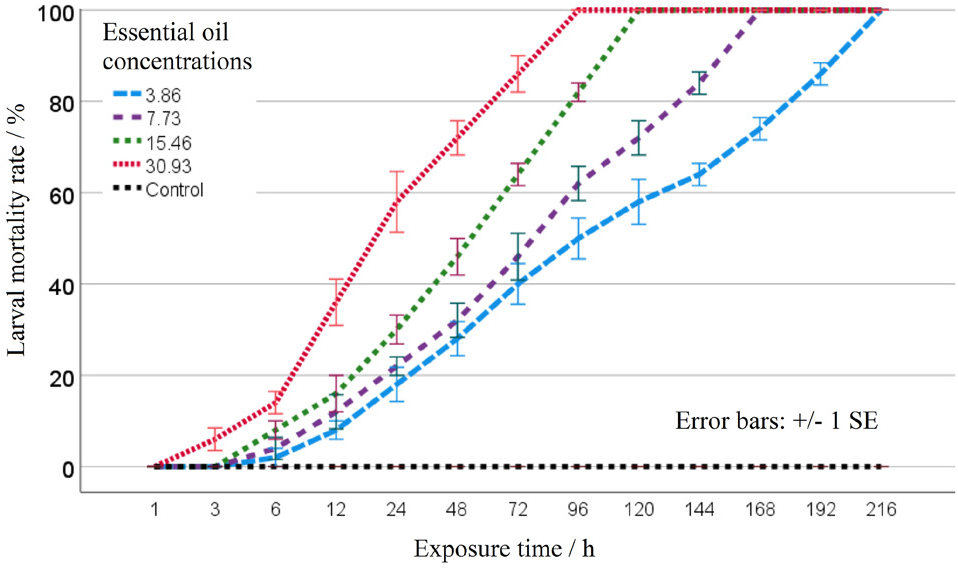
The codling moth, Cydia pomonella (L.), is a globally significant pest of apple orchards. Its developing resistance to conventional pesticides necessitates the exploration of alternative control agents, particularly for post-harvest protection. This study characterizes the chemical composition and evaluates the fumigant toxicity of an essential oil (EO) extracted from an ecotype of Artemisia herba-alba Asso. previously unstudied in the Aurès region (Algeria). The hydrodistillation yielded 0.36 ± 0.01% (v/m) of a pale-yellow oil. Gas chromatography-mass spectroscopy (GC-MS) revealed an uncommon ocimene/terpineol-rich chemotype, distinct from ordinary camphor or thujone-dominated profiles. The relative amounts (semi-quantitative) were dominated by alloocimene (31.13%), α-terpineol (23.67%), and 4 thujanol (17.12%). Bioassays against fifth-instar larvae demonstrated significant fumigant toxicity, with a 24 h LC50 (lethal concentration) value of 25.81 μg mL-1 air. This efficacy is comparable to that of other plant derived insecticides reported in the literature, confirming the oil potential as a viable botanical fumigant. The discovery of this uncommon chemotype not only expands the known chemical diversity of A. herba-alba but also positions its EO as a promising, eco friendly candidate for integration into post-harvest integrated pest management strategies against C. pomonella.
Keywords:
Cydia pomonella; biopesticides; Artemisia herba-alba; chemotype
 Thumbnail