 Photovoltaic versus Conventional Electrocoagulation for the Removal of Acetylsalicylic Acid: Efficiency, Zeta Potential and Economic Evaluation
Abstract
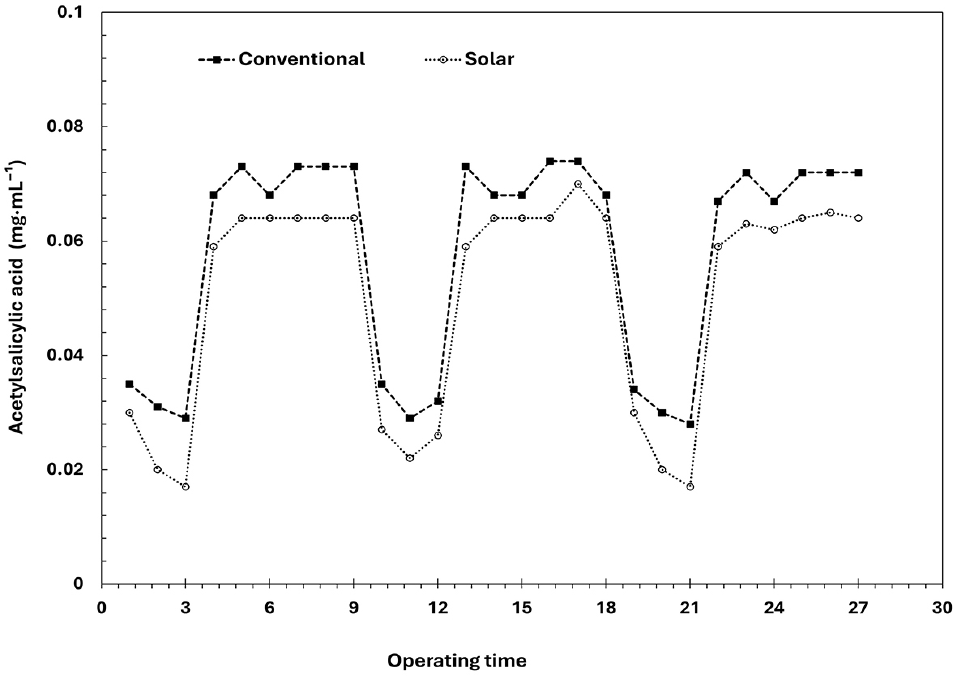
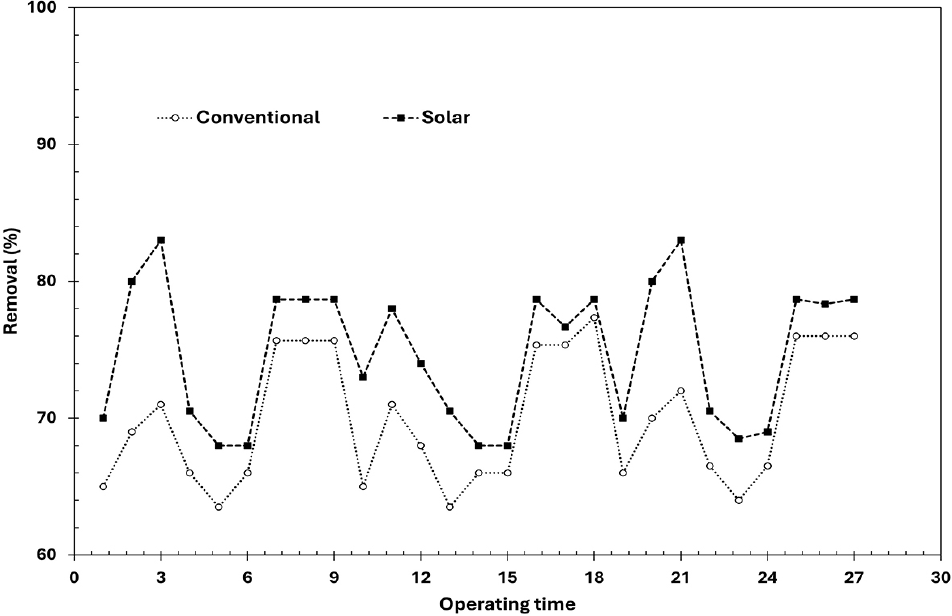
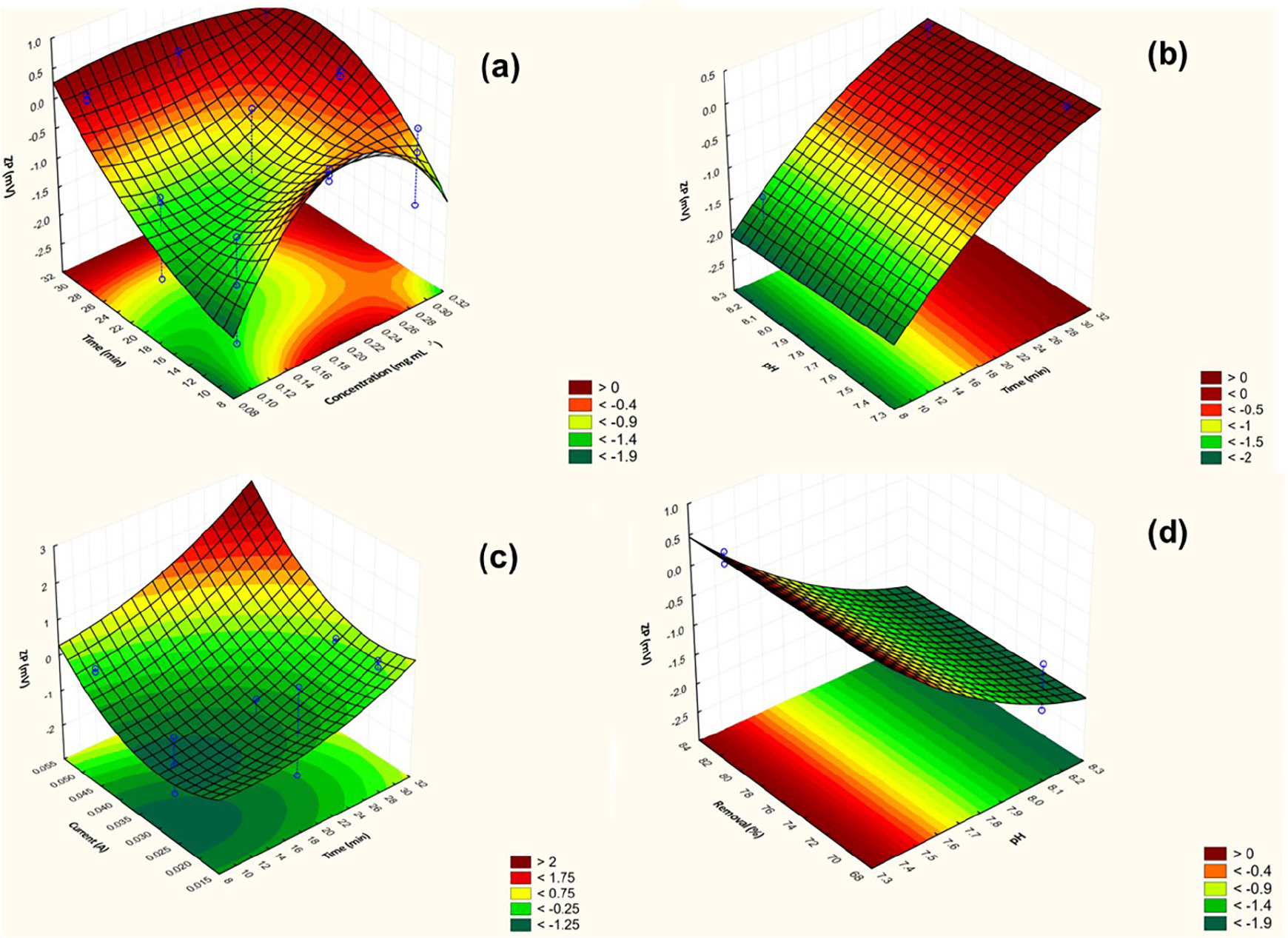
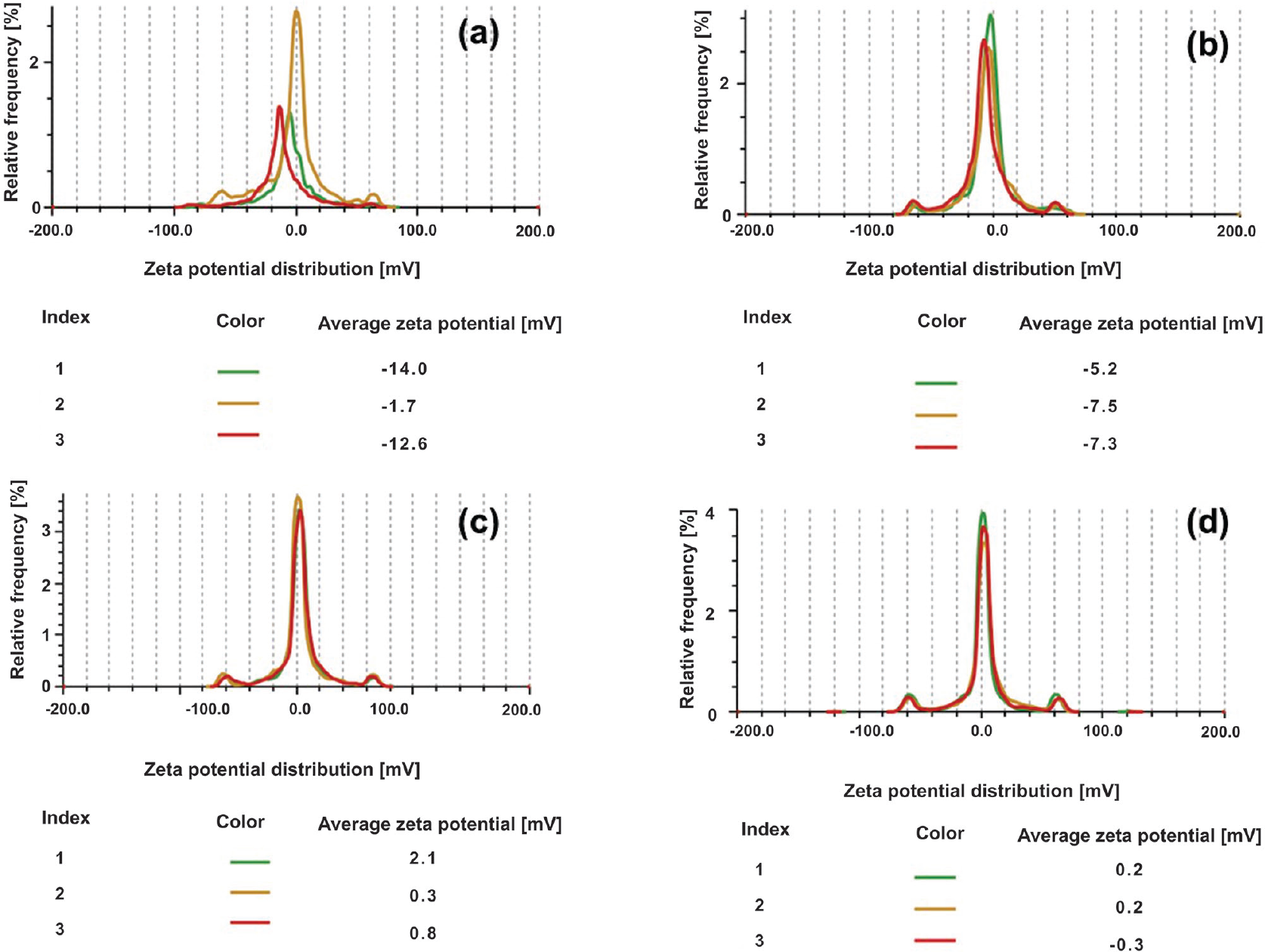
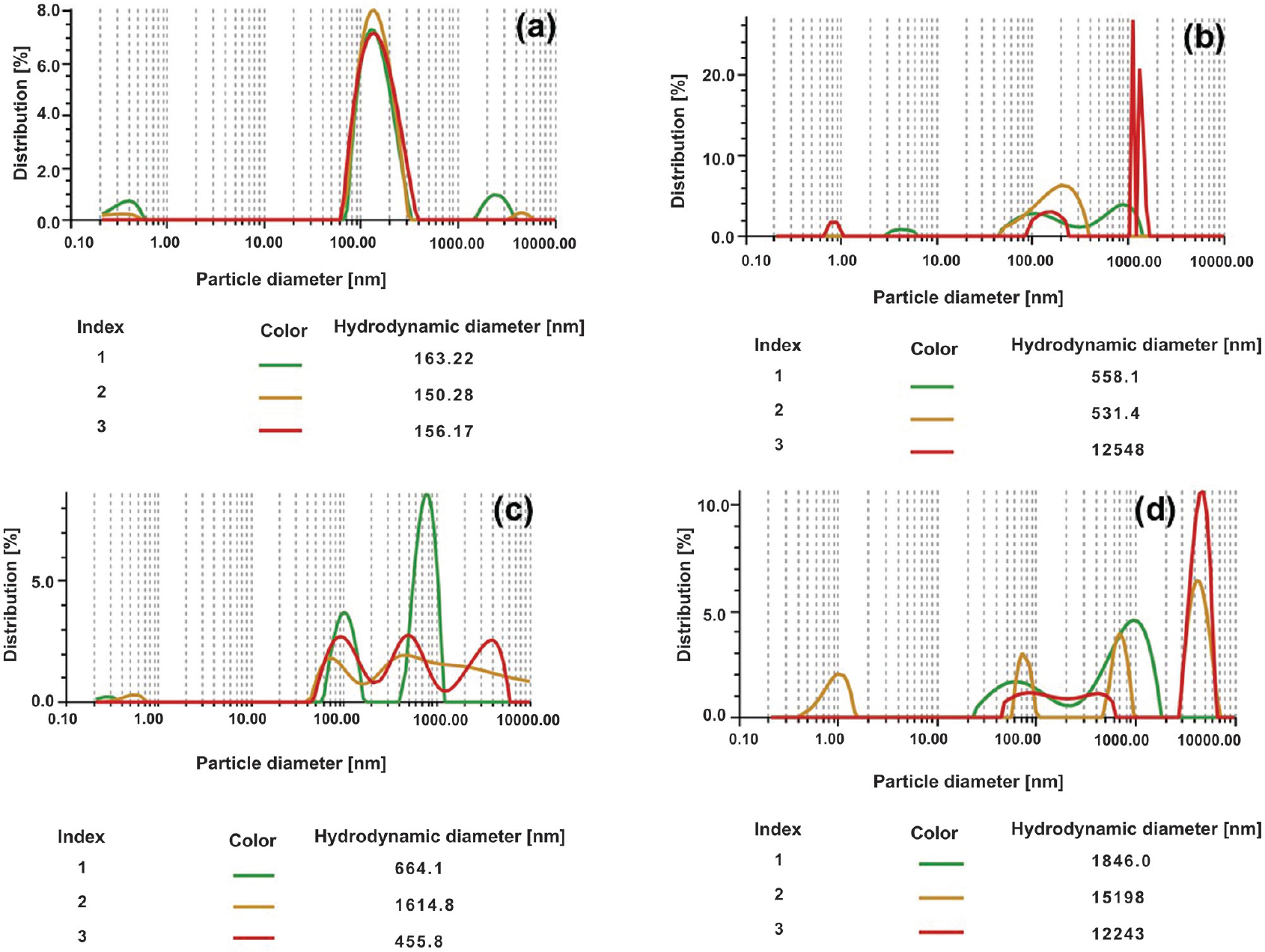
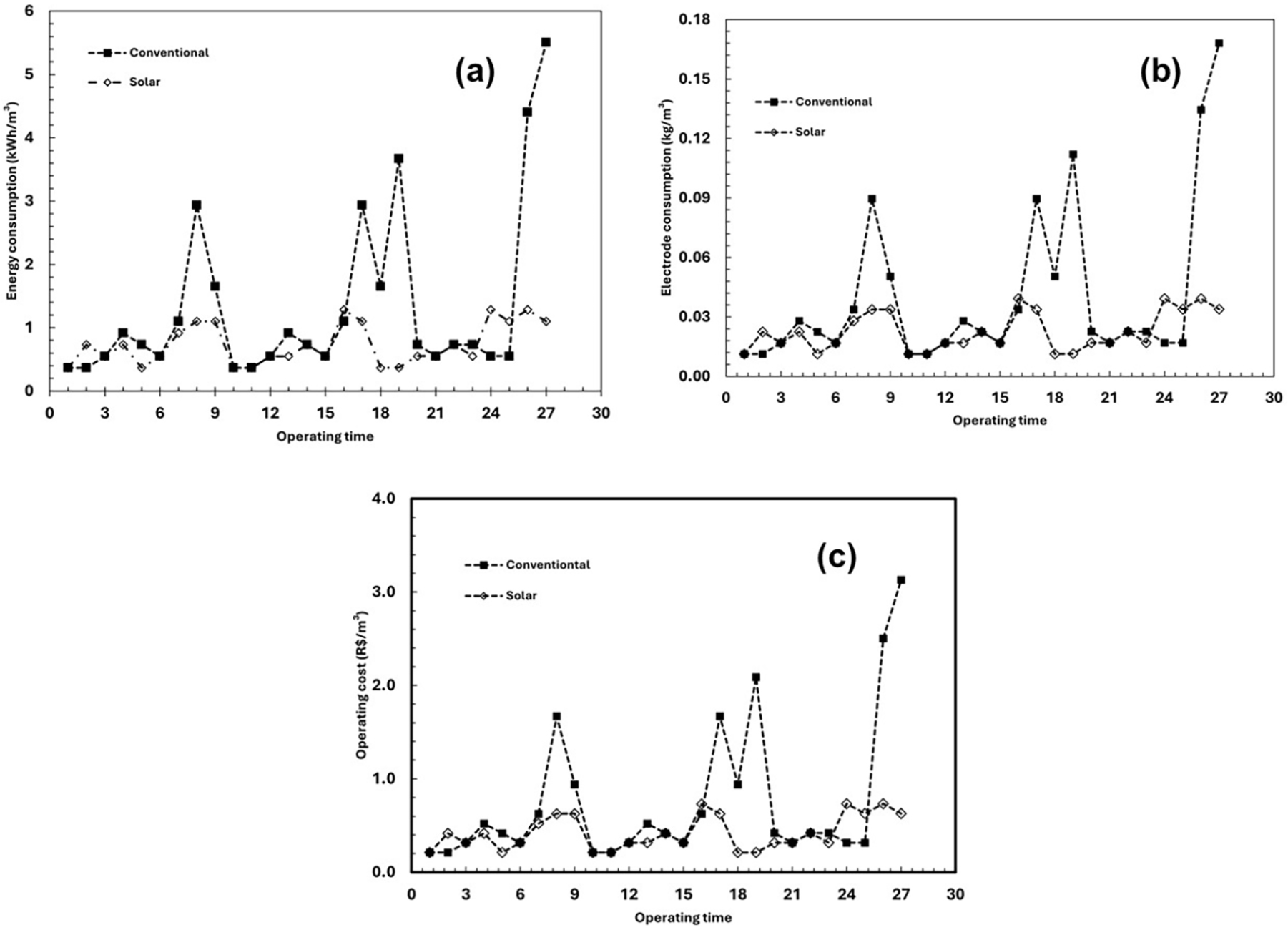
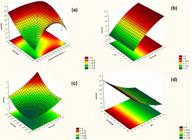
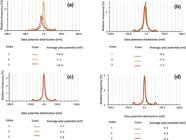
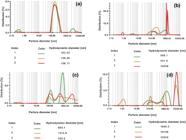
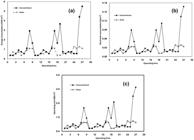
Acetylsalicylic acid (ASA) is a persistent pharmaceutical contaminant whose low biodegradability demands more efficient treatment alternatives. This study compares conventional electrocoagulation (EC-Conv) and photovoltaic-powered electrocoagulation (PV-EC) for ASA removal under identical operational conditions. PV-EC achieved higher and more stable removal efficiencies (78-85%) than EC-Conv (65-75%), maintaining zeta potential (ζ) within the optimal range for colloidal destabilization (-1.0 to -2.0 mV) and promoting the formation of macroflocs (> 10,000 nm). Response-surface analysis confirmed that slightly negative ζ values enhance particle aggregation, whereas values near 0 mV reduce process efficiency. Operational indicators showed clear advantages for PV-EC, including lower energy consumption (≤ 1.3 vs. 5.5 kWh m-3), reduced electrode dissolution (≤ 0.04 vs. 0.16 kg m-3), and substantially lower operating costs (≤ 0.73 vs. 3.13 R$ m-3). Overall, the results demonstrate that solar-powered electrocoagulation is a more efficient, economical, and sustainable alternative for ASA removal, reinforcing its potential for decentralized and large-scale applications in the treatment of pharmaceutical contaminants.
Keywords:
solar electrocoagulation; pharmaceutical contaminants; acetylsalicylic acid; zeta potential; macrofloc formation; operational costs
 Thumbnail
 Thumbnail
 Thumbnail
 Thumbnail
 Thumbnail
 Thumbnail