 The Suitability of Chemically Modified Starch-Based Antimicrobial Coatings for Post-Harvest Strawberry Preservation
Abstract
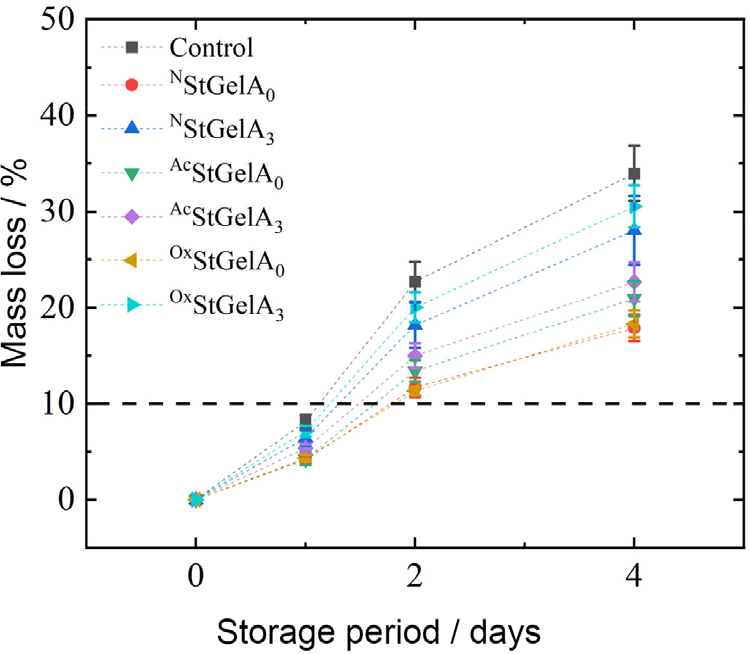
Biodegradable coatings can improve fruit storage, but physical and chemical interactions might impair performance. This work coated strawberries with a blend based on cassava starch (native, oxidized, or acetylated), gelatin, sorbitol, and two antimicrobial agents (calcium propionate and potassium permanganate) to evaluate potential downsides of exposure to an acidic environment. The coatings varied in thickness (0.124-0.160 nm), opacity (1.37-4.61), solubility (29-55%), and color. Mass loss analysis indicated limited efficiency (the 10% threshold was reached within 48 h) in strawberries due to potential hydrolysis reaction. Soluble solids, titratable acidity, harvest index, and vitamin C concentration confirmed that hydrolysis under acidic conditions strongly impaired acetylated starch coating performance, performing worse than the control group. Further studies are needed to evaluate coating behavior in non-acidic fruits and under different pH conditions.
Keywords:
antimicrobial agent; biodegradable film; cassava starch; hydrolysis reaction; addition-elimination reaction
 Thumbnail