 In silico Identification of Lanostane Triterpenes as GluN1-GluN2B NMDA Receptor Inhibitors
Abstract
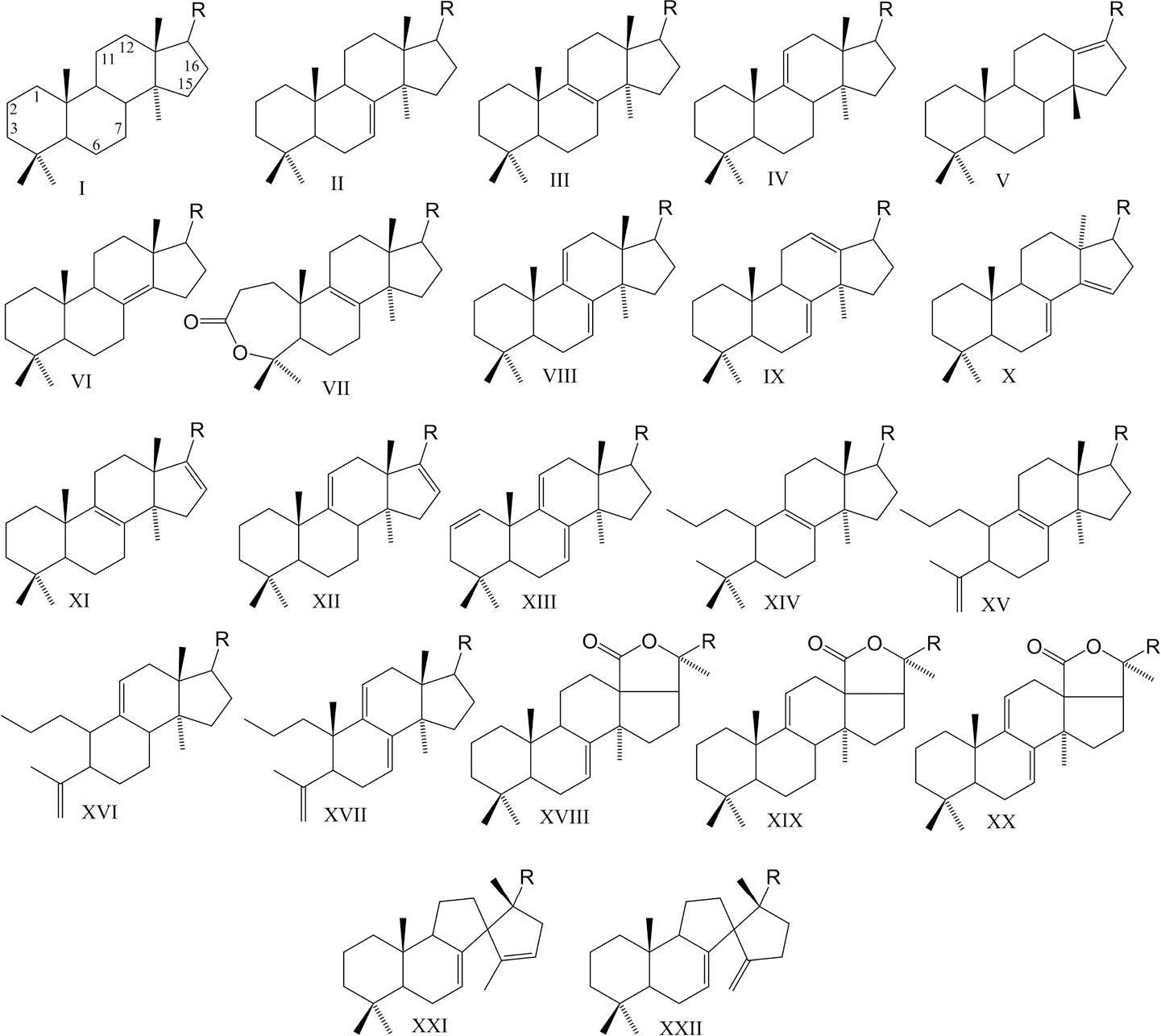
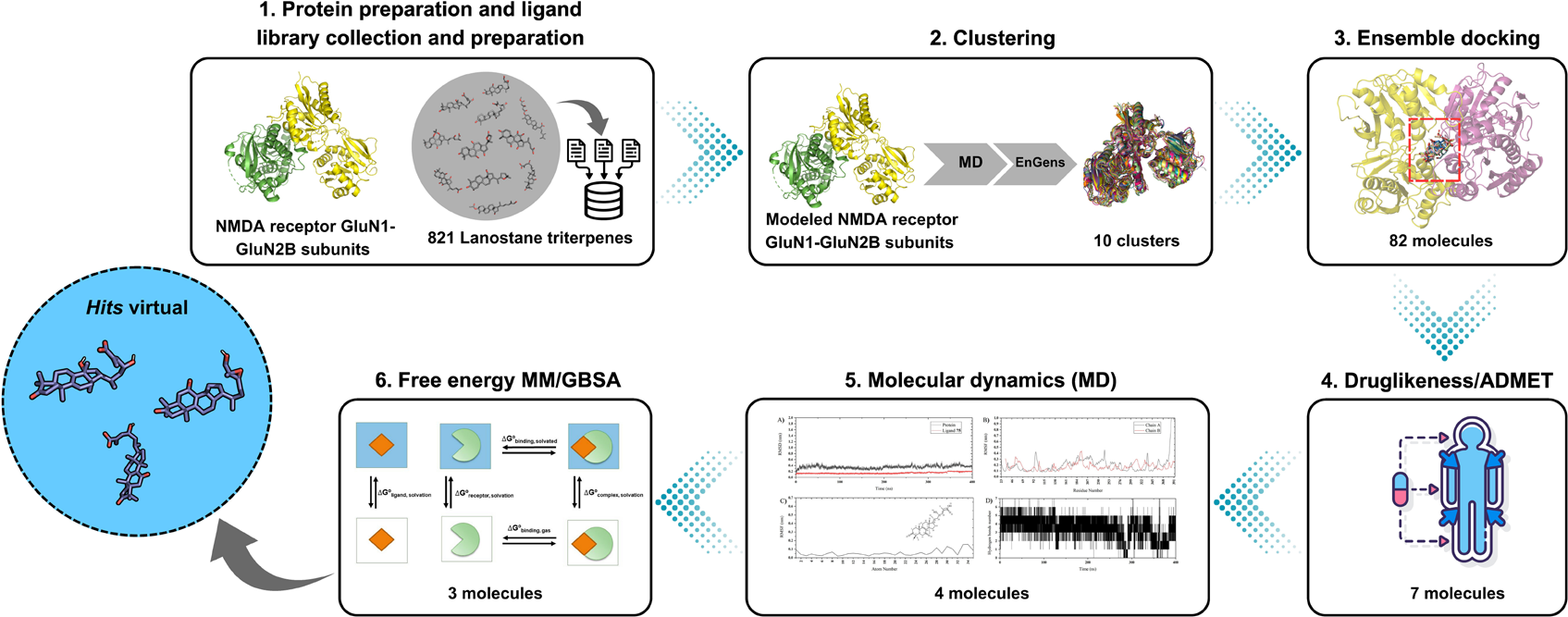
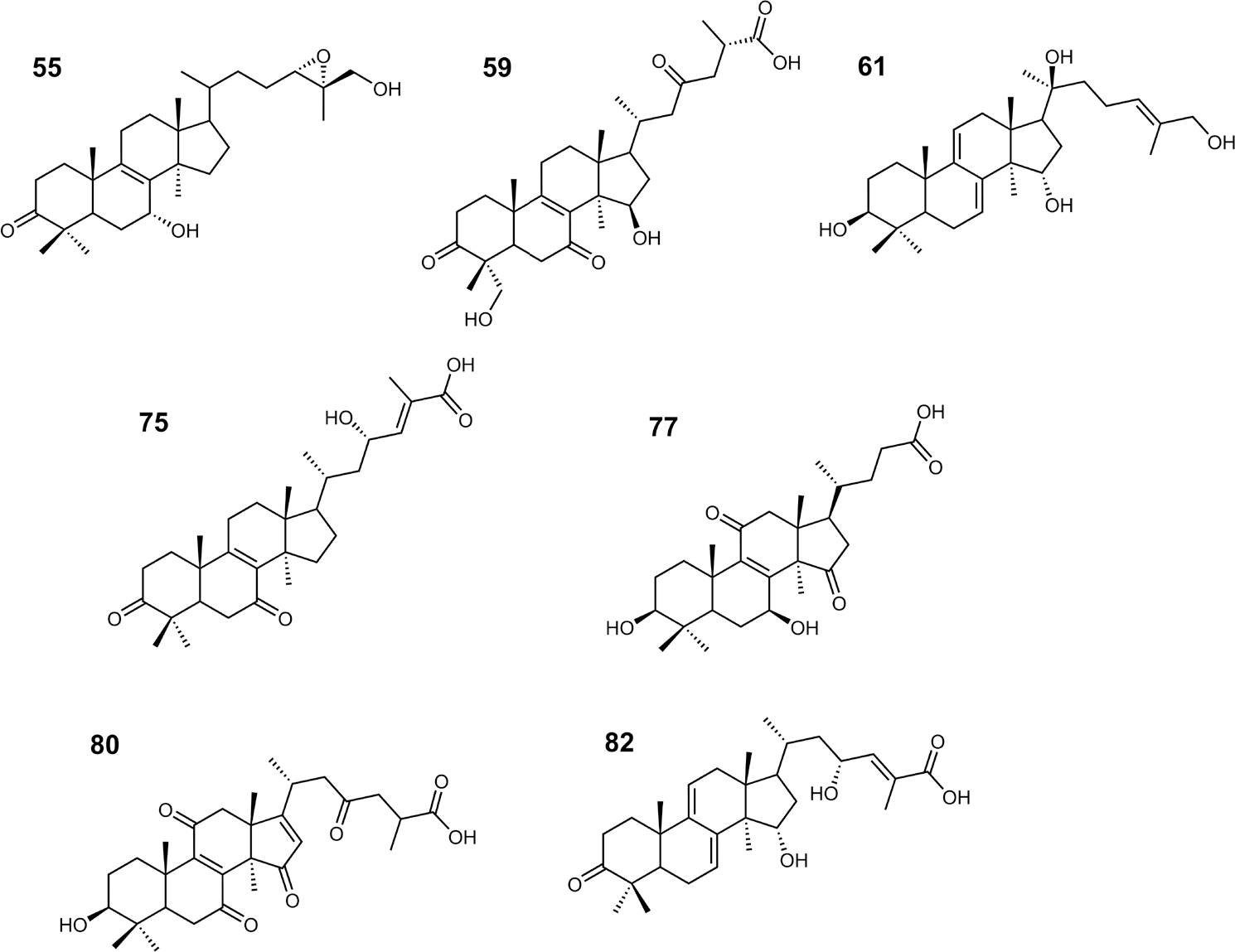
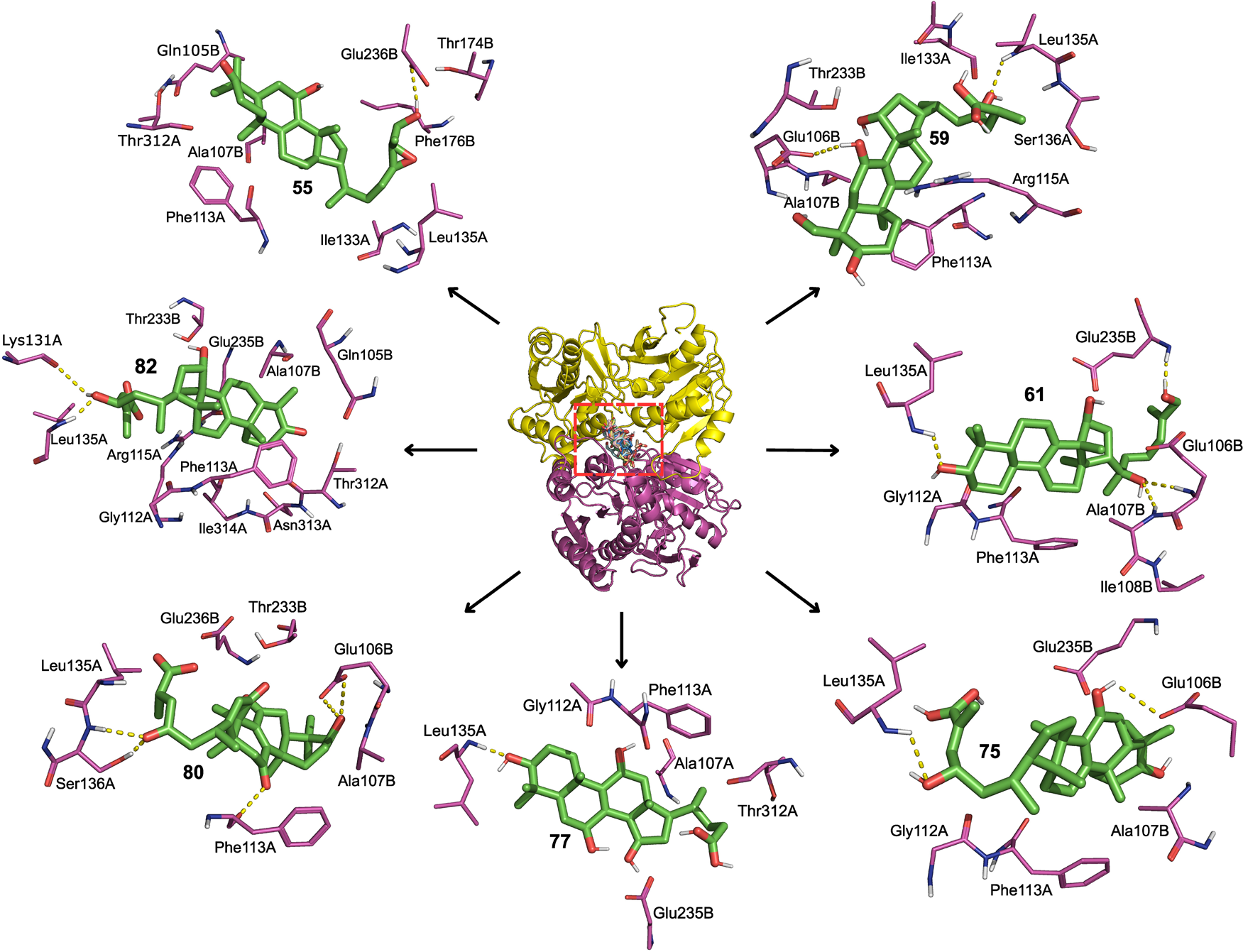
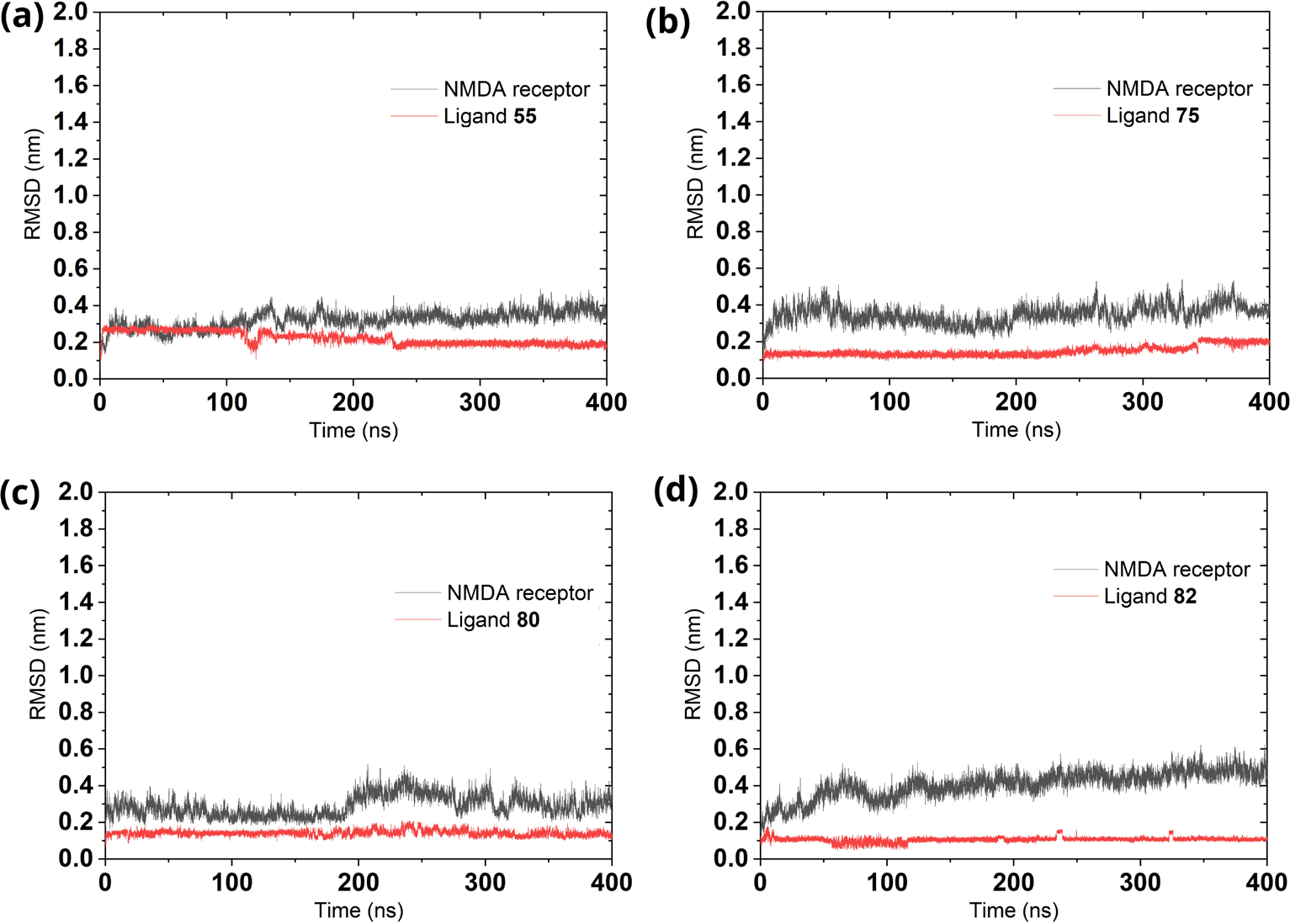
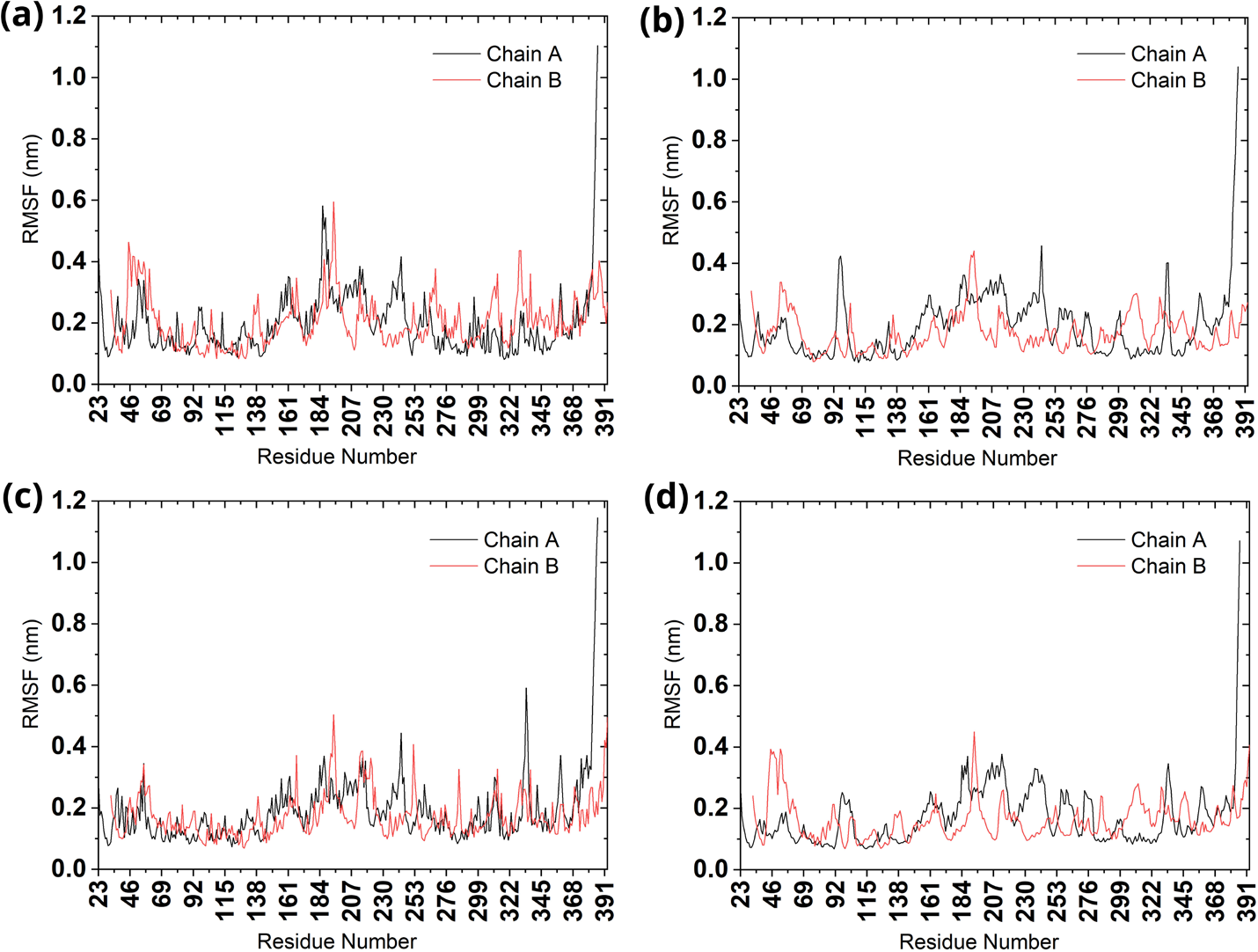
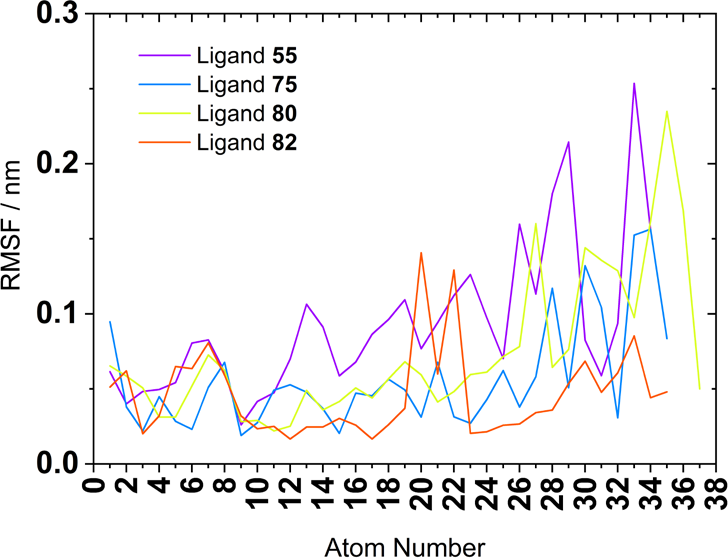
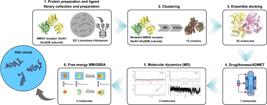
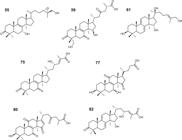
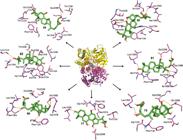
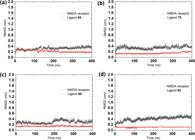
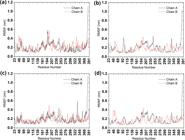
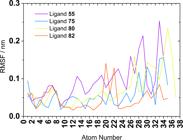
N-Methyl-D-aspartate receptors (NMDARs) dysfunction can lead to impaired synaptic plasticity, learning and memory, and have been linked to various neuropsychiatric disorders, including cognitive dysfunction, schizophrenia, autism, epilepsy, and depression. NMDAR is a non-specific cation channel formed by different combinations of subunits, GluN1 and GluN2 family (A-D). Previous studies have indicated that the subunit GluN2B activity is linked to depressive symptoms. Herein, we utilize computational biology techniques to identify the inhibitory potential of lanostane triterpenes on the GluN1-GluN2B subunit of NMDARs. Ensemble-based virtual screening was performed to test 821 compounds against the crystallographic structure of GluN1 GluN2B. After physicochemical and pharmacokinetic analysis, compounds 55, 59, 61, 75, 77, 80, and 82 were found to have a favorable profile for developing potential drugs. Induced fitting simulations relaxed atomic contacts under solvated conditions, improving molecular interactions between the selected ligands and the NMDA. Binding free energy calculations corroborated the stability of the protein-ligand complexes, indicating that compounds 55, 75, and 82 are the most promising inhibitors. These findings demonstrate the potential of lanostane triterpenes as candidates for treating neuropsychiatric conditions associated with NMDA dysfunction, contributing to the search for new therapies that aim to selectively and effectively modulate the activity of this receptor.
Keywords:
NMDA receptors; depression; GluN2B; lanostane triterpenes; ensemble docking; MM-GBSA
 Thumbnail
 Thumbnail
 Thumbnail
 Thumbnail
 Thumbnail
 Thumbnail
 Thumbnail
 Thumbnail
 Thumbnail
 Thumbnail
 Thumbnail
 Thumbnail