 Strategic Innovation for Drug Enforcement: Brazilian Development of Certified Reference Material for Amphetamine Hydrochloride
Abstract
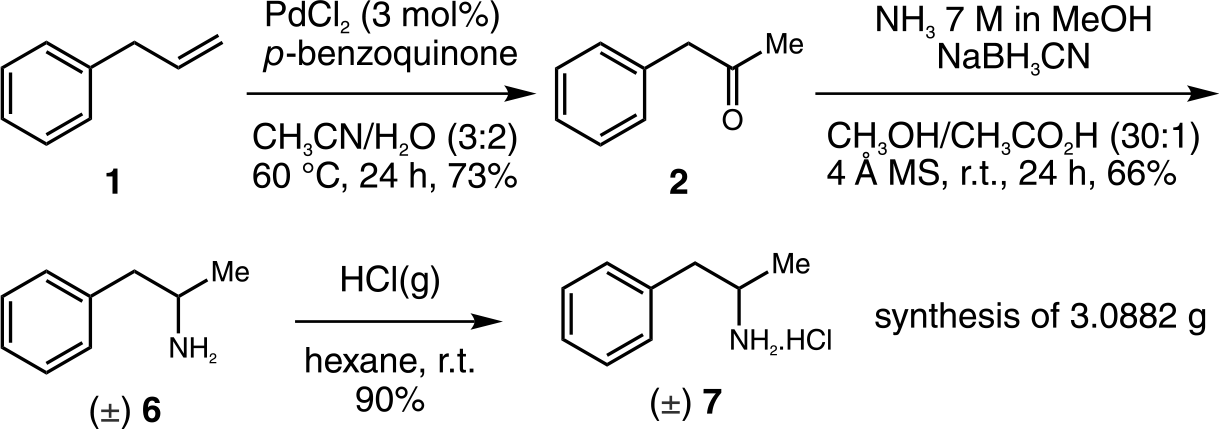
This study addresses a critical national gap in Brazil regarding the production of certified reference materials (CRMs) for amphetamines, which are essential for ensuring the accuracy, comparability, and metrological traceability of forensic drug analyses. The work presents the synthesis of high-purity amphetamine hydrochloride on a gram scale and its full certification as a CRM. The synthetic route comprises three steps, including oxidation, reductive amination, and an acid-base reaction. The certification process involves comprehensive studies of identity, homogeneity, stability under varying conditions, and full characterization. The initiative was carried out in partnership with the University, Institute of Metrology, Quality and Technology (Inmetro), and the Brazilian Federal Police, aiming to meet the practical demands of forensic laboratories. Additionally, it contributes to building national capacity for CRM production, reducing reliance on imports, and promoting scientific autonomy. This work represents a step toward improving the quality infrastructure in forensic science in Brazil.
Keywords:
forensic science; psychoactive substances; certified reference materials; amphetamines; Wacker-Tsuji oxidation; reductive amination
 Thumbnail
 Thumbnail
 Thumbnail
 Thumbnail