 Unravelling Sources of BPA Exposure in Southern Brazil: Contributions of Drinking Water and Thermal Paper to Daily Intake Assessment through Human Biomonitoring
Abstract
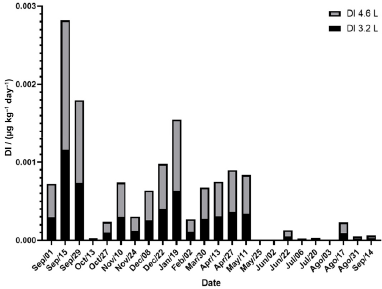
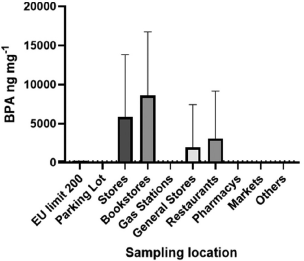
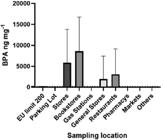
Bisphenol A (BPA) is an endocrine-disrupting chemical used in polycarbonate plastics, epoxy resins, and thermal paper, and has been linked to health problems. Human exposure occurs mainly through ingestion and dermal contact, and BPA is detected in various biological and environmental matrices. This study quantified and evaluated BPA in urine, drinking water, and thermal paper samples collected from commercial establishments in southern Brazil. The analytical method applied was liquid chromatography coupled to mass spectrometry (LC-MS/MS). BPA was detected in 100% of urine samples, with concentrations ranging from 0.11 to 63.69 ng mL-1, indicating continuous exposure. In drinking water, concentrations varied from < 0.04 to 21.66 ng L-1, remaining within European Union regulatory limits. In contrast, 15% of thermal paper samples showed BPA above the permitted limit, with values ranging from 5,035.9 to 24,218.8 ng mg-1. Toxicological risk assessment indicated that, under previously established intake limits, exposure through drinking water and thermal paper would be considered safe. However, with the new tolerable daily intake (TDI) set by the European Food Safety Agency (EFSA) in 2023 (0.2 ng kg-1 body weight per day), exposure became a concern for a significant part of the study population. These findings highlight potential health risks and regulatory gaps in Brazil, emphasizing the need for stricter measures and safer alternatives to BPA in consumer products. They also reinforce the importance of monitoring BPA exposure and aligning national regulations with international safety standards.
Keywords:
bisphenol A; exposure; biomonitoring; drinking water; thermal paper
 Thumbnail
 Thumbnail