 Investigating the Role of Molybdenum in the Corrosion Resistance of Electrodeposited Ni-Mo Alloys
Abstract
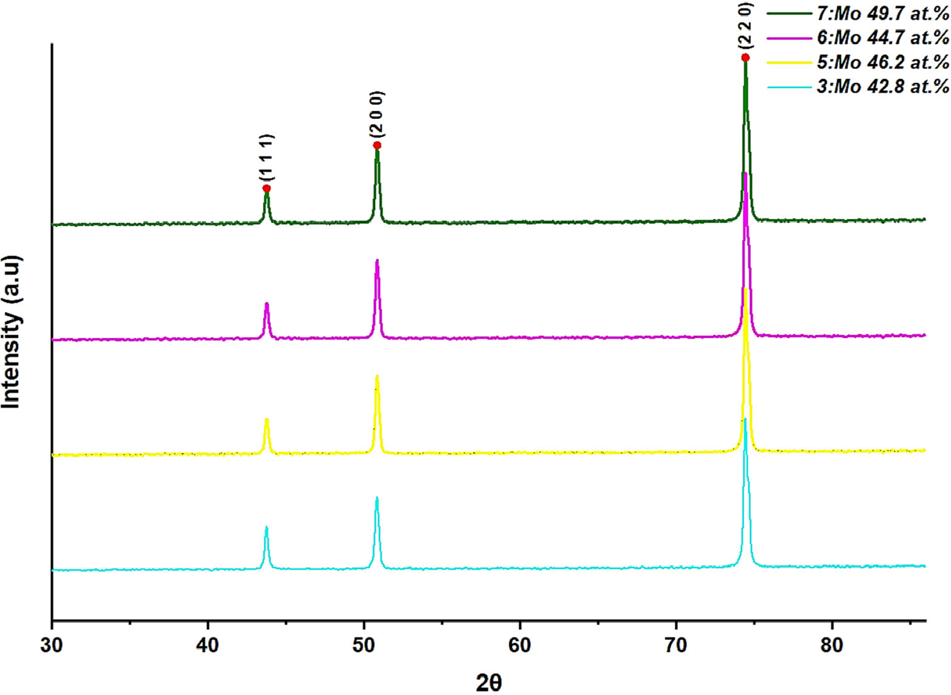
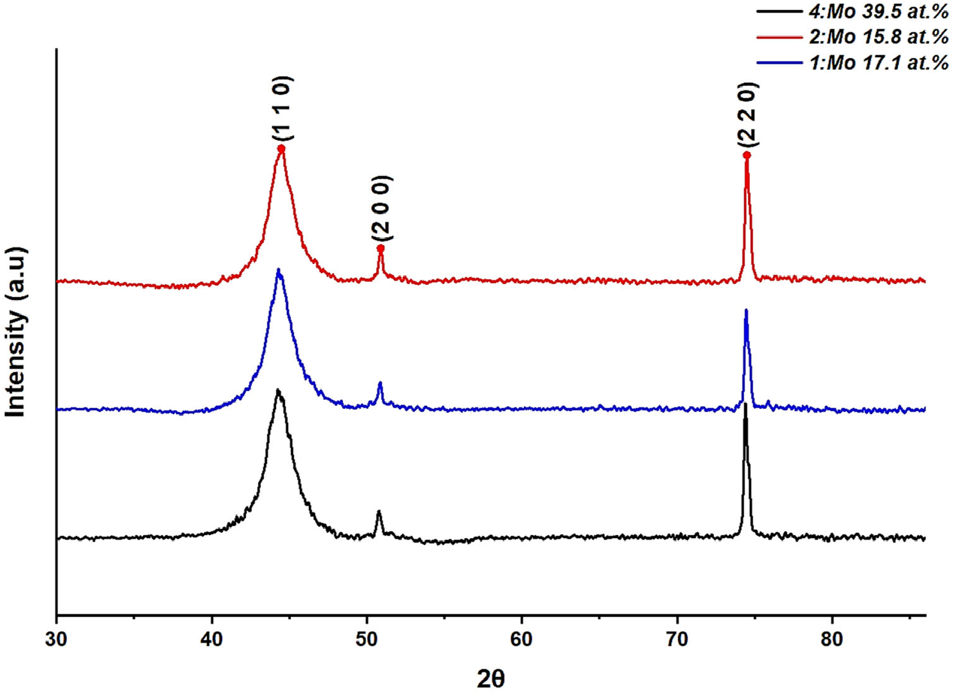
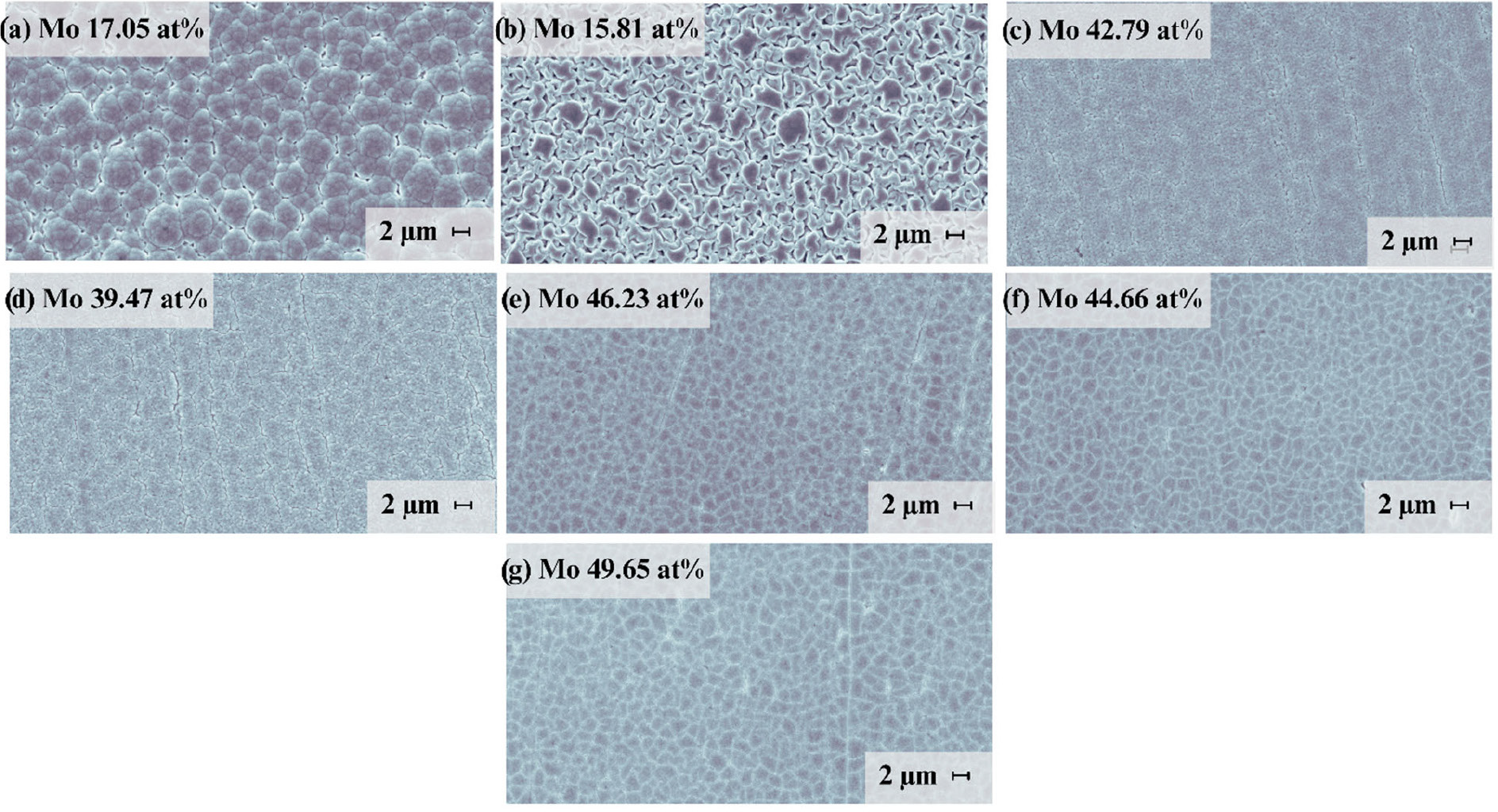
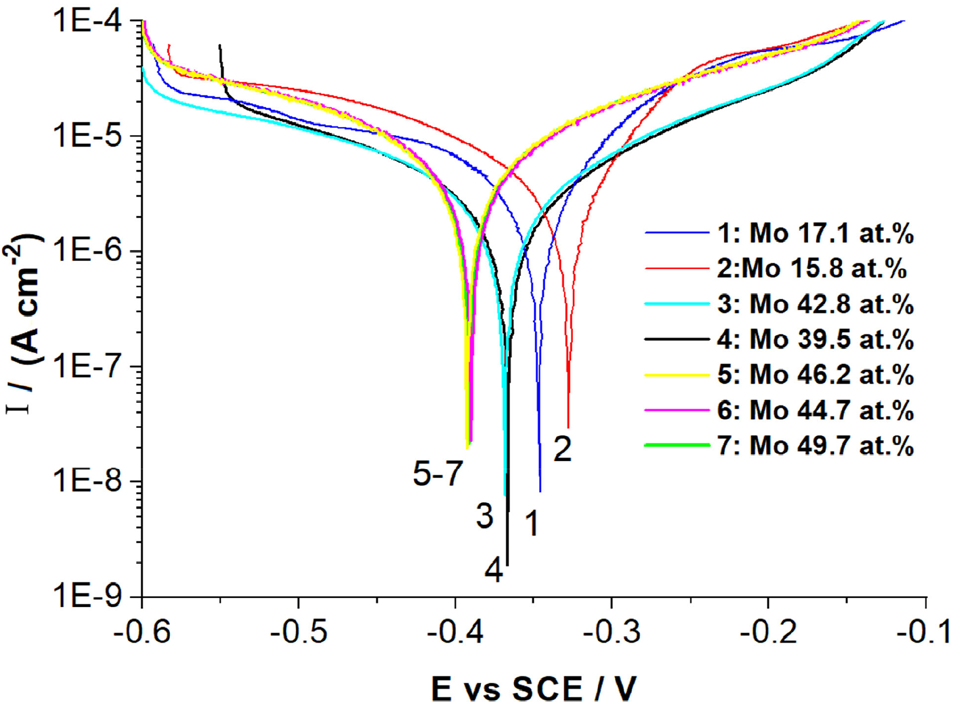
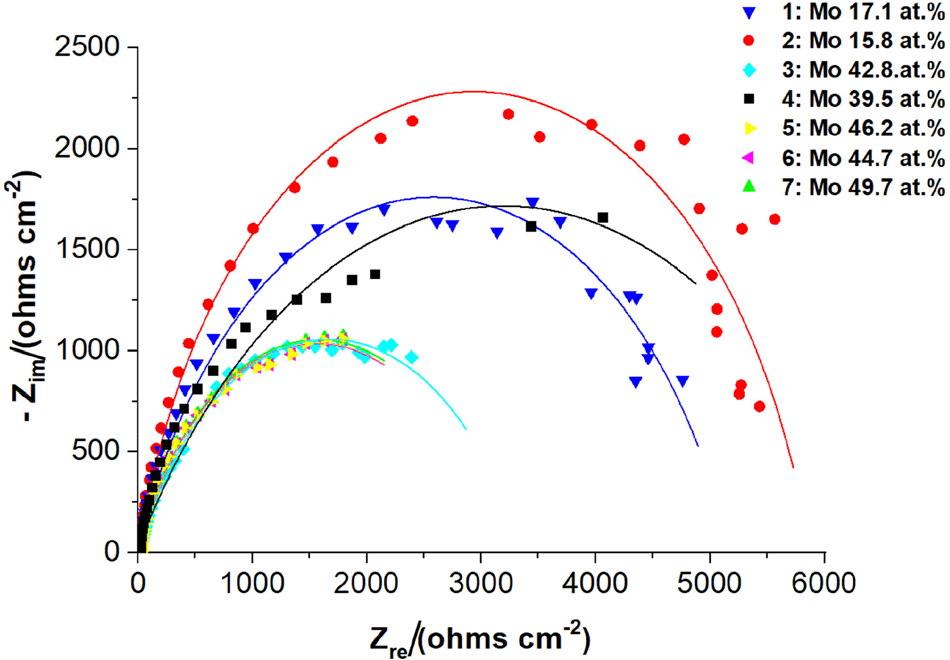
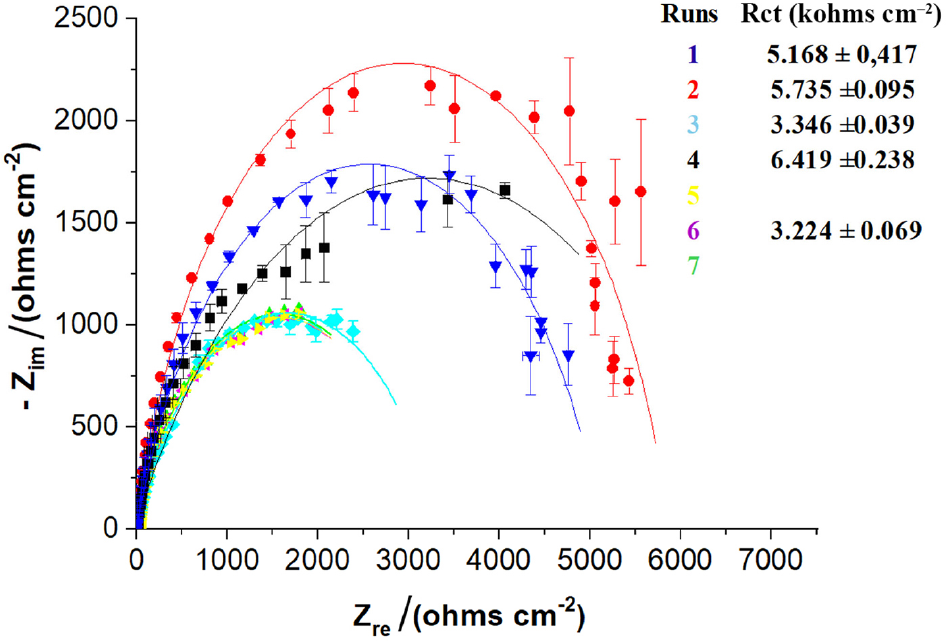
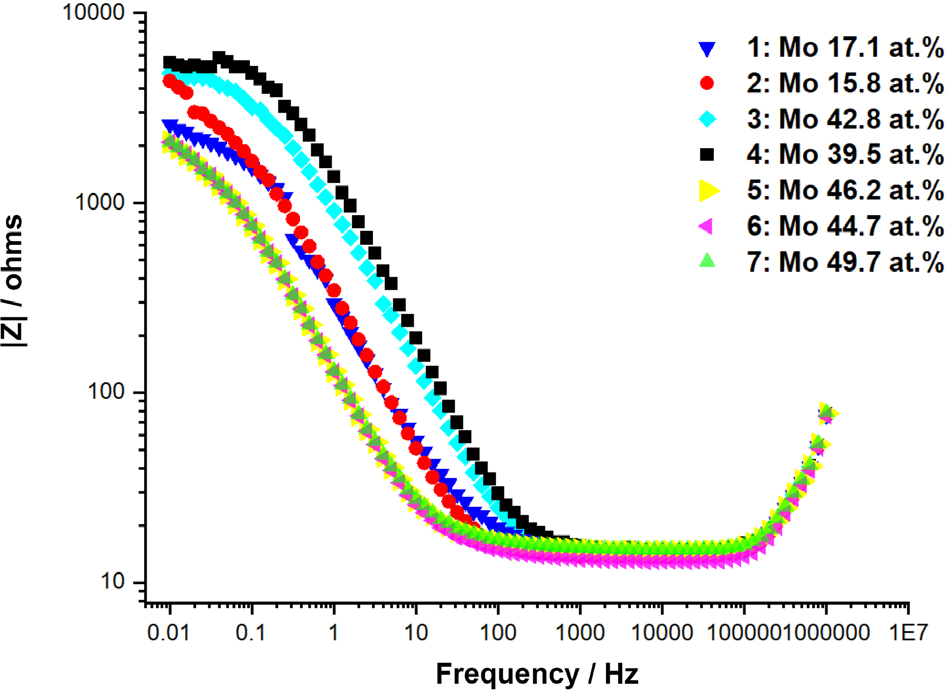
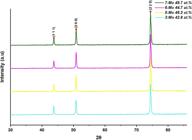
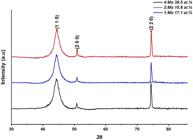
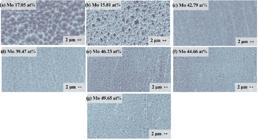
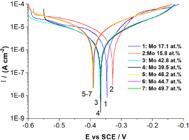
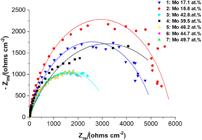
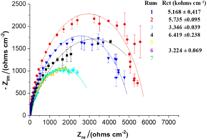
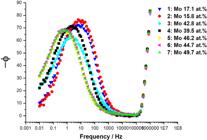
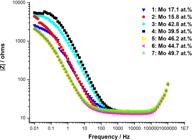
Ni-Mo alloys, promising candidates as environmentally safer alternatives to Cr coatings, were electrodeposited on a copper substrate. A full 22 factorial design was conducted to evaluate the effects of electrolyte pH (ranging from 4 to 8) and cathode rotation (10 to 50 rpm) on composition, microstructure, texture, and corrosion resistance. Results indicate that only pH significantly affects molybdenum content in the alloy, ranging from 15.81 to 49.65 at%. The increase in Mo content changed the surface morphology from nodular to compact, smooth, and crackled layer. Additionally, Ni-Mo alloys with Mo contents above 40 at% exhibited an anomalous growth along the less energetically favorable (2 2 0) crystallographic plane. Electrochemical measurements were carried out in 0.1 M NaCl, revealing an abnormal result: the alloy containing 39.47 at% Mo exhibited the lowest corrosion current (1.351 µA cm-2) and the highest charge transfer resistance (5.53 kΩ cm2). Overall, corrosion behavior appears to be predominantly governed by Mo content, while surface morphology and crystallographic texture exert a secondary influence. Thus, the alloy containing 39.47 at% Mo with nanocrystalline microstructure, is a promising material for anticorrosion coatings and surfaces.
Keywords:
passivation; electroplating; corrosion current; Ni-Mo alloys; anticorrosive coatings; Mo-containing alloys
 Thumbnail
 Thumbnail
 Thumbnail
 Thumbnail
 Thumbnail
 Thumbnail
 Thumbnail
 Thumbnail
 Thumbnail