 Promoting Osteoblast Proliferation and Activity by Combining Natural Rubber Hybrid Systems with Calcium Phosphate and Silica Particles
Abstract
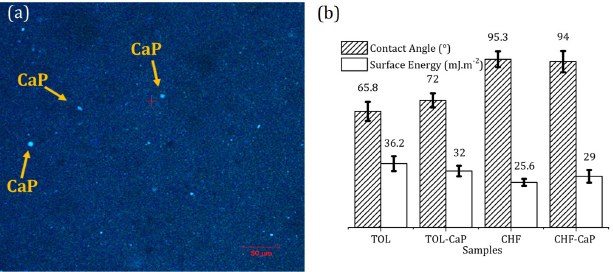
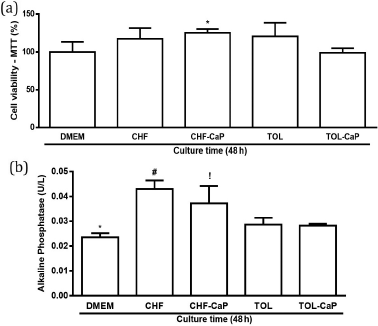
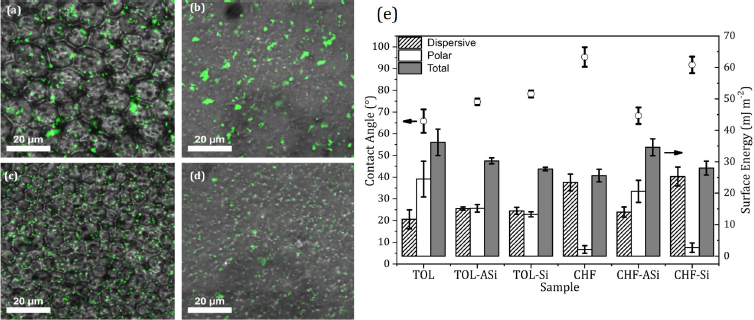
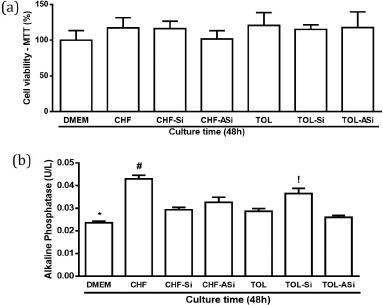
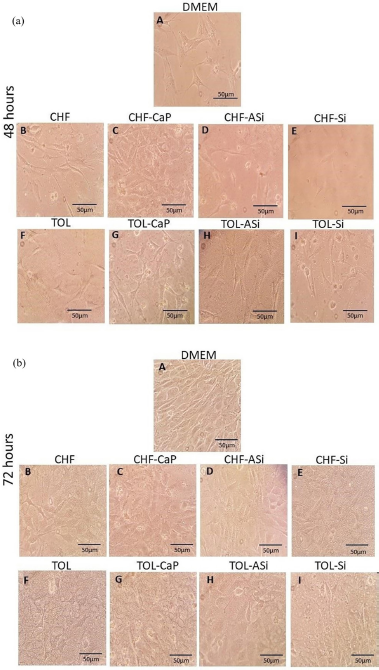
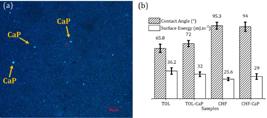
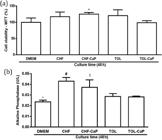
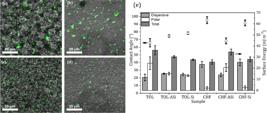
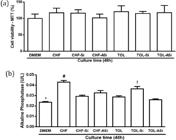
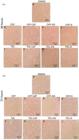
Natural rubber (NR) latex from Hevea brasiliensis can be modified with functional particles to obtain advanced materials. This study evaluates the biocompatibility of two NR-based hybrid systems incorporating calcium phosphate (CaP) and silica (SiP) particles for medical and industrial use. Films (NRHS) were prepared using chloroform (CHF) and toluene (TOL) as solvents, and their physicochemical surface properties and interactions with osteoblastic cells were analyzed. Parameters included morphology, alkaline phosphatase (ALP) activity, and cell viability ((3-(4,5-dimethylthiazol-2-yl)-2,5-diphenyl tetrazolium bromide (MTT) assay). Hybridization altered surface energy and wettability, key factors for biocompatibility. Depending on solvent and particle combinations, NRHS modulated osteoblast responses, either preserving, impairing, or enhancing proliferation and enzymatic activity. Both NR-CaP and NR-SiP composites influenced surface energy and contact angle, while generally maintaining viability. These results highlight the tunability of NRHS via particle incorporation, and their positive cellular interactions suggest strong potential for biosensing and biomedical device engineering.
Keywords:
natural polymer; functional nanoparticles; surface wettability; osteoblast cell
 Thumbnail
 Thumbnail
 Thumbnail
 Thumbnail
 Thumbnail