 N-(4-Bromophenyl) Ureas: A Mild Regioselective Synthesis and Antifungal Activity against Colletotrichum lindemuthianum
Abstract
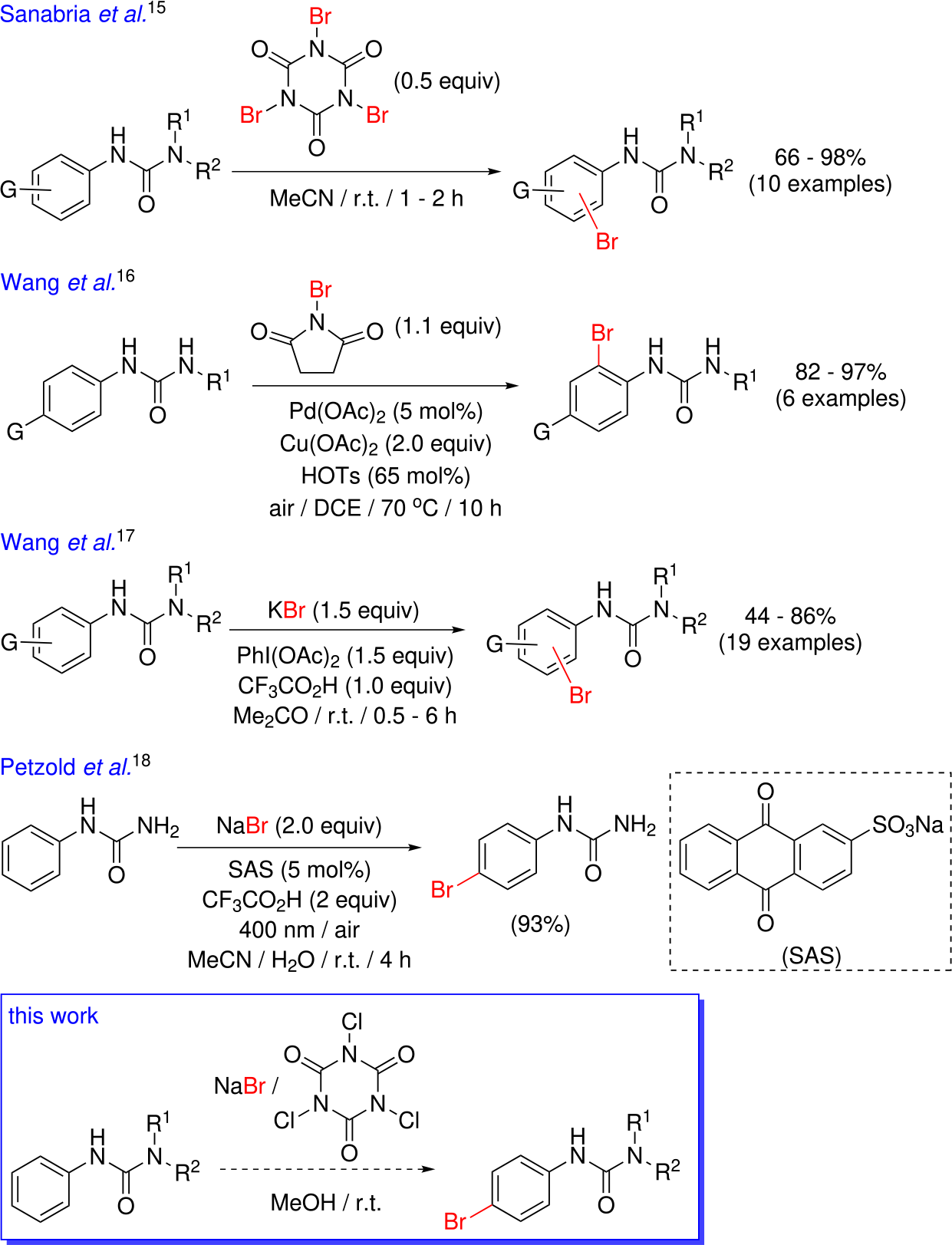
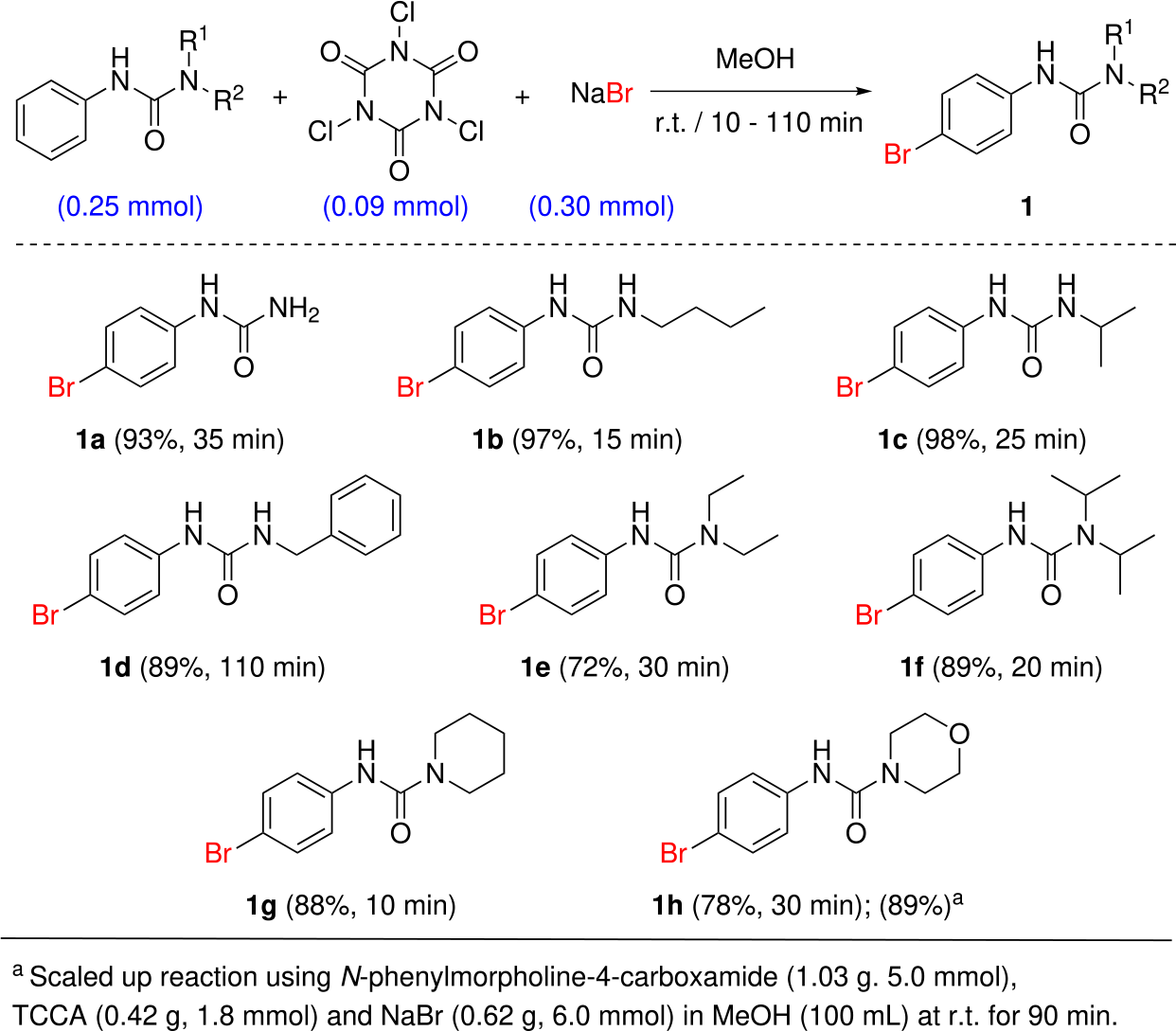
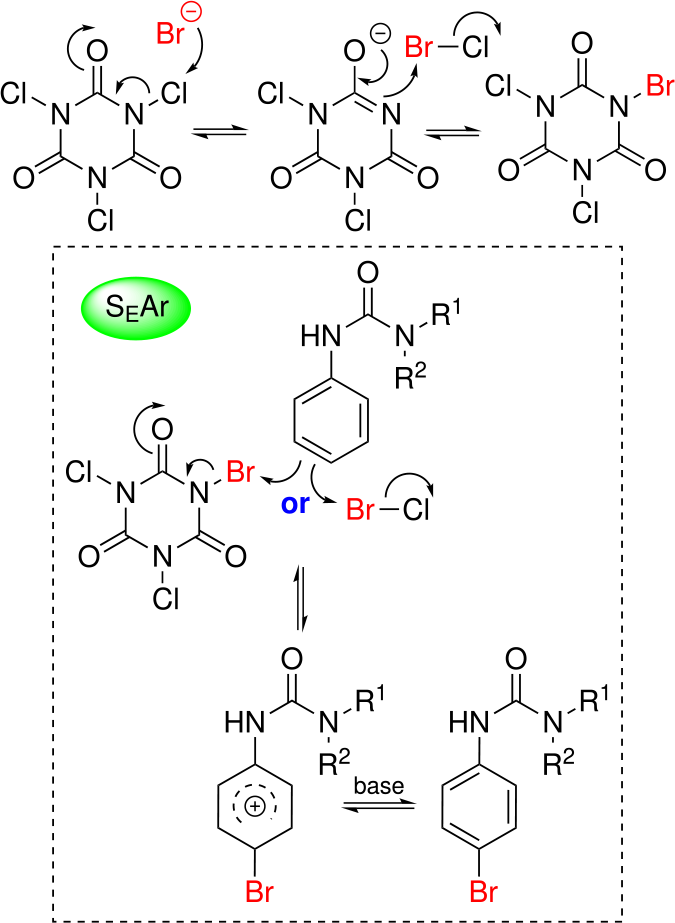
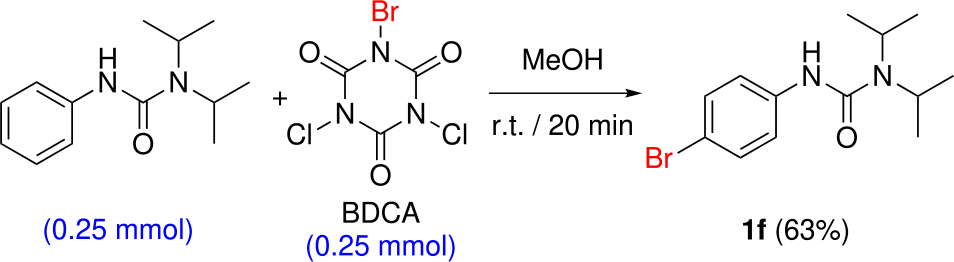
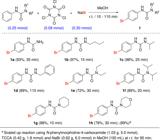
A green, efficient, scalable and regioselective bromination of N-phenyl ureas was developed using NaBr/trichloroisocyanuric acid in methanol at room temperature. The protocol was effective to a range of substituted N-phenyl ureas, giving the corresponding N-(4-bromophenyl) ureas in up to 98% isolated yield under mild conditions. Among the products obtained, N-(4-bromophenyl)morpholine-4-carboxamide proved to be a valuable fungicide candidate against Colletotrichum lindemuthianum, an important pathogen responsible for causing anthracnose on common bean (Phaseolus vulgaris). The in vitro antifungal activity determined by the minimum inhibitory concentration (MIC = 63 mg mL-1) gave the same result of the commercial fungicide thiophanate-methyl.
Keywords:
halogenation; trichloroisocyanuric acid; green chemistry; phytopathogen; Colletotrichum; fungicide
 Thumbnail
 Thumbnail
 Thumbnail
 Thumbnail
 Thumbnail
 Thumbnail