 Plasma Levels of Organochlorine Pesticides in Historically Exposed Vector Control Workers from Rio de Janeiro, Brazil
Abstract
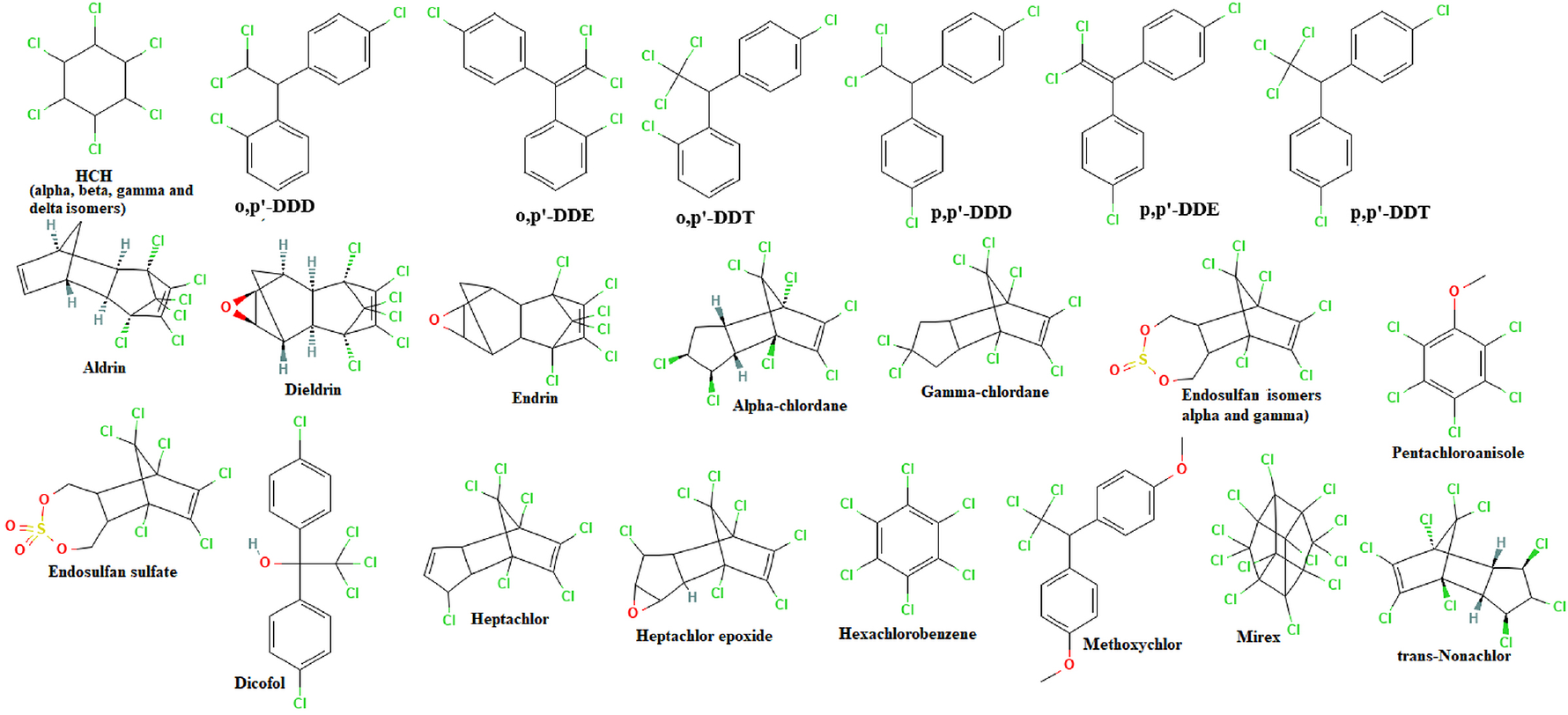
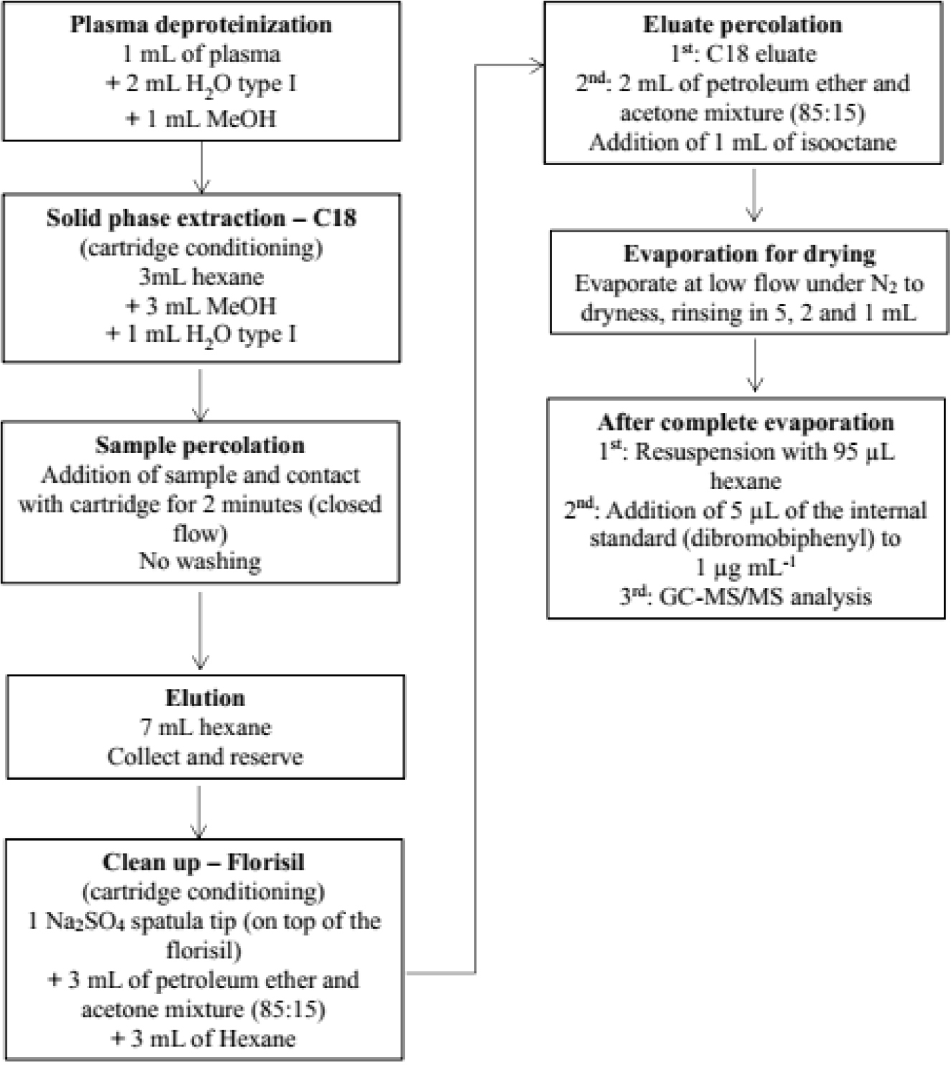
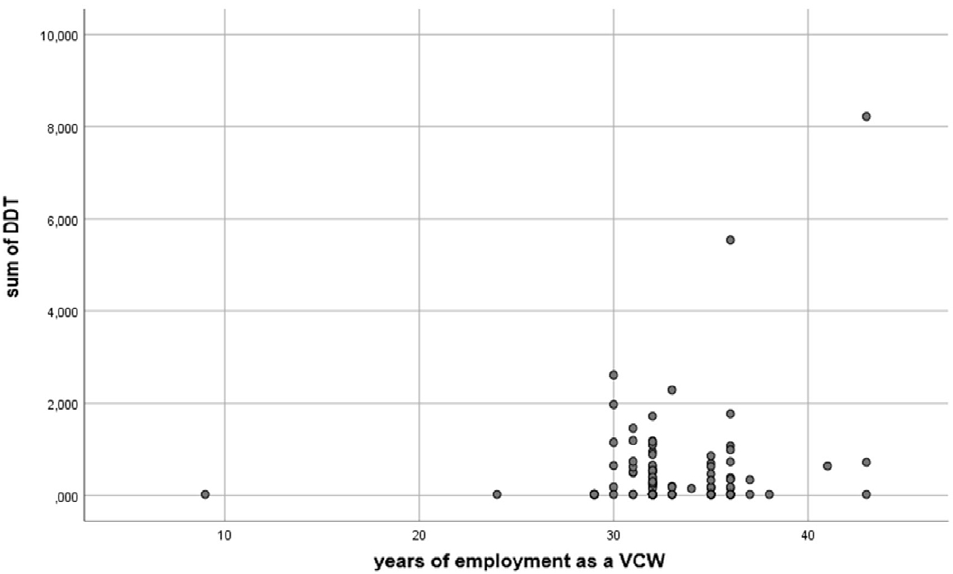
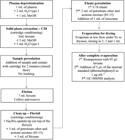
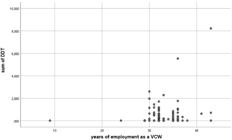
In Brazil, organochlorines pesticides (OCP) were used to combat vectors until the 2000s, and their residues are still present in environmental and biological matrices. Therefore, it is essential to assess the historical exposure of vector control workers (VCW). This article has two main objectives, to describe the validation of analytical methodology, and to assess simultaneous quantification of 26 analytes, between OCP and related transformation products, in blood plasma for VCW exposure levels. The occupational exposure of 127 VCW from Rio de Janeiro State, Brazil, to 26 analytes in blood plasma samples was evaluated using solid-phase extraction (SPE) for sample preparation and gas chromatography coupled to mass spectrometry (GC-MS/MS). The method performance met acceptance criteria according to Brazilian guideline showing linearity with correlation coefficients (R) between 0.936 and 0.994 in 0.2 to 15 ng mL-1 range; recovery between 93 to 105%; limit of detection (LOD) of 0.015 to 0.468 ng mL-1, and limit of quantification (LOQ) of 0.045 to 1.419 ng mL-1; precision with coefficients of variation < 20%. VCW samples presented 52% dichlorodiphenyltrichloro-ethane (DDT) isomers and related transformation products (0.15 to 8.22 ng mL-1), and 12% contained beta-hexachlorocyclohexane (HCH) residues (0.09 to 0.28 ng mL-1). It was possible to demonstrate high prevalence of VCW with residues, even after the cessation of exposure years ago.
Keywords:
vector control workers; occupational exposure; organochlorines pesticides; persistent organic pollutant; occupational health; public health
 Thumbnail
 Thumbnail
 Thumbnail