 Excitation-Emission Matrix Fluorescence of Blood Plasma Combined with Multi Way Chemometric Analysis for HIV Detection in Pregnant Women
Abstract
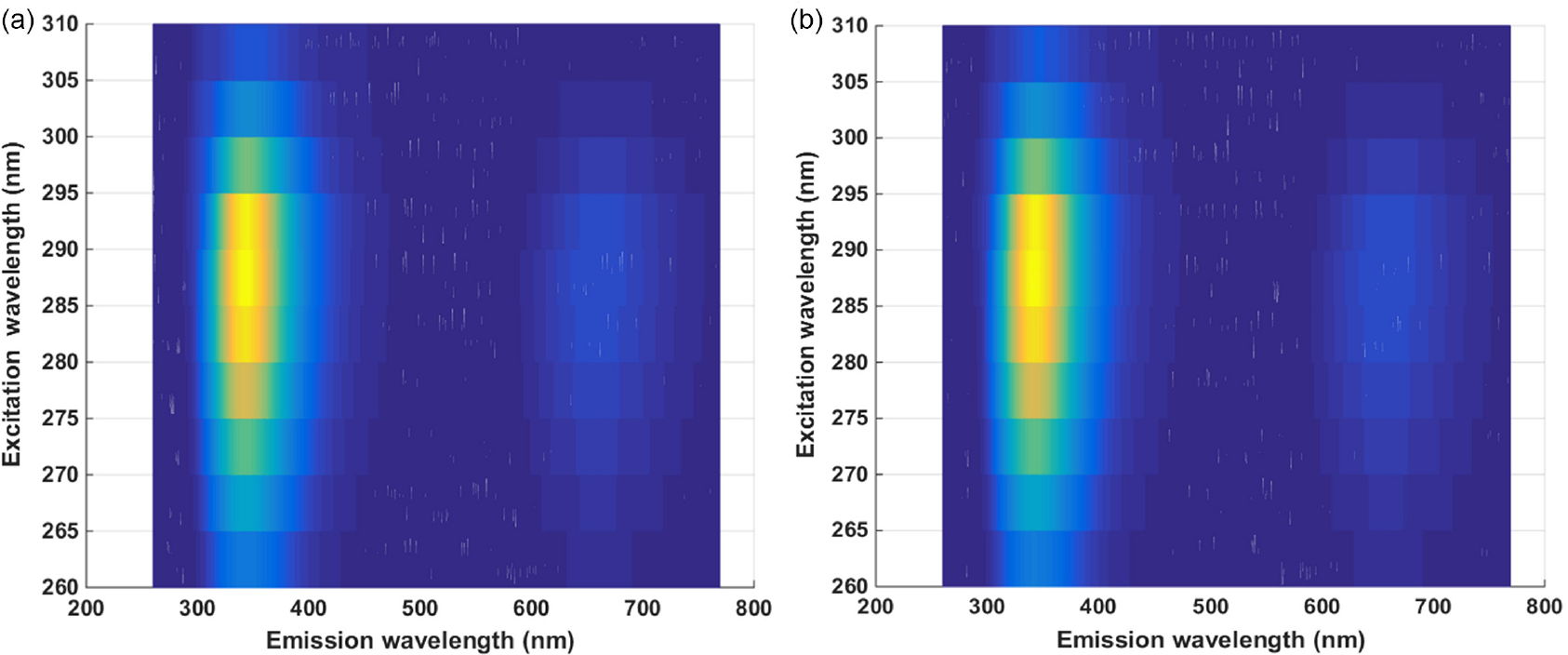
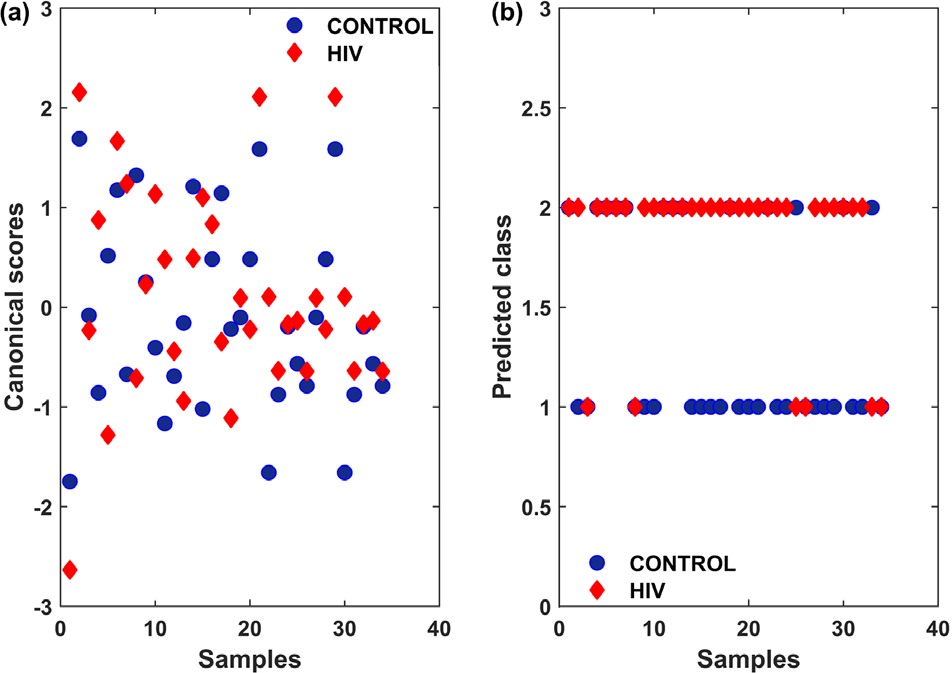
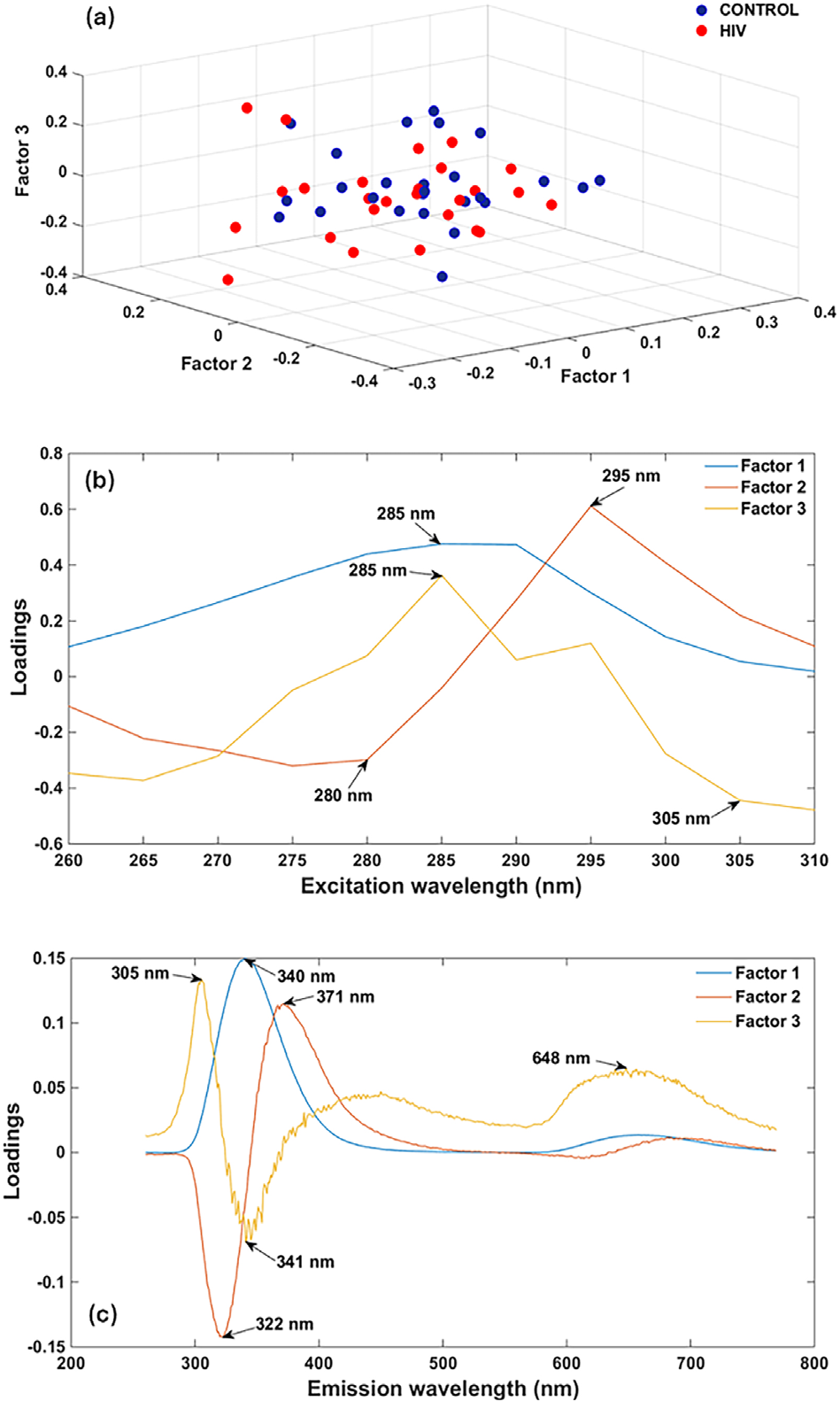
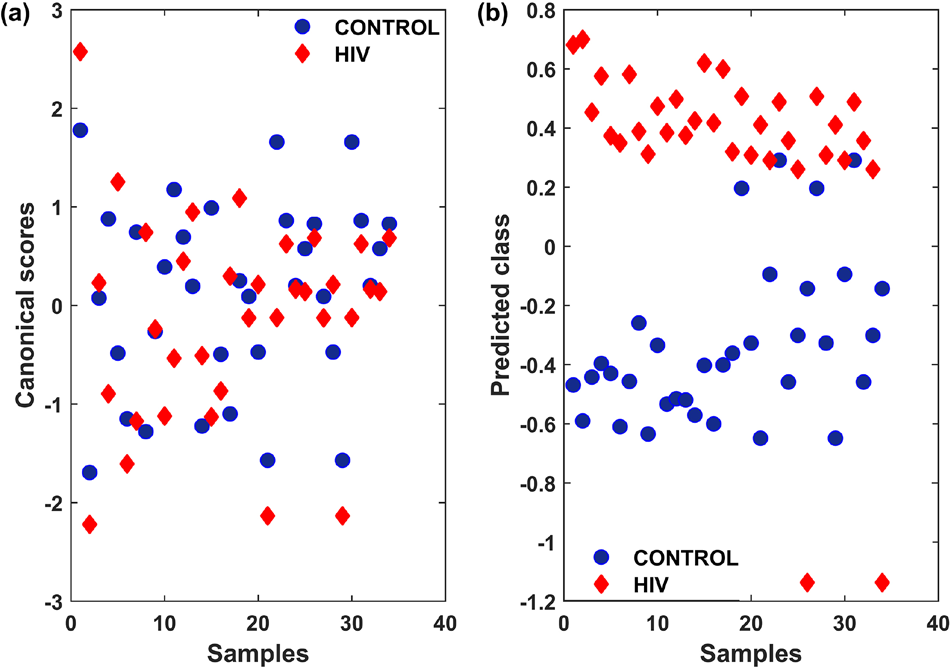
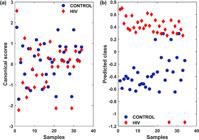
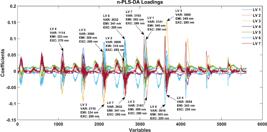
The risk of vertical transmission of the human immunodeficiency virus (HIV), the major concern among pregnant women living with the virus, can be reduced through early diagnosis and initiation of antiretroviral therapy (ART). Although conventional tests used for HIV diagnosis are effective, they are labor-intensive and costly, highlighting the need for faster and more accessible methods. In this study, fluorescence spectroscopy in excitation-emission matrix (EEM) combined with multiway analysis techniques was employed as an alternative approach to diagnose HIV in blood plasma samples from 26 uninfected and 26 pregnant women living with HIV. The Tucker3 QDA (Tucker3-quadratic discriminant analysis) and n-PLS-DA (n-way partial least squares discriminant analysis) classification algorithms were applied, and their performances were assessed based on figures of merit: accuracy, sensitivity, specificity, F-score, and G-score The n-PLS-DA model achieved the best classification performance, with 81.25% accuracy, 87.50% sensitivity, 75.00% specificity, 80.77% F-score, and 81.07% G-score. These results demonstrate the potential of the proposed method as a rapid, simple, and low-cost alternative for HIV screening during pregnancy.
Keywords:
EEM; multi-way; Tucker3-QDA; n-PLS-DA; HIV
 Thumbnail
 Thumbnail
 Thumbnail
 Thumbnail
 Thumbnail