
 Skin microcirculation and hypertension: is there a connection?
Abstract
Introduction: Hypertension is an important risk factor for myocardial infarction, stroke, peripheral arterial disease, and chronic kidney disease. The World Health Organization has determined that approximately 1.28 billion adults worldwide have high blood pressure. Its definition has changed over the years, and in 2017 the American College of Cardiology and the American Heart Association have defined blood pressures ≥ 130/80 mmHg as hypertension.
Methods: The PubMed database was searched using the MeSH terms sodium, capillary resistance, hypertension, and microvascular rarefaction to identify articles relevant to skin sodium levels, peripheral circulations and vascular rare fraction, and hypertension.
Results: Experimental animal and human studies indicate that there are fewer capillaries and arterioles in patients with primary hypertension, and decreased density, also known as rarefaction, increases peripheral resistance. Microvascular density can be estimated noninvasively by methods such as intravital video microscopy in cutaneous regions or in nailfolds. The mechanisms of the reduction in density have been studied and could be used as a parameter when evaluating therapeutic options for patients. The skin provides a reservoir for sodium and can help moderate fluctuations in blood pressure associated with changes in sodium intake. In addition, the skin can modulate fluid volumes in the body through transepidermal water loss.
Conclusions: This review discusses microvascular rarefaction, changes in microvasculature structure including the skin capillaries with hypertension, the association between sodium and skin physiology relevant to hypertension, transepidermal water loss, and the vascular effects associated with some antihypertensive medications that help explain their benefit in the prevention of cardiovascular events.
Keywords:
Sodium; Capillary Resistance; Hypertension; Microvascular Rarefaction
Resumo
Introdução: Introdução: Hipertensão é fator de risco importante para infarto do miocárdio, acidente vascular cerebral, doença arterial periférica e doença renal crônica. A OMS estimou que, globalmente, aproximadamente 1,28 bilhão de adultos apresentam hipertensão. Sua definição mudou ao longo dos anos e, em 2017, o American College of Cardiology e a American Heart Association definiram pressão arterial ≥ 130/80 mmHg como hipertensão.
Métodos: Realizou-se pesquisa no banco de dados PubMed utilizando os descritores MeSH “sódio”, “resistência capilar”, “hipertensão”, “rarefação microvascular” para identificar artigos relevantes sobre níveis de sódio na pele, circulações periféricas e rarefação vascular, hipertensão.
Resultados: Estudos experimentais em animais e humanos indicam que há menos capilares e arteríolas em pacientes com hipertensão primária, e a redução da densidade, também conhecida como rarefação, aumenta a resistência periférica. A densidade microvascular pode ser estimada de forma não invasiva por métodos como microscopia intravital por vídeo em regiões cutâneas ou pregas ungueais. Os mecanismos da redução da densidade foram estudados e podem ser usados como parâmetro na avaliação de opções terapêuticas. A pele fornece um reservatório de sódio e pode ajudar a moderar flutuações na pressão arterial associadas a mudanças na ingestão de sódio. Ademais, pode modular volumes de fluido no corpo pela perda de água transepidérmica.
Conclusões: Esta revisão discute rarefação microvascular, alterações na estrutura da microvasculatura, incluindo capilares da pele com hipertensão, associação entre sódio e fisiologia da pele relacionada à hipertensão, perda de água transepidérmica e efeitos vasculares de alguns medicamentos anti-hipertensivos que contribuem para explicar seus benefícios na prevenção de eventos cardiovasculares.
Descritores:
Sódio; Resistência Capilar; Hipertensão; Rarefação Microvascular
Introduction
One in every two people older than 20 years in the United States has hypertension, and only 39.6% of hypertensive patients on medications has well-controlled blood pressure1. Multiple factors contribute to the development of and are associated with hypertension; these include the autonomic nervous system, the renin-angiotensin-aldosterone system, the vasopressin system, and environmental factors, such as salt intake and stress. Initial events likely involve the microcirculation; chronic increases in blood pressure develop secondary to changes in the microcirculation, including vasoconstriction, tissue hypoxia, and reduced arteriolar and capillary density. These events increase peripheral vascular resistance, which can cause tissue injury, starting with microvascular adaptations leading to organ damage2. The skin contains small arterioles and venules and non-osmotic sodium, and patients with hypertension have higher levels of skin sodium storage measured with sodium-23 magnetic resonance imaging (23Na-MRI)3,4. Consequently, studies on the skin microcirculation and its sodium levels can provide both insights and opportunities to study hypertension. Key findings on these mechanisms are summarized in Chart 1.
Microvascular rarefaction is a term that refers to the increase in peripheral resistance as a consequence of a decrease in the number of vessels in the microcirculation (arterioles and capillaries) per unit of tissue volume5. Direct intravital capillary video microscopy, which measures erythrocytes inside capillaries, provides a reliable and dynamic method to study skin capillaries. Several procedures have been used to study the nonperfused capillaries; for example, venous congestion increases the maximal capillary density and allows anatomic study of capillaries6. Studies with intravital video microscopy have demonstrated a 15% to 20% reduction in capillary density in nail-folds of patients with hypertension7. Prasad and colleagues used intravital fluorescein angiography and found a 20% reduction in capillary density in the forearm skin of hypertensive participants compared with normotensive participants8. This review will discuss the associations among microcirculation in the skin, sodium storage in the skin, and hypertension.
Skin and Sodium
The skin has two layers, the epidermis and the dermis. The dermis is an acellular layer containing fibroblasts, blood vessels, lymphatics, and nerves in an extracellular matrix of collagen, elastin, and GAGs (Figure 1). Most of the vessels are located in the papillary dermis 1 to 2 mm below the epidermal surface. The arterioles in the dermis have a diameter that ranges from 17 to 26 µm. GAGs in the dermis can bind sodium and provide non-osmotic storage of sodium in the interstitium due to highly negative charges9. Studies by Titze and colleagues suggested that in normal conditions, sodium binds to negatively charged GAGs in the dermal interstitium with no water retention. They found that skin sodium levels can increase up to 180–190 mmol/L without the expected increase in water content10. High concentrations of sodium increase GAG synthesis, extend the storage capacity of sodium, and facilitate the buffering system to avoid changes in systemic blood pressure10. But in conditions of high salt loading, the normal sodium-binding capacity of GAGs may be exceeded, and this causes interstitial hypertonicity. The skin interstitium’s role in sodium storage can contribute to blood pressure regulation11.
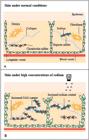
Schematic representation of sodium on the skin. Panel A shows normal conditions where GAGs such as chondroitin sulfate and heparan sulfate bind to sodium in the dermal interstitium. Panel B shows the increase in sodium content from sodium accumulation, an increase in the GAG content and synthesis as well as a decrease in blood vessel density. Additional changes include a decrease in VEGF-C levels, which limits lymphangiogenesis and possibly affects lymph vessel density. Created by JF.
An increase in sodium load can cause several changes in this skin, and these include a decrease in blood vessel density12,13, an increase in sodium accumulation10,14,15,16,17, an increase in GAG content10,15,16, and increased inflammatory cell influx and lymph vessel density16–18. The skin interstitium may contribute to the pathogenesis of primary hypertension; this occurs when there are decreased levels of vascular endothelial growth factor-C (VEGF-C) in hypertensive patients, which limits lymphangiogenesis and reduces the protective function of the skin lymphatic system, which transfers electrolytes and water out of the skin19.
Chachaj and colleagues enrolled 131 patients who underwent skin biopsies before abdominal surgery20. The primary groups in this study were based on their arterial hypertension classification, and the secondary groups were based on sodium concentration in the skin. In both primary groups (i.e., increased blood pressure and normal blood pressure), there were no differences in sodium concentration in the skin, and this result differed from previous findings in which patients with hypertension had high sodium levels and lymphatic vessel density in the skin19. The authors suggested that patients with hypertension and high sodium levels have an interstitial buffering system in the skin with the following characteristics; it is saturated with sodium and water, has increased activation of transcription factor NFAT5 (nuclear factor of activated T cells 5) and VEGF-C pathways, and has increased lymphatic vessel density in the skin due to lymphangiogenesis. All of these events can occur in salt-sensitive hypertension.
Selvarajah et al. placed 48 healthy subjects on either a low sodium diet (70 mmol of sodium per day) or a high sodium diet (200 mmol of sodium per day) for 7 days17. Skin sodium and potassium concentrations were measured in biopsies and expressed as milligrams per gram of wet tissue. Sodium levels were 2.91 ± 0.08 mg/g tissue on the low sodium diet group and 3.12 ± 0.09 mg/g tissue on the high sodium diet group. Women but not men on the high sodium diet had a significant increase in mean blood pressure. There were no changes in mean VEGF-C levels in either men or women on the high sodium diet group compared to the low sodium diet group. However, there was a positive correlation between VEGF-C serum levels and the skin sodium to potassium ratio. These results suggest that the skin can buffer increased dietary sodium intake in men but not in women and that dietary sodium levels can influence vessel formation in the skin.
The following sections discuss rarefaction in the microcirculation in more detail.
Changes in Microvascular Structure
The renin-angiotensin-aldosterone and the endothelin systems can cause endothelial dysfunction and vascular remodeling in vascular diseases and in aging. These events develop due to production of reactive oxygen species (ROS), inflammation, and cell growth and help explain the development of disorders in the vascular network21.
Both macro- and microcirculations have been studied in hypertension, and the term cross-link helps explain the effects of one circulation on the other22. Damage in vessels will vary based on their size; for example, small arteries will have functional defects, such as vasoconstriction and impaired vasodilatation, and structural defects like inward eutrophic remodeling. In large arteries, stiffening increases central systolic and pulse pressures, which are further enhanced by wave reflections due to structural adaptations in small resistance arteries23. Park and Schiffrin found that small artery remodeling is frequent and perhaps the earliest form of damage to target organs in patients with mild primary hypertension24.
Alterations in microcirculation may be initially related to increases in blood pressure during early morning hours, a period during sleep that is associated with an increased incidence of cardiovascular events25. Studies have demonstrated that in patients with primary hypertension, resistance arteries have increased media thickness and decreased lumen and external diameter resulting in an increased media-to-lumen ratio, but no change in total wall tissue, as shown by unchanged media cross-sectional area resulting in eutrophic remodeling. This results in a rearrangement of the same quantity of vessel wall components around a smaller vessel lumen without net cell growth26.
Microvascular Rarefaction
Based on the work of several investigators, skin capillary rarefaction and reduction in the density of capillaries have been associated with hypertension8,13,27. Rarefaction is structural in origin and related to either impaired angiogenesis or capillary attrition. It is believed that these changes increase blood pressure by altering peripheral vascular resistance causing capillaries to gradually sustain damage and accumulate toxic reactive oxygen species27,28.
Microvascular rarefaction can contribute to the increase in peripheral vascular resistance in hypertensive subjects, and several factors have been investigated29. Two different types of rarefaction have been found (Figure 2); functional rarefaction of microvessels is the result of vasoconstriction, secondary to reduced levels of nitric oxide (NO) or growth factors, such as growth hormone (GH), vascular endothelial growth factor (VEGF), and insulin-like growth factor 1 (IGF1), or increased levels of endogenous vasoconstrictors (e.g., endothelin and prostaglandins), or increased sympathetic tone. Structural rarefaction is due to a loss of vessels in a vascular network and can occur due to chronic vasoconstriction and loss of perfusion, reduced levels of vascular growth factors, or inadequate angiogenesis. Structural rarefaction of capillaries and arterioles was detected in young spontaneously hypertensive rats before the elevation of blood pressure and in humans before the development of primary hypertension27,28,29,30.
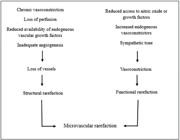
Representation of the factors involved in the development of microvascular rarefaction either due to factors related to structural rarefaction or those related to functional rarefaction.
Capillary rarefaction has also been studied with measurements of the retinal vasculature and retinal capillary flow. Patients with hypertension in early stages have lower retinal capillary density than normotensive subjects. Moreover, capillary rarefaction is increased in patients with chronic hypertension31. Therefore, widespread systemic microvascular rarefaction can be an important characteristic of early hypertension; in addition, current information suggests that capillary density can be an early factor in end-organ damage in hypertensive patients.
He et al. reported that in hypertensive patients, a modest reduction in salt intake improves dermal capillary density measured by capillaroscopy at the dorsa and sides of the fingers in a 12-week randomized double-blind crossover trial13. This occurred in different racial groups, including White, Black, and Asian patients, suggesting that salt intake is uniformly linked to microvascular rarefaction. The exact mechanisms on how salt affects the microcirculation remains uncertain, but experimental studies with rats suggest that salt intake increases hormonal vasoreactivity in the skin, possibly increasing the total peripheral resistance and causing blood pressure surges in those with salt-sensitive hypertension, which supports a possible relationship with osmotically inactive sodium accumulation32.
Transepidermal Water Loss
The skin can transfer water to the environment by evaporation from its surface and through sweat glands. The outer layer of the epidermis controls the transcutaneous water loss, and the movement of water across the skin surface is controlled by flattened corneocytes that are surrounded by hydrophobic bilaminar lipids33, which include ceramides, cholesterol, and free fatty acids. This water loss can be measured with an open chamber device, an unventilated chamber device, or a condenser chamber device. Water loss depending on the skin area and is higher on the palms, soles, and axillae. It is increased with skin trauma and certain skin disorders such as atopic dermatitis.
Chen et al. measured sweat gland secretion and transepidermal water loss in patients with hypertension34. Skin biopsies were taken to determine sodium content. In addition, VEGF and hemoglobin in the skin were investigated as indices of skin micro circulation There was a positive correlation between sodium concentration in sweat and its concentration in the skin and between sodium concentration in sweat and age, but a negative correlation between sweat sodium and diastolic blood pressure. There was a positive correlation between the transepidermal water loss and sweat volume and between transepidermal water loss and surrogate measures for skin microvasculature based on VEGF-C levels and skin hemoglobin content. These results suggest that the skin participates in both fluid and sodium homeostasis, and changes in these functions potentially contribute to the development of hypertension.
Ogura et al. measured urinary concentration ability, body sodium/water balance, blood pressure, and transepidermal water loss in spontaneous hypertensive rats35. Spontaneous hypertension rats had significantly higher urine volume and lower urine osmolality. However, there was no significant difference between these rats and control rats in water intake, urinary electrolyte excretion, and plasma osmolarity. Spontaneously hypertensive rats had significantly higher blood pressure and skin sodium content but lower transepidermal water loss than control rats. Increased body temperature in spontaneous hypertensive rats increased total transepidermal water loss and significantly decreased blood pressure. These results suggest that decreased skin water loss can compensate for increased renal water loss. These changes are associated with vasoconstriction and hypertension. Consequently, understanding hypertension requires information about both renal function and skin function in terms of volume control and sodium storage.
Therefore, the skin can help regulate volume and potentially works in a reciprocal manner with the kidney36. For example, if urine output increases, the skin will decrease transepidermal water loss. Peripheral vasoconstriction decreases water loss through the skin but also increases blood pressure. Consequently, the skin contributes to normal physiology, potentially provides compensatory responses in patients with renal disease, and can contribute to the development and maintenance of hypertension. Sodium is stored in the interstitium of the skin, and this can be detected by 23Na-MRI magnetic resonance imaging. Sodium storage involves extracellular binding to GAG, and low storage levels in the skin does not result in an increase in tonicity. However, at high sodium levels there may be increased tonicity and increased fluid volumes in the skin. The exact details of skin sodium storage likely depend on sodium level in the skin, its thickness and lymphatic function. Understanding the contribution of transepidermal water loss to blood pressure control and volume control requires information about the regional distribution of transepidermal water loss, skin health, and factors that stimulate or inhibit water loss.
Vascular Effects of Antihypertensive Drug Therapy
Antihypertensive drugs, such as dihydropyridine calcium channel blockers and renin-angiotensin system inhibitors (ACE inhibitors and angiotensin II receptor blockers), can prevent and decrease large artery stiffening and reverse microvascular remodeling37,38. These drugs improve microvascular structure and consequently reduce the media-to-lumen ratio; diuretics and beta-blockers do not alter the microvasculature38,39,40. Clinical studies have demonstrated that long term antihypertensive treatment increases capillary density in the skin of hypertensive patients without diabetes. The effects of angiotensin converting enzyme inhibition are mediated by activation of the bradykinin pathway, which stimulates VEGF formation and increases NO bioavailability41.
De Ciuceis and colleagues compared the effects of two drug combinations (lercanidipine + enalapril vs. lercanidipine + hydrochlorothiazide) on structural alterations in retinal arterioles, on skin capillary density, and on large artery distensibility in two small cohorts42,43. The capillary density increased only after treatment with lercanidipine + enalapril. The authors concluded that treatment with lercanidipine and enalapril for 24 weeks improves retinal arteriole structure and increases total capillary density and suggested that additional cohorts should be studied to validate their results. They believe that the hemodynamic and antioxidant effects of the medications could explain the positive effects on large arteries and on the structural alterations of retinal arterioles and capillaries. These drugs inhibit the mechanisms most likely involved in the intravascular stiffening and small artery remodeling, which include increased activity of the renin-angiotensin system, matrix metalloproteinases, intracellular signaling, and extracellular matrix formation44.
Zheleznyh et al. studied the effects of a fixed combination of an ACE inhibitor and diuretic on structural-functional parameters of the heart and vessels and on cognitive function. They used photoplethysmography and video capillaroscopy to evaluate the function and structure of capillaries in the fingers and found improved endothelial function of middle caliber arteries and microcirculatory vascular bed (p < 0.00005), increased density of skin capillary network at rest (p < 0.00007), and better cognitive function (p < 0.0001)45.
These studies and their methods provide an opportunity to understand the effect of antihypertensive medications on the microcirculation and raise the possibility that these changes in the microcirculation can function as a surrogate predictor of future cardiovascular events. Replication of these trials using larger study groups is needed to support the cross-link concept between the micro- and macrocirculations.
Discussion
Ongoing research indicates that the skin functions as a third compartment of sodium distribution with a dynamic capacity for sodium storage and a buffering system that can vary based on salt consumption. The term salt-sensitivity has been used to identify subjects with changes of blood pressure with salt intake. The association between skin sodium content and blood pressure based on clinical and experimental studies is still controversial due to the mixed results36. Some studies report that skin sodium accumulation is associated with water retention and not with hypertonicity46,47, but other studies report that sodium accumulation is associated with hypertonicity and no water retention3,4,18,48,49.
Independent of factors associated with increased blood pressure, both functional and structural changes in systemic vasculature develop during established hypertension and involve both the micro- and macrovasculature. The supply of oxygen, nutrients, and metabolites occurs mostly in the microcirculation, which includes resistance arterioles, capillaries, and venules50. Changes such as an increased media-to-lumen ratio of small resistance arteries and increase vascular resistance are an initial adaptive response to hemodynamic load. The diameter and structure of small resistance arteries vary with fluctuations in blood pressure and flow patterns30; these variations are affected when microvascular rarefaction is present since this may affect not only peripheral vascular resistance but also muscle perfusion and metabolism51. It has been suggested that changes in the microvasculature can damage target organs secondary to increased hemodynamic load in hypertension52,53 and may be a predictor of future cardio-cerebrovascular events and complications secondary to hypertension26.
It is still uncertain how the accumulation of sodium in the skin can influence cutaneous blood flow and transepidermal water loss36. Jung and colleagues found that changes in the microcirculation occur first in nearly 93% of patients with a diagnosis of primary hypertension, long before organ dysfunctions become clinically apparent. Their findings show that the earliest disorders were discovered in skin capillaries and subsequently in the retina and the skeletal muscle50. An experimental study found a relationship among the precapillary skin arterioles of rats and high salt intake that explained the development of an increased hormonal vasoreactivity to angiotensin II. This up-regulation of hormonal sensitivity creates increased peripheral vascular resistance and thus increased afterload on the left ventricle54.
Recent studies demonstrate that patients benefit from a combination of antihypertensive medications, and have an improvement in their microcirculation, e.g., changes in the skin density measured by intravital microscopy. Stabilization of the small resistance artery structure occurs in hypertensive patients with long-term and effective therapy with either ACE inhibitors, angiotensin II receptor blockers, or calcium channel antagonists. Studies in patients with diabetes provide similar outcomes55. This promising information can help clinicians understand one of the most common clinical disorders worldwide and potentially determine which patients require close follow up and regular assessment of their treatments. Continued research with more participants is important to understand the pathogenesis and treatment of hypertension.
The skin also helps modulate body fluid levels through transepidermal water loss. This process depends on skin health, skin age, and the distribution of blood flow to the skin. There is limited information on the effect of antihypertensive medications on this physiological activity, and prospective studies in patients on these medications, especially in patients with chronic renal disease, could help explain responses to drug treatment in patients with hypertension.
Conclusions
The structure of small arteries has been established as the best predictor of cardiovascular events in both primary and secondary hypertension. Recent studies led to a better understanding of the importance of the skin in blood pressure regulation. The development of skin capillary rarefaction has been studied in patients with primary hypertension, not only in the established phase, but also in early phases of hypertension when there are irregular elevations of blood pressure. This phenomenon can reduce the blood supply to the affected areas, leading to a decrease in the delivery of oxygen and nutrients and in the removal of metabolic waste. These changes denote an early phase in hypertension-mediated organ damage and could eventually cause angina, stroke, and renal dysfunction. Furthermore, microcirculation analysis provides a method for monitoring the beneficial effects of antihypertensive medications. Well-designed controlled studies with larger populations, including different ethnicities, are required since they could determine if different antihypertensive combinations have different effects on microcirculatory responses.
Data Availability
All information in this review was collected from the references used for this review.
References
-
1. Chobufo MD, Gayam V, Soluny J, Rahman EU, Enoru S, Foryoung JB, et al. Prevalence and control rates of hypertension in the USA: 2017–2018. Int J Cardiol Hypertens. 2020;6:100044. doi: http://doi.org/10.1016/j.ijchy.2020.100044. PubMed PMID: 33447770.
» https://doi.org/10.1016/j.ijchy.2020.100044 - 2. de Moraes R, Tibirica E. Early functional and structural microvascular changes in hypertension related to aging. Curr Hypertens Rev. 2017;13(1):24–32. PubMed PMID: 28412915.
- 3. Kopp C, Linz P, Wachsmuth L, Dahlmann A, Horbach T, Schöfl C, et al. Na magnetic resonance imaging of tissue sodium. Hypertens. 2012;59(1):167–72. PubMed PMID: 22146510.
-
4. Kopp C, Linz P, Dahlmann A, Hammon M, Jantsch J, Müller DN, et al. 23Na magnetic resonance imaging-determined tissue sodium in healthy subjects and hypertensive patients. Hypertension. 2013;61(3):635–40. doi: http://doi.org/10.1161/HYPERTENSIONAHA.111.00566. PubMed PMID: 23339169.
» https://doi.org/10.1161/HYPERTENSIONAHA.111.00566 -
5. Debbabi H, Uzan L, Mourad JJ, Safar M, Levy BI, Tibiriçà E. Increased skin capillary density in treated essential hypertensive patients*. Am J Hypertens. 2006;19(5):477–83. doi: http://doi.org/10.1016/j.amjhyper.2005.10.021. PubMed PMID: 16647618.
» https://doi.org/10.1016/j.amjhyper.2005.10.021 - 6. Antonios TF, Rattray FE, Singer DR, Markandu ND, Mortimer PS, MacGregor GA. Maximization of skin capillaries during intravital video-microscopy in essential hypertension: comparison between venous congestion, reactive hyperaemia and core heat load tests. Clin Sci (Lond). 1999;97(4):523–8. PubMed PMID: 10491353.
-
7. Gasser P, Bühler FR. Nailfold microcirculation in normotensive and essential hypertensive subjects, as assessed by video-microscopy. J Hypertens. 1992;10(1):83–6. doi: http://doi.org/10.1097/00004872-199201000-00013. PubMed PMID: 1312555.
» https://doi.org/10.1097/00004872-199201000-00013 -
8. Prasad A, Dunnill GS, Mortimer PS, MacGregor GA. Capillary rarefaction in the forearm skin in essential hypertension. J Hypertens. 1995;13(2):265–8. doi: http://doi.org/10.1097/00004872-199502000-00015. PubMed PMID: 7615958.
» https://doi.org/10.1097/00004872-199502000-00015 -
9. Wiig H, Luft FC, Titze JM. The interstitium conducts extrarenal storage of sodium and represents a third compartment essential for extracellular volume and blood pressure homeostasis. Acta Physiol (Oxf). 2018;222(3):e13006. doi: http://doi.org/10.1111/apha.13006. PubMed PMID: 29193764.
» https://doi.org/10.1111/apha.13006 -
10. Titze J, Shakibaei M, Schafflhuber M, Schulze-Tanzil G, Porst M, Schwind KH, et al. Glycosaminoglycan polymerization may enable osmotically inactive Na+ storage in the skin. Am J Physiol Heart Circ Physiol. 2004;287(1):H203–8. doi: http://doi.org/10.1152/ajpheart.01237.2003. PubMed PMID: 14975935.
» https://doi.org/10.1152/ajpheart.01237.2003 -
11. Jhee JH, Park HC, Choi HY. Skin Sodium and blood pressure regulation. Electrolyte Blood Press. 2022;20(1):1–9. doi: http://doi.org/10.5049/EBP.2022.20.1.1. PubMed PMID: :36451714.
» https://doi.org/10.5049/EBP.2022.20.1.1 - 12. Wenstedt EFE, Olde Engberink RHG, Vogt L. Sodium Handling by the Blood Vessel Wall: Critical for Hypertension Development. Hypertens. 2018;71(6):990–6. PubMed PMID: 29661837.
- 13. He FJ, Marciniak M, Markandu ND, Antonios TF, MacGregor GA. Effect of modest salt reduction on skin capillary rarefaction in white, black, and Asian individuals with mild hypertension. Hypertens. 2010;56(2):253–9. PubMed PMID: 20585106.
-
14. Titze J, Lang R, Ilies C, Schwind KH, Kirsch KA, Dietsch P, et al. Osmotically inactive skin Na+ storage in rats. Am J Physiol Renal Physiol. 2003;285(6):F1108–17. doi: http://doi.org/10.1152/ajprenal.00200.2003. PubMed PMID: 12888617.
» https://doi.org/10.1152/ajprenal.00200.2003 - 15. Ivanova LN, Archibasova VK, Shterental’ IS. Sodium-depositing function of the skin in white rats. Fiziol Zh SSSR Im I M Sechenova. 1978;64(3):358–63. PubMed PMID: 648666.
-
16. Machnik A, Neuhofer W, Jantsch J, Dahlmann A, Tammela T, Machura K, et al. Macrophages regulate salt-dependent volume and blood pressure by a vascular endothelial growth factor-C-dependent buffering mechanism. Nat Med. 2009;15(5):545–52. doi: http://doi.org/10.1038/nm.1960. PubMed PMID: 19412173.
» https://doi.org/10.1038/nm.1960 -
17. Selvarajah V, Mäki-Petäjä KM, Pedro L, Bruggraber SFA, Burling K, Goodhart AK, et al. Novel mechanism for buffering dietary salt in humans. Hypertension. 2017;70(5):930–7. doi: http://doi.org/10.1161/HYPERTENSIONAHA.117.10003. PubMed PMID: 28974570.
» https://doi.org/10.1161/HYPERTENSIONAHA.117.10003 -
18. Wiig H, Schröder A, Neuhofer W, Jantsch J, Kopp C, Karlsen TV, et al. Immune cells control skin lymphatic electrolyte homeostasis and blood pressure. J Clin Invest. 2013;123(7):2803–15. doi: http://doi.org/10.1172/JCI60113. PubMed PMID: 23722907.
» https://doi.org/10.1172/JCI60113 -
19. Chachaj A, Pula B, Chabowski M, Grzegrzólka J, Szahidewicz-Krupska E, Karczewski M, et al. Role of the lymphatic system in the pathogenesis of hypertension in humans. Lymphat Res Biol. 2018;16(2):140–6. doi: http://doi.org/10.1089/lrb.2017.0051. PubMed PMID: 29346014.
» https://doi.org/10.1089/lrb.2017.0051 -
20. Chachaj A, Stanimirova I, Chabowski M, Gomulkiewicz A, Hodurek P, Glatzel-Pluciñska N, et al. Sodium accumulation in the skin is associated with higher density of skin lymphatic vessels in patients with arterial hypertension. Adv Med Sci. 2023;68(2):276–89. doi: http://doi.org/10.1016/j.advms.2023.08.001. PubMed PMID: 37639949.
» https://doi.org/10.1016/j.advms.2023.08.001 - 21. Savoia C, Battistoni A, Calvez V, Cesario V, Montefusco G, Filippini A. Microvascular alterations in hypertension and vascular aging. Curr Hypertens Rev. 2017;13(1):16–23. PubMed PMID: 28474545.
-
22. Laurent S, Briet M, Boutouyrie P. Large and small artery cross-talk and recent morbidity-mortality trials in hypertension. Hypertension. 2009;54(2):388–92. doi: http://doi.org/10.1161/HYPERTENSIONAHA.109.133116. PubMed PMID: 19546376.
» https://doi.org/10.1161/HYPERTENSIONAHA.109.133116 -
23. Laurent S, Agabiti-Rosei C, Bruno RM, Rizzoni D. Microcirculation and macrocirculation in hypertension: a dangerous cross-link? Hypertension. 2022;79(3):479–90. doi: http://doi.org/10.1161/HYPERTENSIONAHA.121.17962. PubMed PMID: 34984924.
» https://doi.org/10.1161/HYPERTENSIONAHA.121.17962 -
24. Park JB, Schiffrin EL. Small artery remodeling is the most prevalent (earliest?) form of target organ damage in mild essential hypertension. J Hypertens. 2001;19(5):921-30. doi: http://doi.org/10.1097/00004872-200105000-00013. PubMed PMID: 11393676.
» https://doi.org/10.1097/00004872-200105000-00013 -
25. Rizzoni D, Porteri E, Platto C, Rizzardi N, De Ciuceis C, Boari GEM, et al. Morning rise of blood pressure and subcutaneous small resistance artery structure. J Hypertens. 2007;25(8):1698–703. doi: http://doi.org/10.1097/HJH.0b013e328172dc41. PubMed PMID: 17620968.
» https://doi.org/10.1097/HJH.0b013e328172dc41 -
26. Rizzoni D, Agabiti-Rosei C, Agabiti-Rosei E. Hemodynamic consequences of changes in microvascular structure. Am J Hypertens. 2017;30(10):939–46. doi: http://doi.org/10.1093/ajh/hpx032. PubMed PMID: 28338956.
» https://doi.org/10.1093/ajh/hpx032 -
27. Antonios TF, Singer DR, Markandu ND, Mortimer PS, MacGregor GA. Structural skin capillary rarefaction in essential hypertension. Hypertension. 1999;33(4):998–1001. doi: http://doi.org/10.1161/01.HYP.33.4.998. PubMed PMID: 10205237.
» https://doi.org/10.1161/01.HYP.33.4.998 -
28. Manning D, Rivera EJ, Santana LF. The life cycle of a capillary: mechanisms of angiogenesis and rarefaction in microvascular physiology and pathologies. Vascul Pharmacol. 2024;156:107393. doi: http://doi.org/10.1016/j.vph.2024.107393. PubMed PMID: 38857638.
» https://doi.org/10.1016/j.vph.2024.107393 -
29. Norling AM, Gerstenecker AT, Buford TW, Khan B, Oparil S, Lazar RM. The role of exercise in the reversal of IGF-1 deficiencies in microvascular rarefaction and hypertension. Geroscience. 2020;42(1):141–58. doi: http://doi.org/10.1007/s11357-019-00139-2. PubMed PMID: 31808026.
» https://doi.org/10.1007/s11357-019-00139-2 -
30. Levy BI, Ambrosio G, Pries AR, Struijker-Boudier HA. Microcirculation in hypertension: a new target for treatment? Circulation. 2001;104(6):735–40. doi: http://doi.org/10.1161/hc3101.091158. PubMed PMID: 11489784.
» https://doi.org/10.1161/hc3101.091158 -
31. Bosch AJ, Harazny JM, Kistner I, Friedrich S, Wojtkiewicz J, Schmieder RE. Retinal capillary rarefaction in patients with untreated mild-moderate hypertension. BMC Cardiovasc Disord. 2017;17(1):300. doi: http://doi.org/10.1186/s12872-017-0732-x. PubMed PMID: 29268712.
» https://doi.org/10.1186/s12872-017-0732-x -
32. Helle F, Karlsen TV, Tenstad O, Titze J, Wiig H. High-salt diet increases hormonal sensitivity in skin pre-capillary resistance vessels. Acta Physiol (Oxf). 2013;207(3):577–81. doi: http://doi.org/10.1111/apha.12049. PubMed PMID: 23253180.
» https://doi.org/10.1111/apha.12049 -
33. Alexander H, Brown S, Danby S, Flohr C. Research techniques made simple: transepidermal water loss measurement as a research tool. J Invest Dermatol. 2018;138(11):2295–2300.e1. doi: http://doi.org/10.1016/j.jid.2018.09.001. PubMed PMID: 30348333.
» https://doi.org/10.1016/j.jid.2018.09.001 - 34. Chen JY, Chew KS, Mary S, Boder P, Bagordo D, Rossi GP, et al. Skin-specific mechanisms of body fluid regulation in hypertension. Clin Sci (Lond). 2023;137(3):239–50. PubMed PMID: 36648486.
-
35. Ogura T, Kitada K, Morisawa N, Fujisawa Y, Kidoguchi S, Nakano D, et al. Contributions of renal water loss and skin water conservation to blood pressure elevation in spontaneously hypertensive rats. Hypertens Res. 2023;46(1):32–9. doi: http://doi.org/10.1038/s41440-022-01044-6. PubMed PMID: 36229521.
» https://doi.org/10.1038/s41440-022-01044-6 - 36. Kitada K, Nishiyama A. Potential role of the skin in hypertension risk through water conservation. Hypertens. 2024;81(3):468–75. PubMed PMID: 37942635.
-
37. Safar ME, Rizzoni D, Blacher J, Muiesan ML, Agabiti-Rosei E. Macro and microvasculature in hypertension: therapeutic aspects. J Hum Hypertens. 2008;22(9):590–5. doi: http://doi.org/10.1038/jhh.2008.43. PubMed PMID: 18509346.
» https://doi.org/10.1038/jhh.2008.43 - 38. Agabiti-Rosei E, Heagerty AM, Rizzoni D. Effects of antihypertensive treatment on small artery remodelling. J Hypertens. 2009;27(6):1107–14. PubMed PMID: 19293726.
-
39. Schiffrin EL. Remodeling of resistance arteries in essential hypertension and effects of antihypertensive treatment. Am J Hypertens. 2004;17(12 Pt 1):1192–200. doi: http://doi.org/10.1016/j.amjhyper.2004.05.023. PubMed PMID: 15607629.
» https://doi.org/10.1016/j.amjhyper.2004.05.023 - 40. Rizzoni D, Agabiti-Rosei C, Boari GEM, Muiesan ML, De Ciuceis C. Microcirculation in hypertension: a therapeutic target to prevent cardiovascular disease? J Clin Med. 2023;12(15):4892. PubMed PMID: 37568294.
- 41. Battegay EJ, de Miguel LS, Petrimpol M, Humar R. Effects of anti-hypertensive drugs on vessel rarefaction. Curr Opin Pharmacol. 2007;7(2):151–7. PubMed PMID: 17276727.
-
42. De Ciuceis C, Salvetti M, Rossini C, Muiesan ML, Paini A, Duse S, et al. Effect of antihypertensive treatment on microvascular structure, central blood pressure and oxidative stress in patients with mild essential hypertension. J Hypertens. 2014;32(3):565–74. doi: http://doi.org/10.1097/HJH.0000000000000067. PubMed PMID: 24378999.
» https://doi.org/10.1097/HJH.0000000000000067 - 43. De Ciuceis C, Salvetti M, Paini A, Rossini C, Muiesan ML, Duse S, et al. Comparison of lercanidipine plus hydrochlorothiazide vs. lercanidipine plus enalapril on micro and macrocirculation in patients with mild essential hypertension. Intern Emerg Med. 2017;12(7):963–74. PubMed PMID: 28647890.
- 44. Schiffrin EL. Vascular stiffening and arterial compliance. Implications for systolic blood pressure. Am J Hypertens. 2004;17(12 Pt 2):39S–48S. PubMed PMID: 15607434.
- 45. Zheleznyh EA, Danilogorskaya YA, Privalova EV, Belenkov YN, Schendrygina AA, Pavlov NA, et al. Effect of combined antihypertensive therapy with perindopril and indapamide on morpho-functional parameters of the heart, blood vessels of small and medium caliber in patients with essential hypertension. Kardiologiia. 2016;56(3):19–24. PubMed PMID: 28294884.
- 46. Rossitto G, Mary S, Chen JY, Boder P, Chew KS, Neves KB, et al. Tissue sodium excess is not hypertonic and reflects extracellular volume expansion. Nat Commun. 2020;11(1):4222. PubMed PMID: 32839436.
- 47. Ellison DH, Welling P. Insights into salt handling and blood pressure. N Engl J Med. 2021;385(21):1981–93. PubMed PMID: 34788509.
- 48. Machnik A, Dahlmann A, Kopp C, Goss J, Wagner H, van Rooijen N, et al. Mononuclear phagocyte system depletion blocks interstitial tonicity-responsive enhancer binding protein/vascular endothelial growth factor C expression and induces salt-sensitive hypertension in rats. Hypertens. 2010;55(3):755–61. PubMed PMID: 20142563.
-
49. Nikpey E, Karlsen TV, Rakova N, Titze JM, Tenstad O, Wiig H. High-salt diet causes osmotic gradients and hyperosmolality in skin without affecting interstitial fluid and lymph. Hypertension. 2017;69(4):660–8. doi: http://doi.org/10.1161/HYPERTENSIONAHA.116.08539. PubMed PMID: 28167686.
» https://doi.org/10.1161/HYPERTENSIONAHA.116.08539 - 50. Jung F, Pindur G, Ohlmann P, Spitzer G, Sternitzky R, Franke RP, et al. Microcirculation in hypertensive patients. Biorheology. 2013;50(5–6):241–55. PubMed PMID: 24398607.
- 51. Serné EH, Gans ROB, ter Maaten JC, ter Wee PM, Donker AJM, Stehouwer CDA. Capillary recruitment is impaired in essential hypertension and relates to insulin’s metabolic and vascular actions. Cardiovasc Res. 2001;49(1):161–8. PubMed PMID: 11121808.
- 52. Heagerty AM. Predicting hypertension complications from small artery structure. J Hypertens. 2007;25(5):939–40. PubMed PMID: 17414654.
- 53. Tsioufis C, Dimitriadis K, Katsiki N, Tousoulis D. Microcirculation in hypertension: an update on clinical significance and therapy. Curr Vasc Pharmacol. 2015;13(3):413–7. PubMed PMID: 25659075.
-
54. Kolwelter J, Kannenkeril D, Linz P, Jung S, Nagel AM, Bosch A, et al. The SGLT2 inhibitor empagliflozin reduces tissue sodium content in patients with chronic heart failure: results from a placebo-controlled randomised trial. Clin Res Cardiol. 2023;112(1):134–44. doi: http://doi.org/10.1007/s00392-022-02119-7. PubMed PMID: 36289063.
» https://doi.org/10.1007/s00392-022-02119-7 - 55. Rizzoni D, Agabiti-Rosei E. Structural abnormalities of small resistance arteries in essential hypertension. Intern Emerg Med. 2012;7(3):205–12. PubMed PMID: 21380549.


