 Incidence and risk factors for contrast-induced nephropathy after angioplasty: an observational retrospective study
Background Contrast-induced nephropathy (CIN) is a complication of iodinated contrast media use that can lead to worsening of renal function, increased morbidity and mortality, and the need for renal replacement therapy.
Objectives To evaluate the incidence of CIN after angioplasty and identify associated factors, including variations in creatinine, glomerular filtration rate (GFR), contrast volume, procedure time, and comorbidities.
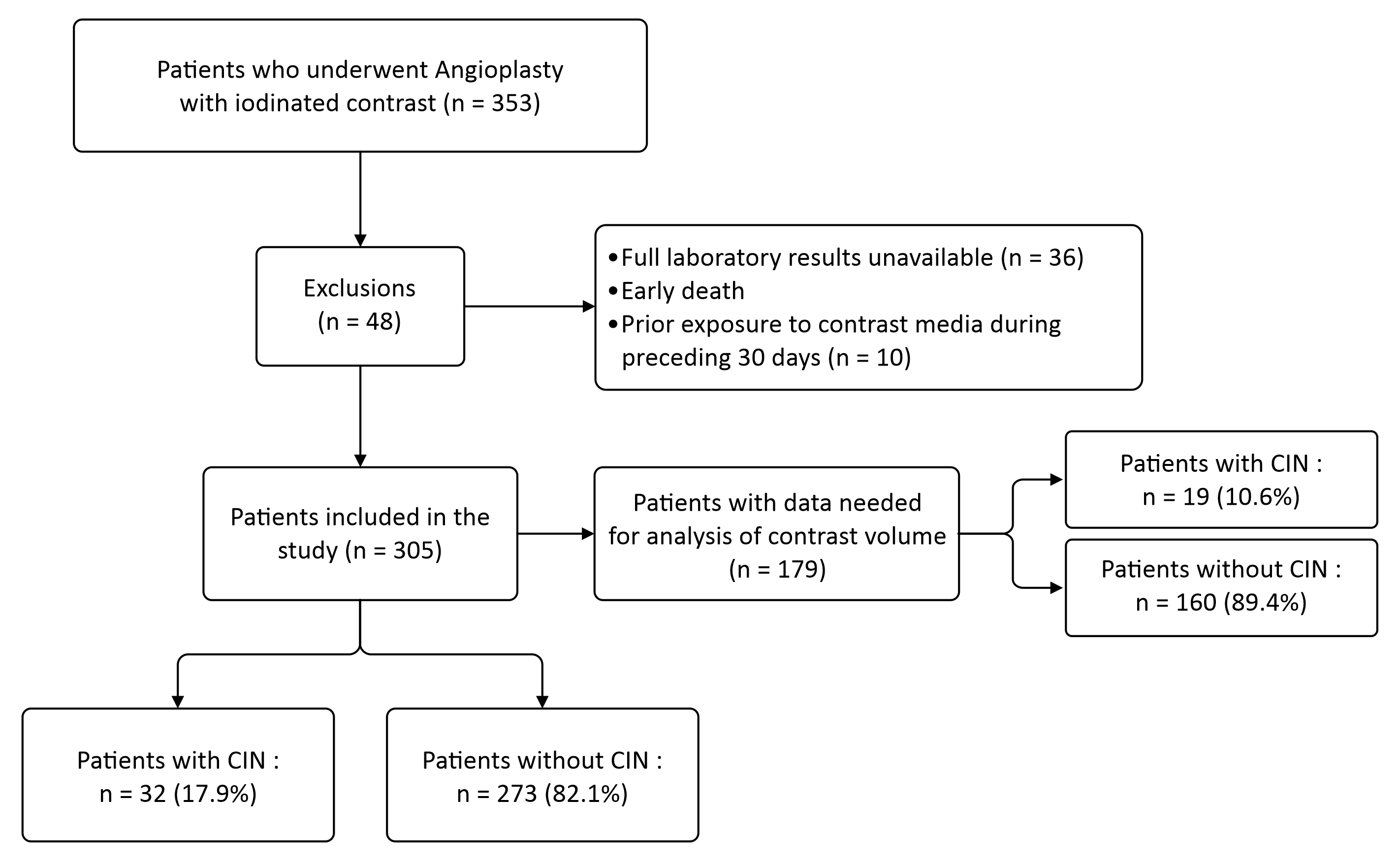
Methods Retrospective study of 305 patients undergoing angioplasty. Clinical and laboratory variables, including serum creatinine and GFR before and after the procedure, were analyzed. CIN was defined as an absolute increase in creatinine ≥ 0.3 mg/dL or a relative increase ≥ 50% within 48 hours. Logistic regression was applied to identify independent predictors.
Results The incidence of CIN was 10.5% (n = 32/305). Patients with CIN showed a significant reduction in GFR (pre: 73.79 ± 22.5 vs. post: 34.32 ± 11.8 mL/min; p < 0.0001) and increased creatinine (pre: 1.12 ± 0.3 vs. post: 1.78 ± 0.6 mg/dL; p < 0.001). CIN was associated with stroke (p = 0.014), peripheral arterial occlusive disease (p = 0.007), diabetes mellitus (p = 0.002), chronic kidney disease (p = 0.005), and heart failure (p = 0.004). Multivariate analysis confirmed DM (OR = 2.45; 95% CI: 1.12–4.38; p = 0.022) as the main risk factor.
Conclusions CIN occurred in 10.5% of patients, with DM, CKD, and HF being the main risk factors. These findings reinforce the importance of monitoring to reduce the impact of CIN and optimize clinical outcomes.
Keywords:
angioplasty; contrast media; acute kidney injury; kidney diseases; risk factors
 Thumbnail