 Use of point-of-care ultrasound in the analysis of arterial abnormalities in people with chronic kidney disease on hemodialysis: a cross-sectional study
Background Individuals with chronic kidney disease (CKD) have twice the risk of peripheral arterial disease (PAD) and are more susceptible to arterial calcification. Diagnosing arterial abnormalities involves a combination of clinical assessment and noninvasive tests. The ankle-brachial index (ABI) is a cost-effective method for assessing arterial abnormalities and predicting mortality. Continuous Doppler ultrasound is the gold standard for ABI assessment due to its greater accuracy, and point-of-care ultrasound (POCUS) enables bedside measurement of this index.
Objectives To analyze the prevalence of arterial abnormalities in individuals undergoing hemodialysis using POCUS.
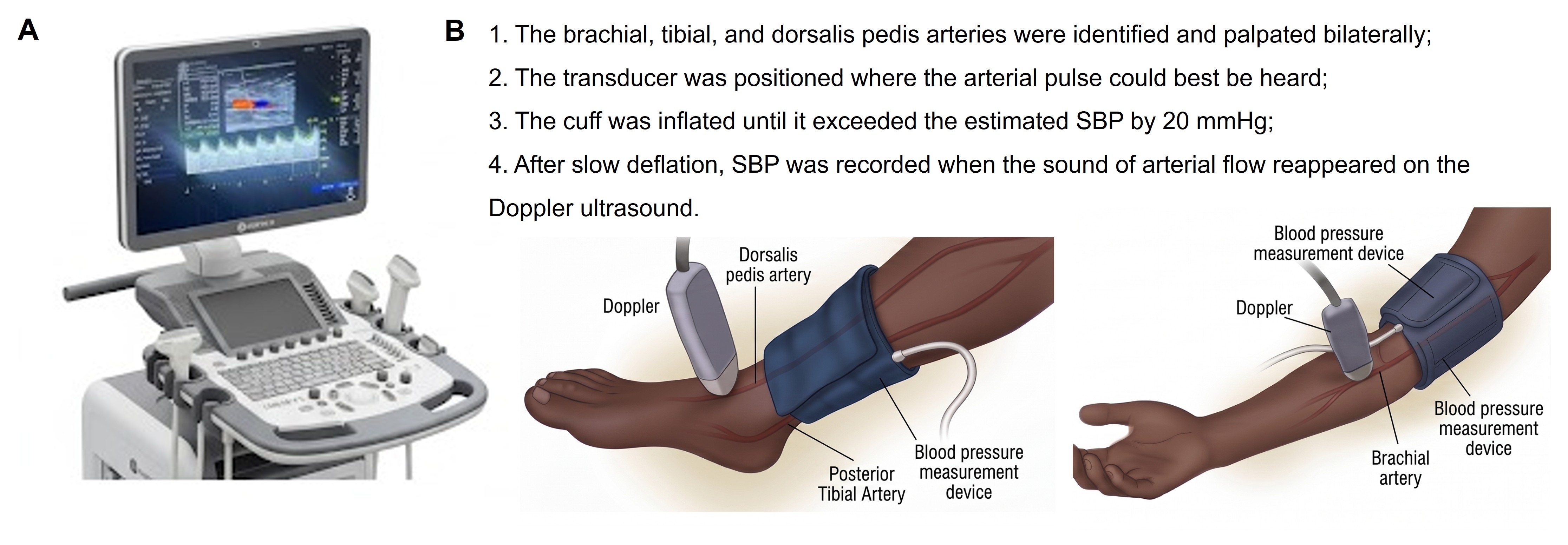
Methods We conducted an observational, analytical, cross-sectional study of 85 patients on hemodialysis, using a clinical and sociodemographic questionnaire and calculating the ABI. The primary outcome was the analysis of the presence of arterial abnormalities through the measurement of ABI using the POCUS method..
Results The prevalence of ABI results suggestive of PAD and arterial calcification was 24.7% and 22.4%, respectively. Diabetes mellitus (p = 0.02) and advanced age (p = 0.01) were identified as the main risk factors for PAD.
Conclusions The POCUS-assisted assessment identified a prevalence of 24.7% for PAD and 22.4% for arterial calcification among patients with CKD. Advanced age and diabetes mellitus were the main risk factors associated with PAD. The data suggest that POCUS is an innovative approach for the bedside diagnosis of arterial abnormalities in patients on hemodialysis.
Keywords:
peripheral arterial disease; ultrasonography; chronic kidney disease; ankle brachial index; hemodialysis
 Thumbnail
 Thumbnail