 The Deanes’ malarias and the antimalarial drugs in 1939 and the 1940s
Abstract
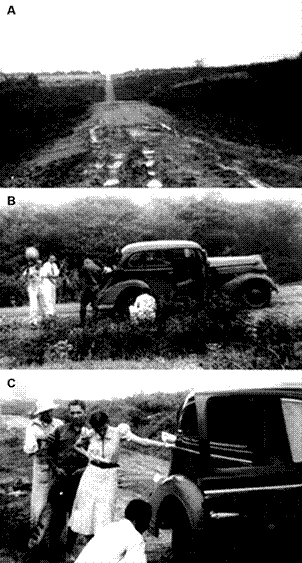
Malaria was one of the main research themes of Leônidas de Mello Deane (1914-1993) and Maria José von Paumgartten Deane (1916-1995), a couple of parasitologists - known among their peers as “the Deanes” - who in the late 1930s and 1940s ventured into areas of the Amazon, where the disease was endemic, and of the northeastern Brazil, where an important epidemic outbreak ecloded. Despite their knowledge of the disease and the adoption of preventive measures, both contracted malaria, he the malignant tertian fever (Plasmodium falciparum) and she the benign form of the disease (Plasmodium vivax). This article describes the circumstances in which they became infected and the evolution and outcome of their malaria. The years subsequent to the period in which they became ill witnessed extraordinary progress in the pharmacological treatment of malaria. The Deanes’ two episodes of malaria are contextualised in relation to the treatment alternatives available at the time and the couple’s suspicions regarding the development of resistance to existing antimalarial drugs in view of the persistence of recurrences of the disease despite treatment.
Key words:
malaria; tropical medicine; parasitology; antimalarial drugs; drug resistance; prophylactic treatment
 Thumbnail
 Thumbnail
 Thumbnail
 Thumbnail
 Thumbnail
 Thumbnail