 Entomo-virological investigation during the epizootic outbreak of sylvatic yellow fever in Rio Grande do Sul, Brazil, between 2021 and 2022
Abstract
BACKGROUND Yellow fever virus (YFV) re-emerged among non-human primates (NHPs) in Rio Grande do Sul in early 2021, more than a decade after its last detection in the state. The spread of the virus was accompanied by increased mortality among NHPs.
OBJECTIVES To conduct entomological surveillance and molecular detection of YFV and other Orthoflavivirus species in mosquito samples collected from affected and potentially receptive areas.
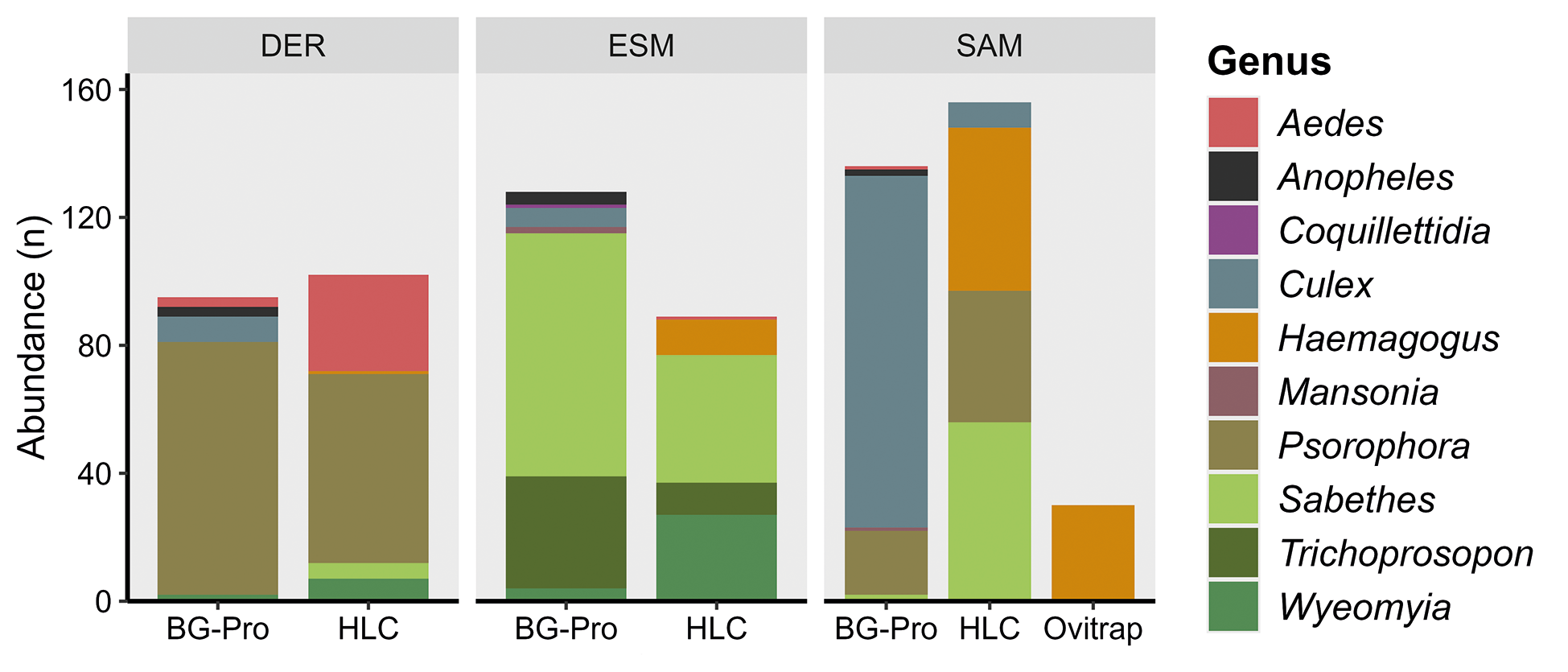
METHODS Mosquitoes were collected during epizootics using human landing catches, BG-Pro traps, and ovitraps. Virus detection was performed using reverse transcription real-time polymerase chain reaction (RT-qPCR) assays targeting YFV and pan-Orthoflavivirus sequences.
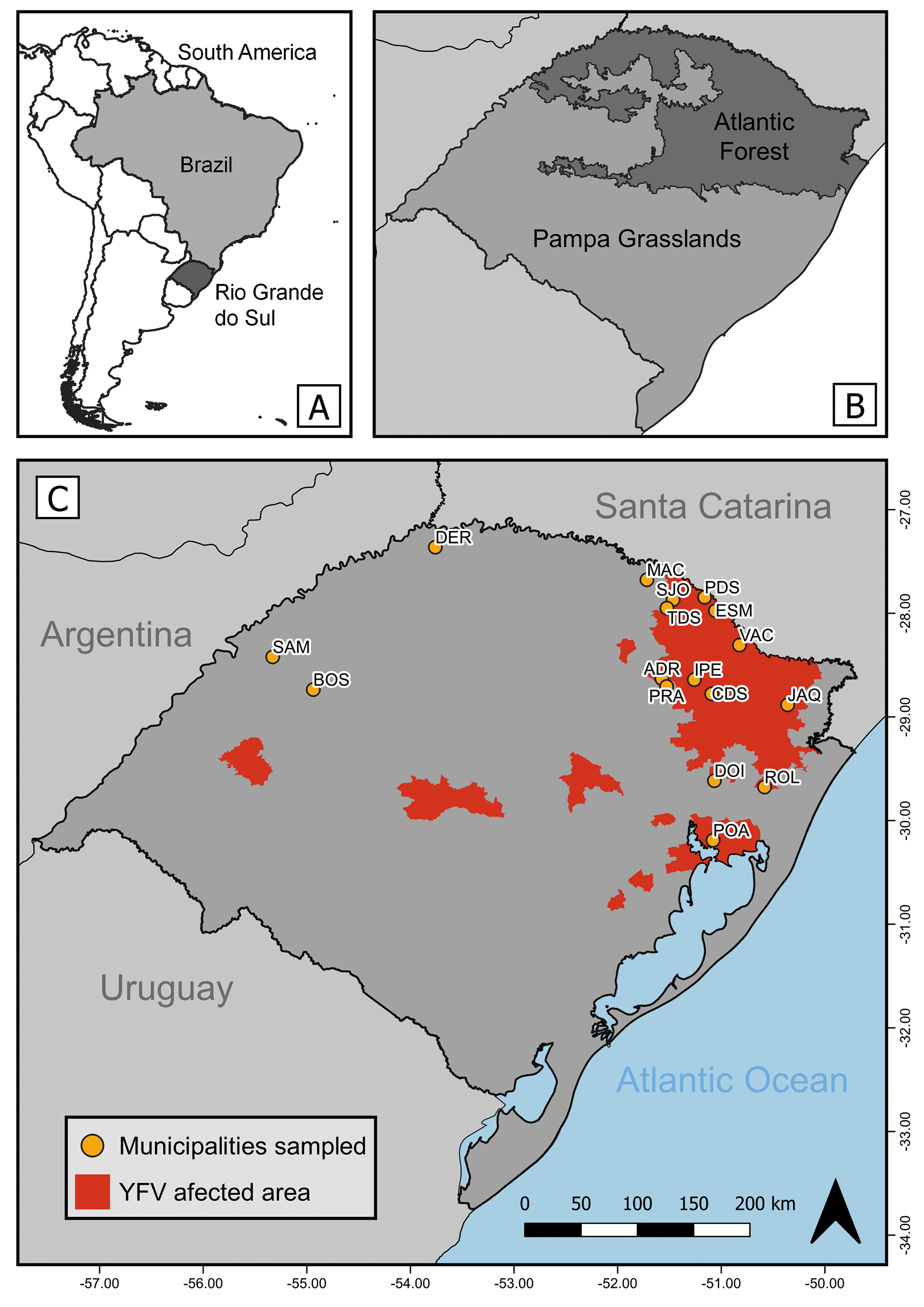
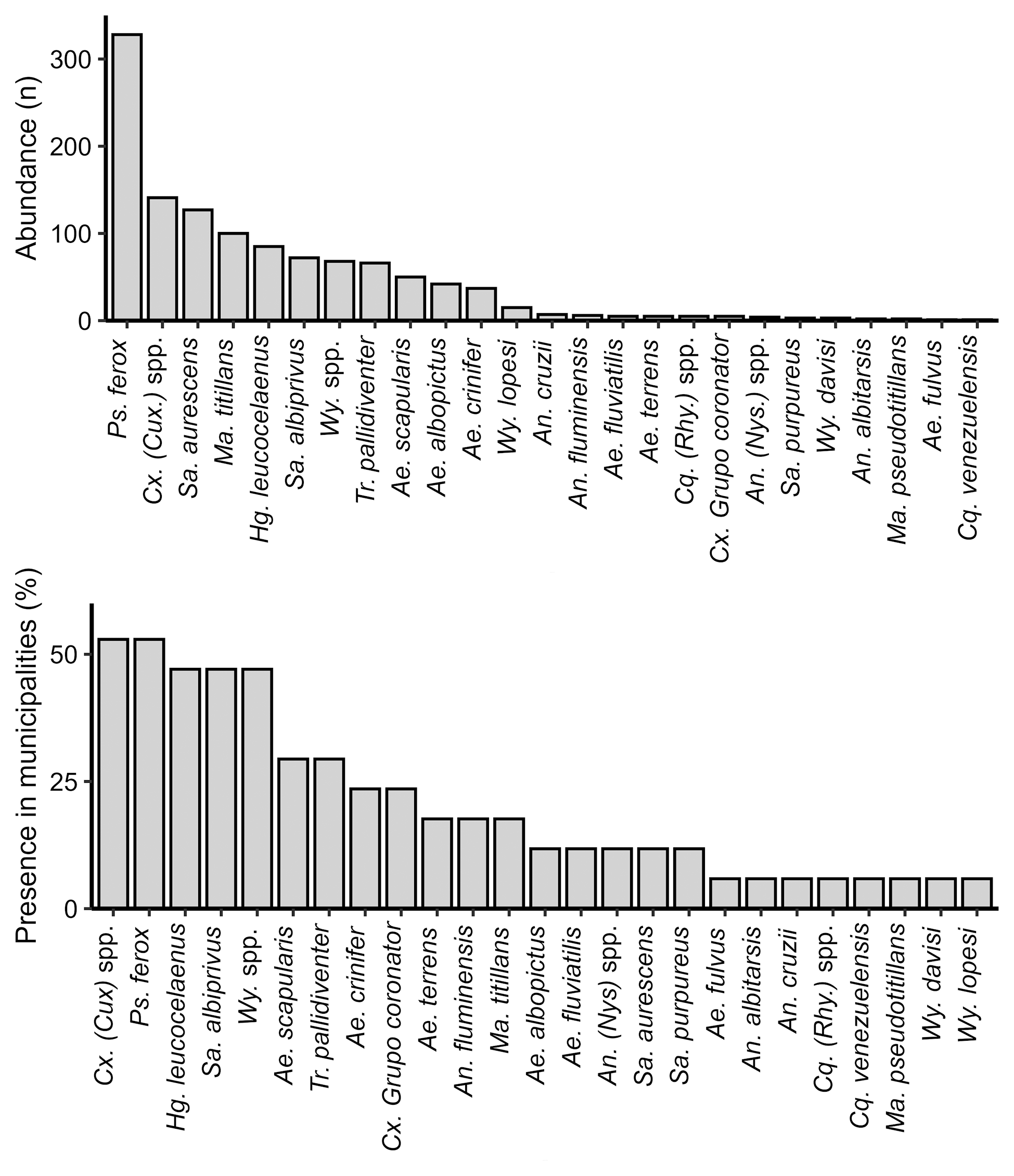
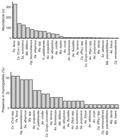
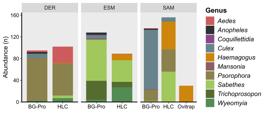
FINDINGS A total of 1,210 mosquitoes, representing 26 taxa, were collected across 17 municipalities. Psorophora ferox was the most abundant species, followed by Culex (Culex) spp., accounting for 27% and 12% of the specimens, respectively. Haemagogus leucocelaenus, the primary YFV vector in the region, was also among the most frequently captured species, representing 7%. In total, 203 mosquito pools were assembled by species, location, and date of collection. RT-qPCR analysis did not detect YFV or other Orthoflavivirus RNA in any of the samples.
MAIN CONCLUSIONS Although mosquitoes were collected during a period of active YFV circulation, the absence of virus detection suggests that arboviral circulation in vector populations may occur at low frequencies, even during outbreaks.
Key words:
yellow fever virus; arboviruses; Culicidae; mosquito vectors; viral zoonosis
 Thumbnail
 Thumbnail
 Thumbnail