
 Can Hantavirus cruise into the next pandemic?
Abstract
Despite concerns arising from a recent ship-associated outbreak on the M/V Hondius cruise, current evidence suggests that Andes virus (ANDV) poses a low pandemic risk. Nevertheless, viral evolution, ecological changes, and reservoir host dynamics could drive future emergence of ANDV, underscoring the need for improved surveillance, diagnostics, therapeutics, and vaccine preparedness.
Key words:
Hantavirus; Andes virus; M/V Hondius
Hantaviruses are part of the family Hantaviridae, which comprises eight genera.1 Among them, viruses associated with human disease belong to the genus Orthohantavirus.2,3 Orthohantaviruses are enveloped, tri-segmented, negative-sense RNA viruses whose genome consists of small (S), medium (M), and large (L) segments encoding the nucleocapsid protein (N), glycoproteins Gn/Gc, and the RNA-dependent RNA polymerase (RdRp), respectively.4,5,6
The two major clinical diseases caused by orthohantaviruses are haemorrhagic fever with renal syndrome (HFRS) and hantavirus pulmonary syndrome/cardiopulmonary syndrome (HPS/HCPS).3,7 HFRS is mainly caused by Asian and European orthohantaviruses, including Hantaan virus, Seoul virus, Puumala virus, and Dobrava virus, and primarily affects the kidneys.2 In contrast, HPS/HCPS is caused by several American orthohantaviruses, including Orthohantavirus sinnonbrenense (Sin Nombre virus; SNV) and Orthohantavirus andesense (Andes virus; ANDV), and is characterised by severe respiratory disease, pulmonary oedema, and cardiovascular compromise.2 Importantly, ANDV-associated HPS is characterised by high case-fatality rates, with mortality estimates in Chile and Argentina ranging from approximately 21% to 50%.8,9,10,11,12
Orthohantavirus infection is primarily acquired by inhaling aerosolised particles contaminated with the urine, saliva, or faeces of infected rodents, although transmission may also occur through direct contact with contaminated materials or rodent bites.2,3 While most orthohantaviruses are transmitted exclusively from rodents to humans, ANDV is unique among orthohantaviruses for its demonstrated capacity for person-to-person transmission, particularly during close, prolonged contact with symptomatic individuals.9,12,13,14,15 Although sustained community transmission has not been demonstrated, ANDV remains the only orthohantavirus for which person-to-person transmission has been consistently documented, predominantly among close household or intimate contacts. On 4 May 2026, an international cluster of ANDV infections was identified among passengers travelling aboard the M/V Hondius following its departure from Ushuaia, Argentina. The event prompted a multinational public health response involving case isolation, quarantine, surveillance, contact tracing, and genomic investigation.16 The WHO declared the outbreak over on 2 July 2026, with 13 cases reported, including 3 fatalities.17 The M/V Hondius cluster therefore provides an important contemporary example of ANDV’s epidemic potential.
Could ANDV cause a future pandemic?
Despite documented person-to-person transmission associated with the M/V Hondius cluster, current epidemiological and genomic evidence indicates that the likelihood of this outbreak progressing to sustained epidemic or pandemic transmission was exceedingly low. Prompt implementation of public health interventions, including quarantine measures and active surveillance of individuals aboard the vessel, facilitated the early identification and isolation of suspected cases. Furthermore, genomic analyses revealed remarkably limited viral diversity among sequenced cases from the M/V Hondius cluster, with identical S and M segment sequences and only two synonymous single-nucleotide polymorphisms (SNPs) detected within the L segment, one in case 5 and another in case 7. Importantly, no evidence of amino acid changes associated with enhanced transmissibility or sustained human-to-human spread was identified.18 In contrast, the outbreak sequences showed approximately 98.7% nucleotide identity across all three genome segments with ANDV sequences identified in Argentina in 1997 and 2018, indicating considerably greater divergence from these historical reference sequences.18 Furthermore, the reported positive cases fell within the incubation period of nine to 45 days for ANDV, suggesting that the cluster may have originated from a limited zoonotic exposure event, potentially followed by restricted secondary transmission, and is unlikely to develop into an epidemic or a pandemic event. However, given that ANDV has historically caused multiple outbreaks, it is important to highlight the conditions that could enable localised ANDV outbreaks to evolve and escalate into larger epidemics, and potentially, under exceptional circumstances, into a pandemic threat among human populations, as illustrated in Figure.
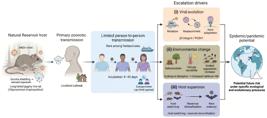
Potential drivers of Andes virus (ANDV) outbreak escalation and pandemic emergence. ANDV is maintained in rodent reservoirs, primarily the long-tailed pygmy rice rat (Oligoryzomys longicaudatus), and is transmitted to humans through inhalation of aerosolised rodent excreta. Unlike other orthohantaviruses, ANDV can also undergo limited person-to-person transmission, although sustained community transmission has not been documented. The graphical abstract highlights three factors that could contribute to outbreak escalation: (i) viral evolution through mutation, reassortment, and host adaptation; (ii) environmental and ecological changes that increase rodent abundance and spillover risk; and (iii) expansion of reservoir host range through host switching and reservoir diversification. Under favourable ecological and evolutionary conditions, these processes could increase the scale, frequency, geographic distribution, or transmission potential of future outbreaks, underscoring the importance of continued surveillance, preparedness, and the development of effective diagnostics, therapeutics, and vaccines. Illustration created with BioRender.com.
First - The acquisition of beneficial mutations may facilitate adaptation to human hosts. Genetic variation arising during viral replication could theoretically influence viral fitness, host range, or transmission efficiency under selective pressures. Orthohantaviruses replicate using an error-prone RNA-dependent RNA polymerase (RdRp), with evolutionary rates estimated at approximately 10⁻²-10⁻⁴ substitutions per site per year, consistent with rates reported for other RNA viruses.19 However, the relationship between genomic variation and altered transmissibility in ANDV remains incompletely understood, and no specific adaptive mutations have yet been conclusively associated with sustained human-to-human transmission.
Previous studies have shown that ANDV strains from rodent and human hosts can produce markedly different outcomes in the Syrian hamster model.20,21 Notably, a Chilean human isolate (CHI-7913), recovered from a fatal HPS case, acquired only a single non-synonymous mutation after 25 serial passages in hamsters and remained non-pathogenic, indicating relative genomic stability.20 In contrast, the rodent-derived isolate Chile-9717869 causes uniformly lethal disease despite differing by 23 amino acids from CHI-7913.21 Although these findings suggest a degree of genomic stability, they do not necessarily preclude adaptation. One possible explanation is that the CHI-7913 isolate had already undergone host-specific adaptation following zoonotic transmission to humans, thereby enhancing fitness in human cells while reducing replication efficiency and pathogenicity in the Syrian hamster model. Collectively, these observations indicate that relatively few genetic changes can substantially alter host adaptation and disease phenotype in ANDV, while the molecular determinants governing virulence and transmissibility remain incompletely understood.
Several biological mechanisms may contribute to these processes, including alterations in receptor usage, interferon antagonism, and genome reassortment. Pathogenic orthohantaviruses utilise β3 integrins, protocadherin-1, and other endothelium-associated receptors for host-cell entry, and mutations affecting glycoprotein-receptor interactions could alter host permissiveness and enhance adaptation to humans.22,23,24,25,26 In addition, the ability of orthohantaviruses to suppress interferon signalling contributes to reservoir persistence and may influence pathogenicity across different hosts.27,28,29,30,31 Importantly, the segmented orthohantavirus genome permits genetic reassortment during co-infection, potentially generating novel phenotypic combinations with altered virulence, transmissibility, or host range.32 Although reassortment appears less frequent than in other members of the order Bunyavirales (e.g. orthobunyaviruses) and influenza viruses, it remains an important mechanism contributing to long-term evolutionary adaptation and host expansion.33
Second - An increase in rodent reservoir populations driven by environmental and ecological changes may amplify the risk of zoonotic spillover. Environmental disruption is a well-recognised determinant of orthohantavirus emergence and transmission dynamics.34,35 Climatic oscillations, including El Niño-associated rainfall patterns, can substantially increase rodent abundance and population density, thereby elevating opportunities for human exposure, as previously documented during Sin Nombre virus (SNV) outbreaks in North America. In South America, deforestation, agricultural expansion, urban encroachment into rural and forested ecosystems, and biodiversity disturbance may similarly intensify contact between humans and ANDV reservoir hosts. In parallel, globalisation and expanding transportation networks have facilitated the international dissemination of rodent-associated orthohantaviruses, as illustrated by the spread of Seoul virus (SEOV) through maritime trade and the pet rat industry.36 Collectively, these ecological and anthropogenic pressures may increase the frequency of spillover events and the geographic distribution of orthohantavirus exposure. However, there is currently no evidence that such conditions alone are sufficient to drive sustained human-to-human transmission or pandemic-level spread of ANDV.
Third - Expansion of reservoir host range may contribute to broader geographic dissemination and increased opportunities for human exposure. Orthohantaviruses were historically considered highly host-specific pathogens, with individual virus lineages predominantly associated with a single rodent reservoir species through long-term co-evolutionary relationships.37,38 ANDV is primarily associated with Oligoryzomys longicaudatus as its principal reservoir host. However, accumulating phylogenetic and ecological evidence has challenged the concept of strict host specificity, demonstrating that host-switching events, spillover infections, and reservoir diversification have likely occurred repeatedly throughout orthohantavirus evolutionary history.19,39,40 In addition, the identification of genetically divergent orthohantaviruses in shrews, moles, and bats suggests that ancestral orthohantaviruses may have undergone multiple historical cross-species transmission events.39,41,42 Collectively, these findings indicate that orthohantavirus host associations, although generally stable, are not biologically absolute. Habitat disruptions, altered species interactions, and environmental pressures could therefore increase opportunities for cross-species transmission and geographic expansion over extended ecological timescales, potentially increasing the frequency of human exposure to infected reservoir hosts. Nevertheless, there is currently no evidence that such ecological processes have resulted in ANDV lineages with enhanced sustained human-to-human transmissibility.
Current preparedness against ANDV outbreaks
Perhaps more worrying is the limited availability of rapid diagnostics, antivirals, and vaccines for responding to outbreaks of ANDV and other clinically relevant orthohantaviruses. Several antiviral and immunotherapeutic strategies have been explored against human disease-causing orthohantaviruses, including nucleoside analogues such as ribavirin, favipiravir and ETAR; entry inhibitors such as lactoferrin and griffithsin; host-directed approaches targeting vascular leakage pathways; RNAi-based strategies; and, more recently, neutralising monoclonal antibodies targeting the Gn/Gc glycoprotein complex.(2,3,43-48) However, no orthohantavirus-specific antiviral has yet become an established standard of care, and most candidates remain experimental or dependent on very early administration. In parallel, vaccine development efforts have advanced substantially over the past decades. Hantavax®, an inactivated orthohantavirus vaccine marketed in South Korea to prevent HFRS caused by Hantaan and Seoul viruses, remains among the only orthohantavirus vaccines licensed for human use, while several next-generation vaccine candidates are currently under development and evaluation in preclinical and early-phase clinical trials.43,49 Despite these advances, effective countermeasures specifically targeting ANDV remain limited, highlighting an important preparedness gap for future outbreaks.
In conclusion - Overall, current evidence does not support the conclusion that ANDV is imminently poised to emerge as a pandemic pathogen comparable to severe acute respiratory syndrome coronavirus 2 (SARS-CoV-2). Nevertheless, under favourable ecological and epidemiological conditions, localised ANDV outbreaks may increase in scale or geographic distribution, potentially posing broader regional public health challenges. These considerations underscore the importance of strengthening preparedness strategies to prevent the escalation of orthohantavirus outbreaks, particularly in under-resourced endemic regions of South America. Integrated ecological surveillance approaches, including climate-informed forecasting of rodent population dynamics,50 together with genomic epidemiological surveillance of ANDV and other clinically relevant orthohantaviruses, may improve early detection of spillover risk, characterise orthohantavirus diversity and evolutionary dynamics, and support timely public health responses. In addition, expanded availability of antiviral therapeutics, monoclonal antibodies, preventive vaccines, and rapid diagnostic platforms will be important for comprehensive orthohantavirus outbreak preparedness and response. These diagnostic platforms could include lateral-flow assays to detect orthohantavirus-specific IgM and IgG antibodies in symptomatic patients,51 as well as antigen-based tests for direct virus detection in both humans and reservoir hosts.
How to cite:
DATA AVAILABILITY
The contents underlying the research text are included in the manuscript.
REFERENCES
-
1 Bradfute SB, Calisher CH, Klempa B, Klingström J, Kuhn JH, Laenen L, et al. ICTV virus taxonomy profile: Hantaviridae 2024. J Gen Virol. 2024; 105: 001975. doi: 10.1099/jgv.0.001975.
» https://doi.org/10.1099/jgv.0.001975 -
2 Vial PA, Ferrés M, Vial C, Klingström J, Ahlm C, López R, et al. Hantavirus in humans: a review of clinical aspects and management. Lancet Infect Dis. 2023; 23: e371-e382. doi: 10.1016/S1473-3099(23)00128-7.
» https://doi.org/10.1016/S1473-3099(23)00128-7 -
3 Jonsson CB, Figueiredo LT, Vapalahti O. A global perspective on hantavirus ecology, epidemiology, and disease. Clin Microbiol Rev. 2010; 23: 412-41. doi: 10.1128/CMR.00062-09.
» https://doi.org/10.1128/CMR.00062-09 -
4 Cifuentes-Muñoz N, Salazar-Quiroz N, Tischler ND. Hantavirus Gn and Gc envelope glycoproteins: key structural units for virus cell entry and virus assembly. Viruses. 2014; 6: 1801-22. doi: 10.3390/v6041801.
» https://doi.org/10.3390/v6041801 -
5 Kukkonen SK, Vaheri A, Plyusnin A. L protein, the RNA-dependent RNA polymerase of hantaviruses. Arch Virol. 2005; 150: 533-56. doi: 10.1007/s00705-004-0414-8.
» https://doi.org/10.1007/s00705-004-0414-8 -
6 Reuter M, Krüger DH. The nucleocapsid protein of hantaviruses: much more than a genome-wrapping protein. Virus Genes. 2018; 54: 5-16. doi: 10.1007/s11262-017-1522-3.
» https://doi.org/10.1007/s11262-017-1522-3 -
7 WHO - World Health Organization. Hantavirus. 2026 [cited 2026 Sep 14]. Available from: https://www.who.int/news-room/fact-sheets/detail/hantavirus
» https://www.who.int/news-room/fact-sheets/detail/hantavirus -
8 Martinez-Valdebenito C, Calvo M, Vial C, Mansilla R, Marco C, Palma RE, et al. Person-to-person household and nosocomial transmission of Andes hantavirus, Southern Chile, 2011. Emerg Infect Dis. 2014; 20: 1629-36. doi: 10.3201/eid2010.140353.
» https://doi.org/10.3201/eid2010.140353 -
9 Wells RM, Sosa Estani S, Yadon ZE, Enria D, Padula P, Pini N, et al. An unusual hantavirus outbreak in southern Argentina: person-to-person transmission? Emerg Infect Dis. 1997; 3: 171-4. doi: 10.3201/eid0302.970210.
» https://doi.org/10.3201/eid0302.970210 -
10 Martinez VP, Bellomo CM, Cacace ML, Suarez P, Bogni L, Padula PJ. Hantavirus pulmonary syndrome in Argentina, 1995-2008. Emerg Infect Dis. 2010; 16: 1853-60. doi: 10.3201/eid1612.091170.
» https://doi.org/10.3201/eid1612.091170 -
11 Alonso DO, Iglesias A, Coelho R, Periolo N, Bruno A, Córdoba MT, et al. Epidemiological description, case-fatality rate, and trends of Hantavirus Pulmonary Syndrome: 9 years of surveillance in Argentina. J Med Virol. 2019; 91: 1173-81. doi: 10.1002/jmv.25446.
» https://doi.org/10.1002/jmv.25446 -
12 Martínez VP, Di Paola N, Alonso DO, Pérez-Sautu U, Bellomo CM, Iglesias AA, et al. ‘Super-Spreaders’ and person-to-person transmission of Andes virus in Argentina. N Engl J Med. 2020; 383: 2230-41. doi: 10.1056/NEJMoa2009040.
» https://doi.org/10.1056/NEJMoa2009040 -
13 Martinez-Valdebenito C, Calvo M, Vial C, Mansilla R, Marco C, Palma RE, et al. Person-to-person household and nosocomial transmission of Andes hantavirus, Southern Chile, 2011. Emerg Infect Dis. 2014; 20: 1629-36. doi: 10.3201/eid2010.140353.
» https://doi.org/10.3201/eid2010.140353 -
14 Ferrés M, Martínez-Valdebenito C, Henriquez C, Marco C, Angulo J, Barrera A, et al. Viral shedding and viraemia of Andes virus during acute hantavirus infection: a prospective study. Lancet Infect Dis. 2024; 24: 775-82. doi: 10.1016/S1473-3099(24)00142-7.
» https://doi.org/10.1016/S1473-3099(24)00142-7 -
15 Toledo J, Haby MM, Reveiz L, Sosa Leon L, Angerami R, Aldighieri S. Evidence for human-to-human transmission of hantavirus: a systematic review. J Infect Dis. 2022; 226: 1362-71. doi: 10.1093/infdis/jiab461.
» https://doi.org/10.1093/infdis/jiab461 -
16 WHO - World Health Organization. Hantavirus cluster linked to cruise ship travel, multi-country. 2026 [cited 2026 Sep 14]. Available from: https://www.who.int/emergencies/disease-outbreak-news/item/2026-DON599
» https://www.who.int/emergencies/disease-outbreak-news/item/2026-DON599 -
17 WHO - World Health Organization. Hantavirus outbreak linked to cruise ship travel, multi-locations. 2026 [cited 2026 Sep 14]. Available from: https://www.who.int/emergencies/disease-outbreak-news/item/2026-DON611
» https://www.who.int/emergencies/disease-outbreak-news/item/2026-DON611 -
18 Palacios G. Preliminary analysis of Orthohantavirus andesense virus sequences from a cruise-ship related cluster, May 2026. Virological.org. 2026 [cited 2026 Sep 14]. Available from: https://virological.org/t/preliminary-analysis-of-orthohantavirus-andesense-virus-sequences-from-a-cruise-ship-related-cluster-may-2026/1029
» https://virological.org/t/preliminary-analysis-of-orthohantavirus-andesense-virus-sequences-from-a-cruise-ship-related-cluster-may-2026/1029 -
19 Ramsden C, Melo FL, Figueiredo LM, Holmes EC, Zanotto PM, Consortium V. High rates of molecular evolution in hantaviruses. Mol Biol Evol. 2008; 25: 1488-92. doi: 10.1093/molbev/msn093.
» https://doi.org/10.1093/molbev/msn093 -
20 Warner BM, Prévost J, Tailor N, Deschambault Y, Sloan A, Allarie J, et al. High genomic stability of Andes virus following successive passage in vivo in Syrian hamsters. J Virol. 2025; 99(8): e00512-25. doi: 10.1128/jvi.00512-25.
» https://doi.org/10.1128/jvi.00512-25 -
21 Warner BM, Sloan A, Deschambault Y, Dowhanik S, Tierney K, Audet J, et al. Differential pathogenesis between Andes virus strains CHI-7913 and Chile-9717869 in Syrian hamsters. J Virol. 2021; 95: e00108-21. doi: 10.1128/JVI.00108-21.
» https://doi.org/10.1128/JVI.00108-21 -
22 Gavrilovskaya IN, Shepley M, Shaw R, Ginsberg MH, Mackow ER. beta3 Integrins mediate the cellular entry of hantaviruses that cause respiratory failure. Proc Natl Acad Sci USA. 1998; 95: 7074-9. doi: 10.1073/pnas.95.12.7074.
» https://doi.org/10.1073/pnas.95.12.7074 -
23 Gavrilovskaya IN, Gorbunova EE, Mackow NA, Mackow ER. Hantaviruses direct endothelial cell permeability by sensitizing cells to the vascular permeability factor VEGF, while angiopoietin 1 and sphingosine 1-phosphate inhibit hantavirus-directed permeability. J Virol. 2008; 82: 5797-806. doi: 10.1128/JVI.02397-07.
» https://doi.org/10.1128/JVI.02397-07 -
24 Jangra RK, Herbert AS, Li R, Jae LT, Kleinfelter LM, Slough MM, et al. Protocadherin-1 is essential for cell entry by New World hantaviruses. Nature. 2018; 563: 559-63. doi: 10.1038/s41586-018-0702-1.
» https://doi.org/10.1038/s41586-018-0702-1 -
25 Tischler ND, Gonzalez A, Perez-Acle T, Rosemblatt M, Valenzuela PDT. Hantavirus Gc glycoprotein: evidence for a class II fusion protein. J Gen Virol. 2005; 86: 2937-47. doi: 10.1099/vir.0.81083-0.
» https://doi.org/10.1099/vir.0.81083-0 -
26 Serris A, Stass R, Bignon EA, Muena NA, Manuguerra JC, Jangra RK, et al. The hantavirus surface glycoprotein lattice and its fusion control mechanism. Cell. 2020; 183: 442-456.e16. doi: 10.1016/j.cell.2020.08.023.
» https://doi.org/10.1016/j.cell.2020.08.023 -
27 Alff PJ, Gavrilovskaya IN, Gorbunova E, Endriss K, Chong Y, Geimonen E, et al. The pathogenic NY-1 hantavirus G1 cytoplasmic tail inhibits RIG-I- and TBK-1-directed interferon responses. J Virol. 2006; 80: 9676-86. doi: 10.1128/JVI.00508-06.
» https://doi.org/10.1128/JVI.00508-06 -
28 Matthys V, Mackow ER. Hantavirus regulation of type I interferon responses. Adv Virol. 2012; 2012: 524024. doi: 10.1155/2012/524024.
» https://doi.org/10.1155/2012/524024 -
29 Levine JR, Prescott J, Brown KS, Best SM, Ebihara H, Feldmann H. Antagonism of type I interferon responses by new world hantaviruses. J Virol. 2010; 84: 11790-801. doi: 10.1128/JVI.00916-10.
» https://doi.org/10.1128/JVI.00916-10 -
30 Mackow ER, Dalrymple NA, Cimica V, Matthys V, Gorbunova E, Gavrilovskaya I. Hantavirus interferon regulation and virulence determinants. Virus Res. 2014; 187: 65-71. doi: 10.1016/j.virusres.2013.12.041.
» https://doi.org/10.1016/j.virusres.2013.12.041 -
31 Zhao Y, Che L, Pan M, Huang Y, Fang S, Wang M, et al. Hantaan virus inhibits type I interferon response by targeting RLR signaling pathways through TRIM25. Virology. 2024; 589: 109942. doi: 10.1016/j.virol.2023.109942.
» https://doi.org/10.1016/j.virol.2023.109942 -
32 Handke W, Oelschlegel R, Franke R, Wiedemann L, Krüger DH, Rang A. Generation and characterization of genetic reassortants between Puumala and Prospect Hill hantavirus in vitro J Gen Virol. 2010; 91: 2351-9. doi: 10.1099/vir.0.021139-0.
» https://doi.org/10.1099/vir.0.021139-0 -
33 Klempa B. Reassortment events in the evolution of hantaviruses. Virus Genes. 2018; 54: 638-46. doi: 10.1007/s11262-018-1590-z.
» https://doi.org/10.1007/s11262-018-1590-z -
34 Engelthaler DM, Mosley DG, Cheek JE, Levy CE, Komatsu KK, Ettestad P, et al. Climatic and environmental patterns associated with hantavirus pulmonary syndrome, Four Corners region, United States. Emerg Infect Dis. 1999; 5: 87-94. doi: 10.3201/eid0501.990110.
» https://doi.org/10.3201/eid0501.990110 -
35 Klempa B. Hantaviruses and climate change. Clin Microbiol Infect. 2009; 15: 518-23. doi: 10.1111/j.1469-0691.2009.02848.x.
» https://doi.org/10.1111/j.1469-0691.2009.02848.x -
36 Kerins JL, Koske SE, Kazmierczak J, Austin C, Gowdy K, Dibernardo A, et al. Outbreak of Seoul virus among rats and rat owners - United States and Canada, 2017. Can Commun Dis Rep. 2018; 44: 71-4. doi: 10.14745/ccdr.v44i02a07.
» https://doi.org/10.14745/ccdr.v44i02a07 -
37 Mills JN, Childs JE. Ecologic studies of rodent reservoirs: their relevance for human health. Emerg Infect Dis. 1998; 4: 529-37. doi: 10.3201/eid0404.980403.
» https://doi.org/10.3201/eid0404.980403 -
38 Plyusnin A, Morzunov SP. Virus evolution and genetic diversity of hantaviruses and their rodent hosts. Curr Top Microbiol Immunol. 2001; 256: 47-75. doi: 10.1007/978-3-642-56753-7_4.
» https://doi.org/10.1007/978-3-642-56753-7_4 -
39 Guo WP, Lin XD, Wang W, Tian JH, Cong ML, Zhang HL, et al. Phylogeny and origins of hantaviruses harbored by bats, insectivores, and rodents. PLoS Pathog. 2013; 9: e1003159. doi: 10.1371/journal.ppat.1003159.
» https://doi.org/10.1371/journal.ppat.1003159 -
40 Yanagihara R, Gu SH, Arai S, Kang HJ, Song JW. Hantaviruses: rediscovery and new beginnings. Virus Res. 2014; 187: 6-14. doi: 10.1016/j.virusres.2013.12.038.
» https://doi.org/10.1016/j.virusres.2013.12.038 -
41 Klempa B, Fichet-Calvet E, Lecompte E, Auste B, Aniskin V, Meisel H, et al. Novel hantavirus sequences in shrew, Guinea. Emerg Infect Dis. 2007; 13: 520-2. doi: 10.3201/eid1303.061198.
» https://doi.org/10.3201/eid1303.061198 -
42 Weiss S, Witkowski PT, Auste B, Nowak K, Weber N, Fahr J, et al. Hantavirus in bat, Sierra Leone. Emerg Infect Dis. 2012; 18: 159-61. doi: 10.3201/eid1801.111026.
» https://doi.org/10.3201/eid1801.111026 -
43 Afzal S, Ali L, Batool A, Afzal M, Kanwal N, Hassan M, et al. Hantavirus: an overview and advancements in therapeutic approaches for infection. Front Microbiol. 2023; 14: 1233433. doi: 10.3389/fmicb.2023.1233433.
» https://doi.org/10.3389/fmicb.2023.1233433 -
44 Mittler E, Serris A, Esterman ES, Florez C, Polanco LC, O’Brien CM, et al. Structural and mechanistic basis of neutralization by a pan-hantavirus protective antibody. Sci Transl Med. 2023; 15: eadg1855. doi: 10.1126/scitranslmed.adg1855.
» https://doi.org/10.1126/scitranslmed.adg1855 -
45 Garrido JL, Prescott J, Calvo M, Bravo F, Alvarez R, Salas A, et al. Two recombinant human monoclonal antibodies that protect against lethal Andes hantavirus infection in vivo Sci Transl Med. 2018; 10: eaat6420. doi: 10.1126/scitranslmed.aat6420.
» https://doi.org/10.1126/scitranslmed.aat6420 -
46 Engdahl TB, Binshtein E, Brocato RL, Kuzmina NA, Principe LM, Kwilas SA, et al. Antigenic mapping and functional characterization of human New World hantavirus neutralizing antibodies. eLife. 2023; 12: e81743. doi: 10.7554/eLife.81743.
» https://doi.org/10.7554/eLife.81743 -
47 Mittler E, Wec AZ, Tynell J, Guardado-Calvo P, Wigren-Byström J, Polanco LC, et al. Human antibody recognizing a quaternary epitope in the Puumala virus glycoprotein provides broad protection against orthohantaviruses. Sci Transl Med. 2022; 14: eabl5399. doi: 10.1126/scitranslmed.abl5399.
» https://doi.org/10.1126/scitranslmed.abl5399 -
48 Brocato RL, Wu H, Kwilas SA, Principe LM, Josleyn M, Shamblin J, et al. Preclinical evaluation of a fully human, quadrivalent-hantavirus polyclonal antibody derived from a non-human source. mBio. 2024; 15: e0160024. doi: 10.1128/mbio.01600-24.
» https://doi.org/10.1128/mbio.01600-24 -
49 Song JY, Woo HJ, Cheong HJ, Noh JY, Baek LJ, Kim WJ. Long-term immunogenicity and safety of inactivated Hantaan virus vaccine (HantavaxTM) in healthy adults. Vaccine. 2016; 34: 1289-95. doi: 10.1016/j.vaccine.2016.01.031.
» https://doi.org/10.1016/j.vaccine.2016.01.031 -
50 CSIRO - Commonwealth Scientific and Industrial Research Organisation. Tracking Australia’s mice. 2021 [cited 2026 Sep 14]. Available from: https://www.csiro.au/en/research/animals/pests/mouse-census
» https://www.csiro.au/en/research/animals/pests/mouse-census -
51 Guimarães JPT, Fogaça MBT, Moura RS, Mendonça M, Conceição FR, Gimaque JBL, et al. Hantavirus: preliminary assessment of lateral flow immune assay prototypes to detect IgM and IgG antibodies. Diagn Microbiol Infect Dis. 2024; 110: 116521. doi: 10.1016/j.diagmicrobio.2024.116521.
» https://doi.org/10.1016/j.diagmicrobio.2024.116521
Conflict of interest
Handling editor:
FIRST REVIEW ROUND - REVIEWERS’ COMMENTS
REVIEWER #1
The manuscript titled “Could Hantavirus Transmit the Next Pandemic?” presents a compelling and relevant discussion regarding the potential for hantavirus cardiopulmonary syndrome (HCPS) outbreaks. Prompted by the recent atypical HCPS outbreak associated with Andes orthohantavirus (ANDV) aboard the cruise ship M/V Hondius, the authors analyze this threat from virological, genomic, and eco-epidemiological perspectives. They convincingly argue that sustained person-to-person transmission would require highly specific—and currently unlikely—evolutionary conditions.
The manuscript, from the abstract to the main text and references, is clear and well-structured. Notably, the authors present robust evidence that ANDV currently lacks the adaptive mutations necessary to drive person-to-person transmission in the manner observed with influenza viruses or SARS-CoV-2. This provides a timely and necessary clarification: although hantaviruses possess a trisegmented RNA genome capable of rapid mutation, reassortment and host adaptation, a large-scale epidemic remains highly unlikely. Finally, by advocating for an integrated global approach—combining genomic-epidemiological monitoring, rapid diagnostics, and accessible therapies—the authors highlight the precise surveillance strategies needed to contain localized HCPS outbreaks before they escalate into regional public health threats. Thus, in addition to adequately answering the title’s central question, the authors highlight the urgent global need for continuous, targeted surveillance—adopting a One Health approach—in areas endemic for SCPH, as well as for the accelerated development of effective diagnostics, specific therapies, and vaccines against HCPS.
Minor comments: (i) standardized taxonomy — replace the word “hantavirus” with “orthohantavirus”, and (ii) in the graphical abstract : Oligoryzomys longicaudatus has been correctly italicized and change “exposure to aerosolised” to “inhalation of aerosolized.”
REVIEWER #2
This manuscript presents an interesting ecoevolutionary perspective into the outstanding question of Hantavirus’ pandemic potential. It has been discussed long before the Hondius outbreak that hantaviruses are worth being surveilled and studied to better understand if through evolution and expansion of host distributions and rodent-human contact interfaces, Hantaviruses could become the agents behind the next pandemic. The authors create a solid compendium of evidence regarding these scenarios and provide a grounded commentary on ANDV’s lack of pandemic potential at the moment, bringing a sobering message at a time when the lay public needs a better understanding of Hantaviruses.
That being said, I would like to suggest some minor changes to enhance the flow of the manuscript:
1. In the background section, there should be 2-3 sentences introducing the reader to the M/V Hondius situation. At the time of this review, the Hondius is not at the front page of the news anymore, and moreover, the manuscript should be timeless. For that reason, it would be good if the authors could include a section explaining the Hondius outbreak.
2. Related to the first point, in lines 64-66, the authors dive right into discussing the “likelihood that the M/V Hondius ANDV cluster could progress into a sustained epidemic”. Before this section, there is no context of what the N/V Hondius ANDV cluster is.
3. In lines 69-70, the authors mention that the sequences derived from the ANDV cluster have two synonymous mutations with respect to ANDV reference sequences from Argentina (1997 and 2018) and cite the Virological.org post by Dr. Gustavo Palacios. However, that is not what the post mentions; instead, the post describes two nonsynonymous mutations arising in the L segment between the first three sequences generated in South Africa, and they argue that this is a sign of a single spillover event as the origin of the index case. The original publication then mentions “98.76% and 98.75% based on the L segment, 98.71% and 98.68% on the M segment and 98.73% and 98.73% on the S segment”, these are with respect to the reference sequences from 1997 and 2018, which is more than two SNPs. Therefore, the authors should rectify the assertion of only two SNPs in the Hondius sequences, it would be evolutionarily impossible for an RNA virus to only accumulate two mutations in almost 30 years.
AUTHORS’ RESPONSE TO THE REVIEWERS
Response to Reviewers
Reviewer 1:
The manuscript titled “Could Hantavirus Transmit the Next Pandemic?” presents a compelling and relevant discussion regarding the potential for hantavirus cardiopulmonary syndrome (HCPS) outbreaks. Prompted by the recent atypical HCPS outbreak associated with Andes orthohantavirus (ANDV) aboard the cruise ship M/V Hondius, the authors analyze this threat from virological, genomic, and eco-epidemiological perspectives. They convincingly argue that sustained person-to-person transmission would require highly specific—and currently unlikely—evolutionary conditions.
The manuscript, from the abstract to the main text and references, is clear and well-structured. Notably, the authors present robust evidence that ANDV currently lacks the adaptive mutations necessary to drive person-to-person transmission in the manner observed with influenza viruses or SARS-CoV-2. This provides a timely and necessary clarification: although hantaviruses possess a trisegmented RNA genome capable of rapid mutation, reassortment and host adaptation, a large-scale epidemic remains highly unlikely. Finally, by advocating for an integrated global approach—combining genomic-epidemiological monitoring, rapid diagnostics, and accessible therapies—the authors highlight the precise surveillance strategies needed to contain localized HCPS outbreaks before they escalate into regional public health threats. Thus, in addition to adequately answering the title’s central question, the authors highlight the urgent global need for continuous, targeted surveillance—adopting a One Health approach—in areas endemic for SCPH, as well as for the accelerated development of effective diagnostics, specific therapies, and vaccines against HCPS.
Minor comments: (i) standardized taxonomy — replace the word “hantavirus” with “orthohantavirus”, and (ii) in the graphical abstract: Oligoryzomys longicaudatus has been correctly italicized and change “exposure to aerosolised” to “inhalation of aerosolized.”
Authors’ response:
Thank you for reviewing our manuscript and providing us with useful feedback. We have addressed your comments accordingly.
We have standardized the taxonomy by replacing the word “hantavirus” with “orthohantavirus” found on lines 43, 45, 51, 54, 55, 58, 84, 104, 108, 109, 117, 125, 127, 131, 138, 139, 141, 151, 152, 159, 160, 163, 172, 175, 176, 179, 182, 189, 206.
We have made the recommended changes in the graphical abstract figure legend from “exposure to aerosolised” to “inhalation of aerosolised” on Line 206.
Reviewer 2:
This manuscript presents an interesting ecoevolutionary perspective into the outstanding question of Hantavirus’ pandemic potential. It has been discussed long before the Hondius outbreak that hantaviruses are worth being surveilled and studied to better understand if through evolution and expansion of host distributions and rodent-human contact interfaces, Hantaviruses could become the agents behind the next pandemic. The authors create a solid compendium of evidence regarding these scenarios and provide a grounded commentary on ANDV’s lack of pandemic potential at the moment, bringing a sobering message at a time when the lay public needs a better understanding of Hantaviruses.
That being said, I would like to suggest some minor changes to enhance the flow of the manuscript:
1. In the background section, there should be 2-3 sentences introducing the reader to the M/V Hondius situation. At the time of this review, the Hondius is not at the front page of the news anymore, and moreover, the manuscript should be timeless. For that reason, it would be good if the authors could include a section explaining the Hondius outbreak.
2. Related to the first point, in lines 64-66, the authors dive right into discussing the “likelihood that the M/V Hondius ANDV cluster could progress into a sustained epidemic”. Before this section, there is no context of what the N/V Hondius ANDV cluster is.
3. In lines 69-70, the authors mention that the sequences derived from the ANDV cluster have two synonymous mutations with respect to ANDV reference sequences from Argentina (1997 and 2018) and cite the Virological.org post by Dr. Gustavo Palacios. However, that is not what the post mentions; instead, the post describes two nonsynonymous mutations arising in the L segment between the first three sequences generated in South Africa, and they argue that this is a sign of a single spillover event as the origin of the index case. The original publication then mentions «98.76% and 98.75% based on the L segment, 98.71% and 98.68% on the M segment and 98.73% and 98.73% on the S segment», these are with respect to the reference sequences from 1997 and 2018, which is more than two SNPs. Therefore, the authors should rectify the assertion of only two SNPs in the Hondius sequences, it would be evolutionarily impossible for an RNA virus to only accumulate two mutations in almost 30 years.
Authors’ response:
Thank you for reviewing our manuscript and providing us with useful feedback. We have addressed your comments accordingly.
We have added a paragraph introducing the M/V Hondius ANDV outbreak for context on Lines 60-66 and highlighted the changes using Track Changes tools and in yellow. The following sentence was deleted as the M/V Hondius ANDV cluster has been declared over: “Additional cases associated with the M/V Hondius cluster may still be identified within the recognised incubation period”
Refer to abovementioned response addressing this comment. We have added, on lines 60-66, context of what the M/V Hondius ANDV cluster is. We have also added additional text to improve clarity on lines 71-73.
We thank the reviewer for identifying this ambiguity in Lines 69-70. We agree that our original wording incorrectly conflated the limited sequence variation observed among cases within the 2026 M/V Hondius cluster with the genetic divergence between the outbreak sequences and historical ANDV sequences from Argentina. The preliminary genomic analysis reported that the S and M consensus sequences generated from the cluster were identical to each other, whereas two SNPs were detected among the L-segment sequences (C2139T in case 5 and G576A in case 7). Importantly, the report describes both of these SNPs as synonymous. In contrast, comparison with ANDV sequences from Argentina in 1997 and 2018 showed approximately 98.7% nucleotide identity across the three genome segments, indicating considerably greater divergence from these historical reference sequences. We have therefore revised the manuscript to clearly distinguish within-cluster genomic variation from divergence relative to historical ANDV strains and have removed the incorrect implication that the 2026 outbreak virus differed from the 1997 and 2018 strains by only two substitutions. Thus, we adjusted and replaced the text to improve clarity on lines 79-90, as indicated in the Track Changes and highlighted in yellow.
- peer review recommendation: accept
REVIEWERS’ COMMENTS
REVIEWER #1
The authors have satisfactorily responded to all comments and questions raised, and the revised manuscript is suitable for publication.
REVIEWER #2
I would like to thank the authors for thoroughly implementing the requested changes. The manuscript is clear, informative, and has my recommendation for acceptance.
- peer review recommendation: accept

