 Relationship among epidemiological parameters of six childhood infections in a non-immunized Brazilian community
Abstract
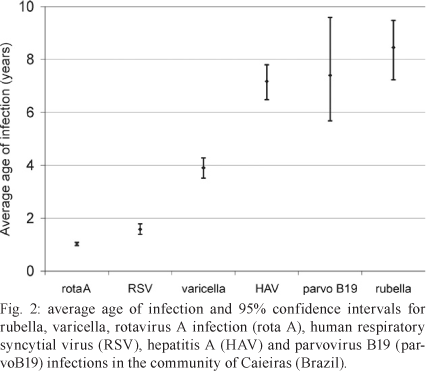
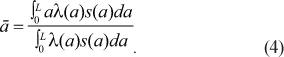
Epidemiological parameters, such as age-dependent force of infection and average age at infection (<IMG SRC="../img/13s1.gif" WIDTH=9 HEIGHT=12>) were estimated for rubella, varicella, rotavirus A, respiratory syncytial virus, hepatitis A and parvovirus B19 infections for a non-immunized Brazilian community, using the same sera samples. The for the aforementioned diseases were 8.45 years (yr) [95% CI: (7.23, 9.48) yr], 3.90 yr [95% CI: (3.51, 4.28) yr], 1.03 yr [95% CI: (0.96, 1.09) yr], 1.58 yr [95% CI: (1.39, 1.79) yr], 7.17 yr [95% CI: (6.48, 7.80) yr] and 7.43 yr [95% CI: (5.68, 9.59) yr], respectively. The differences between average ages could be explained by factors such as differences in the effectiveness of the protection conferred to newborns by maternally derived antibodies, competition between virus species and age-dependent host susceptibility. Our seroprevalence data may illustrate a case of the above-mentioned mechanisms working together within the same population.
seroprevalence; viral diseases; epidemiology; average age; force of infection; Monte Carlo method