
 Heterochromatin protein 1 (HP1) of Schistosoma mansoni: non-canonical chromatin landscape and oviposition effects
Abstract
BACKGROUND Heterochromatin protein 1 (HP1) is widespread in several organisms playing a role in control of gene expression by heterochromatin formation and maintenance of silent chromatin. Schistosoma mansoni is a human parasite that is responsible for Schistosomiasis, a tropical neglected disease in the tropical and subtropical areas in the world, where the intermediate host Biomphalaria glabrata is present.
OBJECTIVES In this study we attempted to investigate if the SmHP1 is enriched in S. mansoni chromatin in cercariae larvae stage, compared with another larvae stage sporocysts and its importance for S. mansoni life cycle progression and parasite oviposition.
METHODS We used ChIPmentation with commercial antibody ab109028 that passed in-house quality control. We also used RNA interference, mice infection and histology.
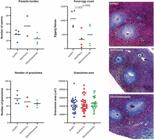
FINDINGS Our data show that S. mansoni HP1 enrichment is non-canonical with a peak at the transcription end sites of protein coding genes. We did not find strong differences in SmHP1 chromatin landscapes between sporocysts and cercariae. Knock- down of SmHP1 in schistosomula and in vivo experiments in mice unexpectedly increased parasite oviposition.
MAIN CONCLUSIONS Our results suggest that SmHP1 may influence chromatin structure in a non-canonical way in S. mansoni stages and may play a role in regulation of parasite oviposition.
Key words:
heterochromatin protein 1; HP1; ChIPmentation; cercariae; sporocysts;
Schistosoma mansoni
 Thumbnail
 Thumbnail
 Thumbnail
 Thumbnail
 Thumbnail
 Thumbnail
 Thumbnail


