Microstructural Characterization, Cytotoxicity and Antibacterial Evaluation of Multicomponent MoNbNiTiZr Alloy
Abstract
Traditional biomaterials like CoCrMo, Ti, and stainless-steel face challenges due to their instability in biological settings. As an alternative, exploring multicomponent alloys is viewed as a viable path for bettering both mechanical performance and biocompatibility. Our research explores the potentiality of the MoNbNiTiZr based alloy for biomedical applications. The microstructural characterization was realized using X-Ray Diffractometry (XRD) and Scanning Electron Microscopy (SEM/EDS). We also conducted Vickers microhardness tests and assessed it’s in vitro biocompatibility and antibacterial action against S. aureus and S. aureus HU25 strains relative to cp-Ti. Our observations denote that this alloy showcases a triphasic structure, consisting of dendritic and interdendritic zones with BCC, HCP, and Laves formations. A microhardness of is approximately 576.5 HV align with values for comparable multicomponent alloys in the biomedical field. Pertaining to its antibacterial efficiency and in vitro compatibility, this alloy manifests commendable antibacterial performance and relevant compatibility in comparison with cp-Ti.
Keywords:
Multicomponent alloy; Biomaterial; Antibacterial activity; Biocompatibility
1. Introduction
The increasing interest and utilization of biomaterials have led to significant technological advancements that positively impact human health and well-being1. According to a report by Grand View Research2, the biomaterials market is projected to reach US$ 489 billion by 2030. This growth is driven by the widespread applications of biomaterials in various fields, including cardiovascular, ophthalmic, dental, orthopedic, wound healing, tissue engineering, plastic surgery, neurology, and more. However, conventional metal alloys like cp-Ti, Ti6Al4V, 316L, and CoCrMo face specific challenges that could be addressed. These challenges include improving corrosion resistance and reducing potential degradation when exposed to physiological environments3-5, enhancing mechanical performance while maintaining biocompatibility1,5-10, decreasing the magnetic susceptibility11,12, and increasing resistance to bacterial infections9.
The development of multi-principal element alloys (MPEAs) or high-entropy alloys (HEAs) gained momentum in the early 2000s13,14, captivating the attention of the academic and engineering communities due to their remarkable thermodynamic stability and the ability to obtain diverse properties and microstructures by varying the composition and elements. From the study of these alloys, an expected application is in the biomedical field15,16, being possible to complement the use of conventional alloys (cp-Ti, Ti6Al4V, 316L and CoCrMo alloys) or to be used as a coating for alloys. Several studies have been conducted to address these limitations, and multicomponent alloys have emerged as a promising solution, exhibiting favorable mechanical performance and biocompatibility4,17-19. Literature reviews are available and the reader is encouraged to read Castro et al.20, Ahmady et al.21 and Oliveira et al.22 papers, which provide further insights on this subject.
A variety of studies highlight MPEAs as candidates for biomedical applications3,6,7,23-30. In this sense, the present study focuses on evaluating the microstructural and biological characteristics of the MoNbNiTiZr MPEA in its as-cast state, with the aim of exploring its potential for future biomedical applications (implants, medical instruments, stents). Conventional Ti alloys have good biocompatibility but have limitations in mechanical performance. Therefore, alloy’s composition was selected based on the desired properties and characteristics required for biomaterials, including biocompatibility, biofunctionality31, and antimicrobial resistance. The study employed CALPHAD method (Computer Coupling of Phase Diagrams and Thermochemistry), Scanning Electron Microscopy (SEM) with Energy-Dispersive Spectroscopy (EDS) and X-Ray Diffractometry (XRD) techniques to gain insights into the alloy’s phases and chemical composition. Additionally, Vickers microhardness tests were conducted.
In line with the evaluation of biological characteristics, this study also included in vitro biocompatibility tests to compare the cytotoxicity performance between cp-Ti and the MoNbNiTiZr based alloy. In the existing literature, a few research related to cellular viability have been conducted, comparing multi-component alloys to conventional alloys6,24,25,31-33. The favorable outcomes observed for MPEAs are largely attributed to the presence of Ti and Zr22, which create a conducive microenvironment for cell adhesion. These tests are critical for assessing the alloy’s suitability for biomedical applications, particularly in scenarios where biocompatibility is a concern. The assessment of antimicrobial activity against S. aureus and S. aureus HU25 was performed due to bacterial infection being one of the main causes of implant failures34. Similarly, in the literature, research pertaining to MPEAs for biomedical applications that evaluate antimicrobial activity can be found, presenting an opportunity for studies in this area26,35.
2. Materials and Methods
2.1. Preliminary thermodynamic prediction
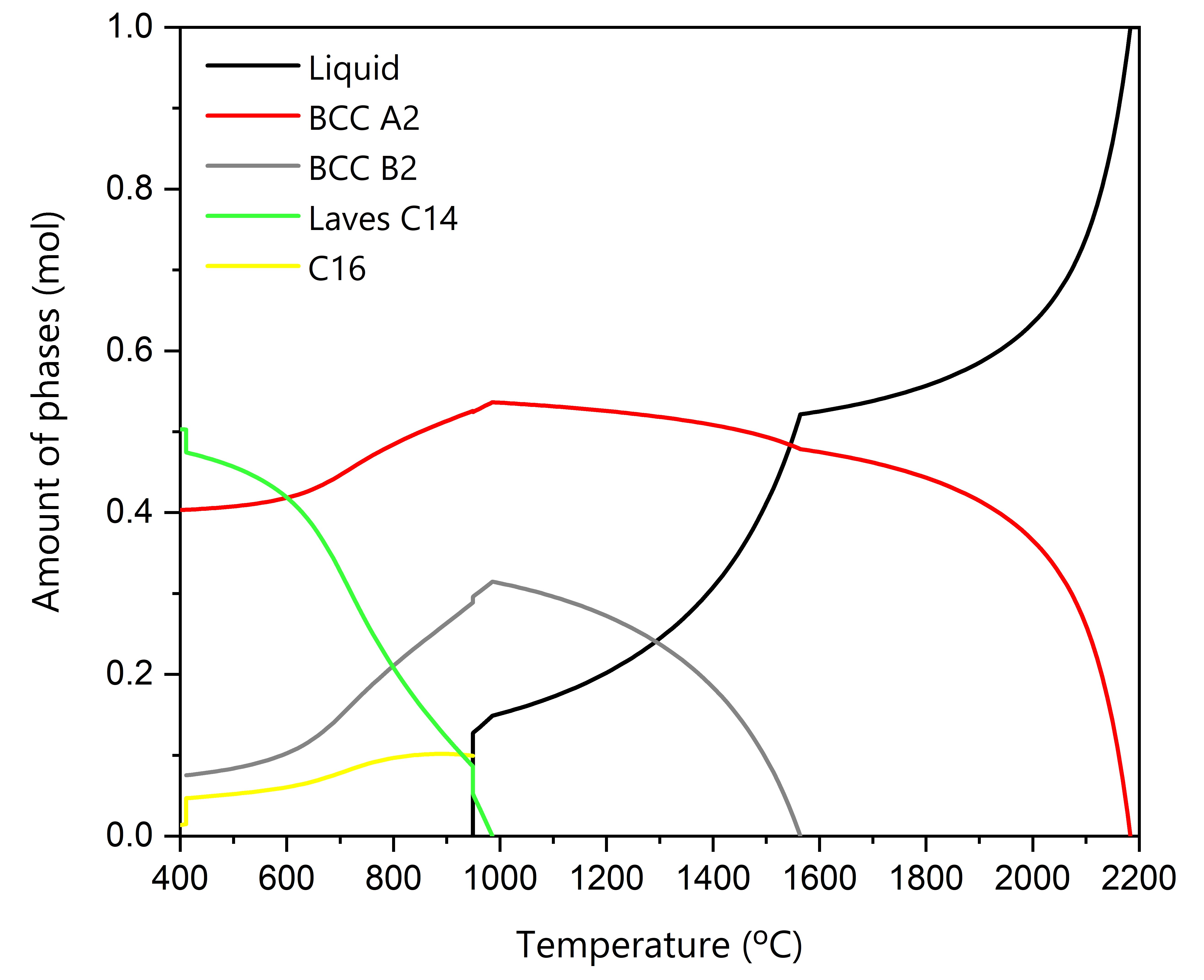
The initial stage involved conducting computational thermodynamic simulations using the CALPHAD method with the Thermo-Calc software and the TCHEA6 database (Thermodynamic Database for High Entropy Alloys). These simulations aimed to analyze the predicted phases within the MoNbNiTiZr equimolar system over a temperature range of 400 to 2200 °C. Furthermore, the composition of the phases was calculated at a temperature of 900 °C.
2.2. Alloy’s preparation and sampling
The constituent elements of the alloy, namely Mo (min. 99.9 wt.%), Nb (min. 99.8 wt.%), Ni (min. 99.9 wt.%), Ti (min. 99.5 wt.%) and Zr (min. 99.7 wt.%) were weighed using a precision analytical balance with an accuracy of 0.1 mg. The raw materials in powder form were arc melted utilizing an analytical argon atmosphere at a pressure of 1 bar, a water-cooled copper melting crucible, and tungsten electrodes. Four melting steps were conducted, involving the flipping of the alloy upside down between each step. It should be noted that a cp-Ti (min. 99.33 wt.%) ingot was also produced by this same process to obtain reference specimens for further tests.
For the subsequent experimental procedures, the as-cast ingots were sectioned parallel to the heat extraction direction using a diamond disc in an ISOMET Low-Speed Precisium Metallographic Saw machine. This cutting process allowed the production of specimens with dimensions of approximately 1.5 to 2 mm in thickness, 8 mm in width, and 10 mm in length. For the biological tests, specimens of MoNbNiTiZr and cp-Ti were prepared by low-speed cutting to obtain a shape close to cubic geometry. The samples underwent sanding and polishing to achieve dimensional adjustment and surface finish, until obtaining a sample with a width and length of 5 mm each, with a thickness of 1 mm.
2.3. Microstructural and mechanical characterization
The microstructural characterization of the samples was conducted using SEM/BSE and XRD. Prior to SEM analysis, the samples underwent conventional metallographic preparation. This involved hot mounting the samples in phenolic resins, followed by grinding with sanding paper ranging from 600 to 2000 mesh, and polishing with colloidal silica suspension (OPS). The SEM/BSE analysis was performed using a Carl Zeiss EVO MA15 microscope equipped with an EDS detector (XFLASH 6|10). The semiquantitative compositional analysis of the phases was obtained by averaging the values from at least three measured points, while the overall analysis represents the results of measurements within a 1.39x0.92 mm area.
The ingot was ground in a mortar and further refined through an 800-mesh sieve, producing a powder suitable for X-ray diffractometry (XRD) analysis. The XRD was conducted using a PANalytical model X'Pert Pro, employing Cu-kα radiation. The experimental conditions included a voltage of 40 kV, an angle range from 10 to 90°, a step size of 0.02, and a counting time of 1 s.
The microhardness tests (HV 0.5) were conducted using an HV-1000 Digital Micro Vickers Hardness Tester (HST Group), utilizing the same samples prepared for the SEM analysis. The measurements were obtained by averaging the values from fifteen randomly selected measuring points. An applied load of 500 gf (4.9 N) was used during the tests. To ensure representative results, the measurements were taken at random points in the sample, with a minimum distance of 500 µm between each measurement.
2.4. In vitro biocompatibility evaluation
In this study, the adopted procedures were based on previous research36, with some modifications. All cellular culture and flow cytometry procedures were performed according to the required biosafety criteria, following the biosecurity standards described by ISO 10993–537. For the analysis, HEK-293 human embryonic kidney cells (ATCC® CLR-1573) grown in Dulbecco's modified Eagle's medium (DMEM) with 10% fetal bovine serum and 1% streptomycin were used. Cells were incubated (Thermo Fisher Scientific, Asheville, USA) in a controlled atmosphere and humidity (5% CO2) at 37 °C. Duplicates of samples, constituted by MoNbNiTiZr or cp-Ti, were placed onto the well’s bottom. The metallic samples were previously sterilized using 70% ethanol and ultraviolet irradiation (30 min for each side). After reaching adequate confluency, approximately 1.0 x 10¹⁰ cells were transferred to the wells containing the metallic samples. A monolayer cell had developed in each well, and controls were constituted by cells treated with sterile saline solution (0.9 w/v%). The treatments to evaluate the in vitro biocompatibility were conducted through 24 or 48 h.
The potential cytotoxicity of MoNbNiTiZr or cp-Ti samples was studied through the flow cytometry technique (BD FACsVERSE, San Jose, USA) using the kit Fixable Viability Stain®. This kit has a maximum emission of fluorochrome at 450 nm, which reacts by binding covalently to the amines of the cell’s surface and the intracellular medium. Dead cells show increased fluorescence when compared to living cells. For each sample, 10,000 acquisitions were conducted.
2.5. Antimicrobial activity
Two reference bacterial strains were selected: (American Type Culture Collection - ATCC): Staphylococcus aureus (S. aureus - ATCC 6538) and Staphylococcus aureus MRSA - HU25, which was isolated from the Hospital Universitário Clementino Fraga Filho (HUCFF), described as a carrier of the mecA gene and susceptible to Vancomycin38. To promote biofilm formation, a modified version of the method proposed was employed39-41. Brain Heart Infusion (BHI) culture media, both in broth and agar form, were prepared following the manufacturer’s instructions. The solutions, along with all necessary materials, were sterilized in an autoclave at 127 °C for 15 min. The BHI-agar culture medium was then poured into Petri dishes, and the bacterial strains were inoculated onto the agar surface. The plates were subsequently incubated in a microbiological oven at 37 °C for 24 h. Colonies isolated from the plates were added to a test tube with 3 mL of sterile 0.9% sodium chloride solution, reaching a turbidity of 0.5 on the McFarland scale (equivalent to 1.5 x 10⁸ CFU/mL).
To perform the test, the samples were divided into two groups: cp-Ti and MoNbNiTiZr. In a 24-well plate, 2 mL of BHI broth supplemented with 1% glucose were added to promote biofilm formation and 100 µL of the suspension of each bacterial inoculum corresponding to 0.5 on the McFarland scale in each well. The plate, containing the samples, was then incubated in an oven at 37 °C for 24 h.
After 24 h, the samples were placed in Falcon tubes with 3 mL of 0.9% sodium chloride solution, taken to a vortex mixer (model MA-162 Marconi) for 2 min and washed in ultrasound (model USC-1400A Unique) for 10 min, to disperse the biofilms and obtain a bacterial solution. From this solution, a serial dilution was performed, obtaining concentrations of 10-2, 10-4, 10-6 and 10-8. For the colony-forming unit (CFU) count, 20 µL of the bacterial inoculum was applied to the surface of an agar plate, allowing the droplet to spread evenly. The plate was then incubated for 24 h at 37 °C to allow colony growth (Figure 1). The number of colonies was counted, and the CFU value was calculated using Equation 1.

Microscopy analysis was conducted to examine the topography of the MoNbNiTiZr alloy compared to cp-Ti, both with biofilm formation. The samples were incubated in a 24-well plate containing 2 mL of BHI broth supplemented with 1% glucose and 100 µL of the suspension of each bacterial inoculum corresponding to 0.5 on the McFarland scale in each well. Then, the samples were placed in each well and taken to the oven for 24 h at 37 °C. After the incubation period, the samples were washed with 0.9% saline solution and fixed for 1 h in 2% glutaraldehyde and dehydrated in several washes with ethanol (10, 25, 50, 75 and 90% for 20 min and 100% for 1 h). Subsequently, the samples were dried in a bacteriological incubator at 37 °C and mounted on aluminum stubs using copper tape, coated with gold in a low-pressure atmosphere with a spray coating. The surface topography of the biofilms was visualized and photographed using a scanning electron microscope (Carl Zeiss Evo MA 15), operating at 15 kV in 1,000 and 20,000x increments.
Statistical analysis was performed using Student’s t-test to determine the significance of the results. The data were presented as mean ± standard error with a sample size of n = 7. A significance level of P<0.05 was considered statistically significant.
3. Results and Discussion
3.1. Prediction of phase formation from simulations by CALPHAD Method
Figure 2 illustrates the phase stability calculation results for the MoNbNiTiZr based alloy across temperatures ranging from 400 to 2200 °C. According to the CALPHAD method, the primary precipitation of a phase with a disordered BCC structure (A2) occurs at approximately 2200 °C, followed by the precipitation of a second ordered BCC phase (B2) at around 1550 °C. Furthermore, the calculation predicts that temperatures below approximately 1000 °C, intermetallic phases with C14 and C16 structures tend to precipitate and stabilize below the solidus temperature, to the detriment of phases with BCC structure (A2 and B2). Table 1 consolidates the crystallographic information for the phases predicted by the CALPHAD method, as well as for the HCP A3, the details of which will be discussed in subsequent section.

The thermodynamic calculations for phase equilibria at 900 °C indicate the presence of four phases: a BCC A2 with a higher atomic fraction of Mo, Nb and Ti elements, a BCC B2 with higher concentrations of Ni and Zr, a Laves C14, and a C16 (Table 2). The BCC A2 phase is characterized as a disordered phase, as indicated by the equal values of atomic fraction for all elements in its sublattices. On the other hand, the BCC B2 is ordered, with a tendency of preferential occupation of Ni in sublattice 1 and Ti and Zr in sublattice 2. It is known that it is difficult to distinguish between A2 and B2 with XRD, therefore the CALPHAD method was used to calculate the composition of the equilibrium phases and assist in the interpretation of the EDS results.
Phase composition and sublattice composition (at. %) in MoNbNiTiZr based alloy calculated by CALPHAD method at 900 °C.
3.2. Microstructural characterization of MoNbNiTiZr alloy
Figure 3 shows the sample obtained after melting. The overall EDS analysis indicated minor compositional deviations from the intended alloy composition after casting (Table 3). Slight enrichments of Ni and Ti and a slight depletion of Mo and Nb in relation to the desired composition. These deviations may be attributed to material loss during the casting process during the casting process.

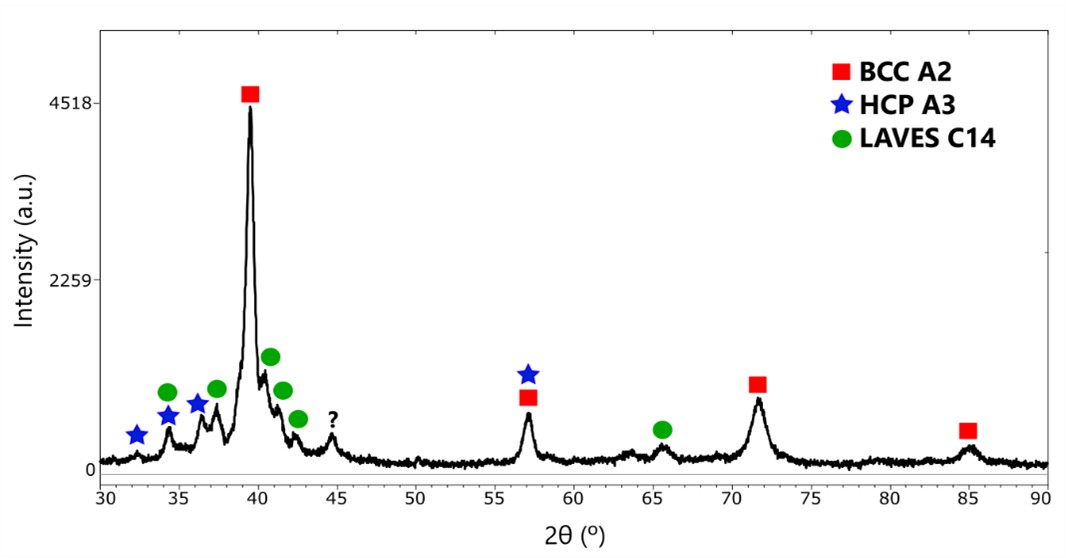
Figure 4 presents the X-ray diffractogram of the MoNbNiTiZr alloy, indicating the presence of diffraction peaks corresponding to phases with BCC A2, HCP A3, and Laves C14 structures. In the range between 34 and 43°, as well as at 66°, the observed peaks can be associated with the presence of a fraction of intermetallic phase. They align with the predicted positions of the C14 phase from the Thermo-Calc simulation, which exhibits its main diffraction peaks in this region. The X-ray diffraction data for the Laves C14 phase, including the arrangement of elements in the sublattices, their occupancies, and unit cell parameters, were adapted from the literature43.

According to the phase equilibria prediction using the CALPHAD method, the formation of BCC B2 and C16 phases was expected, in addition to the previously mentioned BCC A2 and Laves C14 phases. However, the XRD patterns for the alloy did not exhibit sufficiently coinciding peaks for the BCC B2 and C16 phases. It is worth noting that the unidentified peak at approximately 45° coincides with the highest intensity peak of the BCC B2 (NiTi pattern) phase. Nevertheless, we chose not to consider this phase due to the enlargement nature of the other observed peaks, which do not align with the diffraction patterns exhibited by the alloy. The diffraction patterns of the C15 phase and other intermetallic phases were also tested, but no correspondence was observed.
The micrograph obtained through SEM/BSE of the MoNbNiTiZr alloy (Figure 5) reveals three distinct regions: a lighter dendritic region, an intermediate-toned region, and a darker interdendritic region. By conducting EDS analysis (Table 4), it can be inferred that the lighter region corresponds to a phase rich in Mo, Nb and Ti, which may be associated with the BCC A2 structure identified in XRD analysis, as the predominant elements (Mo and Nb) tend to adopt this structure at room temperature. On the other hand, the darker interdendritic and intermediate region exhibits a higher content of Ni, Ti, and Zr, corresponding to the HCP A3 and Laves C14 phases, respectively.

Micrographs (SEM/BSE) of the MoNbNiTiZr alloy in the as-cast state. (a) 200x magnification, (b) 5000x magnification showing BCC A2, HCP A3, and Laves C14 phases.
Studies in the literature have investigated alloys with compositions similar to the one studied in this research, containing Ta instead of Ni, that is, alloys of the MoTaNbTiZr system. In equiatomic compositions, these alloys have been observed to exhibit a microstructure consisting of two BCC4,17. Akmal et al.19 conducted a study to investigate the influence of Mo and Ta on the microstructure of alloys in this system, reporting a two-phase stabilization with BCC structure from contents greater than 0.8 for (MoTa)x in alloys with the stoichiometry (MoTa)xNbTiZ, where x = 0.2, 0.4, 0.6, 0.8 and 1. In the study by Hua et al.10, the TixZrNbTaMo alloy (x = 0.5, 1, 1.5 and 2) showed two BCC phases for all conditions, indicating that the increase in Ti content only takes to a trend towards shorter dendritic arms in the microstructure.
The results obtained in the present research suggest that the replacement of Ta with Ni can lead to the stabilization of the HCP phase, despite what has been reported in some studies suggesting a trend of FCC phase stabilization in other systems7,26,27,44-47. The presence of an HCP-type phase was not expected based on thermodynamic simulations or the existing literature. Therefore, several hypotheses can be considered to explain this divergence. The first hypothesis is that the stabilization of the HCP phase may be associated with the compositional deviation that the alloy suffered during the casting process, leading to higher Ni content than what was calculated in the simulation and typically found in the literature. The second hypothesis is an overestimation of the stability of the BCC B2 phase in the database used (TCHEA6), which is present in the Ni-Ti binary system48. The third hypothesis relates to the metastable condition of the HCP structure phase as a possibly result of the high cooling rates imposed by arc melting49. In this case, a heat treatment could decompose this phase, aligning the microstructure with the expectations based on thermodynamic equilibrium.
3.3. Vickers microhardness
The MoNbNiTiZr based alloy exhibits an average microhardness of 576.5 kgf/mm2 based on the test results. This value is considerably above the values for conventional biomedical alloys. As known, cp-Ti typically has a hardness range of 120 to 200 kgf/mm2, while Ti6Al4V, the hardest among conventional alloys, has a hardness value of 310 kgf/mm2. It is noteworthy that despite the MoNbNiTiZr alloy having a non-single-phase microstructure in its as-cast state, the measured microhardness values demonstrate low standard deviation. This observation suggests a high degree of property homogeneity within the alloy. Considering these findings, the multicomponent MoNbNiTiZr alloy produced via arc melting shows potential in surpassing the mechanical strength and wear resistance of conventional alloys. In a preliminary analysis, the obtained microhardness value indicates suitability for use in biomedical applications.
3.4. In vitro biocompatibility evaluation
The biocompatibility study of synthesized compounds, in special bulk metallic compounds, is a challenge since a wide set of experiments is required to reveal the biocompatibility profile. In the present study, samples constituted by MoNbNiTiZr or cp-Ti were evaluated against normal human cell lineage, and the biocompatibility potential of the system was preliminarily studied. The HEK-293 cells were chosen to integrate this evaluation due to their good superficial adhesion properties to metallic surfaces. The obtained results for cells treated with cp-Ti samples during 24 h are available in Figure 6. The flow cytometry panel containing the data regarding SSC (side scatter) vs FSC (forward scatter) parameters is available in Figure 6a, and the data revealed one single primary population of cells exhibiting low values for both parameters studied, compatible with healthy cells. In the same direction, the flow cytometry panel in Figure 6b, considered SSC vs. Fixable viable stain-450 dye parameters, revealed two different populations of HEK-293 cells. Low SSC and V-450 emissions values are available the population of live cells that reached 89.97% of cells studied. On the other hand, with high values, V450 can find the population of dead cells, representing only 8.03% of the treated cells. The profile of treated cells is better visualized in Figure 6c, characterized by the histogram of treated cells overlaid by negative control cells (treated with sterile saline solution – 0.9 w/v%).

Flow cytometry panels of HEK-293 cells treated with cp-Ti samples during 24 h. FSC vs. SSC dot plot panel revealing a well-defined population of live cells and debris (a); SSC vs Fixable Viable Stain (V-450). Contour plot detailing two well-defined populations of live (89.9%) and dead cells (8.03%) (b); Histogram of V-450 vs. normalized population (%) (c). The continuous line represents the distribution of cells treated with cp-Ti samples. Line-dot-line represents the behavior of negative control, constituted by cells treated with sterile saline solution (0.9 w/v%).
The results obtained for cells treated with MoNbNiTiZr samples for 24 h are available in Figure 7. From the flow cytometry panels obtained, it is possible to verify that the treatment applied could induce similar biocompatible behavior to the cp-Ti samples. Figures 777c revealed an analogous pattern obtained in Figures 66b, in which it was determined to live cells the percentage of 91.25% of the tested population and dead cells only 6.75%.
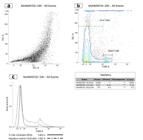
Flow cytometry panels of HEK-293 cells MoNbNiTiZr samples during 24 h. FSC vs. SSC dot plot panel revealing a well-defined population of live cells and debris (a). SSC vs. Fixable Viable Stain (V-450) Contour plot detailing two well-defined populations of live (89.9%) and dead cells (8.03%) (b). Histogram of V-450 vs normalized population (%) (c). The continuous line represents the distribution of cells treated with cp-Ti samples. Line-dot-line represents the behavior of negative control, constituted by cells treated with sterile saline solution (0.9 w/v%).
The study evaluated metallic samples’ behavior for more than 24 h, reaching a total of 48 h. The results for both samples revealed that, even with additional treatment time, no significant cytotoxicity was induced in the studied cells displaying a biocompatible profile. Figures 88b show the flow cytometry panels detailing the results obtained in which HEK-293 cells were treated with cp-Ti and MoNbNiTiZr samples, respectively. The obtained data revealed cell viability higher than 90% for both investigations made, and the relevant biocompatibility profile of metallic samples studied.

Flow cytometry panels of HEK-293 cells treated during 48 h. Contour plot detailing two well- defined populations of live (89.9%) and dead cells (8.03%) treated with cp-Ti samples (a); Contour plot detailing two well-defined populations of live (99.08%) and dead cells (0.62%) MoNbNiTiZr samples (b).
3.5. Antimicrobial activity
Figures 9 and 10 show the results of antimicrobial activity for the alloy MoNbNiTiZr and cp-Ti against Gram-positive bacterias S. aureus and S. aureus HU25. In Figures 9 a and 10a it is possible to observe a statistically significant reduction of colony forming units per mL of S. aureus and S. aureus HU25 in HEA when compared to cp-Ti. For the bacterium S. aureus, it appears that cp-Ti has about 108 CFU/mL, while the alloy demonstrates about 106 CFU/mL (Figure 9a). Likewise, for the bacterium S. aureus HU25 presents approximately 109 CFU/mL for cp-Ti and approximately 107 CFU/mL for the multicomponent alloy (Figure 10a).

Colony-forming units per milliliter (CFU/mL) in S. aureus biofilms on cp-Ti and MoNbNi- TiZr (a); Micrographs of S. aureus biofilm on cp-Ti (b) and MoNbNiTiZr (c). Results are presented as mean ± standard error of the mean from 5-7 samples per group.

Colony-forming units per milliliter (CFU/mL) in S. aureus HU25 biofilms on cp-Ti and MoNbNiTiZr (a); Micrographs of S. aureus HU25 biofilm on cp-Ti (b) and MoNbNiTiZr (c). Results are presented as mean ± standard error of the mean from 5-7 samples per group.
The SEM/SE micrographs of cp-Ti and multicomponent alloy (Figure 9b and Figure 10b, and Figure 9c and Figure 10c, respectively) corroborate the data obtained demonstrating growth of S. aureus in biofilm formation on cp-Ti over the entire analyzed surface. On the other hand, for the multicomponent alloy it is possible to observe a reduction of the biofilm formation of S. aureus and S. aureus HU25. The reduction in bacterial growth and adhesion in biofilms can be attributed to the constituent elements and characteristics of multicomponent alloys. Although Ti does not possess significant antimicrobial capacity, as demonstrated by Yasuyuki et al., literature reports emphasize that elements such as Mo, Ni, and Zr contribute to enhanced resistance against bacteria, Furthermore, there are studies focusing on alloys composed of one or more of these elements, highlighting their antimicrobial capabilities50-54.
It is known that several metal alloys used in implants are susceptible to failure due to bacterial contamination. Hence, there is a demand for materials with enhanced bacterial resistance to inhibit bacterial adhesion, colonization, and biofilm formation. The results obtained with the MoNbNiTiz alloy demonstrate its ability to resist biofilm formation in these preliminary tests, which can reduce the risk of implant failure caused by bacterial infections.
As an example for comparison, the antimicrobial activity of the CoCrCuFeNi alloy was evaluated by Gao et al.26 using both traditional metallurgy and selective laser melting methods. In their study, stainless steel 304 was also included for comparison. The results demonstrated the superior effectiveness of the multicomponent alloy against both S. aureus and E. coli when compared to stainless steel. The surfaces of the CoCrCuFeNi alloy samples exhibited fewer bacterial colony forming units in comparison. Particularly, among the CoCrCuFeNi samples, the one SLM-produced showed the best antimicrobial results26. This study highlights the potential of multicomponent alloys in achieving enhanced antimicrobial properties.
4. Conclusion
Multicomponent alloys or high-entropy alloys are materials with a wide compositional range and are still in the early stages of development. Preliminary literature findings suggest potential advantages that these alloys may offer over traditional materials for biomedical applications, opening possibilities for new materials that can complement the use of conventional alloys and be applied as coatings.
The feasibility of synthesizing the MoNbNiTiZr alloy by arc melting has been demonstrated, revealing dendritic and interdendritic regions, with phases exhibiting BCC A2, HCP A3 and Laves C14 crystal structures. The multicomponent alloy exhibits an average microhardness of 576.5 kgf/mm2, indicating good mechanical strength and wear resistance tendencies. In terms of cytotoxicity, the alloy demonstrates biocompatible behavior similar to that of cp-Ti. Additionally, the alloy exhibits greater resistance to the formation of bacterial colonies of S. aureus and S. aureus HU25 compared to cp-Ti.
These findings demonstrate the potential of the MoNbNiTiZr alloy for biomedical applications. Its unique microstructural characteristics, favorable mechanical properties, biocompatibility, and antimicrobial resistance make it a promising candidate for further exploration in the field of biomaterials. Further research and optimization strategies are warranted to fully harness the capabilities of MPEAs in biomedical applications and to investigate their corrosion resistance, long-term stability, and biological responses.
5. Acknowledgments
This study was also financed in part by the Coordenação de Aperfeiçoamento de Pessoal de Nível Superior - Brasil (CAPES), Federal University of Itajubá - UNIFEI, Graduate Program in Mechanical Engineering.
6. References
- 1 Narushima T. New-generation metallic biomaterials. In: Niinomi M, editor. Metals for biomedical devices. Sawston: Woodhead Publishing; 2019. p. 495-521.
-
2 Grand View Research. Biomaterials market worth $488.7 billion by 2030 [Internet]. USA: Market Research Future; 2023 [cited 2023 Nov 29]. Available from: https://www. grandviewresearch.com/press-release/global-biomaterials-market.
» https://www. - 3 Motallebzadeh A, Peighambardoust NS, Sheikh S, Murakami H, Guo S, Canadinc D. Microstructural, mechanical and electrochemical characterization of TiZrTaHfNb and Ti1.5ZrTa0.5Hf0.5Nb0.5 refractory high-entropy alloys for biomedical applications. Intermetallics. 2019;113:106572.
- 4 Shittu J, Pole M, Cockerill I, Sadeghilaridjani M, Reddy LVK, Manivasagam G, et al. Biocompatible high entropy alloys with excellent degradation resistance in a simulated physiological environment. ACS Appl Bio Mater. 2020;3(12):8890-900.
- 5 Tüten N, Canadinc D, Motallebzadeh A, Bal B. Microstructure and tribological properties of TiTaHfNbZr high entropy alloy coatings deposited on Ti6Al4V substrates. Intermetallics. 2019;105:99-106.
- 6 Ishimoto T, Ozasa R, Nakano K, Weinmann M, Schnitter C, Stenzel M, et al. Development of TiNbTaZrMo bio-high entropy alloy (BioHEA) super-solid solution by selective laser melting, and its improved mechanical property and biocompatibility. Scr Mater. 2021;194:113658.
- 7 Alagarsamy K, Fortier A, Komarasamy M, Kumar N, Mohammad A, Banerjee S, et al. Mechanical properties of high entropy alloy Al0.1CoCrFeNi for peripheral vascular stent application. Cardiovasc Eng Technol. 2016;7(4):448-54.
- 8 Akmal M, Park HK, Ryu HJ. Plasma spheroidized MoNbTaTiZr high entropy alloy showing improved plasticity. Mater Chem Phys. 2021;273:125060.
- 9 Berger JE, Jorge AM Jr, Asato GH, Roche V. Formation of self-ordered oxide nanotubes layer on the equiatomic TiNbZrHfTa high entropy alloy and bioactivation procedure. J Alloys Compd. 2021;865:158837.
- 10 Hua N, Wang W, Wang Q, Ye Y, Lin S, Zhang L, et al. Mechanical, corrosion, and wear properties of biomedical TiZrNbTaMo high entropy alloys. J Alloys Compd. 2021;861:157997.
- 11 Yuan Y, Wu Y, Yang Z, Liang X, Lei Z, Huang H, et al. Formation, structure and properties of biocompatible TiZrHfNbTa high-entropy alloys. Mater Res Lett. 2019;7(6):225-31.
- 12 Calin M, Vishnu J, Thirathipviwat P, Popa MM, Krautz M, Manivasagam G, et al. Tailoring biocompatible TiZrNbHfSi metallic glasses based on high-entropy alloys design approach. Mater Sci Eng C. 2021;121:111733.
- 13 Yeh JW, Chen SK, Lin SJ, Gan JY, Chin TS, Shun TT, et al. Nanostructured high-entropy alloys with multiple principal elements: novel alloy design concepts and outcomes. Adv Eng Mater. 2004;6(5):299-303.
- 14 Cantor B, Chang ITH, Knight P, Vincent AJB. Microstructural development in equiatomic multicomponent alloys. Mater Sci Eng A. 2004;375:213-8.
- 15 Song H, Lee S, Lee K. Thermodynamic parameters, microstructure, and electrochemical properties of equiatomic TiMoVWCr and TiMoVNbZr high-entropy alloys prepared by vacuum arc remelting. Int J Refract Met Hard Mater. 2021;99:105595.
- 16 Chen Y, Xie B, Liu B, Cao Y, Li J, Fang Q, et al. A focused review on engineering application of multi-principal element alloy. Front Mater. 2022;8:816309.
- 17 Wang SP, Xu J. TiZrNbTaMo high-entropy alloy designed for orthopedic implants: as-cast microstructure and mechanical properties. Mater Sci Eng C. 2017;73:80-9.
- 18 Navi AS, Haghighi SE, Haghpanahi M, Momeni A. Investigation of microstructure and corrosion of TiNbTaZrMo high-entropy alloy in the simulated body fluid. J Bionics Eng. 2021;18(1):118-27.
- 19 Akmal M, Hussain A, Afzal M, Lee YI, Ryu HJ. Systematic study of (MoTa)xNbTiZr medium and high-entropy alloys for biomedical implants in vivo biocompatibility examination. J Mater Sci Technol. 2021;78:183-91.
- 20 Castro D, Jaeger P, Baptista A, Oliveira J. An overview of high-entropy alloys as biomaterials. Metals. 2021;11(4):648.
- 21 Ahmady AR, Ekhlasi A, Nouri A, Nazarpak MH, Gong P, Solouk A. High entropy alloy coatings for biomedical applications: a review. Smart Mater Struct. 2023;1:100009.
- 22 Oliveira TG, Fagundes DV, Capellato P, Sachs D, Silva AAAP. A review of biomaterials based on high-entropy alloys. Metals. 2022;12(11):1940.
- 23 Aksoy CB, Canadinc D, Yagci MB. Assessment of Ni ion release from TiTaHfNbZr high entropy alloy coated NiTi shape memory substrates in artificial saliva and gastric fluid. Mater Chem Phys. 2019;236:121802.
- 24 Perumal G, Grewal HS, Pole M, Reddy LVK, Mukherjee S, Singh H, et al. Enhanced biocorrosion resistance and cellular response of a dual-phase high entropy alloy through reduced elemental heterogeneity. ACS Applied Bio Materials Journal. 2020;3(2):1233-44.
- 25 Hori T, Nagase T, Todai M, Matsugaki A, Nakano T. Development of non-equiatomic TiNbTaZrMo high-entropy alloys for metallic biomaterials. Scr Mater. 2019;172:83-7.
- 26 Gao J, Jin Y, Fan Y, Xu D, Meng L, Wang C, et al. Fabricating antibacterial CoCrCuFeNi high-entropy alloy via selective laser melting and in-situ alloying. J Mater Sci Technol. 2022;102:159-65.
- 27 Socorro-Perdomo P, Florido-Suarez N, Voiculescu I, Mirza-Rosca J. Comparative EIS study of AlxCoCrFeNi alloys in Ringer’s solution for medical instruments. Metals. 2021;11(6):928.
- 28 Li Z, Lai W, Wang B, Tong X, You D, Li W, et al. A novel Ti42.5Zr42.5Nb5Ta10 multi-principal element alloy with excellent properties for biomedical applications. Intermetallics. 2022;151:107731.
- 29 Srivastav CK, Anuraag NS, Pandey AK, Prasad NK, Khan D. Design, preparation and study of microstructure, phase evolution and thermal stability of Ti-Co0.35-Cr0.35-Nb-Zr nanocrystalline HEA for biomedical applications. Mater Today Commun. 2023;35:105557.
- 30 Bololoi AE, Geambazu LE, Antoniac IV, Bololoi RV, Manea CA, Cojocaru VD, et al. Solid-state processing of CoCrMoNbTi high-entropy alloy for biomedical applications. Materials. 2023;16(19):6520.
- 31 Todai M, Nagase T, Hori T, Matsugaki A, Sekita A, Nakano T. Novel TiNbTaZrMo high-entropy alloys for metallic biomaterials. Scr Mater. 2017;129:65-8.
- 32 Yang W, Liu Y, Pang S, Liaw PK, Zhang T. Bio-corrosion behavior and in vitro biocompatibility of equimolar TiZrHfNbTa high-entropy alloy. Intermetallics. 2020;124:106845.
- 33 Iijima Y, Nagase T, Matsugaki A, Wang P, Ameyama K, Nakano T. Design and development of TiZrHfNbTaMo high-entropy alloys for metallic bio- materials. Mater Des. 2021;202:109548.
- 34 Zhang E, Zhao X, Hu J, Wang R, Fu S, Qin G. Antibacterial metals and alloys for potential biomedical implants. Bioact Mater. 2021;6(8):2569-612.
- 35 Burla A, Khandelwal M, Vaidya M. Antibacterial properties of cu containing complex concentrated alloys. Mater Today Commun. 2022;33:104915.
- 36 Pokrowiecki R, Zareba T, Szaraniec B, Palka K, Mielczarek A, Menaszek E, et al. In vitro studies of nanosilver-doped titanium implants for oral and maxillofacial surgery. Int J Nanomedicine. 2017;12:4285-97.
-
37 ISO: International Organization for Standardization. ISO 10993-5:2009: tests for in vitro cytotoxicity [Internet]. Geneva: ISO; 2009 [cited 2025 Feb 11]. Available from: https://www.iso.org/standard/36406.html
» https://www.iso.org/standard/36406.html - 38 Teixeira L, Resende C, Ormonde L, Rosenbaum R, Figueiredo A, De Lencastre H, et al. Geographic spread of epidemic multiresistant Staphylococcus aureus clone in Brazil. J Clin Microbiol. 1995;33(9):2400-4.
- 39 Machado TS, Pinheiro FR, Andre LSP, Pereira RFA, Correa RF, Mello GC, et al. Virulence factors found in nasal colonization and infection of methicillin-resistant Staphylococcus aureus (MRSA) isolates and their ability to form a biofilm. Toxins. 2020;13(1):14.
- 40 Pinheiro L, Hoelz L, Ferreira M, Oliveira L, Pereira R, Valle A, et al. Synthesis of benzoylthiourea derivatives and analysis of their antibacterial performance against planktonic Staphylococcus aureus and its biofilms. Lett Appl Microbiol. 2020;71(6):645-51.
- 41 Andre LS, Pereira RFA, Pinheiro FR, Pascoal ACRF, Ferreira VF, Silva F, Gonzaga DTG, Costa DCS, Ribeiro T, Sachs D, et al. Biological evaluation of selected 1, 2, 3-triazole derivatives as antibacterial and antibiofilm agents. Curr Top Med Chem. 2020;20(24):2186-91.
- 42 Villars P. Pearson’s Crystal Data®: crystal structure database for inorganic compounds. Materials Park: ASM International; 2007.
- 43 Levin I, Krayzman V, Chiu C, Moon KW, Bendersky L. Local metal and deuterium ordering in the deuterated ZrTiNi C14 Laves phase. Acta Mater. 2012;60(2):645-56.
- 44 Chang SH, Wu SK, Liao BS, Su CH. Selective leaching and surface properties of CoNiCr-based medium-high-entropy alloys. Appl Surf Sci. 2020;515:146044.
- 45 Zhou E, Qiao D, Yang Y, Xu D, Lu Y, Wang J, et al. A novel Cu-bearing high-entropy alloy with significant antibacterial behavior against corrosive marine biofilms. J Mater Sci Technol. 2020;46:201-10.
- 46 Liu D, Ma Z, Zhao H, Ren L, Zhang W. Nano-indentation of biomimetic artificial bone material based on porous Ti6Al4V substrate with Fe22Co22Ni22Ti22Al12 high entropy alloy coating. Mater Today Commun. 2021;28:102659.
- 47 Ríos ML, Perdomo PS, Voiculescu I, Geanta V, Craciun V, Boerasu I, et al. Effects of nickel content on the microstructure, microhardness and corrosion behavior of high-entropy AlCoCrFeNix alloys. Sci Rep. 2020;10(1):1.
-
48 ASM International. ASM alloy phase diagram database [cited 2024 Jan 7]. Materials Park: ASM International; 2024. Available from: https://www.asminternational.org/online-databases-journals
» https://www.asminternational.org/online-databases-journals - 49 Bolokang A, Phasha M. Novel synthesis of metastable HCP nickel by water quenching. Mater Lett. 2011;65(1):59-60.
- 50 Yasuyuki M, Kunihiro K, Kurissery S, Kanavillil N, Sato Y, Kikuchi Y. Antibacterial properties of nine pure metals: a laboratory study using staphylococcus aureus and escherichia coli. Biofouling. 2010;26(7):851-8.
- 51 Ribeiro AM, Flores-Sahagun TH, Paredes RC. A perspective on molybdenum biocompatibility and antimicrobial activity for applications in implants. J Mater Sci. 2016;51(6):2806-16.
- 52 Zhang E, Zhao X, Hu J, Wang R, Fu S, Qin G. Antibacterial metals and alloys for potential biomedical implants. Bioact Mater. 2021;6(8):2569-612.
- 53 Sreekumari KR, Sato Y, Kikuchi Y. Antibacterial metals: a viable solution for bacterial attachment and microbiologically influenced corrosion. Mater Trans. 2005;46(7):1636-45.
- 54 Du JK, Chao CY, Chiu KY, Chang YH, Chen KK, Wu JH, et al. Antibacterial properties and corrosion resistance of the newly developed biomaterial, Ti–12Nb–1Ag alloy. Metals. 2017;7(12):566.