The Effect of CO2 Partial Pressure on the Evolution of Corrosion Product in a Confined Space
Abstract
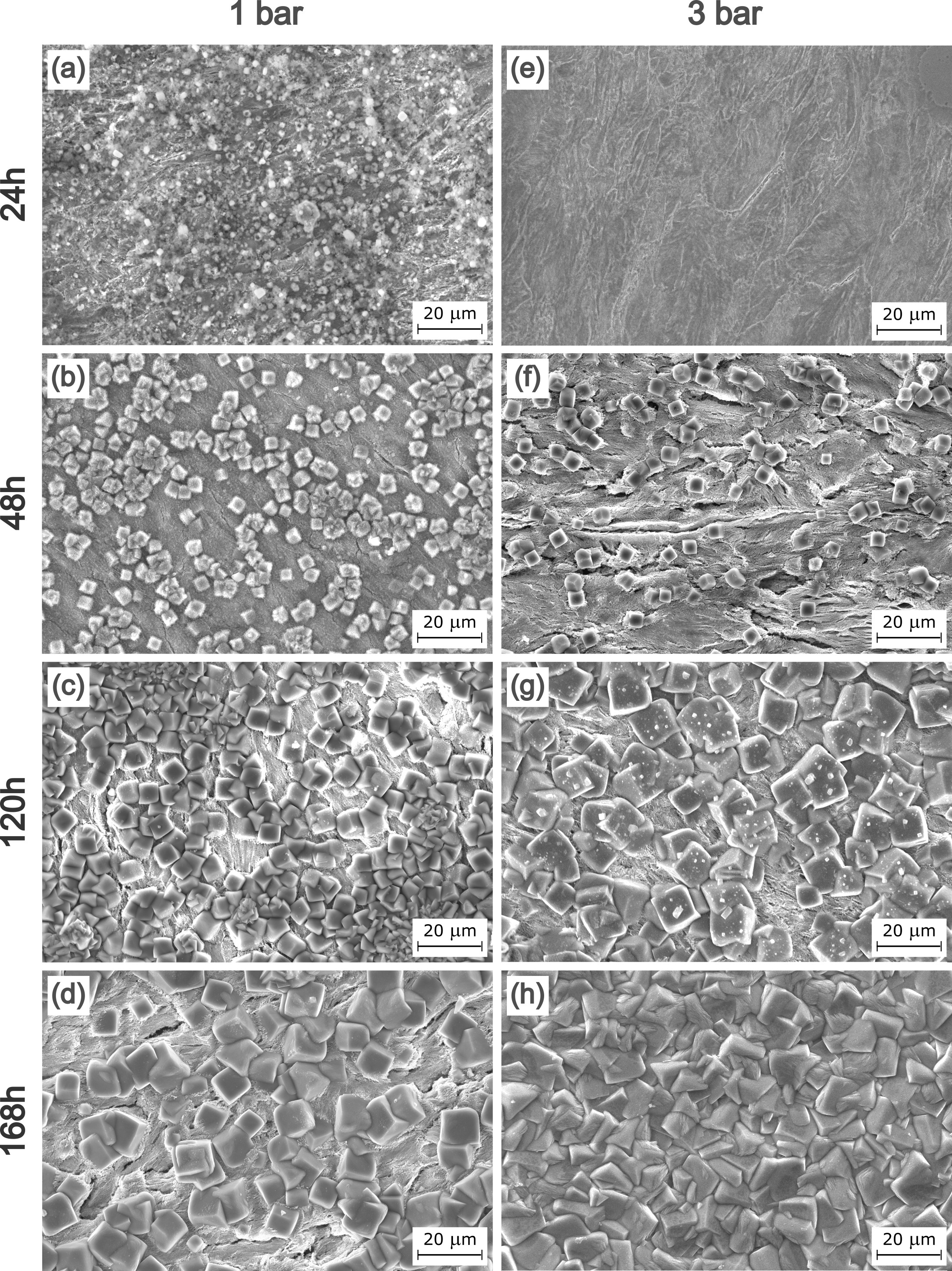
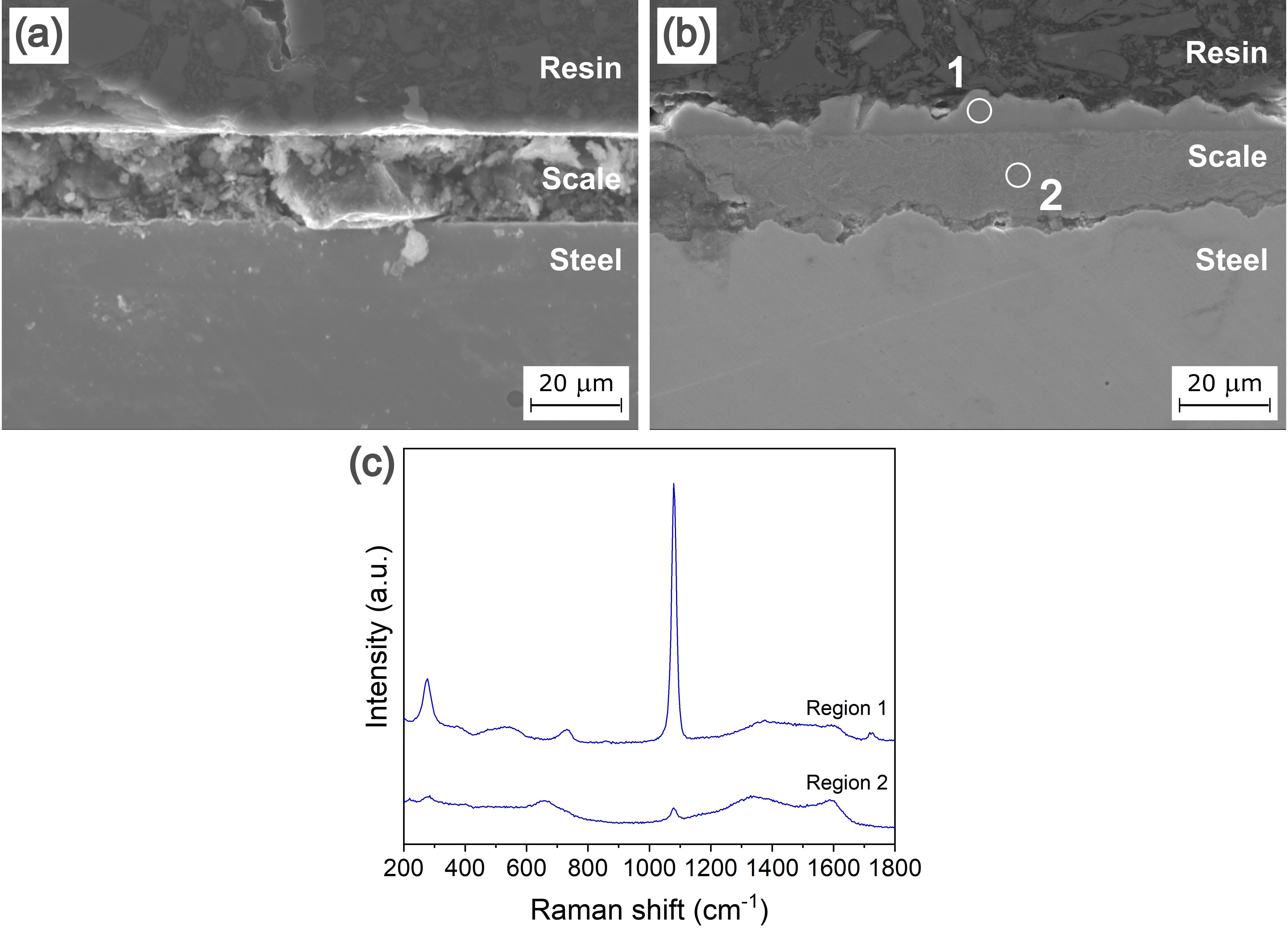
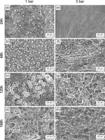
Saturation of acidic gases in seawater, resulting from deepwater activities in the oil and gas industry, can promote detrimental effects on the internal metallic sheath of pipelines due to an eventual failure of the outer sheath. Failures in the tensile armor typically occur in a confined space due to the low volume of electrolyte, i.e. seawater, in comparison to the exposed surface area of the steel. This condition promotes the supersaturation of several species in this environment. This study was conducted to investigate the complex chemistry and electrochemical mechanism involved in CO2 corrosion in confined spaces. The aim is to elucidate the impact of low CO2 partial pressures, either 1 or 3 bar, on the supersaturation of species as well as the formation of a solid FeCO3 film onto the alloy surface and evaluate its protectiveness degree. The data obtained suggests the presence of a more protective layer associated with a pressure of 3 bar, represented by a continuous and compact FeCO3 film approximately 26.54 µm thick. Despite the faster growth of FeCO3 films at 1 bar, they appear to exhibit non-protective properties, as observed through SEM analyses, with a discontinuous layer measuring about 20.86 µm in thickness.
Keywords:
CO2 Corrosion; Confined space; Pressure; FeCO3
 Thumbnail
 Thumbnail
 Thumbnail
 Thumbnail
 Thumbnail