Effect of Severe Surface Mechanical Treatment on the Microstructure, Corrosion Resistance, and Wear Behavior of AA5052 Aluminium Alloy
Abstract
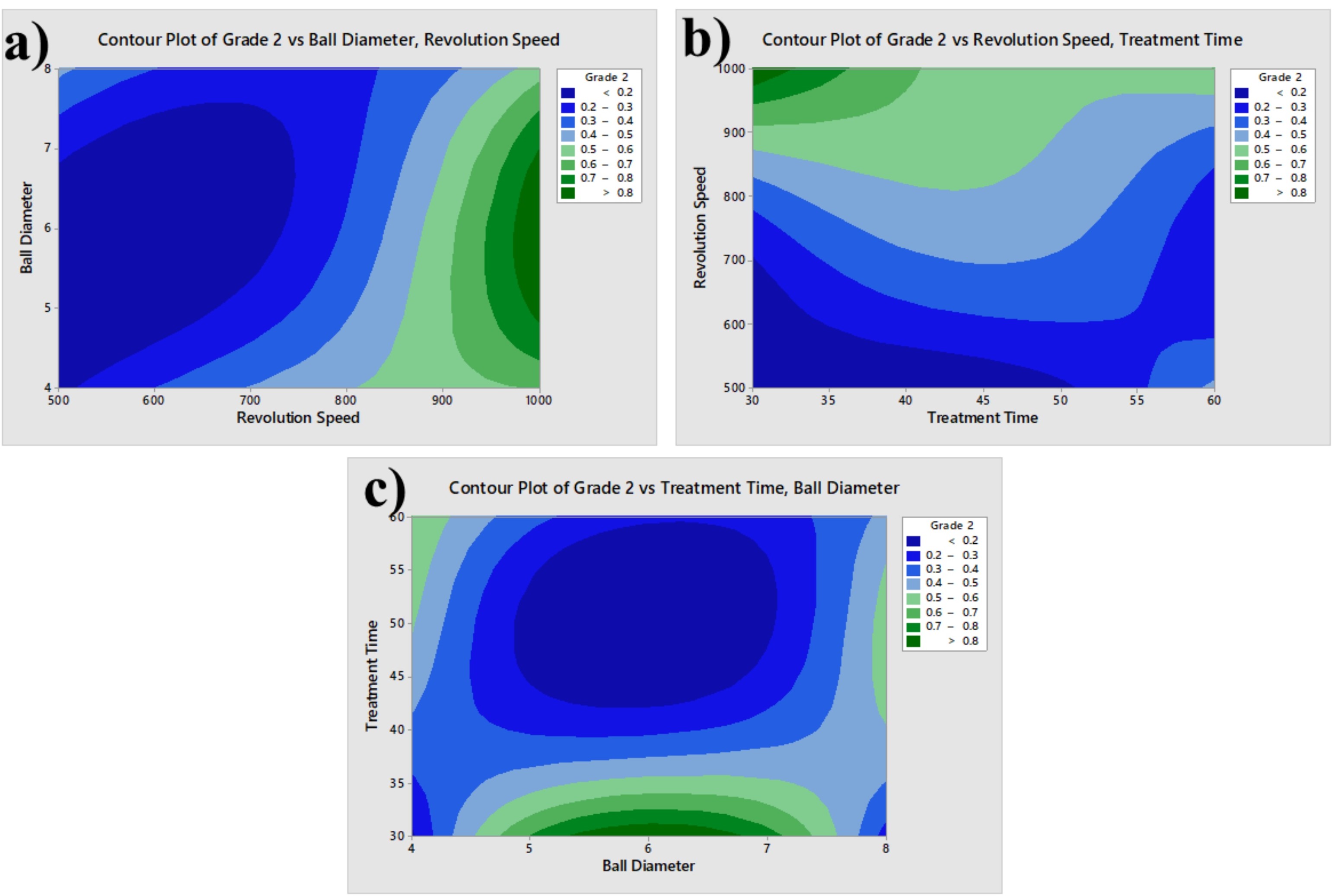
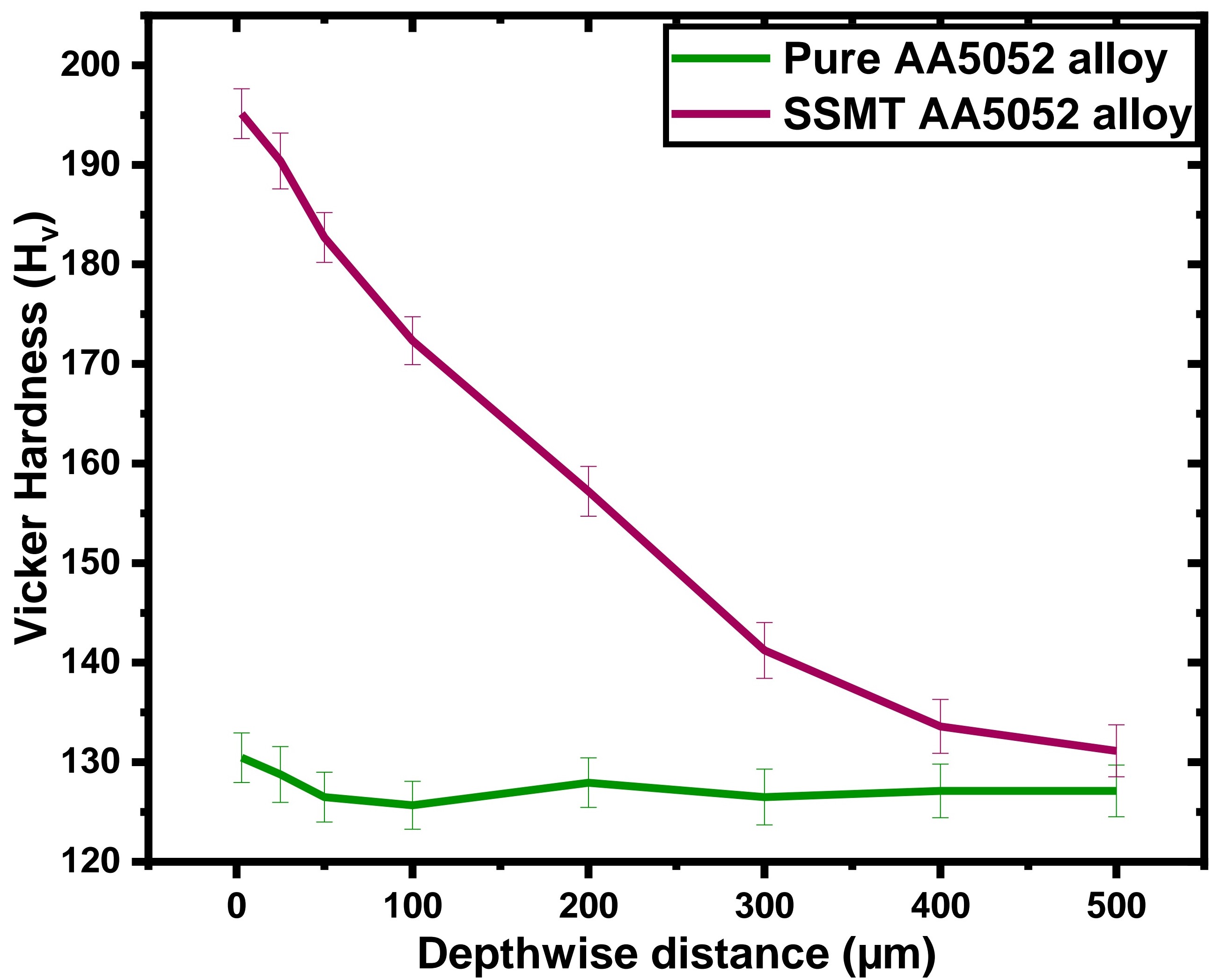
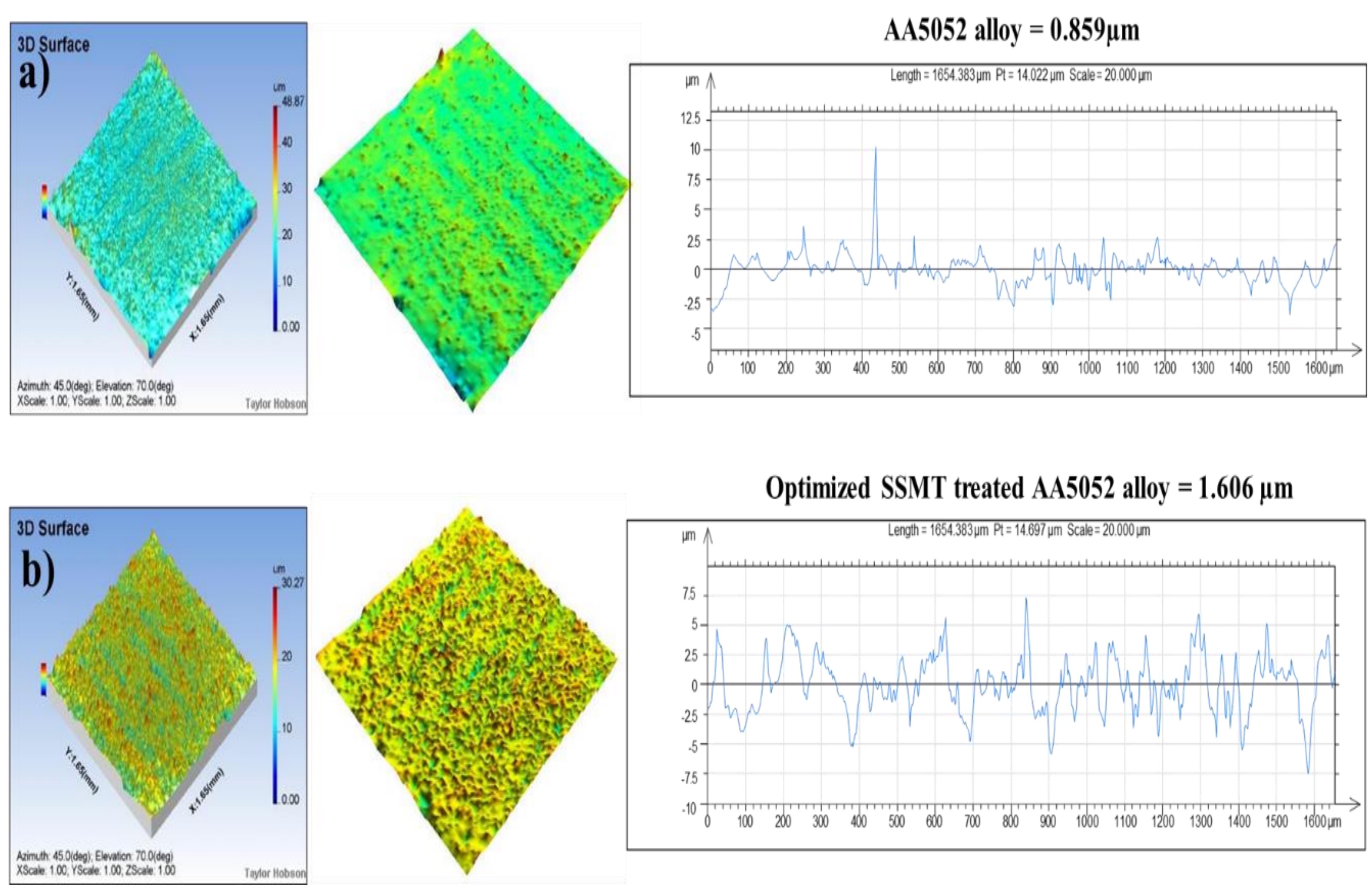
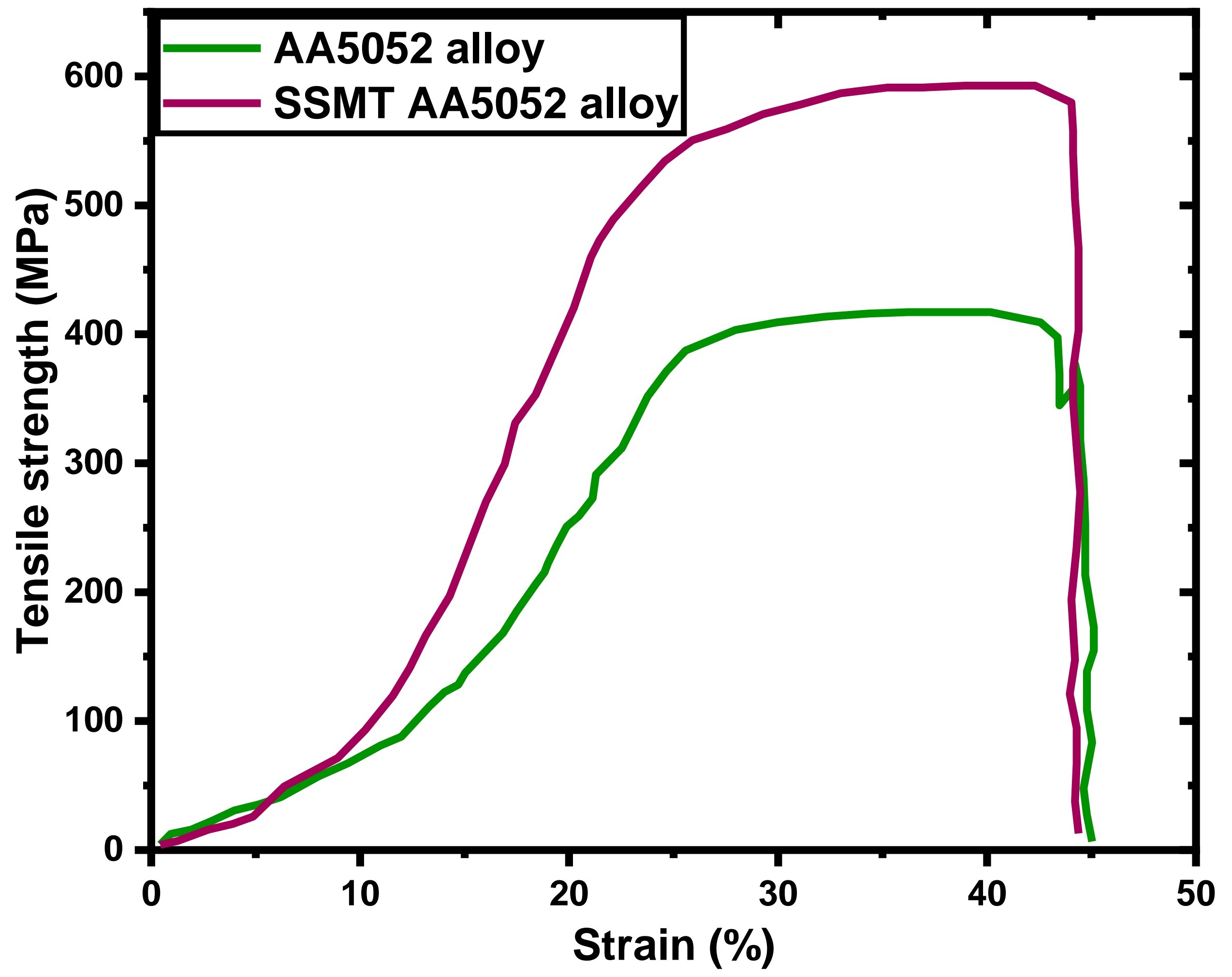
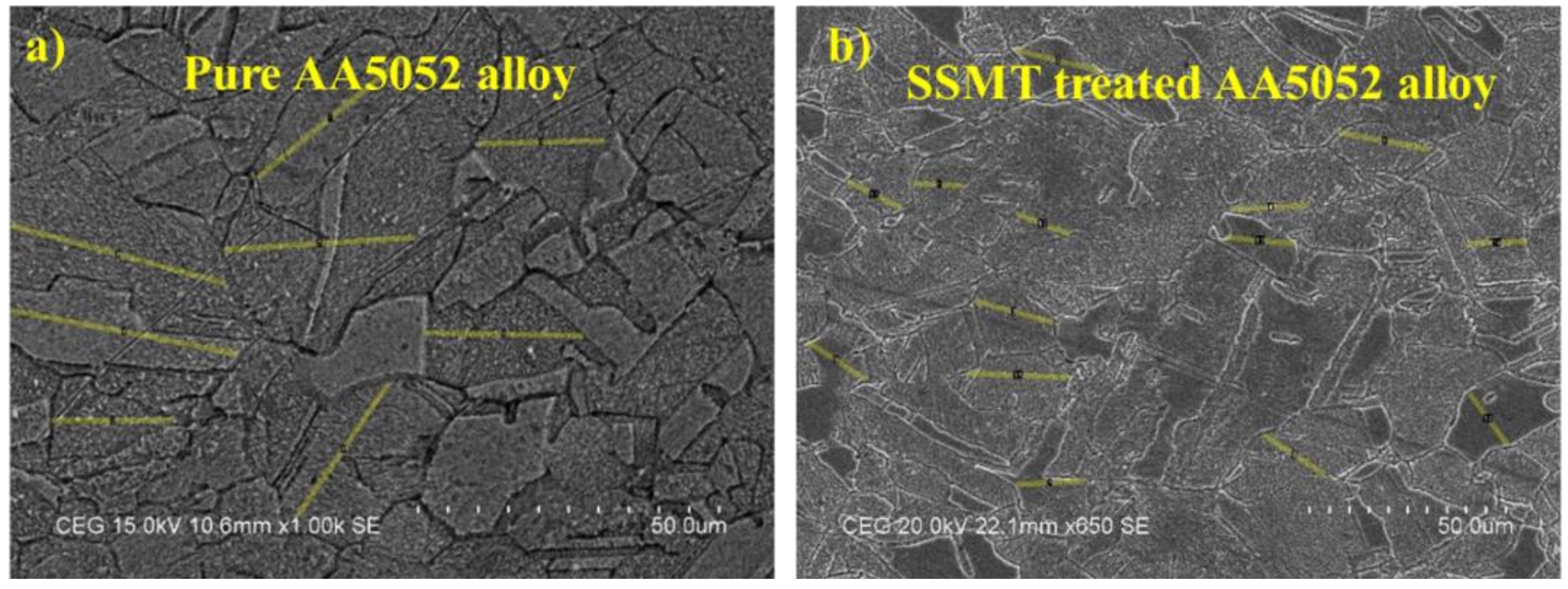
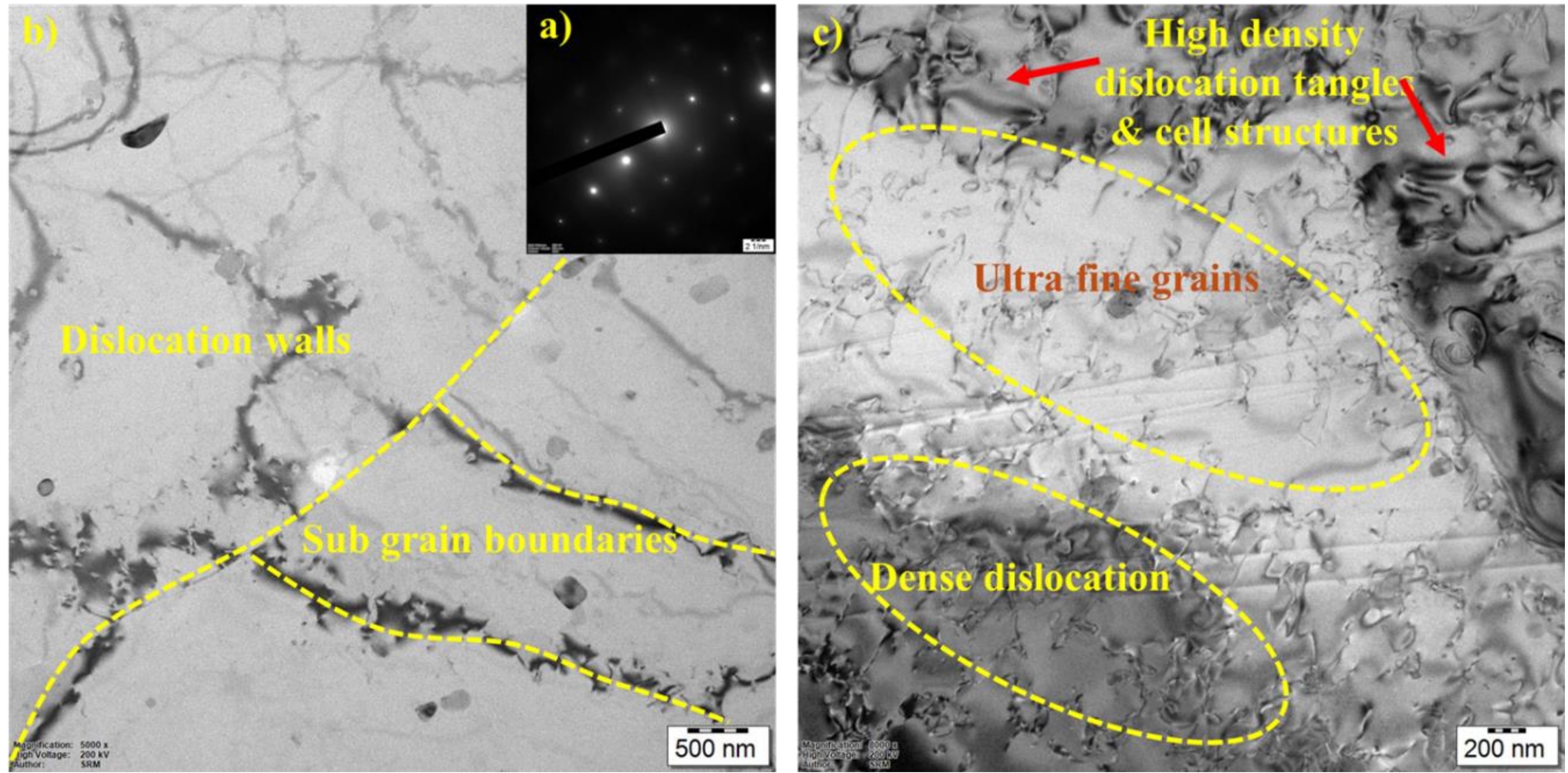
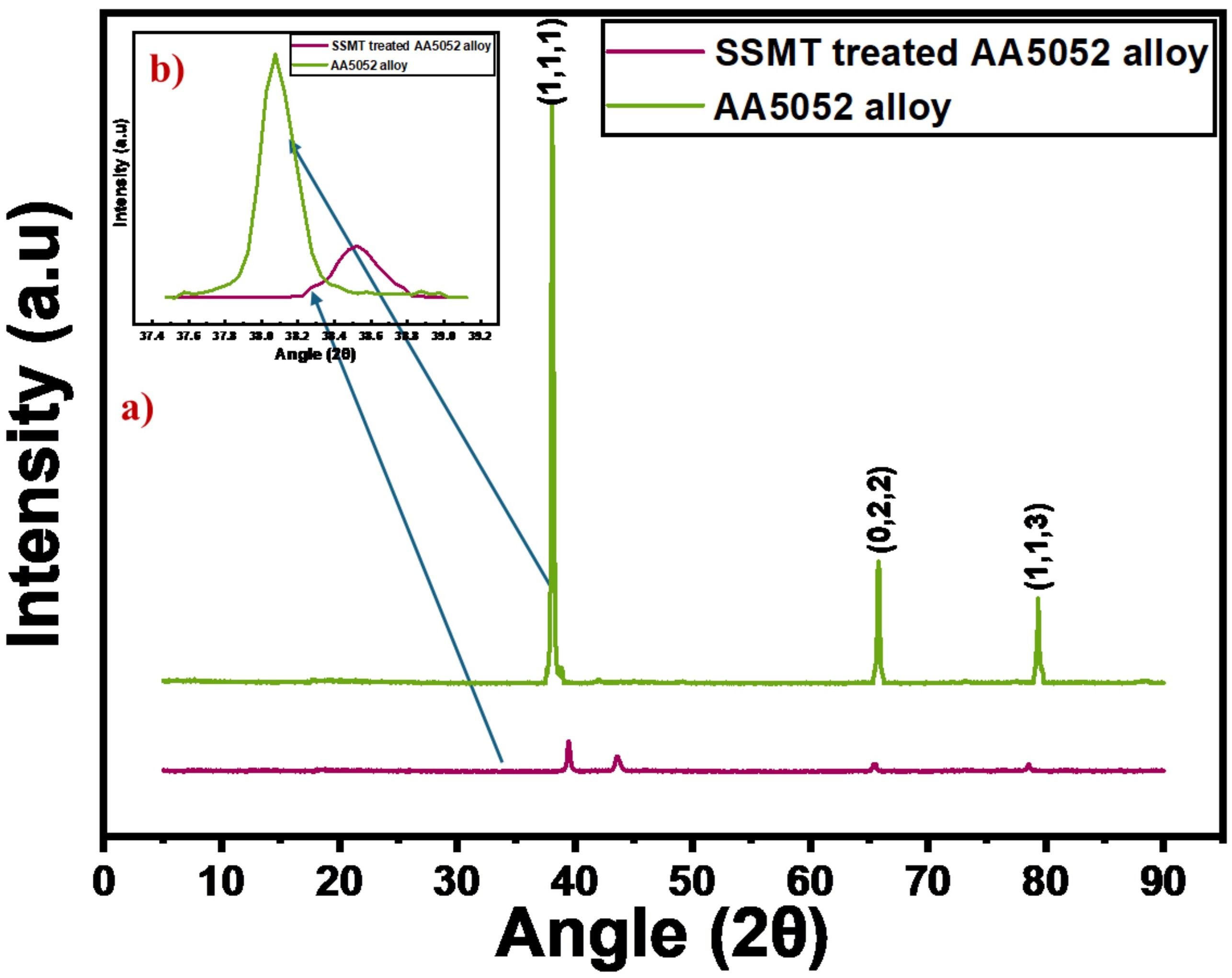
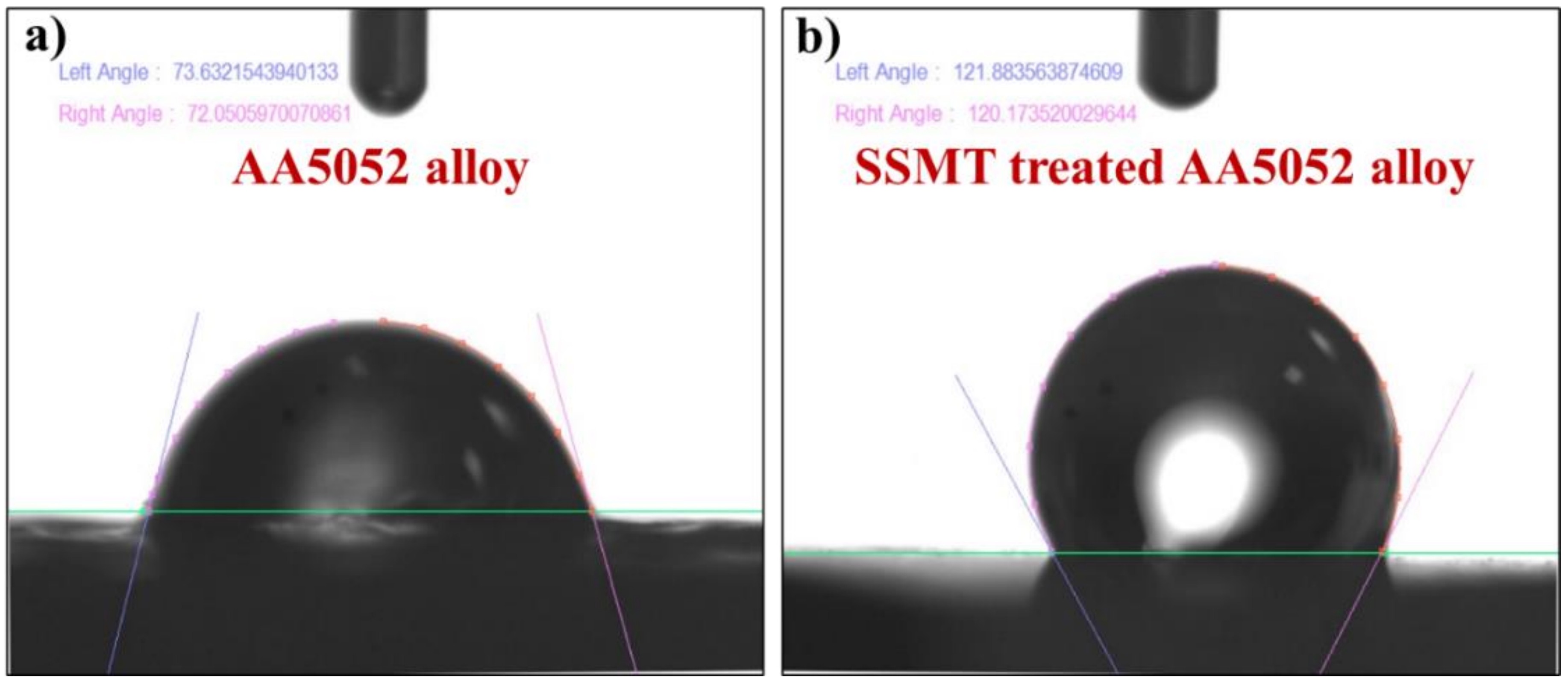
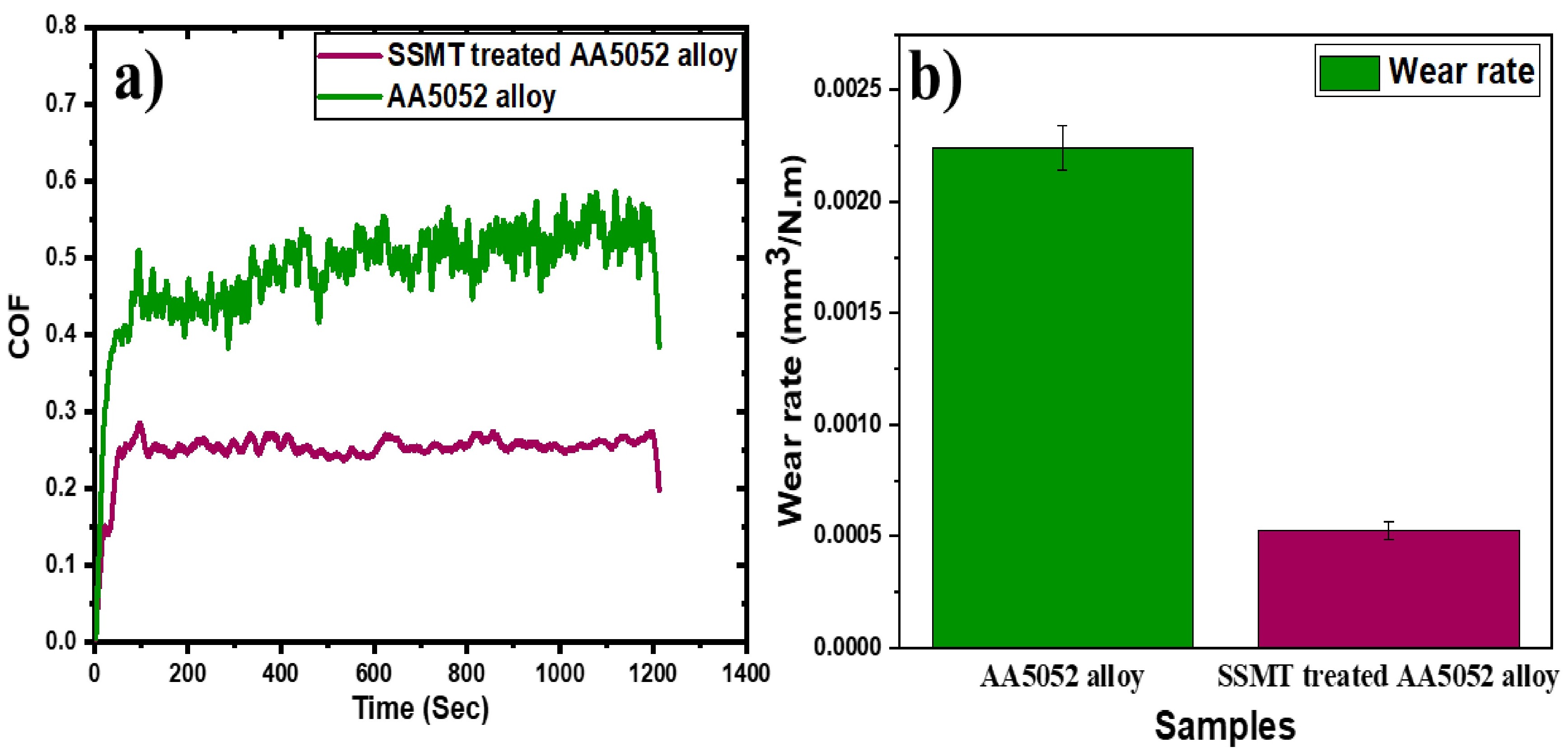
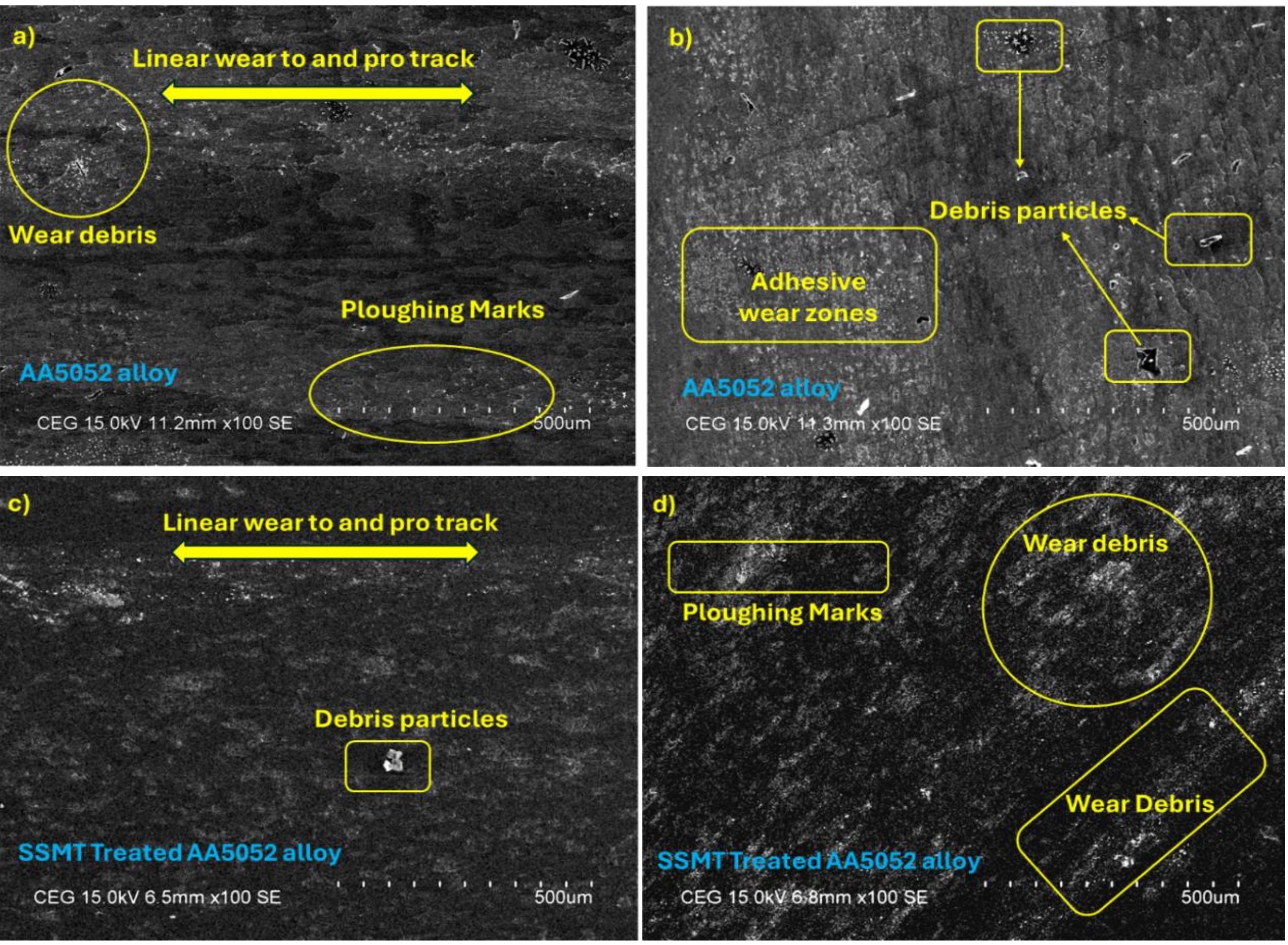
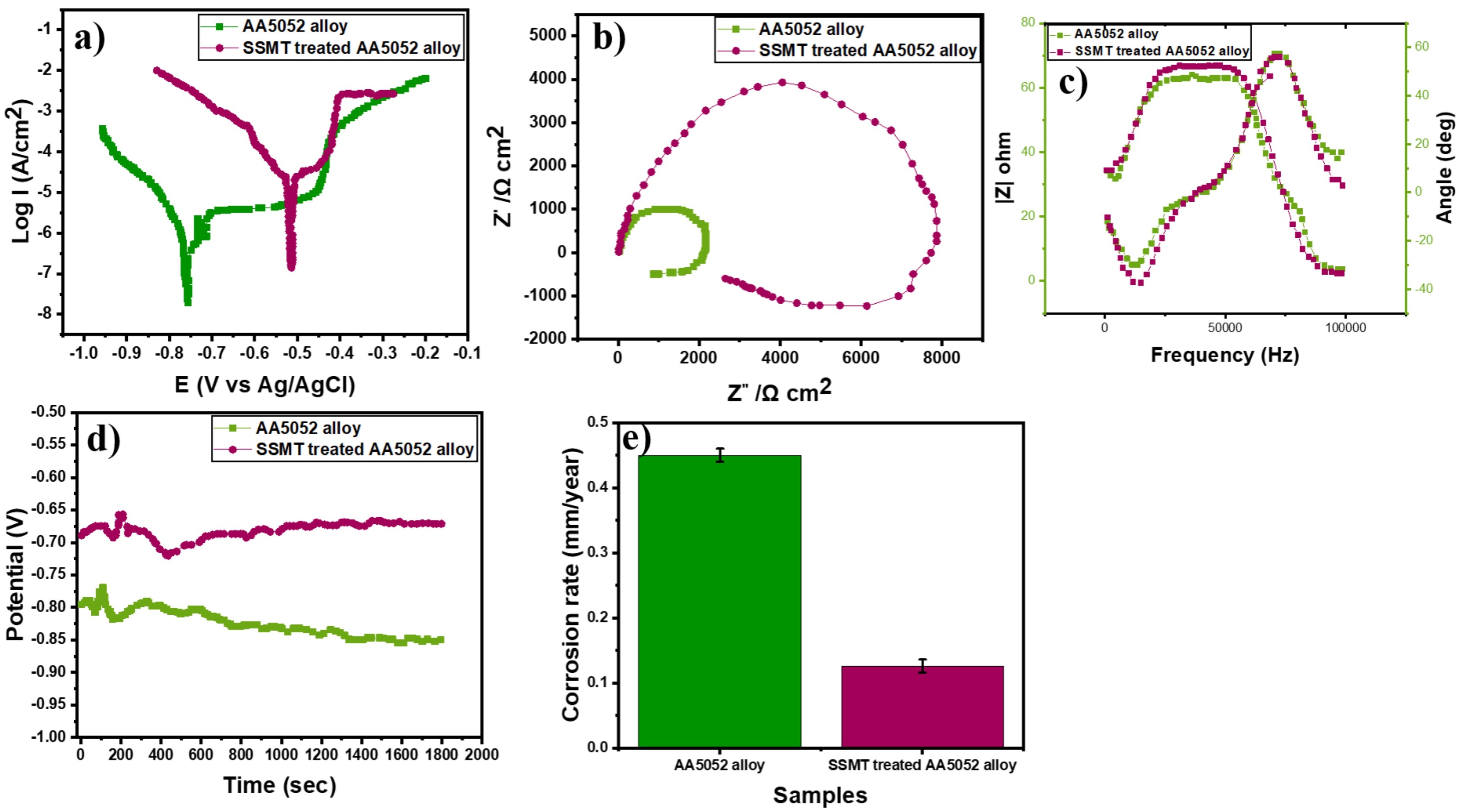
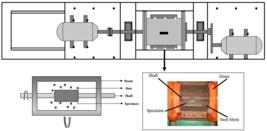
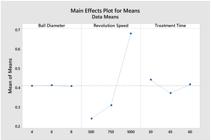
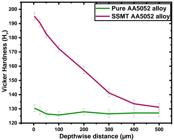
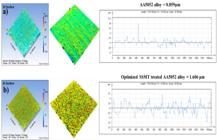
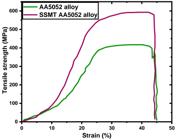
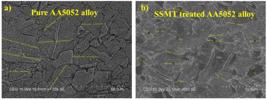
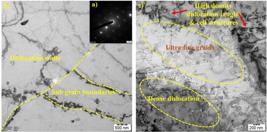
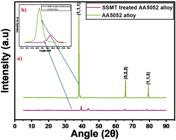
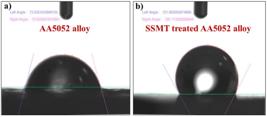
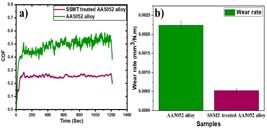
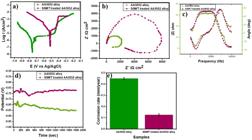
This study investigates the influence of Severe Surface Mechanical Treatment (SSMT) on the AA5052 aluminium alloy, widely used in marine and structural applications. Using a Taguchi L9 orthogonal array and a TOPSIS-based multi-response optimization, the ideal SSMT condition (6 mm ball diameter, 1000 rpm, 30 min) was determined. The optimized treatment yielded significant property improvements: surface hardness increased by 48.5% (from 130 HV to 193 HV) and tensile strength improved by 21.5% (from 492 MPa to 598 MPa), achieving a surface roughness of 1.606 μm. Microstructural analysis (XRD/TEM) confirmed the underlying cause: grain refinement from 140.5 μm to 40.5 μm, increased dislocation density, and the formation of compressive residual stresses. These changes translated into enhanced durability. Electrochemical testing in 3.5% NaCl showed a 72% reduction in corrosion rate (from 0.45 mm/year to 0.126 mm/year), indicated by a lower corrosion current density and improved passive film stability. Additionally, the wear rate decreased by 76.5%, and hydrophobicity improved significantly (contact angle increased from ~73° to ~121°). Overall, the optimized dual-rotating SSMT system is a scalable and sustainable method for simultaneously enhancing the strength, wear, and corrosion resistance of AA5052.
Keywords:
Severe surface mechanical treatment; TOPSIS; Material characterization; Structural characterization; Tribology; Corrosion
 Thumbnail
 Thumbnail
 Thumbnail
 Thumbnail
 Thumbnail
 Thumbnail
 Thumbnail
 Thumbnail
 Thumbnail
 Thumbnail
 Thumbnail
 Thumbnail
 Thumbnail
 Thumbnail
 Thumbnail