
 Influence of Post-Weld Heat Treatment on the Mechanical Properties and Microstructure of a Seamless Pipe of an ASTM A335 Gr P91 Steel
Abstract
This study investigates the effects of different post-weld heat treatments (PWHT) on the mechanical properties and microstructure of ASTM 335 Gr P91 martensitic steel, commonly used in boiler applications. Mechanical tests were conducted at room temperature, 300°C, and 600°C. Two PWHT conditions were applied: (i) PWHT-1, involving a 300°C isothermal treatment followed by heating to 770°C, and (ii) PWHT-2, following the same profile but without cooling to room temperature after the initial isothermal step. The resulting microstructure exhibited martensitic features, with a gradient of prior austenite grain boundaries in the heat-affected zone (HAZ) and δ-ferrite formation in the fusion zone (FZ), reducing toughness. Ultimate tensile strength decreased with increasing temperature, ranging from 675–750 MPa (RT), 525–615 MPa (300°C), and 375–440 MPa (600°C). Elongation was highest at 600°C (BM: 25–30%, FZ: 8–20%), decreasing at room temperature (BM: 20–25%, FZ: 2–12%). Toughness tests showed crack propagation across BM, HAZ, and FZ, with the lowest energy absorption in FZ (0.05–0.4 mm, 12–50 J). At 600°C, toughness decreased in BM and HAZ but increased in FZ, suggesting a change in deformation mechanisms at elevated temperatures.
Keywords:
Post-Weld Heat Treatment (PWHT); Martensitic CrMo Steel; Mechanical Properties; Microstructure Evolution; High-Temperature Performance
1. Introduction
The increasing demand for energy sources has heightened the need to develop ferritic/martensitic steels for application in industrial plants subjected to severe thermo-mechanical conditions1. The performance of materials under high-temperature mechanical stress has been improved by adding alloying elements. Ferritic/martensitic steel alloyed with Cr and Mo exhibits higher mechanical strength than carbon steel. These properties enable the fabrication of boilers, pressure vessels, heat exchangers, valves, turbine rotors, and pipelines2. In the case of ultra-supercritical power plants, some components operate between 25 to 30 MPa and temperatures ranging from 580 to 620 °C 3. This significantly enhances efficiency—up to 45%—compared to conventional fossil-fired plants operating at approximately ~17 MPa and 560 °C4,5. Consequently, materials with excellent creep resistance are essential for components with increasingly thinner walls and higher temperatures and pressures6.
Ferritic steels became popular in the 1950s with the development of the ferritic alloys 0.5Cr-Mo-V, 1.25Cr-0.5Mo-V, and 2.25Cr-1Mo, which increased the critical working temperature from 450 ºC to 568 ºC7. Over the following years, the use of these materials became more widespread, but they failed when used in conditions involving welding, creep, and corrosive environments8. To improve mechanical properties at high temperatures, 2.25Cr-1Mo steel was produced, which, with additions of Nb and V, became 9Cr-2Mo steel9. However, due to the evolution of its microstructure under operating conditions, its application in industrial plants was restricted to thick-walled components10. In the 1970s, a 9Cr-1Mo alloy with excellent creep resistance was developed for regenerative reactors in the nuclear industry11,12. Still, it was in the 1980s that the American Society for Testing Materials (ASTM) approved this composition under the T91/P91 standard for use in pipes subjected to temperatures above 650 °C13-15. Steel 91 is classified into different product categories, each designated by a specific letter: "P" for seamless pipes (ASTM A335), "T" for seamless tubes (ASTM A213), and no letter designation for plates (ASTM A387)16,17. In addition to offering excellent creep resistance, A335 steels have other desirable characteristics, such as good resistance to stress corrosion cracking (SCC) and thermal fatigue.
For use in boilers and pipes, the P91 steel is austenitized at temperatures between 1030 ºC and 1080 ºC and cooled in the air, followed by quenching between 730 ºC and 780 ºC for 1-2 h18,19, which results in a martensitic microstructure, with a high density of dislocations and the formation of M23C6 (M: Fe, Cr, Mn), M7C3 (M: Fe, Cr, Mn), M3C (M: Fe), M2X (Cr2N) e MX (M: V, Nb-X: C, N)20. M23C6 and MX precipitates dominate tempered martensite, with M23C6 precipitates being abundant in the matrix and primary austenite contours, grain contours, and martensite lath contours. At the same time, MX compounds are found within the grains21. Both precipitates are mainly responsible for the increase in mechanical strength, creep, and toughness of P91 at high temperatures22: the M23C6 contributes to stabilizing the grain contours while the MX anchors the dislocations. The addition of boron keeps the M23C6 precipitates refined for longer, preventing grain slippage at temperatures up to 625 ºC23,24. Additionally, the material benefits from solid solution hardening contributed by solutes like molybdenum and tungsten, along with the dispersion of fine V/Nb carbonitrides (MX). These factors are crucial in ensuring exceptional long-term creep resistance25.
The mechanical properties of P91 steel mechanical properties of P91 steel have been improved by adding alloying elements such as C, V, Nb, and nitrogen to form particles of carbides and nitrides. Moreover, heat treatment promotes the formation of carbonitrides rich in Nb and V26. However, the exposure of P91 steel at high temperatures or overheating over time promotes a microstructural change, which decreases mechanical properties, such as toughness and creep resistance27. Those mechanical properties are degraded due to the growth of precipitates, especially M23C6, a decrease in the density of dislocations, and the formation of the Laves and Z phases28.
The Lave phases precipitate in regions with high Mo content adjacent to M23C6 precipitates along martensite laths or grain boundaries29. According to Hurtado-Noreña et al.30, the Laves phase is stable and provides good creep properties during working up to 620 ºC. However, it reduces tensile mechanical properties. Also, the growth of coarsening Lave phases decreases toughness because it induces microvoid coalescence and reduces Mo and W, which promotes solid solution hardening31,32. The Z phase (Cr (V, Nb) N) forms after long periods at temperatures between 650 and 800 °C, its composition varying with exposure time33 but with an accelerated effect on loss of toughness. The Z phase is formed from fine precipitates of V-rich nitride and Nb-carbonitride, which act as nucleation sites for the Z phase34. Thus, the welding and heat treatment processes of P91 steel require thorough control during the welding process and heat treatment because the lack of thermal cycle control can cause microstructure modification and, consequently, unexpected failure during the service life35,36.
The welding process can promote embrittlement in the fusion zone by using flux processes and type IV cracking in the HAZ (Heat Affected Zone)37. These alloys are welded using methods such as gas tungsten inert-arc welding (GTAW), shielded metal arc welding (SMAW), and submerged arc welding (SAW). For welded joints that work at high temperatures, toughness is not essential; however, this characteristic is necessary at room temperature in operations such as maintenance. The A335 T91/P91 alloy joints must have a toughness of 47 J after post-weld heat treatment (PWHT), tempering at 20 °C to avoid brittle fracture38,39. Nevertheless, flux-shielded welding processes produce low toughness in the fusion zone because of the lower amount of O and the formation of micro inclusions in the metal40. In contrast, the root pass uses the GTAW process mainly41. Alternatives such as flux-cored arc welding (FCAW)42,43, A-TIG44,45, and GMAW metal-cored filler46 have been explored with promising results.
On the other hand, the welding process of these alloys shows cracking in the fine-grained heat-affected zone (FGHAZ), named type IV fracture47,48. This failure is caused by HAZ microstructural gradients, leading to creep at high temperatures. The P91 alloy has better creep performance because of optimizing the Nb/V ratio, promoting the formation of MX precipitates of the NbC and VC type. Those precipitates act as obstacles to the movement of dislocations and anchors to the sub-grain boundaries, preventing loss of strength due to recovery and grain growth49. Additions of boron (B) prevent the thickening of the M23C6 precipitates50-52. The control of welding parameters, preheating temperatures, interpass, cooling rate, and post-welding heat treatment is essential to predict the characteristics of the material. That control is difficult in the manufacturing environment and the assembly and maintenance of equipment in the field53,54. Two distinct procedures are used to perform PWHT in martensitic alloys alloyed with CrMo. The first method adopted by assembly and installation companies is to perform the heat treatment immediately after welding. The second procedure, a usual practice in the equipment industry, involves exposing the part to room temperature after welding and performing the heat treatment. An alternative technique for in-situ repair of welded martensitic stainless steels consists of the application of tempering passes, as detailed by Váz et al.55. This method involves depositing additional welding passes to temper the previously formed martensitic phase in the deposit. By precisely regulating the cooling rate and temperature, these tempering passes mitigate brittleness and enhance the overall toughness of the welded joint.
Understanding crack formation during post-weld heat treatments is essential for ensuring the structural integrity of martensitic steels. Previous studies have shown that phase transitions and residual stress can lead to defects in welded joints, as observed in Ti-Al-Nb alloys56, while the evolution of precipitates and their impact on mechanical strength degradation have been extensively studied in nickel-based superalloys, emphasizing the need to control secondary phase formation to maintain material properties57. Evaluating and comparing different post-weld heat treatment procedures is crucial for the manufacturing sector, including industries, assembly companies, and regulatory bodies, to determine the most effective methods for fabricating equipment that incorporates this type of alloy.
In this study, we investigated the mechanical properties of ASTM A335 P91 (9Cr-1Mo) welded joints subjected to two different stress relief temperatures, conducting microhardness profiling across the welded regions (HAZ, BM, and FZ) to assess the influence of stress relief conditions. Additionally, tensile, impact, and fracture toughness tests were performed at room temperature (25 °C), 300 ºC, and 600 ºC, providing valuable insights into the behavior of this steel under varying thermal and mechanical conditions. This study aligns with previous research emphasizing the significance of controlling fabrication and heat treatment parameters to refine microstructure and, consequently, improve the mechanical properties of metallic alloys58,59. By establishing these correlations, we aim to optimize PWHT parameters to enhance the performance of P91 steel in critical applications.
2. Material and Experimental Procedures
2.1. Material, welding process, and post-weld heat treatment
Two welded samples were produced from the 9Cr1Mo martensitic steel alloy pipe of ASTM A 335 P91 standard60, with an external diameter of 304.8 mm and a thickness of 25 mm. They were welded using a predefined procedure and parameters. The samples are identified as PWHT -1 to indicate that one was heat treated immediately after the welding process, and PWHT-2 indicates that samples were exposed to air followed by heat treatment.
Table 1 shows the chemical composition of the plates and fillers.
The pipe welding process was performed in a butt joint configuration, with a single V groove angle of 60°, a weld root opening, and a weld root face of 3.00 and 1.06 mm, respectively. The welding was carried out in the 5G position, using the processes GTAW to fill the root and SMAW to fill (three passes) and finish (three passes) the welded joint. The parameters and procedures were defined according to Coleman and Newell's61 recommendations, as shown in Table 2.
Before welding, the pipe was preheated at 250 °C for 1h. The interpass temperature was measured as 350 °C. Argon gas was used to avoid oxidation of the root pass. Moreover, the stringer technique was used to reduce the lateral oscillation of the arc. The post-weld heat treatment (PWHT) parameters were defined according to the ASME Boiler and Pressure Vessel Code62, American Welding Society (AWS)63, and ASME VIII division 1 standard64. The heat treatments were performed at 710-740 °C, holding time 70-85 min, heating rate 200 °C/h, and cooling rate 240 °C/h. Samples PWHT-1 were heat treated after cooling at room temperature, while for sample PWHT-2, the heat treatment was performed immediately after welding. The HT1's cooling rate after welding is 300 °C/h, while the cooling rate for both PWHTs was 215 °C/h.
2.2. Microstructure characterization and mechanical testing
To assess mechanical properties, the specimens from the welded regions, such as base metal (BM), heat affected zone (HAZ), and fusion zone (FZ), were obtained according to ASME IX, figure QW46365 (Figure 1a).

Scheme of the welded tube procedure and sampling (in mm). a) Schematic sectioning of the welded tube to locate the different samples, b) root pass (1) by GTAW and filler passes by SMAW, c) cross-section showing the places to measure hardness (HV5/15) according to Petrobras standard N133, d) impact toughness sample, e) fracture toughness sample, and f) tensile sample.
The microstructure was analyzed by optical microscopy (OM), scanning electron microscopy (SEM), and micro indentation hardness. For OM and SEM analysis, the surface of samples was prepared as usual metallography preparation, according to ASTM E3-01, followed by etching with Vilella (5 ml of HCl+ 1g of picric acid+ 100 ml 95%C2H6O). The optical analysis was performed by a Nikon Microscope model Optiphot, series 316417-58797, in a bright field. For scanning electron microscopy analysis, a microscope Tescan Vega3 XMU equipped with EDS Oxford x-act was used with an accelerating voltage of 15 kV and 15mm for work distance.
Vickers microhardness measurement was performed by a Reicherter model KL-2 on sample surfaces without etching, according to ASTM E9266 with a load of 5 kgf and a time of 15 s (HV5/15) along the cross-section of the deposit, according to the specifications of Petrobras standard N13367, as shown in Figure 1b and 1c.
Mechanical properties evaluated by the Charpy impact test, tensile test, and crack tip opening displacement (CTOD) were run out at ambient, 300 °C, and 600 °C in cross-section samples from base metal, heat affected zone, and fusion zone. The Charpy impact tests were conducted according to ASTM E2368 to determine the energy absorbed and the dynamic stress intensity factor (K1d). Sample geometry for Charpy testing is presented in Figure 1d. The tests were conducted in triplicate for samples from each welding region at room temperature, 300ºC, and 600ºC. The impact tests at high temperatures were conducted in a resistive furnace where a thermocouple monitored the temperature.
The tensile tests were performed in an MTS 661 servo-hydraulic machine on cylindrical cross-section samples extracted from welded region, Figure 1f. The loading speed for tensile tests at room temperature was 2 mm/min and 1 mm/min for 300 °C and 600 °C, according to ASTM standard E8/E8M69 and ASTM E21/E21M70. Fracture toughness was evaluated by crack tip opening technique (CTOD) testing according to ASTM E182071 at room temperature, 300 ºC, and 600 ºC, on single edge bend (SE(B)) specimens, Figure 1e. The notches were machined in the weld bead, the HAZ, and the base material. A pre-crack was nucleated by fatigue test under constant amplitude loading to meet the criteria 0.45≤ a⁄W ≤0.70. The fractures were cleaned in ethylic alcohol using an ultrasonic chamber, followed by optical and scanning electron microscopy analysis.
3. Results and Discussion
3.1. Macro and microstructure characterization welded joint after the PWHT
The macrographs (Figure 2) reveal the three main regions in the welded joints: the fusion zone (FZ), heat-affected zone (HAZ), and base metal (BM). Visual inspection confirms the absence of welding defects, demonstrating good penetration, continuity in the deposits, and proper filling, indicating that the welding procedure was performed correctly. Defects in the welding process can lead to crack formation in the joint. Tavares et al.72 investigated failures in P91 steel welds of a superheater steam pipe, welded under similar conditions to the present study, and identified cracks and porosity in the weld metal. These defects were attributed to inadequate joint cleaning and electrode composition.

The base metal's microstructure (Figure 3) presents a granular structure corresponding to prior austenite grain boundaries (PAGBs) and an internal structure formed by packets of tempered martensite. There are also martensite packet boundaries (PBs), M23C6 precipitates close to the PAGBs and PBs, and MX precipitates on the lath boundaries (LBs) inside the martensite. These characteristics were identified thanks to the rigorous characterization carried out by Pandey et al.73. Similar results were presented by Mungole et al.74.

Microstructure characterization by optical microscopy of the base metal shows the presence of prior austenite grain boundaries (PAGBs), package boundaries (PBs), M23C6 and MX precipitates, and martensite. In (a) PWHT-1 and (b) PWHT-2.
Figure 4 and Figure 5 illustrate the microstructural characterization of the welded joint for PWHT-1 and PWHT-2. The microstructure consists of the FZ, CGHAZ (coarse-grained HAZ), FGHAZ (fine-grained HAZ), and BM. In addition to CGHAZ and FGHAZ, the welding process promotes the formation of an intercritical HAZ (ICHAZ) and an over-tempered zone (OTZ)75,76. Each HAZ region corresponds to a temperature range of 1140-1100 °C, 1100-850 °C (Ac3), 850-800 °C (Ac1) and 800-730 °C, respectively77. Authors such as Silwal et al.78 calculated the equilibrium Ac1 temperature based on Mn and Ni content following Equation 1. From input welding parameters and according to the composition in

Characterization by optical microscopy of the welded joint. Microstructure of PWHT-1 in a) FZ, b) CGHAZ, c) FGHAZ, and d) BM.
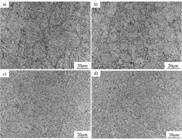
Characterization by optical microscopy of the welded joint. Microstructure of PWHT-2 in a) FZ, b) CGHAZ, c) FGHAZ, and d) BM.
Table 1, the Ac1 temperature for ER 90S-B9, E9015 B9, and P91 are 775°C, 752°C, and 800 °C. The temperature level for P91 steel is close to that estimated by Silwal et al.78; however, it is higher than the maximum temperature used in PWHTs. Fresh martensite is formed at maximum temperature, which exceeds Ac1 temperature and decreases the toughness of the welded joint.
Considering only Ac1 for P91 steel, PWHT-1, and PWHT-2, martensite may be formed by the PWHT. However, considering the temperatures determined for the filler metals, and if the dilution is low, there would be no risk of fresh martensite formation, only if the PWHT temperature is lower than 750 °C.
After the PWHT, the microstructure is expected to homogenize, suppressing the OTZ. We started with the fusion zone and progressed through the HAZ to assess the rest of the microstructure in the welded joint. For both conditions, PWHT-1 and PWHT-2, no significant differences were observed. Figure 6 shows micrographs of the weld metal in the PWHT-2 condition. The structure consists of parcels of martensite (lath martensite) surrounded by PAGBs and PBs. Surprisingly, no precipitates would dissolve due to the high welding temperature, but they should precipitate due to the heat treatment.
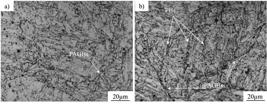
Characterization by optical microscopy of fusion zone (FZ). Microstructure in (a) PWHT-1 and (b) PWHT-2.
As shown in Figure 7, taking the ferrite and austenite spectra (Figure 7a) as a reference, the predominant phase in the fusion zone and base metal is martensite, represented by the ferrite diffraction peak. No retained austenite or precipitates are observed, which can be explained by its absence or low content, which prevents it from being indexed using this technique. The latter agrees with that observed in Figure 6. Pandey et al.79 presented similar results after PHWT at 760 °C for 2 h on the welded joint of P91. The author identifies the martensite peaks and indicates that they correspond to Cr23C6 and MX precipitates.

XRD pattern of the welded joint of coupon PWHT-1, measured at room temperature: a) reference spectrum with indexing of the ferrite and austenite peaks, b) spectrum in the fusion zone (FZ), and c) spectrum measured in the base metal (BM).
Villaret et al.80 reported no evidence of a dendritic structure in the fusion zone, which is one of the main challenges because it promotes poor strength and does not register the formation of δ-ferrite. According to Samir81, the oxidation control relies on increasing silicon content to 0.3%, but the base metal and the filler metals have 0.27, 0.19, and 0.20 Si content (
Table 1), which, due to the dilution, Si content reaches around 0.24% in the FZ. Si is a strong ferritizer. Therefore, a δ-ferrite phase above 2% reduces the toughness of the FZ82. Moreover, according to Samir81, Creq must be greater than 13.5 to obtain a completely martensitic structure, while the difference between Creq and Nieq, called ferrite factor (FF), must be less than 8. Other authors83 observed the absence of δ-ferrite for Creq less than 10. From Equations 2 to 4, the FF values are calculated and shown in Table 3.
Taking these results into account and assuming the Creq criterion is less than 10, the BM has an FF above 8.0, but the input metals are smaller; taking dilution into account, the FF in the FZ will be less than 8.0. However, preheating or slow cooling promotes the formation of δ-ferrite84. Zhou et al.85 indicate that a cooling rate of 200 °C/s promotes the formation of δ-ferrite with a granular or blocky morphology and reduces the amount of martensite. As explained in section 3.1, the cooling rate experienced after welding for PWHT-1 is 300 ºC/min, which would prevent the formation of δ-ferrite in the FZ. However, for PWHT-2, it is impossible to reject ferrite formation completely.
Figure 4 and Figure 5 show a slight increase in grain size compared to BM but without the PAGBs. It is also difficult to identify the PBs in CGHAZ. Sawada et al.86 determined by Thermo-Calc. The M23C6 and MX precipitates' dissolution temperatures are 880 °C and 1310 °C, respectively. However, the researchers explain that the holding time is slight in welding, making it difficult to dissolve the precipitates, which causes the dissolution temperature to increase. Pandey et al.87 explain that at temperatures up to 1373 K (1100 °C), the M23C6 grows while the MX remains constant. Above this temperature, the precipitates dissolve quickly. Dissolution contributes to increasing C and N in solid solution, improving the resistance in this region. The dissolution of M23C6 allows a significant increase in grain size, as it has been identified that they are more effective at blocking the growth of PBs because of the close relationship between M23C6 spacing and subgrain size88-90. However, after PHWT, the solute-rich structure of the precipitate solubilization again generates precipitates by tempering the lath martensite.
Figure 8 shows the structure in FGHAZ, with a significant reduction in PAGB compared to BM. As a result of the welding process, M23C6 is solubilized, and MX remains, which prevents austenite grain growth. Divya et al.91 presented that FGHAZ and ICHAZ have the lowest joint strength, with temperatures above Ac3 for FGHAZ and between Ac1 and Ac3 for ICHAZ. In FGHAZ, there is partial solubilization of the M23C6 precipitates, which prevents austenite grain growth. After welding, lath martensite is formed without tempering but with less hardness than that generated in the CCHAZ due to less dissolution of the precipitates.

Wang and Li92 describe the formation of a martensitic structure with very fine laths containing a high density of dislocations in FGHAZ. In the ICHAZ, the partial transformation to austenite and the partial dissolution of precipitates lead to lath martensite of lower hardness and over-tempered martensite (OTM). During PWHT, fewer precipitates are generated in both the FGHAZ and the ICHAZ compared to the CGHAZ due to the lower solute presence generated by the decreasing solubilization of M23C6 as the distance from the FZ increases. In addition, the temperature reached in these regions is lower at 1100 °C, which promotes the growth of M23C6, leading to a significant drop in mechanical strength. Both the FGHAZ and the ICHAZ are between the CCHAZ and the higher strength BM, which means that the microstructure in this region is subject to multi-axial loading conditions, which favors the occurrence of creep93,94.
The ICHAZ, after welding, is composed of over-hardened martensite and fresh martensite generated by the austenite transformation. The ICHAZ is a region in the HAZ that is difficult to identify, as it is very narrow (200 μm)95. Liu et al.96 explain that the ICHAZ can be identified by microhardness as the region of lowest value due to the significant reduction of dislocations and the substantial increase in the size of the M23C6. The growth of the M23C6 is due to the enrichment of Cr and Mo, which also leads to a loss of solid-solution hardening since these are the two main solid-solution strengthening elements in the modified 9Cr-1Mo steel matrix. Figure 9 shows the microhardness results for samples PWHT1 and PWHT-2. Similar results were obtained by Gutiérrez et al.97, who welded joints under similar conditions to those used in this work but with PHWT at 760 ºC with different holding times: 1h to 8h.

Gülçimen et al.98 describe a large difference in hardness between the different regions for joints welded without PWHT, with high hardness in the FZ, a continuous reduction in hardness in the HAZ, and a minimum in the ICHAZ. However, Pandey and Mahapatra99 explain that after PWHT, the hardness distribution in the welded joint becomes homogeneous, reducing significantly in the FZ and CGHAZ (Figure 9). This leads to the fracture site changing from the ICHAZ to the FGHAZ during the tensile test. The ICHAZ is responsible for the type IV fracture of welded joints during service100. Failure during tensile and in-service in the FGHAZ-ICHAZ is due to the lower strength and multiaxial stresses. The homogenous distribution of hardness by both PWHTs (Figure 9) eliminates the heterogeneity of mechanical properties.
There is a growth of M23C6 in FGHAZ and ICHAZ, both of which did not dissolve during welding and PWHT. Martensite tempering and the formation of new fine MX and M23C6 precipitates are also generated; all this favors the homogenization of mechanical properties101. Lath martensite is formed in the FGHAZ, with less carbon than the forms in the CGHAZ. Therefore, during PWHT, fewer precipitates are formed in this region than in the CGHAZ. However, the thickening of the partially dissolved precipitates occurs rapidly, resulting in a drop in hardness and strength in FGHAZ and ICHAZ.
For both samples, the hardness is higher for BM than for other welded regions. However, the hardness of the welded joint is higher for sample PWHT-2 than for sample PWHT-1. As the phenomenon occurs in different areas, the microstructural element that explains this difference must be the same. One common element is the formation of fresh martensite. PWHT-1 is cooled to room temperature after welding, while PWHT-2 is produced without cooling. PWHT at 760 °C for 2 h has been recommended by many researchers102. Post-weld heating of P91 at 250-300 °C for 30-60 min is also recommended, followed by air cooling to 100 °C before PWHT to remove diffusible hydrogen. Cooling to 100 °C ensures the formation of a fully martensitic microstructure before PWHT since residual austenite does not respond to PWHT and promotes the formation of harmful unhardened martensite103. Although it is impossible to rule out the presence of δ-ferrite in the WM and the other regions of the HAZ for the PWHT-2 condition, the formation of small percentages of unhardened martensite may explain the difference in hardness in favor of PWHT-2.
Another important element is the possible formation of δ-ferrite in FGHAZ. However, the δ -ferrite is formed directly from the liquid in the FZ98. Pandey et al.100 identified the formation of blocks of -ferrite in the PAGBs in the FGHAZ and explained that this happens in regions in the HAZ that reach temperatures above 1200 °C. In addition, the ferrite blocks are not affected by the PWHT, although it improves mechanical strength but decreases Charpy toughness. The presence of this ferrite would be primarily responsible for the grain size in this region, as it blocks the displacement of the grain boundaries. According to Pandey et al.73, the literature should also mention the over-tempering zone (OTZ). This region is formed at a lower temperature than Ac1, leading to a few microstructural changes in the base metal. Only a slight growth of precipitates leads to a small reduction in mechanical strength compared to the base metal.
3.3. Mechanical characterization
The results of tensile tests are presented in Figure 10. The yield stress (σy) and ultimate stress (σu) exhibit similar behavior, as depicted in Figure 10a and 10b. Both decrease with increasing test temperature, regardless of the location and type of PHWT. The FZ has the highest resistance value, but the increase in test temperature reduces the difference with the WB, and for 600 °C, the different regions and conditions show similar behavior. As the test time is short, creep is not expected, but relatively high diffusion phenomena, such as the growth of M23C6 precipitates and the over-tempering of martensite. The increase in the size of the precipitates does not explain the loss of strength since their purpose is to delay creep104,105. However, the increase in size is due to the absorption of Cr and Ni, the main solid solution hardening elements.

Tensile properties of samples PWHT-1 and PWHT-2 at 25 °C, 300 °C and 600 °C. In a) yield stress (σy), b) ultimate stress (σU), and c) elongation to fracture (εf).
The differences in the microhardness measurements for PWHT-1 and PWHT-2 (Figure 9) influence the yield stress and ultimate stress. However, the homogeneity of the hardness distribution along the joint can also be seen in the σy and σU values in the different regions. Schafer106 presented that up to 8% ferrite has no significant effect on strength, so the amount of δferrite generated by PWHT-2 is expected to be less than 8%. Regarding elongation (Figure 10c), the BM (base metal) for both conditions (PWHT-1 and PWHT-2) is higher than the FZ (Fusion Zone). However, there is no distinct trend of elongation for the different conditions. The highest ductility is observed for tests at 600 °C, attributed to the reduction in strength. For PWHT-1, the lowest ductility is observed for the test at 300 °C. Siska et al.107 conducted tensile tests on P91 welds in the 400 to 600 °C temperature range after normalization treatment at 1050 °C for 230 minutes and annealing at 780 °C for 5 h. Their results show a similar ultimate tensile strength (σU) behavior observed in this study. Moreover, they detected the fracture as ductile in all specimens, initiating at precipitates, followed by the growing and coalescence of microvoids. Furthermore, the dislocation movement is restricted to 400 °C but can be restored to 500-600 °C. The increased dislocation mobility would account for the more considerable deformation in the tensile specimens tested at 600 °C.
The toughness results were divided into the impact toughness measured by the Charpy tests and the fracture toughness measured by the CTOD parameter, and their results are shown in Figures 11a and 11b. The trend for the assessed conditions is that base metal (BM) and the heat-affected zone (HAZ) present higher toughness before the fracture than the fusion zone (FZ). For the impact test, the fusion zone (FZ) did not show differences between PWHT treatments. However, the fracture toughness test shows differences between the PHWT treatments, significantly increasing toughness at 600 °C. Differences in behavior between the impact and fracture toughness test are based on the size of the machined notch from the Charpy sample and the thin pre-cracked sample of the fracture toughness, which is several magnitude orders different. Therefore, fracture toughness tests are more sensitive to the type of microstructure in front of the crack propagation. Another difference is the type of load being applied; while the Charpy test has a dynamic force that produces an impact, the CTOD test uses a quasi-static load.

a) Impact toughness was measured using the Charpy test, and b) fracture toughness was measured using the CTOD parameter. Tests were conducted in the PWHT-1 and PWHT-2 at 23 °C, 300°C, and 600 °C.
The lower toughness in the FZ is related to microinclusions108, possibly because of shielded metal arc welding (SMAW)109 as a welding technique for the root pass, based on the results of the tensile test (see Figure 10), it is anticipated that the decrease in strength and the increase in ductility at higher test temperatures would result in higher absorbed energy, as seen in both post-weld heat treatment (PWHT) conditions in the fusion zone (see Figure 11). At room temperature, the impact energy required for welded P91 joints is 45 J with a minimum average of 38 J. Though, joint toughness relies on notch location, welding process, filler metal composition, post-weld heat treatment (PWHT), and tempering time110,111. In the as-welded condition, the lowest toughness is observed in the coarse-grained heat-affected zone (CGHAZ) due to the formation of untempered martensite with high hardness, resulting from precipitate dissolution and increased carbon content in austenite. PWHT above Ac1 significantly reduces the toughness of the heat-affected zones (HAZs) due to the formation of fresh martensite. However, very low temperatures below 730 °C do not considerably affect CGHAZ toughness. Arivazhagan et al.109 explain that after PWHT at 760 °C for 2 h, toughness improves significantly due to reduced dislocation density and the formation of M23C6 precipitates and carbonitrides (Nb and V). They present different values obtained at various points in the welded joint (Figure 11a).
Comparing the results in Figure 11a and 11b shows the low toughness achieved in the FZ for HT1 and HT2, with values lower than 47 J after PWHT, allowed by standard EN1557:1997. The toughness reached the expected value only for the tests carried out at 300 and 600 ºC. The energy absorbed in the HAZ and the BM exceeds the limit required by the standard (Figure 11); however, in the HAZ, which would correspond specifically to the CGHAZ, it is also lower than the value reported in Figure 11a (184 J), for all test temperatures. This behavior is observed in BM for PWHT-1 and PWHT-2 conditions, with the value for the former at 300 ºC being close to the 242 J reported in Figure 11a. This indicates that the heat treatment procedure is adequate for either of the two PWHT conditions. The low toughness may be associated with the formation of fresh martensite in PWHT-2 due to the lack of threading after welding, which would maintain small fractions of austenite that, after PWHT, would form martensite without tempering. For PWHT-1, the energy absorbed is greater because of the absence of this martensite.
The general reduction in toughness could be related to the significant increase in PGAB size112. However, elements such as the need for more time to improve tempering and the formation of fresh martensite could lead to these results. Arivazhagan et al.113 indicate that Mn and Ni content is kept below 1.44 in the metal composition, as higher values reduce the Ac1 temperature below 780 °C, which could produce fresh martensite. Nonetheless, manganese in the feed metal (Table 1) is higher than P91 to aid deoxidization in the FZ. Nickel improves toughness in the FZ because it controls the formation of δ-ferrite114-116. Therefore, based on these observations, the holding time of one hour in the PWHT is insufficient to recover toughness in the welded joint; in addition, cooling to 100 °C after welding (PWHT-1) is essential to ensure the absence of austenite before the start of the PWHT. It should be noted that in recent years, several studies related to PHWT dealt with the N&T (normalized and tempered) treatment of welds instead of the subsequent PWHT117, have observed that the microstructure generated throughout the joint was more homogeneous, more effectively reducing the hardness gradient in the joint. In addition, the researchers indicate that the δ-ferrites in the FZ and the CGHAZ are lower for N&T than PWHT118-120.
CTOD results reported in the literature121, at room temperature, are around 0.3 mm for BM, 0.45 mm for the HAZ, and 0.4 mm for the FZ for the SAW process, while other work reported 0.6 mm for the BM and 0.46 mm for the FZ after the SAW process122. The BM in this work presents higher values than those reported in the literature; however, the FZ is below 0.1 mm at room temperature and 300 °C. The fracture toughness performance was higher for PWHT-1 than for PWHT-2 samples. Moreover, when the test temperature increased, the results showed a δ-ferrite decreasing trend for MB, PWHT-1, and PWHT-2. From the analysis of PWHT-1 welding regions, a decreasing δ-ferrite trend with increasing temperature is also observed for HAZ, while for the FZ region, the value increases with temperature. The analysis of PWHT-2 showed an increasing trend for HAZ and FZ.
Figure 12 shows the ductile behavior of the MB fracture of PWHT-1 and PWHT-2 samples at room temperature; however, in PWHT-2 (Figure 13), carbides are present, which change the size and distributions of dimples. At high temperatures, in both cases, the fracture mechanics showed the presence of tearing-type dimples, indicating a decrease in fracture toughness. Carbides inside dimples and on quasi-cleavage regions were observed in HAZ and FZ for both PWHT.

Fractography of the BM/PWHT-1 submitted to CTOD tests showing details of the fracture surfaces in the BM (a-c), HAZ (d-f), and FZ (g-i) at room temperature (a, d, g), 300 °C (b, e, h), and 600 °C (c, f, i).

Fractography of the BM/PWHT-2 submitted to CTOD tests showing details of the fracture surfaces in the BM (a-c), HAZ (d-f), and FZ (g-i) at room temperature (a, d, g), 300 °C (b, e, h), and 600 °C (c, f, i).
The high values for CTOD measurements of MB/ PWHT-1 compared to BM/PWHT-2 are related to large austenite grains, while the martensite is not homogenously distributed inside the grains. However, this value decreases when the temperature increases, changing the fracture feature, characterized by dimples at room temperature, to tearing-type dimples at 300 °C and 600 °C, indicating high plastic deformation, as shown in Figure 12. The BM/PWHT-2 samples showed low CTOD values, probably because the microstructure presented precipitation of MX and M23C6, which embrittle grain boundaries. However, the martensite is distributed inside the microstructure; for both samples of FZ, PWHT-1, and PWHT-2, the values of CTOD were lower at the three test temperatures, probably because of the coarse martensite in the microstructure.
Tan et al.121 describe that the relationship between second-phase particles and the matrix influences the fracture surface, resulting in the microvoids observed in Figure 12 and Figure 13. When stress reaches the maximum value, those particles will be fractured or removed from the matrix, resulting in voids. At room temperature, FZ presented a quasi-cleavage fracture where those voids formed, which is evidence of brittle fracture caused by the precipitation of carbides and the increase of the martensite dispersion123. At high temperatures, on FZ of PWHT-1 and PWHT-2, sample dimples grow along by diffusion of grain boundaries, which are also embrittled by precipitation of the second phase particle123.
4. Conclusions
-
Post-weld heat treatments (PWHT) influenced the microstructure of ASTM A335 Gr P91 steel welded joints, leading to a homogenization of martensitic features. However, δ-ferrite formation in the fusion zone (FZ) was observed in PWHT-2, reducing toughness. The impact energy in the FZ ranged between 12–50 J, while the base metal (BM) and heat-affected zone (HAZ) exhibited significantly higher values of 75–200 J.
-
The ultimate tensile strength (UTS) decreased with increasing test temperature, from 675–750 MPa at room temperature to 525–615 MPa at 300 °C and 375–440 MPa at 600 °C. The yield strength and hardness distribution became more homogeneous after both PWHTs, reducing mechanical property heterogeneity and minimizing susceptibility to Type IV cracking.
-
The elongation to fracture was highest at 600°C, reaching 25–30% in BM and 8–20% in FZ, whereas at room temperature, values dropped to 20–25% and 2–12%, respectively. Fracture toughness (CTOD) performed better in BM and HAZ but was significantly lower in FZ, particularly at lower temperatures.
-
Microhardness results confirmed that PWHT-2 exhibited slightly higher hardness than PWHT-1, attributed to fresh martensite formation. The fusion zone hardness remained above 250 HV, whereas the HAZ and BM showed more homogeneous hardness distributions.
-
PWHT-1 demonstrated better overall mechanical performance, minimizing fresh martensite formation and promoting higher toughness. A PWHT temperature below 750°C is recommended for industrial applications to prevent excessive grain growth while maintaining adequate mechanical properties. Further optimization should consider extended holding times to enhance toughness recovery.
5. Acknowledgments
Julian Avila acknowledges the Brazilian National Council for Scientific and Technological Development (CNPq) – grant 306960/2021–4.
-
Data Availability
The data supporting this study’s findings are available from the corresponding author, J.A. Avila, upon reasonable request.
6. References
-
1 Khajuria A, Kumar R, Bedi R. Effect of boron addition on creep strain during impression creep of P91 steel. J Mater Eng Perform. 2019;28(7):4128-42. http://doi.org/10.1007/s11665-019-04167-z
» http://doi.org/10.1007/s11665-019-04167-z -
2 Masuyama F. Low-alloyed steel grades for boilers in ultra-supercritical power plants. In: Di Gianfrancesco A, editor. Materials for ultra-supercritical and advanced ultra-supercritical power plants. Amsterdam: Woodhead Publishing; 2017. Chapter 2; p. 53-76. http://doi.org/10.1016/B978-0-08-100552-1.00002-6
» http://doi.org/10.1016/B978-0-08-100552-1.00002-6 -
3 Tumanovskii AG, Shvarts AL, Somova EV, Verbovetskii EK, Avrutskii GD, Ermakova SV, et al. Review of the coal-fired, over-supercritical and ultra-supercritical steam power plants. Therm Eng. 2017;64(2):83-96. http://doi.org/10.1134/S0040601517020082
» http://doi.org/10.1134/S0040601517020082 - 4 Wright IG, Maziasz PJ, Ellis FV, Gibbons TB, Woodford D. Materials issues for turbines for operation in ultra-supercritical steam. Washington, D.C.: US Department of Energy, Office of Fossil Energy, Advanced Research Materials Program; 2004.
- 5 Viswanathan R, Bakker WT. Materials for ultra supercritical fossil power plants. Palo Alto: Electric Power Research Institute; 2000. (EPRI Report; No. TR-114750).
- 6 Saito N, Komai N, Sumiyoshi Y, Takei Y, Kitamura M, Tokairin T. Development of materials for use in A-USC boilers. Mitsubishi Heavy Ind Tech Rev. 2015;52:27-36.
-
7 Mayer K-H, Masuyama F. The development of creep-resistant steels. In: Abe F, Kern TU, Viswanathan R, editors. Creep-resistant steels. Amsterdam: Woodhead Publishing; 2008. Chapter 2; p. 15-77. http://doi.org/10.1533/9781845694012.1.15
» http://doi.org/10.1533/9781845694012.1.15 - 8 Lundin CD, Liu P, Cui Y. A literature review on characteristics of high temperature ferritic Cr-Mo steels and weldments. New York: Welding Research Council; 2000.
-
9 Vaillant JC, Vandenberghe B, Hahn B, Heuser H, Jochum C. T/P23, 24, 911 and 92: new grades for advanced coal-fired power plants: properties and experience. Int J Press Vessels Piping. 2008;85(1-2):38-46. http://doi.org/10.1016/j.ijpvp.2007.06.011
» http://doi.org/10.1016/j.ijpvp.2007.06.011 - 10 Bell K. An analysis of published creep rupture data for modified 9%-Cr steel weldments. Cambridge: Welding Institute; 1997.
- 11 Sikka VK. Development of modified 9 Cr-1 Mo steel for elevated-temperature service. Oak Ridge: Oak Ridge National Lab.; 1983.
-
12 Bendick W, Cipolla L, Gabrel J, Hald J. New ECCC assessment of creep rupture strength for steel grade X10CrMoVNb9-1 (Grade 91). Int J Press Vessels Piping. 2010;87(6):304-9. http://doi.org/10.1016/j.ijpvp.2010.03.010
» http://doi.org/10.1016/j.ijpvp.2010.03.010 -
13 Brozda J, Zeman M. Weldability of 9Cr‐1Mo‐Nb, V P91 steel intended for service in the power industry. Welding International. 1996;10(5):370-80. http://doi.org/10.1080/09507119609549012
» http://doi.org/10.1080/09507119609549012 -
14 Cerjak H, Letofsky E. The effect of welding on the properties of advanced 9–12%Cr steels. Sci Technol Weld Join. 1996;1(1):36-42. http://doi.org/10.1179/stw.1996.1.1.36
» http://doi.org/10.1179/stw.1996.1.1.36 -
15 Prunier V, Gampe U, Nikbin K, Shibli IA. HIDA activity on P91 steel. Mater High Temp. 1998;15(3-4):159-66. http://doi.org/10.1080/09603409.1998.11689595
» http://doi.org/10.1080/09603409.1998.11689595 -
16 Narasimhachary SB, Saxena A. Crack growth behavior of 9Cr−1Mo (P91) steel under creep–fatigue conditions. Int J Fatigue. 2013;56:106-13. http://doi.org/10.1016/j.ijfatigue.2013.07.006
» http://doi.org/10.1016/j.ijfatigue.2013.07.006 -
17 Kumar S, Pandey C, Goyal A. Effect of post-weld heat treatment and dissimilar filler metal composition on the microstructural developments, and mechanical properties of gas tungsten arc welded joint of P91 steel. Int J Press Vessels Piping. 2021;191:104373. http://doi.org/10.1016/j.ijpvp.2021.104373
» http://doi.org/10.1016/j.ijpvp.2021.104373 -
18 Davis JR, Committee ASMIH. ASM specialty handbook: cast irons. Materials Park: ASM International; 1996 [cited 2024 Dec 3]. Available from: https://books.google.com.br/books?id=NbgtnLo7jhwC
» https://books.google.com.br/books?id=NbgtnLo7jhwC -
19 Das CR, Albert SK, Bhaduri AK, Srinivasan G, Murty BS. Effect of prior microstructure on microstructure and mechanical properties of modified 9Cr–1Mo steel weld joints. Mater Sci Eng A. 2008;477(1-2):185-92. http://doi.org/10.1016/j.msea.2007.05.017
» http://doi.org/10.1016/j.msea.2007.05.017 -
20 Mandziej ST, Výrostková A. Evolution of Cr-Mo-V weld metal microstructure during creep testing – part 1: P91 material. Weld World. 2008;52(1-2):3-26. http://doi.org/10.1007/BF03266613
» http://doi.org/10.1007/BF03266613 -
21 Dzioba I, Gajewski M, Neimitz A. Studies of fracture processes in Cr–Mo–V ferritic steel with various types of microstructures. Int J Press Vessels Piping. 2010;87(10):575-86. http://doi.org/10.1016/j.ijpvp.2010.07.012
» http://doi.org/10.1016/j.ijpvp.2010.07.012 -
22 Grybėnas A, Makarevičius V, Baltušnikas A, Lukošiūtė I, Kriūkienė R. Correlation between structural changes of M23C6 carbide and mechanical behaviour of P91 steel after thermal aging. Mater Sci Eng A. 2017;696:453-60. http://doi.org/10.1016/j.msea.2017.04.103
» http://doi.org/10.1016/j.msea.2017.04.103 - 23 Santella M, Shingledecker J, Klueh R, Brown E, Hashimoto N, Swindeman R. Analysis of off-normal metallurgical conditions on the performance of advanced Cr-MO steels. Oak Ridge: Oak Ridge National Lab.; 2010.
- 24 Ó Murchú C. Physically-based methods for improved high temperature creep performance of 9Cr steels and welds: nano-, micro-and macro-scale studies [thesis]. Galway: NUI Galway; 2019.
-
25 Li D, Shinozaki K, Harada H, Ohishi K. Investigation of precipitation behavior in a weld deposit of 11Cr-2W ferritic steel. Metall Mater Trans, A Phys Metall Mater Sci. 2005;36(1):107-15. http://doi.org/10.1007/s11661-005-0143-y
» http://doi.org/10.1007/s11661-005-0143-y -
26 Pandey C, Giri A, Mahapatra MM. Evolution of phases in P91 steel in various heat treatment conditions and their effect on microstructure stability and mechanical properties. Mater Sci Eng A. 2016;664:58-74. http://doi.org/10.1016/j.msea.2016.03.132
» http://doi.org/10.1016/j.msea.2016.03.132 -
27 Benvenuti A, Bontempi P, Corti S, Ricci N. Assessment of material thermal history in elevated temperature components. Mater Charact. 1996;36(4-5):271-8. http://doi.org/10.1016/S1044-5803(96)00058-7
» http://doi.org/10.1016/S1044-5803(96)00058-7 -
28 Panait CG, Bendick W, Fuchsmann A, Gourgues-Lorenzon AF, Besson J. Study of the microstructure of the Grade 91 steel after more than 100,000 h of creep exposure at 600 °C. Int J Press Vessels Piping. 2010;87(6):326-35. http://doi.org/10.1016/j.ijpvp.2010.03.017
» http://doi.org/10.1016/j.ijpvp.2010.03.017 -
29 Xia Z-X, Wang C-Y, Zhao Y-F, Zhang G-D, Zhang L, Meng X-M. Laves Phase Formation and Its Effect on Mechanical Properties in P91 Steel. Acta Metall Sin. 2015;28(10):1238-46. http://doi.org/10.1007/s40195-015-0318-5
» http://doi.org/10.1007/s40195-015-0318-5 -
30 Hurtado-Noreña C, Danón CA, Luppo MI, Bruzzoni P. Evolution of minor phases in a P91 steel normalized and tempered at different temperatures. Procedia Mater Sci. 2015;8:1089-98. http://doi.org/10.1016/j.mspro.2015.04.172
» http://doi.org/10.1016/j.mspro.2015.04.172 -
31 Ortolani M, Mariani P. Microstructural evolution of ASTM grade 91 after long-term creep testing. Mater High Temp. 2016;33(6):604-8. http://doi.org/10.1080/09603409.2016.1201332
» http://doi.org/10.1080/09603409.2016.1201332 -
32 Maddi L, Deshmukh GS, Ballal AR, Peshwe DR, Paretkar RK, Laha K, et al. Effect of Laves phase on the creep rupture properties of P92 steel. Mater Sci Eng A. 2016;668:215-23. http://doi.org/10.1016/j.msea.2016.05.074
» http://doi.org/10.1016/j.msea.2016.05.074 -
33 Sawada K, Kushima H, Kimura K, Tabuchi M. TTP diagrams of Z phase in 9–12% Cr heat-resistant steels. ISIJ Int. 2007;47(5):733-9. http://doi.org/10.2355/isijinternational.47.733
» http://doi.org/10.2355/isijinternational.47.733 -
34 Abd El-Azim ME, Ibrahim OH, El-Desoky OE. Long term creep behaviour of welded joints of P91 steel at 650 °C. Mater Sci Eng A. 2013;560:678-84. http://doi.org/10.1016/j.msea.2012.10.013
» http://doi.org/10.1016/j.msea.2012.10.013 - 35 Sorrentino S. Welding technologies for ultra-supercritical power plant materials. In: Di Gianfrancesco A, editor. Materials for ultra-supercritical and advanced ultra-supercritical power plants. Kent: Elsevier Science; 2017. p. 247-319.
- 36 Abson DJ, Rothwell JS, Cane BJ. Advances in welded creep resistant 9-12% Cr steels. In: 5th International Conference on Advances in Materials Technology for Fossil Power Plants; 2007; Marco Island, Florida. Proceedings. Cambridge: TWI Ltd.; 2007. p. 5.
-
37 Arivazhagan B, Kamaraj M. Metal-cored arc welding process for joining of modified 9Cr-1Mo (P91) steel. J Manuf Process. 2013;15(4):542-8. http://doi.org/10.1016/j.jmapro.2013.07.001
» http://doi.org/10.1016/j.jmapro.2013.07.001 -
38 Arivazhagan B, Sundaresan S, Kamaraj M. A study on influence of shielding gas composition on toughness of flux-cored arc weld of modified 9Cr–1Mo (P91) steel. J Mater Process Technol. 2009;209(12-13):5245-53. http://doi.org/10.1016/j.jmatprotec.2009.02.006
» http://doi.org/10.1016/j.jmatprotec.2009.02.006 -
39 Arivazhagan B, Vasudevan M. A comparative study on the effect of GTAW processes on the microstructure and mechanical properties of P91 steel weld joints. J Manuf Process. 2014;16(2):305-11. http://doi.org/10.1016/j.jmapro.2014.01.003
» http://doi.org/10.1016/j.jmapro.2014.01.003 -
40 Krishnan S, Kulkarni DV, De A. Multipass pulsed current gas metal arc welding of P91 steel. Sci Technol Weld Join. 2016;21(3):171-7. http://doi.org/10.1179/1362171815Y.0000000080
» http://doi.org/10.1179/1362171815Y.0000000080 -
41 Singh AK, Dey V, Kumar P. Use of backing mediums increase penetration during TIG welding of P91 steel. Sadhana. 2021;46(4):203. http://doi.org/10.1007/s12046-021-01734-w
» http://doi.org/10.1007/s12046-021-01734-w -
42 Arivazhagan B, Kamaraj M. A study on factors influencing toughness of basic flux-cored weld of modified 9Cr-1Mo steel. J Mater Eng Perform. 2011;20(7):1188-95. http://doi.org/10.1007/s11665-010-9757-3
» http://doi.org/10.1007/s11665-010-9757-3 -
43 Zhang Z, Craciun S, van der Mee V. All-positional flux cored wire with lower trace element contents and improved ambient temperature toughness for welding P91 steels. Weld World. 2021;65(10):1859-69. http://doi.org/10.1007/s40194-021-01135-x
» http://doi.org/10.1007/s40194-021-01135-x -
44 Maduraimuthu V, Vasudevan M, Muthupandi V, Bhaduri AK, Jayakumar T. Effect of activated flux on the microstructure, mechanical properties, and residual stresses of modified 9Cr-1Mo steel weld joints. Metall Mater Trans, B, Process Metall Mater Proc Sci. 2012;43(1):123-32. http://doi.org/10.1007/s11663-011-9568-4
» http://doi.org/10.1007/s11663-011-9568-4 -
45 Vidyarthy RS, Kulkarni A, Dwivedi DK. Study of microstructure and mechanical property relationships of A-TIG welded P91–316L dissimilar steel joint. Mater Sci Eng A. 2017;695:249-57. http://doi.org/10.1016/j.msea.2017.04.038
» http://doi.org/10.1016/j.msea.2017.04.038 -
46 Krishnan S, Kulkarni DV, De A. Pulsed current gas metal arc welding of P91 steels using metal cored wires. J Mater Process Technol. 2016;229:826-33. http://doi.org/10.1016/j.jmatprotec.2015.11.007
» http://doi.org/10.1016/j.jmatprotec.2015.11.007 -
47 Mayr P, Mitsche S, Cerjak H, Allen SM. The impact of weld metal creep strength on the overall creep strength of 9% Cr steel weldments. J Eng Mater Technol. 2011;133(2):021011. http://doi.org/10.1115/1.4003112
» http://doi.org/10.1115/1.4003112 -
48 Francis JA, Cantin GMD, Mazur W, Bhadeshia H. Effects of weld preheat temperature and heat input on type IV failure. Sci Technol Weld Join. 2009;14(5):436-42. http://doi.org/10.1179/136217109X415884
» http://doi.org/10.1179/136217109X415884 -
49 Francis JA, Mazur W, Bhadeshia HKDH. Review type IV cracking in ferritic power plant steels. Mater Sci Technol. 2006;22(12):1387-95. http://doi.org/10.1179/174328406X148778
» http://doi.org/10.1179/174328406X148778 -
50 Kondo M, Tabuchi M, Tsukamoto S, Yin F, Abe F. Suppressing type IV failure via modification of heat affected zone microstructures using high boron content in 9Cr heat resistant steel welded joints. Sci Technol Weld Join. 2006;11(2):216-23. http://doi.org/10.1179/174329306X89260
» http://doi.org/10.1179/174329306X89260 -
51 Abe F, Tabuchi M, Kondo M, Tsukamoto S. Suppression of Type IV fracture and improvement of creep strength of 9Cr steel welded joints by boron addition. Int J Press Vessels Piping. 2007;84(1-2):44-52. http://doi.org/10.1016/j.ijpvp.2006.09.013
» http://doi.org/10.1016/j.ijpvp.2006.09.013 -
52 Akhtar M, Khajuria A, Kumar VS, Gupta RK, Albert SK. Evolution of microstructure during welding simulation of boron modified P91 steel. Phys Met Metallogr. 2019;120(7):672-85. http://doi.org/10.1134/S0031918X19070056
» http://doi.org/10.1134/S0031918X19070056 -
53 David SA, Siefert JA, Feng Z. Welding and weldability of candidate ferritic alloys for future advanced ultrasupercritical fossil power plants. Sci Technol Weld Join. 2013;18(8):631-51. http://doi.org/10.1179/1362171813Y.0000000152
» http://doi.org/10.1179/1362171813Y.0000000152 -
54 Siefert JA, David SA. Weldability and weld performance of candidate austenitic alloys for advanced ultrasupercritical fossil power plants. Sci Technol Weld Join. 2014;19(4):271-94. http://doi.org/10.1179/1362171814Y.0000000197
» http://doi.org/10.1179/1362171814Y.0000000197 -
55 Váz RF, Tristante R, Pukasiewicz AGM, Capra AR, Chicoski A, Filippin CG, et al. Welding and thermal spray processes for maintenance of hydraulic turbine runners: case studies. Soldag Insp. 2021;26:e2540. http://doi.org/10.1590/0104-9224/si25.40
» http://doi.org/10.1590/0104-9224/si25.40 -
56 Shao L, Zhang X, Chen Y, Zhu L, Wu S, Liu Q, et al. Why do cracks occur in the weld joint of Ti-22Al-25Nb alloy during post-weld heat treatment? Front Mater. 2023;10:1135407. http://doi.org/10.3389/fmats.2023.1135407
» http://doi.org/10.3389/fmats.2023.1135407 -
57 Wang Z, Ning Y, Di P, Zhang B, Yu H, Xie B. Understanding the fracture mechanisms of Ni–Co–Cr-type superalloys: role of precipitate evolution and strength degradation. Mater Sci Eng A. 2024;902:146623. http://doi.org/10.1016/j.msea.2024.146623
» http://doi.org/10.1016/j.msea.2024.146623 -
58 Qu X, Li X, Zhang L, Yi D, Wang J, Wen C, et al. Effect of construction angles on the microstructure and mechanical properties of LPBF-fabricated 15-5 PH stainless steel. Mater Sci Eng A. 2024;900:146423. http://doi.org/10.1016/j.msea.2024.146423
» http://doi.org/10.1016/j.msea.2024.146423 -
59 Wang H, Qian D, Wang F, Dong Z, Chen J. Predictive mechanical property and fracture behavior in high-carbon steel containing high-density carbides via artificial RVE modeling. Mater Des. 2024;247:113383. http://doi.org/10.1016/j.matdes.2024.113383
» http://doi.org/10.1016/j.matdes.2024.113383 - 60 ASTM: American Society for Testing and Materials. ASTM A355/A355M: standard specification for seamless ferritic alloy-steel pipe for high-temperature service. West Conshohocken: ASTM; 2024.
- 61 Coleman KK, Newell WF. P91 and beyond. Weld J. 2007;86:29.
- 62 ASME: American Society of Mechanical Engineers. ASME boiler and pressure vessel code: an international code. New York: ASME; 1998.
- 63 McEnerney JW. ANSI/AWS D10.10-9X: recommended practices for local heating of welds in pipe and tubing. Miami: American Welding Society; 1998.
- 64 ASME: American Society of Mechanical Engineers. Boiler and Pressure Vessel Code: VIII rules for construction of pressure vessels - division 1. New York: ASME; 2007.
- 65 ASME: American Society of Mechanical Engineers. Section IX: qualification standard for welding, brazing, and fusing procedures; welders; brazers; and welding, brazing and fusing operators. New York: ASME; 2010.
- 66 ASTM: American Society for Testing and Materials. ASTM E92-16: standard test methods for vickers hardness and knoop hardness of metallic materials. West Conshohocken: ASTM; 2017.
- 67 Petrobras. N-133: soldagem. Rio de Janeiro; 2017.
- 68 ASTM: American Society for Testing and Materials. ASTM E23: standard test methods for notched bar impact testing of metallic materials. West Conshohocken: ASTM; 2012.
- 69 ASTM: American Society for Testing and Materials. ASTM E8/E8M: standard test methods for tension testing of metallic materials. West Conshohocken: ASTM; 2017.
- 70 ASTM: American Society for Testing and Materials. ASTM-E21: standard test methods for elevated temperature tension test of metallic materials. West Conshohocken: ASTM; 2006.
- 71 ASTM: American Society for Testing and Materials. ASTM E1820: standard test method for measurement of fracture toughness. West Conshohocken: ASTM; 2020.
-
72 Tavares SSM, Pardal JM, Souza GC, Garcia PSP, Barbosa ES, Barbosa C, et al. Study of cracks in the weld metal joint of p91 steel of a superheater steam pipe. Eng Fail Anal. 2015;56:464-73. http://doi.org/10.1016/j.engfailanal.2014.12.001
» http://doi.org/10.1016/j.engfailanal.2014.12.001 -
73 Pandey C, Mahapatra MM, Kumar P, Saini N. Some studies on P91 steel and their weldments. J Alloys Compd. 2018;743:332-64. http://doi.org/10.1016/j.jallcom.2018.01.120
» http://doi.org/10.1016/j.jallcom.2018.01.120 -
74 Mungole MN, Sahoo G, Bhargava S, Balasubramaniam R. Recrystalised grain morphology in 9Cr 1Mo ferritic steel. Mater Sci Eng A. 2008;476(1-2):140-5. http://doi.org/10.1016/j.msea.2007.04.105
» http://doi.org/10.1016/j.msea.2007.04.105 -
75 Raj B, Choudhary BK. A perspective on creep and fatigue issues in sodium cooled fast reactors. Trans Indian Inst Met. 2010;63(2-3):75-84. http://doi.org/10.1007/s12666-010-0011-3
» http://doi.org/10.1007/s12666-010-0011-3 - 76 Milović L, Vuherer T, Blačić I, Vrhovac M, Stanković M. Microstructures and mechanical properties of creep resistant steel for application at elevated temperatures. Mater Des. 2013;46:660-7.
-
77 Abson DJ, Rothwell JS. Review of type IV cracking of weldments in 9–12%Cr creep strength enhanced ferritic steels. Int Mater Rev. 2013;58(8):437-73. http://doi.org/10.1179/1743280412Y.0000000016
» http://doi.org/10.1179/1743280412Y.0000000016 - 78 Silwal B, Li L, Deceuster A, Griffiths B. Effect of postweld heat treatment on the toughness of heat-affected zone for grade 91 steel. Weld J. 2013;92:80s-7s.
-
79 Pandey C, Giri A, Mahapatra MM, Kumar P. Characterization of microstructure of HAZs in as-welded and service condition of P91 pipe weldments. Met Mater Int. 2017;23(1):148-62. http://doi.org/10.1007/s12540-017-6394-5
» http://doi.org/10.1007/s12540-017-6394-5 -
80 Villaret V, Deschaux-Beaume F, Bordreuil C. A solidification model for the columnar to equiaxed transition in welding of a Cr-Mo ferritic stainless steel with Ti as inoculant. J Mater Process Technol. 2016;233:115-24. http://doi.org/10.1016/j.jmatprotec.2016.02.017
» http://doi.org/10.1016/j.jmatprotec.2016.02.017 -
81 Merchant Samir Y. A review of effect of welding and post weld heat treatment on microstructure and mechanical properties of grade 91 steel. Int J Res Eng Technol. 2015;4(3):574-80. http://doi.org/10.15623/ijret.2015.0403096
» http://doi.org/10.15623/ijret.2015.0403096 -
82 Sireesha M, Sundaresan S, Albert SK. Microstructure and mechanical properties of weld fusion zones in modified 9Cr-1Mo steel. J Mater Eng Perform. 2001;10(3):320-30. http://doi.org/10.1361/105994901770345033
» http://doi.org/10.1361/105994901770345033 -
83 Pandey C, Mahapatra MM. Effect of heat treatment on microstructure and hot impact toughness of various zones of P91 welded pipes. J Mater Eng Perform. 2016;25(6):2195-210. http://doi.org/10.1007/s11665-016-2064-x
» http://doi.org/10.1007/s11665-016-2064-x -
84 Arivazhagan B, Srinivasan G, Albert SK, Bhaduri AK. A study on influence of heat input variation on microstructure of reduced activation ferritic martensitic steel weld metal produced by GTAW process. Fusion Eng Des. 2011;86(2-3):192-7. http://doi.org/10.1016/j.fusengdes.2010.12.035
» http://doi.org/10.1016/j.fusengdes.2010.12.035 -
85 Zhou X, Liu Y, Qiao Z, Guo Q, Liu C, Yu L, et al. Effects of cooling rates on δ-ferrite/γ-austenite formation and martensitic transformation in modified ferritic heat resistant steel. Fusion Eng Des. 2017;125:354-60. http://doi.org/10.1016/j.fusengdes.2017.05.095
» http://doi.org/10.1016/j.fusengdes.2017.05.095 -
86 Sawada K, Hara T, Tabuchi M, Kimura K, Kubushiro K. Microstructure characterization of heat affected zone after welding in Mod.9Cr–1Mo steel. Mater Charact. 2015;101:106-13. http://doi.org/10.1016/j.matchar.2015.01.013
» http://doi.org/10.1016/j.matchar.2015.01.013 -
87 Pandey C, Giri A, Mahapatra MM. Effect of normalizing temperature on microstructural stability and mechanical properties of creep strength enhanced ferritic P91 steel. Mater Sci Eng A. 2016;657:173-84. http://doi.org/10.1016/j.msea.2016.01.066
» http://doi.org/10.1016/j.msea.2016.01.066 -
88 Aghajani A, Somsen C, Eggeler G. On the effect of long-term creep on the microstructure of a 12% chromium tempered martensite ferritic steel. Acta Mater. 2009;57(17):5093-106. http://doi.org/10.1016/j.actamat.2009.07.010
» http://doi.org/10.1016/j.actamat.2009.07.010 -
89 Ghassemi Armaki H, Chen R, Maruyama K, Igarashi M. Creep behavior and degradation of subgrain structures pinned by nanoscale precipitates in strength-enhanced 5 to 12 Pct Cr ferritic steels. Metall Mater Trans, A Phys Metall Mater Sci. 2011;42(10):3084-94. http://doi.org/10.1007/s11661-011-0726-8
» http://doi.org/10.1007/s11661-011-0726-8 -
90 Pandey C, Mahapatra MM. Effect of long-term ageing on the microstructure and mechanical properties of creep strength enhanced ferritic P91 steel. Trans Indian Inst Met. 2016;69(9):1657-73. http://doi.org/10.1007/s12666-015-0826-z
» http://doi.org/10.1007/s12666-015-0826-z -
91 Divya M, Das CR, Albert SK, Goyal S, Ganesh P, Kaul R, et al. Influence of welding process on Type IV cracking behavior of P91 steel. Mater Sci Eng A. 2014;613:148-58. http://doi.org/10.1016/j.msea.2014.06.089
» http://doi.org/10.1016/j.msea.2014.06.089 - 92 Wang Y, Li L. Microstructure evolution of fine-grained heat affected zone in Type IV failure of P91 welds. Weld J. 2016;95:27-36.
-
93 Watanabe T, Tabuchi M, Yamazaki M, Hongo H, Tanabe T. Creep damage evaluation of 9Cr–1Mo–V–Nb steel welded joints showing Type IV fracture. Int J Press Vessels Piping. 2006;83(1):63-71. http://doi.org/10.1016/j.ijpvp.2005.09.004
» http://doi.org/10.1016/j.ijpvp.2005.09.004 -
94 Wang Y, Kannan R, Li L. Insight into type IV cracking in grade 91 steel weldments. Mater Des. 2020;190:108570. http://doi.org/10.1016/j.matdes.2020.108570
» http://doi.org/10.1016/j.matdes.2020.108570 -
95 Wang Y, Kannan R, Li L. Identification and characterization of intercritical heat-affected zone in as-welded grade 91 weldment. Metall Mater Trans, A Phys Metall Mater Sci. 2016;47(12):5680-4. http://doi.org/10.1007/s11661-016-3736-8
» http://doi.org/10.1007/s11661-016-3736-8 -
96 Liu W, Liu X, Lu F, Tang X, Cui H, Gao Y. Creep behavior and microstructure evaluation of welded joint in dissimilar modified 9Cr–1Mo steels. Mater Sci Eng A. 2015;644:337-46. http://doi.org/10.1016/j.msea.2015.07.068
» http://doi.org/10.1016/j.msea.2015.07.068 -
97 Gutiérrez NZ, Alvarado JV, de Cicco H, Danón A. Microstructural study of welded joints in a high temperature martensitic-ferritic ASTM A335 P91 steel. Procedia Mater Sci. 2015;8:1140-9. http://doi.org/10.1016/j.mspro.2015.04.178
» http://doi.org/10.1016/j.mspro.2015.04.178 -
98 Gülçimen B, Durmuş A, Ülkü S, Hurst RC, Turba K, Hähner P. Mechanical characterisation of a P91 weldment by means of small punch fracture testing. Int J Press Vessels Piping. 2013;105–106:28-35. http://doi.org/10.1016/j.ijpvp.2013.02.005
» http://doi.org/10.1016/j.ijpvp.2013.02.005 -
99 Pandey C, Mahapatra MM. Effect of groove design and post-weld heat treatment on microstructure and mechanical properties of P91 steel weld. J Mater Eng Perform. 2016;25(7):2761-75. http://doi.org/10.1007/s11665-016-2127-z
» http://doi.org/10.1007/s11665-016-2127-z -
100 Pandey C, Mahapatra MM, Kumar P, Saini N. Effect of normalization and tempering on microstructure and mechanical properties of V-groove and narrow-groove P91 pipe weldments. Mater Sci Eng A. 2017;685:39-49. http://doi.org/10.1016/j.msea.2016.12.079
» http://doi.org/10.1016/j.msea.2016.12.079 -
101 Pandey C, Mahapatra MM, Kumar P, Saini N. Comparative study of autogenous tungsten inert gas welding and tungsten arc welding with filler wire for dissimilar P91 and P92 steel weld joint. Mater Sci Eng A. 2018;712:720-37. http://doi.org/10.1016/j.msea.2017.12.039
» http://doi.org/10.1016/j.msea.2017.12.039 -
102 Paddea S, Francis JA, Paradowska AM, Bouchard PJ, Shibli IA. Residual stress distributions in a P91 steel-pipe girth weld before and after post weld heat treatment. Mater Sci Eng A. 2012;534:663-72. http://doi.org/10.1016/j.msea.2011.12.024
» http://doi.org/10.1016/j.msea.2011.12.024 -
103 Deng D, Murakawa H. Prediction of welding residual stress in multi-pass butt-welded modified 9Cr–1Mo steel pipe considering phase transformation effects. Comput Mater Sci. 2006;37(3):209-19. http://doi.org/10.1016/j.commatsci.2005.06.010
» http://doi.org/10.1016/j.commatsci.2005.06.010 - 104 Maruyama K, Sawada K, Koike J. Strengthening mechanisms of creep resistant tempered martensitic steel. ISIJ Int. 2001;41:641-53.
-
105 Wang Y, Kannan R, Li L. Characterization of as-welded microstructure of heat-affected zone in modified 9Cr–1Mo–V–Nb steel weldment. Mater Charact. 2016;118:225-34. http://doi.org/10.1016/j.matchar.2016.05.024
» http://doi.org/10.1016/j.matchar.2016.05.024 -
106 Schäfer L. Influence of delta ferrite and dendritic carbides on the impact and tensile properties of a martensitic chromium steel. J Nucl Mater. 1998;258-263:1336-9. http://doi.org/10.1016/S0022-3115(98)00200-1
» http://doi.org/10.1016/S0022-3115(98)00200-1 -
107 Siska F, Stratil L, Smid M, Luptakova N, Zalezak T, Bartkova D. Deformation and fracture behavior of the P91 martensitic steel at high temperatures. Mater Sci Eng A. 2016;672:1-6. http://doi.org/10.1016/j.msea.2016.06.065
» http://doi.org/10.1016/j.msea.2016.06.065 - 108 Zhang Z, Marshall AW, Farrar JCM. Recent developments in welding consumables for P (T) 91 creep resisting steels. In: International Conference on Integrity of High-Temperature Welds; 1998; Nottingham, UK. Proceedings. London: Professional Engineering Pub.; 1998. p. 3-4.
-
109 Arivazhagan B, Sundaresan S, Kamaraj M. Effect of TIG arc surface melting process on weld metal toughness of modified 9Cr-1Mo (P91) steel. Mater Lett. 2008;62(17-18):2817-20. http://doi.org/10.1016/j.matlet.2008.01.054
» http://doi.org/10.1016/j.matlet.2008.01.054 -
110 Moitra A, Parameswaran P, Sreenivasan PR, Mannan SL. A toughness study of the weld heat-affected zone of a 9Cr–1Mo steel. Mater Charact. 2002;48(1):55-61. http://doi.org/10.1016/S1044-5803(02)00247-4
» http://doi.org/10.1016/S1044-5803(02)00247-4 -
111 Jang YC, Hong JK, Park JH, Kim DW, Lee Y. Effects of notch position of the Charpy impact specimen on the failure behavior in heat affected zone. J Mater Process Technol. 2008;201(1-3):419-24. http://doi.org/10.1016/j.jmatprotec.2007.11.272
» http://doi.org/10.1016/j.jmatprotec.2007.11.272 -
112 Chatterjee A, Chakrabarti D, Moitra A, Mitra R, Bhaduri AK. Effect of normalization temperatures on ductile–brittle transition temperature of a modified 9Cr–1Mo steel. Mater Sci Eng A. 2014;618:219-31. http://doi.org/10.1016/j.msea.2014.09.021
» http://doi.org/10.1016/j.msea.2014.09.021 -
113 Arivazhagan B, Vasudevan M, Kamaraj M. Influence of low nickel (0.09 wt%) content on microstructure and toughness of P91 steel welds. Met Mater Int. 2015;21(3):538-42. http://doi.org/10.1007/s12540-015-4351-8
» http://doi.org/10.1007/s12540-015-4351-8 -
114 Manugula VL, Rajulapati KV, Reddy GM, Rao KBS. Role of evolving microstructure on the mechanical properties of electron beam welded ferritic-martensitic steel in the as-welded and post weld heat-treated states. Mater Sci Eng A. 2017;698:36-45. http://doi.org/10.1016/j.msea.2017.05.036
» http://doi.org/10.1016/j.msea.2017.05.036 -
115 Pandey C, Mahapatra MM, Kumar P, Daniel F, Adhithan B. Softening mechanism of P91 steel weldments using heat treatments. Arch Civ Mech Eng. 2019;19(2):297-310. http://doi.org/10.1016/j.acme.2018.10.005
» http://doi.org/10.1016/j.acme.2018.10.005 -
116 Sirohi S, Pandey C, Goyal A. Brief study on δ-ferrite characterization: a review. Mater Today Proc. 2022;50:1367-71. http://doi.org/10.1016/j.matpr.2021.08.280
» http://doi.org/10.1016/j.matpr.2021.08.280 -
117 Saini N, Pandey C, Mahapatra MM, Narang HK, Mulik RS, Kumar P. A comparative study of ductile-brittle transition behavior and fractography of P91 and P92 steel. Eng Fail Anal. 2017;81:245-53. http://doi.org/10.1016/j.engfailanal.2017.06.044
» http://doi.org/10.1016/j.engfailanal.2017.06.044 -
118 Pandya NM, Kalyankar VD, Naik HV. Influence of Post-Welding Heat Treatment on the Impact Toughness of Welded Joints of P91 Steel. Metal Sci Heat Treat. 2021;63(5-6):269-79. http://doi.org/10.1007/s11041-021-00682-w
» http://doi.org/10.1007/s11041-021-00682-w -
119 Saini N, Raghav R, Bist V, Mulik RS, Mahapatra MM. Microstructural features and mechanical properties of similar and dissimilar ferritic welded joints for ultra-supercritical power plants. Int J Press Vessels Piping. 2021;194:104556. http://doi.org/10.1016/j.ijpvp.2021.104556
» http://doi.org/10.1016/j.ijpvp.2021.104556 -
120 Pandey C, Mahapatra MM, Kumar P, Saini N. Homogenization of P91 weldments using varying normalizing and tempering treatment. Mater Sci Eng A. 2018;710:86-101. http://doi.org/10.1016/j.msea.2017.10.086
» http://doi.org/10.1016/j.msea.2017.10.086 -
121 Tan L, Li S, Zhao L, Wang L, Zhao X. The effect of mechanical inhomogeneity in microzones of welded joints on CTOD fracture toughness of nuclear thick-walled steel. Nucl Eng Technol. 2023;55(11):4112-9. http://doi.org/10.1016/j.net.2023.07.031
» http://doi.org/10.1016/j.net.2023.07.031 -
122 Nagalakshmi R, Rathinam A, Manimozhi S, Suresh S, Jegan N. Fracture toughness of modified P91 weldments. Trans Indian Inst Met. 2010;63(2-3):587-94. http://doi.org/10.1007/s12666-010-0087-9
» http://doi.org/10.1007/s12666-010-0087-9 - 123 Hull D. Fractography: observing, measuring and interpreting fracture surface topography. Cambridge: Cambridge University Press; 1999.
The data supporting this study’s findings are available from the corresponding author, J.A. Avila, upon reasonable request.


