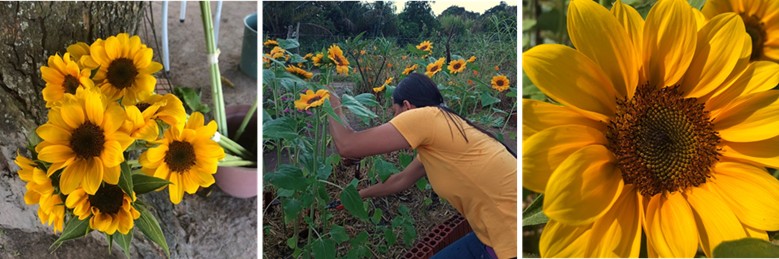
 Cut sunflower as an alternative income in the southern Agreste of Pernambuco
Abstract
Brazil presents optimal conditions for the cultivation of many species of ornamental plants, including cut sunflower (Helianthus annuus L.). The objective in this study was to evaluate the growth and flower production components of cut sunflower in three locations in the southern Agreste of Pernambuco, aiming to contribute to the diversification of production and income for small landholder farmers in the region. The study was carried out in the municipalities of Garanhuns, Bom Conselho and Canhotinho, State of Pernambuco, Brazil, with the cut sunflower Vincent’s Choice hybrid, considered one of the best cut flower hybrids in Brazil. The beds were 1.0 meter wide and 3.15 meters long and 10 plants per bed were evaluated in each location. Management practices from sowing to harvesting followed the recommendations of the ‘Flowers for All’ Project. The results showed a significant difference in all morphophysiological variables. It is concluded that (i) the production of cut sunflowers is adapted to the studied areas, with the standards required for the local market of the southern Agreste of Pernambuco, and that (ii) the ‘Flowers for All’ Project through the cultivation of cut sunflower contributed to the diversification of production and thus became a viable alternative for small landholder farmers in the region.
Keywords:
Floriculture; ‘Flowers for All’ Project; Helianthus annuus L.; Smallholder farming
Resumo
O Brasil favorece o cultivo das mais variadas espécies de plantas ornamentais, dentre elas destaca-se o girassol de corte (Helianthus annuus L.). O objetivo neste estudo foi avaliar o crescimento e componentes da produção de flores de girassol de corte no Agreste meridional de Pernambuco, visando a contribuir para a diversificação da produção e geração de renda para pequenos agricultores na região. O trabalho foi conduzido nos municípios de Garanhuns, Bom Conselho e Canhotinho, estado de Pernambuco, Brasil, utilizando o híbrido Vincent’s Choice, considerado um dos melhores híbridos de flor de corte do Brasil. Os canteiros possuíam 1,0 metro de largura por 3,15 metros de comprimento e foram avaliadas 10 plantas por canteiro em cada local. As práticas de manejo da semeadura à colheita seguiram as recomendações do Projeto “Flores para Todos”. Os resultados obtidos apresentaram diferença significativa em todas as variáveis morfofisiológicas. Conclui-se que (i) a produção de girassol de corte se adequou aos padrões exigidos para o comércio local do Agreste meridional de Pernambuco e (ii) que o Projeto “Flores para Todos” através de cultivo de girassol de corte contribuiu para a diversificação da produção e uma fonte de renda para pequenos produtores familiares na região.
Palavras-chave:
Floricultura; Projeto “Flores para Todos”; Helianthus annuus L.; Agricultura familiar
Introduction
Commercial floriculture in Brazil began in a more organized way in the 1950s, with the arrival of Dutch immigrants and since then it has been increasing its importance in Brazilian agribusiness. In the last decade, the flower market has had a steadily growth along with a significant growth of socioeconomic indicators in Brazil, as well as the increase in the consumption of flowers and other features related to quality of life, well-being and rapprochement with nature that the cultivation of flowers bring.
Within the different sectors of Floriculture, cut flowers have the potential to be an important source of income, especially for small farmers (Reis et al., 2020; Oliveira et al., 2021). Aligned with this potential is the ‘Flowers for All’ Project, the largest inclusive floriculture extension project in Brazil, led by the PhenoGlad Teams from several Brazilian states (Uhlmann et al., 2019; Streck and Uhlmann, 2021; Streck et al., 2024). The PhenoGlad Team seeks, in their research and extension actions, to present solutions for a sustainable intensification of cut flowers production, focusing on the demands of small rural enterprises and the delivery of a sustainable floriculture for future generations in order to attract and keep families in the countryside.
Brazil is a continental country with a wide edaphoclimatic variation, which favors the cultivation of many species of ornamental plants, among them cut sunflower (Helianthus annuus L.) (Curti et al., 2012; Tomiozzo et al., 2023; Tomiozzo et al.2024a). Cut sunflower is an annual eudicot native to North America, with good adaptation to a wide variety of climates, from equatorial and tropical to subtropical and temperate climates (Shatoori et al., 2021; Tomiozzo et al., 2023; Ribeiro et al., 2024), and with genotypes with low sensitivity to photoperiod (Tomiozzo et al., 2024b) and sensitive to water deficit from the first vegetative stages (two pairs of leaves) to the beginning of the reproductive phase (Souza et al., 2024; Tomiozzo et al., 2024b). The Southern Agreste of Pernambuco is a transition region between Zona da Mata and Sertão of Pernambuco, located at the Planalto da Borborema with an altitude ranging from 400 to 800 m, reaching approximately 1,000 m in the micro-region of Garanhuns, which has an area of 13,153.50 km² (Almeida et al., 2015).
The cultivation of cut sunflower has become a very attractive possibility of the income for farmers, as it is a short-cycle crop, propagated by seeds and their inflorescences, called capitulum, have high ornamental value in the flower market (Andrade et al., 2012; Silva et al., 2018, 2022; Tomiozzo et al., 2023; Tomiozzo et al., 2024). The quality of the cut sunflower is evaluated according to quantitative variables such as the length of the floral stem and the diameter of the capitulum, and qualitative variables such as the aesthetic value of the capitulum (Silva et al., 2018; Moura et al., 2022; Tomasi et al., 2024). Hence, the capitulum must be of adequate size for pots, which is defined by genetics and the production environment, with emphasis on air and soil temperature, solar radiation, and availability of water and nutrients in the soil (Damasceno et al., 2011), and the time required for completing the developmental cycle depends on genotype, environment, and their interaction (Proietti et al., 2022). Therefore, the use of genotypes adapted to the region in which it will be cultivated is extremely important as it reduces the risk of production losses and increases farmers profit (Dalchiavon et al., 2016). Regarding fertilization to provide nutrients to the plant, studies such as Andrade et al. (2014), who sought to analyze the quality of cut sunflower flowers using manure doses, indicate that doses of 15.0% to 16.7% the manure provided the best morphological and growth characteristics of sunflower flowers.
Another important management practice in the cultivation of cut sunflower is the sowing time, as different seasons throughout the year provide different availability of temperature, solar radiation, and water for plants. Therefore, the optimum time for sowing is the one that provides the best conditions in each environment (location) to produce the best quality of flower stems.
The objective in this study was to evaluate the growth and flower production components of cut sunflower flowers in three locations in the southern Agreste of Pernambuco, aiming to contribute to the diversification of production and income for small landholder farmers in the region.
Material and Methods
Field experiments were carried out in 2022 in the municipalities of Garanhuns, Bom Conselho and Canhotinho, State of Pernambuco, Brazil, using the Vincent’s Choice cut sunflower hybrid, considered the best hybrid and cut sunflower available in Brazil. Garanhuns is located at 08º 53’ 25” S latitude and 36º 29’ 34” W longitude, Bom Conselho at 09° 09’ 51’’ S latitude and 36° 40’ 60’’ W longitude, and Canhotinho at 8° 52′ 38” S latitude and 36° 11′ 49” W longitude. The selected locations are part of the Atlantic Forest biome, which has a tropical climate, with a rainy season from March to August, and a dry season from September to February. In these locations, the soils are shallow and stony, that is, less developed, with soils types as Vertisols, Ultisols, Luvisols, Neosols, and Planosols. This study was part of the ninth (first semester of 2022) and tenth (second semester of 2022) phases of the ‘Flowers for All’ Project (Uhlmann et al., 2019; Streck and Uhlmann, 2021) and was among the ten finalists of the Transformative Educator - 2023 Award in the Youth and Adult Education (EJA) category, held by Bett Brasil, Sebrae and Instituto Significare (www.educadortransformador.com.br).
The experimental design used was completely randomized. Trials were carried out in the campus of the Universidade Federal do Agreste de Pernambuco (UFAPE) (area 01), in the Castainho community in Garanhuns/PE (area 02), in the Fazenda Sampaio in Bom Conselho/PE (area 03), in the Sítio Luz community (area 04) and in the Olho D’água community, both in Canhotinho/PE (area 05). The management practices were according to the nationwide protocol of the ‘Flower for All’ Project from the PhenoGlad Team of the Universidade Federal de Santa Maria (UFSM) and carried out by undergraduate students, farmers, rural young and adults, rural EJA students, agricultural technicians and extension workers in each location.
Beds were prepared with 3.15 m in length and 1.0 m in width. The soil pH was corrected using limestone (500 g of limestone per m2) and organic fertilizer (cattle manure) was used at a rate of 3 kg per bed to increase organic matter in the soil. The cut sunflower seeds were provided by the PhenoGlad Team of UFSM, of which 100 seeds per area were used, totaling 500 seeds. Sowing was carried out in a plastic tray with commercial substrate on the following dates (dd/mm/yyyy) at each location: UFAPE = 04/06/2022, Castainho = 04/01/2022, Bom Conselho = 04/01/2022, and Canhotinho = 11/03/2022.
Transplanting of the seedlings onto the beds was performed when the seedlings had expanded cotyledons and two true leaves, which occurred 10 to 12 days after sowing. Plant spacing in the beds was four rows 20 cm apart and 12.5 cm within rows spacing (32 plants m-2) in the five areas, and the soil was covered with dry leaves as a mulching for the purpose of weed control, temperature reduction, and maintaining soil moisture (Fig. 1). Starting at transplanting, irrigation in the beds was carried out one to two times a day, according to the environmental conditions of each location. It was not necessary to carry out pest or disease control in any of the cultivation locations.

Soil mulching used in the beds with the Vincent’s Choice hybrid cut sunflower in the Southern Agreste region of Pernambuco, Brazil, 2022/2023.
Ten plants per bed were tagged with colored wires in each location, totaling 50 plants evaluated in the five areas. The following growth and development variables were evaluated during the developmental cycle at each location: plant height measured from the soil surface to the insertion of the uppermost last leaf, accumulated number of leaves on the stem, the date of R5 (ligulate flowers with an angle of 90º with the receptacle) which was assumed to be the harvest point (Luz and Tomiozzo, 2024), diameter of the floral stem at the height of 70 centimeters down from the capitulum at harvest, and diameter of the capitulum at harvest (Fig. 2).

Criteria of measurement of the variables capitulum diameter (mm), floral stem diameter at 70 cm down from the capitulum (mm), and plant height (cm) in the Vincent’s Choice hybrid cut sunflower grown in the Southern Agreste region of Pernambuco, Brazil, 2022/2023.
The absolute growth rates (TCA) and relative growth rates (TCR) of the variable plant height were also determined as (Benincasa, 2003):
in which M2 = final measurement of plant height (cm); M1 = initial measurement of plant height (cm); T2 - T1 = time interval (days); Ln = natural logarithm.
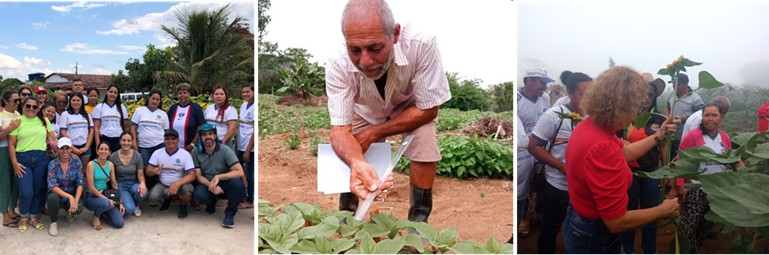
At the end of the cultivations, field days were held in order to present to the participants the entire cultivation processes (management, harvest point, and post-harvest care). All the communities involved during the production process of the cut sunflower were monitored, from the preparation of the bed to the harvesting of the floral stems (Fig. 3).

Harvesting of floral stems of the Vincent’s Choice hybrid cut sunflower grown in the southern Agreste of Pernambuco, Brazil, 2022/2023.
Statistical analyses were performed through analysis of variance (ANOVA), using the ASSISTAT software, and the comparison of means was with the Tukey test (p < 0.05).
Results and Discussion
The locations provided different environmental and management conditions in the cultivation of cut sunflower in the Southern Agreste region of Pernambuco. Average temperatures ranged from 29 °C to 33 °C in the southern Agreste of Pernambuco. A low temperature amplitude was observed during the developmental cycle, and temperature remained close to the optimum temperature of 28 °C for the species (Tomiozzo et al., 2024b). The accumulated rainfall during the developmental cycle was 60.5 mm, 38.2 mm, and 84.6 mm in Garanhuns, Bom Conselho and Canhotinho, respectively (APAC, 2022).
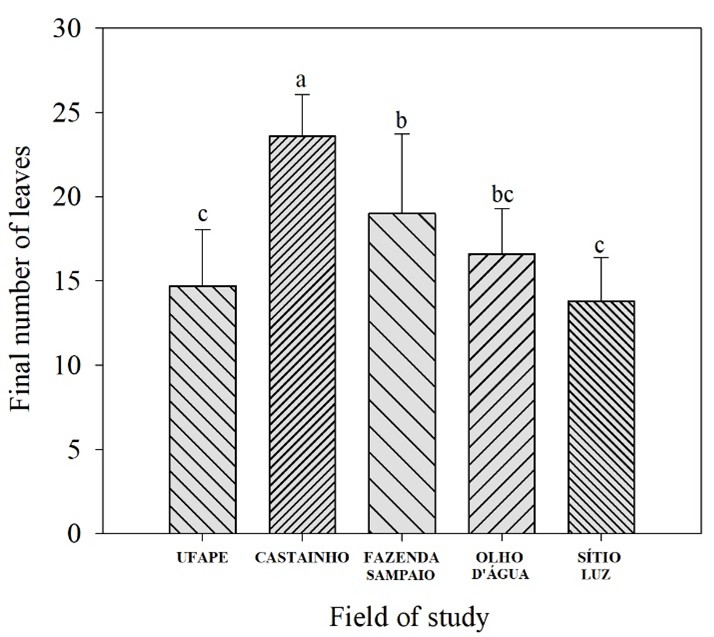
The high temperatures probably influenced the final number of leaves of the sunflower plants (Fig. 4), with a reduction of 19.3% in the cultivation at Fazenda Sampaio, 29.50% in the Olho D’água community, 38% at UFAPE and 41.40% in the Sítio Luz community, in relation to the Castainho community, which presented the highest final number of leaves, with an average of 24 leaves. This reduction in the final number of leaf may be a survival strategy used by plants to reduce water loss through transpiration, as water stress has the potential to reduce sunflower growth in height and yield (Ali et al., 2024).

Final number of leaves of Vincent’s Choice hybrid cut sunflower plants grown at five locations in the southern Agreste region of Pernambuco (UFAPE, Castainho, Fazenda Sampaio, Olho D’água, and Sítio Luz), Brazil, 2022/2023. Bars with the same letter do not differ from each other by the Tukey test (p < 0.05).
Despite the lower final number of leaves in UFAPE and in the Sítio Luz community, these locations had the highest plant heights (Fig. 5). In Sítio Luz, the plants reached an average length of 107.4 cm at harvest, 48 days after sowing. In the other locations, plant height ranged from 80 to 100 cm. In the Sítio Luz community, the area had a large amount of organic matter in the soil due to the cattle manure used in previous crops by the farmer, compared to the other locations. Diniz et al. (2020) observed that the use of cattle manure for fertilization provides greater nitrogen storage in the soil, a nutrient that is essential for plant growth and development.

Plant height of Vincent’s Choice hybrid cut sunflower grown in five locations in the southern Agreste region of Pernambuco (UFAPE, Castainho, Fazenda Sampaio, Olho D’água and Sítio Luz), Brazil, 2022/2023. Bars with the same letter do not differ from each other by the Tukey test (p < 0.05).
The TCA of the variable plant height was higher in the cultivation carried out at UFAPE, with approximately 3.82 cm day-1, and differed from the other locations (Fig. 6A). This rate represents the variation or increase in growth in cm per day between two samplings (Benincasa, 2003). The Fazenda Sampaio was the location where the plants had the lowest TCA. According to Miralles et al. (1997), in sunflower hybrids aiming at grain production, TCA increases slowly until full flowering and decreases in the last developmental phase of the life cycle. In the municipality of Catu/Bahia, Souza et al. (2013) found that the maximum TCA occurred close to 60 days after emergence and the authors attributed this delay to water deficit. For the cut sunflower hybrid Vincent´s Choice, the same genotype used in this study, plant height was lower in non-irrigated plants compared to irrigated plants in Itaqui/RS (Souza et al., 2024). The TCR represents a measure of the efficiency of growth in height over existing height and was significantly lower in the four locations (community of Castainho, Fazenda Sampaio, community of Olho D’água and Sítio Luz) compared to the cultivation carried out at UFAPE, where TCR was 0.11973 cm cm-1 day-1 (Fig. 6B).
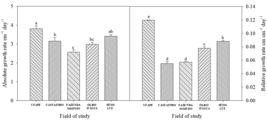
Absolute growth rate (cm day-1) (A) and relative growth rate (cm cm-1 day-1) (B) of Vincent’s Choice hybrid cut sunflower plants grown in five locations in the southern Agreste region of Pernambuco (UFAPE, Castainho, Fazenda Sampaio, Olho D’água and Sítio Luz), Brazil, 2022/2023. Bars with the same letter do not differ from each other by the Tukey test (p < 0.05).
The capitulum diameter and the height of the sunflower plants at harvest are variables related to the floral stem commercial value. According to Ibraflor (2023), the minimum diameter required is 45 mm for partially opened capitulum and 55 mm for fully opened capitulum, which must be accompanied by stems 40, 50, 60, and 70 cm high. In addition to the largest plant height, Sítio Luz also had the largest capitulum diameter (52.40 mm), followed by the Olho D’água (45.40 mm), both located in Canhotinho/PE (Fig. 7A) whereas the crop grown in Garanhuns (UFAPE and Castainho Community) and Bom Conselho (Fazenda Sampaio) had smaller capitulum diameter. The largest stem diameters were also in the Olho D’água Community (12.10 mm) and in the Sítio Luz (11.52 mm), which did not differ from each other (Fig. 7B). The higher the heigth (longer floral stem) and the larger the stem diameter, the better for flower longevity (Moura et al., 2022). Based on the results in this study, mainly in the Olho D’água Community and Sítio Luz, a relationship between height, stem diameter and capitulum diameter is evident. A strong positive correlation between height and stem diameter was observed by Amorim et al. (2008), indicating that plants with greater height tend to have larger stem diameter.
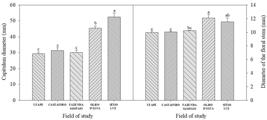
Capitulum diameter (mm) (A) and stem diameter (mm) (B) of Vincent’s Choice hybrid cut sunflower plants grown at five locations in the southern Agreste region of Pernambuco (UFAPE, Castainho, Fazenda Sampaio, Olho D’água and Sítio Luz), Brazil, 2022/2023. Bars with the same letter do not differ from each other by the Tukey test (p < 0.05).
According to the technical characteristics of the Vincent’s Choice hybrid, the plants can reach a height of 150 to 200 cm and have a development cycle of 55 days to 60 days (Sakata, 2024). Based on such information, it was observed that the cut sunflower plants in this study were penalized with the reduction of height and development cycle. However, this result does not associate with the quality standard of cut sunflower flower stems for commercialization in cooperatives regarding their height, since the standards of the Brazilian flower market determine that the length of the stem (from its base to the tip of the stem) should be 50, 60, 70, 80, and 90 cm (Veiling Holambra, 2024).
In addition to the stem length, capitulum and stem diameters are also important variables for commercial cut sunflower. Only the flower stems produced in both Olho D’água Community and in Sítio Luz had the capitulum diameter within the minimum standard of 45 mm for stem lengths of 50, 60, and 70 cm, for closed flowers. In the other locations, the flower stems did not reach the minimum for capitulum diameter. In semiarid conditions, cut sunflower floral stems can be reduced as previously reported (Silva et al., 2022). Regarding the diameter of the stem, the five cultivation areas had diameters above the minimum value of 8 mm, and the floral stems produced in the Olho D’água Community and in Sítio Luz presented even larger diameters, above 10 mm.
In local markets, such as the Southern Agreste region of Pernambuco, these standards do not need to be achieved, ensuring flexibility for producers to sell their products without financial losses. Even if the flower stems produced at UFAPE, at both Fazenda Sampaio and at Castainho community did not reach the quality standard required by the Brazilian flower market, the quality standard can be adjusted according to the needs of both the famers and the local consumers.
The potential of cut sunflower as an alternative of diversification for small rural properties and generating income in the Southern Agreste region of Pernambuco was confirmed in this study by the success of the field days held at the end of each growing season (Fig. 8). Small farmers and young people and adults from EJA positively evaluated the experience of learning in practice how to cultivate cut sunflower, from sowing to harvesting and marketing the flower stems. Another positive aspect was the experience of actively participating in daily data collection and understanding the basics of how agronomic research is carried out (Fig. 8). Extension actions, such as the ‘Flowers for All’ Project (Uhlmann et al., 2019; Streck and Uhlmann, 2021), are an excellent opportunity to encourage young people of rural areas and recognize their field work as very important for their sustainability, for the diversification of cultivation and demonstrate the suitability of different regions of Brazil for the cultivation of cut flowers.

Field Days and data collecting on cut sunflower in the Southern Agreste region of Pernambuco, Brazil, 2022/2023.
Conclusions
The cut sunflower adapted well to the environmental conditions of the Southern Agreste region of Pernambuco, producing quality floral stems to meet local market requirements.
The action of the ‘Flowers for All’ Project in the Southern Agreste region of Pernambuco through the cultivation of cut sunflowers contributed to the diversification of production and thus became a viable alternative for small landholder farmers in the region.
Acknowledgments
To the PhenoGlad Team and the ‘Flowers for All’ Project for the opportunity to grow cut sunflowers in the Southern Agreste of Pernambuco. We also thank the Federal University of Pernambuco Agreste (Universidade Federal do Agreste de Pernambuco) for all support for the project.
Data availability statement
The research data is contained in the manuscript
References
-
ALI, A.A; LAMLOM, S.F.; EL-SORADY, G.A.; ELMAHDY, A.M.; ABD ELGHANY, S.H.; USMAN, M.; ALAMRI, A.; SHAGHALEH, H.; HAMOUD, Y.A.; ABDELGHANY, A.M. Boosting resilience and yields in water-stressed sunflower through coordinated irrigation scheduling and silica gel applications. Heliyon, v.10, p.1-15, 2024. https://doi.org/10.1016/j.heliyon.2024.e38129
» https://doi.org/10.1016/j.heliyon.2024.e38129 -
ALMEIDA, A.V.D.L.; CORRÊA, M.M.; LIMA, J.R.D.S.; SOUZA, E.S.D., SANTORO, K.R.; ANTONINO, A.C.D. Atributos físicos, macro e micromorfológicos de Neossolos Regolíticos no agreste meridional de Pernambuco. Revista Brasileira de Ciência do Solo, v.39, p.1235-1246, 2015. https://doi.org/10.1590/01000683rbcs20140757
» https://doi.org/10.1590/01000683rbcs20140757 -
AMORIM, E.P.; RAMOS, N.P.; UNGARO, M.R.G.; KIIHL, T.A. Correlações e análise de trilha em girassol. Bragantia, v.67, p.307-316, 2008. https://doi.org/10.1590/S0006-87052008000200006
» https://doi.org/10.1590/S0006-87052008000200006 -
ANDRADE, L.O., GHEYI, H.R., NOBRE, R.G., DIAS, N.S., NASCIMENTO, E.C.S. Qualidade de flores de girassóis ornamentais irrigados com águas residuária e de abastecimento. Idesia (Arica), v.30, n.2, p.19-27, 2012. http://dx.doi.org/10.4067/S0718-34292012000200003
» http://dx.doi.org/10.4067/S0718-34292012000200003 -
APAC - Agência Pernambucana de Águas e Climas. Available at: <Available at: https://www.apac.pe.gov.br/ > Accessed on: July 28th, 2024.
» https://www.apac.pe.gov.br/ - BENINCASA, M.M.P. Análise de crescimento de plantas: noções básicas. Jaboticabal: FUNEP, 2003. 42p.
-
CURTI, G.L.; MARTIN, T.N.; FERRONATO, M.L.; BENIN, G. Girassol ornamental: caracterização, pós-colheita e escala de senescência. Revista de Ciências Agrárias, v.35, n.1, p.240-250, 2012. https://doi.org/10.19084/rca.16179
» https://doi.org/10.19084/rca.16179 -
DALCHIAVON, F.C.; MALACARNE, B.J.; CARVALHO, C.G.P. Características agronômicas de genótipos de girassol (Helianthus annuus L.) em segunda safra no Chapadão do Parecis-MT. Revista de Ciências Agrarias, v.39, n.1, p.178-186, 2016. https://doi.org/10.19084/RCA15049
» https://doi.org/10.19084/RCA15049 - LUZ, P.B.; TOMIOZZO, R. Colheita, pós-colheita e qualidade das hastes florais de girassol de corte. In: Girassol de corte: inovação e sustentabilidade na floricultura moderna. Santa Maria: Editora GR, 2024. pp.207-217.
- DAMASCENO, L.M.O.; ANDRADE JUNIOR, A.S.; CHEYI, H.R.; DIAS, N.S.; SILVA, C.O. Composição nutricional foliar da gérbera irrigada com efluente doméstico tratado. Revista Caatinga, v.24, n.2, p. 121-128, 2011.
- ANDRADE, L.O.; GHEYI, H.R.; DIAS, N.S.; NOBRE, R.G.; SOARES, F.A.L.; NASCIMENTO, E.C.S. Qualidade de flores de girassol ornamental irrigada com água residuária e doses de esterco. Revista Caatinga, v.27, n.3, p.142-149, 2014.
-
DINIZ, P.O.; SOUSA P.L.O.; SOUSA, G.O.; SILVA, E.N.R.; MOTA, F.D.A.R. Efeitos de diferentes proporções de esterco bovino no desenvolvimento do girassol. Diversitas Journal, v.5, n.4, p.2464-2472, 2020. https://doi.org/10.17648/diversitas-journal-v5i4-121
» https://doi.org/10.17648/diversitas-journal-v5i4-121 -
IBRAFLOR. Instituto Brasileiro de Floricultura. Padrão de qualidade: girassol corte. Available at: <Available at: https://www.ibraflor.com.br/padraodequalidade > Accessed on: Sept 8th, 2023.
» https://www.ibraflor.com.br/padraodequalidade -
MIRALLES, O.B., VALERO, J.A.J.; OLALLA, F.M.S. Growth, development and yield of five sunflower hybrids. European Journal of Agronomy, v.6, p.47-59, 1997. https://doi.org/10.1016/S1161-0301(96)02035-7
» https://doi.org/10.1016/S1161-0301(96)02035-7 -
MOURA, S.R.; SILVA, C.M.A.; COTTING, J.C.; BARBOSA, M.S.; SOUZA, R.R.; BECKMANN-CAVALCANTE, M.Z. Longevity and post-harvest quality of cut ornamental sunflower floral. Revista Brasileira de Ciências Agrárias, v.17, p.1-7, 2022. https://doi.org/10.5039/agraria.v17i2a1708
» https://doi.org/10.5039/agraria.v17i2a1708 - OLIVEIRA, C.B.; NASCIMENTO, N.T.; SILVA, R.G.R.; LOPES, I.C. A cadeia produtiva de flores e plantas ornamentais no Brasil: uma revisão sobre o segmento. Revista Livre de Sustentabilidade e Empreendedorismo, v.6, n.2, p.180-200, 2021.
-
PROIETTI, S., SCARIOT, V., DE PASCALE, S.; PARADISO, R. Flowering mechanisms and environmental stimuli for flower transition: bases for production scheduling in greenhouse floriculture. Plants, v.11, n.3, 432, 2022. https://doi.org/10.3390/plants11030432
» https://doi.org/10.3390/plants11030432 -
REIS, M.V.; SAT’ANA, G.S.; PAIVA, P.D.O.; BONIFÁCIO, F.L.; GUIMARÃES, P.H. Profile of producer and retailer of flower and ornamental plant. Ornamental Horticulture, v.26, n.3, p.367-380. 2020. https://doi.org/10.1590/2447-536X.v26i3.2164
» https://doi.org/10.1590/2447-536X.v26i3.2164 -
RIBEIRO, Y.S.; SANTOS, E.R.; LIMA, C.S.M.; LEANDRINI, J.A.; UHLMAN, L.O.; HILATCHUK, C.I.V. Custos de implantação e condução de girassol de corte em sistema de plantio orgânico no Município de Laranjeiras do Sul, Estado do Paraná (PR), Brasil. Research, Society and Development, v.13, n.3, e2913345135, 2024. https://doi.org/0.33448/rsd-v13i3.45135
» https://doi.org/0.33448/rsd-v13i3.45135 -
SAKATA. Vincent’s Choice. Available at: Available at: https://www.sakata.com.br/flores/corte/sunflower/vincent-s Accessed on: July 16th, 2024.
» https://www.sakata.com.br/flores/corte/sunflower/vincent-s -
SHATOORI, M.M.; SAFFARI, V.R.; FARAHMAND, H. Correlation between vase life and biochemical parameters in ornamental sunflower (Helianthus annuus L.) affected by spraying chemical materials during the growth stages. Journal of Plant growth Regulation, v.40, p.179-186, 2021. https://doi.org/10.1007/s00344-020-10088-2
» https://doi.org/10.1007/s00344-020-10088-2 -
SILVA, S.D.P.; BECKMANN-CAVALCANTE, M.Z.; SOUZA, G.P.; OLIVEIRA, T.S.; LIMA, R.R.; CHAVES, A.R.M. Growth of ornamental sunflowers in two growing seasons under semiarid conditions. Journal of Food and Agriculture, v.30, p.381-388, 2018. https://doi.org/10.9755/ejfa.2018.v30.i5.1681
» https://doi.org/10.9755/ejfa.2018.v30.i5.1681 -
SILVA, S.D.P.; SOUZA G.P.; CHAVES, A.R.M.; SILVA, M.A.; SOUZA, R.R.; BECKMANN-CAVALCANTE, M. Morphophysiological aspects of ornamental sunflowers cultivated in different growing seasons under semi-arid conditions. Revista Brasileira de Engenharia Agrícola e Ambiental, v.26, p.299-305, 2022. http://dx.doi.org/10.1590/1807-1929/agriambi.v26n4p299-305
» http://dx.doi.org/10.1590/1807-1929/agriambi.v26n4p299-305 - SOUZA, A. G.; ALBERTO, C. M; BOSCO, L. C.; UHLMANN, L. O.; LUZ, P. B.; SORGATO, J. C.; ANTONIACOMI, L. A. M.; TAVARES, N. C.; FERNANDES, M. E. S.; SIMON, M. L.; TOMIOZZO, R.; STRECK, N. A. Sistemas de produção de girassol de corte. In: Girassol de corte: inovação e sustentabilidade na floricultura moderna. Santa Maria: Editora GR, 2024. pp.113-151.
- STRECK, N.A.; UHLMANN, L.O. Flowers for all; bridging the gap between science and society. Chronica Horticulturae, v.61, n.3, p.32-34, 2021.
- STRECK, N.A.; UHLMANN, L.O.; TOMIOZZO, R.; PAULA, G.M.; ALBERTO, C.M.; FREITAS, C.O.; BOSCO, L.C.; SOUZA, A.G.; ROSSATO, O.B.; HOJO, E.T.D.; PERBONI, A.T.; BECKMANN-CAVALCANTE, M.Z.; LUZ, P.B.; SORGATO, J.C.; FONSECA, F.L.; MOREIRA, M.A.; PEREIRA, S.M.S.; BEZERRA, J.S.; BARROS, A.M.F.; BARRETO, L.L.; ZANON, J.A.; SILVA, A.R.; NARDI, S.; BERNARDI, L.; RAMOS, A.J.K.; VIONE, G.; CHAVES, M.; MAZUIM, L.; VIVIAN, I.; BENKE, E.B.; ILHA, L.; PILLATI, I.; BORSTMANN, F.; DUTRA, V. L.; FRIES, C.D.; DECOL, O.; TIRONI, L.F.; JANISCH, D.; MAFINI, S.M.; ZAMBON, S.M.; GELATTI, M.; SCHIAVO, J.T.; FEIJÓ, N.T.; GETZ, B.M.; RICHTER, N.; BOHN, L.; SANTA MARIA, B.C.; RODRIGUES, R.S.; DIAS, F.P.; STRECK, M.M.; SILVA, J.L.; REGO, M.C.A.; SILVA-MATOS, R.R.S.; LUZ, L.M.; COSTA, L.C.; MARTÍNEZ, C.M.T.; CERA, L.G.; BECKER, D.; ROSO, T.P.; SILVA, L.G.O.; FERRONATO, L.; BITTENCOURT, P.N.; FERNANDES, M.E.S.; SIMON, M.L.; HENKER, T.; BRANDÃO, G.H.; OLIVEIRA, A.L.; OLIVEIRA, J.H.N.; COSTA, G.S.; FIGUEIREDO, H.F.; SANTANA, P.N.O.; SILVA, G.L.; ANTONIACOMI, L.A.M.; VALENTIM, S.M.S.; MORETTO, G.; CARDOSO, E.L.O.; MOREIRA, A.C.S.; AMARAL, A.J.C.; MIRANDA, B.S.O.; ENGEL, M.E.S.; DELLA NORA, M.F.; OLIVEIRA, F.G.; TAIRA, T.L.; ELOY, A.V.M.; ELIAS, D.B.; FARIAS, K.A.A.; OLIVEIRA, V.B.S.; SANTOS, W.M.A.; ALVES, L.Z.; SILVA, A.V.; CAMPOS, L.N.; TENÓRIO, G.F.; TEIXEIRA, M.R.; SILVA, A.L.V.; MÜNCH, D.; RENOSTO, M.; PORT, F.; MORES, E.; TAVARES, N.C.; MACALI, J.B.; BARBOSA, L.B.; SILVA, A.A.A.; COSTA, L.M.; NAKAHARADA, G.V.; SILVA, L.G.; FERREIRA, M.B.; VIERO, V.B.; PINHEIRO, E.S.S.; HOLZ, E.; BONETTI, A.S.; TESSER, M. O girassol de corte no Projeto Flores para Todos. In: Girassol de corte: inovação e sustentabilidade na floricultura moderna. Santa Maria: Editora GR, 2024. pp. 239-313.
-
TOMASI, T.C.; REIS, L.C.; TAIRA, T.L.; SOARES, J.S.; TOMIOZZO, R.; UHLMANN, L.O.; STRECK, N.A.; SORGATO, J.C. Plant density and location: optimization of growth and quality of cut sunflower in tropical and subtropical environments. Plants, v. 13, p. 2810, 2024. https://doi.org/10.3390/plants13192810
» https://doi.org/10.3390/plants13192810 - TOMIOZZO, R.; SILVA, L.G.O.; FIGUEIREDO, H.F.; VALENTIM, S.M.S.; STRECK, N.A.; UHLMANN, L.O.; BECKMANN-CAVALCANTE, M.Z.; LUZ, P.B.; BOSCO, L.C.; ITAKO, A.T.; TOLENTINO JÚNIOR, J.B.; REIS, S.N.; SILVA, L.M.C.; SORGATO, J.C.; TAIRA, T.L.; PERBONI, A.T.; COSTA, L.C.; LUZ, L.M.; MARAFIGO, D.R.F.; ROSO, T.P.; SOUZA, R.R.; SILVA, G.L.; AMORIM, L.D.S.; SANTANA, P.N.O.; NAKAHARADA, G.V.; MARTÍNEZ, C.M.T.; MANSUINO, A.; ELOY, A.V.M.; ELIAS, D.B.; FARIAS, K.A.A.; OLIVEIRA, V.B.S.; SANTOS, W.M.A. Ensaio Brasileiro de Girassol de Corte. Santa Maria, RS: PhenoGlad/UFSM, 2023. e-book: il.
- TOMIOZZO, R.; STRECK, N.A.; UHLMANN, L.O.; PAULA, G.M.; ALBERTO, C.M.; FREITAS, C.P.O.; BOSCO, L.C.; SOUZA, A.G.; ROSSATO, O.B.; HOJO, E.T.D.; PERBONI, A.T.; BECKMANN-CAVALCANTE, M.Z.; LUZ, P.B.; SORGATO, J.C.; FONSECA, F.L.; MOREIRA, M.A.; PEREIRA, S.M.S.; BEZERRA, J.S.; BARROS, A.M.F.; BARRETO, L.L.; ZANON, J.A.; SILVA, A.R.; NARDI, S.; BERNARDI, L.; RAMOS, A.J.K.; VIONE, G.; CHAVES, M.; MAZUIM, L.; VIVIAN, I.; BENKE, E.B.; ILHA, L.; PILLATI, I.; BORSTMANN, F.; DUTRA, V. L.; FRIES, C.D.; DECOL, O.; TIRONI, L. F.; JANISCH, D.; MAFINI, S.M.; ZAMBON, S.M.; GELATTI, M.; SCHIAVO, J.T.; FEIJÓ, N.T.; GETZ, B.M.; RICHTER, N.; BOHN, L.; SANTA MARIA, B.C.; RODRIGUES, R.S.; DIAS, F.P.; STRECK, M.M.; SILVA, J.L.; REGO, M.C.A.; SILVA-MATOS, R.R.S.; LUZ, L.M.; COSTA, L.C.; MARTÍNEZ, C.M.T.; CERA, L.G.; BECKER, D.; ROSO, T.P.; SILVA, L.G.O.; FERRONATO, L.; BITTENCOURT, P. N.; FERNANDES, M.E.S.; SIMON, M. L.; HENKER, T.; BRANDÃO, G. H.; OLIVEIRA, A.L.; OLIVEIRA, J.H.N.; COSTA, G.S.; FIGUEIREDO, H.F.; SANTANA, P.N.O.; SILVA, G.L.; ANTONIACOMI, L. A. M.; VALENTIM, S. M. S.; MORETTO, G.; CARDOSO, E. L. O.; MOREIRA, A. C. S.; AMARAL, A. J. C.; MIRANDA, B. S. DE O.; ENGEL, M. E. S.; DELLA NORA, M. F.; OLIVEIRA, F. G. DE; TAIRA, T. L.; ELOY, A. V. M.; ELIAS, D. B.; FARIAS, K. A. A.; OLIVEIRA, V. B. S.; SANTOS, W. M. A. DOS; ALVES, L. Z.; SILVA, A.V.; CAMPOS, L.N.; TENÓRIO, G.F.; TEIXEIRA, M.R.; SILVA, A.L.V.; MÜNCH, D.; RENOSTO, M.; PORT, F.; MORES, E.; TAVARES, N.C.; MACALI, J.B.; BARBOSA, L.B.; SILVA, A.A.A.; COSTA, L.M.; NAKAHARADA, G.V.; SILVA, L.G.; FERREIRA, M.B.; VIERO, V.B.; PINHEIRO, E.S.S.; HOLZ, E.; BONETTI, A.S.; TESSER, M. Girassol de corte: inovação e sustentabilidade na floricultura moderna. Santa Maria: Editora GR, 2024a., 320 p.
- TOMIOZZO, R.; UHLMANN, L.O.; PAULA, G.M.; FONSECA, F.L.; SILVA, L.G.O.; FERRONATO, L.; OLIVEIRA, L. S.; COSTA, M.A.D.; GRAZZIOTIN, N.; BOSCO, L.C.; STRECK, N.A. Exigências climáticas e época de cultivo do girassol de corte. In: Girassol de corte: inovação e sustentabilidade na floricultura moderna. Santa Maria: Editora GR, p. 63-85, 2024b.
-
UHLMANN, L.O.; BECKER, C.C.; TOMIOZZO, R., STRECK, N.A.; SCHONS, A.; BALEST, D.S.; LANGNER, J.A. Gladiolus as an alternative for diversification and profit in small rural property. Ornamental Horticulture, v.25, n.2, p.200-208, 2019. https://doi.org/10.14295/oh.v25i2.1541
» https://doi.org/10.14295/oh.v25i2.1541 -
VEILING HOLAMBRA. Padrões de classificação de girassol de corte. Disponível em: Disponível em: https://veiling.com.br/nossos-produtos/ Acesso em 27/11/2024.
» https://veiling.com.br/nossos-produtos/
Edited by
-
Editor:
Márkilla Zunete Beckmann-Cavalcante (Universidade Federal do Vale do São Francisco, Brasil)