 Evaluating Diversity and Molecular Association Analysis in Wild Iranian Gladiolus
Abstract
Gladiolus is considered one of the most significant globally ornamental crops, extensively utilized as a cut flower and for outdoor landscaping. However, the local destruction of Iranian Gladiolus as a weed threatens the biodiversity of this species. This research aimed to compare Iranian Gladiolus populations. A total of 76 Iranian Gladiolus accessions were collected. These accessions exhibited significant phenotypic variability across all the studied traits. Geographical factors were found to significantly contribute to this diversity. Additionally, to explore the association between genetic markers and phenotypic traits, both ISSR and IRAP markers were employed. Significant correlations were identified between stem length and latitude (r = 0.746, p < 0.01). Moreover, floret number showed a strong correlation with spike length and longitude (r = 0.777, p < 0.01 and r = 0.658, p < 0.05, respectively). The Hmdn8 population from Hamedan province exhibited superior values across all phenotypic traits. Furthermore, the Krdstn4 population from Kurdistan province, known for its superior inflorescence traits, was identified as suitable for specific breeding purposes. The climatic conditions of Kurdistan, characterized by a cold semi-humid climate and high annual rainfall, indicate that higher latitudes and colder periods are favorable for Gladiolus growth and flowering. A total of 146 polymorphic bands were produced from two types of markers, ISSR and IRAP. The association analysis revealed that the ISSR4-3, ISSR2-20 and ISSR5-24 markers showed significant correlations with stem length and floret number. Additionally, informative markers were identified for other traits, demonstrating significant associations with multiple traits in Gladiolus. These findings are crucial for identifying crucial genomic regions for Gladiolus breeding programs.
Keywords:
genetic resource; geographical factors; inflorescence
Resumo
O gladíolo é considerado uma das culturas ornamentais mais significativas do mundo, amplamente utilizado como flor de corte e para paisagismo externo. No entanto, a destruição local do gladíolo iraniano como erva daninha ameaça a biodiversidade desta espécie. Esta pesquisa teve como objetivo comparar populações de gladíolo iraniano. Um total de 76 acessos de gladíolo iraniano foram coletados, exibindo variabilidade fenotípica significativa em todas as características estudadas. Fatores geográficos contribuíram significativamente para essa diversidade. Correlações significativas foram identificadas entre comprimento do caule e latitude (r = 0.746, p < 0.01). O número de floretes mostrou uma forte correlação com comprimento e longitude da espiga (r = 0.77, p < 0.01 e r = 0.658, p < 0.05, respectivamente). A população Hmdn8 da província de Hamedan exibiu valores superiores em todas as características fenotípicas. Além disso, a população Krdstn4 da província do Curdistão, conhecida por suas características superiores de inflorescência, foi identificada como adequada para propósitos específicos de reprodução. As condições climáticas do Curdistão, caracterizadas por um clima frio semi-úmido e alta precipitação anual, indicam que latitudes mais altas e períodos mais frios são favoráveis ao crescimento e floração do gladíolo. Um total de 146 bandas polimórficas foram produzidas a partir de dois tipos de marcadores, ISSR e IRAP. A análise de associação revelou que os marcadores ISSR4-3, ISSR2-20 e ISSR5-24 mostraram correlações significativas com o comprimento do caule e o número de floretes. Essas descobertas são cruciais para identificar regiões genômicas importantes para programas de reprodução do gladíolo.
Palavras-chave:
fatores geográficos; inflorescência; recurso genético
Introduction
Gladiolus, from the Iridaceae family, is an ornamental cormous plant with annual geophytic organs. Today, Gladiolus with spike inflorescence is one of the world’s most important ornamental crops used as a cut flower and landscaping outdoor decoration (Cantor and Tolety, 2011). In Iran, the commercial value of the Gladiolus has significantly increased since it is one of the most consumed cut flowers being cultivated in more than 350 hectares in 2017 (Azimi, 2020). Gladiolus genus originates from South Africa and its utilization spreads to the Mediterranean region, Caucasus, Asia Minor, and Central Asia, Iran, and Afghanistan (Gabrielian, 2001). Wild Gladiolus (Gladiolus segetum Ker Gawl.), as a native weed in Iran, is widely distributed, particularly in fields of wheat, legumes, and other drylands. Therefore, over 20% of losses of wheat yield have led to the use of herbicides to control and eliminate it as a weed. These data indicate that the Gladiolus is an endangered species. In addition, other reasons, such as flower harvest sooner than their maturity, lack of opportunity to produce seeds, human exploitation of natural resources, global climatic changes, and the absence of a germplasm conservation program (Aziz et al., 2020), resulted in the sharp decrease of the diversity of Iranian wild ornamental (especially Gladiolus), which is currently threatened with local destruction. Maintaining diversity via the establishment of the protected areas, and also collection and characterization of wild germplasm are the primary policies in order to perform germplasm conservation (Aziz et al., 2020; Ebrahimi et al., 2020).
In modern plant breeding, native plants with a wide range of diversity are considered as valuable gene pools for crossing programs (Yali and Mitiku, 2024). The development of genomic resources of Gladiolus is important for conservation, domestication, and breeding processes. Wild Gladiolus species can be a reservoir of genetic resources for genetic improvement of ornamental characteristics and disease resistance through traditional and molecular breeding methods (Cantor and Tolety, 2011). Hence, in the process of plant genetic diversity and conservation, phenotypic variations are recommended as the first step for selection of Gladiolus (Chaudhary et al., 2018). The evaluation of genetic diversity of the germplasm population and morphological traits evaluation may provide valuable information for plant breeding programs (Khadivi et al., 2020). Singh et al. (2018) estimated the variability and genetic relationships among 50 Gladiolus cultivars, based on morphological, physiological, and molecular markers. An ideal Gladiolus should have inflorescence with a good ornamental value, excellent stem strength, good corm enlargement, large number of cormels, high rate of propagation, and low sensitivity to major pests and diseases (Cantor and Tolety, 2011). Therefore, the existence of variations in ornamental traits is of great importance for commercial purposes, utilization in landscaping, and appreciating plant resources (Echeverría and Camadro, 2020). Hence, the identification of valuable plant materials such as landraces and indigenous varieties are important for the breeding (Lazaridi et al., 2024). Phenotypic variations have been successfully applied to assess genetic diversity in ornamental crops, such as the endangered orchid (Orchis mascula (L.) L.) (Ebrahimi et al., 2020) and ornamental Xanthoceras sorbifolium Bunge (Zhou et al., 2023).
To date, several molecular investigations utilizing various markers have been conducted on Gladiolus genotypes. Chaudhary et al. (2018), employed ISSR markers; Singh et al. (2017) focused on SCAR markers; and Ražná et al. (2022) applied miRNA-based markers to explore the genetic diversity of Gladiolus. In addition to assessing gene diversity, molecular markers enable researchers to identify and track specific genomic regions associated with desirable traits in plants (Kamal Meena et al., 2023).
Despite the wide distribution of numerous Gladiolus accessions in Iran, the characterization and assessment of the existing diversity of Iranian Gladiolus germplasm at the morphological level have received little attention. We hypothesized that plant diversity varies between Gladiolus accessions collected from different parts of Iran. To address this, the present investigation focused on two main objectives: The present investigation aimed to understand phenotypic diversity through multivariate analysis to identify superior populations from 14 regions of western Iran. Considering the limited research on the association between key phenotypic traits of Gladiolus and molecular markers, this study employed two molecular marker technologies-ISSR and IRAP-for association analysis.
Materials and methods
Plant materials
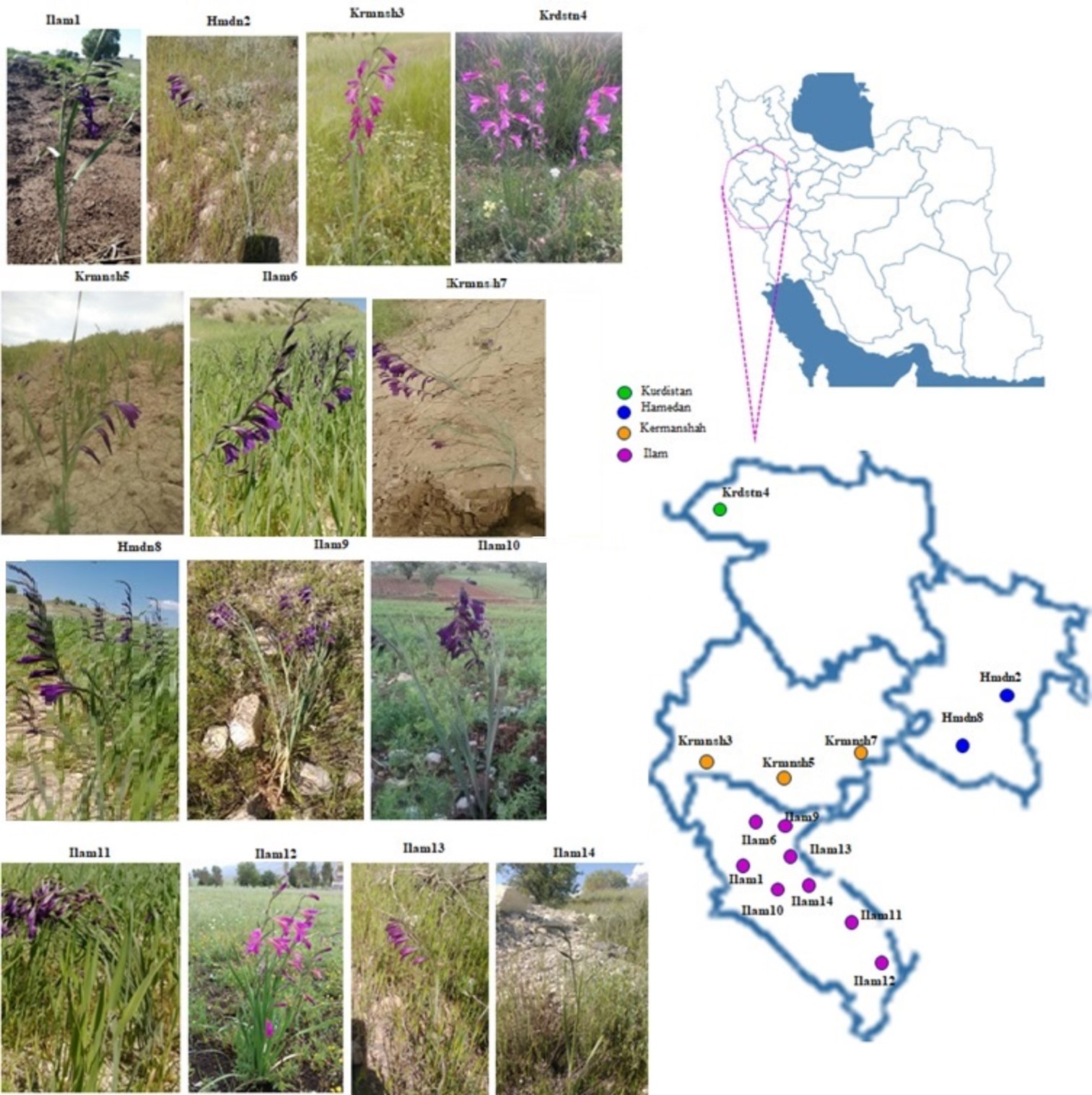
In the present study, a total of 76 Iranian Gladiolus accessions were collected from 14 wild populations originating from various geographical regions of Iran (Fig. 1). The accessions belonged to western regions of Iran at Ilam, Kermanshah, Hamedan, and Kurdistan provinces. The accessions were completely harvested at the flowering stage from their natural habitats between May and June 2019. The distance between the samples in each collection site was at least 100 m. All the geographical characteristics of the collection sites included latitude, longitude, altitude, and species names represented in Table 1. The identification of Gladiolus species was performed by the authors based on Colorful Flora of Iran (Ghahraman, 1979).
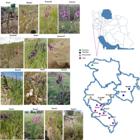
Collection sites of Gladiolus populations from different geographical regions of Iran that were investigated in this study.
Phenotypic evaluation
In the studied accessions, the morphological traits, such as stem length and spike length were measured with a ruler; corm diameter was measured using digital caliper (Guanglu, resolution: 0.01 mm), and the number of leaves and florets was recorded.
DNA extraction and PCR
Leaf samples were collected from young plants, kept on ice, and promptly transferred to a -80°C freezer in the laboratory, where they remained until DNA extraction. For genomic DNA extraction, the CTAB method was employed with some modifications (Ramos et al., 2014). The quantity and quality of the extracted genomic DNA were assessed using agarose gel electrophoresis (Bio-Rad, USA). DNA quality was evaluated against lambda phage DNA (100 bp) at a specific concentration. The IRAP and ISSR primers utilized in this study were sourced from Metabion International AG and prepared by Rastin Gene. The sequences of these primers are presented in Table 2.
Annealing temperature and sequence of ISSR and IRAP primers used in genetic evaluation of Gladiolus populations.
The optimal annealing temperature for each primer was determined using polymerase chain reaction (PCR) with a thermal gradient. PCR reactions were prepared in a volume of 10 μl for each ISSR and IRAP primer. The final concentrations of the components for both types of primers were as follows: 0.8 µM for primers, 0.4 mM for dNTPs, 1X PCR buffer, 2 mM MgCl, and 5 U µl-1 Taq DNA polymerase. PCR was conducted using a thermocycler (Labnet Multi Gene Optimax model, USA) equipped with a temperature gradient. The annealing temperature for each primer was set to 5 °C below its specific melting temperature, with an incremental increase of 0.4 °C for each cycle. The products obtained from the polymerase chain reaction (PCR) were separated using 1.5% agarose gel, and the bands on the gel were scored as binary values (0 and 1).
Statistical data analysis
Analysis of variance (ANOVA) was performed for each morphological trait according to GLM procedure using SAS software (SAS Institute version 9.1 Cary NC). The mean comparison was performed by applying the Duncan’s Multiple-Range Test. The correlations between the traits were determined utilizing the Pearson correlation coefficient with GraphPad Prism 8.0 (GraphPad Software Inc. San Diego CA). To determine the effective variables on creating diversity among the populations, principal component analysis (PCA) was performed using SAS software (SAS, 2003). The cluster analysis of Gladiolus populations for phenotypic traits according to the Ward method was constructed using SPSS version 24, Chicago, IL, USA.
To estimate the number of genetic subpopulations among the 76 Gladiolus accessions investigated, Structure 2.3.4 software (Pritchard et al., 2000) was employed. Subsequently, association analysis was performed to examine the relationships between the morphological and molecular characteristics of the Gladiolus accessions. TASSEL software (Bradbury et al., 2007) was used for this analysis. Two models were evaluated: the General Linear Model (GLM), which incorporated morphological data, molecular data, and the Q matrix; and the Mixed Linear Model (MLM), which included morphological data, molecular data, the Q matrix, and the K matrix. The Q matrix represents the results of population structure analysis, while the K matrix reflects kinship data, indicating the general genetic similarity among the accessions due to their relatedness.
Results
Variability in phenotypic traits
Table 3 summarizes the results of ANOVA for the morphological traits of the 76 Gladiolus accessions of the 14 populations. A wide range of variation was observed among the populations; the obtained data revealed highly significant differences (p < 0.01, p < 0.001) among the populations for all of the characteristics (stem length, spike length, floret number, leaf number, corm diameter). The comparison of means showed (Table 4) that the highest stem length belonged to Krdstn4, followed by Krmnsh7 populations. The shortest accessions with 31.36 cm were recorded for Ilam12. The comparison of the studied populations revealed that the tallest spikes belonged to the Hmdn8 population. The population of Ilam12, despite plant shortness, had a long spike. This indicated that a large part of the stem is covered with florets. The shortest spikes belonged to Ilam13, followed by Ilam9 populations. Hmdn8 population had the highest number of florets, with an average of 10.4 florets per spike. The population of Ilam14 came in second with an average of 10.33 florets. The lowest number of florets was recorded for the Ilam13 population with 5.33 florets. The leafiest populations had four leaves on the stem (Ilam14 and Ilam10) while the number of leaves in five of the studied populations was three or less than three. In addition, the thickest corms belonged to the Hmdn8 population, which was 17 mm in diameter, whereas the smallest corms were observed in the population of Krmnsh5.
Correlation between characters
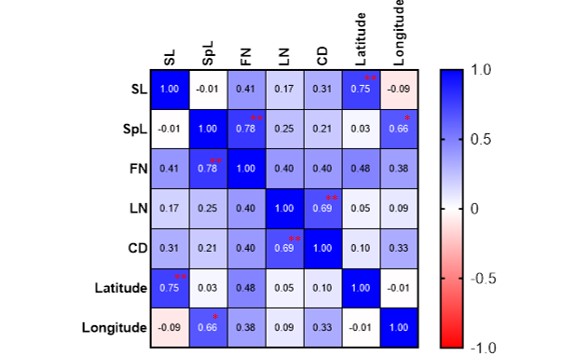
Figure 2 depicts the results of Pearson correlation coefficient between the traits and geographical factors. There was a positive and significant correlation between stem length and latitude (p < 0.01, r = 0.746). The number of florets on the spike as an important feature was found to be strongly correlated with the spike length and the longitude of the region (p < 0.01, r = 0.777 and p < 0.05, r = 0.658, respectively). In addition, corm diameter was positively and significantly correlated with the number of leaves (p < 0.01, r = 0.693).
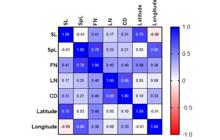
The correlation coefficients among the investigated traits in Gladiolus populations. SL, Stem length; SpL, Spike length; FN, Floret number; LN, Leaf number; CD, Corm diameter. * and ** Significant at 0.05 and 0.01, respectively
Principal components analysis (PCA)
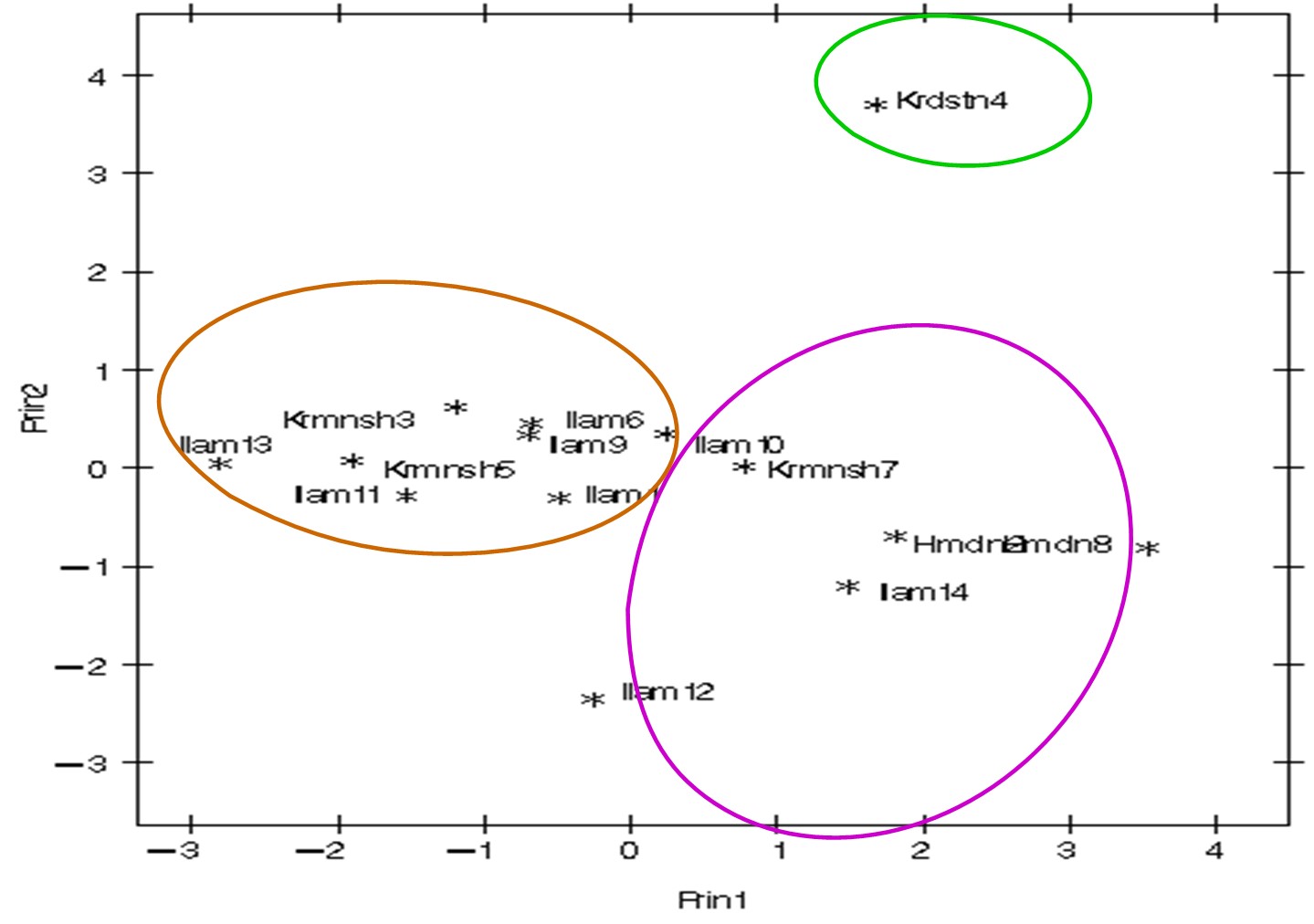
The Principal Components Analysis (PCA) identified key traits for grouping Gladiolus populations, including floret number, stem length, latitude, leaf number, and corm diameter (Table 5). The traits in the first factors have a pivotal role in distinguishing the populations. These traits explained 84.66% of the variability, with the first three components having eigenvalues greater than 1.0. The first component (PC1) accounted for 41.6% of the variance, mainly defined by floret number (0.522). The second component (PC2) explained 25% of the variance, primarily related to stem length (0.580) and latitude (0.551). The third component contributed 17.9% of the variance, associated with leaf number (-0.617) and corm diameter (-0.546). The biplot chart showed three groups of populations based on the first two components (Fig. 3). The first group, with five populations, had higher floret numbers and stem lengths. The second group, with eight populations, had lower floret numbers and medium heights. The third group, consisting of one population (Krdstn4), was distinct with high values for both components, indicating high quality in terms of florets and plant height.
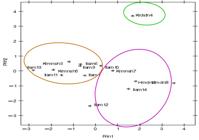
Distribution of Gladiolus populations on the basis of first and second components. PC1 and PC2 are floret number and stem height, respectively.
Cluster analysis
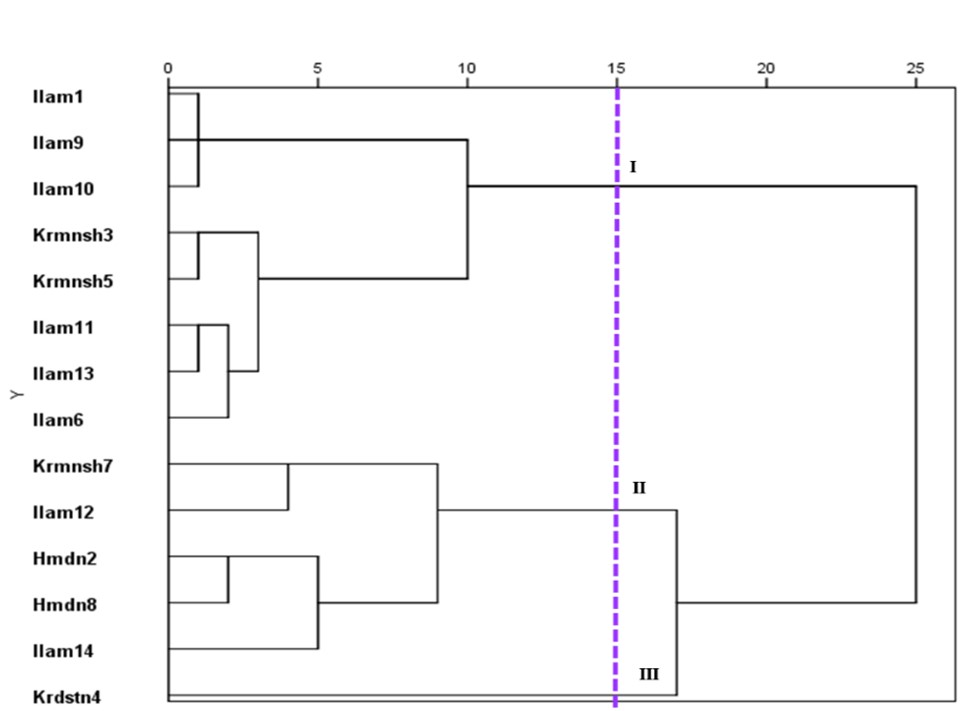
The dendrogram was obtained based on all the phenotypic characters, at a distance of 15, using the Ward method, which clustered the populations into three major clusters (Fig. 4). Eight populations (Ilam1, Krmnsh3, Krmnsh5, Ilam6, Ilam9, Ilam10, Ilam11, and Ilam13) were grouped together in the first cluster (I). The second cluster (II) included the populations of Hmdn2, Krmnsh7, Hmdn8, Ilam12, and Ilam14. The third cluster (III) comprised the Krdstn4 population only. The first cluster had lower values for all the traits; in addition, their distribution was limited to a lower latitude and longitude (Table 6). The negative Z-score values of the evaluated traits for the first group also confirmed that the value of its populations was lower than the total average. Therefore, the inferior populations belonged to this group. The mean of all the traits for the second group was higher than that of the first group; accordingly, positive Z-score values (except stem length) showed that the populations of this group had a higher value than the total mean. The third group, which included only one population (Krdstn4), had different characteristics. Higher stems, further florets, and higher latitudes were important characteristics of this population, which were very different from those of other populations with positive Z-score values. On the other hand, the values of the traits for spike length, corm diameter, and longitude in this population were lower than the total average.
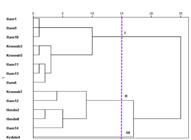
Composition of the groups and the distribution of the Gladiolus populations in each group based on cluster analysis.
Molecular markers and association analysis
Out of the five ISSR markers analyzed, a total of 93 scorable bands were identified, with 89 of them being polymorphic. This yields an average of 17.8% polymorphic bands per ISSR primer. The ISSR5 primer exhibited the highest number of polymorphic bands, totaling 26, while the ISSR3 primer showed the lowest, with only eight bands. Overall, 96.3% of the bands identified were polymorphic. In addition, three IRAP markers were examined, resulting in 59 band rows, of which 57 were found to be polymorphic. The average number of polymorphic bands per IRAP primer was 19%. Among these, the IRAP3 marker displayed the highest number of polymorphic bands, totaling 25, whereas the IRAP2 marker had the fewest, with 15 bands.
To perform association analysis using TASSEL software (Bradbury et al., 2007), the Q matrix obtained from population structure analysis was utilized. Two models, namely the GLM and MLM, were examined in this study. The GLM model, which encompasses morphological data, molecular data, and the Q matrix, investigates the relationship between traits and markers without accounting for population structure. Consequently, it provides less accurate information. On the other hand, the MLM model incorporates population structure and kinship by including additional variables such as the K subpopulation, thereby offering a more reliable understanding of marker-trait relationships (Zhang et al., 2010). Upon analyzing the data, it was found that the GLM model identified more markers with significant relationships to the traits (with the exception of corm diameter) compared to the MLM model. However, the MLM model, due to its ability to remove uncorrelated or falsely correlated markers, identified fewer markers (Zhao et al., 2007). The significance level for evaluating trait-marker relationships was set at 5% (p < 0.05). A total of 87 significant markers associated with morphological traits (comprising 5 traits) were detected, with 53 markers identified by the GLM model and 34 by the MLM model (Table 7).
The analysis of ISSR and IRAP markers revealed significant relationships with stem length across different Gladiolus genotypes. In the GLM model, approximately 17 markers were identified with significant relationships at either the 5% or 1% probability level, where the R² values ranged from 4.82% to 16.5%. In the MLM model, 9 markers exhibited positive relationships with stem length, with R² coefficients ranging from 5.35% to 12.70%. Notably, the ISSR2-20 and ISSR5-24 markers demonstrated the strongest association with stem length (p = 0.0028) and were also significantly related to the number of florets on the spike. Additionally, the ISSR4-3 marker exhibited a significant relationship with the number of flower traits (p = 0.0384). The IRAP3-11 marker was observed as a common marker throughout the spike. It is important to note that ISSR markers displayed a higher contribution to stem length variation compared to IRAP markers.
Regarding spike length, the GLM model identified eight significant positive markers, which were reduced to six in the MLM model. The highest correlation (p = 0.0041) was associated with the IRAP3-11 marker, contributing to an 11.68% variation explanation. The IRAP3-11 marker also displayed a positive and significant relationship with stem length. Moreover, the number of IRAP markers associated with spike length exceeded that of ISSR markers.
For the number of florets, fifteen markers in the GLM model exhibited significant relationships, which decreased to seven markers in the MLM model. Among these, the ISSR2-20 and ISSR5-24 markers showed the strongest association at 9.65% (p = 0.0119). Three markers (ISSR2-20, ISSR4-3, and ISSR5-24) were linked to stem length, while one marker (IRAP1-1) was associated with corm diameter. The contribution of markers related to the number of florets was higher for ISSR compared to IRAP.
In terms of leaf number, the number of significant markers decreased from seven in the GLM model to five in the MLM model. The IRAP3-15 marker exhibited the most significant association, accounting for 11% (p = 0.0052) of the variation. The IRAP2-16 marker was a common marker between leaf number and corm diameter. Only one marker associated with ISSR was linked to leaf number. Regarding corm diameter, six significant positive markers were identified in the GLM model, which increased to seven markers in the MLM model. The highest association (p = 0.0092) was observed with the IRAP3-12 marker, contributing to 9.52% of the variation. This trait shared significant markers with both the number of leaves and florets. Among the seven significant markers in the MLM model, four were associated with IRAP markers and three with ISSR markers. According to the results, we identified several markers associated with multiple traits. IRAP3-11 had a significant association with stem length and spike length. Additionally, ISSR4-3, ISSR2-20, and ISSR5-24 showed significant correlations with stem length and floret number. Furthermore, IRAP1-1 was found to be associated with floret number and corm diameter, while IRAP2-16 was associated with leaf number and corm diameter.
Associated markers (ISSR and IRAP) with different traits in Gladiolus accessions collected from different geographical regions of Iran.
Discussion
In Gladiolus, the flowering stem consists of an axis at the bottom of which are the leaves, and along them are one-sided spikes with many florets. The long stem is a desirable and important feature for breeders in order to select superior genotypes from diverse collections. Additionally, the number of florets on spike is one of the morphological traits that determines the ornamental value of Gladiolus. The more florets are there on the spike, the greater the commercial value of the plant would be (Singh et al., 2018). In this study, phenotypic results pointed out a notable phenotypic variability among the evaluated populations. These differences might have arisen due to several reasons that could result from environmental conditions or the state of the plant, and also from a high genotypic variation. Our findings confirmed that latitude and longitude were effective in germplasm genetic diversity and population differentiation. Similar results were conducted on Gladiolus using morphological markers in an earlier study (Singh et al., 2018). Even though low polymorphism and influence of environment are some of the phenotypic limitations for genetic diversity evaluation, phenotypic traits were helpful in a preliminary assessment of genetic diversity and provided critical information to characterize genetic resources (Kaur et al., 2022).
The correlation analysis illustrated that certain characters, floret number for instance, were highly correlated with spike length (Fig. 3). A similar correlation was detected by Singh et al. (2018), who observed a positive correlation between length of spike with the number of florets. It seems that geographical factors play a major role in separating populations and are effective in the diversity of traits; accordingly, the number of florets and stem length have been followed by the latitude and longitude, respectively. Our analysis based on morphological data provided clear evidence for the significant role of the number of leaves in the size of the corm (Fig. 3).
The first two principal components contained 66.7% of the overall variance (Table 5). In this study, the high value of the accumulated variance of PC1 and PC2 indicated that the observed characters are of importance for the classification of the tested Gladiolus populations. Among the evaluated characters, three traits-floret number, stem length, and latitude-contributed the most to the organization and allowed reliable differentiation among the populations. The characters involved in the first two PCs had the highest variation among the populations and the greatest effect on their separation (Fig. 3).
Cluster analysis based on morphological parameters provided the identification of three major clusters (Fig. 4). The results showed that populations were classified as the same cluster based on phenotypic characters, which implies the closeness of their phenotypes. In contrast, morphological grouping of 50 Gladiolus cultivars from India by Singh et al. (2018) at a Euclidean distance of 14.75, observed seven major clusters. Based on Z-score values, the first cluster was characterized by a weak vegetative development expressed by a reduced floret number, short inflorescence, and had a small underground organ. The remaining populations were grouped in the second cluster, with positive Z-score values (except stem length), and had a larger plant than the first cluster. The third group, which included only one population (Krdstn4), with positive Z-score values, had taller plants, more florets, and higher latitudes. Kurdistan province is characterized as the coldest province of Iran due to its location in a mountainous region. Baneh city, which is located in Kurdistan province, has a cold, semi-humid climate with 499.4 mm of annual rainfall. This indicates that higher latitudes and periods of cold are favorable for Gladiolus growth and flowering. Therefore, the third group, despite the fact that the number of its members is limited to one population, is of great importance in breeding programs. The results, suggested that the Krdstn4 population could be a promising germplasm for applications in breeding and for improvement of the inflorescence quality of Gladiolus.
Gladiolus features numerous cultivars, with new ones introduced annually, making it essential to evaluate existing cultivars for desired traits (Singh et al., 2018). However, relying solely on morphological and physiological traits to assess genetic diversity is unreliable due to environmental influences (Chaudhary et al., 2018). ISSR and IRAP have proven to be reliable molecular markers for genetic diversity and breeding research. Recently, Wen et al. (2023) reported that combining IRAP and ISSR markers is highly effective for assessing genetic diversity in Rhododendron. Notably, IRAP markers demonstrated superior polymorphic parameters and greater efficiency in genetic fidelity detection. In this study, we identified 87 significant ISSR and IRAP markers associated with morphological traits using both the GLM and the MLM, with 53 markers derived from GLM and 34 from MLM. The MLM model, which incorporates population structure and kinship, provides a more reliable understanding of marker-trait relationships by removing uncorrelated markers (Kumar et al., 2022). The significance level for evaluating trait-marker relationships was set at 5% (p < 0.05). Our analysis identified several markers associated with key traits in Gladiolus, highlighting the benefits of markers linked to multiple traits for pinpointing crucial genomic regions in breeding programs. IRAP3-11 was significantly associated with both stem length and spike length. ISSR4-3, ISSR2-20, and ISSR5-24 showed significant correlations with stem length and floret number. Additionally, IRAP1-1 was linked to floret number and corm diameter, while IRAP2-16 was associated with leaf number and corm diameter. Recognizing common genetic markers that influence multiple traits is vital for enhancing breeding efficiency (Hasan et al., 2021).
These markers enable breeders to select for several traits simultaneously, addressing challenges in plant breeding. Also, this finding can be applied to breeding programs to develop superior Gladiolus genotypes with desirable traits. For instance, marker-assisted selection (MAS) programs can be employed to accelerate the breeding process by selecting plants that carry favorable alleles for these traits (Tyagi et al., 2024). However, it is worth mentioning that the direct application of the results of association analyses requires validation in larger populations with a greater number of molecular markers and confirmation of the results. Therefore, we recommend further investigation of the markers identified in this study within larger populations and diverse environments to validate their associations with the studied traits. Upon confirmation, these markers could be converted into SCAR markers and integrated into marker-assisted selection programs (Gangwar et al., 2023).
Conclusions
The study confirmed that both aerial and underground traits can effectively assess phenotypic diversity in Gladiolus populations, leading to the selection of superior specimens through morphological analysis. It identified western Iran as a key center of Gladiolus diversity, influenced by geographical factors. However, this biodiversity faces threats from agricultural practices, highlighting the need for conservation efforts. A total of 87 significant markers related to morphological traits were identified using GLM and MLM, with notable contributions from ISSR markers to stem length variation. Key findings include strong associations between specific ISSR and IRAP markers with traits like stem length, spike length, leaf number, and corm diameter, suggesting their utility in future breeding and conservation strategies.
References
-
AZIMI, M.H. Assessment and ranking of new Gladiolus hybrids in Iran. Journal of Horticulture and Postharvest Research, v.3, n.2, p.235-244, 2020. https://doi.org/10.22077/jhpr.2020.2972.1112
» https://doi.org/10.22077/jhpr.2020.2972.1112 -
AZIZ, S.; FIRDOUS, S.; RAHMAN, H.; AWAN, S.; MICHAEL, V.; MERU, G. Genetic diversity among wild pomegranate (Punica granatum) in Azad Jammu and Kashmir region of Pakistan. Electronic Journal of Biotechnology, v.46, p.50-54, 2020. https://doi.org/10.1016/j.ejbt.2020.06.002
» https://doi.org/10.1016/j.ejbt.2020.06.002 -
BRADBURY, P.J.; ZHANG, Z.; KROON, D.E.; CASSTEVENS, T.M.; RAMDOSS, Y.; BUCKLER, E.S. TASSEL: Software for association mapping of complex traits in diverse samples. Bioinformatics, v.23, n.19, p.2633-2635, 2007. https://doi.org/10.1093/bioinformatics/btm308
» https://doi.org/10.1093/bioinformatics/btm308 - CANTOR, M.; TOLETY, J. Gladiolus. In: KOLE, C. (eds) Wild Crop Relatives: Genomic and Breeding Resources. Berlin, Heidelberg: Springer, 2011.
-
CHAUDHARY, V.; KUMAR, M.; SHARMA, S.; KUMAR, N.; KUMAR, V.; YADAV, H.K.; SHARMA, S.; SIROHI, U. Assessment of genetic diversity and population structure in Gladiolus (Gladiolus hybridus Hort.) by ISSR markers. Physiology and Molecular Biology of Plants, v.24, p.493-501, 2018. https://doi.org/10.1007/s12298-018-0519-2
» https://doi.org/10.1007/s12298-018-0519-2 -
EBRAHIMI, A.; ASADI, A.; MONFARED, S.R.; SAHEBI, M., REZAEE, S.; KHALEDIAN, Y. Evaluation of phenotypic diversity of the endangered orchid (Orchis mascula): Emphasizing on breeding, conservation and development. South African Journal of Botany, v.132, p.304-315. 2020. https://doi.org/10.1016/j.sajb.2020.05.013
» https://doi.org/10.1016/j.sajb.2020.05.013 -
ECHEVERRÍA, M.L.; CAMADRO, E.L. Morphological and molecular variability of wild diploid and polyploid populations of Chrysolaena flexuosa (Sims) H. Rob.: relevance for ornamental breeding. Scientia Horticulturae, v.260, p.108875, 2020. https://doi.org/10.1016/j.scienta.2019.108875
» https://doi.org/10.1016/j.scienta.2019.108875 - GABRIELIAN, E. The genus Gladiolus (Iridaceae) in southern Transcaucasia. Bocconea, v.13, p.445-455, 2001.
-
GANGWAR, H.; GAHLAUT, V.; CHAUHAN, R.; SINGH, S.; JAISWAL, V. Development of species-specific ISSR-derived SCAR marker for early discrimination between Cinnamomum verum and Cinnamomum cassia Molecular Biology Reports, v.50, n.8, p.6311-6321, 2023. https://doi.org/10.1007/s11033-023-08578-z
» https://doi.org/10.1007/s11033-023-08578-z - GHAHRAMAN, A. Colorful Flora of Iran. Tehran: The Research Institute of Forest and Pastures, 1979.
-
HASAN, N.; CHOUDHARY, S.; NAAZ, N.; SHARMA, N.; LASKAR, R.A. Recent advancements in molecular marker-assisted selection and applications in plant breeding programmes. Journal of Genetic Engineering and Biotechnology, v.19, n.1, p.128. 2021, https://doi.org/10.1186/s43141-021-00231-1
» https://doi.org/10.1186/s43141-021-00231-1 - KAMAL MEENA, V.; VARDHAN SINGH SHEKHAWAT, H.; CHAND, S.; CHOUDHARY, K.; KUMAR SHARMA, J.; LEKHA, L. Advances in Molecular Marker Technology and their Significance in Plant Improvement Strategies. Hong Kong: IntechOpen, 2023.
-
KAUR, V.; ARAVIND, J.; MANJU, JACOB, S.R.; KUMARI, J.; PANWAR, B.S.; PAL, N.; RANA, J.C.; PANDEY, A.; KUMAR, A. Phenotypic characterization, genetic diversity assessment in 6,778 accessions of barley (Hordeum vulgare L. ssp. vulgare) germplasm conserved in National Genebank of India and development of a core set. Frontiers in Plant Science, v.13, p.771920, 2022. https://doi.org/10.3389/fpls.2022.771920
» https://doi.org/10.3389/fpls.2022.771920 -
KHADIVI, A.; MIRHEIDARI, F.; MORADI, Y.; PARYAN, S. Phenotypic and fruit characterizations of Prunus divaricata Ledeb. germplasm from the north of Iran. Scientia Horticulturae, v.261, p.109033, 2020. https://doi.org/10.1016/j.scienta.2019.109033
» https://doi.org/10.1016/j.scienta.2019.109033 -
KUMAR, K.; ANJOY, P.; SAHU, S.; DURGESH, K.; DAS, A.; TRIBHUVAN, K.U.; SEVANTHI, A.M.; JOSHI, R.; JAIN, P.K.; SINGH, N.K.; RAO, A.R.; GAIKWAD, K. Single trait versus principal component-based association analysis for flowering related traits in pigeonpea. Scientific Reports, v.12, n.1, p.10453, 2022. https://doi.org/10.1038/s41598-022-14568-1
» https://doi.org/10.1038/s41598-022-14568-1 -
LAZARIDI, E.; KAPAZOGLOU, A.; GERAKARI, M.; KLEFTOGIANNI, K.; PASSA, K.; SARRI, E.; PAPASOTIROPOULOS, V.; TANI, E.; BEBELI, P.J. Crop landraces and indigenous varieties: A valuable source of genes for plant breeding. Plants, v.13, n.6, p.758, 2024. https://doi.org/10.3390/plants13060758
» https://doi.org/10.3390/plants13060758 - PRISM, G. Release 8.0 Version. Graph Pad software. San Diego, CA, USA. 2018.
-
PRITCHARD, J.K.; STEPHENS, M.; DONNELLY, P. Inference of population structure using multilocus genotype data. Genetics, v.155, n.2, p.945-959, 2000. https://doi.org/10.1093/genetics/155.2.945
» https://doi.org/10.1093/genetics/155.2.945 -
RAMOS, S.N.; SALAZAR, M.M.; PEREIRA, G.A.; EFRAIM, P. Plant and metagenomic DNA extraction of mucilaginous seeds. MethodsX, v.1, p.225-228, 2014. https://doi.org/10.1016/j.mex.2014.09.005
» https://doi.org/10.1016/j.mex.2014.09.005 -
RAŽNÁ, K.; KUČKA, M.; HARENČÁR, Ľ.; MAJTÁN, M. Genetic diversity of selected Gladiolus (Gladiolus× Gandavensis Van Houtte) cultivars assessed by microrna-based markers. Agrobiodiversity for Improving Nutrition, Health and Life Quality, v.6, n.1, 2022. https://doi.org/10.15414/ainhlq.2022.0010
» https://doi.org/10.15414/ainhlq.2022.0010 - SAS Institute Inc. SAS/STAT. User’s Guide, Version 9. Cary, NC: SAS Institute Inc., 2003.
-
SINGH, N.; PAL, A.K.; MEENA, B.; ROY, R.K.; TAMTA, S.; RANA, T.S. Development of ISSR-and RAPD-derived SCAR markers for identification of Gladiolus germplasm. The Journal of Horticultural Science and Biotechnology, v.92, n.6, p.577-582, 2017. https://doi.org/10.1080/14620316.2017.1309995
» https://doi.org/10.1080/14620316.2017.1309995 -
SINGH, N.; PAL, A.K.; ROY, R.K; TEWARI, S.K.; TAMTA, S.; RANA, T.S. Characterization of gladiolus germplasm using morphological, physiological, and molecular markers. Biochemical Genetics, v.56, p.128-148, 2018. https://doi.org/10.1007/s10528-017-9835-4
» https://doi.org/10.1007/s10528-017-9835-4 -
TYAGI, A.; MIR, Z.A.; ALMALKI, M.A.; DESHMUKH, R.; ALI, S. Genomics-assisted breeding: a powerful breeding approach for improving plant growth and stress resilience. Agronomy, v.14, n.6, p.1128, 2024. https://doi.org/10.3390/agronomy14061128
» https://doi.org/10.3390/agronomy14061128 -
WEN, S.; ZHAO, H.; ZHANG, M.; QIAO, G.; SHEN, X. IRAPs in combination with highly informative ISSRs confer effective potentials for genetic diversity and fidelity assessment in Rhododendron International Journal of Molecular Sciences, v.24, n.8, p.6902. 2023. https://doi.org/10.3390/ijms24086902
» https://doi.org/10.3390/ijms24086902 -
YALI, W.; MITIKU, T. Gene pool, classification and its importance in modern crop improvement program. International Journal of Agricultural Science and Food Technology, v.10, n.2, p.068-073, 2024. https://dx.doi.org/10.17352/2455-815X.000209
» https://dx.doi.org/10.17352/2455-815X.000209 -
ZHANG, Z.; ERSOZ, E.; LAI, C.; TODHUNTER, R.J.; TIWARI, H.K.; GORE, M.A.; BRADBURY, P.J.; YU, J.; ARNETT, D.K.; ORDOVAS, J.M.; BUCKLER, E.S. 2010. Mixed linear model approach adapted for genome-wide association studies. Nature Genetics, v.42, n.4, p.355-360. 2010. https://doi.org/10.1038/ng.546
» https://doi.org/10.1038/ng.546 -
ZHAO, K.; ARANZANA, M.J.; KIM, S.; LISTER, C.; SHINDO, C.; TANG, C.; TOOMAJIAN, C.; ZHENG, H.; DEAN, C.; MARJORAM, P.; NORDBORG, M. An Arabidopsis example of association mapping in structured samples. PLoS Genetics. v.3, e4. 2007. https://doi.org/10.1371/journal.pgen.0030004
» https://doi.org/10.1371/journal.pgen.0030004 -
ZHOU, C.; WU, H.; SHENG, Q.; CAO, F.; ZHU, Z. Study on the phenotypic diversity of 33 Ornamental Xanthoceras sorbifolium Cultivars. Plants, v.12, n.13, p.2448. 2023. https://doi.org/10.3390/plants12132448
» https://doi.org/10.3390/plants12132448
Edited by
-
Editor:
Chao Yu (Beijing Forestry University, China)