
 Karyotype alterations, meiotic abnormalities, and reduced pollen viability in triploid cytotypes of Passiflora foetida (Passifloraceae) derived from endosperm cultures
Abstract
The polyploidy induction offers the possibility to generate new variations in plant shape, color, fragrance, form, shelf life, flower architecture, and adaptability to adverse environments. Considering the importance of such information for understanding the effects of triploidy and homologous diploid on the reproductive biology of this cytotype of Passiflora foetida. To better understand the effects of triploidy on the reproductive biology of Passiflora foetida, this study aimed to compare the karyotype, meiotic behavior, and pollen viability of diploid and triploid cytotypes. Karyotyping, heterochromatin patterns, meiosis, and pollen viability assessments were conducted using differential DAPI and chromomycin A3 (CMA3) staining. As expected, diploid plants exhibited normal meiotic behavior, with approximately 75% viable pollen, whereas triploid cytotypes displayed abnormalities in both meiotic divisions and had approximately 70% unviable pollen. Despite these irregularities, triploid cytotypes demonstrated greater chromosomal stability in somatic cells compared to diploids. Given that chromosomal behavior plays a key role in reproduction and fertility, these findings provide valuable insights for breeding strategies and the development of improved P. foetida cultivars with desirable traits.
Keywords:
chromosome banding; heterochromatin; meiotic behavior; passion fruit; triploids
Resumo
A indução da poliploidia oferece a possibilidade de gerar novas variações na forma, cor, fragrância, forma, durabilidade, arquitetura da flor e a adaptabilidade em ambientes adversos. Considerando a importância de informações para a compreensão dos efeitos da triploidia na biologia reprodutiva de citótipo de Passiflora foetida o presente estudo teve como objetivo avaliar a estabilidade do genoma de plantas triploides de P. foetida regeneradas a partir de culturas de endosperma in vitro. Padrões de heterocromatina, comportamento de meiose e viabilidade polínica foram usados como parâmetros. A coloração diferencial dupla com fluorocromos DAPI/cromomicina (CMA3) revelou quatro cromossomos com uma banda CMA3 + em plantas diploides e seis cromossomos com uma banda CMA3 + em triploides de P. foetida. Como esperado, as plantas diploides apresentaram comportamento meiótico normal com aproximadamente 75% de pólen viável; enquanto os citótipos triplóides apresentaram comportamento anormal em ambas as divisões meióticas (primeira e segunda) e aproximadamente 70% de pólen inviável. A descrição dos cariótipos permite a identificação e seleção de materiais com características fenotípicas desejáveis, especialmente de plantas ornamentais que sofreram poliploidização.
Palavras-chave:
bandeamento cromossômico; comportamento meiótico; heterocromatina; maracujá ornamental; triploide
Introduction
Polyploidy has played a significant role in the evolution and diversification of flowering plants, resulting in elevated morphological variability and plasticity (Jiao et al., 2011; Afonso et al., 2021). The advantages of polyploidy are gene redundancy and heterosis, which are the result of gene duplication (Comai, 2005; Soltis and Soltis, 2014; Basit and Lim, 2024). The principal disadvantages include the disrupting effects of nuclear and cell enlargement, the epigenetic instability that results in the alteration of gene regulation, and errors in meiosis (Comai, 2005).
The genetic redundancy present in polyploids enables them to undergo extensive genetic rearrangements that lead to the stable expression of novel traits (Alexander, 2020; Begna, 2024). In breeding programs for ornamental plants, polyploidy induction offers the possibility to generate new variations in plant shape, color, fragrance, form, shelf life, flower architecture, and adaptability to adverse environments (Wang et al., 2016; Forrester, 2020; Iannicelli et al., 2020; Touchell et al., 2020; Machado et al., 2022). This contributes substantially to the amelioration of agriculturally and economically important plants (Cui et al., 2023).
Polyploidy allows breeders to overcome plant barriers and quickly and efficiently create homogenous lines (Liqin et al., 2019; Niazian and Nalousi, 2020). The pattern of chromosome pairing during the first meiotic division is a reliable criterion for identifying homologous relationships between chromosome sets in a polyploid organism (Blasio et al., 2022). Nevertheless, polyploid species have developed mechanisms that control proper segregation of genetic material during meiosis and ensure genome stability (Soares et al., 2021).
Breeders have used many strategies to induce polyploid passion fruit plants with greater vigor and larger floral organs (Askura and Hoshino, 2017; Mikovski et al., 2021; Silva et al., 2021; Machado et al., 2022). The regeneration of endosperm-derived passion fruit plants has been reported in Passiflora foetida L., an ornamental flowerpot species dating back to the 1990s (Mohamed, 1996). Endosperm is generally triploid in nature (Wang et al., 2016; Antoniazzi et al., 2018). Recently, cytogenetic analyses confirmed the triploidy of P. foetida endosperm-derived plants, whose vegetative and floral structures were larger than those of their diploid counterparts (Mikovski et al., 2021).
However, the karyotype and meiotic behavior of triploid passion fruit plants have not been evaluated. Considering the importance of such information for understanding the effects of triploidy on the reproductive biology of this cytotype, the present study aimed to compare the karyotype, meiotic behavior, and pollen viability of diploids and triploids of P. foetida obtained by Mikovski et al. (2021).
Materials and Methods
Plant material
Passiflora foetida endosperm was cultivated following the methodology proposed by Mikovski et al. (2021) in the presence of 2.0 mg L−1 thidiazuron for 60 days. The adventitious shoots obtained were isolated and cultivated in Murashige and Skoog (MS) medium (Murashige and Skoog, 1962) for 60 days. Plantlets of 8 - 10 cm in length were transferred to 300 mL plastic cups containing commercial substrate (Tropstrato HT; Vida Verde), kept under laboratory conditions for 15 days, and then transferred to a greenhouse.
The surviving plants (2n and 3n) were incubated for an additional 60 days and, once they reached a length of 15 - 20 cm, they were transferred to 15 L plastic pots filled with a 3:1 (v v-1) mixture of soil and substrate (Tropstrato HT). The potted plants were kept in a greenhouse until they reached reproductive age.
Cytogenetic characterization
For cytogenetic analysis, root tips from seed and endosperm-derived plants were pre-treated with 0.003 M 8-hydroxyquiloneine for 8 h at 4 °C and fixed in ethanol:acetic acid (3:1 v v-1) for at least 24 h at -20 °C. Afterwards, the root tips were washed and digested with 4% cellulase + 40% pectinase for 4 h at 37 °C, and the slides were prepared according to Carvalho e Saraiva (1997). Chromosomes were stained with 4-6-diamidino-2-phenylindole (DAPI; Sigma) and visualized under an Olympus BX51 epifluorescence microscope. Around 30 metaphases per plant were evaluated and captured by an Olympus DP72 digital camera.
Chromosome banding
Chromosome banding was performed according to Schweizer (1976). Slides were stained with chromomycin A3 (CMA3; 0.5 mg mL−1) for 1 h, distamycin (0.1 mg mL−1) for 30 min, and DAPI (2 µg mL-1) for 30 min, followed by mounting in McIlvaine’s buffer (pH 7.0) and glycerol (1:1 v v-1). Metaphase was photographed using an Olympus DP72 digital camera, and chromosomes were observed using an epifluorescence microscope (Olympus BX 51) with an appropriate filter set.
Meiotic behavior
To analyze meiotic behavior, 30 flower buds of diploid and tetraploid P. foetida were collected at the initial stage of development. The samples were fixed in ethanol:acetic acid (3:1 v v-1) and kept in a freezer at -20 °C until analysis. The slides were prepared using the crushing technique and stained with 5% acetic acid (La Cour, 1941). The meiotic behavior of diploid and triploid plants was analyzed to establish the chromosome number under conditions and verify irregularities in meiotic divisions.
Pollen viability
For pollen viability, a test with fluorescein diacetate was performed with slight modifications (Heslop-Harrison and Heslop-Harrison, 1970). The flower buds of diploid and triploid plants in the pre-anthesis period were collected in the morning, opened with needles to remove the anthers, dissected to release pollen, and stained with a drop of fluorescein diacetate solution prepared in 2 mL of acetone with 10% sucrose. After 15 min in the dark, the pollen grains were analyzed using an epifluorescence microscope (Olympus BX 51). Approximately 1000 pollen grains were evaluated from five random fields obtained from five slides for each cytotype.
Results
Cytogenetic analysis of seed-derived P. foetida plants (diploid cytotype) revealed 2n = 2x = 20 chromosomes. Double staining allowed the visualization of DAPI-/CMA3 + bands in the proximal region of the long arm of chromosome 2 and one band in the proximal region of the short arm of chromosome 3 (Fig. 1A, 1B, 1E, 1F, and 1H).
These CMA3 + bands coincided with the secondary constrictions of the cytotype. In contrast, all endosperm-derived plants had 30 chromosomes (2n = 3x = 30), confirming their triploidy. The triploid cytotype presented a similar monoploid complement to seed-derived plants and matching positions of DAPI-/CMA3 + bands (Fig. 1C, 1D, 1G, and 1H).
The meiotic behavior of the diploid cytotype was normal, with a typical division pattern during meiosis I and II. In contrast, the triploid cytotype contained numerous uni- and trivalent cells during diakinesis (Fig. 2A and 2B), lagging chromosomes in metaphase I (Fig. 2C and 2E), chromosomal fragments in anaphase I (Fig. 2F and 2G), cytomixis (Fig. 2H), and triad formation (Fig. 2I).
Analysis of pollen viability revealed that seed-derived plants (diploid cytotype) contained 76% viable grains. In contrast, endosperm-derived plants (triploid cytotype) produced fewer pollen grains and only 29% of them were viable (Table 1).
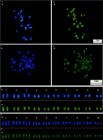
Representative chromosome metaphase spread and caryograms of Passiflora foetida. (A, B) Metaphase spread of the 2x cytotype stained with DAPI and CMA3 +, respectively. (C, D) Metaphase spread of the 3x cytotype stained with DAPI and CMA3, respectively. (E, F) Caryogram showing DAPI and CMA3 profiles for each chromosome of 2x P. foetida. (G, H) Caryogram showing DAPI and CMA3 profiles for each chromosome of 3x P. foetida. The arrowhead points to chromosomes with CMA3 + bands. Scale bar = 5 μM.

Meiosis of triploid Passiflora foetida: (A) diakinesis; (B) diakinesis with uni-, bi-, and trivalent cells; (C-E) metaphase I with lagging chromosomes; (F) anaphase I; (G) anaphase I with chromosome fragments; (H) cytomixis; and (I) triad. Scale bar = 5 μM.
Discussion
In the present study, chromosome counting confirmed the triploid nature of endosperm-derived P. foetida plants (2n = 3x = 30), as reported previously by Mikovski et al. (2021). Although endosperm is a generally triploid tissue, numerical chromosomal variations such as polyploidy, aneuploidy, and mixoploidy are commonly observed in plants derived from endosperm (Johri e Nag, 1974). In addition, meiotic irregularities, such as lagging chromosomes and bridges, have been described in this tissue (Thomas and Chaturvedi, 2008). Chromosomal analysis is essential for evaluating ploidy stability and homogeneity after endosperm culture (Silva et al., 2024; Otoni et al., 2024).
Chromosome staining with DAPI/CMA3 + revealed a proportional increase in the number of CMA3 + bands with ploidy, as evidenced by the positive signals observed in diploid (two bands) and triploid (three bands) plants. This finding further confirms that the plant regeneration protocol successfully produced triploid plants from endosperm tissue without any signs of chromosomal rearrangements (Silva et al., 2020; Mikovski et al., 2021; Machado et al., 2022; Silva et al., 2024; Otoni et al., 2024). Nevertheless, chromosome structure, chromosome count, and determination of ploidy are relevant tools for assessing the richness of genome stability in artificial polyploids. Julião et al. (2020) used fluorescent in situ hybridization with rDNA 45S probes to assess the structural stability of artificially obtained diploids and polyploids in Lippia alba. The authors observed six signals in diploids, nine in triploids, and 12 in tetraploids. These observations indicate that no structural rearrangement of this sequence occurred with polyploidy.
In triploid plants, meiotic irregularities are common due to the presence of an unbalanced chromosome set, which disrupts normal chromosome pairing and segregation. As expected, in this study, numerous abnormalities were observed in both the first and second meiotic divisions. These irregularities included chromosome lagging, formation of univalents and multivalents, as well as unequal chromosome distribution during anaphase. Such disruptions in meiosis directly contribute to reduced gamete viability, as evidenced by the low pollen viability of approximately 29% observed in the triploid plants analyzed. The impaired formation of functional pollen grains limits fertility and successful reproduction, a phenomenon widely documented in various triploid species. For instance, similar meiotic irregularities and reduced fertility have been observed in Cardamine amara, where triploid plants originated from the endosperm. This pattern suggests that triploidy often results in compromised sexual reproduction, leading to a reliance on alternative propagation mechanisms, such as vegetative reproduction, for population persistence (Filippi et al., 2022; Bartolić, 2025).
The reduction in fertility is another common consequence of auto polyploidy and may result from issues about the multivalent formation and meiotic irregularities (Stebbins, 1971). However, an immediate consequence of polyploidy is the change in gametic and filial frequencies (Begna, 2024). Alternatively, the coexistence of more than two copies of the same or similar chromosome sets may lead to multivalent formation during the first meiotic division and subsequent production of aneuploid gametes (Svačina et al., 2019). Extra-chromosomal sets represent a significant fitness advantage when tolerating large rearrangements in the genome, which would normally lead to fatal consequences for diploid progenitors. However, the factors and mechanisms that shape the meiotic recombination landscape along chromosomes remain unclear (Soares et al., 2021).
Several routes lead to polyploidy. The first is chromosome doubling due to non-disjunction during mitosis. However, this is rarely observed under natural conditions and is usually achieved only by exposure to chemical agents (Islam et al., 2022). Although triploid plants of P. foetida have shown irregular meiotic behavior and low pollen viability, the present work suggests greater chromosomal stability of somatic cells in triploid cytotypes compared to diploid ones. Given that chromosomal behavior likely influences the reproduction and fertility of Passiflora plants, the present comparison will benefit genetic improvement programs of this species. The description of karyotypes allows for the identification and selection of materials with desirable phenotypic characteristics, especially from ornamental plants that have undergone polyploidization.
Conclusions
In conclusion, the cytogenetic analysis of Passiflora foetida revealed clear differences between the diploid and triploid cytotypes. Diploid plants (2n = 2x = 20) exhibited normal meiosis and a high pollen viability (76%), whereas triploid plants (2n = 3x = 30) showed meiotic irregularities, including univalents, trivalents, lagging chromosomes, and chromosomal fragmentation, resulting in reduced pollen viability (29%). These findings suggest that triploidy affects meiotic behavior and fertility, which may influence the species’ reproduction and propagation.
Acknowledgments
We want to thank Editage(www.editage.com.br) for editing the English language. This research was supported by the “Fundação de Amparo à Pesquisa do Estado de Mato Grosso” (FAPEMAT) in Cuiabá, MT, and the Coordenação de Aperfeiçoamento de Pessoal de Nível Superior (CAPES) in Brasília, DF, Brazil
Data availability statement
All the research data is contained in the manuscript.
References
-
AFONSO, A.; LOUREIRO, J.; ARROYO, J.; VICENTE, E.O.; CASTRO, S. Cytogenetic diversity in the polyploid complexLinum suffruticosum s.l. (Linaceae). Botanical Journal of the Linnean Society, v.195, p.216-232, 2021. https://doi.org/10.1093/botlinnean/boaa060
» https://doi.org/10.1093/botlinnean/boaa060 -
ALEXANDER, L. Ploidy level influences pollen tube growth and seed viability in interploidy crosses of Hydrangea macrophylla Frontiers in Plant Science, v.11, p.100, 2020. https://doi.org/10.3389/fpls.2020.00100
» https://doi.org/10.3389/fpls.2020.00100 -
ANTONIAZZI, C.A.; FARIA, R.B.; CARVALHO, P.P.; MIKOVSKI, A.I.; CARVALHO, I.F.; MATOS, E.M.; REIS, A.C.; VICCINI, L.F.; PAIM PINTO, D.L.; ROCHA, D.I.; OTONI, W.C.; SILVA, M.L. In vitro regeneration of triploid plants from mature endosperm culture of commercial passionfruit (Passiflora edulis Sims). Science Horticulture, v.238, p.408-415, 2018. https://doi.org/10.1016/j.scienta.2018.05.001
» https://doi.org/10.1016/j.scienta.2018.05.001 -
ASKURA, I.; HOSHINO, Y. Endosperm-derived triploid plant regeneration in diploid Actinidia kolomikta, a cold-hardy kiwifruit relative. Scientia Horticulturae, v.219, p.53-59, 2017. https://doi.org/10.1016/j.scienta.2017.02.045
» https://doi.org/10.1016/j.scienta.2017.02.045 -
BARTOLIĆ, P.; VOLTROVA A.; MACKOVA, L.; ŠRAMKOVA,G.; ŠLENKER, M.; MANDAKOVA, T.; PADILLA GARCIA, N.; MARHOLD, K.; KOLAŘ, F. Overcoming ploidy barriers: the role of triploid bridges in the genetic introgression of Cardamine amara Molecular Ecology, v.0, e17702, 2025.https://doi.org/10.1111/mec.17702
» https://doi.org/10.1111/mec.17702 -
BASIT, A.; LIM, K. Systematic approach of polyploidy as an evolutionary genetic and genomic phenomenon in horticultural crops. Plant Science, v.348, p.112236, 2024. https://doi.org/10.1016/j.plantsci.2024.112236
» https://doi.org/10.1016/j.plantsci.2024.112236 - BEGNA, T. Polyploidy’s genetic effects in crop improvement: a review. Middle East Journal of Agriculture Research, v.13, p.137-147, 2024.
-
BLASIO, F.; PRIETO, P.; PRADILLO, M.; NARANJO, T. Genomic and meiotic changes accompanying polyploidization. Plants, v.11, n.1, p.125, 2022. https://doi.org/10.3390/plants11010125
» https://doi.org/10.3390/plants11010125 -
CARVALHO, C.R.; SARAIVA, L.S. High-resolution HKG-banding in maize mitotic chromosomes. Journal of Plant Research, v.110, p.417-420, 1997. https://doi.org/10.1007/bf02506801
» https://doi.org/10.1007/bf02506801 -
COMAI, L. The advantages and disadvantages of being polyploid. Nature reviews. Genetics, v.6, p.836-846, 2005. https://doi.org/10.1038/nrg1711
» https://doi.org/10.1038/nrg1711 -
CUI, L.; LIU, Z.; YIN, Y.; ZOU, Y.; FAIZAN, M.; ALAM, P.; YU, F. Research progress of chromosome doubling and 2n gametes of ornamental plants. Horticulturae, v.9, p.752, 2023. https://doi.org/10.3390/horticulturae9070752
» https://doi.org/10.3390/horticulturae9070752 -
FILIPPI, M.; BOLDRINI, K.R.; AGOSTINNHO, K.F.; CORRÊA, S.J.S.; DONAZOLLO, J. Estudo citogenético e viabilidade do pólen de Diatenopteryx sorbifolia Radlk. Ciência Florestal, v.32, n.1, p.233-246, 2022. https://doi.org/10.5902/1980509848072
» https://doi.org/10.5902/1980509848072 -
FORRESTER, N.J.; REBOLLEDA-GÓMEZ, M.; SACHS, J.L.; ASHAMAN, T.L. Polyploid plants obtain greater fitness benefits from a nutrient acquisition mutualism. New Phytologist, v.227, p.944-954, 2020. https://doi.org/10.1111/nph.16574
» https://doi.org/10.1111/nph.16574 -
HESLOP-HARRISON, J.; HESLOP-HARRISON, Y. Evaluation of pollen viability by enzymatically induced fluorescence: intracellular hydrolysis of fluorescein diacetate. Stain Technology, v.45, p.115-120, 1970. https://doi.org/10.3109/10520297009085351
» https://doi.org/10.3109/10520297009085351 -
IANNICELLI, J.; GUARINIELLO, J.; TOSSI, J.J.; REGALADO, L.; DI-CIANCCIO, L.; VAN-BAREN, C.M.; PITTA ALVAREZ, S.I.; ESCANDÓN, A.S. The “polyploid effect” in the breeding of aromatic and medicinal species. Scientia Horticulturae, v.260, p.108854, 2020. https://doi.org/10.1016/j.scienta.2019.108854
» https://doi.org/10.1016/j.scienta.2019.108854 -
ISLAM, M.M.; DEEPO, D.M.; NASIF, S.O.; SIDDIQUE, A.B.; HASSAN, O.; PAUL, N.C. Cytogenetics and consequences of polyploidization on different biotic-abiotic stress tolerance and the potential mechanisms involved. Plants, v.11, p.2684, 2022. https://doi.org/10.3390/plants11202684
» https://doi.org/10.3390/plants11202684 -
JIAO, Y.; WICKETT, N.; AYYAMPALAYAM, S.; CHANDERBALI, A.S.; LANDHERR, L.; RALPH, P.E.; TOMSHO, L.P.; HU, Y.; LIANG, H.; SOLTIS, P.S.; SOLTIS, D.E.; CLIFTON, S.W.; SCHARBAUM, S.E.; SCUSTER, S.C.; MA, H.; LEEBENS-MACK, J.; PAMPHILIS, C.W. Ancestral polyploidy in seed plants angiosperms. Nature, v.473, p.97-100, 2011. https://doi.org/10.1038/nature09916
» https://doi.org/10.1038/nature09916 -
JOHRI, B.M.; NAG, K. Cytology and morphogenesis of embryo and endosperm tissues of Dendrophthoe and Taxillus Cytology, v.39, p.801-813, 1974. DOI: https://doi.org/10.1508/cytologia.39.801
» https://doi.org/10.1508/cytologia.39.801 -
JULIÃO, S.A.; RIBEIRO, C.V.; LOPES, J.M.L.; MATOS, E.M.; REIS, A.C.; PEIXOTO, P.H.P.; MACHADO, M.A.; AZEVEDO, A.L.S.; GRAZUL, R.M.; CAMPOS, J.M.S.; VICCINI, L.F. Induction of synthetic polyploids and assessment of genomic stability in Lippia alba Frontiers in Plant Science, v.11, p.292, 2020. https://doi.org/10.3389/fpls.2020.00292
» https://doi.org/10.3389/fpls.2020.00292 - LA COUR, F. Acetic-orcein: a new stain-fixative for chromosomes. Biotechnic & Histochemistry, v.16, p.169-174, 1941.
-
LIQIN, G.; JIANGUO, Z.; XIAOXIA, L.; GUODONG, R. Polyploidy-related differential gene expression between diploid and synthesized allotriploid and allotetraploid hybrids of Populus Molecular Breeding, v.39, p.69, 2019. https://doi.org/10.1007/s11032-019-0975-6
» https://doi.org/10.1007/s11032-019-0975-6 -
MACHADO, M.D.; SOUZA, C.S.; MACHADO, M.; REIS, A.C.; SOUSA, S.M.; MATOS, E.M.; VICCINI, L.F.; OTONI, W.C.; CARVALHO, I.F.; ROCHA, D.I.; SILVA, M.L. Novel avenues for passion fruit in vitro regeneration from endosperm culture, and morpho-agronomic and physiological traits of triploid Passiflora cincinnata Mast. emblings. Plant Cell Tissue Organ Culture, v.150, p.637-650, 2022. https://doi.org/10.1007/s11240-022-02318-0
» https://doi.org/10.1007/s11240-022-02318-0 -
MIKOVSKI, A.I.; SILVA, N.T.; SILVA, L.A.S.; MACHADO, M.; BARBOSA, L.C.S.; REIS, A.C.; MATOS, E.M.; VICCINI, L.F.; SOUZA, C.S.; MACHADO, M.D.; OOTONI, W.C.; CARVALHO, I.F.; ROCHA, D.I.; SILVA, M.L. From endosperm to triploid plants: a stepwise characterization of the de novo shoot organogenesis and morpho-agronomic aspects of an ornamental passion fruit (Passiflora foetida L.). Plant Cell Tissue Organ Culture, v.147, p.239-253, 2021. https://doi.org/10.1007/s11240-021-02120-4
» https://doi.org/10.1007/s11240-021-02120-4 -
MOHAMED, M.E.; HICKS, R.G.T.; BLAKESLEY, D. Shoot regeneration from mature endosperm of Passiflora foetida Plant Cell Tissue Organ Culture, v.46, p.161-164, 1996. DOI: https://doi.org/10.1007/BF00034851
» https://doi.org/10.1007/BF00034851 -
MURASHIGE, T.; SKOOG, F. A revised medium for rapid growth and bioassays with tobacco tissue cultures. Physiologia Plantarum, v.15, p.473-497, 1962. https://doi.org/10.1111/j.1399-3054.1962.tb08052.x
» https://doi.org/10.1111/j.1399-3054.1962.tb08052.x -
NIAZIAN, M.; NALOUSI, A.M. Artificial polyploidy induction for improvement of ornamental and medicinal plants. Plant Cell Tissue Organ Culture, v.142, p.447-469, 2020. https://doi.org/10.1007/s11240-020-01888-1
» https://doi.org/10.1007/s11240-020-01888-1 - OTONI, W.C.; SOARES, J.R.; SOUZA, C.S.; SILVA, L.A.S.S.; DIAS, L.L.L.; ROBLEDO, K.J.M.; PAIM-PINTO, D.L.; KOEHLER, A.D.; SODRZEIESKI, P.A.; FERNANDES, A.M.; VIEIRA, L.M.; SILVA, P.O.; SILVEIRA, E.C.; MATOS, E.M.; CARVALHO, I.F.; ROMANEL, E.; BATISTA, D.S.; VICCINI, L.F.; FALEIRO, F.G.; ROCHA, D.I.; NOGUEIRA, F.T.S.; SILVA, M.L.C. Advances in Tissue Culture and Transformation Studies in Non-model Species: Passiflora spp. (Passifloraceae). In: LOYOLA-VARGAS, V.; OCHOA-ALEJO, N. (eds). Plant Cell Protocols. Methods in Molecular Biology, v. 2827,. New York: Humana, 2024. pp.207-222.
-
SCHWEIZER, D. Reverse fluorescent chromosome-banding with chromomycin A and DAPI. Chromosoma, v.58re, p.307-324, 1976. https://doi.org/10.1007/BF00292840
» https://doi.org/10.1007/BF00292840 -
SILVA, M.L.; PINTO, D.L.P.; CAMPOS, J.M.S.; CARVALHO, I.F.; ROCHA, D.I.; BATISTA, D.S.; OTONI, W.C. Repetitive somatic embryogenesis from wild passion fruit (Passiflora cincinnata Mast.) anthers. Plant Cell Tissue Organ Culture, v.146, p.635-641, 2021. https://doi.org/10.1007/s11240-021-02083-6
» https://doi.org/10.1007/s11240-021-02083-6 -
SILVA, N.T.; FARIA, R.B.; CREPALDI, G.B.; Crepaldi, G.B.; Paim-Pinto, D.L.; Viccini, L.F.; de Matos, E.M.; da Silva, M.L. Karyotype characterization of endosperm-derived plants of Passiflora cristalina Vanderplank and Zappi, a wild amazonian passionfruit species. Plant Cell Tissue Organ Culture, v.156, 102, 2024. https://doi.org/10.1007/s11240-024-02714-8
» https://doi.org/10.1007/s11240-024-02714-8 -
SILVA, N.T.; SILVA, L.A.S.; REIS, A.C.; MACHADO, M.D.; MATOS, E.M.; VICCINI, L.F.; OTONI, W.C.; CARVALHO, I.F.; ROCHA, D.I.; SILVA, M.L. Endosperm culture: a facile and efficient biotechnological tool to generate passion fruit (Passiflora cincinnata Mast.) triploid plants. Plant Cell Tissue Organ Culture. v.142, p.613-624, 2020. https://doi.org/10.1007/s11240-020-01887-2
» https://doi.org/10.1007/s11240-020-01887-2 -
SOARES, N.R.; MOLLINARI, M.; OLIVEIRA, G.K.; PEREIRA, G.S.; VIEIRA, M.L.C. Meiosis in polyploids and implications for genetic mapping: a review. Genes, v.12, p.1517, 2021. https://doi.org/10.3390/genes12101517
» https://doi.org/10.3390/genes12101517 - SOLTIS, P.S.; SOLTIS, D.E. Polyploidy and Genome Evolution. New York: Springer, 2014. 420p.
- STEBBINS, G.L. Chromosomal evolution in higher plants. In: G. Ledyard Stebbins (eds.) London: Edward Arnold Ltd., 1971.
-
SVAČINA, R.; KARAFIÁTOVÁ, M.; MALUROVÁ, M.; SERRA, H.; VITEK, D.; ENDO, T.R.; SOURDILLE, P.; BARTOS, J. Development of deletion lines for chromosome 3D of bread wheat. Frontiers in Plant Science, v.10, 2019. https://doi.org/10.3389/fpls.2019.01756
» https://doi.org/10.3389/fpls.2019.01756 -
THOMAS, T.D.; CHATURVEDI, R. Endosperm culture: a novel method for triploid plant production. Plant Cell Tissue and Organ Culture, v.93, p.1-14, 2008. https://doi.org/10.1007/s11240-008-9336-6
» https://doi.org/10.1007/s11240-008-9336-6 -
TOUCHELL, D.H.; PALMER, I.E., RANNEY, T.G. In vitro ploidy manipulation for crop improvement. Frontiers in Plant Science, v.11, p.722, 2020. https://doi.org/10.3389/fpls.2020.00722
» https://doi.org/10.3389/fpls.2020.00722 -
WANG, X.; CHENG, Z.M.; ZHI, S.; XU, F. Breeding Triploid Plants: A Review. Czech Journal of Genetics and Plant Breeding, v.52, p.41-54, 2016. https://doi.org/10.17221/151/2015-CJGPB
» https://doi.org/10.17221/151/2015-CJGPB
Edited by
-
Editor:
Francyane Tavares Braga (Universidade do Estado da Bahia, Brasil)


