 UV-C light irradiation effects on two rose cultivars infected with Botrytis cinerea
Abstract
Gray mold (Botrytis cinerea Pers.: Fr) is one of the most important diseases that cause great economic losses in cut roses. Chemical fungicides are widely used for disease management. However, these products have a large accumulation of residues and select strains resistant to pathogens and pesticides. In this context, the irradiation of plants with UV-C light (254 nm) is an effective treatment for the control of several phytopathogens. In this study, the in vitro effect of three doses of UV-C light (1.0, 1.5, and 2.0 kJ m-2) on conidia germination and B. cinerea mycelial growth was evaluated. In addition, in vivo trials were carried out on two white rose cultivars “Polar Star” and “Proud”. For this, the stems of the roses were irradiated with UV-C light before inoculation of B. cinerea or inoculated directly with irradiated conidia. The in vitro experiments showed inhibition of more than 90% of conidia germination and the total inhibition mycelial growth, at any of the doses evaluated. In addition, infection of rosebuds was significantly reduced or avoided when they were inoculated with irradiated conidia. When roses were irradiated with the same doses and inoculated with viable conidia, symptoms appeared more quickly and differences between varieties were more evident. The histological analysis of the rose petals showed that the petals of the roses cv. Proud had thicker abaxial and adaxial epidermis, with numerous elongated cone-shaped papillae, which may confer greater tolerance to Botrytis infections.
Keywords:
epidermis; gray mold; polar Star; postharvest
Resumo
O mofo cinzento (Botrytis cinerea Pers.: Fr) é uma das doenças mais importantes que causam grandes perdas econômicas em rosas de corte. Os fungicidas químicos são amplamente utilizados para o manejo da enfermidade. No entanto, estes produtos apresentam grande acúmulo de resíduos e selecionam estirpes resistentes do patógenos aos defensivos. Neste contexto, a irradiação de plantas com luz UV-C (254 nm) tem se mostrado um tratamento eficaz para o controle de diversos fitopatógenos. Neste estudo, avaliou-se o efeito in vitro de três doses de luz UV-C (1,0, 1,5 e 2,0 kJ m-2) na germinação de conídios e no crescimento micelial de B. cinerea. Além disso, foram realizados ensaios in vivo em duas cultivares de rosa branca “Polar Star” e “Proud”. Para isso, os caules das rosas foram irradiados com luz UV-C antes da inoculação de B. cinerea ou inoculados diretamente com conídios irradiados. Os experimentos in vitro mostraram inibição de mais de 90% da germinação de conídios e a inibição total do crescimento micelial, em qualquer uma das doses avaliadas Além disso, a infecção dos botões de rosa foi significativamente reduzida ou evitada quando estes foram inoculados com conídios irradiados. Quando as rosas foram irradiadas com as mesmas doses e inoculadas com conídios viáveis, os sintomas apareceram mais rapidamente e as diferenças entre as variedades foram mais evidentes. A análise histológica das pétalas de rosa mostrou que as pétalas das rosas cv. Proud possuíam epiderme abaxial e adaxial mais espessa, com numerosas papilas alongadas em formato de cone, o que pode conferir maior tolerância a infecções por Botrytis.
Palavras-chave:
epiderme; mofo cinzento; estrela polar; pós-colheita
Introduction
The gray mold, caused by Botrytis cinerea Pers.: Fr., is one of the most important diseases during pre and postharvest handling of ornamental plants. It attacks more than 200 plant species and is difficult to control due to its wide adaptability (Cheung et al., 2020). Botrytis is one of the most common causal agents of fungal diseases in greenhouse production of cut roses. This fungus produces characteristic gray spores with fuzzy appearance on the surface of infected tissues. The conidia of B. cinerea are ubiquitous, they are dispersed by wind or contaminated tools. The most severe damage occurs during storage and transportation of cut flowers because the conidia germinate on the surface of the petals due to the high relative humidity (93%) and temperature (18 - 25 °C) (Elad et al., 2016). The symptoms of the gray mold infection initially appear on rose petals as a localized lesion. Subsequently, the lesion is expanded as necrotic tissue to the flower bud, which shortens its vase life and causes product rejection by consumers. Nonetheless, rose varieties differ in their susceptibility to B. cinerea infections, and such susceptibility is related to flower’s phenology, petal turgidity, inoculum concentration, among others. Thus, selection of resistant varieties of roses to gray mold infections is a determinant step for growers (Bika et al., 2021).
The use of fungicides such as benzimidazoles, dicarboximides, chloronitriles, phthalimides, sulfonamides, dithiocarbamates, azoxystrobin, fludioxonil, and pyrimethanil is recommended for controlling B. cinerea (Fillinger and Walker, 2016; FRAC, 2024). Methyl benzimidazole carbamate (MBC)-fungicides are potent inhibitors of tubulin polymerization by targeting the β-tubulin subunit of microtubules affecting cell division, which finally leads to the fungi death (Dewey and Downtown, 2016). Other chemical compounds target respiration processes, methionine, and sterol biosynthesis, which efficiently control Botrytis (Abbey et al., 2019). However, the excessive use of fungicides is now restricted due to the increase of fungal resistance and because of their environmental impact. Botrytis has the capability to modify their active sites before fungicides, frequently, by mutating at amino acid positions 198 and 200 of the β-tubulin gene (Shao et al., 2021). Moreover, the fungi can develop resistance against carboxamide fungicides, inhibitors of the succinate dehydrogenase enzyme (SDH, EC 1.3.5.1). In addition, they show resistance to azoxystrobin because of a G143A mutation in the cytochrome b gen (Fernández-Ortuño et al., 2017; FRAC, 2024;). Consequently, different fungi strains have developed mutations in different genes leading to multiple resistance (MLR) or mutations associated with overexpression of efflux transporters leading to multidrug resistance (MDR) (Sofianos et al., 2023). As result, high fungicide doses are frequently used for treating B. cinerea infections, which also results in high environmental pollution. In this regard, alternative control methods have been explored. Some of them include the use of benefic Pseudomonas, actinomycetes (Streptomyces cacaoi), yeasts (Aureobasidium spp.), fungi (Trichoderma spp.), mineral oils, organic acids, chlorine, neem oil, and UV-C light (Macnish et al., 2010; Fillinger and Walker, 2016; Elad et al., 2016). The last one, has demonstrated to be an efficient technology for fungal disease control in wavelengths from 250 to 270 nm, however, 254 nm has shown the best germicidal effect. The three UV lights (UV-A, UV-B and UV-C) UV have different properties on sterilization efficacy, but UV-C has been demonstrated the most effective microbial growth inhibition (Byeong-Ming et al., 2023).
In gerbera stems, UV-C light was tested for the control of B. cinerea infection (Darras et al., 2012). The experiments showed a reduction in the diameter of the fungal lesion only in UV-C irradiated stems. The exposure to UV-C light also increased the vase life and reduced stems’ breaking risk, which has been attributed to the production of phenolic compounds responsible for cell wall and vascular tissue stability. Nonetheless, the control degree of fungal infections by UV-C irradiation depends on flower variety, cultivar, and even flower color within the same species. Therefore, the goal of this research was to evaluate different doses of UV-C light on the survival of B. cinerea conidia and their pathogenicity after irradiation. Moreover, to test the natural susceptibility and the protective effect of UV-C light after flower exposure to B. cinerea infections in two rose cultivars.
Materials and Methods
Two varieties of white roses, Polar Star and Proud (Rosen Tantau) were harvested in a commercial greenhouse located in Tequexquinahuac, Mexico.
Isolation and morphological identification of Botrytis sp.
Stems of white roses var. Polar Star and Proud with typical symptoms of gray mold infection were taken and cleaned with chlorine (1.5%) for 2 min, rinsed twice with sterile distilled water, dried with sterilized paper towels, and placed at 100% relative humidity (RH) at 23 ± 2 °C. The growing conditions were monitored with a Data Logger (HOBO® U12). Six days later, the formation of conidiophores loaded with conidia were observed with a stereoscope (American Optical® 569). By using a sterile dissecting needle, the spores were collected and placed in a sterile Petri dish (60 x 15 mm) with water-agar medium (2%) and placed in darkness at 23 ± 2 °C to promote their development.
Four days after culturing, a mycelium section was extracted using the hypha point technique to reseed into sterile plastic Petri dishes (90 x 15 mm) filled with Potato Dextrose Agar (PDA) medium. The plates were incubated at 23 ± 2 °C with a photoperiod of 12:12 h (L:D). By using the monosporic conidia technique, the germinated conidia were purified in Petri dishes with a PDA medium and identified based on their morphological and culture features (Barnett and Hunter 1998; Zhong et al., 2019). To verify the pathogenicity of the isolates, a conidial suspension (1 x 10⁴ mL-1) was sprayed on roses buds (5 mL per stem) and covered with a plastic bag to increase the RH to 100% with a nebulizer (VUH-5 VITALLYS®) between 20 and 25 ºC. Later, re-isolations were carried out in PDA culture to verify the pathogenicity of the inoculated isolates.
Molecular identification
A three-day-old pure isolate was chosen for DNA extraction. The extraction was carried out using the cetyltrimethylammonium bromide (BCTA) protocol. DNA samples were sent to the Institute of Biotechnology of the National Autonomous University of Mexico (UNAM) for sequencing. The primers for the amplification of the ITS region were forward-9351.113BM.ITS4ab1 and reverse-9352.113BM.ITS5ab1. The sequences were cleaned and assembled with FinchTV® 1.4.0 software and once the consensus sequence was obtained, they were compared using the BLAST algorithm of the NCBI platform (http://blast.ncbi.nlm. nih.gov/Blast.cgi).
In vitro UV-C light effect on the germination and mycelial growth of B. cinerea
Plugs of 5 mm diameter were taken from four-day-old B. cinerea cultures were placed in Petri dishes (90 mm) filled with PDA medium for subsequent irradiation. UV-C irradiation was carried out inside a 100 x 60 x 60 cm stainless-steel chamber, the light was provided with six Philips® linear lamps (TUV 8WG8 T5) with an emission peak at 254 nm. Then, the mycelial plugs were placed on top of a stainless-steel mesh sheet, there were 18.3 cm between plugs and the UV lamps. The treatments consisted in UV doses of 1 kJ m-2 (T1), 1.5 kJ m-2 (T2), and 2 kJ m-2 (T3). The negative control consisted of non-irradiated mycelial plugs (T0 = 0 kJ m-2). For each treatment, eight Petri dishes with one plug in each of them were tested and the experiment was independently carried out three times.
To achieve an appropriate UV dosage, the lamps were turned on 10 min before starting the experiment (Janisiewicz et al., 2016). The Petri dishes were equidistantly placed and irradiated without lid, immediately sealed after irradiation with Parafilm® and kept in the dark at 21 ± 2 ºC. The UV irradiation dosage was measured with a Lutron radiometer (Model UVC-254™). Subsequently, the radial mycelial growth was measured with a digital Vernier scale, measuring two representative diameters of the colony circumference for 96 h measuring every 24 h. The growth rate was calculated according to the formula used by Perez and Garcia-Godos, (2019). To explore the effect of UV-C light on the conidia germination, 25 mL of a conidial suspension (1 x 10⁴ conidia mL-1) obtained from 28 days old B. cinerea cultures were placed in a Petri dish (180 x 15 mm) and irradiated with UV-C at three doses, 1.0 (T1), 1.5 (T2), and 2.0 kJ m-2 (T3). The control consisted of non-irradiated conidial suspensions. Then, three aliquots of 10 µL of each treatment were placed in a Petri dish (60 x 15 mm) filled with PDA, allowing them to dry for 10 min. To determine the effect of UV-C irradiation on conidia germination, 100 conidia were selected per aliquot and observed under a microscope. The experiment was independently performed two times.
Infective capacity of UV-C irradiated conidial suspensions of B. cinerea in roses
To determine the pathogenicity of irradiated conidia, 250 mL of a B. cinerea conidial suspension (1 x 10⁴ mL-1) divided in four equal volumes and irradiated at the previously described light doses were used for this experiment. On the other hand, 25 rose stems of each variety (Polar Star and Proud) were harvested at AA harvest index (at least 2 to 3 partially separated petals) and immediately taken to the laboratory. The stems were cut to a length of 31.5 cm and placed in disinfected glass vases containing 300 mL of distilled water. The conidia suspension from each dosage of UV-C irradiation was placed in a fixed BADGER® 250-2 airbrush and placed at 28 cm from the flower bud. To carry out a homogeneous inoculation, the vase with the flower stem was placed on a fixed rotating base with a speed of 54 rpm. The inoculation was carried out at a constant pressure of 13.3 psi for 30 s with a flow rate of 5 mL-1/min per each inoculated flower bud (average 2.5 mL bud-1). Once the stems were inoculated, they were placed in a room with temperature between 23 and 26 ºC and 85% - 90% RH, with a photoperiod of 12:12 h (L:D) provided by two 75 W fluorescent linear lamps (Elad et al., 2016). To determine the infection degree, a diagrammatic disease scale was established, and a severity index was calculated from it (Bautista et al., 2016). To compare the natural infection by Botrytis, rose stems from the greenhouse were used as relative control. Briefly, severity index of zero represented 0% of visual damage, severity indexes 1, 2, 3, and 4 represented, 1% - 25%, 26% - 50%, 51% - 75%, and 76% - 100% of damage in rose buds, respectively.
Rose stems irradiation prior to B. cinerea inoculation
Following the irradiation dosage procedure for previous bioassays, rose stems were harvested, left for 24 h, to discard natural infections, and then irradiated with UV-C light (1, 1.5, and 2.0 kJ m-2). One hour later, they were inoculated with conidia obtained from 28 days old cultures of B. cinerea (1 x 10⁴ conidia mL-1) and placed in a room with temperature between 23 and 26 ºC, 85%-90% RH, and photoperiod of 12:12 h (L:D) (Elad et al., 2016). A diagrammatic disease scale was constructed, from which a severity index was calculated as previously described (Bautista et al., 2016).
Histological analysis of the petals from Polar Star and Proud rose varieties
Fresh and healthy petals portions of the “Proud” and “Polar Star” cultivars were sampled and fixed in formaldehyde: acetic acid: ethanol: water (FAA) solution. Later, they were embedded in paraffin to make histological sections. The sections were stained with fast green safranin and observed under a microscope (ROSSBACH® MG-11T). For this, three flower buds were selected for each variety and 3 outer petals of each button. For each petal, 4 slides were prepared. Each petal had 4 cuts, in which 2 fields were visualized, which made a total of 288 fields for each variety. From each selected field, 3 thickness measurements were made, 3 measurements of aerenchyma, 20 cells from the adaxial part, and 20 from the abaxial part of the cut were measured. With the obtained data, one way analysis of variance (ANOVA) and a Tukey means test (p < 0.05) (SAS® version 9.0) were performed to determine statistical differences in the anatomical conformation between the analyzed rose cultivars.
Results and Discussion
Application of UV-C radiation in vitro on the growth of B. cinerea
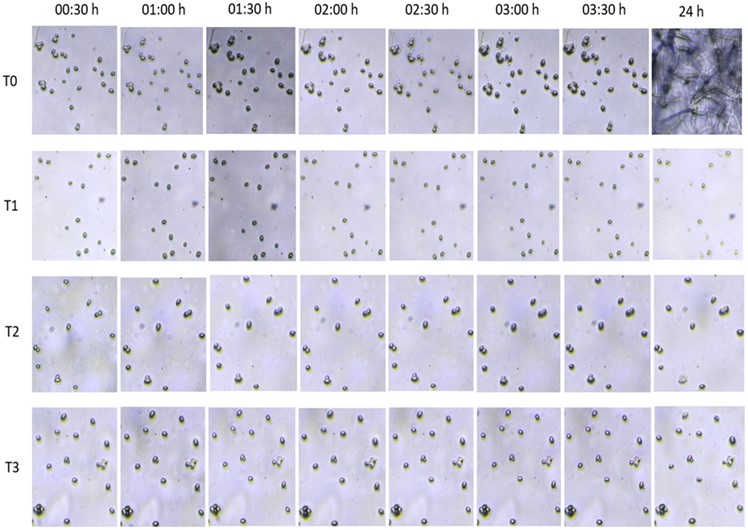
The inhibition effect of UV-C radiation on the germination of B. cinerea conidia was high in all tested UV-C doses. For instance, at 1 kJ m-2, the 94% of all irradiated conidia did not germinate. In the case of 1.5 kJ m-2 and 2.0 kJ m-2, there was 96% and 98% of germination inhibition, respectively. The non-irradiated control showed only 1% of non-germinated conidia at the end of the experiment (Fig. 1). Even after 24 h, the irradiated conidia did not form a germ tube, while control conidia formed abundant mycelium (Fig. 2). These results were in line with those determined in conidia of B. cinerea isolated from Gerberas jasmonii. That is, the germination percentage of irradiated conidia was significantly decreased, ten times lower, when irradiated with UV-C at 0.5, 1.0, 2.5, or 5.0 kJ m-2 (Darras et al., 2012).

Percentage of conidial germination of Botrytis cinerea cultured in vitro (104 conidia mL-1), after irradiating them with UV-C (254 nm) at 0.0 kJ m-2 (○ T0), 1.0 kJ m-2 (▲ T1), 1.5 kJ m-2 (▼ T2) and 2.0 kJ m-2 (□ T3). The bar at each point represents the standard deviation. Regression model (DR-Hill-Zero background) for T0: y = 100.076 * x^ 3.9437 / (113.660^ 3.9437 + x^ 3.9437) (n = 300, R2 = 0.96). “x” is time (min); “y” is the percentage of germinated conidia.

Germination of B. cinerea conidia, at different times lapses after irradiation with UV-C dosages: 0.0 kJ m-2 (T0), 1.0 kJ m-2 (T1), 1.5 kJ m-2 (T2) and 2.0 kJ m-2 (T3).
The effectiveness of UV-C irradiation on the inhibition of the germination of B. cinerea conidia might be correlated to their hyaline and non-melanized spore type. For instance, spores of Aspergillus nidulans, which produce the pigment asperthecin, are resistant to UV-C light exposure (Palmer et al., 2021). This fact might explain the high anti-germination effect of UV-C in our experiments. Moreover, a natural pigment-deficient isolate of Venturia inaequalis showed less infection capability in apple, which denotes the importance of pigmentation in conidia viability (Steiner and Oerke, 2021).
In the case of mycelium, the application of UV-C radiation (254 nm) showed a total fungicidal effect on B. cinerea. That is, all UV light dosages (1.0, 1.5, and 2.0 kJ m-2), completely inhibited the fungal growth during the whole experiment evaluation (four days). This was confirmed when compared with the non-irradiated control, which grew 24.3 mm per day covering the whole Petri dish in four days (Fig. 3). It is worth to mention that all irradiated plates did not show any mycelial growth even after 15 days of incubation, which corroborated the fungicidal effect of the UV-C light. In the context, B. cinerea grown in PDA has shown a growth rate around 9.8 mm day-1 (Larios-Palacios et al., 2020). Moreover, UV-C light (275 nm) used against B. cinerea in grapevines reduced around 50% of mycelial growth in vitro and reduced up to 85% the severity of in vivo infections caused by this fungi (Phonyiam et al., 2021). Similar effects have been observed in other fungi species exposed to UV-C light. Taken as examples, the highly reduced growth of Penicillium digitatum and Botrytis in Galia melons and grapevines, respectively, exposed to UV light (Terao et al., 2021; Ramalingam et al., 2024).

Diameter of the Botrytis cinerea mycelium strain grown in vitro, after irradiating them with UV-C (254 nm) at 0.0 kJ m-2 (○ T0,), 1.0 kJ m-2 (▲ T1), 1.5 kJ m-2 (▼ T2) and 2.0 kJ m-2 (□ T3). The bar at each point represents the standard deviation. Linear model for T0: y = 0.1049 x - 1.56 (n = 48, R2 = 0.99). “x” is time (h); “y” is the diameter of the strain (cm).
In the context, the effect of UV-C has been attributed to the interruption of the fungus cell division. The UV-C radiation is absorbed by nucleic acids, proteins, amino acids (tryptophan and tyrosine), NADH, quinones, among other chromophore molecules. Therefore, it triggers a cascade of reactions producing cytotoxic and genotoxic effects in fungi. In addition, reactive oxygen species (ROS) are generated in response to UV-C radiation. Such radicals damage lipids, proteins, and carbohydrates, thus causing the progressive deterioration of cell structures and functions, which finally results in the inhibition of mycelial growth. Furthermore, the germicidal effect of UV-C radiation is capable to kill most microorganisms due to cellular DNA alteration via pyrimidine dimers, pyrimidine photoproducts, and adenine or pyrimidine hydrates formation (Vanhaelewyn et al., 2020).
Infective capacity of UV-C irradiated conidial suspensions of B. cinerea in roses
The UV-C radiation is effective in dosages between 0.2 and 20 kJ m-2 at 10 to 40 cm from the irradiated surface with significant results on B. cinerea control (Darras et al., 2012). Our results showed a delay in the infection severity in the rose petals when the conidia were irradiated with UV-C light. For instance, the flower buds inoculated with non-irradiated conidia reached a severity index of 2.0 on the fourth day. Conversely, the flower buds inoculated with conidia irradiated at 2 kJ m-2 showed the same appearance as the relative control roses, that is, no damage caused by B. cinerea infection.
In Polar Star roses, all specimens and regardless of the UV-C radiation dosage, reached a severity index of four, while Proud roses remained below a severity index of three. Nonetheless, this did not occur with Proud roses inoculated with irradiated conidia at 0 (T0) and 1.0 kJ m-2 (T1) (Fig. 4A). These results indicated that Proud roses possess greater tolerance to B. cinerea infection than Polar Star roses. In detail, from the third to the fifth day after inoculation, most of the treatments showed no symptoms of infection, except for T0 and T1. However, on the sixth day, all treatments showed petals with severity index value of two, which remained in that state until the eleventh day after inoculation for treatments T2 and T3. On the other hand, on the same day, T0 and T1 flowers increased their severity index to three. Finally, T0 and T1 reached a severity index of four on the 15th day after inoculation (Fig. 4B). According to in vitro germination after UV-C irradiation results, one should expect no infection establishment due to the low number of conidia capable of germinating after UV treatment. However, the opposite was observed with the apparition of clear symptoms of petal damage. In this regard, it has been documented that regardless of the temperature (15 - 25 ºC), a low concentration of B. cinerea conidia was capable of infecting flowers. The probability of infection with 3,161 conidia m-3 increases at higher temperature, which indicates that the inoculum amount, temperature, and RH% are crucial factors for the infective capability of B. cinerea (Carisse and van der Heyden, 2015). Our experiments used a high inoculum dosage (5 x 10⁴ mL-1), temperature (23 - 26 ºC), and RH% (85% - 90%), which could explain the rapid infection of the petals and symptoms presence. Darras et al. (2012) evaluated the development of the B. cinerea lesions in the florets of gerbera (Gerbera jamesonii “Helado” and “Ecco”) by measuring the diameter of lesions, and observed that after inoculation with irradiated conidia (0.5 and 5.0 kJ m-2), the stems of the “Helado” variety had 55% and 48% smaller lesion diameters compared with those inoculated with non-irradiated suspensions, while in the “Ecco” variety, lesions were reduced up to 70%. Naturally, the rose stems had a vase life of more than 10 days, the stems of “Proud” showed 99% turgid flowers during the evaluation period while “Polar Star” had 95%. After 15 days, the flowers wilted, or their peduncle was broken.
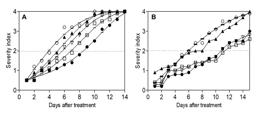
Severity index in roses A) “Polar Star” and B) “Proud” after inoculating (104 conidia mL-1) of Botrytis cinerea treated with UV-C at 0.0 kJ m-2 (○ T0), 1.0 kJ m-2 (▲ T1), 1.5 kJ m-2 (▼ T2) and 2.0 kJ m-2 (□ T3). A relative control T01 (●) are the stems with natural damage caused by spores of Botrytis cinerea in the greenhouse. Rational model y = (a + b * x) / (1 + c * x + d * x ^ 2) (n = 10). “X” is the time in vase (d); “Y” is the severity index according to the severity scale described.
Rose stems irradiation prior to B. cinerea inoculation
As previously described, the rose buds from both varieties were irradiated prior to be inoculated with non-irradiated conidia. The flower stems of Polar Star and Proud roses were harvested (day zero) and left for 24 h before UV-C irradiation (day one), subsequently the fungal inoculation was carried out 24 h after UV-C irradiation (day 2). For the case of Polar Star roses, the experiment showed that one day after inoculation most of the treatments reached a severity index of 1, except for the relative control T01. Two days after inoculation most of the treatments reached the level 2 in the severity index. On the 5th day after inoculation, most of the treatments had reached level 4, while the T1 treatment had level 3 (Fig. 5A). For Proud roses, after inoculation, the stems showed a level 1 of damage in the severity index for two days. However, the relative control T01 showed no symptoms during nine days of vase life. Moreover, the stems of Proud roses had better resistance to B. cinerea infection than Polar Star roses (Fig. 5B). However, the tested dosages of UV-C lights seem to cause damage to the rose petals and thus facilitate the infection by B. cinerea, which finally results in a faster rose bud withering.
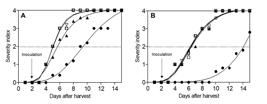
Damage severity index in roses A) “Polar Star” and B) “Proud” irradiated with UV-C at day 1, at 0.0 kJ m-2 (○ T0), 1.0 kJ m-2 (▲ T1), 1.5 kJ m-2 (▼ T2) and 2.0 kJ m-2 (□ T3) and thereafter inoculated with viable conidia. A relative control T01 (●) are the stems with natural damage caused by spores of Botrytis cinerea in the greenhouse. Regression model (DR-Hill-Zerobackground) for T01, T02, T1, T2 and T3: y = theta * x ^ eta / (kappa ^ eta + x ^ eta) (n = 10). “X” is the time in vase (d); “Y” is the severity index according to the severity scale described.
In the context, it is well documented that high dosages of UV-C radiation affect plant cells chloroplasts, mitochondria, and membrane. For instance, high UV-C light dosages easily destroy plastoquinones. In addition, the integrity of thylakoids and the lamellar membrane is also damaged, which directly affects electron transport and causes the production of ROS and peroxyl radicals (Urban et al., 2016). Nevertheless, low doses or flashes of UV-C light elicit the production of specialized metabolites, which supports plant defense from pathogens (Martínez-Sanchez et al., 2019; Ledermann et al. 2021; Martínez-Hernández et al., 2020). However, in the case of cut flowers, this type of treatment must be applied before harvest or immediately after harvest before bud opening. Interestingly, regardless of the flower buds withering severity, during the vase life evaluation of the turgidity of flower stems was not affected during the evaluation period. However, less than 5% presented stem bending and most of them were turgid and erect mainly in “Polar Star”, in contrast to what was observed in “Proud” flower stems at any UV-C dosage.
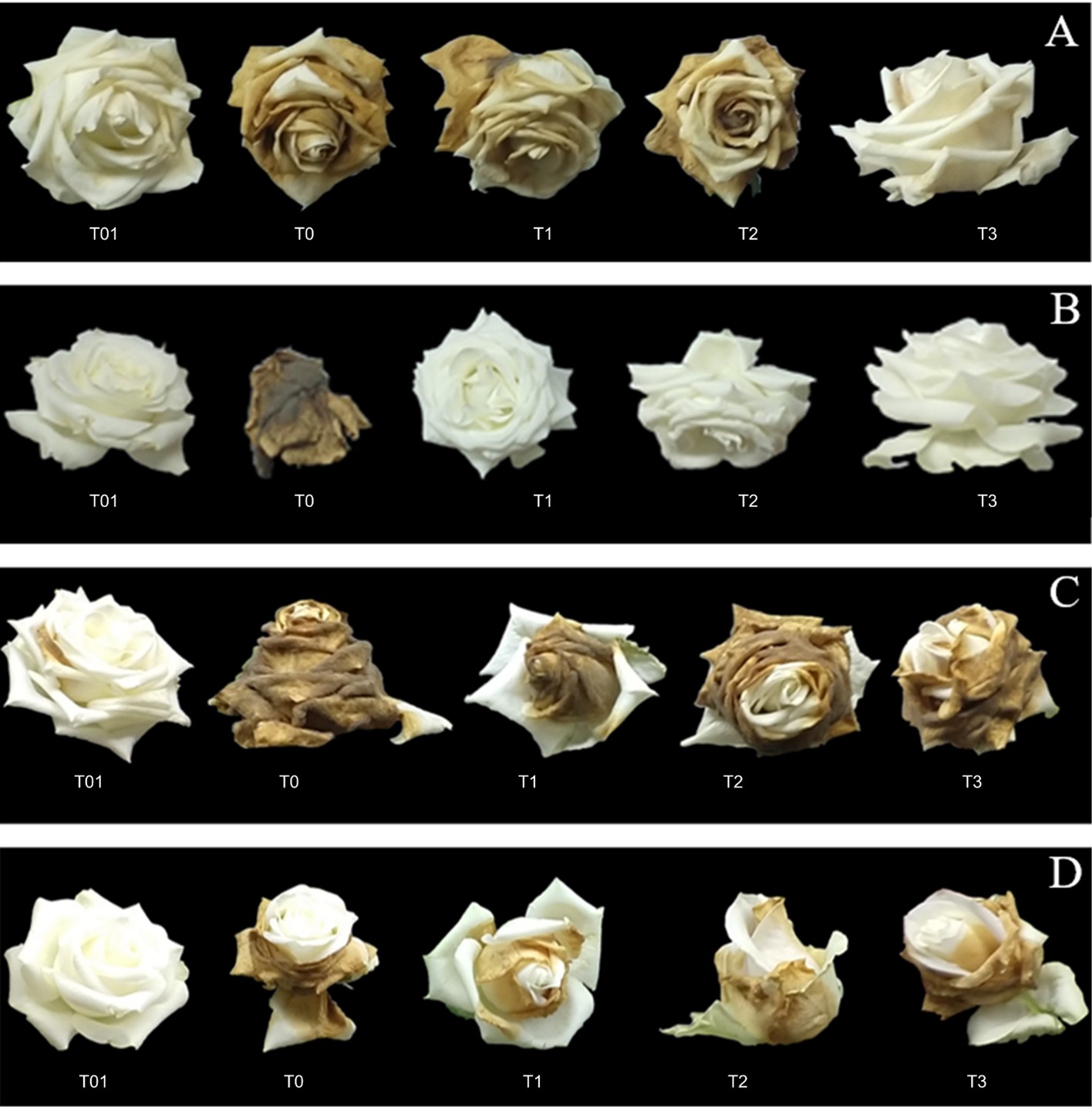
Finally, we could state that responses to UV-C radiation, and type of conidia (irradiated or non-irradiated) are also variety dependent. For instance, even if UV irradiation decreased the germination index of B. cinerea conidia, only the highest UV-C dosage was able to protect Polar Star roses from infections (Fig. 6A). On the other hand, Proud roses were not affected by irradiated conidia inoculation at the lowest irradiation dosage (Fig. 6B). In line with these results, flowers buds of Polar Star irradiated before inoculation showed an increase in the symptoms severity as the UV-C dosage increased. This corroborated two facts, Polar Star is more susceptible to B. cinerea infection, and it is damaged by exposure to UV-C light, which could also facilitate fungal infection (Fig. 6C). This parallel suggested that Proud roses are more resistant to B. cinerea infection, and it is less affected by UV-C radiation. This can be observed as the lower flower buds’ opening as the UV-C intensity increased (Fig. 6D). Something similar has happened with several flowers which develop especial petal arrangement to protect reproductive structures and pollen against UV-B radiation (Cun et al., 2024). In the case of Proud roses, instead of producing new structures, the petals might close to protect their reproductive organs against UV-C light.

Degree of severity in rose flower buds “Polar Star” (A) and “Proud” (B) 8 d after inoculation with irradiated conidia of B. cinerea. Degree of severity of irradiated flower buds of “Polar Star” (C) and “Proud” (D) that were subsequently inoculated with viable conidia of B. cinerea, 8 d after irradiation. Irradiation dosages: relative control (T01), control (T0), 1.0 kJ m-2 (T1), 1.5 kJ m-2 (T2) and 2.0 kJ m-2 (T3).
Therefore, even if postharvest UV has been reported to enhance the antioxidant activity of several plants and stimulates the synthesis of bioactive specialized metabolites, the proper dosage of UV-C radiation must be stablished for each type of specimen (Sonntag et al., 2023). For the case of the two evaluated rose cultivars, lower irradiation dosages (< 0.5 kJ m-2) and lower inoculum concentration must be tested. Thus, even if UV-C radiation has demonstrated benefits on other flower species such as gerbera cultivars or Freesia x hybrida Baile (Darras et al., 2012), in these rose cultivars, UV-C radiation, at the tested dosages, is not beneficial for the flower quality or disease tolerance. In the context, other factors such as color (pigments) might be associated with the outcome of UV-C irradiation. For instance, pink roses, variety MovieStar, treated with similar UV doses (2.1, 1.1, and 5.4 kJ m-2) showed no damage in their petals at any UV dosage (Vega et al., 2020). However, both tested cultivars in this research are white, thus, tolerance to UV damage and/or infection must be associated to other of factors in addition to pigment metabolites.
Histological analysis of the petals of both varieties.
According to all experiments, the tolerance to B. cinerea infections of each variety inoculated with non-irradiated conidia seems to be determined by intrinsic flower features rather than UV exposure. It is well-known that successful infections depend on several environmental, genetic, and metabolic factors during pathogen-host interactions. In this context, the adaxial and abaxial epidermis, physical barriers that protect the tissue from attack by pathogens, constitute the first physical space for pathogen-petal interactions, which might determine the outcome of potential microbial infections (Thi Ha et al. 2021). The petal thickness varies between rose species, for instance, in R. canina L., R. gallica L., R. rugosa Thunb., and R. x damascena Mill varies from 120 to 374 µm according to Zuraw et al. (2015). Therefore, anatomical differences between Polar Star and Proud petals were scrutinized. When analyzing the total petal thickness of both rose varieties, there were no significant differences between them (Table 1). However, when individually analyzing the thickness of the adaxial and abaxial epidermis, significant differences (p < 0.05) were observed between cultivars (Table 1).
In addition, the petals of Polar Star had a flat-like adaxial epidermis, while Proud petals possessed an adaxial epidermis with numerous elongated cone-shaped papillae (Fig. 7A and B). Such papillae have been observed in other rose cultivars (Bergougnoux et al., 2007). Thus, the natural higher tolerance to B. cinerea infection of the Proud variety must be associated with its thicker abaxial and adaxial epidermis. Something similar was observed in other two rose cultivars, in which their cuticle determined the success or failure of B. cinerea infection (Muñoz et al., 2019). In that study, at least 40% of germinated conidia on the petal surface failed to penetrate and establish an infection in the resistant cultivar. However, other factors such as the content or production of antimicrobial metabolites in both rose varieties must be further determined.

Conclusions
In vitro irradiation of Botrytis cinerea spores with UV-C light, at the tested dosages, drastically inhibited their germination, up to 98%. In addition, the treatments were capable of completely stopping mycelial growth of already germinated B. cinerea spores. The irradiation of conidia before rose inoculation inhibits the apparition of infection symptoms in Polar Star roses only at 2.0 kJ m-2, while in Proud roses this occurs at all tested UV-C dosages. Thus, Polar star roses are more susceptible to B. cinerea infections than Proud cultivar, even at low viable conidia infection. The direct irradiation of both rose cultivars with UV-C before conidia inoculation accelerated the damage symptoms in all tested UV dosages. Polar Star roses showed higher damage that Proud roses, which indicates that they are more susceptible to both B. cinerea infection and UV exposure compared with Proud roses. The higher tolerance of Proud roses to both factors is associated with its thicker abaxial and adaxial epidermis. However, UV-C radiation could be used as greenhouse sanitation approach before establishing indoor rose cultivation at least at 2.0 kJ m-2. The quality of the irradiated stems was not affected during the experiments, which reinforces the need to test lower conidia inoculum concentration and lower UV-C intensities in roses. Finally, metabolite differences among rose cultivars must also be correlated to B. cinerea susceptibility.
Acknowledgments
The author kindly thanks to the Mexican Scientific council (CONAHCYT) for its scholarship (Number 1171109).
Data availability statement
Data is available upon request to the corresponding author.
-
Declaration of generative AI and AI-assisted technologies in the writing process:
The authors declare that the use of AI and AI-assisted technologies was not applied in the writing process.
References
-
ABBEY, J.A.; PERCIVAL, D.; ABBEY, L.; ASIEDU, S. K.; PRITHIVIRAJ, B.; SCHILDER, A. Biofungicides as alternative to synthetic fungicide control of grey mould (Botrytis cinerea) - prospects and challenges, Biocontrol Science and Technology, v.29, n.3, p.207-228, 2019. https://doi.org/10.1080/09583157.2018.1548574
» https://doi.org/10.1080/09583157.2018.1548574 - BARNETT, H. L.; HUNTER, B. B. Illustrated genera of imperfect fungi. Minesota, USA: American Phytopathological Society, 1998. 218 p.
-
BAUTISTA-SILVA, J.P.; BARBOSA-BARBOSA, H.J.; URIBE-VÉLEZ, D. Formulation prototype based on Rhodotorula mucilaginosa for the control of Botrytis cinerea in roses. Revista Colombiana de Biotecnología, v.18, n.2, p.13-23, 2016. https://doi.org/10.15446/rev.colomb.biote.v18n2.55826
» https://doi.org/10.15446/rev.colomb.biote.v18n2.55826 -
BERGOUGNOUX, V.; CAISSARD, J.C.; JULLIEN, F.; MAGNARD, J.L.; SCALLIET, G.; COCK, J.M.; BAUDINO, S. Both the adaxial and abaxial epidermal layers of the rose petal emit volatile scent compounds. Planta, v.226, n.4, p.853-866, 2007. https://doi.org/10.1007/s00425-007-0531-1
» https://doi.org/10.1007/s00425-007-0531-1 -
BIKA, R.; BAYSAL-GUREL, F.; JENNINGS, C. Botrytis cinerea management in ornamental production: a continuous battle. Canadian Journal of Plant Pathology, v.43, n.3, p.345-365, 2021. https://doi.org/10.1080/07060661.2020.1807409
» https://doi.org/10.1080/07060661.2020.1807409 -
BYEONG-MING, S.; GUN-HEE, L.; HEE-JEONG, H.; JU.HEE, Y.; EUN-GYEONG, L.; HYUNJI, G.; HA-KYEONG, P.; KYUNGA, R.; JINWOO, K.; SANG-MIN, K.; DONGSEOB, T. Ultraviolet-C light at 222 nm has a high disinfecting spectrum in environments contaminated by infectious pathogens, including SARS-CoV-2. PLoS One, v.18, n11, e0294427, 2023. https://doi.org/10.1371/journal.pone.0294427
» https://doi.org/10.1371/journal.pone.0294427 -
CARISSE, O.; VAN DER HEYDEN, H. Relationship of airborne Botrytis cinerea conidium concentration to tomato flower and stem infections. Plant Disease, v.99, n.1, p.137-142, 2015. https://doi.org/10.1094/PDIS-05-14-0490-RE
» https://doi.org/10.1094/PDIS-05-14-0490-RE -
CHEUNG, N.; TIAN, L.; LIU, X.; LI, X. The destructive fungal pathogen Botrytis cinerea-Insights from genes studied with mutant analysis. Pathogens, v.9, n.11, p.923, 2020. https://doi.org/10.3390/pathogens9110923
» https://doi.org/10.3390/pathogens9110923 -
CUN, SL; ZHANG, C.; CHEN, J.; QUIAN, L.; SUNA, H.; SONG, B. Effects of UV-B radiation on pollen germination and tube growth: A global meta-analysis. Science of the Total Environment, v.915, 170097, 2024. https://doi.org/10.1016/j.scitotenv.2024.170097
» https://doi.org/10.1016/j.scitotenv.2024.170097 -
DARRAS, A.I.; DEMOPOULOS, V.; TINIAKOU, C. UV-C irradiation induces defense responses and improves vase-life of cut gerbera flowers. Postharvest Biology and Technology, v.64, n.1, p.168-174, 2012. https://doi.org/10.1016/j.postharvbio.2011.07.008
» https://doi.org/10.1016/j.postharvbio.2011.07.008 - ELAD, Y.; PERTOT, I.; PRADO, A.M.C.; STEWART, A. Plant Hosts of Botrytis spp. In: FILLINGER, S.; ELAD, Y. (eds) Botrytis-the fungus, the pathogen and its management in agricultural systems. New York: Springer International Publishing, 2016. p.413-486.
-
FERNÁNDEZ-ORTUÑO, D.; PÉREZ-GARCÍA, A.; CHAMORRO, M.; DE LA PEÑA, E.; DE VICENTE, A.; TORÉS, J. A. Resistance to the SDHI fungicides boscalid, fluopyram, fluxapyroxad, and penthiopyrad in Botrytis cinerea from commercial strawberry fields in Spain. Plant Disease, v.101, n.7, p.1306-1313, 2017. https://doi.org/10.1094/PDIS-01-17-0067-RE
» https://doi.org/10.1094/PDIS-01-17-0067-RE -
DEWEY, F.M.; GRANT-DOWNTON, R. Botrytis-Biology, Detection and Quantification. p.17-34. In: Botrytis - the Fungus, the Pathogen and its Management in Agricultural Systems Fillinger, S., Elad, Y. (eds). 2016. Springer, Cham. https://doi.org/10.1007/978-3-319-23371-0_2
» https://doi.org/10.1007/978-3-319-23371-0_2 - FILLINGER, S.; WALKER, A.S. Chemical control and resistance management of Botrytis diseases. In: FILLINGER, S.; ELAD, Y. (eds). Botrytis - the fungus, the pathogen and its management in agricultural systems. New York: Spinger, 2016. p.189-216.
-
FRAC. Recommendations for Fungicide Resistance Management from FRAC Working Group. Available. at: Available. at: https://www.frac.info/fungicide-resistance-management/by-frac-working-group-expert-forum Accessed on May 06th 2024.
» https://www.frac.info/fungicide-resistance-management/by-frac-working-group-expert-forum -
JANISIEWICZ, W.J.; TAKEDA, F.; GLENN, D.M.; CAMP, M.J.; JURICK, W.M. Dark period following UV-C treatment enhances killing of Botrytis cinerea conidia and controls gray mold of strawberries. Phytopathology, v.106, n.4, p.386-394, 2016. https://doi.org/10.1094/PHYTO-09-15-0240-R
» https://doi.org/10.1094/PHYTO-09-15-0240-R -
LARIOS-PALACIOS, O.E.; LÓPEZ-VAZQUEZ. E.Y.; CURIEL-RODRIGUEZ, A.; RUIZ-ESPINOZA, F.J.; SOLANO-VIDAL, R.; SERRATO-CRUZ, M.A. In vitro evaluation of methods against Botrytis cinerea Revista Mexicana Ciencias Agrícolas, v.11. n.3. 2020. https://doi.org/10.29312/remexca.v11i3.2077
» https://doi.org/10.29312/remexca.v11i3.2077 -
LEDERMANN, L.; DAOUDA, S.; GOUTTESOULARD, C.; AARROUF, J.; URBAN, L. Flashes of UV-C light stimulate defenses of Vitis vinifera L. ´Chardonnay´ against Erysiphe necator in greenhouse and vineyard conditions. Plant Disease, v.105, p.2106-2113, 2021. https://doi.org.10.1093/PDIS-10-20-2229-RE
» https://doi.org.10.1093/PDIS-10-20-2229-RE -
MACNISH, A.J.; MORRIS, K.L.; THEIJE, A.; MENSINK, M.G.J.; BOERRIGTER, H.A.M.; REID, M.S.; JIANG, C.Z.; WOLTERING, E.J. Sodium hypochlorite: A promising agent for reducing Botrytis cinerea infection on rose flowers. Postharvest Biology and Technology, v.58, n.3, p.262-267. 2010. https://doi.org/10.1016/j.postharvbio.2010.07.014
» https://doi.org/10.1016/j.postharvbio.2010.07.014 -
MARTÍNEZ-HERNÁNDEZ, G.B.; BLANCO, V.; BLAYA-ROS, P. J.; TORRES-SÁNCHEZ, R.; DOMINGO, R.; ARTÉS-HERNÁNDEZ, F. Effects of UV-C on bioactive compounds and quality changes during shelf life of sweet cherry grown under conventional or regulated deficit irrigation. Scientia Horticulture, v.269, n.1, p.109398, 2020. https://doi.org/10.1016/j.scienta.2020.109398
» https://doi.org/10.1016/j.scienta.2020.109398 -
MARTÍNEZ-SÁNCHEZ, A.; GUIRAO-MARTÍNEZ, J.; ANTONIO-MARTÍNEZ, J.; LOZANO-PASTOR, P.; AGUAYO, E. Inducing fungal resistance of spinach treated with preharvest hormetic doses of UV-C. LWT, v.113, n.1, p.108302, 2019. https://doi.org/10.1016/j.lwt.2019.108302
» https://doi.org/10.1016/j.lwt.2019.108302 -
MUÑOZ, M.; FAUST, J.E.; SCHNABEL, G. Characterization of Botrytis cinerea from commercial cut flower roses. Plant Disease, v.103, n.7, p.1577-1583, 2019. https://doi.org/10.1094/PDIS-09-18-1623-RE
» https://doi.org/10.1094/PDIS-09-18-1623-RE -
PALMER, J.M.; WIEMANN, P.; GRECO, C.; CHIANG, Y.M.; WANG, C.C.C.; LINDNER, D.L.; KELLER, N.P. The sexual spore pigment asperthecin is required for normal ascospore production and protection from UV light in Aspergillus nidulans Journal Industrial Microbiology and Biotechnology, v.48, n.9-10, 2021. https://doi.org/10.1093/jimb/kuab055
» https://doi.org/10.1093/jimb/kuab055 -
PÉREZ, D.; GARCÍA-GODOS, P. Identificación del agente causal del marchitamiento en Caesalpinia spinosa tara y el efecto antagónico de aislados de Bacillus spp. y Trichoderma sp. Ecología Aplicada, v.18, n.1, p.51-57, 2019. http://dx.doi.org/10.21704/rea.v18i1.1306
» http://dx.doi.org/10.21704/rea.v18i1.1306 -
PHONYIAM, O.; OHARA, H.; KONDO, S.; NARADISORN, M.; SETHA, S. Postharvest UV-C irradiation influenced cellular structure, jasmonic acid accumulation, and resistance against green mold decay in Satsuma mandarin fruit (Citrus unshiu). Frontiers in Sustainable Food Systems, v.5, n.1, p. 684434, 2021. https://doi.org/10.3389/fsufs.2021.684434
» https://doi.org/10.3389/fsufs.2021.684434 -
RAMALINGAM, S.; LE MYINT, Z.; AHN, S. Y.; RYU, J. A.; LEE, S. M.; YUN, H. K. UV-C treatment elicits resistant responses against Botrytis cinerea infection and the improvement of fruit characteristics in grapevines. Horticulture, Environment, and Biotechnology, p.1-18, 2024. https://doi.org/10.1007/s13580-024-00602-w
» https://doi.org/10.1007/s13580-024-00602-w -
SHAO, W.; YOUFU Z.; ZHONGHUA, M. Advances in understanding fungicide resistance in Botrytis cinerea in China. Phytopathology, v.111, n.3, p.455-463, 2021. https://doi.org/10.1094/PHYTO-07-20-0313-IA
» https://doi.org/10.1094/PHYTO-07-20-0313-IA -
SOFIANOS, G.; SAMARAS, A.; KARAOGLANIDIS, G. Multiple and multidrug resistance in Botrytis cinerea: molecular mechanisms of MLR/MDR strains in Greece and effects of co-existence of different resistance mechanisms on fungicide sensitivity. Frontiers in Plant Science, v.14. 2023. https://doi.org/10.3389/fpls.2023.1273193
» https://doi.org/10.3389/fpls.2023.1273193 -
SONNTAG, F.; LIU, H.; NEUGART, S. Nutritional and physiological effects of postharvest UV radiation on vegetables: A Review. Journal of Agricultural and Food Chemistry, v.71, n.26, p.9951-9972, 2023. https://doi.org/10.1021/acs.jafc.3c00481
» https://doi.org/10.1021/acs.jafc.3c00481 -
STEINER, U.; OERKE, E.C. A melanin-deficient isolate of Venturia inaequalis reveals various roles of melanin in pathogen life cycle and fitness. Journal of Fungi, v.9, n.1, p.35, 2022. https://doi.org/10.3390/jof9010035
» https://doi.org/10.3390/jof9010035 -
TERAO, D.; NECHET, K.L.; FRIGHETTO, R.T.; ANJOS, V.D.; MAIA, A.H.; HALFELD-VIEIRA, B.A. Control of Fusarium rot in Galia melon and preservation of fruit quality with UV-C radiation and hot water treatments. Tropical Plant Pathology, v.46, n.3, p.350-359, 2021. https://doi.org/10.1007/s40858-021-00432-6
» https://doi.org/10.1007/s40858-021-00432-6 -
THI HA, S.T.; CHOI, B.; IN, B. Nature and Regulation of Botrytis cinerea in Rosa hybrid Flower Research Journal, v.29, n.3, p.129-137, 2021. https://doi.org/10.11623/frj.2021.29.3.02
» https://doi.org/10.11623/frj.2021.29.3.02 -
URBAN, L.; CHARLES, F.; ALCÁNTARA DE MIRANDA, M.R.A.; AARROUF, J. Understanding the physiological effects of UV-C light and exploiting its agronomic potential before and after harvest. Plant Physiology and Biochemistry, v.105, n.1, p.1-11, 2016. https://doi.org/10.1016/j.plaphy.2016.04.004
» https://doi.org/10.1016/j.plaphy.2016.04.004 -
VANHAELEWYN, L.; VAN DER STRAETEN, D., DE CONINCK, B.; VANDENBUSSCHE, F. Ultraviolet Radiation from a plant perspective: The plant-microorganism context. Frontiers in Plant Science, v.11, p.597642, 2020. https://doi.org/10.3389/fpls.2020.597642
» https://doi.org/10.3389/fpls.2020.597642 -
VEGA, K.; OCHOA, S.; PATIÑO, L.F.; HERRERA-RAMÍREZ, J.A.; GÓMEZ, J.A.; QUIJANO, J.C. UV-C radiation for control of gray mold disease in postharvest cut roses. Journal of Plant Protection Research, v.60, n.4, p.351-361, 2020. https://doi.org/10.24425/jppr.2020.133957
» https://doi.org/10.24425/jppr.2020.133957 -
ZHONG, S.; ZHANG, J.; ZHANG, G.Z. Botrytis polyphyllae: A New Botrytis Species Causing Gray Mold on Paris polyphylla Plant Disease, v.103, n.7, p.1721-1727, 2019. https://doi.org/10.1094/PDIS-07-18-1284-RE
» https://doi.org/10.1094/PDIS-07-18-1284-RE -
ZURAW, B.; SULBORSKA, A.; STAWIARZ, E.; WERYSZKO, C.E. Flowering biology and pollen production of four species of the genus Rosa L. Acta Agrobotanica, v.68, n.3, p.267-278, 2015. https://doi.org/10.5586/aa.2015.031
» https://doi.org/10.5586/aa.2015.031
Edited by
-
Editor:
Petterson Baptista da Luz (Universidade do Estado de Mato Grosso, Brasil)