 Environmental factors on the prediction of the lactation curve of Holstein cows
Abstract
The objective of this work was to evaluate the influence of environmental factors on the lactation curve parameters and milk yield of Holstein cows. Data on lactations conducted from 2010 to 2019 in the state of Paraná, Brazil, obtained from the official dairy control service, were used. The parameters of the lactation curves were estimated using the Wood model and NLIN procedure of the SAS software. The influence of the environmental factors lactation order and calving region and season on the parameters of the lactation curves and on milk yield was evaluated using the MIXED procedure of SAS. First-lactation cows reached peak lactation later and showed a more persistent lactation. Milk yield increased with lactation order. The highest lactation peaks occurred in lactations started in winter and in fall, at 305 days. Cows raised in the center-east region of the state of Paraná had the highest milk yield at the peak and at 305 days of lactation. Lactation order and calving region and season influence the shape of the lactation curve of Holstein cows, with an increase in milk yield when lactation cycles begin in winter-spring.
Index terms:
calving season; dairy catlle; lactation order; lactation peak; persistency
Resumo
O objetivo deste trabalho foi avaliar a influência de fatores ambientais nos parâmetros da curva de lactação e na produção de leite de vacas da raça Holandesa. Foram utilizados dados de lactações realizadas de 2010 a 2019 no estado do Paraná, Brasil, obtidos do serviço oficial de controle leiteiro. Os parâmetros das curvas de lactação foram estimados com uso do modelo de Wood e do procedimento NLIN do programa SAS. A influência dos fatores ambientais ordem de lactação e região e época de parto nos parâmetros das curvas de lactação e na produção de leite foi avaliada com uso do procedimento MIXED do SAS. Vacas de primeira lactação atingiram o pico de lactação mais tarde e apresentaram lactação mais persistente. A produção de leite aumentou com a ordem de lactação. Os maiores picos ocorreram nas lactações iniciadas no inverno e no outono, aos 305 dias. Vacas criadas na região Centro-Oriental do estado do Paraná apresentaram a maior produção de leite no pico e aos 305 dias de lactação. A ordem de lactação e a região e a estação de parto influenciam o formato da curva de lactação em vacas holandesas, com aumento na produção de leite quando os ciclos de lactação começam no inverno-primavera.
Termos para indexação:
estação do parto; bovinos leiteiros; ordem de lactação; pico de lactação; persistência
Introduction
The lactation curve is a graphic representation of the milk production of a cow during lactation (Cobuci et al., 2001), used to aid technicians and producers in establishing strategies to optimize the selection of more efficient and profitable genotypes (Oliveira et al., 2007). It also provides useful information for the evaluation of the biological and economic efficiencies and the genetics of an animal (Naderi, 2018).
Different mathematical models have been developed over the years to describe lactation curves. The Wood model (Wood, 1967) is widely used because it is easy to apply and presents an overall adequate fit (Ferreira et al., 2015). The parameters obtained by this model are used to estimate characteristics of the lactation curve, such as yield at the onset of lactation, time of peak lactation, yield at peak lactation, persistency, and total milk yield during lactation.
According to several authors, a combination of environmental factors influences the parameters of the lactation curve and, consequently, production volume. In the United States, Li et al. (2022), for example, found that Holstein cows reached lactation peak earlier and had a greater total milk yield when calved in spring and winter, respectively. In the Netherlands, Innes et al. (2024) observed that first-lactation Holstein cows presented lower production peaks and flatter lactation curves than those in subsequent lactations. Considering these results, nutritional strategies and the selection of adequate genotypes for each production system can be used to maximize herd productivity and profitability (Glória et al., 2010).
In the case of Southern Brazil, specifically of the state of Paraná, where dairy farming with Holstein herds stands out, incomplete lactations are still based on data on lactation curve parameters from the 1990s, despite the changes both in nutritional and health management, as well as in animal genetics. Therefore, updating research on lactation curves and their parameters may provide more accurate information to help producers and technicians in their decision-making regarding selection and related culling processes.
The objective of this work was to evaluate the influence of environmental factors on the lactation curve parameters and milk yield of Holstein cows.
Materials and Methods
The study used data on lactations from 2010 to 2019 from 343 herds, obtained from the milk-testing service of Associação Paranaense de Criadores de Bovinos da Raça Holandesa, the Holstein breeders association of the state of Paraná, based in the municipality of Curitiba, Brazil. Monthly test-day milk yield data were considered for first-, second-, and third-lactation cows, with calving ages ranging from 18 to 43, 30 to 60, and 42 to 72 months, respectively. The cows were monitored from the fifth day after calving, when the colostrum is discarded, until the three-hundred-and-fifth day of lactation.
Initially, consistency analyses were carried out to exclude outliers, which resulted from errors in annotations on testing record sheets. The following information was excluded: herds with less than ten animals, cows with less than five milk tests throughout lactation, cows whose first milk test was done 45 days after calving, and cows with a daily milk yield lower than 5.0 kg or higher than 80 kg per day. Only cows that were milked two or three times a day were maintained.
Lactation curves were estimated according to lactation order and calving season and region. To adjust the individual lactation curves, the following equation was applied in the Wood (1967) model: Y = atb exp-ct where Y is milk yield (kg) on the test day; a is the parameter associated with the onset of milk production (kg); t is the period (days) after calving, when milk yield (kg) was measured; b is the average plateau phase; exp is the constant equal to 2.7182; and c is the decline phase of the curve after peak lactation.
The parameters of each individual curve were estimated using the Gauss-Newton iterative method through the NLIN procedure of the SAS statistical package (SAS Institute Inc., Cary, NC, USA). Using the parameters of the model, the characteristics of the curves were defined as proposed by Wood (1967), as shown in Table 1.
To evaluate the influence of the studied environmental factors on the characteristics of the lactation curve, curves considered atypical were excluded, i.e., those with negative a values, negative b values or b values greater than 1, and negative c values.
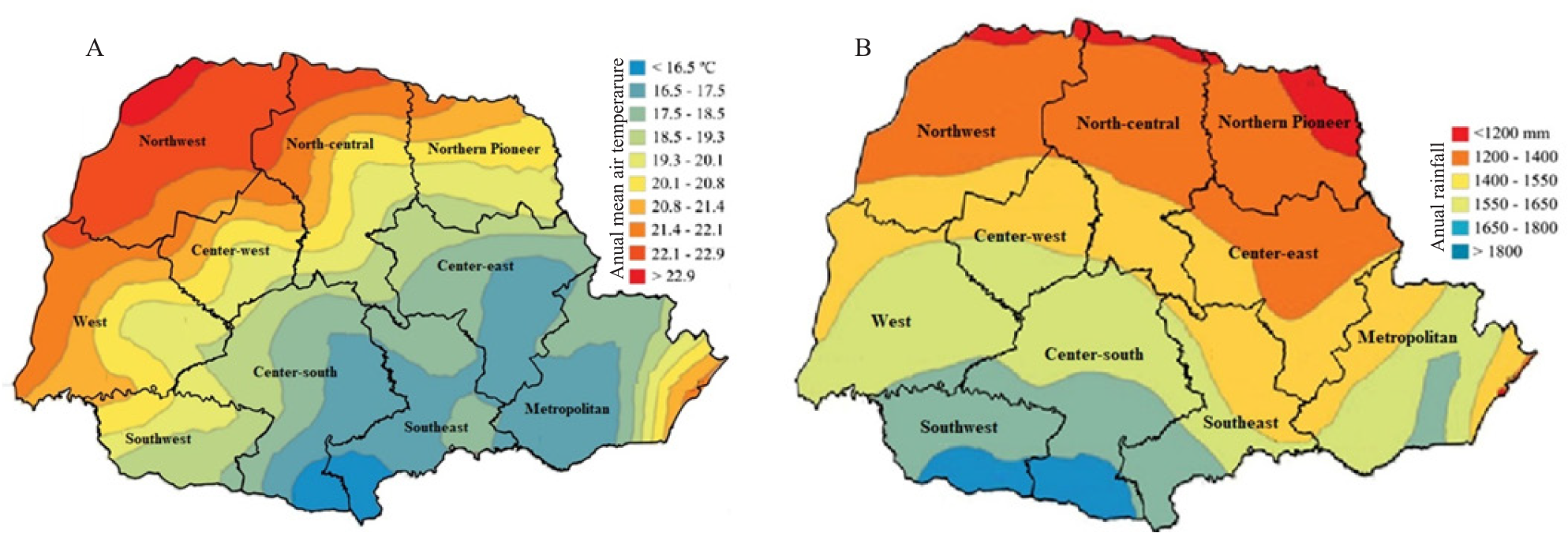
The data were classified according to the lactation order of the cows, as follows: 48,758 cows and 427,613 milk tests for the first lactation, 40,125 cows and 352,128 milk tests for the second lactation, and 24,298 cows and 211,675 milk tests for the third lactation. Subsequently, within each lactation order, the animals were classified according to calving season (Table 2) and region (Table 3). This latter classification used the location of the farms and the definition of mesoregions proposed by Instituto Brasileiro de Geografia e Estatística (IBGE, 2017), which also considers the average variations in annual air temperature and precipitation (Figure 1).
Number of Holstein cows per calving season, within each lactation order, in the state of Paraná, Brazil.
Number of Holstein cows per region in the state of Paraná, Brazil, according to lactation order.
Map of annual mean air temperature (A) and precipitation (B) in the state of Paraná, Brazil. Source: adapted from Aparecido et al. (2016).
The environmental effects lactation order and calving season and region on the dependent variables milk yield in early lactation, time of peak lactation (days), yield at peak lactation, persistency, and volume of milk produced for 305 days were estimated by the MIXED procedure of the SAS software (SAS Institute Inc., Cary, NC, USA). These effects were obtained after adjusting the respective models for lactation order and for calving season and region, as follows:
where Yjklm is the observed value of the dependent variable, i.e., milk yield at the onset of lactation, time of peak lactation in days, yield at peak lactation, persistency, and adjusted milk yield at 305 days (MY305); µ is a constant (overall mean); Orderi is the fixed effect of lactation order i (1, 2, and 3); Regioni is the fixed effect of region i (1, 2, ...6); Herdj is the fixed effect of herd j (1, 2, ...343); Yeark is the fixed effect of calving year k (2010, 2011, ...2019); Seasonl is the fixed effect of the first calving season (1, 2, 3, and 4); Milkingm is the fixed effect of milking frequency m (2 or 3×); and ɛjklm is the residual error associated with each observation.
Results and Discussion
A lower initial milk yield was observed for first-lactation cows (Table 4), which may be associated with the increased stress during milking, an experience that is still new for primiparous cows (Siewert et al., 2019). In this sense, the implementation of practices, such as pre-calving training during the first part of lactation, could increase milking frequency and, consequently, daily milk yield in early lactation (Masía et al., 2020).
Parameters, estimated by the Wood model, of the lactation curve of Holstein cows in the state of Paraná, Brazil, according to lactation order(1).
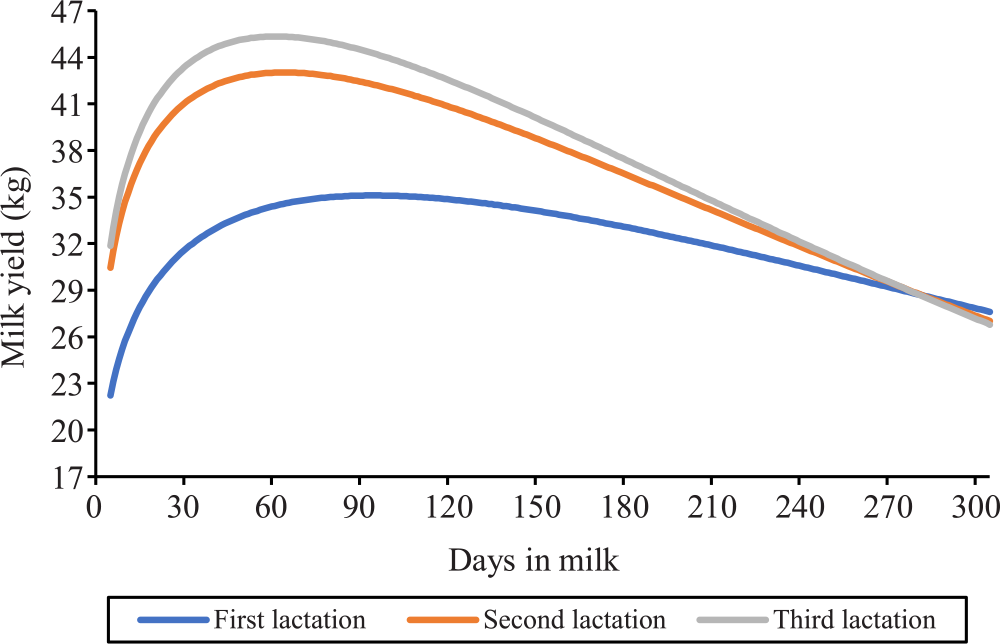
First-lactation cows also presented a longer time of peak lactation of 96 days and a lower peak yield of 32.58 kg per day, when compared with females in the subsequent lactations (Table 4). This could be explained by the fact that the milk-secreting tissue of first-lactation animals takes longer to reach its peak of activity compared with those of multiparous animals (Rao & Sundaresan, 1979). The peak yield of primiparous cows corresponded to 80 and 75.32% of that of secondand third-lactation cows, respectively, which are values within the standards recommended by the industry (Bailey & Currin, 2009). These values are similar, both in magnitude and in proportionality, to those of 32.20 kg per day for primiparous cows and of 43.60 kg per day for multiparous cows reported by Siewert et al. (2019) for dairy herds in the United States.
The analysis of persistency, which indicates the drop in milk yield after peak lactation, showed that this decline was less pronounced in primiparous cows, translating into a flatter lactation curve, with a lower variation in yield. A similar persistency was identified in Holstein cows in the following countries: in Canada, by López et al. (2015); in the Netherlands, by Burgers et al. (2021); and in Scotland, by Marumo et al. (2022), who reported a decrease in persistency with advancing lactation order. The lower persistency observed in multiparous cows is attributed to the age factor, because, as the animal ages, the regression of mammary alveolar cells occurs at an accelerated pace, causing a decrease in milk production (Jingar et al., 2014).
Although the primiparous cows showed a higher persistency, the highest MY305 was estimated for cows with higher lactation orders (Table 4). The yield of first-lactation cows was 9.23 and 7.34% lower than those of thirdand second-lactation cows, respectively. According to Wathes et al. (2007), this result may be related to the fact that primiparous cows are still in the development phase, in which the dietary nutrients are directed toward animal growth. Moreover, Akers (2017) and Connor et al. (2019) concluded that primiparous cows consume less feed and have udders with less secretory tissue than multiparous cows.
In all lactation orders, the estimated lactation curve showed a typical shape, i.e., it followed the biological standard, with a gradual increase in milk yield until peak lactation and a subsequent decline (Figure 2). Similar typical curves for Holstein cattle were also reported by other authors (Hossein-Zadeh, 2019; Abreu et al., 2020). The lactation curve of the primiparous cows showed a smaller decline and was, consequently, more pronounced, with an average loss of 0.035 kg milk per day throughout the post-peak period, which was 0.065 and 0.075 kg milk per day, respectively, for cows in the second and third lactations.
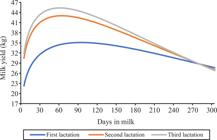
Lactation curves of Holstein cows according to lactation order in the state of Paraná, Brazil.
The cows that calved in spring had a higher initial milk yield, in any lactation order, which may be related to the better body condition scores at calving at this time of the year. These animals were probably more prepared for the onset of lactation, since, during the final third of their pregnancy in winter, they were likely kept in better thermal comfort conditions and received a greater amount of concentrate, which is a common management practice during this season in the study region.
Cows that calved in winter-spring showed an earlier peak lactation, probably because of the aforementioned thermal comfort conditions in this season of the year, and also started lactations with a higher milk production. According to Saghanezhad et al. (2017), cows that are high yielding in early lactation tend to have the highest yield at peak lactation. Contrastingly, cows calved in summer had a longer time of peak lactation due to the unfavorable environmental conditions, such as high temperatures and humidity, and, consequently, produced less milk at peak lactation.
Cows whose lactation started in winter had a higher milk yield during peak lactation, probably because the period of peak milk production coincided with the moment of a greater thermal comfort (winter) for Holstein cows in the Southern region of Brazil. Li et al. (2022), evaluating Holstein cows in United States, reported that milk production was lower when lactations started during summer, which may be attributed to the negative effects of heat stress.
Cows calved in summer showed a higher persistency in all lactations (Table 5), i.e., the decrease in daily milk yield after the peak was slower. This result can be attributed to the fact that the decline in milk production of these cows coincided with the months of low temperatures (late fall and early winter), which probably reduced heat stress, helping the cows to maintain a production volume that was more constant and without a very pronounced drop. During this period, the average temperature in the state of Paraná was 15°C (Kogima & Ely, 2019), which is within the thermal comfort zone between 0 and 20°C for Holstein cows (Desrousseaux, 2021), avoiding cold or heat stress.
Parameters, estimated by the Wood model, of the lactation curve of Holstein cows in the state of Paraná, Brazil, according to calving season(1).
Cows with lactations starting in winter-spring showed a low persistency, with a rapid drop in milk production after peak lactation. This probably occurred because the decline in milk production coincided with the driest months (summer), a period with high temperatures and a low humidity, which generate stressful conditions for the animals. Investigating Holstein cows, also in the state of Paraná, Fagan et al. (2010) concluded that the decline in productivity in summer could be related to the animal’s reduced dry matter intake and slower metabolism, influenced both by high temperatures and the lower quality of the diet provided during this period.
The effect of calving season led to a decline in milk production after peak lactation in cows calved in spring, compared with those calved during summer, in the first, second, and third lactations (0.034 vs. 0.030 kg per day, 0.067 vs. 0.057 kg per day, and 0.077 vs. 0.067 kg per day, respectively). Regardless of lactation order, the highest MY305 was estimated for lactations that started in fall. Torshizi (2016) reported similar results for Holstein cows in Iran, attributing this difference in MY305 between seasons to the photoperiod effect, since cows under less sun exposure would produce more milk per lactation (Miller et al., 2000).
In the present study, cows that calved in winter-spring showed the lowest MY305 in the three lactations. At the end of lactation, cows calved in fall produced, on average, 322.02, 308.68, and 312.60 kg more milk than those calved in spring, i.e., 3.50, 3.12, and 3.05% higher yields in the first, second, and third lactations, respectively.
The shape of the lactation curve differed according to calving season for each lactation order (Figure 3), mainly considering time of peak lactation, peak yield, and persistency. This result may be related to the variation in feed supply and quality, type of management and diet, and to the climatic conditions during the experiment. These findings are in line with those of Torshizi (2016), Li et al. (2022), Ruban et al. (2022), Zamorano-Algandar et al. (2022), and Stojnov et al. (2024), who observed that calving season influenced the shape of the lactation curve, particularly at peak production and persistency. These results are an indicative that, by obtaining lactation curves, it would be possible to plan and adjust herd management regarding culling, nutritional assessment, and animal health.
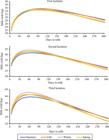
Lactation curves of Holstein cows according to calving season in the state of Paraná, Brazil.
According to the parameters of the lactation curves of Holstein cows in each region of the state of Paraná, the initial milk yield of primiparous cows was similar in the center-east, center-south, and west (Table 6). However, initial milk yield does not allow identifying specific productivity advantages for these regions.
Parameters, estimated by the Wood model, of the lactation curve of Holstein cows based on the regions of the state of Paraná, Brazil(1).
In the first lactation, cows from the center-east of the state of Paraná were late to reach peak lactation (at 97 days), whereas those from the center-south, metropolitan, north-center, west, and southwest regions showed a short time of peak lactation; this variability may be attributed to the different management adopted in each region. In the second and third lactations, the differences in time of peak lactation between the regions were small, and peak lactation occurred around 60 days after calving. According to Glória et al. (2010), longer times from the onset to the peak of lactation are desirable because the animal is challenged nutritionally for more time and can better express its genetic potential, which may reduce the likelihood of metabolic problems (Daltro et al., 2019).
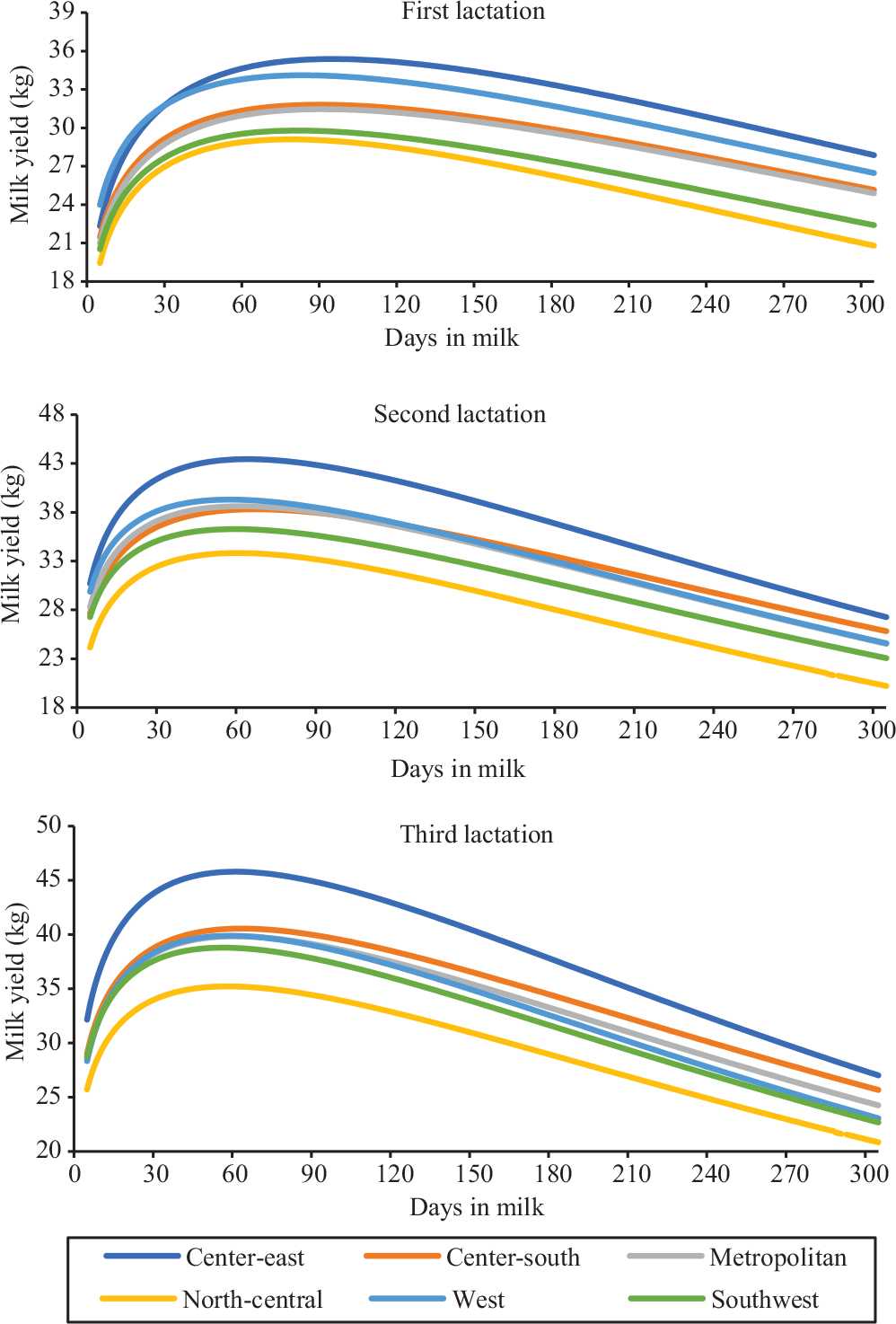
Regardless of lactation order, the highest peak yield was observed for cows from the center-east region and the lowest one, for those from the north-center region. This result can be attributed to differences in climatic conditions and in the quality of the forage provided to the animals until the moment of the peak; feed quality is directly related to the soil-climatic variations in the state of Paraná. On this topic, Bazotti et al. (2012) observed that producers in the center-east region have been using corn, millet, and sugarcane as the main alternatives to increase the amount of roughage offered to the herd.
Compared with cows from the north-center region, those from the center-east showed a superior yield peak of 13.80% in the first lactation, 16.31% in the second lactation, and 18.45% in the third lactation. The lower production observed in the former region may be related to the presence of activities other than milk production, such as the farming of grains, sugarcane, and beef cattle (Silva et al., 2016). Furthermore, temperatures are higher in this region, which is characterized by a hot summer with mean temperatures above 37ºC (Wrege et al., 2012).
Regarding persistency between regions, cows from the center-east showed higher values in the first lactation, but did not differ significantly from those of the other regions in the second and third lactations (Table 6). The difference in lactation curve after peak lactation (persistency) in different regions and in different lactation orders may be associated with the types of animal management and feeding, which contributes to maintain milk production throughout lactation, without a pronounced drop. Differences between regions are also related to the use of production techniques, temperature, herd size, dietary supplementation, and the genetic improvement of the dairy herd (Bazotti et al., 2012; Moreira et al., 2019).
In all lactations, the highest MY305 was observed in the center-east region (Table 6) and increased with lactation order (Table 4). This region includes Campos Gerais, one of the main milk-producing areas in the state of Paraná, which is also one of the most technological areas in dairy production, with highly specialized and properly managed herds. Mulim et al. (2021) pointed some positive production aspects in this region, such as investments in cutting-edge technologies, a long tradition in dairy farming as the main economic activity, and the presence of cooperatives.
The lowest MY305 was obtained for cows from the north-center region, probably because these were smaller herds, translating into a lower investment in the use of technologies and genetic material (Moreira et al., 2019), which reflects in a lower milk yield. This region is characterized by its traditional grain production, particularly of coffee, and dairy farming is carried out as a complementary activity (Fuentes Llanillo et al., 2006).
The region effect strongly influenced the shape of the lactation curve (Figure 4), particularly, yield peak and persistency parameters. Silva et al. (2016) listed several factors that cause regional inequalities regarding milk production, highlighting production methods, advanced genetics, and nutritional control, in addition to the organization of production in a cooperative system.
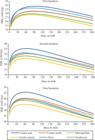
Lactation curves of Holstein cows according to lactation order per region of the state of Paraná, Brazil.
Therefore, considering the environmental influences evaluated in the present study, it would be advisable to adjust the prediction estimates of the lactation curves and MY305 of Holstein cows according to regional, seasonal, and lactation order variations.
Conclusions
-
Lactation order and calving region and season influence the shape of the lactation curve of Holstein cows, with an increase in milk production when lactation cycles begin in winter-spring.
-
The magnitude of lactation order and calving region and season lead to flatter lactation curves, with lower peaks and total milk production.
-
The parameters of the lactation curves show a greater similarity between multiparous cows in the second and third lactations, compared with primiparous cows.
Acknowledgments
To Coordenação de Aperfeiçoamento de Pessoal de Nível Superior (CAPES), for granting the scholarship (Finance Code 01) to the first author; and to Associação Paranaense de Criadores de Bovinos da Raça Holandesa (APCBRH), for providing the data for this study.
References
-
ABREU, B. da S.; BARBOSA, S.B.P.; SILVA, E.C da; SANTORO, K.R.; BATISTA, Â.M.V.; MARTÍNEZ, R.L.V.; VALENÇA, L.M.; JATOBÁ, R.B. Productive and reproductive performance of Holstein cows in Agreste, Pernambuco, from 2007 to 2017. Semina: Ciências Agrárias, v.41, p.571-585, 2020. DOI: https://doi.org/10.5433/1679-0359.2020v41n2p571
» https://doi.org/10.5433/1679-0359.2020v41n2p571 -
AKERS, R.M. A 100-year review: mammary development and lactation. Journal of Dairy Science, v.100, p.10332-10352, 2017. DOI: https://doi.org/10.3168/jds.2017-12983
» https://doi.org/10.3168/jds.2017-12983 -
APARECIDO, L.E. de O.; ROLIM, G. de S.; RICHETTI, J.; SOUZA, P.S. de; JOHANN, J.A. Köppen, Thornthwaite and Camargo climate classifications for climatic zoning in the State of Paraná, Brazil. Ciência e Agrotecnologia, v.40, p.405-417, 2016. DOI: https://doi.org/10.1590/1413-70542016404003916
» https://doi.org/10.1590/1413-70542016404003916 - BAILEY, T.; CURRIN, J. Milk production evaluation in first lactation heifers Virginia: Virginia State University, 2009. 4p. (Publication 404-285).
- BAZOTTI, A.; NAZARENO, L.R.; SUGAMOSTO, M. Caracterização socioeconômica e técnica da atividade leiteira do Paraná. Revista Paranaense de Desenvolvimento, n.123, p.213-234, 2012.
-
BURGERS, E.E.A.; KOK, A.; GOSELINK, R.M.A.; HOGEVEEN, H.; KEMP, B.; van KNEGSEL, A.T.M. Effects of extended voluntary waiting period from calving until first insemination on body condition, milk yield, and lactation persistency. Journal of Dairy Science, v.104, p.8009-8022, 2021. DOI: https://doi.org/10.3168/jds.2020-19914
» https://doi.org/10.3168/jds.2020-19914 -
COBUCI, J.A.; EUCLYDES, R.F.; TEODORO, R.L.; VERNEQUE, R. da S.; LOPES, P.S.; SILVA, M. de A. e. Aspectos genéticos e ambientais da curva de lactação de vacas da raça Guzerá. Revista Brasileira de Zootecnia, v.30, p.1204-1211, 2001. DOI: https://doi.org/10.1590/s1516-35982001000500011
» https://doi.org/10.1590/s1516-35982001000500011 -
CONNOR, E.E.; HUTCHISON, J.L.; van TASSELL, C.P.; COLE, J.B. Defining the optimal period length and stage of growth or lactation to estimate residual feed intake in dairy cows. Journal of Dairy Science, v.102, p.6131-6143, 2019. DOI: https://doi.org/10.3168/jds.2018-15407
» https://doi.org/10.3168/jds.2018-15407 -
DALTRO, D. dos S.; PADILHA, A.H.; GAMA, L.T. da; SILVA, M.V.G.B. da; PANETTO, J.C. do C.; MACHADO, J.D.; BRACCINI NETO, J.; COBUCI, J.A. Heterosis in the components of lactation curves of Girolando cows. Italian Journal of Animal Science, v.18, p.267-278, 2019. DOI: https://doi.org/10.1080/1828051X.2018.1507627
» https://doi.org/10.1080/1828051X.2018.1507627 -
DESROUSSEAUX, G. Fighting heat stress in dairy cows with a new holistic concept. AFMA Matrix, v.30, p.63-65, 2021. DOI: https://doi.org/10520/ejc-vp_afma_v30_n4_a15
» https://doi.org/10520/ejc-vp_afma_v30_n4_a15 -
FAGAN, E.P.; JOBIM, C.C.; CALIXTO JÚNIOR, M.; SILVA, M.S. da; SANTOS, G.T. dos. Fatores ambientais e de manejo sobre a composição química do leite em granjas leiteiras do Estado do Paraná, Brasil. Acta Scientiarum. Animal Sciences, v.32, p.309-316, 2010. DOI: https://doi.org/10.4025/actascianimsci.v32i3.8570
» https://doi.org/10.4025/actascianimsci.v32i3.8570 -
FERREIRA, A.G.T.; HENRIQUE, D.S.; VIEIRA, R.A.M.; MAEDA, E.M.; VALOTTO, A.A. Fitting mathematical models to lactation curves from holstein cows in the southwestern region of the state of Parana, Brazil. Anais da Academia Brasileira de Ciências, v.87, p.503-517, 2015. DOI: https://doi.org/10.1590/0001-3765201520130514
» https://doi.org/10.1590/0001-3765201520130514 -
FUENTES LLANILLO, R.; DEL GROSSI, M.E.; SANTOS, F.O dos; MUNHOS, P.D.; GUIMARÃES, M. de F. Regionalização da agricultura do Estado do Paraná, Brasil. Ciência Rural, v.36, p.120-127, 2006. DOI: https://doi.org/10.1590/s0103-84782006000100018
» https://doi.org/10.1590/s0103-84782006000100018 -
GLÓRIA, J.R. da; BERGMANN, J.A.G.; QUIRINO, C.R.; RUAS, R.M.; MATOS, C.R.A. de; PEREIRA, J.C.C. Curvas de lactação de quatro grupos genéticos de mestiças Holandês-Zebu. Revista Brasileira de Zootecnia, v.39, p.2160-2165, 2010. DOI: https://doi.org/10.1590/S1516-35982010001000009
» https://doi.org/10.1590/S1516-35982010001000009 -
HOSSEIN-ZADEH, N.G. Comparison of the parameters of the lactation curve between normal and difficult calvings in Iranian Holstein cows. Spanish Journal of Agricultural Research, v.17, e0401, 2019. DOI: https://doi.org/10.5424/sjar/2019171-13673
» https://doi.org/10.5424/sjar/2019171-13673 -
IBGE. Instituto Brasileiro de Geografia e Estatística. Divisão Regional do Brasil 2017. Available at: <https://www.ibge.gov.br/geociencias/cartas-e-mapas/redes-geograficas/2231-np-divisoes-regionais-do-brasil/15778-divisoes-regionais-do-brasil.html?=&t=downloads>. Accessed on: Oct. 10 2022.
» https://www.ibge.gov.br/geociencias/cartas-e-mapas/redes-geograficas/2231-np-divisoes-regionais-do-brasil/15778-divisoes-regionais-do-brasil.html?=&t=downloads -
INNES, D.J.; POT, L.J.; SEYMOUR, D.J.; FRANCE, J.; DIJKSTRA, J.; DOELMAN, J.; CANT, J.P. Fitting mathematical functions to extended lactation curves and forecasting late-lactation milk yields of dairy cows. Journal of Dairy Science, v.107, p.342-358, 2024. DOI: https://doi.org/10.3168/jds.2023-23478
» https://doi.org/10.3168/jds.2023-23478 -
JINGAR, S.; MEHLA, R.K.; SINGH, M.; ROY, A.K. Lactation curve pattern and prediction of milk production performance in crossbred cows. Journal of Veterinary Medicine, v.2014, art.814768, 2014. DOI: https://doi.org/10.1155/2014/814768
» https://doi.org/10.1155/2014/814768 -
KOGIMA, K.C.; ELY, D.F. Índices térmicos para a identificação de ondas de calor aplicados ao Estado do Paraná, Brasil. Geo UERJ, n.34, e40947, 2019. DOI: https://doi.org/10.12957/geouerj.2019.40947
» https://doi.org/10.12957/geouerj.2019.40947 -
LI, M.; ROSA, G.J.M.; REED, K.F.; CABRERA, V.E. Investigating the effect of temporal, geographic, and management factors on US Holstein lactation curve parameters. Journal of Dairy Science, v.105, p.7525-7538, 2022. DOI: https://doi.org/10.3168/jds.2022-21882
» https://doi.org/10.3168/jds.2022-21882 -
LÓPEZ, S.; FRANCE, J.; ODONGO, N.E.; MCBRIDE, R.A.; KEBREAB, E.; ALZAHAL, O.; MCBRIDE, B.W.; DIJKSTRA, J. On the analysis of Canadian Holstein dairy cow lactation curves using standard growth functions. Journal of Dairy Science, v.98, p.2701-2712, 2015. DOI: https://doi.org/10.3168/jds.2014-8132
» https://doi.org/10.3168/jds.2014-8132 -
MARUMO, J.L.; LUSSEAU, D.; SPEAKMAN, J.R.; MACKIE, M.; HAMBLY, C. Influence of environmental factors and parity on milk yield dynamics in barn-housed dairy cattle. Journal of Dairy Science, v.105, p.1225-1241, 2022. DOI: https://doi.org/10.3168/jds.2021-20698
» https://doi.org/10.3168/jds.2021-20698 -
MASÍA, F.M.; LYONS, N.A.; PICCARDI, M.; BALZARINI, M.; HOVEY, R.C.; GARCIA, S.C. Modeling variability of the lactation curves of cows in automated milking systems. Journal of Dairy Science, v.103, p.8189-8196, 2020. DOI: https://doi.org/10.3168/jds.2019-17962
» https://doi.org/10.3168/jds.2019-17962 -
MILLER, A.R.E.; ERDMAN, R.A.; DOUGLASS, L.W.; DAHL, G.E. Effects of photoperiodic manipulation during the dry period of dairy cows. Journal of Dairy Science, v.83, p.962-967, 2000. DOI: https://doi.org/10.3168/jds.S0022-0302(00)74960-5
» https://doi.org/10.3168/jds.S0022-0302(00)74960-5 -
MOREIRA, R.P.; PINTO, L.F.B.; VALLOTO, A.A.; PEDROSA, V.B. Evaluation of genotype by environment interactions on milk production traits of Holstein cows in southern Brazil. Asian-Australasian Journal of Animal Sciences, v.32, p.459-466, 2019. DOI: https://doi.org/10.5713/ajas.18.0174
» https://doi.org/10.5713/ajas.18.0174 -
MULIM, H.A.; CARNEIRO, P.L.S.; MALHADO, C.H.M.; PINTO, L.F.B.; MOURÃO, G.B.; VALLOTO, A.A.; PEDROSA, V.B. Genotype by environment interaction for fat and protein yields via reaction norms in Holstein cattle of southern Brazil. Journal of Dairy Research, v.88, p.16-22, 2021. DOI: https://doi.org/10.1017/S0022029921000029
» https://doi.org/10.1017/S0022029921000029 -
NADERI, Y. Appropriate mathematical models to describe the lactation curves of milk production traits of Iranian Holstein dairy cattle. Acta Scientiarum. Animal Sciences, v.40, e37895, 2018. DOI: https://doi.org/10.4025/actascianimsci.v40i1.37895
» https://doi.org/10.4025/actascianimsci.v40i1.37895 -
OLIVEIRA, H.T.V.; REIS, R.B.; GLÓRIA, J.R.; QUIRINO, C.R.; PEREIRA, J.C.C. Curvas de lactação de vacas F1 Holandês-Gir ajustadas pela função gama incompleta. Arquivo Brasileiro de Medicina Veterinária e Zootecnia, v.59, p.233-238, 2007. DOI: https://doi.org/10.1590/s0102-09352007000100037
» https://doi.org/10.1590/s0102-09352007000100037 -
RAO, M.K.; SUNDARESAN, D. Influence of environment and heredity on the shape of lactation curves in Sahiwal cows. The Journal of Agricultural Science, v.92, p.393-401, 1979. DOI: https://doi.org/10.1017/S0021859600062924
» https://doi.org/10.1017/S0021859600062924 -
RUBAN, S.; DANSHYN, V.; MATVIEIEV, М.; BORSHCH, O.O.; BORSHCH, O.V.; KOROL-BEZPALA, L. Characteristics of lactation curve and reproduction in dairy cattle. Acta Universitatis Agriculturae et Silviculturae Mendelianae Brunensis, v.70, p.373-382, 2022. DOI: https://doi.org/10.11118/actaun.2022.028
» https://doi.org/10.11118/actaun.2022.028 - SAGHANEZHAD, F.; ATASHI, H.; DADPASAND, M.; ZAMIRI, M.J.; SHOKRI-SANGARI, F. Estimation of genetic parameters for lactation curve traits in Holstein dairy cows in Iran. Iranian Journal of Applied Animal Science, v.7, p.559-566, 2017.
-
SIEWERT, J.M.; SALFER, J.A.; ENDRES, M.I. Milk yield and milking station visits of primiparous versus multiparous cows on automatic milking system farms in the Upper Midwest United States. Journal of Dairy Science, v.102, p.3523-3530, 2019. DOI: https://doi.org/10.3168/jds.2018-15382
» https://doi.org/10.3168/jds.2018-15382 -
SILVA, L.H.A da.; CAMARA, M.R.G. da.; TELLES, T.S. Evolução e distribuição espacial da produção de leite no estado do Paraná, Brasil. Acta Scientiarum. Human and Social Sciences, v.38, p.37-47, 2016. DOI: https://doi.org/10.4025/actascihumansoc.v38i1.30006
» https://doi.org/10.4025/actascihumansoc.v38i1.30006 -
STOJNOV, M.; PENEV, T.; DIMOV, D.; MARINOV, I. Effect of calving season on productive performance of dairy cows. Dairy, v.5, p.217-228, 2024. DOI: https://doi.org/10.3390/dairy5010018
» https://doi.org/10.3390/dairy5010018 -
TORSHIZI, M.E. Effects of season and age at first calving on genetic and phenotypic characteristics of lactation curve parameters in Holstein cows. Journal of Animal Science and Technology, v.58, art.8, 2016. DOI: https://doi.org/10.1186/s40781-016-0089-1
» https://doi.org/10.1186/s40781-016-0089-1 -
WATHES, D.C.; CHENG, Z.; BOURNE, N.; TAYLOR, V.J.; COFFEY, M.P.; BROTHERSTONE, S. Differences between primiparous and multiparous dairy cows in the inter-relationships between metabolic traits, milk yield and body condition score in the periparturient period. Domestic Animal Endocrinology, v.33, p.203-225, 2007. DOI: https://doi.org/10.1016/j.domaniend.2006.05.004
» https://doi.org/10.1016/j.domaniend.2006.05.004 -
WOOD, P.D.P. Algebraic model of the lactation curve in cattle. Nature, v.216, p.164-165, 1967. DOI: https://doi.org/10.1038/216164a0
» https://doi.org/10.1038/216164a0 - WREGE, M.S.; STEINMETZ, S.; REISSER JÚNIOR, C.; ALMEIDA, I.R. de (Ed.). Atlas climático da Região Sul do Brasil: Estados do Paraná, Santa Catarina e Rio Grande do Sul. 2.ed. Brasília: Embrapa, 2012. 333p.
-
ZAMORANO-ALGANDAR, R.; MEDRANO, J.F.; THOMAS, M.G.; ENNS, R.M.; SPEIDEL, S.E.; SÁNCHEZ-CASTRO, M.A.; LUNA-NEVÁREZ, G.; LEYVA-CORONA, J.C.; LUNA-NEVÁREZ, P. Effect of calving season on the parameters and components of the lactation curve in Holstein dairy cows managed in a semi-desert climate. Tropical Animal Health and Production, v.54, art.88, 2022. DOI: https://doi.org/10.1007/s11250-022-03098-7
» https://doi.org/10.1007/s11250-022-03098-7