Expansion of the Invasive Green Mussel (Perna viridis) in Brazilian Mollusk Farming: A New Southern Frontier
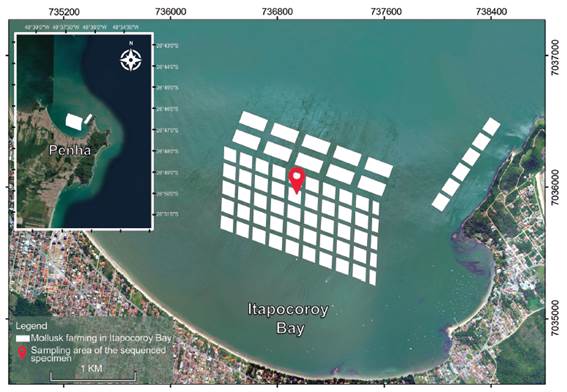
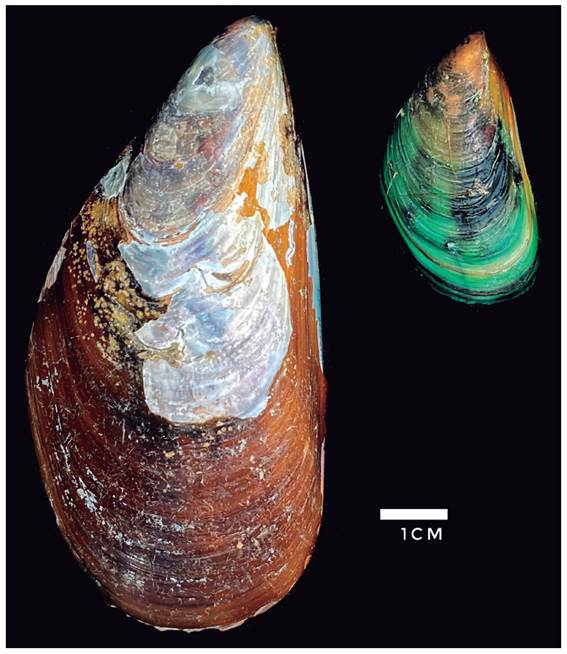
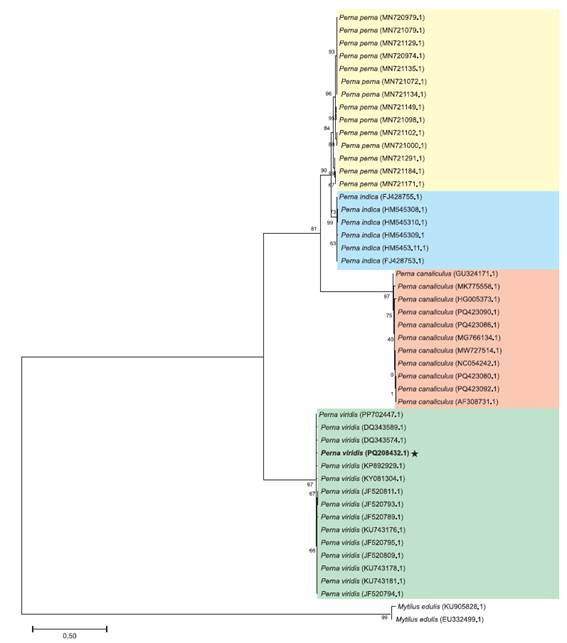
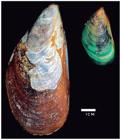
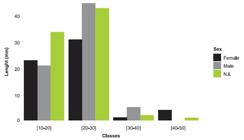
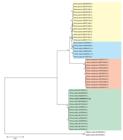
The green mussel Perna viridis, native to the Indo-Pacific, has demonstrated significant invasive potential in various coastal regions worldwide, posing threats to both aquaculture and native ecosystems. In Brazil, mollusk farming is primarily concentrated in Santa Catarina, with an annual production exceeding 13,000 tons. This study aimed to confirm the occurrence of P. viridis in the region, specifically within the mollusk farming park of Itapocoroy Bay. A total of 210 individuals were collected, and molecular analyses confirmed the species’ presence through COI gene amplification, with sequences showing 99.85% similarity to those from China and India. The phylogenetic analysis supported this identification, placing the sample within a highly supported P. viridis clade. Biometric analysis revealed shell lengths ranging from 5.94 mm to 24.72 mm, with 38% of individuals’ sex indeterminate due to the absence of external sexual dimorphism. This represents an 800 km southward range expansion of P. viridis along the Brazilian coast over a six-year period. In Brazil, Perna viridis is likely introduced via ballast water and hull fouling, with secondary dispersal facilitated by coastal vessel movement. Mariculture systems are especially vulnerable due to abundant substrate and resources. The study underscores the importance of early detection to prevent further spread, given P. viridis’ ability to compete with native or commercial species, such as Perna perna, for space and food resources.
Keywords:
Mollusk Farming; Alien Species; Molecular analysis; Biological invasion
 Thumbnail
 Thumbnail
 Thumbnail
 Thumbnail