Surveys of terrestrial gastropods in three nature reserves in southeast Brazil
Abstract
Though only a small fraction of its original natural cover remains, the Atlantic Forest is considered a land snail diversity hotspot. While this biome has been widely explored by malacologists in the past, modern surveys of important conservation areas are lacking. Here we report the results of surveys conducted in two nature reserves and one national park in Espírito Santo state: Parque Nacional Caparaó (a fraction of which is located in Minas Gerais state), Reserva Biológica Córrego do Veado, and Reserva Biológica Sooretama. In total, 15 families of terrestrial gastropods were represented, with 35 species identified, plus another five additional morphospecies that could not be fully determined; 16 species-level taxa in Caparaó, 23 in Córrego do Veado, and 22 in Sooretama. The following are new records for Espírito Santo state (or Minas Gerais state in the case of Caparaó): Rectartemon piquetensis, Anthinus multicolor, Burringtonia labrosa, Rhinus velutinohispidus. Only two non-native species were found, Subulina octona in Sooretama and the marsh slug Deroceras laeve in Caparaó. Anecdotal natural history records are also provided, including depigmented individuals of Leiostracus perlucidus. The importance of local faunal surveys, particularly in preservation areas, cannot be overstated as we endeavour to understand our molluscan fauna.
Keywords:
Espírito Santo; Minas Gerais; Parque Nacional Caparaó; Reserva Biológica Córrego do Veado; Reserva Biológica Sooretama
INTRODUCTION
The Atlantic Forest in Brazil is recognised as a biodiversity hotspot, harbouring a large number of endemic species while suffering from a long history of exploitation; presently, only a small fraction of its original natural cover remains (estimates range from 7% to 36%; e.g., de Lima et al., 2020; Marques et al., 2021; Rosa et al., 2021; Vancine et al., 2024). In its original extension, the Atlantic Forest is thought to have been the second largest rainforest on the planet, with an area of up to 1,500,000 km² covering the eastern coast of South America from the Brazilian states of Rio Grande do Norte to Rio Grande do Sul and as far inland as Paraguay and northeastern Argentina (Marques et al., 2021).
The Atlantic Forest also has a long and complex biogeographic history that resulted in high rates of endemism across several taxa (Mittermeier et al., 2004). This high biodiversity is also unevenly distributed between the northern and southern portions of the Atlantic Forest, with the former having a greater historical biotic exchange with the Amazon rainforest (Sobral-Souza & Lima-Ribeiro, 2017; Faria et al., 2021; Lins-e-Silva et al., 2021; though such faunal connections have not yet been demonstrated in terrestrial gastropods). This distinction influences the patterns of endemism across the biome, and the main biogeographic barrier between northern and southern Atlantic Forest seems to be the Doce River (‘Rio Doce’ in Portuguese), which crosses the states of Minas Gerais and Espírito Santo in Brazil (Sobral-Souza & Lima-Ribeiro, 2017; Carlucci et al., 2021; Faria et al., 2021). The northern part of Espírito Santo state is part of the “Hileia Baiana” region, together with southern Bahia state, and it is acknowledged as the central corridor of the Atlantic Forest, with a diverse biota and high levels of endemism (Faria et al., 2021). As such, the areas surrounding the Doce River are key in understanding the patterns of biodiversity in the Atlantic Forest (Sobral-Souza & Lima-Ribeiro, 2017; Faria et al., 2021).
The high biodiversity of the Atlantic Forest is also reflected in its numerous species of land snails, which are among the world’s most threatened organisms (Lydeard et al., 2004; Régnier et al., 2009, 2015). The Atlantic Forest has been widely explored by past malacologists, which partially explains its high number of taxa (Salvador, 2019b). However, new Atlantic Forest land snail species are still frequently described, and it is estimated that only a fraction of its real biodiversity is currently known (Salvador, 2019b; Machado et al., 2023). Interestingly, the area around the border between the states of Bahia, Minas Gerais and Espírito Santo (part of the “Hileia Baiana” mentioned above) seems to be especially rich in endemic and newly described land snails (Salvador & Cavallari, 2014; Cavallari et al., 2016; Simone & Salvador, 2016; Simone & Amaral, 2021). Nonetheless, modern surveys focusing on land snails from the Atlantic Forest remain scarce, despite their utmost importance as data sources for research in critical areas such as taxonomy, distribution, basic biology, and conservation of land snails.
In this paper, we describe the results of surveys conducted in three key conservation areas in Espírito Santo state, comparing their species composition, reporting new records, and discussing our findings in the broader context of molluscan research and conservation in Brazil. We particularly highlight the importance of this new survey given that: (I) the Atlantic Forest is a biodiversity hotspot and also one of the most threatened ecosystems in Brazil (Marques et al., 2021); (II) land snails are among the world’s most threatened organisms (Lydeard et al., 2004), which is likely true for the little-studied Brazilian species as well (Machado et al., 2023); (III) the land snail biodiversity of this specific area of the Atlantic Forest seems to be especially important both for taxonomy and biogeography, as evidenced by discoveries in the past decade (e.g., Cavallari et al., 2016).
MATERIAL AND METHODS
Surveys were conducted between 2010 and 2012 in three conservation areas in Espírito Santo state, including two nature reserves and one national park, namely: Parque Nacional Caparaó (“Caparaó National Park”, henceforth ‘Caparaó’, a fraction of which is located in Minas Gerais state), Reserva Biológica Córrego do Veado (“Córrego do Veado Biological Reserve”, henceforth ‘Córrego do Veado’), Reserva Biológica Sooretama (“Sooretama Biological Reserve”, henceforth ‘Sooretama’). Collection permits were granted by Ministério do Meio Ambiente (MMA), Instituto Chico Mendes de Conservação da Biodiversidade (ICMBio) and Sistema de Autorização e Informação em Biodiversidade (SISBIO), with the following licence numbers: 13425-1, 25036-1 and -2, 26690-1, 30657-1 to -7, 40153-1 and -2.
Caparaó has an area of 31,762 hectares and has predominantly “tropical highland” weather, characterised by rainy summers (November-January) and dry winters (June-August), with mean annual temperatures between 19 and 22℃ (maximum 36℃ and minimum -4℃ on the highest peaks; ICMBio, 2025). The landscape is a series of tabular hills with characteristic flattened forms, intersected by broad valleys. The area is partly conserved, but the vegetation is almost entirely secondary.
Córrego do Veado is located in the northernmost Espírito Santo state and has an area of 2,800 hectares of Atlantic Forest. Sooretama has 24,000 hectares and is located in the northern part of the state as well. In both Córrego do Veado and Sooretama areas, the climate is hot and humid tropical, with a rainy season in the summer and a dry season in the winter. The vegetation (Atlantic Forest) is classified as a dense ombrophilous forest, characterised by an evergreen forest of hydrophilic character, formed by two or more overlapping layers.
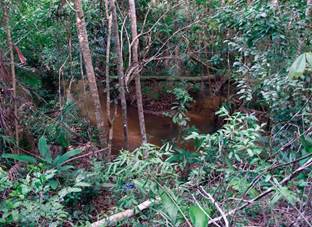
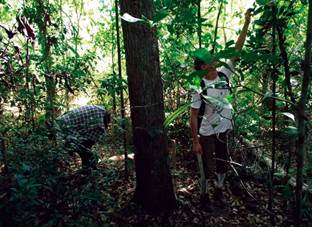
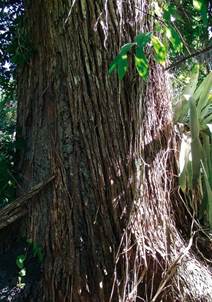
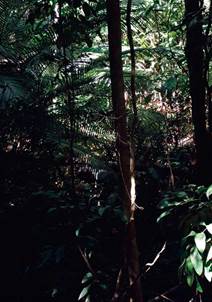
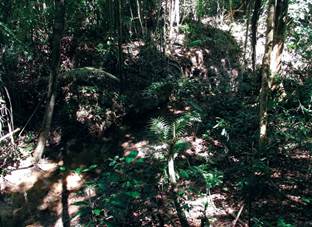
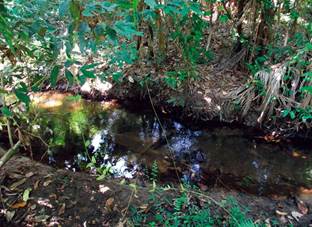
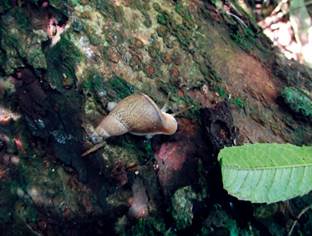
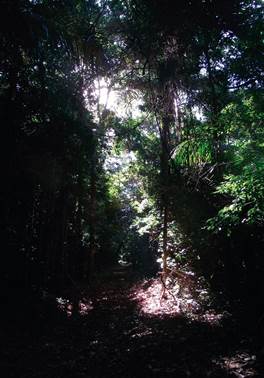
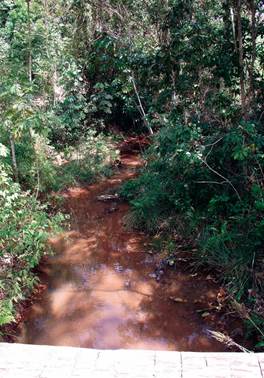
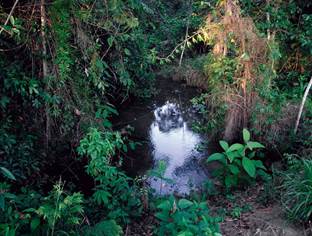
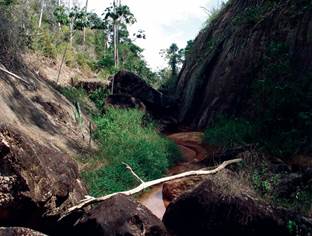
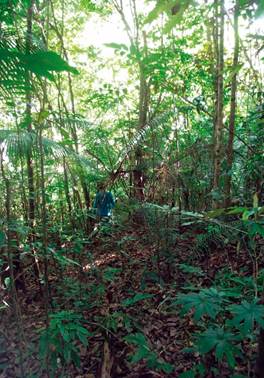
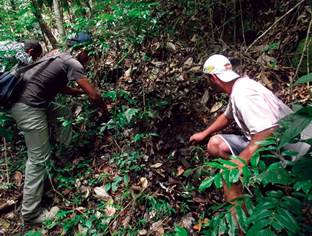
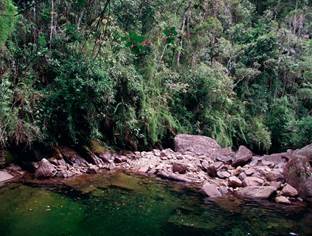
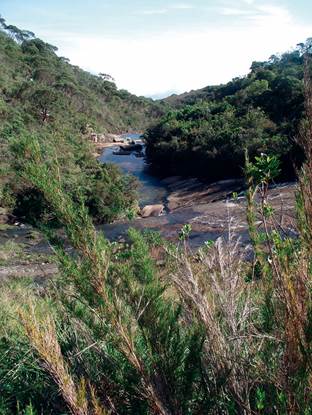
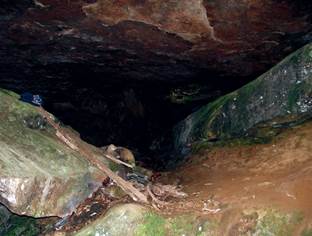
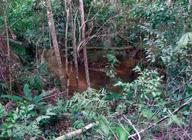
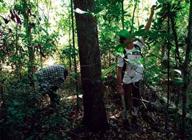
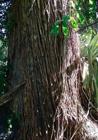
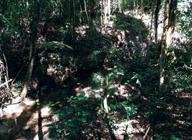
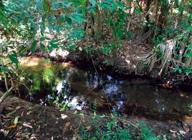
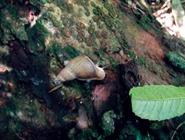
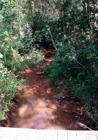
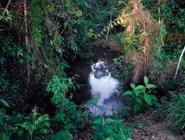
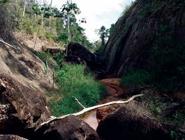
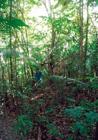
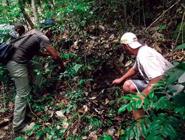
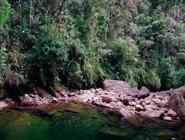
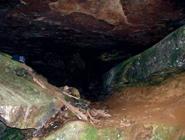
Table 1 summarises the areas visited during the surveys in each main location (Caparaó, Córrego do Veado, and Sooretama), including coordinates, altitude, and specific dates of each visit. Collection stations were chosen in each location in a manner to include both the internal area of the reserves/park and more peripheral areas as well. A visual search was conducted at each station, with the aid of sieves (mesh size 0.3 mm). Gastropod specimens were collected by hand, with the help of forceps. Selected individuals were photographed in vivo in the field or in the laboratory. Supplementary File 1 has photographs exemplifying the study sites and habitats in each main location.
Live animals were euthanized and preserved partly in ethanol 70% (more favourable preservation mode for anatomical studies) and partly in ethanol 96% (for molecular studies). Empty shells were cleaned and preserved dry. The specimens were deposited in the malacological collection of the Museu de Zoologia da Universidade de São Paulo (MZSP; São Paulo, Brazil). See Supplementary File 2 for a full list of specimen lots, their registration numbers, and further collection data.
Identification of the specimens was done to species level (with a few exceptions, see below) using (1) specialized literature, including original descriptions, the catalogue of Simone (2006), and further taxonomic studies and revisions (e.g., references in Table 2); and (2) comparative specimens, available in the MZSP collection or through high quality photographs (including type specimens). The classification scheme used here follows the Brazilian checklist of terrestrial gastropods (Salvador et al., 2024).
List of species found, presence in each surveyed location (marked by an ‘X’), and information on the species’ known distribution (with references). An ‘O’ indicates that individuals were observed in situ, but voucher material was not preserved. An interrogation mark ‘?’ means that specimens belonging to that genus were found but could not be allocated to one species with confidence due to being juvenile or fragmentary. Country abbreviations: ARG, Argentina; BRA, Brazil; PRY, Paraguay; URY, Uruguay. Brazilian state abbreviations: AL, Alagoas; BA, Bahia; ES, Espírito Santo; MG, Minas Gerais; PB, Paraíba; PE, Pernambuco; PI, Piauí; RJ, Rio de Janeiro; SC, Santa Catarina; SP, São Paulo.
A few specimens from the present material have been used in other studies to obtain genetic data (Salvador et al., 2023b). In the present study, we selected further specimens for DNA barcoding, including specimens of Sanniostracus obliquus and Solaropsis planior. While further suitable specimens were available in the present material for DNA sequencing, those species either already had published sequences in the literature (e.g., Leiostracus perlucidus) or the shells would need to be broken to reach the soft tissue (e.g., Burringtonia spp.), which we preferred not to do to singleton specimens. The targeted markers were: the COI barcoding fragment, the mitochondrial 16S marker, and the nuclear H3 and ITS2+28S markers, which have been commonly used in previous phylogenetic studies (Breure & Romero, 2012; Calcutt et al., 2020; Salvador et al., 2023b; Breure et al., 2024; Rosa et al., 2025). The methodology for DNA extraction, amplification, sequencing, proofing, and assembly follows Calcutt et al. (2020) and Salvador et al. (2023b). Sanger sequencing was done at Macrogen Europe (Amsterdam, The Netherlands); sequences were submitted to GenBank (Table 3) after proofing and assembly using Geneious Prime (v.2025, Biomaters Ltd.).
Species from Caparaó and Sooretama for which genetic data are available, either already published or obtained during the present study. *Identified as Pseudoxychona dulcis (Ihering, 1912) in Salvador et al. (2023b), which is very likely a synonym of P. pileiformis (cf., Simone, 2006).
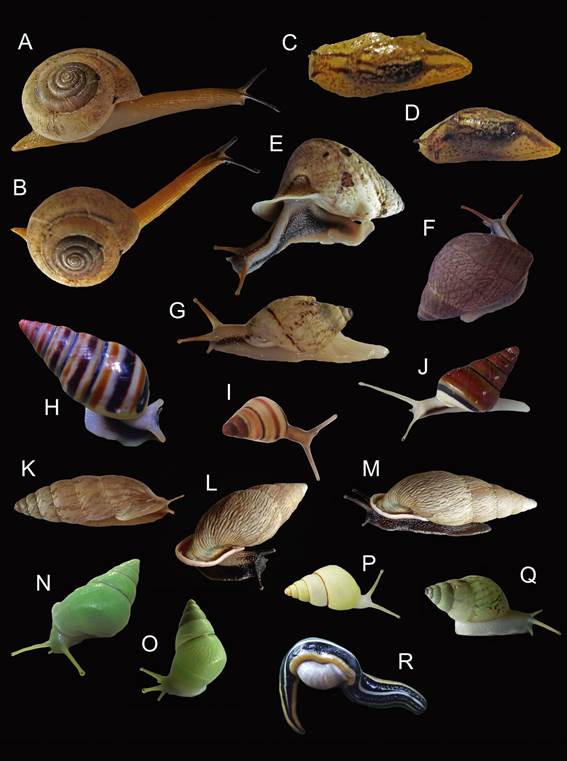
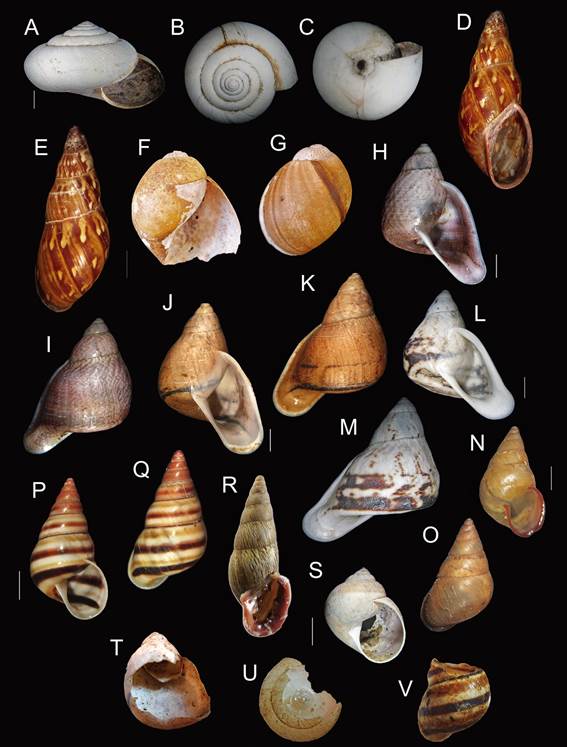
In the present study, we provide photographs of live individuals taken in the field or the base camp during the collection trips (Fig. 1), as images of live animals are typically absent from the academic literature and useful details of the soft body (colour patterns, textures, etc.) for species identification often remain undocumented and unused (cf., Rosa et al., 2022; Breure et al., 2024). We also document shells of some species of greater interest (Fig. 2), such as those that are not often figured in the literature or are known mostly by eroded shells, as these images should be useful for future studies.
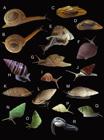
Photographs of live snails taken during fieldwork. Not to scale. (A-B) Rectartemon piquetensis; (C-D) Omalonyx cf. convexus; (E-G) Adult and juvenile Cochlorina aurisleporis; (H-I) Adult and juvenile Sanniostracus cf. obliquus, variety 6 of Dohrn (1883); (J) Juvenile Sanniostracus poecilogramma; (K) Bahiensis bahiensis; (L-M) Burringtonia labrosa; (N-O) Leiostracus perlucidus; (P-Q) Individuals of Leiostracus perlucidus showing depigmentation; (R) Cratera flatworm preying upon a Helicina sp.
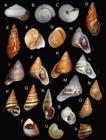
Shells of species of interest. (A-C) Rectartemon piquetensis MZSP 106561; (D-E) Anthinus multicolor MZSP 106521; (F-G) Megalobulimus sp. (potentially M. ovatus (O.F. Müller, 1774)) MZSP 106514; (H-I) Cochlorina aurisleporis MZSP 106903; (J-K) Cochlorina aurisleporis MZSP 106621; (L-M) Cochlorina cf. lateralis MZSP 106715; (N-O) Pseudoxychona polytricha MZSP 106911; (P-Q) Sanniostracus cf. obliquus [variety 6 of Dohrn (1883)] MZSP 106618; (R) Burringtonia labrosa MZSP; (S) Rhinus velutinohispidus MZSP 106690; (T-V) Examples of shells of Cochlorina, Rectartemon, and Sanniostracus showing breakage patterns typical during predation by terrestrial vertebrates. Scale = 5 mm.
RESULTS AND DISCUSSION
In total, 15 families were represented, with 35 species identified (Table 2), plus five additional morphospecies that could not be fully identified due to the specimens being juveniles or too fragmentary, but which are deemed not to Belong to any of the other taxa.
Diversity
In Caparaó, 16 species-level taxa were found; in Córrego do Veado, 23; and in Sooretama, 22. Such numbers are apparently low, but are equivalent to numbers found in other similar Atlantic Forest areas in southeast Brazil: e.g., Rio de Janeiro (Santos & Monteiro, 2001; Rangel et al., 2021), Minas Gerais (Castro & Silva, 2001), and Espírito Santo (Silva & Castro, 2003). The number is markedly low, however, when compared to a survey in an Atlantic Forest reserve in northeast Brazil, which recovered over 40 species (Salvador et al., 2018). The lower number of species could be related to: (1) the history of exploitation and deforestation in Espírito Santo state (and southeast Brazil in general), with mostly secondary forest available in the surveyed areas. Thus, a potentially depauperate fauna would be the norm in these areas, though that is difficult to demonstrate with the scarce survey data available in the literature. Still, some areas in southeast Brazil with a worst record of deforestation can have a somewhat inflated species total due to a greater number of anthropochoric and non-native species (e.g., Rangel et al., 2021). (2) Methodological issues, as very few specimens and species of microgastropods were found (e.g., Achatinidae, Scolodontidae, Pupilloidea, Punctoidea, Euconulidae) in our surveys (Table 2), since leaf litter and soil sampling were not thoroughly conducted. This is particularly true for Sooretama, where a higher species diversity was expected, given the size of the reserve, but where no microgastropods were collected (Table 2). Still, microgastropods have been historically undersampled in most studies in Brazil, which have favoured larger and more colourful snails and thus have likely underestimate local diversity (see Salvador, 2019b; Machado et al., 2023). Case in point, a recent survey in Sooretama (Esteves et al., 2025) recovered 34 species in total, of which 12 are small animals belonging to Achatinidae, Scolodontidae, Punctoidea, and Euconulidae. (3) Chance. Even though the trips were scheduled in spring and summer (the rainy season, when snails and slugs are more active and thus, more easily found; cf., Esteves et al., 2025), the season was unexpectedly extremely dry, which has a notable impact on how many gastropods can be found (e.g., Silva et al., 2021).
When comparing the surveyed areas, the most notable difference (Table 2) was the reduced diversity found in Caparaó, which was certainly an effect of the unusually dry period during the collection trips. This is particularly evident in the Orthalicoidea diversity; this superfamily is the most diverse in Brazil (Salvador, 2019b; Machado et al., 2023; Salvador et al., 2024) and is represented by several species in Córrego do Veado and Sooretama, while only three species were found in Caparaó (Table 2). Even so, members of Odontostomidae and Strophocheilidae, as well as Thaumastus taunaisii, which are large animals overall, were only found in Caparaó despite the dry spell (Table 2). As mentioned above, few microgastropods (e.g., Achatinidae, Scolodontidae, Punctoidea) were collected due to methodological shortcomings, and no microgastropod whatsoever was collected in Sooretama. Euconulidae, a relatively commonly found family of microgastropods, was not found in any of the areas (though it is known from Sooretama; Esteves et al., 2025). The semi-slug Omalonyx cf. convexus was only found in Sooretama, although that could also be a methodological bias, e.g., a reflection of the type of (micro-)habitats surveyed.
Even though the sample from Caparaó was reduced, some differences in faunal composition (i.e., exclusive species) can already be observed in relation to the other two areas (Table 2). Caparaó is located to the south of Doce River, while the other areas are to the north. As mentioned above, this river is thought to act as a geographic barrier that leads to faunal differences between the two regions of the Atlantic Forest (Sobral-Souza & Lima-Ribeiro, 2017; Carlucci et al., 2021; Faria et al., 2021).
New records
Some of the species found during our surveys represent new records for Espírito Santo state (or Minas Gerais state in the case of Caparaó, which borders the two states): Rectartemon piquetensis, Anthinus multicolor, Burringtonia labrosa, Rhinus velutinohispidus. Rectartemon piquetensis (Figs. 1A, B and 2A-C) and Burringtonia labrosa (Figs. 1L, M and 2R) are known from Atlantic Forest areas in neighbouring states (Table 2), so it is not surprising that they were found in our surveys in Espírito Santo state. Likewise, Rhinus velutinohispidus (Fig. 2S) is known only from Bahia state, but its occurrence in Sooretama (Table 2), in the northern portion of Espírito Santo, is also unsurprising. Still, not much is known about this species in comparison to other similar Rhinus spp. (Simone & Salvador, 2016; Salles & Oliveira, 2022). Anthinus multicolor is a more complex case: we found a morphotype that is commonly attributed to this species (Fig. 2D, E) in Caparaó, on the border between Minas Gerais and Espírito Santo states. This species is known from Espírito Santo, Rio de Janeiro and São Paulo states, but not Minas Gerais (Table 2). However, it is important to highlight it here because Simone (2022) remarked that “real” A. multicolor is restricted to Rio de Janeiro and other records of the species are mistaken; he could not find the type material of the species for consultation to corroborate his hypothesis, so the taxonomy of this species (or species complex) will need further study.
Problematic taxa
A few species were left with “open” identifications, as their identity could not be determined with certainty: Omalonyx cf. convexus, Cochlorina cf. lateralis, Solaropsis cf. brasiliana, and Sanniostracus cf. obliquus. No specimen of Omalonyx cf. convexus was collected; thus, our identification was based on field observations alone (Fig. 1C, D) and remains tentative.
Cochlorina cf. lateralis was found in both Córrego do Veado and Sooretama; our specimens (Fig. 2L, M) are morphologically closest to C. lateralis, an endemic species to Espírito Santo (Table 2). However, some of its morphological features do not conform to what is known of that species (e.g., Simone, 2006), namely, a more abapically inclined aperture, a more attenuated angulation instead of a marked keel, and the spire apex having a black colour. The specimens seem more like an intermediate between C. aurisleporis (Fig. 2H-K) and C. lateralis rather than C. lateralis proper. As we do not know whether this represents simple morphological variation, a new taxon, or a forgotten synonymised taxon, we prefer to leave our identification in open nomenclature until these species can be revised. Finally, our specimens identified as Solaropsis cf. brasiliana conform to other shells typically assigned to this species (e.g., Simone, 2006) and the type specimens (housed in the Muséum national d’Histoire naturelle, Paris, France). However, the species lacks a precise type locality in Brazil, making a definitive identification uncertain. Thus, we prefer to leave our specimens in open nomenclature.
Our specimens of Sanniostracus Salvador, Silva & Cavallari, 2023 belong to two species and require further clarification. Individuals of this genus from Córrego do Veado and Sooretama were identified as S. carnavalescus Simone & Salvador, 2016 in the study that described this species from Nanuque, Minas Gerais, though they were not included in the type series of the species (Simone & Salvador, 2016). After the revision of Leiostracus obliquus by Macedo et al. (2023) and the phylogenetic study of Orthalicoidea of Salvador et al. (2023b) that established the genus Sanniostracus, it became clear that there was an issue with the identification of the additional material of Simone & Salvador (2016). Salvador et al. (2024) then reinstated S. poecilogramma for the so-called “red morph” of S. carnavalescus, which is known to occur from Minas Gerais (Ancey, 1901) and Sooretama in Espírito Santo (Simone & Salvador, 2016; this study; Fig. 1J). The specimens from Córrego do Veado (Fig. 1H, I and 2P, Q), however, belong to what is currently understood as Sanniostracus obliquus. That is, they do not belong to the typical morph (as defined by the species original description and lectotype; Reeve, 1849; Dohrn, 1883 [variety 2]; Breure, 1978; Macedo et al., 2023); instead, they belong to the multi-banded ‘variety 6’ described by Dohrn (1883). Macedo et al. (2023) considered all of Dohrn’s varieties (which in their interpretation included S. carnavalescus, S. poecilogramma, and the long-synonymised Bulimus jeffreysi Pfeiffer, 1852) to be synonyms of nominate obliquus. Although there is currently no genetic data available for the nominate taxon, the data from the others shows a more complex story. There are genetic sequences available for S. carnavalescus and S. poecilogramma (Salvador et al., 2023b), and here we add data on ‘variety 6’ of S. obliquus from Córrego do Veado (Table 3). The ITS2+28S genetic sequence of ‘variety 6’ is a 99.8% match to the others, and the H3 is, respectively, a 99.3% and 99.6% match. However, the COI sequences have only 82.5% and 84.2% similarity to those species, respectively. Thus, it is clear that ‘variety 6’ is a distinct taxon, which is in line with the conchological differences. Whether ‘variety 6’ really is the same as nominate obliquus or a still-unnamed species remains to be defined when sequences of the typical morph become available. For that reason, we leave our identification in open nomenclature, as Sanniostracus cf. obliquus (Reeve, 1849) [variety 6 of Dohrn (1883)].
One notable missing species from our surveys was Pseudoxychona faerie (Salvador & Cavallari, 2014), which could not be found. This species was described from a single shell from a museum collection, collected in 1914 in the Doce River area, and no further specimens are known (Salvador & Cavallari, 2014). We hoped that at least the survey in Sooretama would produce some specimens, given its proximity to Doce River, but that did not happen. Thus, whether this species is still alive in the wild remains unknown for now.
The species list of Esteves et al. (2025) for Sooretama, while overall similar to ours regarding the macrogastropods, has meaningful differences (besides using outdated classification). Their study was more ecological, assessing diversity and abundance of snails throughout the seasons and across different areas of the reserve, and not focusing on precise species determination. Thus, we believe that some of their species identifications are problematic, some even quite unusual, and should be revisited. To keep the flow of the text, we discuss these issues in more detail in the Appendix. Still, it is worth noting that, besides the microgastropods mentioned above, they found Orthalicus prototypus Pilsbry, 1899, a large snail that was not observed during our surveys. Notably (and thankfully, if correct), they did not find the non-native Subulina octona (see below).
Non-native species
Of all species found during our surveys, only two are non-native: (1) Subulina octona, native to Central America and widespread in South America (Darrigran et al., 2020), was observed in Sooretama. This species is hypothesised to be a fierce competitor that can outperform native snails due to its sheer abundance (e.g., Sherley, 2000), but no studies have actually demonstrated this so far. While common in Brazil, very few specimens of S. octona were observed in the present survey. (2) The marsh slug Deroceras laeve (Müller, 1774) was observed in Caparaó National Park, which is under more anthropic influence. Only one individual slug was observed during our survey. The survey was conducted over a decade ago, and there are a few recent (2023) records of D. laeve from nearby municipalities in the citizen science online platform iNaturalist (https://www.inaturalist.org). While D. laeve can impact agriculture and be intermediate hosts to nematodes (Maurer et al., 2002), as many other slugs, it is not known to impact the native fauna so far, as it is mostly restricted to disturbed environments. Still, its presence within a protected area (no matter how disturbed) is a cause for concern and future surveys should pay closer attention to exotic species in the area.
Natural history observations
Some anecdotal observations deserve further mention. A notable case involves the genus Burringtonia: B. pantagruelina was found only in Córrego do Veado, while B. labrosa was found only in Sooretama (Table 2). Both species are distributed from Bahia to Rio de Janeiro (Table 2), and it is unknown why each species seems to inhabit only one of the surveyed reserves; we know too little of these animals’ biology at the moment to postulate a hypothesis. Either way, based on known conchological features, we also cannot discard the possibility that these two species are synonyms.
Another interesting observation is a predation event: a flatworm of the genus Cratera Carbayo et al., 2013 (Geoplanidae) feeding on a Helicina snail (Fig. 1R). Flatworms seem to be an important class of predators of land snails in Brazil, though records of predation are scarce (Rosa et al., 2022) and knowledge on predator-prey interactions still incipient (e.g., Boll et al., 2016, 2018). Although no predation by vertebrates was observed, shells with breakage patterns indicative of such predation (cf., Salvador et al., 2018) were commonly found (e.g., Fig. 2T-V).
A notable find was two juvenile individuals of Leiostracus perlucidus lacking the typical green pigmentation of the soft body (the shell is whitish translucent), one from Córrego do Veado and one from Sooretama. These individuals display a certain degree of depigmentation, with an overall more whitish head-foot, with a more attenuated (and, in one specimen, more uneven) green colour of the visceral mass (Fig. 1P, Q; compare to the usual green individuals in Fig. 1N, O). The differences in depigmentation patterns could indicate two distinct conditions or two different degrees of the same condition. Depigmented or unpigmented individuals are known in multiple other land snail species; they are more rarely found in nature, potentially due to stronger selection against them (e.g., Yamagishi et al., 2020; Salvador et al., 2025; Forsyth et al., 2015), but are commonly observed in lineages kept as pets, such as the giant African land snails Lissachatina fulica (Bowdich, 1822) and Archachatina marginata (Swainson, 1821). Such individuals are typically called “albinos” in the malacological literature and in the pet trade, even though the term might not be entirely appropriate in many cases, as different types of depigmentation (of the soft body and/or shell) might be involved.
Genetic data
Since their collection in 2012, some specimens from these surveys were used to obtain genetic data for other studies by some of the present authors (Salvador et al., 2023b). To integrate the data and make it more easily findable for future researchers, we list those species in Table 3, alongside the GenBank accession numbers for the sequences of each genetic marker. To those, we add the data of Solaropsis planior and the colour morph representing ‘variety 6’ of Sanniostracus obliquus (Reeve, 1849) sensu Dohrn (1883).
CONCLUSION
The importance of faunal surveys cannot be overstated. While we have a reasonable (albeit still incomplete) grasp of the taxonomy and diversity of terrestrial gastropods in southeast Brazil, our knowledge of their distribution, abundance, and basic biology is still incipient (Salvador, 2019b; Machado et al., 2023). We are still on a level in which such basic science must be funded, and field studies conducted, if we aim to better understand our native molluscan fauna.
DATA AVAILABILITY:
The authors confirm that the data supporting the findings of this study are available within the article and its supplementary material. Genetic sequences are available from GenBank.
Acknowledgments:
We are grateful to MMA, ICMBio and SISBIO for the collection permits; to Luiz R.L. Simone (MZSP) for receiving the voucher specimens of this study in the MZSP collection; to Simone Lira (MZSP) for the help with accessing the material and metadata; to Piter K. Boll (MZSP) for the flatworm identification; and to the two anonymous reviewers for the truly helpful comments and suggestions.
REFERENCES
- Ancey, C.F. 1901. Notes sur divers mollusques de l’Amérique du Sud accompangnées des descriptions d’espèces nouvelles. Le Naturaliste, Serie 2, 15(23): 92-93.
- Araujo, J.L.B. & Breure, A.S.H. 1977. Notes on Bulimulidae (Gastropoda, Euthyneura), 7. Anatomy and histology of Simpulopsis (Simpulopsis) miersi Pfeiffer, 1856. Zoologische Mededelingen, 52: 19-25.
-
Arruda, J.O. & Thomé, J.W. 2008. Revalidation of Omalonyx convexus (Heynemann 1868) and emendation of the type locality of Omalonyx unguis (Orbigny 1837) (Mollusca: Gastropoda: Pulmonata: Succineidae). Archiv für Molluskenkunde, 137(2): 159-166. https://doi.org/10.1127/arch.moll/0003-9284/137/159-166.
» https://doi.org/10.1127/arch.moll/0003-9284/137/159-166 -
Birckolz, C.J.; Salvador, R.B.; Cavallari, D.C. & Simone, L.R.L. 2016. Illustrated checklist of newly described (2006-2016) land and freshwater Gastropoda from Brazil. Archiv für Molluskenkunde, 145: 133-150. https://doi.org/10.1127/arch.moll/145/133-150.
» https://doi.org/10.1127/arch.moll/145/133-150 -
Boll, P.K. & Leal-Zanchet, A.M. 2016. Preference for different prey allows the coexistence of several land planarians in areas of the Atlantic Forest. Zoology, 119(3): 162-168. https://doi.org/10.1016/j.zool.2016.04.002.
» https://doi.org/10.1016/j.zool.2016.04.002 -
Boll, P.K. & Leal-Zanchet, A.M. 2018. Diversity out of simplicity: interaction behavior of land planarians with co occurring invertebrates. Zoology, 126: 110-118. https://doi.org/10.1016/j.zool.2017.11.005.
» https://doi.org/10.1016/j.zool.2017.11.005 - Breure, A.S.H. 1978. Notes and descriptions of Bulimulidae (Mollusca, Gastropoda). Zoologische Verhandelingen, 164: 1-255.
-
Breure, A.S.H. & Romero, P.E. 2012. Support and surprises: molecular phylogeny of the land snail superfamily Orthalicoidea using a three-locus gene analysis with a divergence time analysis and ancestral area reconstruction (Gastropoda: Stylommatophora). Archiv für Molluskenkunde, 141: 1-20. https://doi.org/10.1127/arch.moll/1869-0963/141/001-020.
» https://doi.org/10.1127/arch.moll/1869-0963/141/001-020 -
Breure, A.S.H.; Barrientos, Z.L.; Monge-Nájera, J.; Salvador, R.B. & Robinson, D.G. 2024. Is being ‘blue’ being different? The status of Antidrymaeus L. Germain, 1907 (Mollusca, Gastropoda, Bulimulidae), with notes on miscellaneous species of Drymaeus Albers, 1850 and Mesembrinus Albers, 1850. Archiv für Molluskenkunde, 153(2): 135-162. https://doi.org/10.1127/arch.moll/153/135-162.
» https://doi.org/10.1127/arch.moll/153/135-162 -
Calcutt, J.; Cuezzo, M.G.; Jackson, M. & Salvador, R.B. 2020. Phylogenetic relationships and classification of Solaropsidae (Gastropoda: Stylommatophora). Archiv für Molluskenkunde, 149(2): 181-193. https://doi.org/10.1127/arch.moll/149/181-193.
» https://doi.org/10.1127/arch.moll/149/181-193 - Carlucci, M.B.; Marcilio-Silva, V. & Torezan, J.M. 2021. The Southern Atlantic Forest: use, degradation, and perspectives for conservation. In: Marques, M.C.M. & Grelle, C.E.V. (Eds.). The Atlantic Forest Cham, Springer. p. 91-111.
- Castro, G.A. & Silva, C.C. 2001. Estudo preliminar dos moluscos terrestres no Parque Estadual do Ibitipoca - MG. Bioikos, 15(2): 99-102.
-
Cavallari, D.C.; Rosa, R.M.; De Luca, A.C.; Silva, F.A.; Ribeiro, F.B. & Salvador, R.B. 2024. Taxonomic synopsis of land snails (Mollusca: Gastropoda) from the Brazilian Midwest deposited in the Coleção Malacológica de Ribeirão Preto, University of São Paulo, Brazil. Journal of Conchology, 45(2): 368-381. https://doi.org/10.61733/jconch/4531.
» https://doi.org/10.61733/jconch/4531 - Cavallari, D.C.; Salvador, R.B. & Simone, L.R.L. 2016. A possible land snail diversity hotspot in Bahia state, Brazil. Tentacle, 24: 14-16.
-
Coscarelli, D.; Montresor, L.C.; Russo, P.; Melo, A.L. & Vidigal, T.H.D.A. 2018. Predicting the distribution of Omalonyx (Mollusca: Pulmonata: Succineidae) from literature review, museum data bases and new sampling efforts in Brazil. Biota Neotropica, 18: 1-20, e20170409. https://doi.org/10.1590/1676-0611-bn-2017-0409.
» https://doi.org/10.1590/1676-0611-bn-2017-0409 -
Cuezzo, M.G.; Lima, A.P. & Santos, S.B. 2018. Solaropsis brasiliana, anatomy, range extension and its phylogenetic position within Pleurodontidae (Mollusca, Gastropoda, Stylommatophora). Anais da Academia Brasileira de Ciências, 90(3): 2753-2765. https://doi.org/10.1590/0001-3765201820170261.
» https://doi.org/10.1590/0001-37652018201 -
Daglio, E.D.; de Lucía, M.; Gomes, S.R. & Gregoric, D.E.G. 2020. First records of the bean-slug Sarasinula plebeia (Gastropoda: Veronicellidae) in Argentina. Papéis Avulsos de Zoologia, 60(47): 1-5, e20206047. https://doi.org/10.11606/1807-0205/2020.60.47.
» https://doi.org/10.11606/1807-0205/2020.60.47 -
Darrigran, G.; Agudo-Padrón, I.; Baez, P.; Belz, C.; Cardoso, F.; Carranza, A.; Collado, G.; Correoso, M.; Cuezzo, M.G.; Fabres, A.; Gutiérrez Gregoric, D.E.; Letelier, S.; Ludwig, S.; Mansur, M.C.; Pastorino, G.; Penchaszadeh, P.; Peralta, C.; Rebolledo, A.; Rumi, A.; Santos, S.; Thiengo, S.; Vidigal, T. & Damborenea, C. 2020. Non-native mollusks throughout South America: emergent patterns in an understudied continent. Biological Invasions, 22: 1-19. https://doi.org/10.1007/s10530-019-02178-4.
» https://doi.org/10.1007/s10530-019-02178-4 -
de Lima, R.A.F.; Oliveira, A.A.; Pitta, G.R.; de Gasper, A.L.; Vibrans, A.C.; Chave, J.; ter Steege, H. & Prado, P.I. 2020. The erosion of biodiversity and biomass in the Atlantic Forest biodiversity hotspot. Nature Communications, 11: 6347. https://doi.org/10.1038/s41467-020-20217-w.
» https://doi.org/10.1038/s41467-020-20217-w - Delannoye, R.; Charles, L.; Pointier, J.-P. & Massemin, D. 2015. Mollusques continentaux de La Martinique. Non-marine Molluscs of Martinique, Lesser Antilles Mèze, Biotope. 328p.
- Dohrn, H. 1883. Beitrag zur kenntniss der conchylienfauna des östlichen Brasiliens. Jahrbücher der Deutschen Malakozoologischen Gesellschaft, 10: 346-356.
-
Esteves, R.A.; Santos, S.B. & Rocha, C.F.D. 2025. Seasonal variation and patterns in the land snail community along a fine-scale humidity gradient in an Atlantic Rainforest remnant, Southeastern Brazil. Brazilian Journal of Biology, 85: 1-9, e287884. https://doi.org/10.1590/1519-6984.287884.
» https://doi.org/10.1590/1519-6984.287884 -
Faria, D.; Delabie, J.H.C. & Dias, M.H. 2021. The Hileia Baiana: An Assessment of Natural and Historical Aspects of the Land Use and Degradation of the Central Corridor of the Brazilian Atlantic Forest. In: Marques, M.C.M. & Grelle, C.E.V. (Eds.). The Atlantic Forest Cham, Springer. p. 63-90. https://doi.org/10.1007/978-3-030-55322-7_4.
» https://doi.org/10.1007/978-3-030-55322-7_4 -
Fernandes, M.R.; Alexandre, G.L. & Salgueiro, F. 2025. Shells, teeth and DNA: land snails from an urban forest in Rio de Janeiro, SE Brazil. Journal of Natural History, 59 (1-4): 129-169. https://doi.org/10.1080/00222933.2024.2446580.
» https://doi.org/10.1080/00222933.2024.2446580 -
Figueiras, A. 1963. Enumeración sistemática de los moluscos terrestres del Uruguay. Comunicaciones de la Sociedad Malacológica del Uruguay, 1(4): 79-96. https://doi.org/10.5962/p.420979.
» https://doi.org/10.5962/p.420979 -
Fontenelle, J.H. & Salvador, R.B. 2023. A new species of Megalobulimus from the early Holocene of southeastern Brazil (Gastropoda, Strophocheilidae). Folia Malacologica, 31: 1-8. https://doi.org/10.12657/folmal.031.001.
» https://doi.org/10.12657/folmal.031.001 - Forsyth, R.G.; Nicolai, A.; Shoobs, N.F.; Ali, R.F. & Salvador, R.B. 2025. A split decision: molecular and biogeographical evidence support species-level status of Anguispira kochi and Anguispira occidentalis (Stylommatophora, Discidae). ZooKeys, 1261: 241-260.
- Hylton Scott, M.I. 1948. Moluscos del noroeste Argentino. Acta Zoológica Lilloana, 6: 241-274.
-
Instituto Chico Mendes de Conservação da Biodiversidade (ICMBio). 2025. Parque Nacional do Caparaó Available: https://www.icmbio.gov.br/parnacaparao/natureza-local.html Access: 02/05/2025.
» https://www.icmbio.gov.br/parnacaparao/natureza-local.html - Jurberg, P.; Barros, H.M.; Gomes, L.A.L. & Coelho, A.S. 1988. Superfamília Bulimuloidea do Brasil. Bulimulidae: Thaumastus (Thaumastus) taunaisii (Férussac, 1822), com dados biológicos e aspectos comportamentais (Mollusca, Gastropoda, Pulmonata). Boletim do Museu Nacional, 317: 1-40.
-
Lins-e-Silva, A.C.B.; Ferreira, P.S.M. & Rodal, M.J.N. 2021. The North-Eastern Atlantic Forest: Biogeographical, Historical, and Current Aspects in the Sugarcane Zone. In: Marques, M.C.M. & Grelle, C.E.V. (Eds.). The Atlantic Forest Cham, Springer. p. 45-61. https://doi.org/10.1007/978-3-030-55322-7_3.
» https://doi.org/10.1007/978-3-030-55322-7_3 -
Lydeard, C.; Cowie, R.H.; Ponder, W.F.; Bogan, A.E.; Bouchet, P.; Clark, S.A.; Cummings, K.S.; Frest, K.J.; Gargominy, O.; Herbert, D.G.; Hershler, R.; Perez, K.E.; Roth, B.; Seddon, M.; Strong, E.E. & Thompson, F.G. 2004. The Global Decline of Nonmarine Mollusks. BioScience, 54(4): 321-331. https://doi.org/10.1641/0006-3568(2004)054[0321:TGDONM]2.0.CO;2.
» https://doi.org/10.1641/0006-3568(2004)054[0321:TGDONM]2.0.CO;2 -
Macedo, M.I.P.F.; Ovando, X.M.C.; D’ávila, S. 2023. Redescription and geographical distribution of Leiostracus obliquus (Reeve, 1849) (Mollusca, Gastropoda, Simpulopsidae). ZooKeys, 1167: 223-240. https://doi.org/10.3897/zookeys.1167.98707.
» https://doi.org/10.3897/zookeys.1167.98707 -
Machado, F.M.; Miranda, M.S.; Salvador, R.B.; Pimenta, A.D.; Côrtes, M.O.; Gomes, J.A.J.; Miyahira, I.C.; Agudo-Padrón, I.; Oliveira, C.D.C.; Caetano, C.H.S.; Coelho, P.R.S.; D’ávila, S.; Arruda, E.P.; Almeida, S.M.; Gomes, S.R.; Alvim, J.; Filho, H.G.; Ferreira-Júnior, A.L.; Marques, R.C.; Martins, I.; Souza, L.S.; Arruda, J.O.; Cavallari, D.C.; Santos, S.B.; Pedro, N.C.; Salles, A.C.A.; Dornellas, A.P.S.; Lima, T.C.; Amaral, V.S.; Silva, F.S.; Passos, F.D.; Thiengo, S.S.; Leite, T.S. & Simone, L.R.L. 2023. How many species of Mollusca are there in Brazil? A collective taxonomic effort to reveal this still unknown diversity. Zoologia, 40 (Special issue animal life Brazil): 1-43, e23026. https://doi.org/10.1590/s1984-4689.v40.e23026.
» https://doi.org/10.1590/s1984-4689.v40.e23026 -
Marques, M.C.M.; Trindade, W.; Bohn, A. & Grelle, C.E.V. 2021. The Atlantic Forest: An Introduction to the Megadiverse Forest of South America. In: Marques, M.C.M. & Grelle, C.E.V. (Eds.). The Atlantic Forest Cham, Springer. p. 3-23. https://doi.org/10.1007/978-3-030-55322-7_1.
» https://doi.org/10.1007/978-3-030-55322-7_1 - Massemin, D.; Lamy, D.; Pointier, J.P. & Gargominy, O. 2009. Coquillages et escargots de Guyane Paris, Muséum National d’Histoire Naturelle. 456p.
-
Maurer, R.L.; Graeff-Teixeira, C.; Thomé, J.W.; Chiaradia, L.A.; Sugaya, H. & Yoshimura, K. 2002. Natural infection of Deroceras laeve (Mollusca: Gastropoda) with metastrongylid larvae in a transmission focus of abdominal angiostrongyliasis. Revista do Instituto de Medicina Tropical de São Paulo, 44: 53-54. https://doi.org/10.1590/S0036-46652002000100009.
» https://doi.org/10.1590/S0036-46652002000100009 - Mittermeier, R.A.; Gil, P.R.; Hoffmann, M.; Pilgrim, J.; Brooks, T.; Mittermeier, C.G.; Lamoreux, J. & Fonseca G.A.B. 2004. Hotspots Revisited Mexico City, CEMEX.
- Parodiz, J.J. 1957. Catalogue of the land Mollusca of Argentina. Nautilus, 71: 63-66.
- Quintana, M.G. 1982. Catálogo preliminar de la malacofauna del Paraguay. Revista del Museo Argentino de Ciencias Naturales “Bernardino Rivadavia”, Zoologia, 11: 61-158.
-
Rangel, F.C.S.; Gomes, S.R.; Canuto, T.; Rodrigues, P.S. & Thiengo, S.C. 2021. Diversity of non-marine gastropods of the Fiocruz Atlantic Forest Biological Station and adjacents urban areas, Rio de Janeiro, RJ, Brasil. Anais da Academia Brasileira de Ciências, 93(2): 1-15, e20190691. https://doi.org/10.1590/0001-3765202120190691.
» https://doi.org/10.1590/0001-3765202120190691 - Reeve, L. 1848-1850. Conchologia Iconica, or illustrations of the shells of molluscous animals, 5. Monographs of the genus Bulimus London, Benham and Reeve. 89 plates.
-
Régnier, C.; Achaz, G.; Lambert, A.; Cowie, R.H.; Bouchet, P. & Fontaine, B. 2015. Mass extinction in poorly known taxa. Proceedings National Academy of Science, 112(25): 7761-7766. https://doi.org/10.1073/pnas.1502350112.
» https://doi.org/10.1073/pnas.1502350112 -
Régnier, C.; Fontaine, B. & Bouchet, P. 2009. Not knowing, not recording, not listing: numerous unnoticed mollusk extinctions. Conservation Biology, 23(5): 1214-1221. https://doi.org/10.1111/j.1523-1739.2009.01245.x.
» https://doi.org/j.1523-1739.2009.01245.x -
Roosen, M.T.; Salvador, R.B. & Breure, A.S.H. 2025. Revision of the genera of Scolodontidae, part 3: Entodina Ancey, 1887, Keranella gen. nov., Martinella Jousseaume, 1887, †Patagocharopa Miquel & P.E. Rodriguez, 2016, Polygyratia Gray, 1847, Ridleyconcha Christensen, 2020, Smenodonta gen. nov., Systrophia L. Pfeiffer, 1855, and Zilchistrophia Weyrauch, 1960. Journal of Conchology, 45(3): 430-449. https://doi.org/10.61733/jconch/4536.
» https://doi.org/10.61733/jconch/4536 -
Rosa, M.R.; Brancalion, P.H.S.; Crouzeilles, R.; Tambosi, R.L.; Piffer, P.R.; Lenti, F.E.B.; Hirota, M.; Santiami, E. & Metzger, J.P. 2021. Hidden destruction of older forests threatens Brazil’s Atlantic Forest and challenges restoration programs. Science Advances, 7(4): 1-8, eabc4547. https://doi.org/10.1126/sciadv.abc4547.
» https://doi.org/10.1126/sciadv.abc4547 -
Rosa, R.M.; Cavallari, D.C. & Salvador, R.B. 2022. iNaturalist as a tool in the study of tropical molluscs. PLOS ONE, 17: 1-15, e0268048. https://doi.org/10.1371/journal.pone.0268048.
» https://doi.org/10.1371/journal.pone.0268048 -
Rosa, R.M.; Salvador, R.B. & Cavallari, D.C. 2025. The disappearing act of the magician tree snail: anatomy, distribution and phylogenetic relationships of Drymaeus magus (Gastropoda: Bulimulidae), a long-lost species hidden in plain sight. Zoological Journal of the Linnean Society, 11(1): 1-2, zlaf017. https://doi.org/10.18563/journal.m3.249.
» https://doi.org/10.18563/journal.m3.249 -
Salles, A.C.A. & Oliveira, C.D.C. 2022. Redescription of Rhinus ciliatus (Gastropoda: Simpulopsidae), an endemic species from the Atlantic Rainforest in Brazil. Malacologia, 64(2): 231-240. https://doi.org/10.4002/040.064.0206.
» https://doi.org/10.4002/040.064.0206 -
Salvador, R.B. 2018. Notes on a new collection of Streptaxidae (Gastropoda: Stylommatophora) from Brazil, with descriptions of two new species of Streptaxis Integrative Systematics, 1: 25-33. https://doi.org/10.18476/insy.v01.a4.
» https://doi.org/10.18476/insy.v01.a4 -
Salvador, R.B. 2019a. Brazilian, Uruguayan and Argentinian land snails in the collection of the Museum of New Zealand Te Papa Tongarewa. Tuhinga, 30: 82-98. https://doi.org/10.3897/tuhinga.30.e34249.
» https://doi.org/10.3897/tuhinga.30.e34249 - Salvador, R.B. 2019b. Land snail diversity in Brazil. Strombus, 25: 10-20.
-
Salvador, R.B. & Cavallari, D.C. 2014. A new species of Leiostracus (Gastropoda, Pulmonata, Orthalicoidea) from Espírito Santo, Brazil. Iheringia, Série Zoologia, 104(3): 364-366. https://doi.org/10.1590/1678-476620141043364366.
» https://doi.org/10.1590/1678-476620141043364366 -
Salvador, R.B. & Simone, L.R.L. 2015. Taxonomical study on a sample of land snails from Alcobaça (Bahia, Brazil), with description of a new species. Stuttgarter Beiträge zur Naturkunde A, 8: 1-7. https://doi.org/10.1127/arch.moll/1869-0963/145/059-068.
» https://doi.org/10.1127/arch.moll/1869-0963/145/059-068 - Salvador, R.B.; Cavallari, D.C. & Simone, L.R.L. 2015. Taxonomical study on a sample of land snails from southeastern Tocantins state, Brazil, with description of a new species. Journal of Conchology, 42: 67-78.
-
Salvador, R.B.; Charles, L.; Simone, L.R.L. & Maestrati, P. 2018. Terrestrial gastropods from Pedra Talhada Biological Reserve, Alagoas state, Brazil, with description of a new species of Radiodiscus (Gastropoda: Charopidae). Archiv für Molluskenkunde, 147(1): 101-128. https://doi.org/10.1127/arch.moll/147/101-128.
» https://doi.org/10.1127/arch.moll/147/101-128 -
Salvador, R.B.; d’Udekem d’Acoz, C.; Vinarski, M.V.; Samyn, Y. & Tomotani, B.M. 2025. François Roffiaen’s terrestrial and freshwater gastropod types in the collection of the Royal Belgian Institute of Natural Sciences. ZooKeys, 1239: 103-121. https://doi.org/10.3897/zookeys.1239.150840.
» https://doi.org/10.3897/zookeys.1239.150840 -
Salvador, R.B.; Miranda, M.S.; Silva, F.S.; Oliveira, C.D.C.; Arruda, J.O.; Cavallari, D.C.; Gomes, S.R.; La Pasta, A.; Pena, M.S.; Ovando, X.M.C.; Rosa, R.M.; Salles, A.C.A.; Santos, S.B.; Simone, L.R.L. & Machado, F.M. 2024. Checklist of the terrestrial gastropods of Brazil. Journal of Conchology, 45(2): 141-185. https://doi.org/10.61733/jconch/4516.
» https://doi.org/10.61733/jconch/4516 -
Salvador, R.B.; Silva, F.S. & Bichuette, M.E. 2023a. Taxonomic study on a collection of terrestrial and freshwater gastropods from caves in Bahia state, Brazil, with the description of a new species. Folia Malacologica, 31: 48-60. https://doi.org/10.12657/folmal.031.007.
» https://doi.org/10.12657/folmal.031.007 -
Salvador, R.B.; Silva, F.S.; Cavallari, D.C.; Köhler, F.; Slapcinsky, J. & Breure, A.S.H. 2023b. Molecular phylogeny of the Orthalicoidea land snails: further support and surprises. PLOS ONE, 18: 1-29, e0288533. https://doi.org/10.1371/journal.pone.0288533.
» https://doi.org/10.1371/journal.pone.0288533 -
Salvador, R.B.; Silva, F.S.; Cavallari, D.C. & Simone, L.R.L. 2021. Terrestrial Gastropoda from the caves of Presidente Olegário, southeastern Brazil. Biota Neotropica, 21(2): 1-11, e20201169. https://doi.org/10.1590/1676-0611-bn-2020-1169.
» https://doi.org/10.1590/1676-0611-bn-2020-1169 -
Salvador, R.B.; Silva, N.G.; Alves, R.J.V.; Moura, R.L. & Simone, L.R.L. 2014. New records of Helicina inaequistriata (Gastropoda: Helicinidae) from Rio de Janeiro and São Paulo states, Brazil. Check List, 10(4): 936-938. https://doi.org/10.15560/10.4.936.
» https://doi.org/10.15560/10.4.936 -
Santos, S.B. & Monteiro, D.P. 2001. Composição de gastrópodes terrestres em duas áreas do centro de Estudos Ambientais e Desenvolvimento Sustentado (CEADS), Vila Dois Rios, Ilha Grande, Rio de Janeiro, Brasil - um estudo piloto. Revista Brasileira de Zoologia, 18(Supl. 1): 181-190. https://doi.org/10.1590/S0101-81752001000500014.
» https://doi.org/10.1590/S0101-81752001000500014 - Sherley, G. 2000. Invasive species in the Pacific: a technical review and draft regional strategy Apia, SPREP. 190p.
- Silva, C.C. & Castro, G.A. 2003. Gastrópodes terrestres num fragmento de restinga do Estado do Espírito Santo. Bioikos, 17: 65-69.
-
Silva, F.S.; Simone, L.R.L. & Salvador, R.B. 2021. Synopsis of the terrestrial and freshwater gastropod fauna of southern Bahia, Brazil. Arquivos de Zoologia, 52: 41-61. https://doi.org/10.11606/2176-7793/2021.52.03.
» https://doi.org/10.11606/2176-7793/2021.52.03 - Simone, L.R.L. 2006. Land and freshwater Molluscs of Brazil São Paulo, EGB/FAPESP. 390p.
-
Simone, L.R.L. 2018. Phenotypic features of Helicina variabilis (Gastropoda: Neritimorpha) from Minas Gerais, Brazil. Papéis Avulsos de Zoologia, 58(32): 1-9, e20185832. https://doi.org/10.11606/1807-0205/2018.58.32.
» https://doi.org/10.11606/1807-0205/2018.58.32 -
Simone, L.R.L. 2022. Additions to the genus Anthinus occurring in Minas Gerais and Goiás regions, Brazil, with description of five new species, one of them in the new related genus Catracca (Gastropoda, Eupulmonata, Strophocheilidae). PLOS ONE, 17(8): 1-58, e0273067. https://doi.org/10.1371/journal.pone.0273067.
» https://doi.org/10.1371/journal.pone.0273067 - Simone, L.R.L. & Amaral, V.S. 2021. Auris inornata, a new Bulimulidae from Espírito Santo, Brazil (Gastropoda, Pulmonata). Journal of Conchology, 44: 71-74.
-
Simone, L.R.L. & Salvador, R.B. 2016. Taxonomical study on a sample of land snails from Nanuque (Minas Gerais, Brazil), with descriptions of three new species. Stuttgarter Beiträge zur Naturkunde A, Neue Serie, 9: 9-30. https://doi.org/10.18476/sbna.v9.a2.
» https://doi.org/10.18476/sbna.v9.a2 -
Sobral-Souza, T. & Lima-Ribeiro, M.S. 2017. De volta ao passado: revisitando a história biogeográfica das florestas neotropicais úmidas. Oecologia Australis, 21: 93-107. https://doi.org/10.4257/oeco.2017.2102.01.
» https://doi.org/10.4257/oeco.2017.2102.01 -
Vancine, M.H.; Muylaert, R.L.; Niebuhr, B.B.; Oshima, J.E.F.; Tonetti, V.; Bernardo, R.; De Angelo, C.; Rosa, M.R.; Grohmann, C.H. & Ribeiro, M.C. 2024. The Atlantic Forest of South America: Spatiotemporal dynamics of the vegetation and implications for conservation. Biological Conservation, 291: 1-18. https://doi.org/10.1016/j.biocon.2024.110499.
» https://doi.org/10.1016/j.biocon.2024.110499 -
Yamagishi, M.; Ito, S. & Konuma, J. 2020. Record of an albino land snail Euhadra quaesita American Malacological Bulletin, 38: 60-62. https://doi.org/10.4003/006.038.0105.
» https://doi.org/10.4003/006.038.0105
APPENDIX
Comparison with Esteves et al. (2025): as explained in the main text, there are several inconsistencies in the species list Esteves et al. (2025) presented from Sooretama. Such issues can be divided into three main categories, as follows.
-
(1) Similar-looking species:Esteves et al. (2025) reported Cochlorina intensior (Pilsbry, 1898) in addition to C. aurisleporis. There is little to distinguish these two species in terms of morphology, and they might as well be synonymous; the former is also only reported from Rio de Janeiro (Simone, 2006). We also identified a different morph of this genus that we ascribed to C. cf. lateralis. Likewise, there is little consensus separating specimens that are referred to as Helicina angulata Sowerby, 1842 and the common H. variabilis.
Esteves et al. (2025) listed Burringtonia pantagruelina from Sooretama. We identified this species only in Córrego do Veado, while specimens from Sooretama were assigned to B. labrosa (Table 2). This was done mostly due to the more delicate and sculptured look of the parietal and palatal teeth. Nevertheless, we would not be surprised if this character proves to be variable and the two species are shown to be synonyms.
The report of Rhinus ciliatus (Gould, 1846) by Esteves et al. (2025), a species so far restricted to Rio de Janeiro (Simone, 2006; Salles & Oliveira, 2022), is not unlikely, though we could only find R. velutinohispidus in our survey, which is a larger animal. Their report of Simpulopsis atrovirens (Moricand, 1836) is a bit more unlikely, as the species is known from Alagoas and Bahia (Salvador et al., 2018). We could not identify our specimens of Simpulopsis from Sooretama (and Córrego do Veado) due to their being juveniles or fragmentary specimens; however, in Caparaó, we only found S. miersi and S. tryoni. Identifying Simpulopsis species based on the shell alone is difficult, and most identifications are tentative. The morphology of the soft body of the animal, including colouration, is potentially good for diagnosis (The Authors, pers. obs.) and deserves further investigation.
Family Streptaxidae are notable for its confusing taxonomy in Brazil, with species being almost randomly assigned to Rectartemon Baker, 1925, Streptartemon Kobelt, 1905, and Streptaxis Gray, 1837, and with species being ill-defined, with juveniles and adults being described as more than one taxon, on top of misassignment of species to family Scolodontidae (Machado et al., 2023; Roosen et al., 2025). Esteves et al. (2025) listed Rectartemon iguapensis (Pilsbry, 1930) and R. iheringi (Thiele, 1927) from Sooretama, two species which are not known from Espírito Santo (Simone, 2006; Salvador, 2018). We identified the two species of Rectartemon present in Sorretama as R. piquetensis and R. regius (Table 2). The latter is already documented from Espírito Santo (Table 2), and its shell is similar to R. iheringi. Likewise, R. piquetensis and R. iguapensis are very similar conchologically; furthermore, they have nearly the same distribution (Simone, 2006; Salvador, 2018) and could very well be synonyms.
-
(2) Probable misidentifications: The report of Drymaeus flexilabris (Pfeiffer, 1853) by Esteves et al. (2025) is strange, as this species is known only from northeast Brazil, from the states of Pernambuco and Alagoas (Salvador et al., 2018). This is likely a misidentification of Sanniostracus poecilogramma, a member of the same family that we report here, and which has previous records from Espírito Santo (Table 2). Likewise, their record of Helicina inaequistriata Pilsbry, 1900 (a species known only from São Paulo to central Rio de Janeiro state; Salvador et al., 2014) could be the same as that we referred to H. leopoldinae, a species endemic to Espírito Santo (Table 2).
Esteves et al. (2025) identified two species of Solaropsis: S. amazonica (Reeve, 1854) and S. rosarium (Pfeiffer, 1850). As one of the names already gives away, these species are from the Amazon region (Simone, 2006). There are records of Solaropsis aff. rosarium from the Midwest region of Brazil, as well as from Minas Gerais state, close to the border with midwestern Goiás state (Salvador et al., 2015, 2021; Cavallari et al., 2024). But even so, the species’ occurrence in Sooretama is unlikely. We identified two species of Solaropsis in Sooretama, S. cf. brasiliana and S. planior, whose occurrence in Espírito Santo are well documented (Table 2).
-
(3) Unlikely records: These are species whose known distribution is very far from Sooretama and usually in a different type of biome. At present, and without access to photos or the voucher material of Esteves et al. (2025), we cannot suggest the most likely identities of these taxa.
Radiodiscus goeldii (Thiele, 1927) is known only from southernmost Brazil (Simone, 2006); although such a record is not entirely unlikely, it needs further verification and more detailed reporting. Pseudoguppya aenea (Hylton Scott, 1948) is an Argentine species that has never been recorded in Brazil (Hylton Scott, 1948); most likely, it belongs to one of the other euconulid species reported by Esteves et al. (2025). Tamayoa decolorata (Drouët, 1859) is a species from French Guiana and the Antilles (Delannoye et al., 2015); it likely is Tamayoa banghaasi (Thiele, 1927), the only species of the genus that occurs in Brazil, known from Paraíba state to Rio de Janeiro, with Espiríto Santo being one of its type localities (Salvador et al., 2023a).
SUPPLEMENTARY FILE 1
This is a supplement to the article “Surveys of terrestrial gastropods in three nature reserves in southeast Brazil” by R.B. Salvador; R.F.S. Antunes; H.C. Herculano; R.I. Marconcini; R.A. Primo; R.M. Rosa; F.S. Silva; B.M. Tomotani, and F.N. dos Santos.
This file compiles photographs taken during collection fieldwork, exemplifying the types of habitats found in each location and which were surveyed for this study.
SUPPLEMENTARY FILE 2
This is a supplement to the article “Surveys of terrestrial gastropods in three nature reserves in southeast Brazil” by R.B. Salvador; R.F.S. Antunes; H.C. Herculano; R.I. Marconcini; R.A. Primo; R.M. Rosa; F.S. Silva; B.M. Tomotani, and F.N. dos Santos.
The voucher specimens are housed in the malacological collection of the Museu de Zoologia da Universidade de São Paulo (MZSP), São Paulo, Brazil. Note that some species were observed in the field but not collected, and that not all collected specimens were kept as vouchers.
The following abbreviations are used below for the three protection areas: PNC = Parque Nacional do Caparaó; RBCV = Reserva Biológica Córrego do Veado; RBS = Reserva Biológica Sooretama. The number in brackets indicates the number of specimens in the lot.
NERITIMOPRHAHelicina boettgeri Wagner, 1910: MZSP 106907 RBCV, 20/viii/2011, [01].
Helicina leopoldinae Wagner, 1905: MZSP 106507, PNC, Trilha do Poço do Desejo, 29/iv/2012, [01]; MZSP 106528, PNC, Patrimônio São João do Príncipe, 27/iv/2012, [01]; MZSP 106530, PNC, Trilha da Sede, 12/xi/2011, [01]; MZSP 106605, RBCV, Estrada do Contorno, 29/v/2011, [01]; MZSP 106612, RBCV, 29/v/2011, [02]; MZSP 106645, RBS, Trilha do Quirinão, 14/iv/2011, [02]; MZSP 106677, RBS, Trilha do Jequitibá, 18/vi/2012, [01]; MZSP 106924, RBCV, Córrego das Moças, 20/xi/2010, [01]; MZSP 106927, RBCV, Trilha Água Limpa, 20/xi/2010, [03].
Helicina variabilis Wagner, 1827: MZSP 106538, RBCV, 20/viii/2011, [01]; MZSP 106565, RBCV, 29/v/2011, [15]; MZSP 106569, RBCV, 29/v/2011, [01]; MZSP 106576, RBCV, 29/v/2011, [08]; MZSP 106579, RBCV, 29/v/2011, [04]; MZSP 106585, RBCV, 29/v/2011, [01]; MZSP 106611, RBCV, 29/v/2011, [02]; MZSP 106623, RBCV, 28/v/2011, [01]; MZSP 106668, RBS, Trilha do Jequitibá, 18/vi/2012, [01]; MZSP 106669, RBS, Trilha do Jequitibá, 18/vi/2012, [07]; MZSP 106676, RBS, Trilha do Jequitibá, 18/vi/2012, [01]; MZSP 106689, RBS, Estrada do Meio, 14/iv/2012, [01]; MZSP 106693, RBS, Estrada do Meio, 14/iv/2012, [01]; MZSP 106702, RBS, 14/iv/2012, [03]; MZSP 106705, RBS, 14/iv/2012, [02]; MZSP 106711, RBS, 14/iv/2012, [07]; MZSP 106714, RBS, 14/iv/2012, [03]; MZSP 106918, RBS, Estrada do Contorno, 14/iv/2012, [02].
Helicina sp.: MZSP 106916, RBS, Trilha Jabuti, 20/vi/2011, [01]; MZSP, 106922, RBS, Estrada do Contorno, 14/iv/2012, [01]; MZSP 106928, RBCV, Água Limpa, 20/xi/2010, [03].
SYSTELLOMMATOPHORASarasinula plebeia (Fisher, 1868): MZSP 106523, PNC, Trilha da Gruta do Vale Verde, 08/iv/2012, [01]; MZSP 106525, PNC, Patrimônio São João do Príncipe, 27/iv/2012, [01].
Veronicellidae indet.: MZSP 106607, RBCV, 29/v/2011, [02].
STYLOMMATOPHORAObeliscus carphodes (Pfeiffer, 1855): MZSP 106563, RBCV, 29/v/2011, [05].
Subulininae indet.: MZSP 106597, RBCV, 29/v/2011, [01].
Scolodontidae indet. 1: MZSP 106601, RBCV, 29/v/2011, [01].
Scolodontidae indet. 2: MZSP 106512, PNC, Santa Clara, Poço da Piscina, 28/iv/2012, [01]; MZSP 106515, PNC, Santa Clara, Poço da Piscina, 28/iv/2012, [01]; MZSP 106517, PNC, Santa Clara, Poço da Piscina, 28/iv/2012, [01]; MZSP 106593, RBCV, 29/v/2011, [01]; MZSP 106598, RBCV, 29/v/2011, [02]; MZSP 106602, RBCV, 29/v/2011, [02]; MZSP 106604, RBCV, 29/v/2011, [02].
Rectartemon depressus (Hyneman, 1868): MZSP 106574, RBCV, 29/v/2011, [02].
Rectartemon piquetensis (Pilsbry, 1930): MZSP 106561, RBCV, 29/v/2011, [01]; MZSP 106567, RBCV, 29/v/2011, [01]; MZSP 106570, RBCV, 29/v/2011, [01]; MZSP 106586, RBCV, 29/v/2011, [01]; MZSP 106588, RBCV, 29/v/2011, [01]; MZSP 106628, RBCV, Trilha Água Limpa, 20/viii/2011, [01]; MZSP 106642, RBS, Trilha do Quirinão, 14/iv/2011, [01]; MZSP 106648, RBS, Trilha do Quirinão, 14/iv/2011, [01]; MZSP 106652, RBS, Trilha do Quirininho, 14/iv/2012, [01]; MZSP 106673, RBS, Trilha do Jequitibá, 18/vi/2012, [02]; MZSP 106692, RBS, Estrada do Meio, 14/iv/2012, [01]; MZSP 106696, RBS, Estrada do Meio, 14/iv/2012, [01]; MZSP 106697, RBS, Estrada do Meio, 14/iv/2012, [01]; MZSP 106704, RBS, 14/iv/2012, [01]; MZSP 106712, RBS, 14/iv/2012, [02]; MZSP 106713, RBS, 14/iv/2012, [03].
Rectartemon regius (Löbbecke, 1881): MZSP 106516, PNC, Poço da Piscina, 28/iv/2012, [01]; MZSP 106524, PNC, Trilha da Gruta do Vale Verde, 08/iv/2012, [01]; MZSP 106527, PNC, São João do Príncipe, 27/iv/2012, [01]; MZSP 106584, RBCV, 29/v/2011, [01]; MZSP 106592, RBCV, 29/v/2011, [01]; MZSP 106694, RBS, Estrada do Meio, 14/iv/2012, [01].
Rectartemon sp.: MZSP 106912, RBCV, Trilha Jabuti, 20/vi/2011, [01]; MZSP 106913, RBCV, Trilha Jabuti, 20/vi/2011, [05].
Punctoidea indet.: MZSP 106632, PNC, Trilha da Anta, 10/xii/2010, [01].
Cystopeltidae indet.: MZSP 106594, RBCV, 29/v/2011, [01]; MZSP 106600, RBCV, 29/v/2011, [01]; MZSP 106603, RBCV, 29/v/2011, [02]; MZSP 106631, RBCV, 10/xii/2010, [01].
Anthinus multicolor (Rang, 1831): MZSP 106521, PNC, Trilha da Gruta do Vale Verde, 08/iv/2012, [01].
Megalobulimus bronni (Pfeiffer, 1847): MZSP 106504, PNC, Trilha do Poço do Desejo, 29/iv/2012, [03]; MZSP 106518, PNC, Santa Clara, Poço da Piscina, 28/iv/2012, [01].
Megalobulimus sp.: MZSP 106514, PNC, Santa Clara, Poço da Piscina, 28/iv/2012, [01]; MZSP 106529, PNC, Patrimônio, São João do Príncipe, 27/iv/2012, [01].
Auris bilabiata (Broderip & Sowerby, 1830): MZSP 106636, RBS, Trilha do Quirinão, 14/iv/2011, [01]; MZSP 106655, RBS, Estrada do Contorno, 14/iv/2012, [03]; MZSP 106685, RBS, Estrada do Meio, 14/iv/2012, [01]; MZSP 106717, RBS, 14/iv/2012, [02].
Cochlorina aurisleporis (Bruguière, 1792): MZSP 106573, RBCV, 29/v/2011, [01]; MZSP 106621, RBCV, 20/vi/2011, [01]; MZSP 106637, RBS, Trilha do Quirinão, 14/iv/2011, [01]; MZSP 106639, RBS, Trilha do Quirinão, 14/iv/2011, [01]; MZSP 106640, RBS, Trilha do Quirinão, 14/iv/2011, [01]; MZSP 106664, RBS, Trilha do Jequitibá, 18/vi/2012, [01]; MZSP 106682, RBS, Estrada do Meio, 14/iv/2012, [01]; MZSP 106699, RBS, 14/iv/2012, [01]; MZSP 106700, RBS, 14/iv/2012, [01]; MZSP 106708, RBS, 14/iv/2012, [01]; MZSP 106895, RBS, 17/vii/2012, [01]; MZSP 106903, RBS, 14/iv/2012, [01].
Cochlorina cf. lateralis (Menke, 1828): MZSP 106578, RBCV, 29/v/2011, [01]; MZSP 106660, RBS, Estrada do Contorno, 14/iv/2012, [01]; MZSP 106715, RBS, 14/iv/2012, [02]; MZSP 106716, RBS, 14/iv/2012, [01].
Cochlorina sp.: MZSP 106562, RBCV, Pinheiros, Espírito Santo, 29/v/2011, [03]; MZSP 106667, RBS, Trilha do Jequitibá, 18/vi/2012, [01]; MZSP 106701, RBS, 14/iv/2012, [01]; MZSP 106606, RBCV, 29/v/2011, [01]; MZSP 106923, RBS, Estrada do Contorno, 14/iv/2012, [01].
Drymaeus papyraceus (Mawe, 1823): MZSP 106532, PNC, Trilha da Sede, 12/xi/2011, [01]; MZSP 106695, RBS, Estrada do Meio, 14/iv/2012, [01]; MZSP 106932, RBCV, 21/xi/2010, [03].
Pseudoxychona pileiformis (Moricand, 1836): MZSP 106590, RBCV, 29/v/2011, [01]; MZSP 106641, RBS, Trilha do Quirinão, 14/iv/2011, [02]; MZSP 106659, RBS, Estrada do Contorno, 14/iv/2012, [01]; MZSP 106670, RBS, Trilha do Jequitibá, 18/vi/2012, [05]; MZSP 106671, RBS, Trilha do Jequitibá, 18/vi/2012, [01]; MZSP 106683, RBS, Estrada do Meio, 14/iv/2012, [01]; MZSP 106710, RBS, 14/iv/2012, [03].
Pseudoxychona polytricha (Ihering, 1912): MZSP 106911, RBCV, 20/viii/2011, [01].
Sanniostracus cf. obliquus (Reeve, 1849) [variety 6 ofDohrn (1883)]: MZSP 106566, RBCV, 29/v/2011, [03]; MZSP 106568, RBCV, 29/v/2011, [02]; MZSP 106587, RBCV, 29/v/2011, [01]; MZSP 106589, RBCV, 29/v/2011, [02]; MZSP 106591, RBCV, 29/v/2011, [01]; MZSP 106608, RBCV, 29/v/2011, [01]; MZSP 106613, RBCV, 29/v/2011, [01]; MZSP 106618, RBCV, 29/v/2011, [06]; MZSP 106626, RBCV, Trilha Água Limpa, 20/viii/2011, [02]; MZSP 106629, RBCV, Trilha Água Limpa, 20/viii/2011, [01]; MZSP 106917, RBCV, Trilha Jabuti, 20/vi/2011, [01]; MZSP 106930, RBCV, Trilha do Tatu Assado, 11/xii/2010, [03].
Sanniostracus poecilogramma (Ancey, 1901): MZSP 106650, RBS, Trilha do Quirininho, 14/iv/2012, [01]; MZSP 106666, RBS, Trilha do Jequitibá, 18/vi/2012, [01]; MZSP 106920, RBS, Estrada do Contorno, 14/iv/2012, [01].
Bahiensis albofilosus (Dohrn, 1883): MZSP 106647, RBS, Trilha do Quirinão, 14/iv/2011, [01]; MZSP 106674, RBS, Trilha do Jequitibá, 18/vi/2012, [06]; MZSP 106681, RBS, Estrada do Meio, 14/iv/2012, [02]; MZSP 106684, RBS, Estrada do Meio, 14/iv/2012, [01].
Bahiensis bahiensis (Moricand, 1834): MZSP 106653, RBS, Trilha do Quirininho, 14/iv/2012, [03]; MZSP 106678, RBS, Trilha do Jequitibá, 18/vi/2012, [01]; MZSP 106698, RBS, Estrada do Meio, 14/iv/2012, [02]; MZSP 106706, RBS, 14/iv/2012, [01].
Burringtonia labrosa (Menke, 1828): MZSP 106663, RBS, Trilha do Jequitibá, 18/vi/2012, [02]; MZSP 106675, RBS, Trilha do Jequitibá, 18/vi/2012, [01].
Burringtonia pantagruelina (Moricand, 1834): MZSP 106580, RBCV, 29/v/2011, [01]; MZSP 106581, RBCV, 29/v/2011, [01]; MZSP 106582, RBCV, 29/v/2011, [01].
Moricandia willi (Dohrn, 1883): MZSP 106686, RBS, Estrada do Meio, 14/iv/2012, [03]; MZSP 106687, RBS, Estrada do Meio, 14/iv/2012, [01].
Thaumastus taunaisii (Férussac, 1822): MZSP 106519, PNC, Trilha da Gruta do Vale Verde, 08/iv/2012, [05]; MZSP 106520, PNC, Trilha da Gruta do Vale Verde, 08/iv/2012, [01]; MZSP 106522, PNC, Trilha da Gruta do Vale Verde, 08/iv/2012, [01]; MZSP 106535, PNC, Cachoeira da Farofa, x/2011, [01]; MZSP 106537, PNC, 12/xi/2011, [01].
Leiostracus goniotropis (Ancey, 1904): MZSP 106921, RBS, Estrada do Contorno, 14/iv/2012, [01].
Leiostracus perlucidus (Spix,1827): MZSP 106564, RBCV, 29/v/2011, [02]; MZSP 106575, RBCV, 29/v/2011, [03]; MZSP 106577, RBCV, 29/v/2011, [02]; MZSP 106609, RBCV, 29/v/2011, [02]; MZSP 106610, RBCV, 29/v/2011, [03]; MZSP 106615, RBCV, 29/v/2011, [08]; MZSP 106616, RBCV, 29/v/2011, [01]; MZSP 106617, RBCV, 29/v/2011, [03]; MZSP 106625, RBCV, Trilha 90°, 28/v/2011, [04]; MZSP 106627, RBCV, Trilha Água Limpa, 20/viii/2011, [02]; MZSP 106638, RBS, Trilha do Quirinão, 14/iv/2011, [01]; MZSP 106643, RBS, Trilha do Quirinão, 14/iv/2011, [01]; MZSP 106644, RBS, Trilha do Quirinão, 14/iv/2011, [02]; MZSP 106656, RBS, Estrada do Contorno, 14/iv/2012, [01]; MZSP 106658, RBS, Estrada do Contorno, 14/iv/2012, [01]; MZSP 106661, RBS, Estrada do Contorno, 14/iv/2012, [02]; MZSP 106665, RBS, Trilha do Jequitibá, 18/vi/2012, [03]; MZSP 106672, RBS, Trilha do Jequitibá, 18/vi/2012, [01]; MZSP 106688, RBS, Estrada do Meio, 14/iv/2012, [02]; MZSP 106691, RBS, Estrada do Meio, 14/iv/2012, [05]; MZSP 106703, RBS, 14/iv/2012, [04]; MZSP 106921, RBS, Estrada do Contorno, 14/iv/2012, [01]; MZSP 106925, RBCV, Córrego das Moças, 20/xi/2010, [05]; MZSP 106926, RBCV, Córrego das Moças, 20/xi/2010, [01].
Rhinus velutinohispidus (Moricand, 1836): MZSP 106657, RBS, Estrada do Contorno, 14/iv/2012, [01]; MZSP 106690, RBS, Estrada do Meio, 14/iv/2012, [02].
Simpulopsis miersi Pfeiffer, 1857: MZSP 106506, PNC, Trilha do Poço do Desejo, 29/iv/2012, [01]; MZSP 106508, PNC, Trilha do Poço do Desejo, 29/iv/2012, [01]; MZSP 106509, PNC, Trilha do Poço do Desejo, 29/iv/2012, [001]; MZSP 106510, PNC, Trilha do Poço do Desejo, 29/iv/2012, [02]; MZSP 106533, PNC, Patrimônio, São João do Príncipe, 27/iv/2012, [01]; MZSP 106536, PNC, Pedra Roxa, 01/x/2011, [01].
Simpulopsis tryoni Pilsbry, 1899: MZSP 106513, PNC, Poço da Piscina, 28/iv/2012, [01]; MZSP 106531, PNC, Trilha da Sede, 12/xi/2011, [04]; MZSP 106539, PNC, Trilha do Poço do Desejo, 29/iv/2012, [01].
Simpulopsis sp.: MZSP 106542, PNC, 2011, [01]; MZSP 106595, RBCV, 29/v/2011, [03]; MZSP 106599, RBCV, 29/v/2011, [01]; MZSP 106620, RBCV, 29/v/2011, [02]; MZSP 106646, RBS, Trilha do Quirinão, 14/iv/2011, [01]; MZSP 106649, RRBS, Trilha do Quirinão, 14/iv/2011, [01]; MZSP 106651, RBS, Trilha do Quirininho, 14/iv/2012, [01]; MZSP 106909, RBCV, 20/viii/2011, [01]; MZSP 106915, RBCV, Trilha Jabuti, 20/vi/2011, [09].
Solaropsis cf. brasiliana (Deshayes, 1832): MZSP 106505, PNC, Trilha do Poço do Desejo, 29/iv/2012, [01]; MZSP 106583, RBCV, 29/v/2011, [01]; MZSP 106709, RBS, 14/iv/2012, [01].
Solaropsis planior (Pilsbry, 1890): MZSP 106526, PNC, Patrimônio São João do Príncipe, 27/iv/2012, [01]; MZSP 106554, RBCV, 29/v/2011, [04]; MZSP 106555, RBCV, 29/v/2011, [01]; MZSP 106557, RBCV, 29/v/2011, [01]; MZSP 106559, RBCV, 29/v/2011, [02]; MZSP 106560, RBCV, 29/v/2011, [01]; MZSP 106622, RBCV, Trilha do Jabuti, 20/vi/2011, [02]; MZSP 106680, RBS, Estrada do Meio, 14/iv/2012, [01]; MZSP 106718, RBS, 14/iv/2012, [01]; MZSP 106719, RBS, 14/iv/2012, [01]; MZSP 106914, RBCV, Trilha Jabuti, 20/vi/2011, [02].