 Influence of Dental Aesthetics on Psychosocial Well-being in the North Indian Population
Objective: To assess the impact of dental aesthetics and to identify the factors that contribute to overall well-being in the North Indian population.
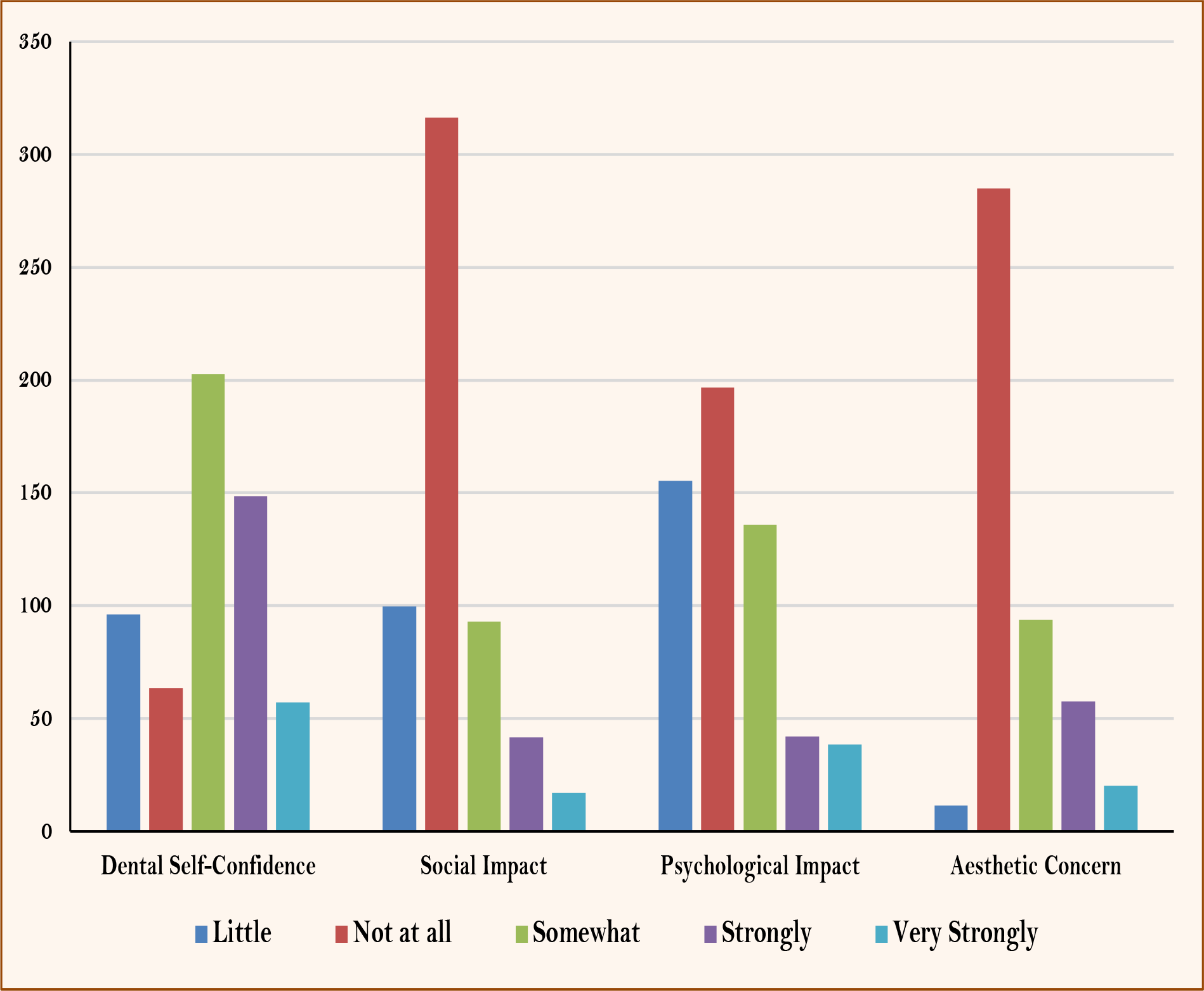
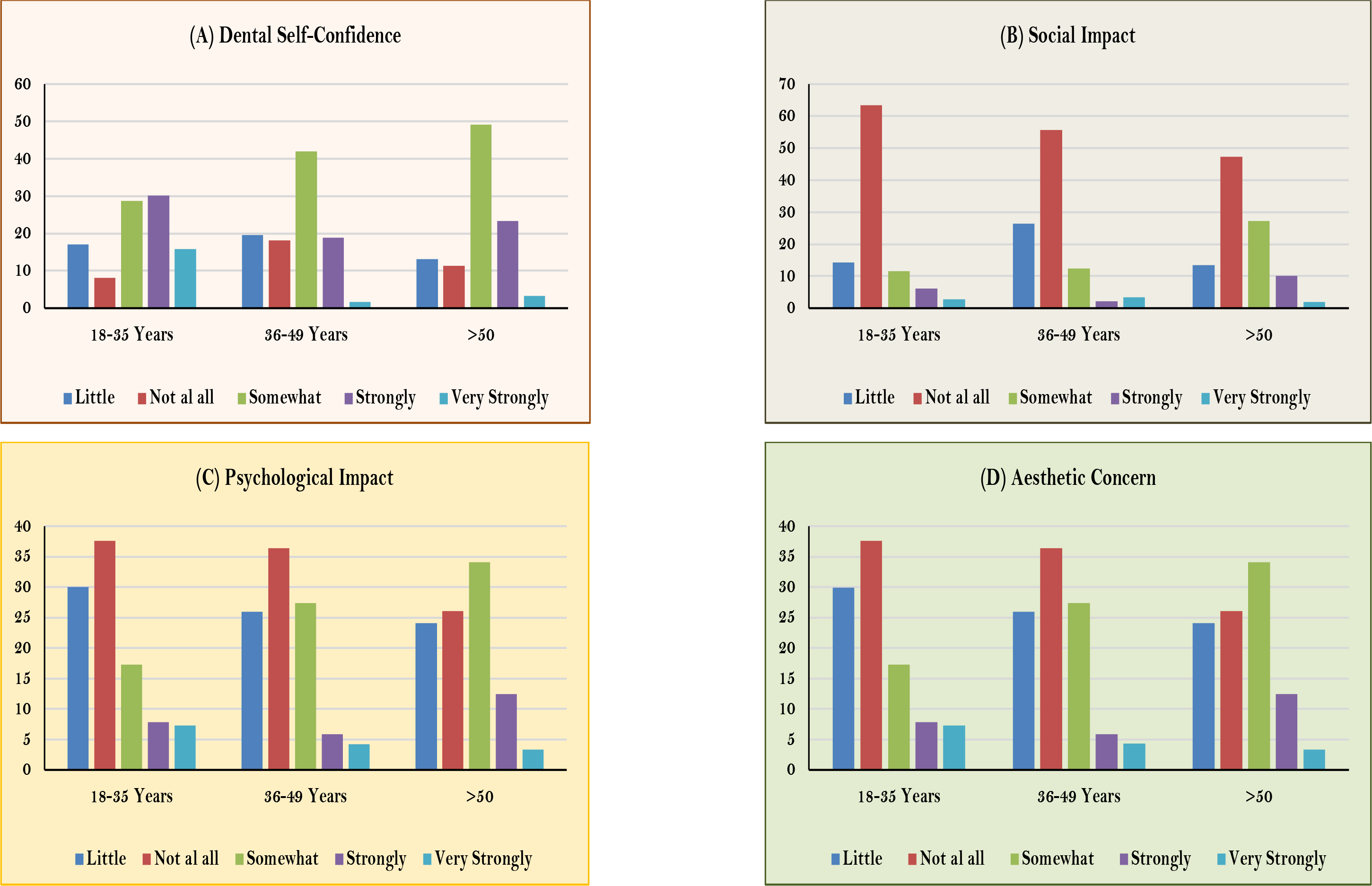
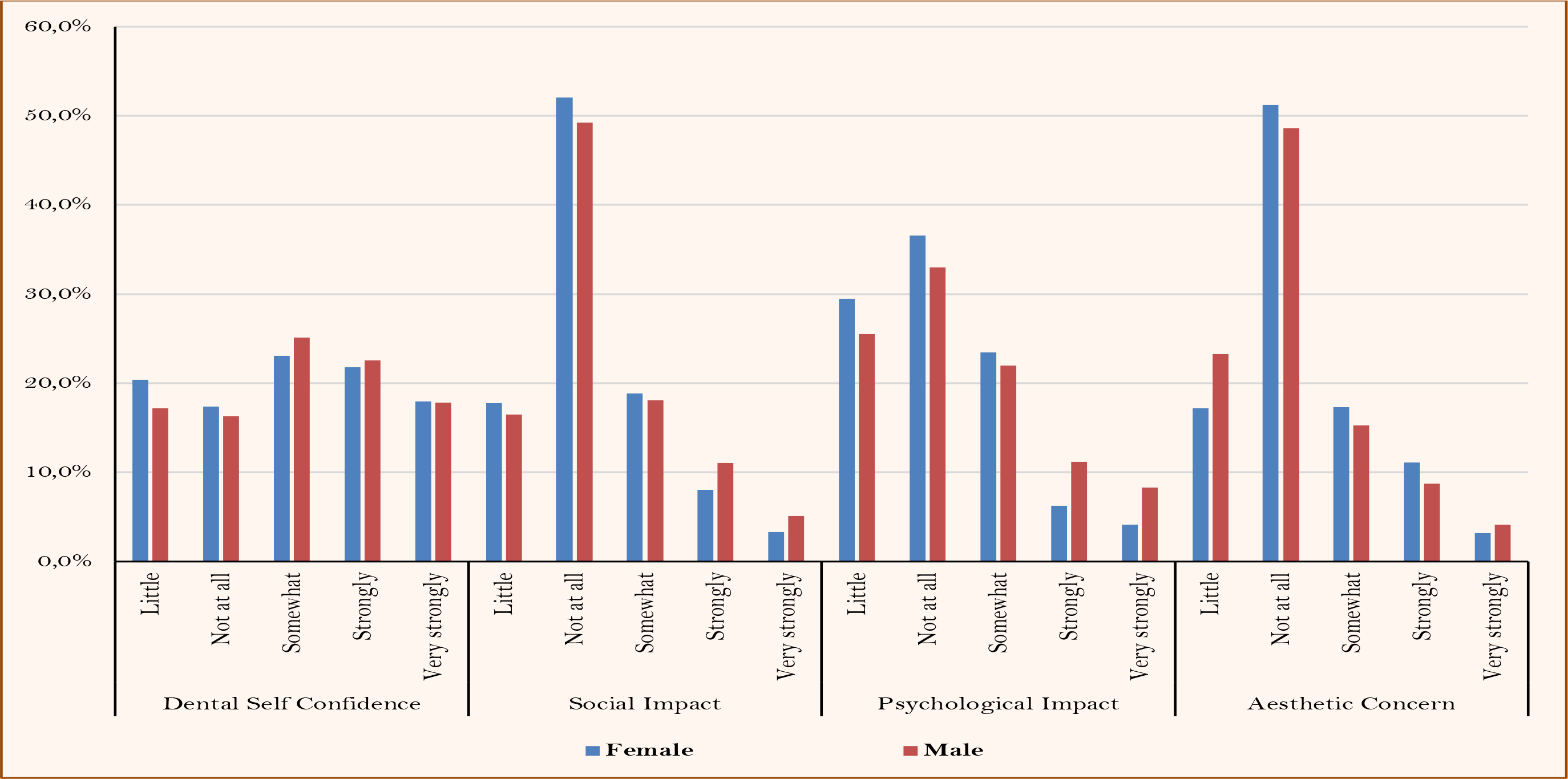
Material and Methods: The psychosocial impact of dental aesthetics was evaluated using the PIDAQ, a validated questionnaire. The content validity of the PIDAQ was established using the content validity index (CVI), and its reliability was assessed using Cronbach's alpha. The PIDAQ consists of four domains: Dental Self-Confidence (DSC), Social Impact (SI), Psychological Impact (PI), and Aesthetic Concern (AC). Descriptive statistics and chi-square tests were employed to analyse the relationship between age groups (18-35, 36-50, and 50+) and gender with the PIDAQ scores.
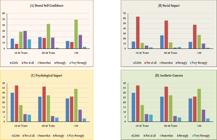
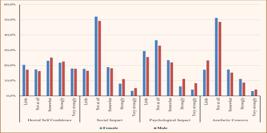
Results: A total of 568 dental patients (60.4%% females and 39.6% males) participated in the study. The questionnaire showed good validity. The 18-35 age group reported higher dental self-confidence, while the 36-50 age group expressed higher concerns about social impact. The 18-35 age group reported lower psychosocial impact and aesthetic considerations. Females were more likely to express aesthetic concern.
Conclusion: Younger individuals have more positive views of their teeth than older individuals. However, females are more concerned about aesthetic concerns, while males experience a higher psychological impact and are more dissatisfied. This shows the connection between dental health, society, and self-esteem.
Keywords:
Oral Health; Orthodontists; Orthopedics; Dental Health Services.
 Thumbnail
 Thumbnail
 Thumbnail