 Barriers to Dental Services Utilization among Adult Population in India: A Scoping Review
ABSTRACT
Objective: To provide comprehensive information about barriers to using dental services in India.
Material and Methods: Original research articles published on factors and(or) barriers to dental and oral health care services utilization were extracted from four electronic databases such as Scopus, PubMed, Web of Science, and EMBASE. The selection process involved looking for English-language articles published between 2005 and 2023 that addressed one or more areas of dental and oral health care barriers in India. Selected articles were analysed using thematic analysis.
Results: 188 original studies were retrieved from the four databases, and 23 were extracted. The barriers to dental and oral health care service utilization were classified into three major themes: sociodemographic factors, dental care access, and individual factors. The findings of the selected articles showed that the high cost of dental care, educational level, fear of dental treatment, poor perception about teeth, and(or) lack of felt need and lack of time were the most frequently reported barriers.
Conclusion: Appropriate utilization of dental and oral health care services was one of the key principles in achieving "Health for All."Dental care delivery systems should address the barriers to its utilization by incorporating policies to overcome the utilization barriers and community-based oral health awareness programs.
Keywords:
Dental Care; Oral Health; Awareness
Introduction
Over the past seven decades, there has been tremendous improvement in dental health clinical indicators in most Western countries. However, the burden of oral disease remains a significant public health problem in underdeveloped and developing nations [1]. According to estimates from the Global Burden of Disease Report (2019), over three and half billion individuals globally suffer from some dental problem, with untreated dental caries and periodontal conditions being the most common [2]. The decline in dental caries in the Western world can be partly attributed to the widespread use of fluorides and increased emphasis on preventive dental care [3].
Good oral health is concurrent with the systematic use of dental health services, indicating that ensuring the general public can access preventive dental care is critical. It enables the early assessment of risk factors and normative needs, the primary prevention of caries through evidence-based preventive strategies, and the early diagnosis and treatment of dental problems [4]. Periodic dental care provides an opportunity for one-to-one chair-side dental education and may also help to encourage preventive dental behaviors at home. The published literature has extensively documented inequalities in dental and oral health service utilization [3]. Oral health and the use of oral health services fluctuate with life, much as perspectives, means of subsistence, and general health do [4].
According to published literature, no single issue is the major obstacle to using oral health care services. Along with the expense of dental care, other significant factors influencing dental visits include oral health literacy, physical disability, lack of perceived need for care, and dental phobia [4]. However, a study conducted in Japan among elderly populations reported that dental care cost alone was not a significant barrier, as most of the dental care for older adults was covered with universal health insurance and other issues such as transport, lack of perceived need for care and fear were found to be barriers for dental visits [5].
Access to oral health care is multidimensional, and previous reports suggest that dental service utilization rates in India were between 27-34% and noticeable oral health inequalities [6]. Various studies have been done scattered over all important regions of India about barriers to dental service utilization; for example, a study reported by Kakatkar et al. from the Northern part of India identified the need and cost of dental treatment as barriers to dental service utilization and males have higher utilization rate than female counterparts [7]. Similarly, a cross-sectional study was conducted by Mohanty et al. [8] from New Delhi, the capital city of India, in which the study participants were school teachers; 47% expressed a lack of awareness, and 29.5% reported economic barriers. Studies reported from the Southern part of India by Bommireddy et al. [9] reported that dental fear is the primary barrier. Yaddanapalli et al. [10] reported that utilization rates were 2.7 times higher in the urban population than in their rural counterparts.
Another obstacle mentioned in the literature is the need for a dental workforce and the lack of importance of oral health in national health policy. There has been a tremendous improvement in the dentist-to-population ratio in India in the last two decades [11]. The two major dental diseases, such as dental caries and periodontal diseases, are preventable; early detection and intervention significantly impact saving natural teeth. The underutilization of dental care services has been linked to poor access to professionally offered preventive dental care, which may lead to incremental dental disease and tooth loss [11].
Due to the disparities in oral health in different societies, it is imperative to identify the factors hindering the use of dental services. Research has been disseminated worldwide to address this issue, and only some isolated cross-sectional studies have been conducted in India [7-9]. However, no single comprehensive research was reported from India to present the barriers to dental service utilization. Thus, the scientific query was posed: what are the barriers to oral health services utilization in India? Conducting a comprehensive review of the factors affecting the use of oral health services can help policymakers, governments, and insurance corporations design comprehensive oral health services at affordable costs. Therefore, this scoping review aimed to provide extensive information about barriers to using dental services in India.
Material and Methods
This scoping review used a methodology suggested by Joanna Briggs Institute's framework for scoping review [12]. Thus, the identification of barriers to dental service utilization in the Indian population was carried out under the following stages:
We determined the research topic as the first step in the framework to gather information on the barriers to dental service utilization in India. A specific research question based on the PCC (population, concept, and context) elements was enquired at the first stage - the Indian population (population), the factors hindering the use of oral and dental services (concept), and the economic, social, cultural, and health conditions in various regions of India (context). Therefore, the research question is, "What factors act as barriers to dental and oral health care utilization in India?"
Adhering to the Joanna Briggs Institute's framework's second step, a search across four electronic databases was conducted to identify pertinent research related to our research question. The selection process involved looking for English-language articles published between 2005 and 2023 that addressed one or more areas of dental and oral health care barriers in India. The research published during the last two decades was the main emphasis because there has been an exponential increase in the dental workforce in India as the number of new dental colleges started functioning.
Inclusion Criteria
-
Original research articles assessing the barriers to oral and (or) dental health care service utilization in India;
-
Studies published between 2005 (January 1st) and 2023 (December 31st);
-
Original research which had a population in the age 12 years and above;
-
Only original research studies reporting primary data; and
-
Articles published in English language only.
Exclusion Criteria
-
Articles such as conference proceedings, editorials, letters to the editor and commentaries;
-
Articles for which abstract is not available;
-
Articles reporting perceptions or opinions of dental health care or health care personnel;
-
Research involving special groups or culturally or geographically disadvantaged participants; and
-
Systematic reviews, meta-analyses, narrative reviews, and case studies.
The first author conducted a thorough search starting in January 2024 and ending in February 2024 across four electronic databases: Scopus, PubMed, Web of Science, and EMBASE. Table 1 provides the search strategy, which includes the key phrases and Booleans used in the initial search across many databases. The same author evaluated the first search results from all four databases for titles, and the outcome was 188 articles. Following the above-described selection criteria, these publications underwent independent full-text evaluation by two authors (1st and 3rd) after title and abstract screening. Any differences of opinion were worked out through discussion with the assistance of a second author. After a full-text assessment, 22 articles were chosen based on the inclusion criteria. After performing a backward citation search of the selected publications' references, a fourth author identified an additional article that made 23 records. These were then subjected to another round of title and abstract screening by two authors (1st and 3rd) independently.
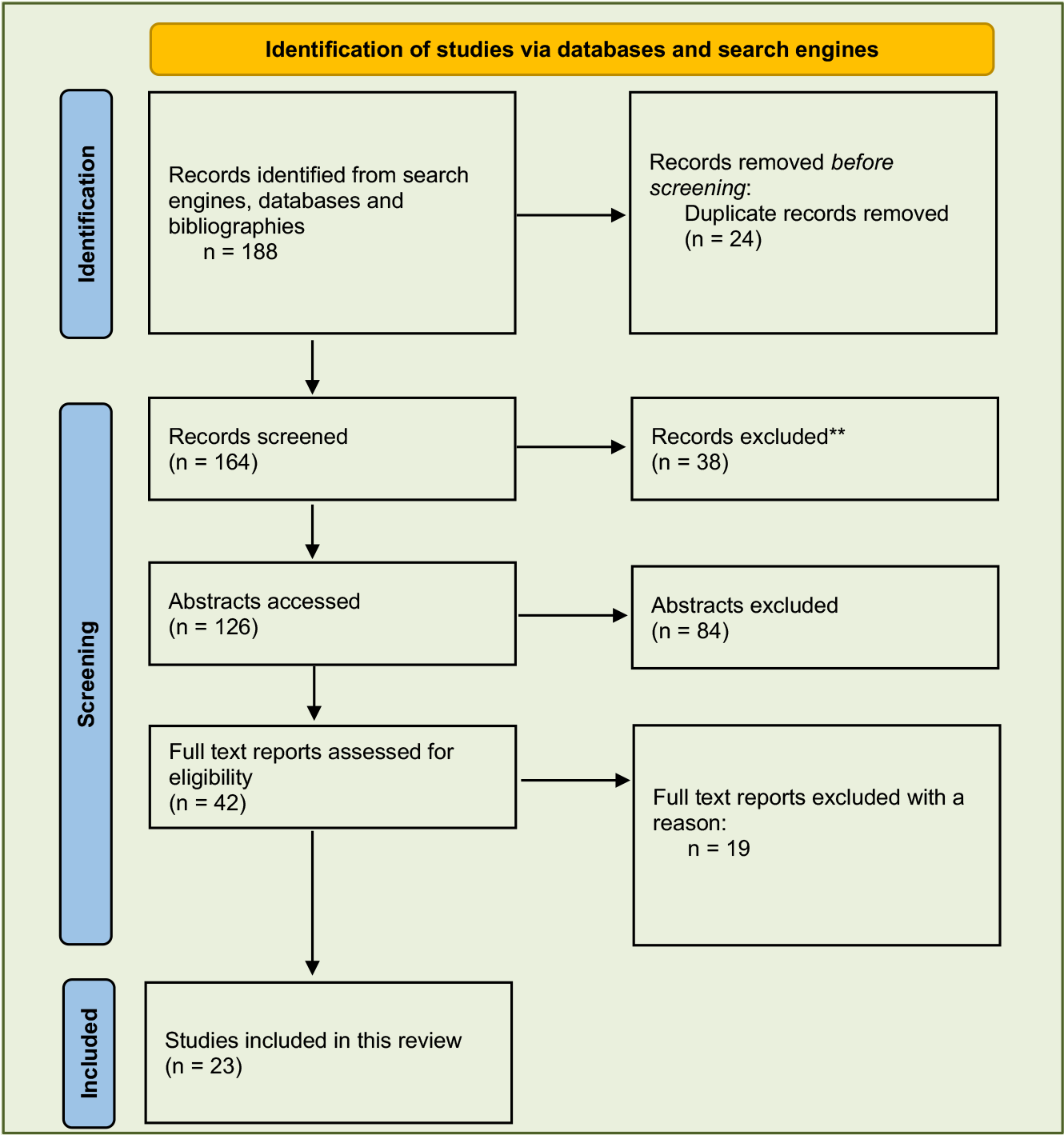
Finally, all the articles with at least English abstracts indexed in the databases (n = 188) were identified and retrieved. After eliminating the duplicates, the remaining 164 articles were reviewed by titles. Furthermore, 126 articles were reviewed regarding abstracts, and 42 were retrieved from full texts to check if they met the inclusion criteria. In the end, 23 articles were included in this study (Figure 1). Finally, the quality of the original articles was assessed using the Critical Appraisals Skills Programme technique [4].
As a fourth step in the scoping review, two authors (1st and 3rd) independently charted the data from the chosen full-text articles for the current scoping review using a pre-designed structure in Microsoft Excel software version 2016 (v16.0). This format made gathering data on authors, publication year, study site, study population, type of study/article, study goal, techniques employed, outcome measures, and significant findings easier. The data extraction tables were then integrated to provide a more complete picture offered by the selected articles, and any missing material that was important to the review was found and filled in collaboratively.
As a final step, the thematic analysis was done to classify the data acquired from the previous step. As a result, the information gathered in the earlier phase was openly coded per the study question. The process of classifying and aggregating the codes proceeded until sub-components and main components that acted as barriers to oral and dental health care among the Indian population were obtained after a second review of the codes and their finalization and reduction.
Results
Based on the selection criteria, 23 retrieved articles were included in this scoping review [7-10, 13-31]. The majority of the studies reported were from the southern part of India. Except for one article, all other articles reported were cross-sectional studies. Of those, nearly half of the articles were reported from South India- Andhra Pradesh (21.8%), Telangana (8.7%), Karnataka (17.5%), Tamilnadu (4.3%), Kerala (4.3%) followed by Northern, Central and Western zones. No articles were reported from Eastern and North-eastern states (Table 2).
Table 3 reported the key findings with central themes, subcomponents, and references. The main themes included were sociodemographic factors, dental care access, and individual factors. Four subcomponents included in the central theme of sociodemographic factors were geographic area, education, age, and gender. Six out of 23 (26%) articles mentioned sociodemographic factors as the barriers to dental care utilization; among the subcomponents, education level was the primary barrier (3 out of 6 articles). The main theme of dental care access has three subcomponents: the high cost of dental care, lack of nearby dental care facilities, and difficulty traveling. Nearly half of the articles (47%) mentioned dental care access, and the subcomponents influenced: the high cost of dental care (n=8; 34.7%), lack of nearby dental care facilities (n=1; 4.3%), and difficulty in traveling (n=2; 8.6%). Almost all the articles (except one) mentioned this central theme: individual factors as barriers to dental care utilization. The subcomponents of this main theme included lack of awareness (n=2; 8.6%), fear of dental treatment (n = 8; 34.7%), poor perception about teeth and (or) lack of felt need (n=7; 30.4%), lack of time (n=7; 30.4%), cultural beliefs and myths (n=2; 8.6%), and physical health status (n=1; 4.3%).
Discussion
This scoping review aimed to assess the barriers to dental care and (or) oral health care utilization in the Indian setting in great detail. The goal of analyzing the available data was to provide a strong foundation for directing policymakers and dental professionals in addressing these utilization barriers and identifying the research needs in this field.
Oral health is inextricably linked to general health, and past research has highlighted that judicious use of dental health care services is essential for good oral health. The results showed that individual factors were the main component most often referenced in the articles, with fear of dental treatment and poor perception of teeth being the two most frequently referred sub-components. The other frequently mentioned subcomponents in the main themes were the perceived high cost of dental care, educational level, and lack of time for attending dental care. The factors influencing people's oral and dental care use are covered in detail in the following sections.
Access to dental care was one of the key components that determined the utilization of dental services. Among the subcomponents of dental care access, most studies reported the cost of dental care as a barrier. Surprisingly, only 3 out of 23 articles in this review mentioned dental care access as a barrier to utilization; among the subcomponents, two studies reported that lack of proper transportation is the major reason, and only one study reported a lack of nearby dental care facilities. A commonly reported access barrier in this review for dental and oral care utilization was the perceived high cost of dental services. These findings aligned with the research findings reported by Nija et al. [22] and Sharma et al. [23].
Put another way, dental care increases the financial burden on households and may even make them less able to afford it or motivated to utilize the services. As per the Ministry of Health report, the out-of-pocket expenditure for health is nearly 50% for 2019-20, and it is one of the reasons for impoverishing the people [32]. To overcome this financial burden, the Union Government of India started implementing a Universal health insurance policy 2018 under the Ayushman Bharat scheme. However, this does not cover most dental procedures and only oral and maxilla-facial surgeries requiring hospitalization. Lack of awareness about this scheme is one of the barriers to its utilization [33]. Providing funding or government subsidies and restructuring existing insurance policies with the inclusion of a few essential dental and oral health services may improve the utilization of dental care and their oral and dental health status.
Fear of dental treatment was another major obstacle in the utilization of dental services, and it influences the frequency of dental and oral care utilization. A study by Jeddy et al. [34] identified pain and tooth extraction as the two major reasons for dental fear. Few other studies reported patients were afraid of the sound and vibrations of dental headpieces [35], and having unpleasant past dental experiences is also one of the reasons for dental fear [36]. Due to dental treatment fear, patients often seek self-care for dental problems or postpone their visits [27]. Oral health awareness programs should address the reasons for dental fear, which may improve dental care utilization rates.
When demographic data were considered, the research's most frequently mentioned sub-component was education level. Higher levels of education were linked to higher rates of dental service utilization, according to studies by Mohanty et al. [8] and Krishnan et al. [14]. This was likely because more educated individuals knew the significance of routinely using dental services [8,13]. Those with greater education levels maintained better oral and dental health through better lifestyle choices. Apart from education's influence on oral health awareness, it may have an indirect effect through better employment chances and financial status. Nevertheless, some research revealed that oral and dental health services were unrelated to education level [21,37]. The variability in the study populations and the people's behavioral traits may cause the dispersion in the results.
Another significant demographic sub-component was gender. According to one of the research studies, females were more likely than males to utilize dental care services and desire to save and maintain their teeth [16]. However, many males are also concerned about dental appearance or aesthetics and have the habit of periodic dental visits. Therefore, it may not be true; rather, it relies more on individual factors. Women are more concerned with how their teeth look than males [19]. Age was one of the factors considered in the research. People over 65 were reported to be less likely to use dental services because of their greater requirement for oral and dental care [38]. According to Aquilanti et al. [39], the decline in the general health of older people [39], mobility issues, anxiety, and ignorance of oral health during dental appointments [40,41] are the causes of this. As a result, it is essential to provide senior citizens with knowledge and active care. Another age group underutilizes dental care is children under 10 years old due to the misconception that deciduous teeth are unimportant and will be replaced by permanent teeth [15].
General/physical health problems were one of the components mentioned in the studies. According to the survey by Zangiabadi et al. [42], dental care utilization rates were lower in people with general health problems than in otherwise healthy people. Oral health is a lesser priority for people who are suffering from life-threatening health conditions, as most oral diseases are not a direct cause of death. Challenges in accessing dental care include traveling to dental care settings, problems using stairs, and the availability of wheelchairs in dental clinics, which may act as obstacles to dental service utilization [43]. Also, the financial burden incurred in treating or managing general health problems adversely affects the priority of dental care.
Another subcomponent of the individual factors domain was the need for dental care. It appeared that people only saw dentists when they were in need of tertiary care rather than for preventive treatment [17,44]. Various published studies reported a gap between normative needs, demand, and effective demand for dental care [20]. The significance of oral health is one of the determining factors for dental care utilization. Gadoi et al. [45] reported that people who said oral health is crucial for them visited the dentist more frequently than others. Yaddanapalli et al. [10] reported that laid-back attitudes, similar to saying it is not a big deal to lose one or two teeth and wait until they get pain that they cannot manage themselves, was one of the barriers to dental service utilization. Lack of awareness about oral health or oral health problems was one of the factors that hindered dental care utilization [15,21]. Unawareness and perceived need for dental care sometimes overlap each other. Various studies reported that people who had higher oral health literacy and oral health knowledge have higher dental care utilization rates [46,47], and thus, proving oral health education for improving dental awareness would improve dental service utilization rates.
Lack of time was the third most common reason (7 of 23 studies) for not utilizing dental services. According to a study reported by Gill et al. [48] among the rural population in North India, nearly half of the participants (49.3%) considered the lack of convenient time a barrier to dental service utilization. Similar findings were reported by Nagarjuna et al. [49] from Andhra Pradesh; 45.8% of the study participants gave lack of time as a reason for not visiting a dental care facility.
Traditional or cultural beliefs were one of the individual components reported in the two studies. Reddy et al. [31] showed that having traditional misconceptions such as "teeth are not as important as other organs in the body" and "upper tooth extraction may affect their vision" acted as a barrier to dental care utilization. Gill et al. [48] reported that people used more home-based self-care medications or therapies for their dental problems rather than professional dental care. Therefore, understanding people's cultural and (or) traditional beliefs and educating them about their misconceptions can enhance the use of oral and dental care services.
Overall, the findings of this paper showed that we have some substantial, although not comprehensive, understanding of the barriers to dental and oral care utilization in India. It becomes imperative to go beyond simple documentation and apply this information when planning oral health services in India. Based on the findings of this scoping review, a few key recommendations are proposed to address these barriers. First, strategies should be developed to integrate various aspects of oral health with general health care, such as healthcare access and insurance systems. Second, more oral health awareness programs should be promoted to reach all age groups and all crucial sections of the population. Third, semi-annual dental screening programs should be planned under private-public partnerships similar to the Ophthalmologic screening program (Kantivelugu) implemented by the government of Telangana [50]. Screening helps early detection and prompt treatment and promotes a positive dental attitude. Many people believe they need no dental treatment since they experience no pain unless they are screened and informed otherwise. Lastly, there should be a surveillance system to report trends in dental and oral care utilization and factors that influence such changes so that the dental care delivery system can adopt new practice strategies to reach the people.
This scoping review offers a unique qualitative amalgamation of research data to provide a thorough overview of the literature on the barriers to dental care utilization in India. One of the drawbacks is that the evidence came from only four electronic databases, but even so, it was enough to identify the body of current evidence. Additionally, only original studies were included in this review, and this decision was made to enhance the quality of evidence.
Conclusion
The primary barriers to utilizing oral and dental services in India include a perceived high cost of dental care, fear of dental treatments, poor perceptions about dental health, a lack of perceived need for treatment, and limited time availability.
Data Availability
The data used to support the findings of this study can be made available upon request to the corresponding author.
Financial Support
References
-
[1] Peres MA, Macpherson LMD, Weyant RJ, Daly B, Venturelli R, Mathur MR, et al. Oral diseases: A global public health challenge. Lancet 2019; 394(10194):249-260. https://doi.org/10.1016/S0140-6736(19)31146-8 Erratum in: Lancet 2019; 394(10203):1010.
» https://doi.org/10.1016/S0140-6736(19)31146-8 -
[2] World Health Organization. Oral Health. Available from: https://www.who.int/newsroom/fact-sheets/detail/oral-health [Accessed on December 24, 2023].
» https://www.who.int/newsroom/fact-sheets/detail/oral-health -
[3] Lin PY, Huang YH, Chen HH, Wang J, Chen SC, Chang HJ, et al. Decline in dental caries experience among schoolchildren in Taiwan, 2012-2020. Community Dent Oral Epidemiol 2023; 51(3):519-526. https://doi.org/10.1111/cdoe.12823
» https://doi.org/10.1111/cdoe.12823 -
[4] Ghanbari-Jahromi M, Bastani P, Jalali FS, Delavari S. Factors affecting oral and dental services` utilization among Elderly: A scoping review. BMC Oral Health 2023; 23(1):597. https://doi.org/10.1186/s12903-023-03285-4
» https://doi.org/10.1186/s12903-023-03285-4 -
[5] Nishioka D, Ueno K, Kino S, Aida J, Kondo N. Sociodemographic inequities in dental care utilisation among governmental welfare recipients in Japan: A retrospective cohort study. Int J Equity Health 2021; 20(1):141. https://doi.org/10.1186/s12939-021-01473-8
» https://doi.org/10.1186/s12939-021-01473-8 -
[6] Talukdar R, Barman D, Thakkar V, Kanungo S. Utilization of dental care services among adult Indian population: A meta-analysis of evidence from 2011-2022. Health Promot Perspect 2022; 12(4):325-335. https://doi.org/10.34172/hpp.2022.42
» https://doi.org/10.34172/hpp.2022.42 - [7] Kakatkar G, Bhat N, Nagarajappa R, Prasad V, Sharda A, Asawa K, et al. Barriers to the utilization of dental services in udaipur, India. J Dent 2011; 8(2):81-89.
-
[8] Mohanty V, Jain S, Grover S. Oral healthcare-related perception, utilization, and barriers among schoolteachers: A qualitative study. J Indian Soc Pedod Prev Dent 2021; 39(2):154-158. https://doi.org/10.4103/JISPPD.JISPPD_368_20
» https://doi.org/10.4103/JISPPD.JISPPD_368_20 -
[9] Bommireddy VS, Koka KM, Pachava S, Sanikommu S, Ravoori S, Chandu VC. Dental service utilization: Patterns and barriers among rural elderly in Guntur district, Andhra Pradesh. J Clin Diagn Res 2016; 10(3):43-47. https://doi.org/10.7860/JCDR/2016/17834.7456
» https://doi.org/10.7860/JCDR/2016/17834.7456 -
[10] Yaddanapalli SC, Parveen Sultana SK, Lodagala A, Babu PC, Ravoori S, Pachava S. Oral healthcare-seeking behaviour and perception of oral health and general healthcare among WHO indexed age groups in East-Coast India. J Family Med Prim Care 2020; 9(7):3600-3606. https://doi.org/10.4103/jfmpc.jfmpc_350_20
» https://doi.org/10.4103/jfmpc.jfmpc_350_20 -
[11] Batra P, Saini P, Yadav V. Oral health concerns in India. J Oral Biol Craniofac Res 2020; 10(2):171-174. https://doi.org/10.1016/j.jobcr.2020.04.011
» https://doi.org/10.1016/j.jobcr.2020.04.011 -
[12] Peters MDJ, Marnie C, Tricco AC, Pollock D, Munn Z, Alexander L, et al. Updated methodological guidance for the conduct of scoping reviews. JBI Evid Implement 2021; 19(1):3-10. https://doi.org/10.1097/XEB.0000000000000277
» https://doi.org/10.1097/XEB.0000000000000277 -
[13] Chandu V, Pachava S, Vadapalli V, Sanikommu S. Is the intention being realized in execution: Evaluation of Oral Health Promotion Program at a South Indian university. J Orofac Sci 2018; 10(2):121-126. https://doi.org/10.4103/jofs.jofs_140_18
» https://doi.org/10.4103/jofs.jofs_140_18 -
[14] Krishnan L, Balasubramanium A, Iyer K, Kumar PDM. Factors affecting the unmet dental needs and dental service utilisation among urban slum dwellers of Chennai city, India. Indian J Public Health Res Dev 2019; 10(11):1451-1456. https://doi.org/10.5958/0976-5506.2019.03515.0
» https://doi.org/10.5958/0976-5506.2019.03515.0 -
[15] Nagdev P, Iyer MR, Naik S, Khanagar SB, Awawdeh M, Al Kheraif AA, et al. Andersen health care utilization model: A survey on factors affecting the utilization of dental health services among school children. PLoS ONE 2023; 18(6):e0286945. https://doi.org/10.1371/journal.pone.0286945
» https://doi.org/10.1371/journal.pone.0286945 -
[16] Gupta S, Ranjan V, Rai S, Mathur H, Solanki J, Koppula SK. Oral health services utilization among the rural population of western Rajasthan, India. J Indian Acad Oral Med Radiol 2014; 26(4):410-413. https://doi.org/10.4103/0972-1363.155688
» https://doi.org/10.4103/0972-1363.155688 - [17] Garcha V, Shetiya SH, Kakodkar P. Barriers to oral health care amongst different social classes in India. Community Dent Health 2010; 27(3):158-162.
-
[18] Kadaluru UG, Kempraj VM, Muddaiah P. Utilization of oral health care services among adults attending community outreach programs. Indian J Dent Res 2012; 23(6):841-842. https://doi.org/10.4103/0970-9290.111290
» https://doi.org/10.4103/0970-9290.111290 -
[19] Gupta E, Robinson PG, Marya CM, Baker SR. Oral health inequalities: Relationships between environmental and individual factors. J Dent Res 2015; 94(10):1362-1368. https://doi.org/10.1177/0022034515592880
» https://doi.org/10.1177/0022034515592880 -
[20] Pradeep Y, Chakravarty KK, Simhadri K, Ghenam A, Naidu GM, Vundavalli S. Gaps in need, demand, and effective demand for dental care utilization among residents of Krishna district, Andhra Pradesh, India. J Int Soc Prev Community Dent 2016; 6(Suppl 2):S116-121. https://doi.org/10.4103/2231-0762.189737
» https://doi.org/10.4103/2231-0762.189737 -
[21] Bommireddy VS, Gayathri Naidu SSN, Kondapalli TP, Kommineni HC, Madem R, Padagala GMY. Oral hygiene habits, oral health status, and oral health care seeking behaviors among spinning mill workers in Guntur district: A cross-sectional study. J Family Med Prim Care 2020; 9(6):3025-3029. https://doi.org/10.4103/jfmpc.jfmpc_349_20
» https://doi.org/10.4103/jfmpc.jfmpc_349_20 -
[22] Nija MA, Gireesh G, Mathew MM, Venkitachalam R. Oral health care-seeking behaviour and influencing factors among 18-34 years old women in Kochi, India. Int J Community Med Public Health 2020; 7(11):4478-4484. https://doi.org/10.18203/2394-6040.ijcmph20204748
» https://doi.org/10.18203/2394-6040.ijcmph20204748 -
[23] Sharma AS, Sheth SA, Dhaduk PJ, Chovateeya SR, Mistry BJ, Jogi MR. Oral hygiene practices and factors affecting oral health service utilization among children (11-14 years) of government school of Nikol ward of East zone of Ahmedabad, Gujarat, India. Contemp Clin Dent 2019; 10(2):299-303. https://doi.org/10.4103/ccd.ccd_549_18
» https://doi.org/10.4103/ccd.ccd_549_18 - [24] Jain VK, Sequeira P, Jain J, Chancy U, Maliyil M, Bhagwandas S. Barriers in utilization of oral health care services among patients attending primary and community health centres in Virajpet, South Karnataka. Natl J Med Dent Res 2013; 1(3):39-47.
-
[25] Rambabu T, Koneru S. Reasons for use and non-use of dental services among people visiting a dental hospital in urban India: a descriptive study. J Educ Health Promot 2018; 7:99. https://doi.org/10.4103/jehp.jehp_193_17
» https://doi.org/10.4103/jehp.jehp_193_17 -
[26] Verma H, Aggarwal AK, Rattan V, Mohanty U. Access to public dental care facilities in Chandigarh. Indian J Dent Res 2012; 23(1):121. https://doi.org/10.4103/0970-9290.99057
» https://doi.org/10.4103/0970-9290.99057 -
[27] Deolia SG, Kela KS, Sawhney IM, Sonavane PA, Nimbulkar G, Reche A. Evaluation of oral health care seeking behaviour in rural population of central India. J Family Med Prim Care 2020; 9(2):886-891. https://doi.org/10.4103/jfmpc.jfmpc_990_19
» https://doi.org/10.4103/jfmpc.jfmpc_990_19 -
[28] Nagaraj A, Ganta S, Yousuf A, Pareek S. Enculturation, myths and misconceptions regarding oral health care practices among rural female folk of Rajasthan. Stud Ethno-Medicine 2014; 8(2):157-164. https://doi.org/10.1080/09735070.2014.11917630
» https://doi.org/10.1080/09735070.2014.11917630 -
[29] Fotedar S, Sharma KR, Bhardwaj V, Sogi GM. Barriers to the utilization of dental services in Shimla, India. Eur J Gen Dent 2013; 2(02):139-143. https://doi.org/10.4103/2278-9626.112314
» https://doi.org/10.4103/2278-9626.112314 -
[30] Bhatt S, Gaur A. Dental caries experience and utilization of oral health services among Tibetan refugee-background children in Paonta Sahib, Himachal Pradesh, India. J Immigr Minor Health 2019; 21(3):461-465. https://doi.org/10.1007/s10903-018-0769-7
» https://doi.org/10.1007/s10903-018-0769-7 -
[31] Reddy LS, Doshi D, Reddy BS, Kulkarni S, Reddy MP, Satyanarayana D, et al. Self-reported obstacles to regular dental care among information technology professionals. J Clin Diagn Res 2016; 10(10):132-137. https://doi.org/10.7860/jcdr/2016/20655.8696
» https://doi.org/10.7860/jcdr/2016/20655.8696 -
[32] India. National Health Accounts Estimates for India 2019-20, Union ministry of Health. 2023. Available from: https://main.mohfw.gov.in/sites/default/files/5NHA_19-20_dt%2019%20April%202023_web_version_1.pdf?utm_medium=email&utm_source=transaction [Accessed on February 24, 2024].
» https://main.mohfw.gov.in/sites/default/files/5NHA_19-20_dt%2019%20April%202023_web_version_1.pdf?utm_medium=email&utm_source=transaction -
[33] Akshay V, Umashankar GK, Pramila M, Maiti R, Aswini M, Manjusha PC. Oral health utilization and awareness of Ayushman Bharat (PMJAY) health insurance scheme in Bangalore. Int J Community Med Public Health 2021, 8(8):4012-4018. https://doi.org/10.18203/2394-6040.ijcmph20213037
» https://doi.org/10.18203/2394-6040.ijcmph20213037 -
[34] Jeddy N, Nithya S, Radhika T, Jeddy N. Dental anxiety and influencing factors: A cross-sectional questionnaire-based survey. Indian J Dent Res 2018; 29(1):10-15. https://doi.org/10.4103/ijdr.IJDR_33_17
» https://doi.org/10.4103/ijdr.IJDR_33_17 -
[35] Muneer MU, Ismail F, Munir N, Shakoor A, Das G, Ahmed AR, et al. Dental anxiety and influencing factors in adults. Healthcare 2022; 10(12):2352. https://doi.org/10.3390/healthcare10122352
» https://doi.org/10.3390/healthcare10122352 -
[36] Appukuttan D, Subramanian S, Tadepalli A, Damodaran LK. Dental anxiety among adults: an epidemiological study in South India. N Am J Med Sci 2015; 7(1):13-18. https://doi.org/10.4103/1947-2714.150082
» https://doi.org/10.4103/1947-2714.150082 -
[37] Qu X, Qi X, Wu B. Disparities in dental service utilization among adults in Chinese megacities: Do health insurance and city of residence matter? Int J Environ Res Public Health 2020; 17(18):6581. https://doi.org/10.3390/ijerph17186851
» https://doi.org/10.3390/ijerph17186851 -
[38] Adams C, Slack-Smith L, Larson A, O’Grady M. Dental visits in older western Australians: A comparison of urban, rural and remote residents. Aust J Rural Health 2004; 12(4):143-149. https://doi.org/10.1111/j.1440-1854.2004.00599.x
» https://doi.org/10.1111/j.1440-1854.2004.00599.x -
[39] Aquilanti L, Santarelli A, Mascitti M, Procaccini M, Rappelli G. Dental care access and the elderly: What is the role of teledentistry? A systematic review. Int J Environ Res Public Health 2020; 17(23):9053. https://doi.org/10.3390/ijerph17239053
» https://doi.org/10.3390/ijerph17239053 -
[40] Leung KC, Chu CH. Dental care for older adults. Int J Environ Res Public Health 2022; 20(1):214. https://doi.org/10.3390/ijerph20010214
» https://doi.org/10.3390/ijerph20010214 -
[41] Okamoto E. Japan's dental care facing population aging: How universal coverage responds to the changing needs of the elderly. Int J Environ Res Public Health 2021; 18(17):9359. https://doi.org/10.3390/ijerph18179359
» https://doi.org/10.3390/ijerph18179359 -
[42] Zangiabadi S, Costanian C, Tamim H. Dental care use in Ontario: The Canadian community health survey (CCHS). BMC Oral Health 2017; 17(1):165. https://doi.org/10.1186/s12903-017-0453-7
» https://doi.org/10.1186/s12903-017-0453-7 -
[43] Ghanbari-Jahromi M, Bastani P, Jalali FS, Delavari S. Factors affecting oral and dental services` utilization among Elderly: A scoping review. BMC Oral Health 2023; 23(1):597. https://doi.org/10.1186/s12903-023-03285-4
» https://doi.org/10.1186/s12903-023-03285-4 -
[44] Sano Y, Antabe R. Regular dental care utilization: The case of immigrants in Ontario, Canada. J Immigr Minor Health 2022; 24(1):162-169. https://doi.org/10.1007/s10903-021-01265-w
» https://doi.org/10.1007/s10903-021-01265-w -
[45] Godoi H, Singh A, de Mello ALSF, Brennan DS, Peres MA. Area-level social development and indicators of public dental services in Southern Brazil. Community Dent Oral Epidemiol 2019; 47(3):274-280. https://doi.org/10.1111/cdoe.12455
» https://doi.org/10.1111/cdoe.12455 -
[46] Brega AG, Johnson RL, Schmiege SJ, Jiang L, Wilson AR, Albino J. Longitudinal association of health literacy with parental oral health behaviour. Health Lit Res Pract 2021; 5(4):333-341. https://doi.org/10.3928/24748307-20211105-01
» https://doi.org/10.3928/24748307-20211105-01 -
[47] Mialhe FL, Santos BL, Bado FMR, Oliveira Júnior AJ, Soares GH. Association between oral health literacy and dental outcomes among users of primary healthcare services. Braz Oral Res 2022; 36:e004. https://doi.org/10.1590/1807-3107bor-2022.vol36.0004
» https://doi.org/10.1590/1807-3107bor-2022.vol36.0004 -
[48] Gill M, Pal K, Gambhir RS. Oral hygiene practices, attitude, and access barriers to oral health among patients visiting a rural dental college in North India. J Dent Res Ver 2014; 1(3):114-117. https://doi.org/10.4103/2348-2915.146486
» https://doi.org/10.4103/2348-2915.146486 -
[49] Nagarjuna P, Reddy VC, Sudhir KM, Kumar RK, Gomasani S. Utilization of dental healthcare services and its barriers among the patients visiting community health centers in Nellore district, Andhra Pradesh: A cross-sectional, questionnaire study. J Indian Assoc Public Health Dent 2016; 14(4):451-455. https://doi.org/10.4103/2319-5932.195844
» https://doi.org/10.4103/2319-5932.195844 -
[50] Telangana. Kanti Velugu. My scheme. Available from: https://cm.telangana.gov.in/2019/06/kanti-velugu/ [Accessed on January 20, 2024].
» https://cm.telangana.gov.in/2019/06/kanti-velugu/