 Impact of different surfactants on chitosan/sodium alginate films reinforced with bergamot oil
Abstract
Active packaging often contains essential oils and plant extracts, which are predominantly hydrophobic. Surfactants are added to stabilize the matrix, improve the dispersion, and ultimately enhance the effectiveness of the active compounds. In the present study evaluate how different surfactants affect Bergamot essential oil incorporated into chitosan and sodium alginate-based packaging film. The incorporation of surfactants leads to enhancement in film thickness and elongation at break, and tensile strength was reduced, which is attributed to altered intermolecular hydrogen bonding and increased chain mobility. XRD and FTIR analyses revealed chemical interactions between additives and polymeric chains that reduced crystallinity and peak intensities. Furthermore, optical, color, and functional properties including water vapor transmission rate (WVTR), swelling index, water contact angle, and antioxidant activity were analyzed. Overall, the results demonstrated that the strategic selection of surfactant enables the development of high-performance material for sustainable active packaging applications.
Keywords:
eco-friendly packaging; green packaging; essential oil-based packaging; active packaging
1. Introduction
At present, plastic packaging production and usage have increasing exponentially due to its low cost, lightweight, and durability. A report published by Plastics Europe showed that in 2018, global plastic production was 370.6 Mt, out of which 339.4 Mt was derived from petroleum-based plastics, and the rest was chemically or mechanically recycled. In 2023 inforgraphics reported that 400.3 Mt global plastic production[1]. A report from Ellen MacArthur Foundation, the World Economic Forum, and McKinsey says plastic production rose to 311 million tonnes in 2014 and is expected to triple by 2050[2].
The benefits of using traditional plastic as a food packaging material are durability, safety, low cost, and lightweight during transportation and storage, which extend the product's shelf-life, reduce energy consumption, and prevent food wastage[3]. Petroleum derived plastics are non- renewable and are associated with pollution and lifecycle-emission concerns[4,5]. Packaging is a major contributor to plastic waste streams such as single-use containers, disposable packaging, wrapping materials, cushioning materials, etc.[6]. Consequently, these limitations of traditional petroleum-based plastics have driven extensive research toward biobased polymers that could offer comparable performance and enhanced environmental compatibility.
Biopolymers are derived from natural resources, which makes them renewable, low-toxic, biodegradable, and have a lower environmental impact. The biopolymers such as starch, cellulose, etc., are derived from agricultural resources, whereas several biopolymers are also derived from the fermentation process[7]. Chitosan (CA) is derived from chitin, which is extracted from crab shells and shrimp shells. It is a natural polysaccharide that shows good film-forming ability, barrier against CO2 and O2, biodegradability, and biocompatibility. The limitation of using CA film in food packaging is due to higher water vapor permeability, flexibility, and ductility[8]. Sodium alginate (SA) is extracted from brown algae. It is a natural anionic polysaccharide that shows good film-forming ability and flexibility[9]. The limitation of using SA in food packaging is due to its higher water vapor permeability, water solubility, and heat sealing ability[10]. Thus designing stable composite material of these oppositely charged polymers based on polyelectrolyte complexation is an promising approach to overcome the challenges faced by both pure polymers. Recent trend in active food packaging demonstrated the utilization of essential oil to improve the shelf life of the targeted food. However uniform dispersion of essential oil in the polymer matrix is always challenging. Thus several surfactants have been utilized to improve the dispersion of the essential oil in the polymeric matrix.
Surfactants or emulsifiers are added to the polymeric solution to improve functional properties in the film by increasing the dispersion of essential oil, such as water vapor permeability, flexibility, hydrophobicity, etc.[11]. There are four types of surfactants such as non-ionic, anionic, cationic, and amphoteric. Span 80 or Sorbitan monooleate is a non-ionic and hydrophobic surfactant having a low Hydrophilic-Lipophilic Balance (HLB) value of 4.3[12]. Non-ionic surfactants do not carry an ionic charge when dissolved in water, which makes them compatible with a wide range of polymers[13]. Tween 80 or polysorbate 80 is a non-ionic surfactant approved by the Food and Drug Administration (FDA) with a high HLB value of approximately 15.0[14]. Lecithin is an amphoteric biobased surfactant found in all living organisms. Lecithin act as an emulsifier and an antioxidant in different preparations[15].
This study aimed to evaluate the impact of various surfactants on the physical, chemical, mechanical, optical, and functional properties of CA, SA, and Bergamot essential oil (BEO) based films.
2. Materials and Methods
2.1 Materials
CA, SA, Glycerol (99% pure), Tween 80 extra pure, and Lecithin ex. Soya, 30% was purchased from Sisco Research Laboratories Pvt. Ltd., Andheri, India. Span 80 was purchased from Yakuri Pure Chemicals Co., Ltd., Kyoto, Japan. BEO was purchased from Nature Natural India, based in Uttar Pradesh, India.
2.2 Fabrication of film samples
CA (1.5% w/v) was dissolved in 1% acetic acid solution. The mixture marked as C1 was then stirred using a magnetic stirrer at a temperature of 30 °C for 3 hours. Simultaneously, SA of concentration 1.5% (w/v) was dissolved in distilled water. This mixture marked as S1 was then stirred using a magnetic stirrer at a temperature of 30 °C for 3 hours. Once both components were fully dissolved, the C1 and S1 solutions were mixed with 0.5% (v/v) of glycerol. After complete mixing of glycerol with C1 and S1 the solutions were divided into four equal parts and named CSS1, CSS2, CSS3, and CSS4. Then, 1% (v/v) bioactive compound BEO was added with different surfactants as mentioned in Table 1 in CSS2, CSS3, and CSS4 solutions. This is followed by ultrasonication of film forming solution, using an ultrasonicator (Sonoplus Bandelin, Germany) for 20 min, mainly for the complete dispersion of the essential oil. Later on all the solutions were poured into a separate petri dish and marked. The petri dishes were allowed to air dry for 48 hours at a temperature of 27 °C. After complete drying of the films they were peeled off and stored in a desiccator for further analysis.
2.3 Characterization
2.3.1 Thickness test
The thickness of the fabricated film samples was measured using a Digital micrometer (Dequmont digital vernier caliper (ROHS NORM 2011/65/EU)). The measurements were randomly tested at 10 different positions, and the mean values were used for further analysis.
2.3.2 Mechanical test
The mechanical properties of the fabricated film sample were determined by using a Texture Analyzer model TA. XT Plus, Stable Micro System from Godalming, UK. The mechanical properties, such as tensile strength and elongation at break, of the fabricated film samples were determined using ASTM D882-95[16] standard protocol. The film samples were stored and conditioned at RH 50% and temperature 25 °C for 40 hours in order to stabilize the water content in Biobase, China. The dimension of the film samples that were used to determine the mechanical strength was 70 mm × 7 mm. The testing was conducted on rectangular strips using crosshead speed was 30 mm/min, and the distance between the opposite grips was 60 mm. The tensile strength and elongation at break values were calculated by using Exponent Connect Software.
2.3.3 Morphological test
The change in the morphology of the fabricated film sample caused by the addition of BEO, Span 80, Tween 80, and Lecithin in the polymeric solution of CA and SA was studied using scanning electron microscopy of model JSM-6510 LA, JEOL, Japan. Its operated at an accelerating voltage of 20 kV. On the fixed aluminum stubs, film specimens were placed using double-sided carbon adhesive. The prepared samples were sputter-coated with a very thin layer of gold before SEM imaging to improve surface conductivity and resulting in better resolution and clarity.
2.3.4 Color and opacity tests
The color and opacity of the fabricated film sample were analyzed by using Chroma Meter (CR-410), Konica Minolta, Japan. The color parameters, including lightness (L*), redness–greenness (a*), and yellowness–blueness (b*) were recorded. The total difference in the color (∆E) was measured by Equation (1):
2.3.5 Transmittance and haze tests
The transmittance and haze of the fabricated film samples were measured by using a YH1200 haze meter (3nh, China). To ensure measurement accuracy, the film samples were carefully aligned with the instrument's measuring aperture to provide complete coverage.
2.3.6 X-Ray diffraction test
To investigate the phase composition and crystalline structure of the fabricated film sample modified with BEO, Span 80, Tween 80, and Lecithin, X-ray diffraction (XRD) was performed using a Bruker D8 Discover diffractometer. The system utilized a Cu Kα radiation source (λ = 1.5418Å) operating at 40 kV. The crystallinity index was subsequently calculated using OriginPro software according to the formula described in Equation (2).
2.3.7 FTIR spectrometry
The Fourier Transform Infrared (FTIR) spectroscopy was used to investigate the chemical interaction between the polymeric chains, essential oil, and surfactant. Spectra were recorded using a Bruker Tensor 37 FTIR spectrometer (Ettlingen, Germany) over a range of 4000–400 cm-1 at a resolution of 4 cm-1.
2.3.8 Swelling test
The swelling index of the fabricated film samples was assessed following the method of Erdem et al.[17]. Film samples of size 2 × 2 cm2 were cut and the intitial weight (w1) was recorded. At a temperature of 25 °C for 2 min, the film samples were dipped in deionized water. The final weight (w2) was measured after removing the excess water. The swelling index was calculated by using Equation (3)
2.3.9 Water vapor transmission rate test
The Water Vapor Transmission Rate (WVTR) of the fabricated film samples was assessed by gravimetrically method followed by Erdem et al.[17]. A glass cup of inner diameter 5 cm and depth 2 cm was used and film samples were sealed over the cups. To generate a vapor pressure gradient, the internal environment was maintained at near 0% relative humidity (RH) using anhydrous silica gel, while the external environment was kept at 25 ± 2 °C and 75% RH (using saturated sodium chloride solution). The WVTR was then calculated according to Equation (4).
Here, ∆m/∆t is the rate of moisture accumulation (kg/s),
A is the surface area of the film sample (m2),
∆p is the water vapor difference (Pa),
d is the thickness of the film sample (mm).
2.3.10 Antioxidant test
The antioxidant properties of the film samples (CSS1–CSS4) were evaluated based on their DPPH radical scavenging activity, following the procedure described in the previous study[18]. The absorbance of the reaction solution was measured using a spectrophotometer at a wavelength of 517 nm. All measurements were performed in triplicate, and the mean inhibition percentage was used for further analysis.
2.3.11 Water contact angle
The surface hydrophobicity of the fabricated films (CSS1–CSS4) was evaluated by measuring the water contact angle using an OCA15 goniometer (DataPhysics Instruments GmbH, Germany). Each film sample was cut into a 2 × 2 cm2 and placed on the flat surface of the stage. Water (deionized) droplet of 1 µL was deposited on the centre of each film sample. The contact angle was measured by using dpiMAX software.
2.3.12 GC-MS
Gas chromatograph mass spectrometer (GC-MS) model no. Shimadzu GCMS-QP-2010 Plus was used to determine the chemical composition of BEO, following the previous procedure[19]. Bioactive constituents were identified by comparing their retention times and retention indices with library mass spectra.
2.3.13 Statistical analysis
All experiments were conducted in triplicate, and results are expressed as the mean ± standard error. Statistical significance was assessed using one-way analysis of variance (ANOVA) followed by Fisher’s post-hoc test.
3. Results and Discussions
3.1 Thickness analysis
The thickness of a packaging material is an important characteristic that directly affects the tensile strength, water vapor permeability, and optical properties. The impact of different surfactants and BEO in the polymer matrix of CA and SA was analyzed, and the results are shown in Table 2. In the fabricated film samples, the thickness is increased with the addition of surfactant and essential oil. The control sample, consisting of CA and SA (CSS1) has an average thickness of 0.06 mm. The addition of BEO and the surfactants Span 80, Tween 80, and Lecithin increased the film thickness by 0.08 mm, 0.08 mm, and 0.09 mm, respectively. Non-ionic surfactants, such as Tween 80 and Span 80, may form aggregates or micelles with in the film resulting in the increase in the film thickness of CSS2 and CSS3[20]. The CSS4 film contain Lecithin which is an ionic surfactant and has a bulky structure, which could contribute to its higher thickness than other fabricated films[21]. There are various other studies reported earlier, where the effect of various surfactants in the polymeric solution casted film is mentioned[22-24].
3.2 Mechanical analysis
The mechanical properties are mainly tensile strength (TS) and elongation at break (EB) of the fabricated film samples were analyzed and represented in Table 2. With the addition of surfactants in the polymeric solution, TS of the resultant film decreased whereas EB increased. The control sample (CSS1), demonstrated TS 19.69 MPa and EB 75.53%. The addition of surfactant in the polymeric solutions resulted in the significant drop in TS values with CSS2, CSS3 and CSS3 showed 9.53 MPa, 9.44 MPa, and 9.87 MPa. However, addition of surfactant caused significant increase in EB values of CSS2 (74.86%), CSS3 (70.65%) and CSS4 (70.11%). The mechanical properties of the film CSS2 and CSS3 decreased due to weakening of intermolecular hydrogen bonding. Tween 80 has higher HLB value (hydrophile-lipophile balance) than Span 80[25]. Lecithin is an ionic surfactant that forms electrostatic bonding with the CA and SA, forming bulky structure and resulting in less reduction in the TS when compared to CSS2 and CSS3 film samples[11,26]. EB of the surfactant added film samples increased due to the increase in chain mobility leading to increase in free volume in the polymer matrix[27].
3.3 Transmittance and haze analysis
The results of transmittance and haze of the fabricated film samples were analyzed and demonstrated in Table 3. The CSS1 sample, consisting of CA and SA, showed a transmittance value of 83.73% and a haze value of 72.23%, whereas upon the addition of essential oils and surfactant, the transmittance changed. In the CSS 2 sample, consisting of Span 80 showed transmittance was 85.03% and the haze value of 63.78%. Moreover, the CSS 3 sample, consisting of Tween 80 showed transmittance value of 85.08% and the haze value of 46.31%. In addition, CSS 4 sample, consisting of Lecithin showed the transmittance 81.37% and the haze value of 83.42%. The CSS 4 sample demonstrated minimum transmittance due to increased scattering of incident light, which may be attributed to bulky structure of Lecithin.
3.4 Color analysis
Table 3 represents color analysis of the fabricated films. The L* value represents the lightness, a* value signifies redness–greenness and b* value signifies yellowness–blueness. The addition of Span 80 to the polymeric solution decreased the lightness and b* value, whereas the a* value was increased. This is due to the addition of essential oil and surfactant that may have increased the reddish-blue hue, resulting in increase in slight darkness in the film. Similar results were found in the previous studies[25,28]. The CSS 3 film sample showed maximum lightness with the increase in a* value whereas b* value decreased. Similar results were found in previous study[29]. In the CSS 4 film sample, the lightness increased with an increase in b* value, whereas the a* value decreased which could be attributed to the brown color of lecithin added[30].
3.5 Scanning electron microscopy analysis
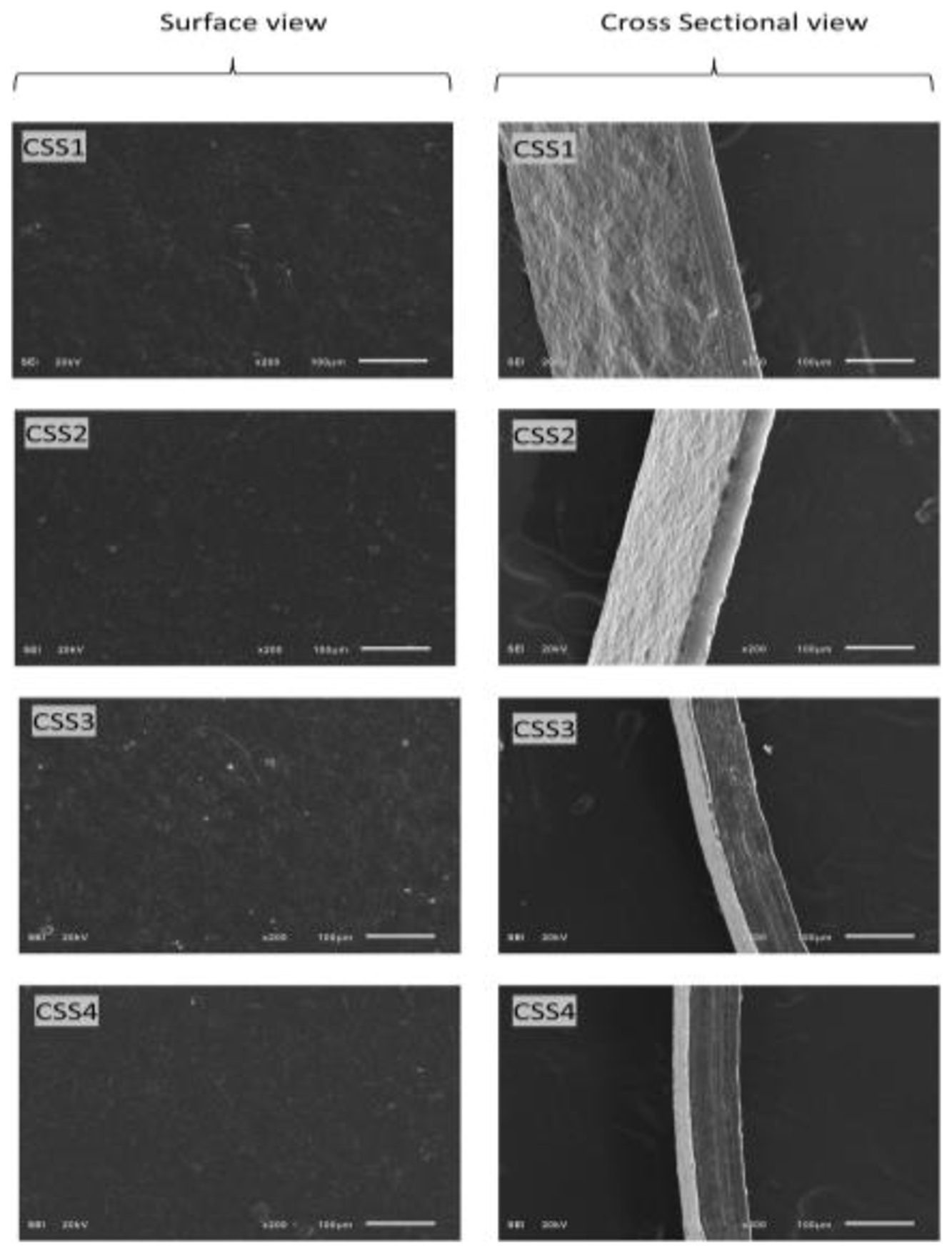
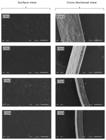
The scanning electron microscopy (SEM) images demonstrate the surface morphology and cross-sectional images of the fabricated film samples. The SEM images of all films with BEO and different surfactant are demonstrated in Figure 1. The CSS 1 film sample image indicates the rough, homogeneous, and uniform surface characteristics which may be attributed to the electrostatic interaction between the chitosan and alginate, as reported earlier[31]. The cross-sectional image indicates that there are no pores and phase separation in control film samples. The CSS 2 film sample indicates the surface is smooth, homogenous, and uniform, whereas the cross-section image indicates smoother edges and no phase separation. This may be associated with addition of Span 80, which is lipophilic in nature. The CSS 3 film sample indicates the surface is smooth, homogeneous, and uniform, whereas the cross-sectional image indicates rough edges. This is due to Tween 80, which is highly hydrophilic in nature. The CSS 4 film sample indicates that the surface is smooth, homogeneous, and uniform, whereas the cross-sectional image indicates that smoother edges and uniform. This is due to lecithin, which is amphiphilic and ionic in nature.
3.6 X-Ray diffraction analysis
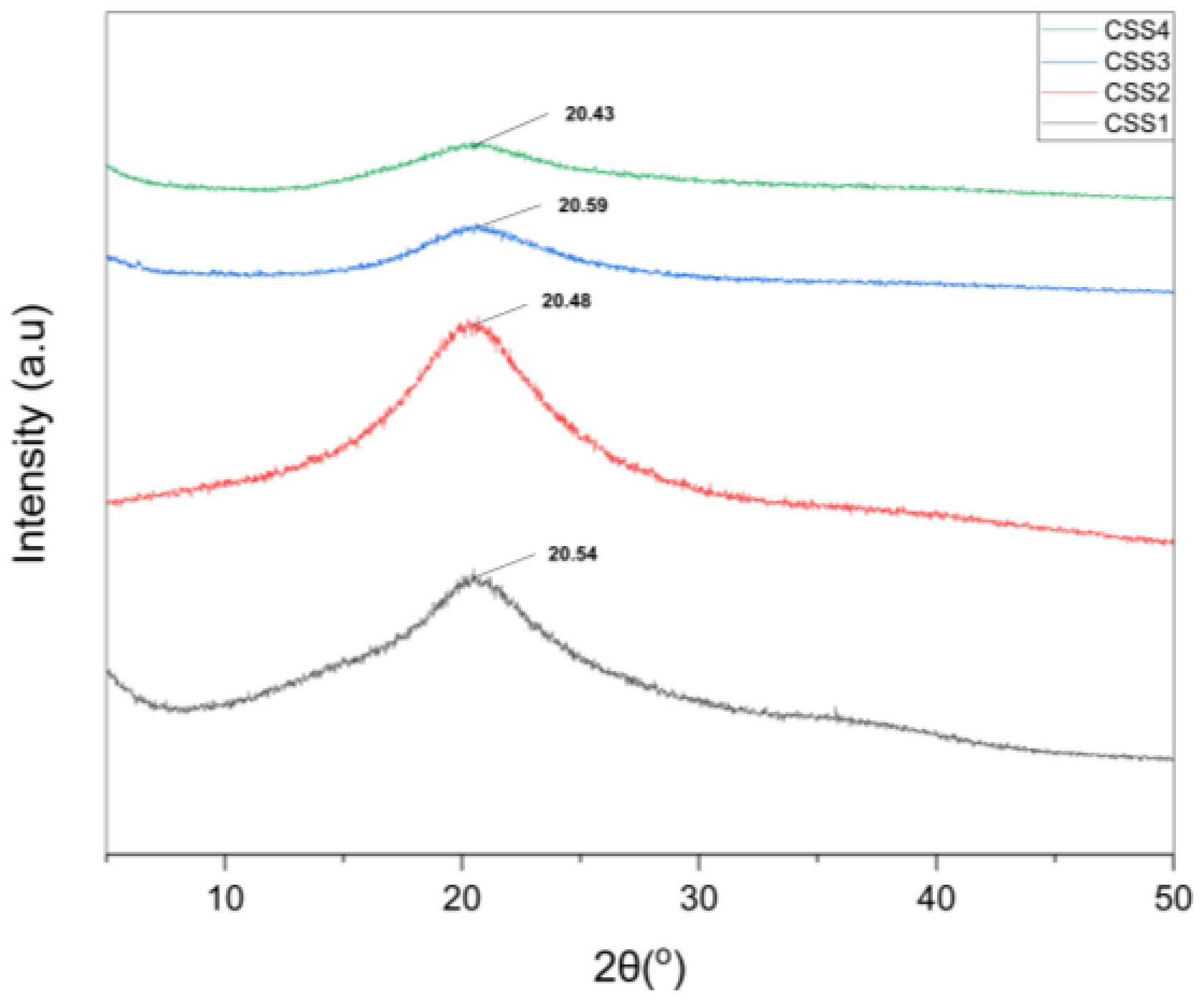
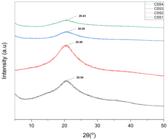
The crystallinity of the fabricated film samples was determined by X-ray diffraction analysis. The results are analyzed and demonstrated in Figure 2. The CSS 1 sample showed a major peak at 2θ = 20.54, and the crystallinity index (CI) is 56.25%. In the CSS 2 film sample, there is a slight shift in the peak, and the new peak is at 2θ = 20.480 and the CI was 53.80% because of the addition of essential oil and Span 80. The CSS3 sample has a peak at 2θ = 20.540 and the CI was 41.49%. This is because of Tween 80, a high HLB (Hydrophilic-Lipophilic Balance) value, which increases the free volume inside the polymer matrix, resulting in a decline in crystallinity. The CSS4 film sample demonstrated peak at 2θ = 20.430 with CI 46.24%. This is because of lecithin, which is an ionic surfactant that increases the mobility of polymeric chains resulting in increase in the free volume.
3.7 Fourier transform infrared spectroscopy analysis
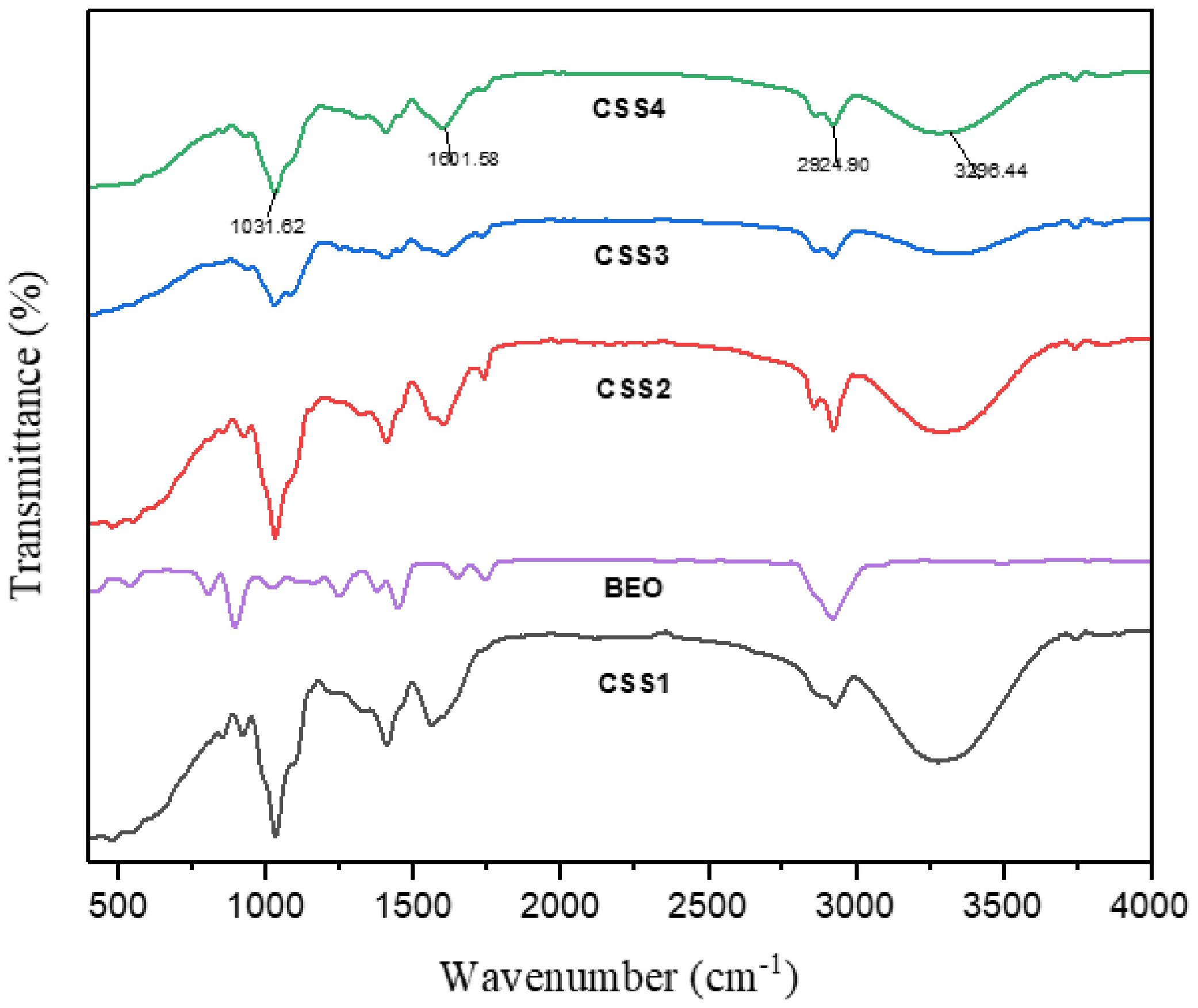
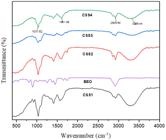
Figure 3 represents the Fourier Transform Infrared (FTIR) Spectroscopy of the fabricated film samples. The peak at 3296 cm-1 is attributed to -OH stretching vibration. The peak at 2924 cm-1 is attributed to -CH stretching vibration. The 1601 cm-1 is attributed to the C=O bond. The peak at 1031 cm-1 is ascribed to the -COC bond, which is reported earlier in the previous study[32]. The addition of BEO and surfactant in the bio-composite matrix in CSS 2, CSS 3, and CSS 4 changed the intensities of the peak. The shift in peak intensity from CSS 2 to CSS 4, indicate molecular interactions between the components. Several studies have been published where BEO showed similar peaks[33,34]. These findings are in line with the previous studies[35-38].
3.8 Water vapor permeability analysis
The water vapor transmission rate of a polymer based film is determined to quantify the amount of moisture that passes through the film per unit area and time, under certain conditions. This is mainly done to assess the film's barrier performance and its potential to maintain the required internal environment of the product. The WVTR results of fabricated films are demonstrated in Table 4. The control sample (CSS 1) showed 0.182 g/m2·day. The CSS 2 film showed the lowest WVTR of 0.164 g/m2·day, which could be due to the addition of hydrophobic surfactant, Span 80. This addition resulted in reduction in the hydrogen bonding with CA and SA leading to change in hydrophobicity of the material . The CSS 3 film showed the highest WVTR of 0.39 g/m2·day, due to addition of hydrophilic surfactant that may increase bound water, resulting in a less dense structure[39]. The CSS 4 film showed a WVTR of 0.21 g/m2·day, due to the presence of lecithin in the polymeric network, which shows lipophilic behavior and demonstrates lower WVTR[40].
3.9 Swelling index analysis
The swelling index is a critical factor in packaging material, which determines the expansion in the volume of the film due to absorption of water. In terms of food packaging, water resistance is determined by swelling capacity which signifies the quality of the food product during transportation and storage[41]. The results of the swelling index of the fabricated film samples were analyzed and demonstrated in Table 4. The CSS 1 film sample showed 77.88%, however with the addition of surfactants and essential oil the swelling index was changed. The CSS 2 film sample showed the lowest swelling index of 74.53%. This behavior might be due to the addition of Span 80, as this addition caused an increase in the water resistance of the film[42]. The CSS 3 film sample showed the swelling index of 88.81%, due to the presence of hydrophilic surfactant, Tween 80 and possess more porous structure, which increases the water uptake of the films. Similar results were found in WVTR and previously reported[43].
3.10 Antioxidant properties
The antioxidant properties of the fabricated film samples are shown in Table 4. The CSS 1 film samples showed 38.46%. The blank sample also possess antioxidant due to the the presence of chitosan[44]. The incorporation of BEO and surfactant in the polymer matrix increases the antioxidant activity. The CSS 2 film samples showed the 41.39% of radical scavenging activity, whereas the CSS 3 and CSS 4 showed 44.90% and 41.52% of inhibition. This illustrates that with different surfactants in the polymer matrix, the antioxidant properties were different, which may be due to the different nature of the surfactants that interact with BEO and polymer matrix.
3.11 Water contact angle
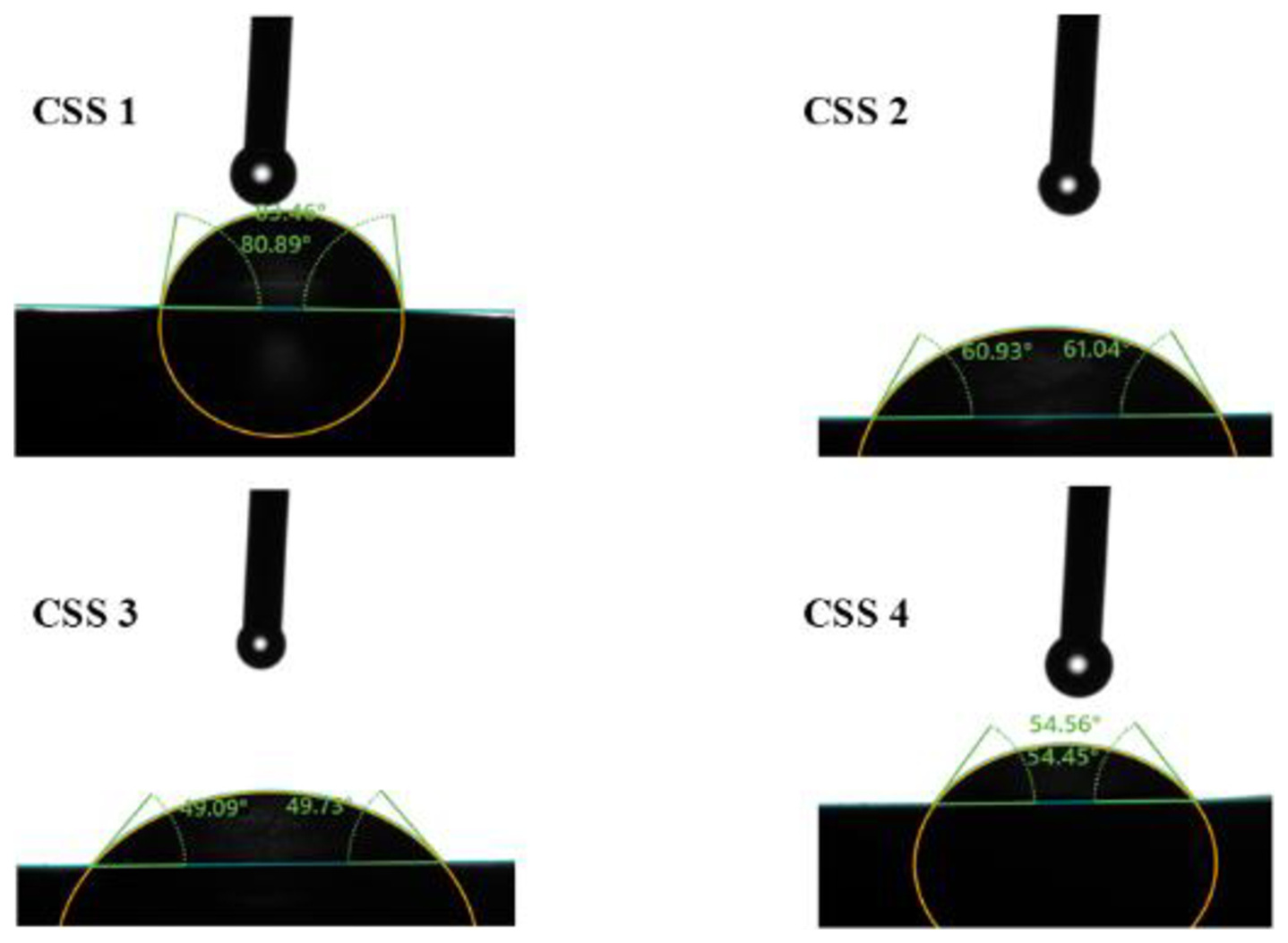
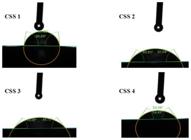
The water contact angle of the fabricated film samples is shown in Figure 4. The control sample showed an average contact angle of 82.17ᴼ, indicating a hydrophilic surface. The incorporation of BEO and surfactant in the polymer matrix made the films more wettable when compared to the control. The CSS 2 film samples showed an average contact angle of 60.98ᴼ, whereas CSS 3 and CSS 4 film samples showed an average contact angles of 49.41ᴼ and 54.51ᴼ, indicating increase in wettability compared to the control. This may be due to the different nature of the surfactant, which reduces the interfacial energy between the polymers and the BEO[45].
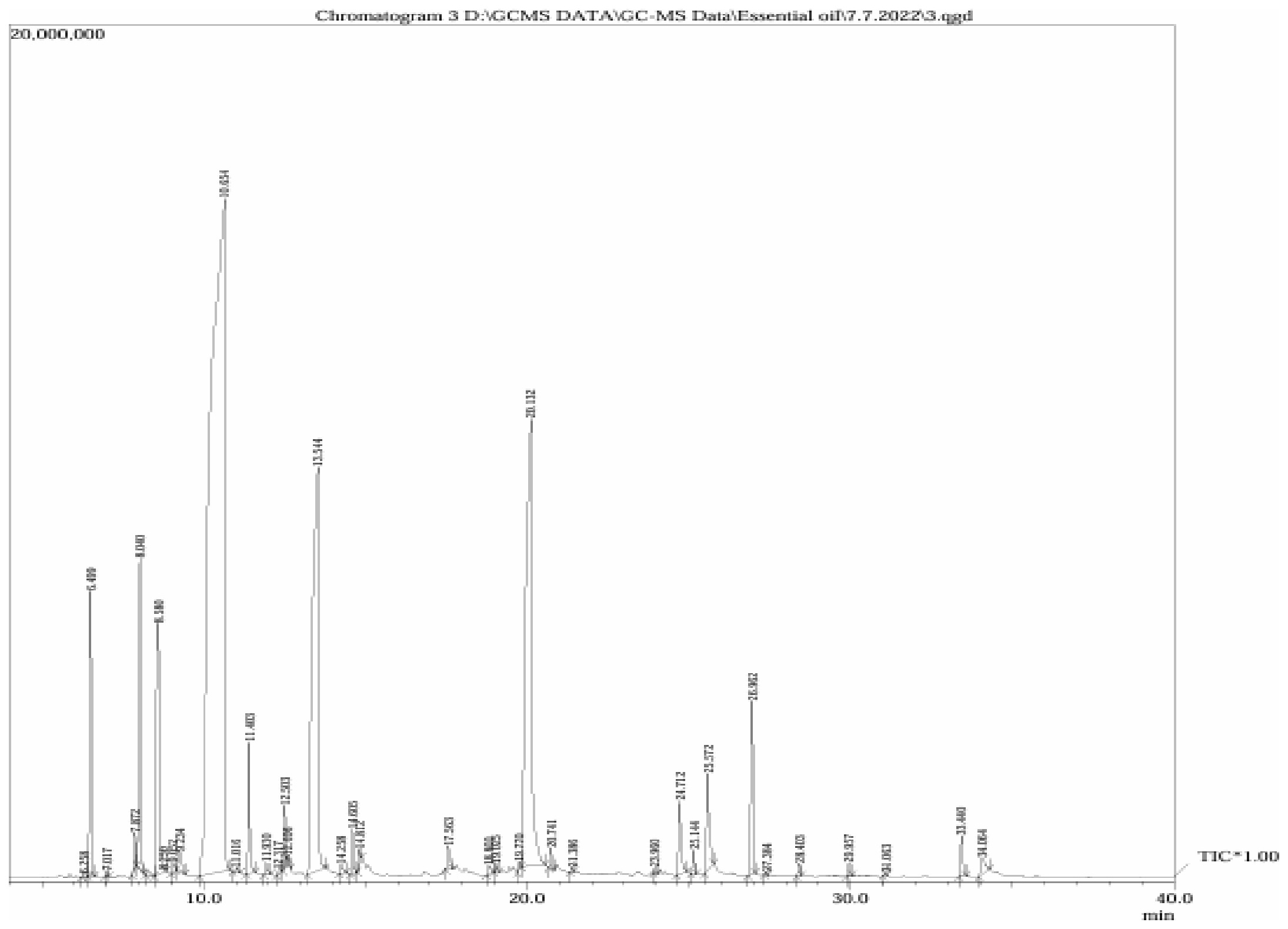
3.12 Gas chromatography – Mass spectroscopy analysis
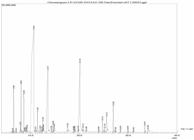
Figure 5 demonstrates the GC-MS analysis of BEO. The GC-MS profile of oil shown in Table 5 revealed the presence of oxygenated and hydrocarbon monoterpenes in the oil. This aligns with the previously reported composition of Citrus bergamia oil. The major component in BEO was limonene which accounted for 50.49% of the total composition. These components form the principal monoterpene hydrocarbon that contributes to the characteristic aroma of citrus. The second most abundant component was linalyl acetate with 14.91% followed by linalool (12.97%). Both of these are key aromatic components that are responsible for Aromatic odour. Some additional monoterpenes such as β-pinene (3.72%) followed by α-pinene (2.64%), γ-terpinene (1.23%), terpinolene (0.52%), and sabinene (0.44%) out of total oil composition were also detected. This indicates the complex volatile matrix of BEO. Furthermore, some minor oxygenated constituents such as limonene oxides (cis and trans), α-terpineol, carveol, and neryl acetate were also detected. Some high molecular weight sesquiterpene derivatives such as caryophyllene (2.00%) and caryophyllene oxide (0.49%) were also present. Similar findings have been documented in the previous literature [46,47].
4. Conclusions
This study successfully evaluated the incorporation of different surfactants over the structural and functional behavior of CA and SA bio-composite films containing BEO. These research findings confirmed that different surfactants caused different changes in the polymer matrix, that help in designing packaging material based on requirements. Span 80 is hydrophobic in nature and have a low HLB value, hence its incorporation caused an improvement in WVTR and decreased swelling index of films, making it more favorable for a high-humidity environment. Tween 80 is hydrophilic in nature and possess high HLB value, hence its incorporation resulted in increase in the free volume with increase in affinity for water molecules, resulting increase in WVTR and swelling index. Lecithin is a bulky surfactant, when incorporated in film, it causes an increase in the thickness. FTIR validated the interaction between the polymer and surfactants. The DPPH radical inhibition showed increased antioxidant activity due to the addition of surfactant and BEO. The water contact angle of the surfactant loaded films decreased due to decrease in wettability resistance of the films. Overall, the presented work highlights the impact of surfactants in the polymer matrix of CA and SA. Span 80-based films emerged as the most suitable candidate for moisture-sensitive food packaging. This study provides robust knowledge for the development of advance eco-friendly active packaging material having customizable performance attributes.
6. Acknowledgements
The Authors are thankful to the Natural and Medical Sciences Research Center, University of Nizwa, Oman, for providing research facilities to conduct the current study.
-
Data Availability:
All data supporting the findings of this study are available from the corresponding author upon request.
-
How to cite:
Gupta, A., Jawad, M., Al-Harrasi, A., & Bhatia, S. (2026). Impact of different surfactants on chitosan/sodium alginate films reinforced with bergamot oil. Polímeros: Ciência e Tecnologia, 36(3), e20260026. https://doi.org/10.1590/0104-1428.20250121
7. References
-
1 Plastics Europe. (2023). Plastics – the fast facts 2023 Retrieved in 2026, January 27, from https://plasticseurope.org/knowledge-hub/plastics-the-fast-facts-2023/
» https://plasticseurope.org/knowledge-hub/plastics-the-fast-facts-2023/ -
2 Ellen MacArthur Foundation. World Economic Forum. McKinsey & Company. (2016). The new plastics economy: Rethinking the future of plastics Ellen MacArthur Foundation. Retrieved in 2026, January 27, from https://www.ellenmacarthurfoundation.org/the-new-plastics-economy-rethinking-the-future-of-plastics
» https://www.ellenmacarthurfoundation.org/the-new-plastics-economy-rethinking-the-future-of-plastics -
3 British Plastics Federation. (2025, December 3). Retrieved in 2026, January 27, from https://www.bpf.co.uk/plastipedia/applications/about_plastics__packaging.aspx
» https://www.bpf.co.uk/plastipedia/applications/about_plastics__packaging.aspx -
4 Singh, N., & Walker, T. R. (2024). Plastic recycling: A panacea or environmental pollution problem. Npj Materials Sustainability, 2(1), 17. https://doi.org/10.1038/s44296-024-00024-w PMid:39114578.
» https://doi.org/10.1038/s44296-024-00024-w -
5 European Environment Agency. (2020). Plastics, the circular economy and Europe’s environment — A priority for action Retrieved in 2026, January 27, from https://www.eea.europa.eu/publications/plastics-the-circular-economy-and
» https://www.eea.europa.eu/publications/plastics-the-circular-economy-and -
6 Sharma, S., & Mallubhotla, S. (2019). Plastic waste management practices. In A. Rathoure (Ed.), Zero waste: Management practices for environmental sustainability (pp. 9-13). Boca Raton: CRC Press. https://doi.org/10.1201/9780429059247-7
» https://doi.org/10.1201/9780429059247-7 -
7 Gironi, F., & Piemonte, V. (2011). Bioplastics and petroleum-based plastics: strengths and weaknesses. Energy Sources. Part A, Recovery, Utilization, and Environmental Effects, 33(21), 1949-1959. https://doi.org/10.1080/15567030903436830
» https://doi.org/10.1080/15567030903436830 -
8 Xu, Y., Liu, X., Jiang, Q., Yu, D., Xu, Y., Wang, B., & Xia, W. (2021). Development and properties of bacterial cellulose, curcumin, and chitosan composite biodegradable films for active packaging materials. Carbohydrate Polymers, 260, 117778. https://doi.org/10.1016/j.carbpol.2021.117778 PMid:33712134.
» https://doi.org/10.1016/j.carbpol.2021.117778 -
9 Hefft, D. I., & Adeutnji, C. O. (2024). Alginate in food and beverage formulations. In D. I. Hefft, & C. O Adeutnji (Eds.), Applications of seaweeds in food and nutrition (pp.115-128). Amsterdam: Elsevier. https://doi.org/10.1016/B978-0-323-91803-9.00017-2
» https://doi.org/10.1016/B978-0-323-91803-9.00017-2 -
10 Schenk, S., Bucher, M., Herrenbauer, M., Schmid, D., & Schmid, M. (2025). Challenges of alginate-based cast films in plastic-free food packaging applications: an overview. Polymers, 17(22), 3061. https://doi.org/10.3390/polym17223061 PMid:41304426.
» https://doi.org/10.3390/polym17223061 -
11 Andreuccetti, C., Carvalho, R. A., Galicia-García, T., Martínez-Bustos, F., & Grosso, C. R. F. (2011). Effect of surfactants on the functional properties of gelatin-based edible films. Journal of Food Engineering, 103(2), 129-136. https://doi.org/10.1016/j.jfoodeng.2010.10.007
» https://doi.org/10.1016/j.jfoodeng.2010.10.007 -
12 Wu, S., Hatahet, T., Bona, B. L., Lodigiani, G., Zhang, M., Bombelli, F. B., & Al-Jamal, W. T. (2025). Incorporating Span 80 surfactant into lipid nanocapsules improves their biocompatibility and cellular uptake in B16F10 melanoma cells. International Journal of Pharmaceutics, 672, 125358. https://doi.org/10.1016/j.ijpharm.2025.125358 PMid:39954976.
» https://doi.org/10.1016/j.ijpharm.2025.125358 -
13 Aksalamol, P. R., George, J., Guthige, M. R., Navaf, M., Sunooj, K. V., Kumar, R., & Semwal, A. D. (2024). Towards sustainable food packaging: optimization of suitable sorbitan surfactant for the development of PLA-based antifog film. Food Packaging and Shelf Life, 46, 101368. https://doi.org/10.1016/j.fpsl.2024.101368
» https://doi.org/10.1016/j.fpsl.2024.101368 -
14 Olewnik-Kruszkowska, E., Ferri, M., Degli Esposti, M., Richert, A., & Fabbri, P. (2025). Innovative biobased active composites of cellulose acetate propionate with tween 80 and cinnamic acid for blueberry preservation. Polymers, 17(15), 2072. https://doi.org/10.3390/polym17152072 PMid:40808120.
» https://doi.org/10.3390/polym17152072 -
15 Li, Q., Liang, W., Lv, L., Fang, Z., Xu, D., Liao, J., & Liu, Y. (2024). Preparation of PCL/lecithin/bacteriocin CAMT6 antimicrobial and antioxidant nanofiber films using emulsion electrospinning: characteristics and application in chilled salmon preservation. Food Research International, 175, 113747. https://doi.org/10.1016/j.foodres.2023.113747 PMid:38128997.
» https://doi.org/10.1016/j.foodres.2023.113747 -
16 American Society for Testing and Materials – ASTM. (2012). ASTM D882-12: Standard test method for tensile properties of thin sheeting West Conshohocken: ASTM. https://doi.org/10.1520/D0882-12
» https://doi.org/10.1520/D0882-12 -
17 Erdem, B. G., Dıblan, S., & Kaya, S. (2019). Development and structural assessment of whey protein isolate/sunflower seed oil biocomposite film. Food and Bioproducts Processing, 118, 270-280. https://doi.org/10.1016/j.fbp.2019.09.015
» https://doi.org/10.1016/j.fbp.2019.09.015 -
18 Brand-Williams, W., Cuvelier, M. E., & Berset, C. (1995). Use of a free radical method to evaluate antioxidant activity. Lebensmittel-Wissenschaft + Technologie, 28(1), 25-30. https://doi.org/10.1016/S0023-6438(95)80008-5
» https://doi.org/10.1016/S0023-6438(95)80008-5 -
19 Khan, T. S., Shah, Y. A., Al-Harrasi, A., Al Dawery, S. K., Harharah, H. N., Harharah, R. H., Ahmad, M. W., Al-Kharusi, L., & Bhatia, S. (2025). Impact of various surfactants on the properties of fucoidan-based biopolymer films extracted from brown seaweed (Padina boergesenii) for active food packaging. International Journal of Biological Macromolecules, 327(Part 2), 146919. https://doi.org/10.1016/j.ijbiomac.2025.146919 PMid:40819761.
» https://doi.org/10.1016/j.ijbiomac.2025.146919 -
20 Ivanova, N. A., Kovalchuk, N. M., Sobolev, V. D., & Starov, V. M. (2015). Wetting films of aqueous solutions of Silwet L-77 on a hydrophobic surface. Soft Matter, 12(1), 26-30. https://doi.org/10.1039/C5SM02043C PMid:26451895.
» https://doi.org/10.1039/C5SM02043C -
21 Li, X., Tu, Z.-C., Sha, X.-M., Ye, Y.-H., & Li, Z.-Y. (2020). Flavor, antimicrobial activity, and physical properties of composite film prepared with different surfactants. Food Science & Nutrition, 8(7), 3099-3109. https://doi.org/10.1002/fsn3.1526 PMid:32724574.
» https://doi.org/10.1002/fsn3.1526 -
22 Yulianti, K., Gunawan, A. Y., Soewono, E., & Mucharam, L. (2020). The effects of surfactant on the evolution of a thin film under a moving liquid drop. Indonesian Journal of Science and Technology, 5(1), 75-85. https://doi.org/10.17509/ijost.v5i1.23100
» https://doi.org/10.17509/ijost.v5i1.23100 -
23 Brandelero, R. P. H., Yamashita, F., & Grossmann, M. V. E. (2010). The effect of surfactant Tween 80 on the hydrophilicity, water vapor permeation, and the mechanical properties of cassava starch and poly(butylene adipate-co-terephthalate) (PBAT) blend films. Carbohydrate Polymers, 82(4), 1102-1109. https://doi.org/10.1016/j.carbpol.2010.06.034
» https://doi.org/10.1016/j.carbpol.2010.06.034 -
24 Delacotte, J., Montel, L., Restagno, F., Scheid, B., Dollet, B., Stone, H. A., Langevin, D., & Rio, E. (2012). Plate coating: influence of concentrated surfactants on the film thickness. Langmuir : The ACS Journal of Surfaces and Colloids, 28(8), 3821-3830. https://doi.org/10.1021/la204386b PMid:22283676.
» https://doi.org/10.1021/la204386b -
25 Song, X., Zuo, G., & Chen, F. (2018). Effect of essential oil and surfactant on the physical and antimicrobial properties of corn and wheat starch films. International Journal of Biological Macromolecules, 107(Pt A), 1302-1309. https://doi.org/10.1016/j.ijbiomac.2017.09.114 PMid:28970166.
» https://doi.org/10.1016/j.ijbiomac.2017.09.114 -
26 Chuah, A. M., Kuroiwa, T., Kobayashi, I., & Nakajima, M. (2009). Effect of chitosan on the stability and properties of modified lecithin stabilized oil-in-water monodisperse emulsion prepared by microchannel emulsification. Food Hydrocolloids, 23(3), 600-610. https://doi.org/10.1016/j.foodhyd.2008.03.014
» https://doi.org/10.1016/j.foodhyd.2008.03.014 -
27 Calambás Pulgarin, H. L., Caicedo, C., & López, E. F. (2022). Effect of surfactant content on rheological, thermal, morphological and surface properties of thermoplastic starch (TPS) and polylactic acid (PLA) blends. Heliyon, 8(10), e10833. https://doi.org/10.1016/j.heliyon.2022.e10833 PMid:36247174.
» https://doi.org/10.1016/j.heliyon.2022.e10833 -
28 Kong, I., Degraeve, P., & Pui, L. P. (2022). Polysaccharide-based edible films incorporated with essential oil nanoemulsions: Physico-chemical, mechanical properties and its application in food preservation—A review. Foods, 11(4), 555. https://doi.org/10.3390/foods11040555 PMid:35206032.
» https://doi.org/10.3390/foods11040555 -
29 Carrapiso, A. I., Pimienta, M., Martín, L., Cardenia, V., & Andrés, A. I. (2023). Effect of a chitosan coating enriched with an olive leaf extract on the characteristics of pork burgers. Foods, 12(20), 3757. https://doi.org/10.3390/foods12203757 PMid:37893650.
» https://doi.org/10.3390/foods12203757 -
30 Tongnuanchan, P., Benjakul, S., & Prodpran, T. (2013). Characteristics and antioxidant activity of leaf essential oil-incorporated fish gelatin films as affected by surfactants. International Journal of Food Science & Technology, 48(10), 2143-2149. https://doi.org/10.1111/ijfs.12198
» https://doi.org/10.1111/ijfs.12198 -
31 Arzate-Vázquez, I., Chanona-Pérez, J. J., Calderón-Domínguez, G., Terres-Rojas, E., Garibay-Febles, V., Martínez-Rivas, A., & Gutiérrez-López, G. F. (2012). Microstructural characterization of chitosan and alginate films by microscopy techniques and texture image analysis. Carbohydrate Polymers, 87(1), 289-299. https://doi.org/10.1016/j.carbpol.2011.07.044 PMid:34662963.
» https://doi.org/10.1016/j.carbpol.2011.07.044 -
32 Kuczajowska-Zadrożna, M., Filipkowska, U., & Jóźwiak, T. (2020). Adsorption of Cu(II) and Cd(II) from aqueous solutions by chitosan immobilized in alginate beads. Journal of Environmental Chemical Engineering, 8(4), 103878. https://doi.org/10.1016/j.jece.2020.103878
» https://doi.org/10.1016/j.jece.2020.103878 -
33 Zambito, Y., Piras, A. M., & Fabiano, A. (2022). Bergamot essential oil: A method for introducing it in solid dosage forms. Foods, 11(23), 3860. https://doi.org/10.3390/foods11233860 PMid:36496668.
» https://doi.org/10.3390/foods11233860 -
34 Wong, S. T. S., Kamari, A., Abdullah, N. N. A., Yusof, N., & Wayan Sutapa, I. (2024). Preparation and characterization of bergamot essential oil nanoemulsion. IOP Conference Series. Earth and Environmental Science, 1425(1), 012031. https://doi.org/10.1088/1755-1315/1425/1/012031
» https://doi.org/10.1088/1755-1315/1425/1/012031 -
35 Chalid, M., Husnil, Y. A., Puspitasari, S., & Cifriadi, A. (2020). Experimental and modelling study of the effect of adding starch-modified natural rubber hybrid to the vulcanization of sorghum fibers-filled natural rubber. Polymers, 12(12), 3017. https://doi.org/10.3390/polym12123017 PMid:33348531.
» https://doi.org/10.3390/polym12123017 -
36 Zhang, H., Han, Q., Gao, X., Tang, X., Chen, K., & Li, M. (2019). Impact of reinforcing additives on the structure and performance of composite films based on regenerated cellulose from corn stalk pith. BioResources, 14(4), 8455-8469. https://doi.org/10.15376/biores.14.4.8455-8469
» https://doi.org/10.15376/biores.14.4.8455-8469 -
37 Pasieczna-Patkowska, S., Cichy, M., & Flieger, J. (2025). Application of Fourier transform infrared (FTIR) spectroscopy in characterization of green synthesized nanoparticles. Molecules, 30(3), 684. https://doi.org/10.3390/molecules30030684 PMid:39942788.
» https://doi.org/10.3390/molecules30030684 -
38 Arya, A., Sadiq, M., & Sharma, A. L. (2018). Effect of variation of different nanofillers on structural, electrical, dielectric, and transport properties of blend polymer nanocomposites. Ionics, 24(8), 2295-2319. https://doi.org/10.1007/s11581-017-2364-7
» https://doi.org/10.1007/s11581-017-2364-7 -
39 Boonpratum, C., Naemchanthara, P., Limsuwan, P., & Naemchanthara, K. (2022). Effects of chitosan and Tween 80 addition on the properties of nanofiber mat through the electrospinning. E-Polymers, 22(1), 234-248. https://doi.org/10.1515/epoly-2022-0029
» https://doi.org/10.1515/epoly-2022-0029 -
40 Shamsuri, A. A., & Siti Nurul, S. N. A. (2020). Functional properties of biopolymer-based films modified with surfactants: A brief review. Processes, 8(9), 1039. https://doi.org/10.3390/pr8091039
» https://doi.org/10.3390/pr8091039 -
41 Kazak, M. B., & Tugrul, N. (2024). Comparison of the film properties of lemon and sour cherry seed essential oil-added glycerol and/or sorbitol-plasticized corn, potato, rice, tapioca, and wheat starch-based edible films. International Journal of Polymer Science, 2024(1), 9112555. https://doi.org/10.1155/2024/9112555
» https://doi.org/10.1155/2024/9112555 -
42 Maran, J. P., Sivakumar, V., Sridhar, R., & Thirugnanasambandham, K. (2013). Development of model for barrier and optical properties of tapioca starch based edible films. Carbohydrate Polymers, 92(2), 1335-1347. https://doi.org/10.1016/j.carbpol.2012.09.069 PMid:23399163.
» https://doi.org/10.1016/j.carbpol.2012.09.069 -
43 Ali, M., Ullah, S., Ullah, S., Shakeel, M., Afsar, T., Husain, F. M., Amor, H., & Razak, S. (2024). Innovative biopolymers composite based thin film for wound healing applications. Scientific Reports, 14(1), 27415. https://doi.org/10.1038/s41598-024-79121-8 PMid:39521931.
» https://doi.org/10.1038/s41598-024-79121-8 -
44 Sun, L., Sun, J., Chen, L., Niu, P., Yang, X., & Guo, Y. (2017). Preparation and characterization of chitosan film incorporated with thinned young apple polyphenols as an active packaging material. Carbohydrate Polymers, 163, 81-91. https://doi.org/10.1016/j.carbpol.2017.01.016 PMid:28267521.
» https://doi.org/10.1016/j.carbpol.2017.01.016 -
45 Gomes, A. C. D., Silva, K. F., Freitas, A. J., Miranda, K. W. E., Santos, T. A., Borges, S. V., Dias, M. V., & Thomazi, A. C. (2021). Effect of surfactant on the formation of chitosan/ε-polycaprolactone blend films for food packaging applications. Research Square https://doi.org/10.21203/rs.3.rs-804708/v1
» https://doi.org/10.21203/rs.3.rs-804708/v1 -
46 Melliou, E., Michaelakis, A., Koliopoulos, G., Skaltsounis, A. L., & Magiatis, P. (2009). High quality bergamot oil from Greece: chemical analysis using chiral gas chromatography and larvicidal activity against the West Nile virus vector. Molecules, 14(2), 839-849. https://doi.org/10.3390/molecules14020839 PMid:19255543.
» https://doi.org/10.3390/molecules14020839 -
47 Leggio, A., Leotta, V., Belsito, E. L., Di Gioia, M. L., Romio, E., Santoro, I., Taverna, D., Sindona, G., & Liguori, A. (2017). Aromatherapy: composition of the gaseous phase at equilibrium with liquid bergamot essential oil. Chemistry Central Journal, 11(1), 111. https://doi.org/10.1186/s13065-017-0340-y PMid:29098462.
» https://doi.org/10.1186/s13065-017-0340-y
Edited by
-
Editor-in-Chief:
Sebastião V. Canevarolo
All data supporting the findings of this study are available from the corresponding author upon request.