 Characterization of PBAT bioplastic with Brazil nut urchin particles
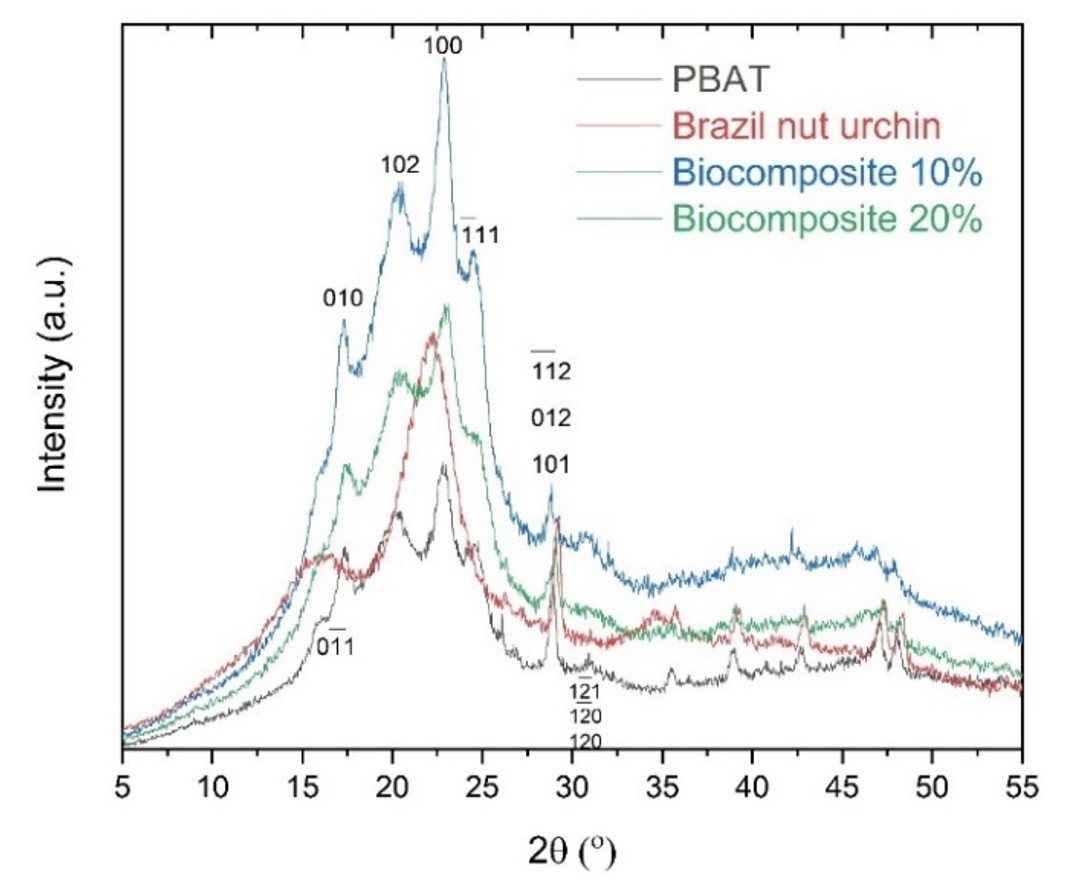
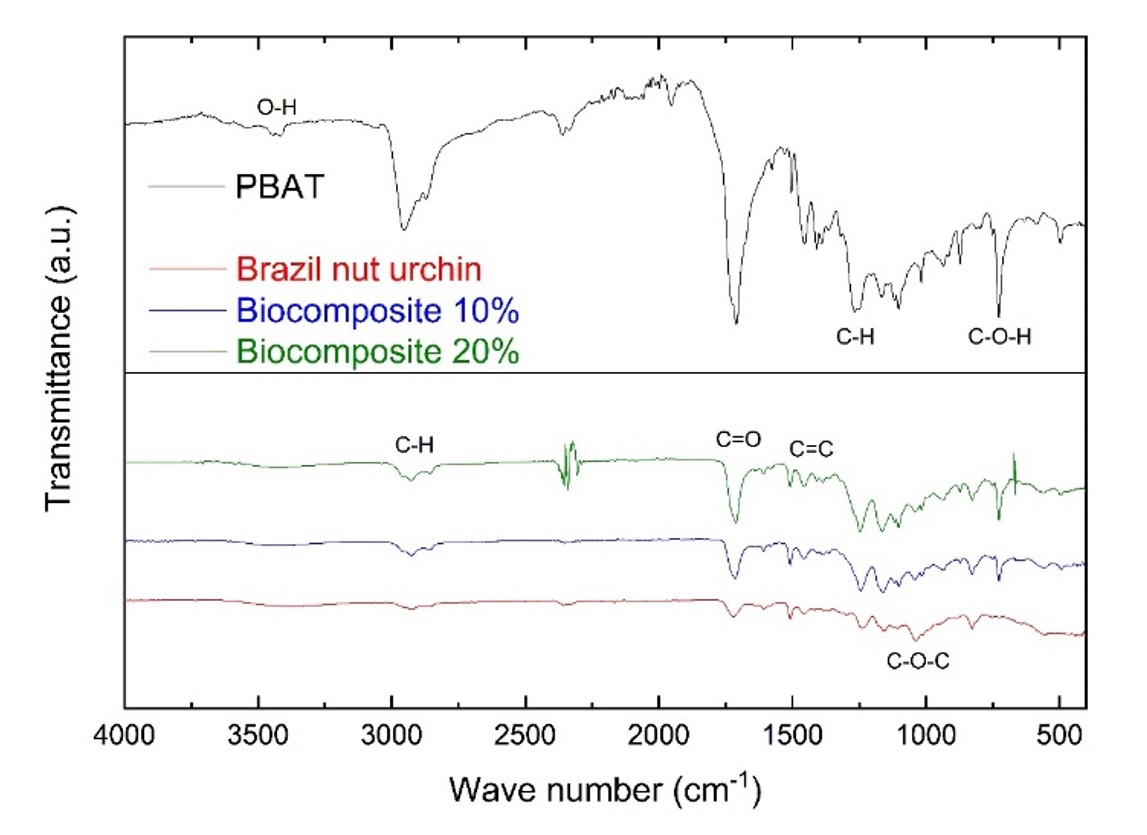
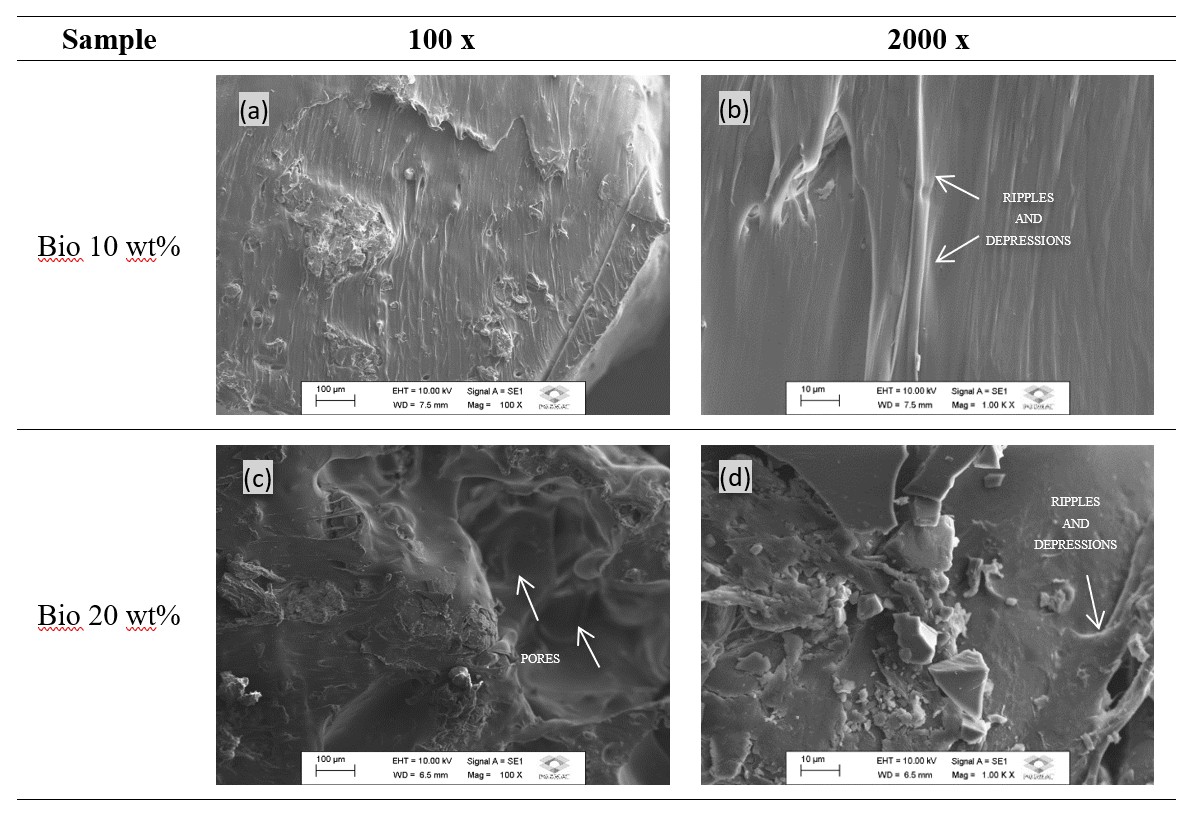
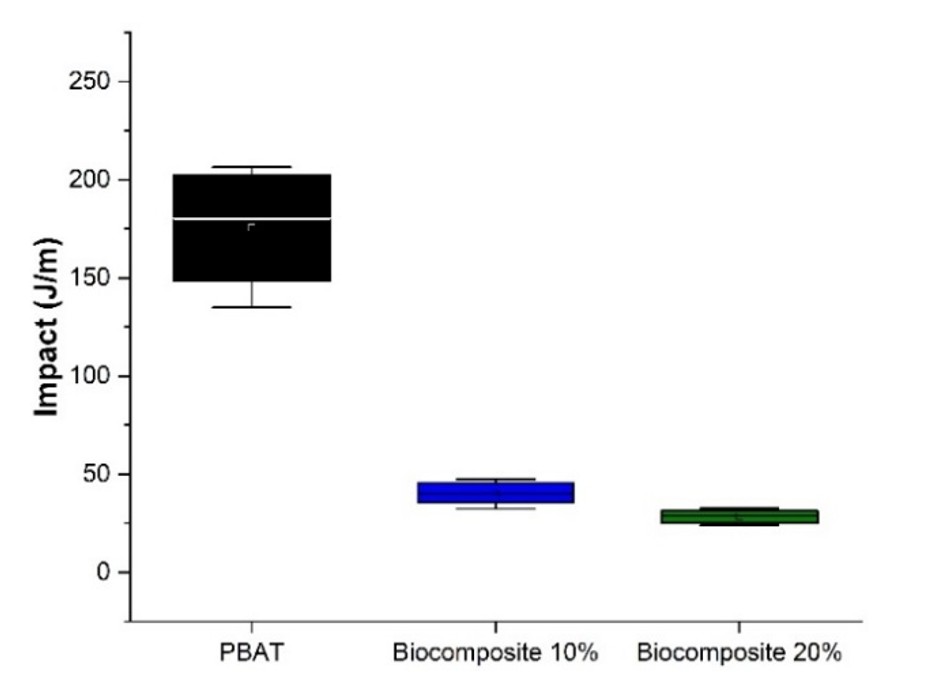
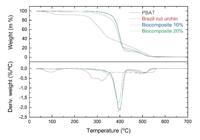
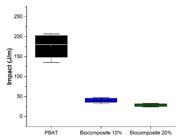
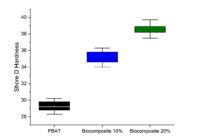
This study developed PBAT (poly[butylene adipate-co-terephthalate]) biocomposites with 10 wt% and 20 wt% Brazil nut urchin particles by extrusion and injection. TGA showed thermal stability up to 275°C (10 wt%) and 250°C (20 wt%), with degradation peaks near 400°C. XRD indicated maintained crystallinity, with the 10 wt% composite having the highest peak intensity (5254 a.u.). FTIR confirmed molecular interactions through characteristic OH (3442 cm−1) and C=O (1710-1720 cm−1) peaks. SEM revealed better surface integrity at 10 wt%, while 20 wt% showed porosity and poor adhesion. Tensile strength decreased from 9.36 MPa (PBAT) to 7.08 MPa (10 wt%) and 6.7 MPa (20 wt%). Elongation reduced, whereas Young’s modulus increased to 210 MPa (10 wt%) and 316 MPa (20 wt%). Shore D hardness improved by over 40%, but impact resistance dropped by up to 88%. These biocomposites show potential for applications requiring higher stiffness and hardness, contributing to sustainable plastic alternatives.
Keywords:
composite materials; forest residues; biopolymers; PBAT; Brazil nut urchin
 Thumbnail
 Thumbnail
 Thumbnail
 Thumbnail
 Thumbnail
 Thumbnail
 Thumbnail
 Thumbnail