 Contributions of humanitarian operations for national security: a perspective of the Brazilian Armed Forces action in three cases
Abstract
Paper aims Disasters mark the last century's history, impacting society's security. In Brazil, National Security is defined as the condition that allows preserving territorial integrity and ensure citizens the exercise of constitutional rights and duties. Amid this scenario, this research aims to analyze how operations performed by the Brazilian Armed Forces in national disaster cases contribute to restoring national security.
Originality The originality of the research concerns the topic covered - national security based on a military vision - and the combination of methods used for analysis.
Research method For developing the research, scoping review, system thinking, and system dynamics methodologies are employed.
Main findings Two hypotheses were raised regarding the employment of military forces in humanitarian operations aimed at national security, considering proactive and reactive strategies. The hypotheses were analyzed and discussed through the development of simulation models. Furthermore, based on the readings, a new aspect of national security – besides preserving territorial integrity and ensuring the exercise of constitutional rights and duties - was raised: power projection by the demonstration of capabilities.
Implications for theory and practice The research has implications for academia as it presents a taxonomy of research aimed at national humanitarian operations, raises hypotheses aimed at national security, and validates them using simulation models. In practice, our results encourage the implementation of strategies to minimize and manage the impacts of disasters.
Keywords:
Armed Forces. National security; Disaster; Systems dynamics; Humanitarian operations
1. Introduction
The Armed Forces, consisting of the Army, the Navy, and the Air Force, are essential to defend the homeland honors, integrity, and sovereignty against external aggressions and to guarantee national security (Brasil, 1941). In Brazil, the National Defense Policy defines National Security as the condition that allows preserving sovereignty and territorial integrity, the realization of national interests despite pressures and threats of any nature, and to guarantee citizens the exercise of constitutional rights and duties (Brasil, 2012).Therefore, while wars and other conflicts appear to be evident threats to National Security, the ability to respond to disaster and humanitarian operations are also acknowledged as Brazilian Armed Forces (BAF) commitments (Brasil, 2020).
Disasters originating from climate change or anthropogenic phenomena mark Brazilian history, causing deaths and impacting constitutional rights (right to life, security, property, education, health, food, work, housing, transportation, social security, and childhood protection). In this sense, recent research analyzes the disaster response processes in Brazil and abroad by the BAF (Cardoso et al., 2017; Costa et al., 2017; Rosa & Bandeira, 2016; Santos, 2019; Xavier et al., 2019; Brito Junior et al., 2020; Escudeiro et al., 2022; Ribeiro et al., 2023).
The Brazilian Atlas of Natural Disasters and the Integrated Disaster Information System (S2iD) are the official databases with relevant data on the occurrence of disasters in the Brazilian region (Brasil, 2024c, d). In each region of Brazil, the recurrent types of disasters are different. In the north, central-west and south regions, the greatest recurrence of disasters is related to the rainfall regime, presenting the highest percentages related to floods and flash floods. In the Northeast Region, most records relate to episodes of drought. In the southeast region, most of the related occurrences are related to droughts, followed by flash floods, floods and mass movements (Silva, 2019). Besides climate-related disasters, the migratory movement, disorderly and unpredictable, of people originating from the crisis in the Bolivarian Republic of Venezuela caused a situation of calamity in the north. The man-made disaster has been recognized by the federal government since 2018 (Brasil, 2024a, b).
Amid this scenario, this research aims to analyze how operations performed by the BAF in national disaster cases contribute to restoring national security. To this end, this research analyzes three major disaster response operations performance by the BAF: Operação Serrana, Operação Carro Pipa, and Operação Acolhida. These disasters are significant in terms of number of affected people, socio-economic impact, federal budget, political implications, geography, and type of disaster. These disasters are analyzed considering different contextual factors, generating hypotheses aimed at national security raised by systemic thinking, and test the hypothesis using systems dynamics (SD) simulation models.
Humanitarian operations simulations have significantly evolved over the past ten years (Mishra et al., 2019) and SD has been steadily used in modelling disaster and humanitarian operations (Besiou et al., 2021; Cunha et al., 2024). Several researchers have emphasized the excellent fit of the SD method for humanitarian operations management (Gonçalves, 2008; Besiou et al., 2021; Cunha et al., 2024).
The hypothesis raised through system thinking considers the readiness in a disaster response and the adoption of proactive or reactive disaster response actions, and the perspective of endogenous and exogenous contextual factors influencing strategies (Oliveira et al., 2020). Consequently, this research contributes answering the question: do contextual factors of disasters impact the nature of military action in humanitarian operations?
After this introductory section, Section 2 presents the research methodology. Section 3 describes the academic literature analysis and findings with a subsection of publications overview and a subsection with the hypothesis raised. Section 4 presents simulation results. Finally, Section 5 and 6 highlight the discussion and conclusions.
2. Methodology
Scoping review, system thinking, and system dynamics methodologies are employed for the research development. The decision to adopt a multi-method approach is recommended as it improves the accuracy of the results and minimizes any research bias (Choi et al., 2016).
Scoping review is a tool aimed at mapping the existing literature, assessing the potential size and scope of the available research literature on a given topic, and clearly stating the amount of literature and research available (Munn et al., 2018). Scoping review can be used in several ways: (i) identify research gaps; (ii) summarize the research finding; (iii) explore the extent of the literature in a particular domain without describing the findings in detail; (iv) help identify the proper variables and parameters of a problem; (v) find a potential scope of a systematic review (Armstrong et al., 2011).
Therefore, the purpose of our scoping reviews is to map the existing literature on three different disaster cases from Brazil (Operação Serrana, Operação Carro Pipa, and Operação Acolhida) and to understand the concepts regarding the employment of the BAF for national security.
The cases selected were intended to identify hypotheses aimed at different contexts in which the BAF operate. In this sense, Operação Acolhida, as it deals with Venezuelan migration, regards the actions of the BAF considering foreign policy. Operação Carro Pipa concerns the federal government actions in the context of a slow-onset disaster (drought), and Operation Serrana regards military action in response to a sudden-onset disaster (flood and landslide).
The system thinking method is a way of thinking about and a language for describing and understanding the interrelationships that shape the behavior of a system (Senge, 1994). Thus, system thinking is adopted to represent the cases analyzed in the scoping review. Causal Loop Diagrams (CLD) represent and assess the system complexity.
System Dynamics (SD), in turn, decomposes a complex problem into a set of variables, providing decision-makers with quantitative tools that allow them to evaluate their decisions short- and long-term outcomes (Cunha et al., 2022a). Thus, SD is a simulation method that studies complex system problems with the help of computer simulations, allowing managers to have an overview of the behavior of variables and their interaction to identify the system short and long-term effects (Sterman, 2000). The high complexity of humanitarian operations makes SD a powerful tool, which allows managers to perceive non-linear relationships, delays, backlogs, and feedback processes to adjust their actions.
Figure 1 presents the relationship between the methodologies adopted.

2.1. Scoping review
For the scoping review, this research follows the 5 steps proposed by Armstrong et al. (2011): (i) identify the research question; (ii) identify relevant studies; (iii) study selection; (iv) chart the data; (v) collate, summarize, and report the results.
The research question and motivation for developing this research were extensively discussed in the introduction. Therefore, to identify aspects of the use of BAF aimed at national security in case of disasters, a scoping review is developed to identify the proper variables and parameters of the problem, as proposed by Armstrong et al. (2011).
To identify relevant studies on the research topic, scoping review second stage, searches were carried out in May 2023 in the Scopus and Web of Science scientific databases, considering the set of keywords presented in Table 1. The database definition occurred to reduce journal indexed bias (choosing two libraries) based on the extensiveness of documents in the bases (Mongeon & Paul-Hus, 2016).
The goal of the study selection, scoping review third stage, is to ensure transparency and reproducibility, maximizing the review utility (Armstrong et al., 2011). Therefore, Figure 2 presents the search results based on the Preferred Reporting Items for Systematic Reviews and Meta-Analyses (PRISMA) flowchart prepared by Moher et al. (2015) and indicates how many articles are obtained at each stage of the work reading process for the three different Brazilian cases.
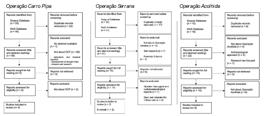
A spreadsheet for each case study is created to map the data, enabling the review of relevant themes. Spreadsheet data include author’s name, publication year, abstract, study objective, disaster case study, employment of the BAF (navy, army, air force), and spectrum of national security (territorial integrity or constitutional law). Table 2 presents a summary of the data collected.
The fifth stage, compilation, summary, and dissemination of results, is presented by generating hypotheses and proposing a framework using system thinking, presented in Section 3.
2.2. System thinking and system dynamics
For system thinking and system dynamics, this research follows the 5 steps proposed by Sterman (2000): (i) problem articulation; (ii) formulation of dynamic hypothesis; (iii) formulation of a simulation model; (iv) testing; and (v) evaluation.
The research question and motivation for developing this research were discussed in the introduction, as the three different disaster cases from Brazil analyzed (Operação Serrana, Operação Carro Pipa, and Operação Acolhida).
Once the problem is characterized and the literature analyzed, dynamic hypothesis to account for behaviors is developed (Sterman, 2000). The hypothesis raised considers the readiness in a disaster response and the adoption of proactive or reactive disaster response actions; proactive strategies are implemented before a disaster strikes to prevent and to mitigate adverse effects, whereas reactive strategies are executed during or after a disaster occurs to adjust operations (Cardoso et al., 2024). Thus, Section 3 details the disasters studied, representing them with CLD - emphasizing the feedback structure of the systems - and finally, resulting at dynamic hypotheses. The formulation of simulation models, testing and evaluation are presented in Section 4.
Vensim Pro (Ventana System) software is used to develop both the CLD and the simulation model. To ensure the validity of the models and provide the opportunity for comments and pertinent adjustments, the hypotheses and models were presented to 30 people, whether researchers or military personnel.
The concepts of proactive and reactive strategies, as well as the concepts of endogenous and exogenous factors are also considered in the CLD and simulation model development. SD seeks endogenous explanations for phenomena (Sterman, 2000). An endogenous theory generates the dynamics of a system by interacting the variables represented in the model. In turn, an exogenous theory explains the dynamics of variables based on variables outside the boundaries of the model (Sterman, 2000).
3. Problem statement and hypothesis development
This section describes the three humanitarian operations addressed, their representation with CLDs, and the development of hypotheses based on the similarities and differences analyzed.
3.1. Operação Carro Pipa (OCP)
OCP is an emergency action by the Federal Government coordinated by the Ministry of Integration and Regional Development, involving the participation of the BAF. It consists of an emergency action to bring drinking water to preferably rural communities in the Brazilian semi-arid region affected by drought, using both proactive (installation of cisterns so that people can both collect rainwater and store water from water trucks) and reactive (water trucks to transport water from previously chosen sources) strategies (Vieira et al., 2021; Brasil, 2023). Proactive strategies are adopted in drought situations to mitigate local water shortages while reactive strategies are adopted to respond to interruptions in the supply service.
The BAF action consists in the presence of the State in areas hit by severe drought and devoid of treatment units. This action by the BAF provides access to water to more than four million people, guaranteeing the fundamental human right to those that survive in an abnormal situation aggravated by climate change due to the lack of water (Santos et al., 2021).
OCP addresses the spectrum of constitutional law of national security. The fundamental right to life in the Brazilian semi-arid region is intrinsically linked to the right to access water in situations of extreme scarcity which local inhabitants are subjected to (Santos et al., 2021).
The right to water has been implicitly guaranteed since the Universal Declaration of Human Rights (in 1948) when the member countries of the United Nations (UN) agreed on the right to life in a General Assembly, which includes Brazil. Based on this democratic decision, every individual has a right that transcends the existential minimum, leaving the State with effective public management to provide “[…] a standard of living capable of assuring people and their families health and well-being, including food, clothing, housing, medical care, and necessary social services” (Santos et al., 2021, p. 605).
Because it is a fundamental human right, the participation of the BAF in this subsidiary mission is essential. The priority given to the OCP is motivated by the essentiality of water for human beings. Note that this assertion receives support both in terms of human rights – internationally and in the fundamental rights protected in the Federal Constitution and in national laws at lower hierarchical levels (Santos et al., 2021).
OCP supplies 20 L of water per person per day. A comparative parameter to such daily water consumption can be found in the Sphere Project—minimum standards for water supply, sanitation, and hygiene promotion, which suggests the value of 15 L per person per day, including the needs of human consumption, cooking, and basic hygiene. The total demand for each location that requires water supply is then calculated considering a daily consumption of 20 L per beneficiary, the value that guides the vehicle fleet dimension as well as the number of trips required during the period of drought (Vieira et al., 2020a, b).
This scenario can be translated into Figure 3 diagram.

Given that a population is affected by drought, decision-makers must mobilize relief operations for this population. With more people affected by the drought, the pressure will be greater to establish operations to support this population. In the case of OCP, the installation of cisterns (as a proactive strategy) and water transport by water trucks (as a reactive strategy) are carried out. Both reduce the amount of population without water access.
3.2. Operação Serrana
An extreme rainfall event occurred in January 2011, which induced the occurrence of thousands of landslides in the mountainous region of the state of Rio de Janeiro, culminating in social, economic, and environmental losses, mainly in the municipalities of Nova Friburgo, Teresópolis, and Petrópolis. This event caused over 900 deaths and affected more than 300,000 people (World Bank, 2012). The response to this disaster pushed the limits of the Brazilian military and other stakeholders (Costa et al., 2017).
Unlike the other two operations discussed in this research, which are federal government operations supported by the BAF, the response to the disaster in the mountainous region of Rio de Janeiro involved several actors: the state government, local governments of the cities affected, the Civil Defense of the State of Rio de Janeiro, the National Security Force, the Fire Brigade of the State of Rio de Janeiro, military forces and NGOs (Costa et al., 2014).
The operations carried out by the military aim to alleviate suffering and save lives, by clearing debris to allow access to isolated areas, and search and rescue operations (persons and corpses). The military also participated in transporting donations from other regions of Brazil to Rio de Janeiro, in loading and unloading trucks of donations, and receiving, sorting, and distributing donations (Air Force support to the civil defense) (Costa et al., 2014, 2017). More details of the processes carried out by the army, navy, and air force can be found in Fontainha et al. (2022a).
Fontainha et al. (2022b) present the military wants and needs, including coordination, alignment, and integration of actions in response to disasters among all the stakeholders involved in the disaster response. Costa et al., (2017) and Fontainha et al. (2022a) present the existence of an Integrated Security Operations Center, a disaster management center, integrating the Army, Air Force, and Navy, significantly facilitating the decisions regarding how, when and where to satisfy all needs, as well as the classification of states of emergency or urgency, via the assessment of experts and connoisseurs of the affected.
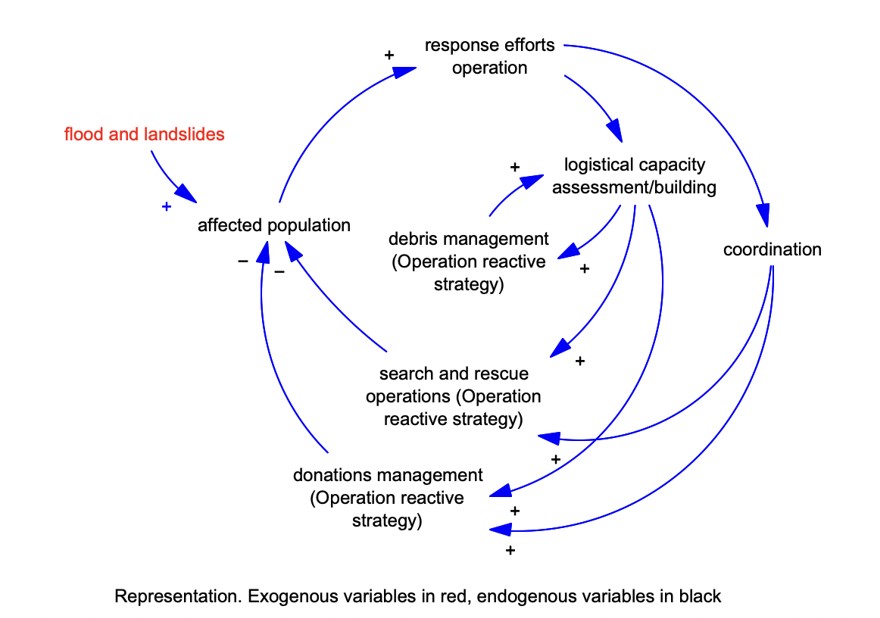
This scenario is translated into Figure 4 diagram.
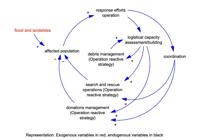
Given that a population is affected by floods and landslides, it is essential to establish response operations. The greater the number of people affected, the greater the effort required to help this population. Debris management (reactive strategy), search and rescue (reactive strategy) and donations management (reactive strategy) operations are adopted to respond to the affected population. The debris management operation impacts the logistical capacity necessary to carry out search and rescue and donation management operations. These latest operations directly influence the number of people affected by the disaster. Finally, for better efficiency of operations, that is, to impact the greatest number of people, coordination is necessary.
3.3. Operação Acolhida
The Venezuelan migratory movement to different countries is the most expressive human mobility in the Americas (Jarochinski-Silva & Baeninger, 2022; Cunha et al., 2022b). According to the inter-agency coordination platform for refugees and migrants from Venezuela, in March 2023, more than 7.2 million Venezuelans were refugees and migrants in the world (more than 6 million in Latin America and the Caribbean). Brazil is the fifth country with the highest number of migrants, surpassing the number of 420,000 Venezuelans in March 2023 (R4V Platform, 2023).
The creation of Operação Acolhida in 2018 was an instrument of action in response to the movement of Venezuelans that entered Brazil—aiming to meet the pressures of the state governments of Roraima and municipal governments of Boa Vista, in addition to the national and international media repercussions. The Brazilian Federal Government Operation is designated as a “humanitarian logistical task force in Roraima”. It involves several federal agencies (Ministry of Defense, Federal Police, ANVISA, Ministry of Citizenship, Ministry of Human Rights, Office of the Union Public Defender), in addition to several international agencies (UNHCR, IOM, UNFPA, UNICEF), civil society entities (national and international) and other federative entities. However, despite all the actors involved in the operation, the main protagonist on the border and in the shelters is the Ministry of Defense, with the BAF participation, which organizes the logistics and security of the actions (Paiva & Gonçalves, 2021). Thus, the concentration of Venezuelans in Roraima brought border militarization with the Operação Acolhida in 2018 (Baeninger et al., 2022).
Humanitarian policy, in the case of migration, is closely related to the security reaction and border controls. Therefore, one of the Operação Acolhida pillars is monitoring the border and referring Venezuelans to regularize their migratory status (residence application or asylum application) (Paiva & Gonçalves, 2021) while also controlling the proliferation of criminal acts allegedly provoked by migrants or facilitated by the context of migrations (Leite & Castro, 2021). Beyond any expectation of Brazilian participation in a possible intervention in Venezuelan territory, the Operação Acolhida aims to safeguard regional stability, prioritizing migratory control and its impacts (Leite & Castro, 2021).
Therefore, migrant response operations are meant to organize the border and to promote national security by documenting and assisting migrants. The greater the migratory movement, the greater the border disorder and the lower the local capacity to absorb the migratory movement. Absorption inability generates more spontaneous occupations (people setting up houses in inappropriate places) and, consequently, less sense of security. Border turmoil also directly impacts the local population's sense of security. Humanitarian operations, therefore, are a response to disorder, fear, and local civil commotion and a search for increasing the capacity to absorb migrants.
Beyond the spectrum of territorial integrity of national security, the arrival of Venezuelans in Roraima impacted public service systems, especially health, education, and social assistance (Paiva & Gonçalves, 2021). Thus, in addition to the pillar of border ordering, Operação Acolhida also focuses on shelter and internalization, including actions to optimize the resettlement of migrants in the Brazilian territory, seeking greater socioeconomic insertion and reducing the floating migrant population on the border, alleviating the local capacity to absorb demand and to regulate the overload of Brazilian public services (Leite & Castro, 2021; Cunha et al., 2022b; Ribeiro et al., 2023).
This scenario is translated into Figure 5 diagram.

The migratory movement generates disorder at the border. Considering a large migratory flow, it causes not only disorder but also a local crisis. This local crisis occurs as a result of the local inability to absorb migrants. Therefore, the greater the migratory movement, the greater the border disorder and the lower the local absorption capacity. Three strategies are adopted: (i) border ordering (reactive strategy) aimed at reorganizing the border; (ii) the interiorization process (reactive strategy) so that other states in the country, with sufficient absorption capacity, receive migrants, and; (iii) shelter, preventing migrants from being left in a situation of the street.
3.4. Hypothesis development
Covering the different types of disasters that occur in Brazil, this research investigated three operations explained in this section. Table 3 presents a summary of the disasters studied, their classifications and types of operations used. OCP is a recurring operation as it occurs every year during periods of drought. Operação Serrana 2011 was an occasional operation, in response to a disaster, and therefore already completed. Operação Acolhida is a continuous operation started in 2018. Man-made sudden-onset disasters, such as terrorist attacks or chemical leak, are not common disasters in Brazil and are therefore not the scope of this study.
In the Operação Acolhida case, the causing variable is man-made; despite being exogenous to Brazil, it is international. Therefore, it is not possible to analyze the focus of the disaster and just how to respond to it. However, in the case of climate-related disasters, the variable of interest is endogenous, allowing proactive and reactive strategies to be adopted, aimed not only at responding to these disasters but also at preventing, mitigating, and preparing for them.
Two different hypotheses are raised considering the exogenous and endogenous causative context:
-
Hypothesis 1: Greater commitment to proactive strategies generates less need to reactive strategies.
While there is a consensus on the importance of disaster pre-occurrence phases, there remains limited research on both disaster preparedness and the impact of preparation on disaster and post-disaster response (Goldschmidt & Kumar, 2019).
-
Hypothesis 2: The speed in mobilizing a response operation (reactive strategies) leads to a smaller accumulation of vulnerable population.
In this sense, vulnerability to disasters is defined as the foreseeable consequences of a damaging event on human lives, health, wealth, or environment (Renteria et al., 2021).
4. Model development
This section describes the model development, primary data sources, and the simulation model results.
4.1. Operação Carro Pipa
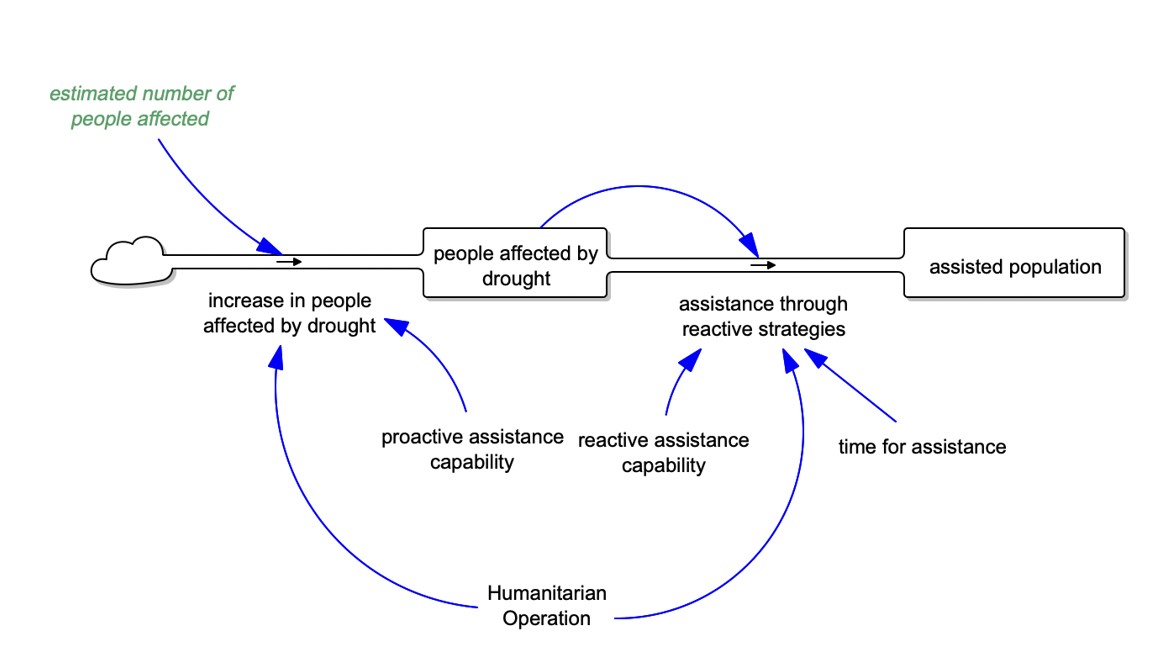
Considering the OCP CLD presented (Figure 3), we developed a simulation model using Vensim Pro (Ventana System), as depicted in Figure 6. Table 4 summarizes the parameters considered, including the variable names, brief descriptions, and their units.

The model represents two stocks: people affected by droughts and people affected but assisted. In the model, the adoption of proactive strategies means that fewer people are affected by droughts, controlling stocks. The adoption of reactive strategies, in turn, does not cause fewer people to be affected, but impacts the number of people assisted.
The variable in green in Figure 6, also represented as an exogenous variable in Table 4, is populated with a real estimate of people affected by droughts, collected by Brazil drought monitor. However, fictitious data is adopted to represent the proactive and reactive assistance capabilities.
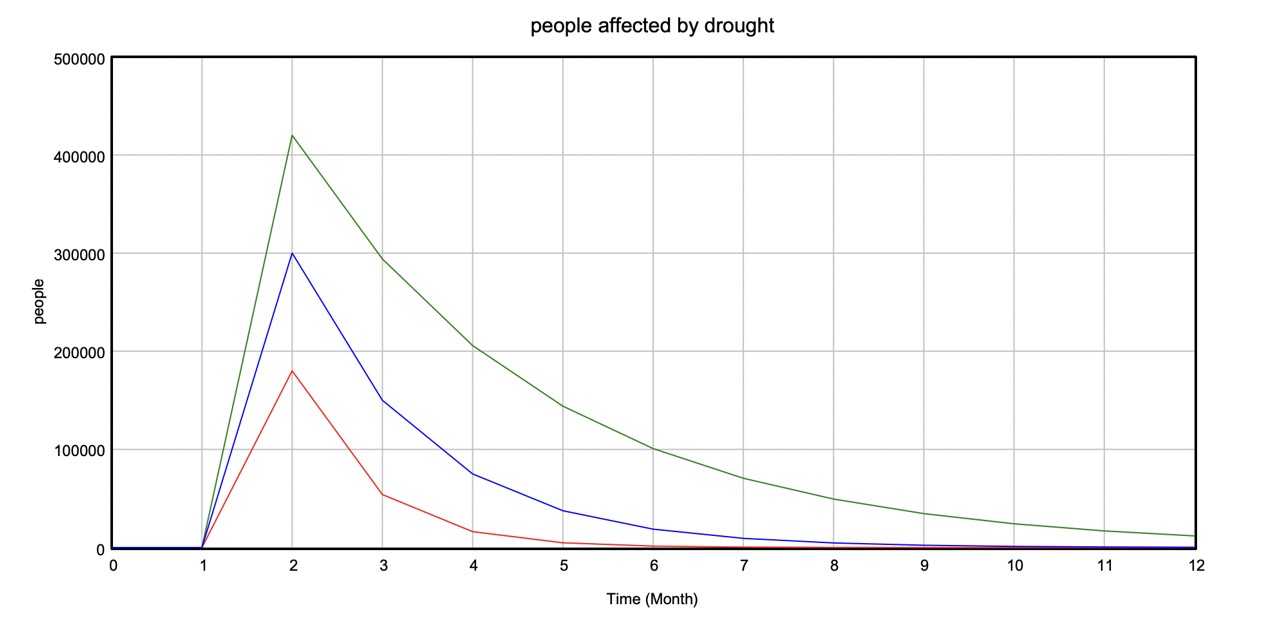
By simulating the three scenarios depicted in Figure 7, it is possible to understand how the model behaves. In green, we have the scenario where the greatest attention is on reactive strategies; in red, the scenario where the greatest attention is on proactive strategies and in blue, the scenario with the same attention to both strategy groups. Therefore, combining different proactive and reactive assistance capabilities, we will have more, or fewer people affected.

Figure 8 presents the assisted population behavior considering the three simulated scenarios. By adopting more proactive strategies, fewer people will be impacted and, consequently, fewer people will need to be assisted, responding more quickly to disasters. Similarly, by emphasizing reactive strategies, more people will be affected and will need to be assisted, thus requiring more time to assist them all.

4.2. Operação Serrana
Considering Operação Serrana CLD (Figure 4), we developed a simulation model using Vensim Pro (Ventana System), as depicted in Figure 9. Table 5 summarizes the parameters used, including the variable names, brief descriptions, and their units.

The variable in green in Figure 9, also represented as exogenous variable in Table 5, is populated with a real estimate of people affected by rainfall and landslides in the mountain regions of the state of Rio de Janeiro in 2011 (World Bank data). However, fictitious data is adopted to represent assistance rate of each operation (debris management, search and rescue, and donations management). For analysis purposes, we consider the assistance rate since debris management is higher than the assistance rate due to search and rescue operations and donations management, since only having the logistical capacity reestablished can other operations occur.
In the specific case of Operation Serrana, we treat the model with three different operations: debris management operation, search and rescue operation, and donations management. Thus, an operation can occur even without others occurring.
Simulation 0, in green in Figure 10, represents the affected population without humanitarian operations. Simulation 1, in gray, represents the result only with debris management operations, while simulation 2, in red, represents the result with debris management and search and rescue operations. Finally, simulation 3, in blue, represents the result with debris management, search and rescue and donations management.

As the population affected by the disaster decreases, the assisted population increases, as represented in Figure 11.

However, all operations identified in the literature, carried out by military personnel, in Operação Serrana represent reactive strategies (after the disaster). A model is proposed considering the scenario where municipal and state Civil Defenses adopted proactive strategies, to simulate their impact on the number of people affected by disasters. Figure 12 allows observing (in blue) that by also adopting proactive strategies, fewer people would be affected from the beginning.

4.3. Operação Acolhida
Considering the Operação Acolhida CLD (Figure 5), we developed a simulation model as depicted in Figure 13. Table 6 summarizes the parameters used, including the variable names, brief descriptions, and their units.

The model briefly represents the passage of immigrants through Boa Vista (Roraima). Therefore, the model presents the entry flow of Venezuelans, the stock (accumulation) of Venezuelans (in shelters), the voluntary departure of Venezuelans back to Venezuela and the internalization of Venezuelans for socioeconomic insertion in other Brazilian states.
The variables in green in Figure 13, also represented as exogenous variables or constant in Table 6, are populated with a real data from the Inter-Agency Coordination Plataform for Refugees and Migrants from Venezuela (R4V).
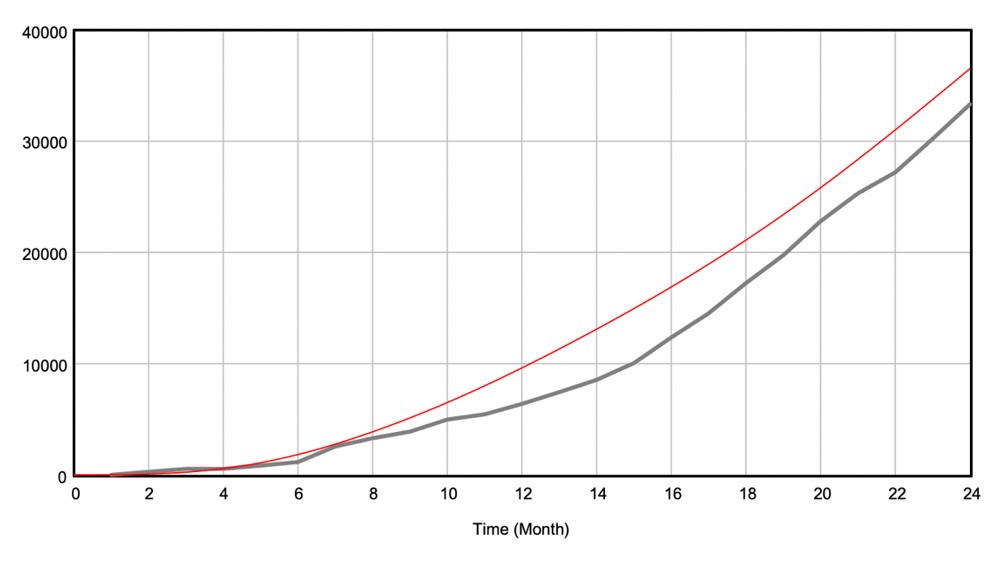
As it is a continuous operation and the data is available, Figure 14 demonstrates how the simulated internalized stock data (red) presents similar behavior to the real one (gray).

However, considering a delay in the mobilization of the specific internalization operation, a reduction can be observed in the number of people socioeconomically inserted (Figure 15).

5. Discussion
Two aspects of national security based on the definition present in the National Defense Policy and the National Defense Strategy Report (Brasil, 2012) were analyzed: (i) preservation of sovereignty and territorial integrity; and (ii) guaranteeing citizens the exercise of constitutional rights and duties. Table 7 presents the contextual factors that influenced and defined military action in each of the cases analyzed.
Employment of Military Forces according to Contextual Factors and National Security Spectrum.
However, based on the scoping review readings, a third aspect of national security was raised: power projection by the demonstration of capabilities. The third aspect, focused on international relations, would be the possibility of power projection by demonstrating capabilities in different expressions of national power, demonstrating that the country has local capabilities for prompt response to a disaster, military capabilities to act in subsidiary actions and not just for armed use, seeking mechanisms to expand power projection in the international community, which is also reflected in the population’s feeling of security.
This third aspect aligns with Brazilian foreign policy, where participation in UN peacekeeping operations has been seen as an important and effective tool for power projection in the international scenario (Campos, 2015). Humanitarian Operations scenario, for example, the success of the United Nations Stabilization Mission in Haiti (MINUSTAH), ratifies the effective use of the military expression as a Brazilian foreign policy tool.
Some topics frequently covered in the literature on humanitarian operations also appeared in the scoping review, corroborating several authors: debris management (Kim et al., 2018; Magalhães et al., 2020), search and rescue operations (Kosmas et al., 2022), donations management (Cunha et al., 2022a), and stakeholders’ coordination (Fontainha et al., 2022a).
Additionally, two hypotheses were raised to be tested with simulation. However, the models presented here are not intended for empirical validation. In other words, models can have different purposes (understanding, quantifying, visualizing, predicting, and simulating different world aspects (Chapariha, 2022), and even though we use empirical data and hypothetical data close to reality, the behavior resulting from the models is the focus of the research. Therefore, as systems are constructs of structures and associated phenomena that offer clarity to our thinking and provide explanations of the interconnectedness of their parts and their observed behavior or condition (Side, 2022), our models were developed to show whether the hypotheses align with reality.
With the Operação Carro Pipa and Operação Serrana simulated scenarios, the hypothesis that a greater commitment to proactive strategies generates less need to reactive strategies, is evidenced. One caveat is that the implementation of proactive strategies does not eliminate the need for reactive strategies. By reducing the number of people affected, less use of human resources, material resources, investments and donations will be needed; however, they will still exist, corroborating Cardoso et al.’s (2024) findings.
Stumpf et al. (2023) and Cunha et al. (2024) mention the literature agreement about the necessity of preparedness to increase humanitarian operations performance, corroborating with the need for proactive strategies. However, more investment and capability are needed in preparedness activities in practice (Stumpf et al., 2023). Limited systemic thinking and fact-based evidence research are reasons why this potential remains untapped (Kunz et al., 2014; Jahre et al., 2016; Anjomshoae et al., 2022; Stumpf et al., 2023; Cunha et al., 2024). Therefore, the present research corroborates these authors by bringing a simulation to highlight and support the topic.
With the Operação Acolhida and Operação Serrana simulated scenarios, the hypothesis considering that the speed in mobilizing a disaster response operation (reactive strategies) leads to a smaller accumulation of vulnerable people is not validated. The Venezuelan flow to Brazil has been ongoing since 2015. However, only in 2018 was Operação Acolhida established. Some issues impact the failure to immediately implement the operation (in 2015), such as the size of the flow, the capacity for local and regional insertion, the necessary investment, and others. Operação Acolhida case also shows that despite its broad mobilization in 2018, the understanding of the need for internalization only came later. Therefore, socio-economic insertion intensified after a period of border planning and shelter, causing a logistical bottleneck in the internalization process. Therefore, for the hypothesis to be true, we would have to consider the speed of mobilization considering different strategies aimed at socioeconomic insertion, and not just response. Similarly, in the case of Operation Serrana, three different reactive strategies were identified (search and rescue operations, donations management and debris management). Rapid mobilization alone does not guarantee the best assistance. To this end, the order in which operations are mobilized matters.
6. Conclusion
Managing humanitarian operations and crises arising from complex natural and anthropogenic disasters and emergencies presents challenges that deserve academic and military attention. These events interfere with the feeling of security and need to be managed to prevent their occurrence and mitigate their impact on societies.
In this sense, the concept of National Security goes beyond the protection angle against external threats and includes issues that interfere with territorial integrity and national sovereignty. Preserving security requires broad-spectrum measures involving, in addition to external defense, Civil Defense. Therefore, crisis management arising from disasters and complex emergencies contributes to maintaining the perception of National Security. In such situations, it is necessary to act quickly to save lives, move people and materials, provide information flow, and manage the acquisition, storage, transportation, and distribution of supplies.
This research investigated the issue of national security from a military perspective, answering the research question (Do contextual factors impact the use of the Armed Forces in humanitarian operations?) by simulating proactive and reactive disaster response operations and endogenous and exogenous contextual factors influencing the different types of operations employed depending on the disaster. Thus, this research contributes to consolidating the military doctrine in humanitarian aid situations and the performance of BAF personnel in Public Security activities. The participation of military personnel in disaster response operations and complex emergencies in Brazil is significant. Thus, there is a need for studies addressing the BAF role in humanitarian operations in Brazil and over the world to improve efficiency in the humanitarian supply chain.
Also noteworthy is the use of simulation techniques, which support experiments in the real world, the opportunity to participate in the development of models and to enable to obtain a more detailed understanding of problems and help to prepare humanitarian workers beyond what knowledge theory can offer. The adopted methodology can be applied to any case of study, presenting greater adherence to cases according to available data. The results can be used for disaster prevention, preparedness, and risk mitigation. Thus, we suggest the adoption of the proposed methodology in future research on BAF's role in national security.
Finally, this research raises the debate about the different forms of coordination between stakeholders working in humanitarian operations in Brazil and abroad while simultaneously recognizing the benefits of coordination in ensuring the success of operations and the perception of National Security in the country. Therefore, the models proposed here are a first step towards developing models encompassing multiple stakeholders, which can effectively be used to assist decision-makers.
Acknowledgements
This work was supported by Coordination for the Improvement of Higher Education Personnel (CAPES) [88887.387760/2019-00] and the the National Council for Scientific and Technological Development (CNPq) [311232/2022].
-
How to cite this article:
Cunha, L. R. A., Brito Junior, I., Yoshizaki, H. T. Y., & Fontainha, T. C. (2024). Contributions of humanitarian operations for national security: a perspective of the Brazilian Armed Forces action in three cases. Production, 34, e20230090. https://doi.org/10.1590/0103-6513.20230090.
References
-
Anjomshoae, A., Banomyong, R., Mohammed, F., & Kunz, N. (2022). A systematic review of humanitarian supply chains performance measurement literature from 2007 to 2021. International Journal of Disaster Risk Reduction, 72, 102852. http://doi.org/10.1016/j.ijdrr.2022.102852
» http://doi.org/10.1016/j.ijdrr.2022.102852 -
Armstrong, R., Hall, B. J., Doyle, J., & Waters, E. (2011). Cochrane Update. 'Scoping the scope' of a cochrane review. Journal of Public Health, 33(1), 147-150. http://doi.org/10.1093/pubmed/fdr015 PMid:21345890.
» http://doi.org/10.1093/pubmed/fdr015 -
Baeninger, R., Demétrio, N. B., & Domeniconi, J. D. O. S. (2022). Directed migrations: state and Venezuelan migrations in Brazil. Revista Latinoamericana de Poblacion, 16, e202113. http://doi.org/10.31406/relap2022.v16.e202113
» http://doi.org/10.31406/relap2022.v16.e202113 -
Besiou, M., Pedraza‐Martinez, A. J., & van Wassenhove, L. N. (2021). Humanitarian operations and the UN sustainable development goals. Production and Operations Management, 30(12), 4343-4355. http://doi.org/10.1111/poms.13579
» http://doi.org/10.1111/poms.13579 -
Brasil. (1941). Estatutos dos Militares (Decreto-lei nº 3.864, de 24 de novembro de 1941). Diário Oficial da República Federativa do Brasil. Retrieved in 2023, November 17, from https://www.planalto.gov.br/ccivil_03/decreto-lei/1937-1946/del3864.htm
» https://www.planalto.gov.br/ccivil_03/decreto-lei/1937-1946/del3864.htm -
Brasil. (2012). Política nacional de defesa e estratégia nacional de defesa. Brasília. Retrieved in 2023, November 17, from https://www.gov.br/defesa/pt-br/assuntos/copy_of_estado-e-defesa/pnd_end_congresso_.pdf
» https://www.gov.br/defesa/pt-br/assuntos/copy_of_estado-e-defesa/pnd_end_congresso_.pdf -
Brasil. (2020). Livro Branco de Defesa Nacional. Brasília. Retrieved in 2023, November 17, from https://www.gov.br/defesa/pt-br/assuntos/copy_of_estado-e-defesa/livro_branco_congresso_nacional.pdf
» https://www.gov.br/defesa/pt-br/assuntos/copy_of_estado-e-defesa/livro_branco_congresso_nacional.pdf -
Brasil. (2023). Operação Carro-Pipa Federal (OCP). Brasília. Retrieved in 2023, November 17, from https://www.gov.br/mdr/pt-br/acesso-a-informacao/perguntas-frequentes/perguntas-frequentes-defesa-civil/operacao-carro-pipa-federal-ocp
» https://www.gov.br/mdr/pt-br/acesso-a-informacao/perguntas-frequentes/perguntas-frequentes-defesa-civil/operacao-carro-pipa-federal-ocp -
Brasil. (2024a). Operação Acolhida. Brasília. Retrieved in 2023, November 17, from https://www.gov.br/defesa/pt-br/assuntos/exercicios-e-operacoes/acoes-humanitarias/operacao-acolhida
» https://www.gov.br/defesa/pt-br/assuntos/exercicios-e-operacoes/acoes-humanitarias/operacao-acolhida -
Brasil, Ministério da Defesa. (2024b). Ações humanitárias. Brasília. Retrieved in 2023, November 17, from https://www.gov.br/defesa/pt-br/assuntos/exercicios-e-operacoes/acoes-humanitarias
» https://www.gov.br/defesa/pt-br/assuntos/exercicios-e-operacoes/acoes-humanitarias -
Brasil. (2024c). S2iD: Integrated Disaster Information System. Brasília. Retrieved in 2023, November 17, from https://s2id.mi.gov.br/paginas/atlas/
» https://s2id.mi.gov.br/paginas/atlas/ -
Brasil, Ministério da Integração e do Desenvolvimento Regional – MDR. (2024d). Atlas digital de desastres no Brasil. Brasília. Retrieved in 2023, November 17, from https://atlasdigital.mdr.gov.br/paginas/mapa-interativo.xhtml
» https://atlasdigital.mdr.gov.br/paginas/mapa-interativo.xhtml -
Brito Junior, I., Leiras, A., & Yoshizaki, H. T. Y. (2020). A multi-criteria stochastic programming approach for pre-positioning disaster relief supplies in Brazil. Production, 30, e20200042. http://doi.org/10.1590/0103-6513.20200042
» http://doi.org/10.1590/0103-6513.20200042 - Campos, M. B. (2015). A projeção do poder do Brasil como força de paz nas Nações Unidas (ONU) na África. Coleção Meira Mattos: Revista das Ciências Militares, 9(34), 69-86.
-
Cardoso, B. D. F. O., Fontainha, T. C., & Leiras, A. (2024). Looking back and forward to disaster readiness of supply chains: a systematic literature review. International Journal of Logistics, 27(9), 1569-1595. http://doi.org/10.1080/13675567.2023.2165052
» http://doi.org/10.1080/13675567.2023.2165052 - Cardoso, M. S., Morelenbaum, J. S., Rocha, M. D., Lopes, R. C., & Leiras, A. (2017). O emprego do corpo de fuzileiros navais em resposta ao furacão Matthew no Haiti. In Anais do XXXI Congresso Nacional de Pesquisa em Transporte da ANPET (pp. 1-10). Brasília: Associação Nacional de Pesquisa e Ensino em Transportes.
-
Chapariha, M. (2022). Systems Dynamics model of SDGs: a case study of Iran. Challenges in Sustainability, 10(1), 3-22. http://doi.org/10.12924/cis2022.10010003
» http://doi.org/10.12924/cis2022.10010003 -
Choi, T. M., Cheng, T. C. E., & Zhao, X. (2016). Multi‐methodological research in operations management. Production and Operations Management, 25(3), 379-389. http://doi.org/10.1111/poms.12534
» http://doi.org/10.1111/poms.12534 -
Costa, N. D. B. O. L., Fontainha, T. C., & Leiras, A. (2017). Brazilian Air Force operations in disaster response–a process analysis. Disaster Prevention and Management, 26(4), 479-498. http://doi.org/10.1108/DPM-04-2017-0081
» http://doi.org/10.1108/DPM-04-2017-0081 -
Costa, S. R. A., Bandeira, R. A. M., Mello, L. C. B. B., & Campos, V. B. G. (2014). Humanitarian supply chain: an analysis of response operations to natural disasters. European Journal of Transport and Infrastructure Research, 14(3), 290-310. http://doi.org/10.18757/EJTIR.2014.14.3.3035
» http://doi.org/10.18757/EJTIR.2014.14.3.3035 - Cunha, L., Antunes, B. B., Rodrigues, V. P., Ceryno, P. S., & Leiras, A. (2022a). Measuring the impact of donations at the Bottom of the Pyramid (BoP) amid the COVID-19 pandemic. Annals of Operations Research In press. PMid:35039706.
- Cunha, L., Leiras, A., & Gonçalves, P. (2022b). Scaling operations to address forced migration flows: the case of Venezuelan immigration. In Production and Operations Management: POMS (Springer Proceedings in Mathematics & Statistics, No. 391, pp. 313-322). Cham: Springer.
-
Cunha, L., Leiras, A. & Goncalves, P. (2024). Looking back and beyond the complex dynamics of humanitarian operations. Journal of Humanitarian Logistics and Supply Chain Management, 14(3), 328-345. http://doi.org/10.1108/JHLSCM-07-2022-0082
» http://doi.org/10.1108/JHLSCM-07-2022-0082 -
Escudeiro, A., Escudeiro, E., Silva, L. O., Bandeira, R. A. D. M., Souza, L. P., Leiras, A., & Oliveira, R. T. (2022). Command and control system management: a perspective of disaster response actors in Brazil. Production, 32, e20210106. http://doi.org/10.1590/0103-6513.20210106
» http://doi.org/10.1590/0103-6513.20210106 -
Fontainha, T. C., Silva, L. D. O., de Lira, W. M., Leiras, A., Bandeira, R. A. D. M., & Scavarda, L. F. (2022a). Reference process model for disaster response operations. International Journal of Logistics, 25(1), 1-26. http://doi.org/10.1080/13675567.2020.1789080
» http://doi.org/10.1080/13675567.2020.1789080 -
Fontainha, T. C., Leiras, A., Bandeira, R. A. D. M., & Scavarda, L. F. (2022b). Stakeholder satisfaction in complex relationships during the disaster response: a structured review and a case study perspective. Production Planning and Control, 33(6-7), 517-538. http://doi.org/10.1080/09537287.2020.1834127
» http://doi.org/10.1080/09537287.2020.1834127 -
Goldschmidt, K. H., & Kumar, S. (2019). Reducing the cost of humanitarian operations through disaster preparation and preparedness. Annals of Operations Research, 283(1-2), 1139-1152. http://doi.org/10.1007/s10479-017-2587-z
» http://doi.org/10.1007/s10479-017-2587-z - Gonçalves, P. (2008). System dynamics modeling of humanitarian relief operations (Working Paper, No. 4704-08). Cambridge: MIT Sloan School.
-
Jahre, M., Pazirandeh, A., & van Wassenhove, L. (2016). Defining logistics preparedness: a framework and research agenda. Journal of Humanitarian Logistics and Supply Chain Management, 6(3), 372-398. http://doi.org/10.1108/JHLSCM-04-2016-0012
» http://doi.org/10.1108/JHLSCM-04-2016-0012 - Jarochinski-Silva, J. C., & Baeninger, R. (2022). The Venezuelan exodus as a South-South migration phenomenon. REMHU: Revista Interdisciplinar da Mobilidade Humana, 29, 123-139.
-
Kim, J., Deshmukh, A., & Hastak, M. (2018). A framework for assessing the resilience of a disaster debris management system. International Journal of Disaster Risk Reduction, 28, 674-687. http://doi.org/10.1016/j.ijdrr.2018.01.028
» http://doi.org/10.1016/j.ijdrr.2018.01.028 -
Kosmas, V., Acciaro, M., & Besiou, M. (2022). Saving migrants’ lives at sea: Improving search and rescue operations. Production and Operations Management, 31(4), 1872-1889. http://doi.org/10.1111/poms.13653
» http://doi.org/10.1111/poms.13653 -
Kunz, N., Reiner, G., & Gold, S. (2014). Investing in disaster management capabilities versus pre-positioning inventory: a new approach to disaster preparedness. International Journal of Production Economics, 157, 261-272. http://doi.org/10.1016/j.ijpe.2013.11.002
» http://doi.org/10.1016/j.ijpe.2013.11.002 -
Leite, A. C. G., & Castro, M. D. A. (2021). Migrações venezuelanas, crise da reprodução social capitalista e necropolíticas de fronteira. Revista Brasileira de História & Ciências Sociais, 13(26), 73-103. http://doi.org/10.14295/rbhcs.v13i26.12824
» http://doi.org/10.14295/rbhcs.v13i26.12824 - Magalhães, M. R., Lima, F. S., Campos, L., Rodriguez, C. T., & Maldonado, M. (2020). Disaster waste management using systems dynamics: a case study in Southern Brazil. In Operations Management for Social Good: 2018 POMS International Conference in Rio (pp. 251-261). Cham: Springer.
-
Mishra, D., Kumar, S., & Hassini, E. (2019). Current trends in disaster management simulation modelling research. Annals of Operations Research, 283(1), 1387-1411. http://doi.org/10.1007/s10479-018-2985-x
» http://doi.org/10.1007/s10479-018-2985-x -
Moher, D., Shamseer, L., Clarke, M., Ghersi, D., Liberati, A., Petticrew, M., Shekelle, P., & Stewart, L. A. (2015). Preferred reporting items for systematic review and meta-analysis protocols (PRISMA-P) 2015 statement. Systematic Reviews, 4(1), 1-9. http://doi.org/10.1186/2046-4053-4-1 PMid:25554246.
» http://doi.org/10.1186/2046-4053-4-1 -
Mongeon, P., & Paul-Hus, A. (2016). The journal coverage of Web of Science and Scopus: a comparative analysis. Scientometrics, 106(1), 213-228. http://doi.org/10.1007/s11192-015-1765-5
» http://doi.org/10.1007/s11192-015-1765-5 -
Moulin Aguiar, C., & Magalhães, B. (2020). Operation shelter as humanitarian infrastructure: material and normative renderings of Venezuelan migration in Brazil. Citizenship Studies, 24(5), 642-662. http://doi.org/10.1080/13621025.2020.1784643
» http://doi.org/10.1080/13621025.2020.1784643 -
Munn, Z., Peters, M. D., Stern, C., Tufanaru, C., McArthur, A., & Aromataris, E. (2018). Systematic review or scoping review? Guidance for authors when choosing between a systematic or scoping review approach. BMC Medical Research Methodology, 18(1), 143. http://doi.org/10.1186/s12874-018-0611-x PMid:30453902.
» http://doi.org/10.1186/s12874-018-0611-x -
Oliveira, F. N., Cunha, L. R. A., Fontainha, T. C., Leiras, A., & Ceryno, P. S. (2020). A system thinking approach for social and environmental risks in supply chains. In Industrial Engineering and Operations Management: XXVI IJCIEOM (pp. 417-427). Cham: Springer. http://doi.org/10.1007/978-3-030-56920-4_34
» http://doi.org/10.1007/978-3-030-56920-4_34 -
Paiva, A. R. D., & Gonçalves, G. D. P. (2021). Operação Acolhida: entre a militarização e a assistência social. Revista Brasileira de História & Ciências Sociais, 13(26), 164-181. http://doi.org/10.14295/rbhcs.v13i26.12552
» http://doi.org/10.14295/rbhcs.v13i26.12552 -
R4V Platform. (2023). Refugees and migrants from Venezuela. Retrieved in 2023, November 17, from https://www.r4v.info/en/refugeeandmigrants
» https://www.r4v.info/en/refugeeandmigrants -
Renteria, R., Chong, M., Brito Junior, I., Luna, A., & Quiliche, R. (2021). An entropy-based approach for disaster risk assessment and humanitarian logistics operations planning in Colombia. Journal of Humanitarian Logistics and Supply Chain Management, 11(3), 428-456. http://doi.org/10.1108/JHLSCM-03-2020-0018
» http://doi.org/10.1108/JHLSCM-03-2020-0018 -
Ribeiro, T. P., Brito Junior, I. D., Yoshizaki, H. T., & Froese Buzogany, R. (2023). Venezuelan migration in Northern Brazil: a system dynamics approach for the internalization program. Journal of Humanitarian Logistics and Supply Chain Management, 13(3), 293-310. http://doi.org/10.1108/JHLSCM-01-2022-0011
» http://doi.org/10.1108/JHLSCM-01-2022-0011 -
Rosa, P. R. S., & Bandeira, R. A. M. (2016). A coordenação civil-militar na logística humanitária e o papel das forças armadas brasileiras no gerenciamento de desastres. Revista Produção Online, 16(3), 895-915. http://doi.org/10.14488/1676-1901.v16i3.2162
» http://doi.org/10.14488/1676-1901.v16i3.2162 -
Santos, I. P., Tassigny, M. M., & Santos Filho, A. L. (2021). O conflito entre o direito à água e o direito de greve: análise da operação carro-pipa do exército brasileiro. Revista de Direito Econômico e Socioambiental, 12(3), 600-630. http://doi.org/10.7213/rev.dir.econ.soc.v12i3.26580
» http://doi.org/10.7213/rev.dir.econ.soc.v12i3.26580 -
Santos, R. A. S. (2019). The use of Airpower on Humanitarian Operations: a case study in Brazil. Brazilian Journal of Operations & Production Management, 16(3), 490-500. http://doi.org/10.14488/BJOPM.2019.v16.n3.a11
» http://doi.org/10.14488/BJOPM.2019.v16.n3.a11 - Senge, P. M. (1994). The fifth discipline fieldbook: strategies and tools for building a learning organization New York: Currency.
-
Side, J. (2022). It’s not just the climate that needs fixing. Civil Engineering and Environmental Systems, 39(3), 255-269. http://doi.org/10.1080/10286608.2022.2093348
» http://doi.org/10.1080/10286608.2022.2093348 - Silva, P. A. S. (2019). Emprego da Engenharia do Exército Brasileiro em Operações de Ajuda Humanitária (Trabalho de conclusão de curso). Estudos da Escola Superior de Guerra, Rio de Janeiro.
- Sterman, J. (2000). Business dynamics : systems thinking and modeling for a complex world Boston: McGraw-Hill.
-
Stumpf, J., Besiou, M., & Wakolbinger, T. (2023). Supply chain preparedness: how operational settings, product and disaster characteristics affect humanitarian responses. Production and Operations Management, 32(8), 2491-2509. http://doi.org/10.1111/poms.13988
» http://doi.org/10.1111/poms.13988 -
Vasconcelos, I., & Santos, S. M. D. A. (2021). La Dieta de Maduro: migração venezuelana, geopolítica e alimentação. Revista Brasileira De História & Ciências Sociais, 13(26), 25-46. http://doi.org/10.14295/rbhcs.v13i26.13147
» http://doi.org/10.14295/rbhcs.v13i26.13147 -
Vieira, Y. E. M., Bandeira, R. A. M., & Silva Júnior, O. S. (2021). Multi-depot vehicle routing problem for large scale disaster relief in drought scenarios: the case of the Brazilian northeast region. International Journal of Disaster Risk Reduction, 58, 102193. http://doi.org/10.1016/j.ijdrr.2021.102193
» http://doi.org/10.1016/j.ijdrr.2021.102193 - Vieira, Y. E. M., Bandeira, R. A. M., Lopes, L. A. S., & Oliveira Silva, L. (2020a). Water distribution for victims of drought: the case of the Brazilian semi-arid region. In Operations Management for Social Good: 2018 POMS International Conference in Rio (pp. 263-272). Cham: Springer.
-
Vieira, Y. E., Bandeira, R. A., Lopes, L. A., Silva Júnior, O. S., & Batista Júnior, M. M. (2020b). A procedure to support the distribution of drinking water for victims of drought: the case of the Brazilian semi-arid region. Transportation Research Procedia, 47, 331-339. http://doi.org/10.1016/j.trpro.2020.03.106
» http://doi.org/10.1016/j.trpro.2020.03.106 -
World Bank. (2012). Avaliação de perdas e danos: inundações e deslizamentos na região serrana do Rio de Janeiro – janeiro de 2011. Retrieved in 2023, November 13, from http://documents.worldbank.org/curated/pt/260891468222895493/pdf/NonAsciiFileName0.pdf
» http://documents.worldbank.org/curated/pt/260891468222895493/pdf/NonAsciiFileName0.pdf -
Xavier, I. R., Bandeira, R. A. M., Silva, L. O., Bandeira, A. D. P. F., & Campos, V. B. G. (2019). Employing helicopters in the modelling of last mile distribution system in large-scale disasters. Transportation Research Procedia, 37, 306-313. http://doi.org/10.1016/j.trpro.2018.12.197
» http://doi.org/10.1016/j.trpro.2018.12.197