 Mandatory legislative budget amendments: Institutional change and challenges
Abstract
This article examines the new institutional framework of mandatory legislative budget amendments in Brazil. The study aims to identify the factors associated with this institutional change and to discuss the implications of this new arrangement for coalition presidentialism, budgetary governance, and the management of intergovernmental transfers. This exploratory research adopts a qualitative approach and relies on descriptive inference supported by official data covering the period from 2015 to 2024. Mandatory amendments are analyzed as an institutional change that emerged amid a political crisis, characterized by intensified tensions between the executive and legislative branches, increased social demands channeled through legislators, and heightened intergovernmental conflicts. Pre-existing policy solutions, such as the debate over mandatory budget execution, the growing technical specialization of the legislative branch, and the use of automatic transfers in the health sector, informed this process of change. The analysis indicates an expansion of the legislature’s direct participation in the budget and a restriction on the use of amendments as instruments of coalition management. The allocation of mandatory amendments reveals patterns of dispersion, localism, and particularism, which place pressure on the efficiency of budgetary governance. The new institutional framework is also associated with increased use of flexible intergovernmental transfers, reconfiguring challenges within fiscal federalism. The article concludes that the current configuration calls for a reassessment of the role of legislative amendments in Brazil’s political-administrative system, considering the principles of representative democracy and the pursuit of effective outcomes in public budgeting and investment management.
Keywords:
mandatory legislative amendments; institutional change; public budget; public investment
Resumo
Este artigo analisa a nova institucionalidade das “emendas parlamentares obrigatórias”. O estudo busca identificar os fatores associados à mudança institucional e discute os desdobramentos do novo arranjo para a governabilidade do presidencialismo de coalizão, a governança orçamentária e a gestão das transferências intergovernamentais. A pesquisa é exploratória, de natureza qualitativa, e adota inferência descritiva, apoiada por dados oficiais referentes aos anos de 2015 a 2024. As “emendas obrigatórias” são analisadas como uma mudança institucional em meio a uma crise política, marcada pela intensificação das tensões entre Executivo e Legislativo, pelo aumento das demandas sociais via conexão direta com os parlamentares e por conflitos interfederativos. Soluções pré-existentes, como o debate sobre o orçamento impositivo, a especialização técnica do Legislativo e as transferências automáticas na saúde, orientaram as mudanças. As análises indicam maior participação direta do Legislativo no orçamento e limitação do uso das emendas como instrumento de gestão de coalizões políticas. A alocação das “emendas obrigatórias” revela um quadro de dispersão, localismo e particularismo tensionando a eficiência da governança orçamentária. O novo marco institucional também se associa ao uso de transferências intergovernamentais flexíveis reconfigurando os desafios do federalismo fiscal. Conclui-se que a configuração atual indica repensar o papel das emendas no ordenamento político-administrativo, à luz dos princípios da democracia representativa e da busca por resultados efetivos na gestão do orçamento e do investimento público.
Palavras-chave:
emendas obrigatórias; mudança institucional; orçamento público; investimento público
Resumen
Este artículo examina el nuevo marco institucional de las asignaciones parlamentarias obligatorias en Brasil. El estudio busca identificar los factores asociados a este cambio institucional y discutir los desarrollos que el nuevo arreglo plantea para el presidencialismo de coalición, la gobernanza presupuestaria y la gestión de las transferencias intergubernamentales. La investigación es de carácter exploratorio, adopta un enfoque cualitativo y se basa en inferencia descriptiva, apoyada en datos oficiales correspondientes al período 2015-2024. Las asignaciones obligatorias se analizan como un cambio institucional que surgió en medio de una crisis política, caracterizada por el aumento de las tensiones entre los poderes Ejecutivo y Legislativo, el incremento de las demandas sociales canalizadas a través de los parlamentarios y la intensificación de los conflictos intergubernamentales. Soluciones de política pública preexistentes, como el debate sobre la ejecución presupuestaria obligatoria, la creciente especialización técnica del Poder Legislativo y la experiencia con transferencias automáticas en el área de salud influyeron en este proceso de cambio. El análisis indica una expansión de la participación directa del Legislativo en el presupuesto y una restricción en el uso de las asignaciones como instrumentos de gestión de coaliciones. La asignación de las asignaciones obligatorias presenta patrones de dispersión, localismo y particularismo, lo que genera presiones sobre la eficiencia de la gobernanza presupuestaria. El nuevo marco institucional también se asocia con un mayor uso de transferencias intergubernamentales flexibles, reconfigurando los desafíos dentro del ámbito del federalismo fiscal. El artículo concluye que la configuración actual exige una reevaluación del papel de las asignaciones parlamentarias en el sistema político-administrativo de Brasil, considerando los principios de la democracia representativa y la búsqueda de resultados efectivos en la gestión del presupuesto público y de las inversiones públicas.
Palabras clave:
asignaciones obligatorias; cambio institucional; presupuesto público; inversión pública
1. INTRODUCTION
The Brazilian legislature directly influences the allocation of the public budget through legislative amendments. According to the Ministry of Planning and Budget, these amendments are modifications made by the legislative branch to the executive’s budget proposal. They impact budget appropriations, the specific amounts assigned to budget programs, and qualitative aspects. Additionally, these amendments can be proposed individually by legislators or collectively through committees, state caucuses, and the budget general-rapporteur (Ministério do Planejamento e Orçamento, 2024a).
Legislative participation in the budget process has been extensively studied in both national and international research, including its impact on decision-making efficiency (Shepsle & Weingast, 1981), the development of distributive policies (Golden & Min, 2013; Stokes, 2009), and electoral outcomes (Ames, 2001). There is also a well-established body of research on the factors influencing parliamentary amendment allocation (Del Rossi, 1995; Pereira & Rennó, 2013; Tromborg & Schwindt-Bayer, 2019), along with a still-developing literature on their policy outcomes (Bertholini et al., 2018).
Although legislative involvement in budgeting in OECD countries is significantly less than in Brazil (Mendes, 2023), the issue remains important in developing countries like India, the Philippines, and Indonesia (Transparency International, 2021). In Brazil, particular attention has been devoted to identifying the factors that drive the allocation of these resources (Almeida, 2021; Baião et al., 2018; Baptista et al., 2012; Carvalho, 2007; Cate, 2023; Medina et al., 2023; Vieira & Lima, 2022).
Legislative amendments are also viewed as tools used by the executive branch to manage coalitional presidentialism. In a multiparty system, the executive strategically allocates amendment funds to build political coalitions and sustain institutional stability (Abranches, 1988; Raile et al., 2011). This coordination is further reinforced by budgetary governance structures that direct amendments into policy programs established by the executive, thus limiting localistic and particularistic allocation patterns (Limongi & Figueiredo, 1998, 2005; Figueiredo & Limongi, 2019). Additionally, the executive influences subnational governments through its control of the distribution and transfer of amendment-related resources within intergovernmental fiscal arrangements (Bijos, 2018; Palotti et al., 2023; Souza, 2003).
However, beginning in 2014, a series of legal and constitutional changes established a new institutional framework that has challenged the executive’s control over the public budget. Legislative participation was expanded through the introduction of so-called “mandatory amendments.” Between 2015 and 2024, more than BRL 167 billion was disbursed under this mechanism, in accordance with rules that require their mandatory budgetary and financial execution (Câmara dos Deputados, 2024). As a result, the executive can no longer rely on discretionary withholding of amendment funds to meet fiscal targets. This institutional shift has reduced the executive’s discretion over the timing and release of amendments, obliging compliance with constitutionally defined payment schedules.
Given the relevance and timeliness of this issue, it is essential to examine the decision-making process that led to the institutionalization of mandatory parliamentary amendments. It is also important to identify the main implications of this transformation for the profile and role of amendments across three dimensions of Brazil’s political-administrative model: (i) the maintenance of governability in a multiparty presidential system; (ii) the pursuit of efficiency through budgetary governance; and (iii) the mitigation of tensions in fiscal federalism through the management of intergovernmental transfer mechanisms.
Given the relative novelty and institutional complexity of mandatory parliamentary amendments, this study does not seek to establish causal relationships. Instead, it aims to provide an analytical and descriptive account of a process of institutional change. To this end, empirical evidence is mobilized to identify patterns and support interpretive inferences, without pursuing hypothesis testing, in line with methodological approaches to institutional analysis and descriptive inference (Collier et al., 2004; King et al., 1994).
Methodologically, the study combines bibliographic research with a descriptive analysis of secondary data on the qualitative and quantitative attributes of budget amendments from 2015 to 2024. The empirical basis is formed by integrating datasets from various government information systems, including SigaBrasil, the National Treasury, the Integrated Planning and Budget System (Sistema Integrado de Planejamento e Orçamento - SIOP), the Investment System of the Unified Health System (Investimentos do Sistema Único de Saúde - InvestSUS), and databases from the Instituto de Pesquisa Econômica Aplicada (Ipea).
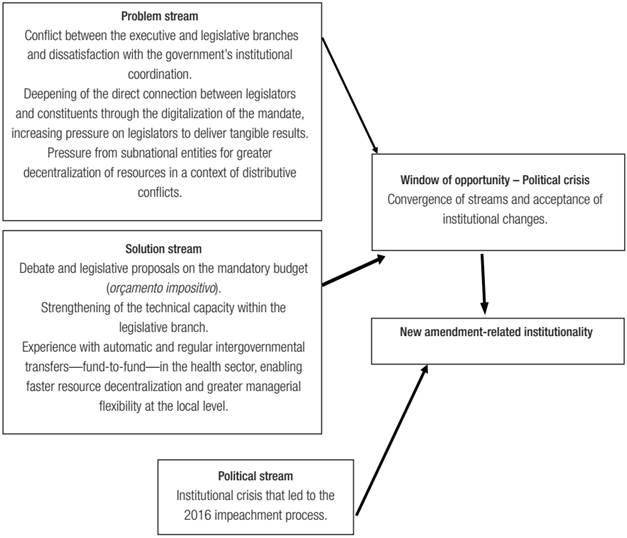
The analysis is guided by the multiple streams framework (Kingdon, 1997), which is used to interpret the decision-making process behind the institutionalization of mandatory amendments. This framework conceptualizes policy change as the convergence of three streams - problems, policies, and politics - during critical moments called windows of opportunity (Kingdon, 1997). In Brazilian literature, applications of the multiple streams framework have often focused on its analytical categories rather than on its overall methodological approach; similarly, this study adopts an exploratory approach based on a literature review and documentary analysis (Capella, 2020).
The findings suggest that tensions between the executive and legislative branches, rising societal demands mediated through direct links with legislators, and intergovernmental conflicts contributed to the problem stream. In the solution stream, the debate on the mandatory budget, increased technical capacity within legislative offices, and prior experience with fund-to-fund transfers in the health sector converged with these issues. These elements ultimately intersected with the political crisis that culminated in the impeachment of President Rousseff in 2016, thereby consolidating the new institutional framework governing parliamentary amendments.
The analysis also demonstrates how this new framework reshapes the profile and function of parliamentary amendments, generating new challenges. Empirical evidence indicates a reduction in executive discretion over the payment of budget amendments, thereby altering their role as instruments of coalition management. At the same time, the effectiveness of budgetary governance may be undermined by increasingly fragmented, particularistic, and localized patterns of resource allocation. Finally, the study highlights how changes in intergovernmental transfer instruments are associated with renewed tensions within Brazil’s fiscal federalism system.
This study contributes to both academic debate and public policy discussions by advancing understanding of the decision-making process and the broader implications of the legislature’s expanded role in budget allocation. It positions parliamentary amendments not only as a fiscal or budgetary issue, but as a central component of the political and administrative functioning of the Brazilian state.
2. THE NEW INSTITUTIONAL FRAMEWORK OF LEGISLATIVE AMENDMENTS UNDER THE MULTIPLE STREAMS FRAMEWORK
Developed by Cohen et al. (1972) and Kingdon (1997), the Multiple Streams Framework (Gottems et al., 2013). The problem stream comprises issues identified through indicators, crisis events, or budgeting and spending findings (Kingdon, 1997). The solution stream focuses on a collection of choices seeking problems (Cohen et al., 1972); here, available alternatives are evaluated based on their technical feasibility, value acceptability, and anticipated future constraints (Kingdon, 1997). Finally, the political stream encompasses the national mood, organized political forces, and changes in government. These streams converge during the opening of policy windows - opportune moments for institutional change (Gottems et al., 2013).
The theoretical lens provided by the multiple streams model has been increasingly used in Brazilian academia (Capella, 2020). Although this research does not directly focus on agenda-setting, it advances the understanding of decision-making and applies Kingdon (1997) analytical model by organizing the analysis of institutional changes that established mandatory amendments through the full adoption of multiple streams dynamics.
Accordingly, we begin our analysis with the problem stream. We add new perspectives to previous studies that attributed the new institutional framework of amendments solely to the power struggle between the executive and legislative branches and to the legislative branch´s dissatisfaction with the discretionary release of resources (Faria, 2023; J. Pederiva & P. Pederiva, 2015; Rodrigues, 2019). Subsequently, we analyze the solution stream and develop our argument that both the problem and solution streams converged during the political crisis that led to the impeachment of the Brazilian President Dilma Rousseff in 2016.
2.1 Problem stream
The new institutional framework governing legislative amendments has been linked to rising tensions between the executive and legislative branches, as well as to legislators’ dissatisfaction with unequal treatment in the management of amendment-related resources. J. Pederiva and P. Pederiva (2015) attribute this institutional change to the weakening of the government’s support base in the legislature following the 2014 elections. Rodrigues (2019), in turn, analyzes the hierarchical relationship between these two branches and demonstrates how, even under the new institutional framework, the executive created mechanisms to maintain control over the budget. Faria (2023) interprets this change as a shift away from Congress’s budget authority, with the legislature taking on roles in budget execution in response to what he describes as a “humiliating via crucis” in securing the release of funds from the executive (Faria, 2023, p. 348).
Beyond institutional conflict between branches, broader structural dynamics also contributed to the problem stream, particularly the deepening of democratic processes and the expansion of societal demands. Budget allocation decisions have been increasingly shaped by greater participation and engagement from diverse social groups in the political process (Faria, 2023). As political representation expanded, legislators faced growing pressure from these constituencies, and increased legislative influence over the budget emerged as a mechanism to respond to voters’ expectations (Baskin et al., 2014).
Furthermore, research shows that increasing voter demands have been amplified by the digitalization of legislative activities, especially through social media. This trend, seen as part of a larger wave of technological adoption, involves lawmakers creating and sharing political content (Lassen & Brown, 2011). The growth of social media has strengthened these trends by enabling direct communication between representatives and constituents and by increasing pressure to produce tangible outcomes, such as funding local projects (Barros et al., 2021). In this context, responding to localized and particularistic demands — often called pork-barrel politics, which involves providing public goods for political and electoral advantage (Golden & Min, 2013; Stokes, 2009; Stokes et al., 2013) — has become a key challenge in legislative practice. Allowing legislators to expand their influence over budget decisions has emerged as a potential institutional approach to meeting these challenges.
At the same time, the literature addressing strains within Brazil’s federal arrangements indicates that the new institutional framework of the amendments reflects problems arising from federalism marked by significant asymmetries across levels of government. In the current federative model, the level of decentralization relies on local administrative capacity, while the central government has delegated responsibilities without a corresponding redistribution of fiscal resources (Arretche, 1999, 2004). As a result, fiscal competition and conflicts over federal resources dominate in a context of budget constraints (Souza, 2003). Given the insufficiency of public resources to meet expanding policy demands, legislative amendments have become a key mechanism through which states and municipalities compete for access to federal funding (Souza, 2003). The combination of increasing subnational responsibilities, particularly in the health sector, and intensifying competition for resources has deepened dissatisfaction among subnational governments with executive control over resource allocation, especially regarding intergovernmental transfers.
These tensions are further exacerbated by inefficiencies in intergovernmental transfer mechanisms. In the Brazilian federal system, the central government maintains control over planning and execution through a grant-agreement model (modelo convenial) - a system of discretionary project-based grants (convênios). Under this model, transfers depend on a lengthy and bureaucratic cycle of project registration, submission, and approval (Bijos, 2018; Palotti et al., 2023). Growing dissatisfaction among subnational governments with this rigid framework has fueled demands for new intergovernmental transfer mechanisms that are more agile and flexible, ensuring faster resource disbursement and higher levels of managerial autonomy.
In summary, the findings point to a set of interrelated factors shaping the problem stream that reinforces the emergence of the new institutional framework for parliamentary amendments. In addition to executive-legislative conflict, particularly dissatisfaction with the executive’s management of political coordination (Faria, 2023; J. Pederiva & P. Pederiva, 2015), the analysis highlights the growing direct linkage between legislators and constituents, driven largely by the digitalization of political activity and the expansion of social media. These dynamics have increased pressure on legislators to secure greater control over budget allocation in order to deliver localized public goods with electoral and political returns.
The analysis also highlights the role of subnational governments’ demands for increased fiscal decentralization, especially in response to perceived inefficiencies of current intergovernmental transfer mechanisms. Without excluding other contributing factors, and within the analytical frameworks used in this study, the evidence indicates that the problem stream merged with the policy and politics streams during the political crisis leading to the 2016 impeachment. The new institutional framework for parliamentary amendments thus emerged within a crucial window of opportunity, as discussed in the following subsection.
2.2 Solution stream
Based on the institutional dimensions considered in this study, the emergence of the new institutional framework for legislative amendments can be situated within a broader context of political and administrative strain. This context encompasses challenges in political coordination strategies, the expansion of societal demands driven by increasingly direct links between voters and legislators, and pressures arising from Brazil’s federal arrangements for greater fiscal decentralization and more efficient intergovernmental transfers.
Given this set of problems, it is crucial to explore the available solutions within these institutional frameworks. One key solution was the debate over a mandatory budget (orçamento impositivo). Until then, discussions about the binding nature of budget execution were characterized by controversy over its effects on governability, budget flexibility, and federal balance (Santos & Gasparini, 2020). However, persistent tensions between the executive and legislative branches, intensified by episodes of expenditure freezing and selective release of funds, strengthened the perception that budget execution should be less discretionary and more closely aligned with the legislative branch´s decisions. This accumulated institutional strain contributed to the reactivation of legislative proposals on the issue and fostered a political environment conducive to the approval of constitutional amendments introducing the partial mandatory execution of parliamentary amendments.
Additionally, changes in budget governance were supported by the growing technical capacity within the legislative branch. Faria (2023) provides a historical account showing how the executive assumed a leading role in budgetary matters throughout the twentieth century, driven by the expansion of social demands linked to the development of the welfare state and the fiscal pressures of global conflicts. In this context, the legislative branch, traditionally seen as a political arena, took on a more limited role, mainly focused on oversight and marginal resource allocation.
More recently, however, the legislative branch has significantly strengthened its technical capabilities, challenging the notion that only the executive possesses the expertise required for policy implementation. This shift is reflected in the growing role of legislative advisory bodies, as well as in the capacity of individual legislators to assemble qualified staff and even establish project-oriented structures capable of navigating complex administrative procedures. This process of technical strengthening aligns with what the literature describes as the bureaucratization of politics (Salazar-Morales, 2023).
In contrast, the executive has faced a relative decline in its technical and administrative capacity, linked to processes of organizational fragmentation, institutional discontinuity, and weakening of bureaucratic expertise (Silva & Vinha, 2025). In this context, the increased technical capacity within the legislative branch has supported its expanded direct role in budget allocation, allowing legislators, through their offices, to navigate administrative procedures and manage resource distribution to their constituencies.
This broader context also indicates that the adoption of more flexible mechanisms for transferring resources derived from legislative amendments was informed by prior experience with intergovernmental transfers in the health sector. In particular, fund-to-fund transfers (transferências fundo a fundo) are automatic and regular, and do not require project-based approval. The expansion of these mechanisms responded to the need for greater simplicity, speed, and autonomy in resource allocation, particularly in contrast to the delays associated with grant-based agreements (convênios) (Palotti et al., 2023).
Another factor contributing to the expansion of fund-to-fund transfers in health was the demand for greater decentralization of resource management to states and municipalities, in line with the constitutional mandate for decentralized service provision established in 1988 (Conselho Nacional de Secretários de Saúde [CONASS], 2003). The increasing volume of resources associated with legislative amendments, combined with the mandatory payment of these amendments, required more flexible transfer mechanisms. This led initially to the creation of incremental funding mechanisms for primary and specialized care, and subsequently to the introduction of special transfers (the so-called emendas pix).
In summary, legislative propositions regarding the mandatory budget, technical specialization of legislative offices, and prior experience with automatic, regular, fund-to-fund intergovernmental transfers in the health sector were presented as technical solutions. These elements converged with the problem stream, creating a window of opportunity for the adoption of the new institutional framework governing parliamentary amendments.
2.3 Opening the window of opportunity
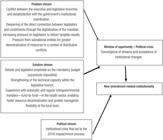
According to the multiple streams framework, institutional change occurs when the problem and solution streams converge, creating the conditions for transformation. Building on this analytical perspective, we argue that the approval of the legal and constitutional changes that established the new institutional framework for parliamentary amendments coincided with the alignment of factors associated with the problem stream, the availability of policy alternatives related to the mandatory budget, the increasing technical capacity within the legislative branch, and prior experience with fund-to-fund transfers. However, the window of opportunity to adopt these changes was opened by the political crisis that culminated in the 2016 impeachment.
The intensification of political conflict led to a direct challenge to the executive’s discretion in executing parliamentary amendments. In this context, ideas and legislative proposals advocating a mandatory budget gained renewed prominence, driven by the escalating dispute between the executive and legislative branches (J. Pederiva & P. Pederiva, 2015; Rodrigues, 2019). The political crisis further exacerbated pre-existing dissatisfaction among legislators regarding unequal treatment in the allocation of amendment-related resources and prolonged delays in processing their demands (Faria, 2023).
Figure 1 synthesizes the main findings of this study using Kingdon (1997) analytical framework, highlighting the window of opportunity created by the political crisis that led to the impeachment process. It is important to note that the analysis focuses on the three institutional dimensions outlined earlier: (i) the maintenance of governability in a multiparty presidential system; (ii) the pursuit of efficiency through budgetary governance; and (iii) the mitigation of tensions in fiscal federalism through the management of intergovernmental transfer mechanisms. Accordingly, other factors not examined here may also have contributed to the observed institutional change.
THE NEW INSTITUTIONAL FRAMEWORK OF PARLIAMENTARY BUDGET AMENDMENTS IN LIGHT OF THE MULTIPLE STREAMS THEORY
3. MANDATORY LEGISLATIVE AMENDMENTS AND INSTITUTIONAL CHALLENGES
The new institutional framework governing legislative amendments emerged from the convergence of problems and solutions during a window of opportunity opened by the institutional, political, and administrative crisis that culminated in the impeachment of President Rousseff in 2016.
This section outlines the main institutional changes and examines their potential implications for the profile and role of parliamentary amendments across the three institutional dimensions addressed in this article: (i) the maintenance of governability in a multiparty presidential system; (ii) the pursuit of efficiency through budgetary governance; and (iii) the mitigation of tensions in fiscal federalism through the management of intergovernmental transfer mechanisms.
3.1 Changes in the institutional framework
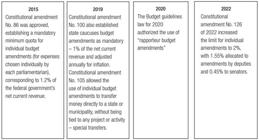
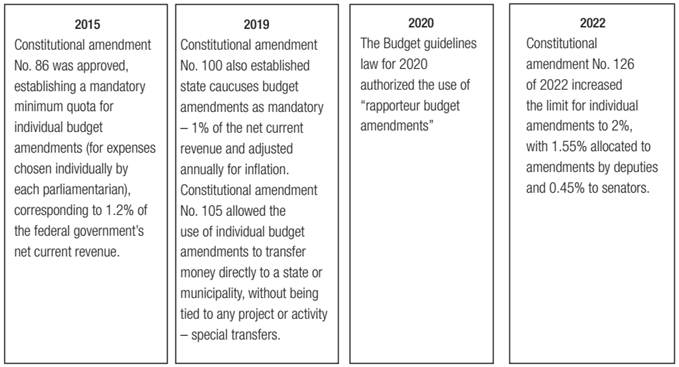
Box 1 shows a timeline of constitutional amendments that strengthen the new institutional framework for parliamentary amendments. These changes made it mandatory to enforce budget and financial expenditures based on fixed percentages of net current revenue, increasing the total amount of resources spent. They also restructured the governance of the budget process by enhancing the influence of individual amendments and, among other actions, introducing automatic intergovernmental transfers. This change happened through a process of institutional “transplantation,” where rules first introduced at the statutory and regulatory levels were later included in the Constitution — a process that Faria (2023, p. 303) calls normative triangulation.
CONSTITUTIONAL AMENDMENTS THAT CONSOLIDATED THE NEW INSTITUTIONAL FRAMEWORK FOR PARLIAMENTARY BUDGET AMENDMENTS
The institutionalization of mandatory amendments, in turn, restructured the rules of the game and, through feedback effects, may have redefined the challenges related to the institutional dimensions examined in this study, as discussed below.
3.2 Profile and institutional role of mandatory amendments
Institutional design influences incentives and decision-making processes by which legislators distribute federal budget resources (Souza, 2003). In this context, the new institutional framework overseeing parliamentary amendments has redefined the legislature’s role in the budget process and has been key in shaping the nature of mandatory parliamentary amendments. These changes have significant implications for Brazil’s political-administrative system, especially concerning governability, budget oversight, and the operation of intergovernmental transfers.
Regarding political governability, the literature has long viewed legislative amendments as tools to maintain governability in a multiparty presidential system (Abranches, 1988; Ames, 2001; Figueiredo & Limongi, 2019; Mueller & Pereira, 2003; Pereira & Mueller, 2002). At the same time, concerning budgetary governance, the common perspective is that institutional arrangements impose a level of rationality on the allocation of amendments by limiting purely individualistic behavior (Limongi & Figueiredo, 1998; Figueiredo & Limongi, 2019).
From the perspective of fiscal federalism, the extensive control historically exercised by the executive over intergovernmental transfers financed through legislative amendments has been justified as a means of preserving the capacity to implement public policies aligned with national and regional priorities, despite increasing responsibilities at the subnational level and growing demand for financial resources (Arretche, 2004).
Building on the descriptive analysis of empirical data, the following sections examine the evolving profile of mandatory legislative amendments and assess their potential implications for political governability, the effectiveness of budgetary governance, and the management of tensions within Brazil’s system of fiscal federalism.
3.2.1 Executive control over legislative amendments and its implications for governance in coalitional presidentialism
In a context of fiscal constraint, the executive branch has traditionally controlled the implementation of parliamentary amendments to secure political support. Coalition-building is a central strategy for achieving governability in a multiparty presidential system (Abranches, 1988). In this setting, legislative amendments function as part of a broader “toolkit” for coalition management (Raile et al., 2011), with the executive conditioning their payment on political alignment (Menezes et al., 2021; Mueller & Pereira, 2003; Raile et al., 2011). To this end, the executive relies on expenditure contingency measures required to meet fiscal targets to delay or restrict the payment of amendments, thereby strengthening its leverage over budget allocation. This dynamic often generates friction with legislators, who depend on negotiated access to resources for their constituencies (Faria, 2023).
The new institutional framework made the budgetary and financial execution of legislative amendments mandatory, effectively shielding them from executive discretion over their release. As a result, mandatory amendments have substantially reduced the executive’s discretionary authority in budget execution and increased the political costs of maintaining governability in a multiparty presidential system (Faria, 2023). This institutional design is grounded in the broader debate over the budget’s binding nature, which emphasizes the legal obligation to execute expenditures approved by the Legislature.
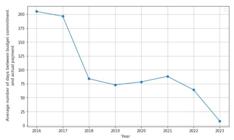
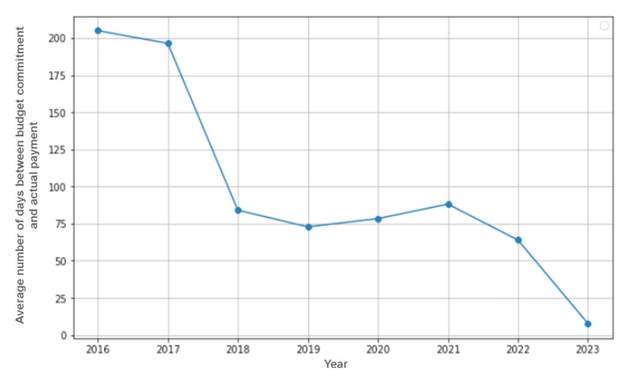
Figure 2 shows a significant reduction in the time lag between budget commitment (empenho) and the payment of amendments. In 2016, the average time to disburse health-sector amendments was 205 days, whereas in 2023 the average decreased to just 7 days (Ministério da Saúde, 2024), a reduction of approximately 94%. It is important to note that these data refer exclusively to the health sector and do not include special transfers (“Pix amendments”), which do not require the submission of project proposals to sectoral ministries and likely present even shorter disbursement times.
AVERAGE NUMBER OF DAYS BETWEEN BUDGET COMMITMENT (EMPENHO) AND PAYMENT OF PARLIAMENTARY AMENDMENTS IN THE HEALTH SECTOR
The executive’s control over the timing of amendment payment has thus been significantly curtailed, given the inability to rely on expenditure contingency as a mechanism to induce political negotiation. Nevertheless, the executive has sought to retain influence over technical and operational aspects of execution, thereby preserving a residual margin for negotiation (Rodrigues, 2019). This margin has been exercised by managing technical impediments, such as errors in budget classification, unfavorable technical assessments of projects, and other conditions established by interministerial regulations.
However, the increasing use of more flexible transfer mechanisms has decreased the occurrence of such technical obstacles, since resource execution no longer relies on the submission and approval of detailed work plans during the analyzed period. As a result, although the formal control over technical procedures remains, empirical evidence on payment flows shows that the Executive has lost effective control over the disbursement of a substantial share of resources. By October 2024, parliamentary amendments made up about 25% of discretionary spending, up from just 5% in 2014 (Ministério do Planejamento e Orçamento, 2024b).
These institutional changes have thus introduced binding constraints that greatly limit the executive’s ability to use budget execution and, especially, legislative amendments to maintain stable governing coalitions. Supporting this view, Bonfim et al. (2023) demonstrate through empirical analysis that legislators from both ruling and opposition parties face similar chances of having their amendments carried out, suggesting that amendments play a smaller role in coalition management.
3.2.2 Prioritization of individual allocation decisions and dispersion, localism, and particularism in budgetary governance
Budgetary governance comprises the set of rules, incentives, and decision-making mechanisms that structure the allocation of public resources. Historically, governance arrangements established by the National Congress have promoted party discipline and mitigated dispersion and localism in the allocation of parliamentary amendments. This was achieved, in part, through the prioritization of collective amendments and their alignment with government budget programs (Limongi & Figueiredo, 1998, 2005; Souza, 2003). It is important to recall that these measures emerged in the aftermath of Parliamentary Commissions of Inquiry (CPIs) that investigated the misuse of amendment-related resources in the early 1990s (Figueiredo & Limongi, 2002).
However, the new institutional framework governing legislative amendments has substantially reconfigured budgetary governance, reshaping both allocation patterns and execution dynamics. The expansion of the legislature’s technical and administrative capacity to manage budgetary procedures and implement policy has enabled greater direct involvement in resource allocation, particularly by individual legislators (Faria, 2023). As a result, legislative activity has expanded to include the detailed specification of funded objects and beneficiaries at a scale not previously observed.
The institutional design associated with mandatory amendments has intensified pre-existing challenges in the governance of public investment, reinforcing patterns of dispersion, localism, and particularism in the allocation of parliamentary amendments (Bijos, 2021; Faria, 2023).
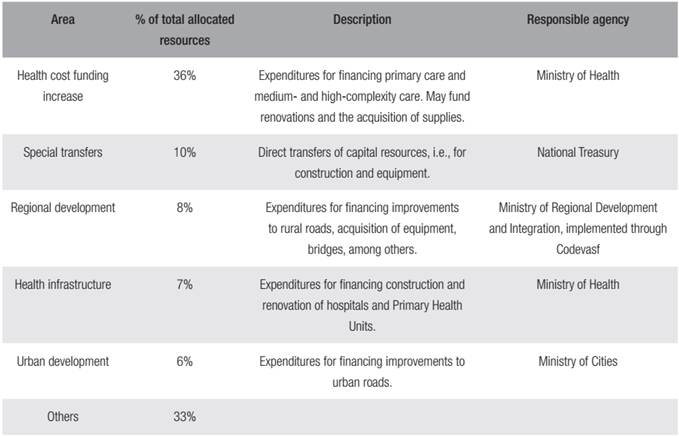
Dispersion refers to the spreading of resources across numerous individual allocation decisions rather than their concentration through coordinated, collective prioritization. Although the prioritization of collective amendments was adopted as a corrective measure following the scandals of the 1990s, and remains recommended in specialized literature (Bijos, 2021), the current institutional framework has shifted incentives toward individual amendments and decentralized allocation decisions. As shown in Box 1, 53% of the resources allocated have been associated with individual amendments, which typically involve relatively small average values.
On average, each legislator submits about 12 amendments annually, with an average value of roughly BRL 1.6 million per amendment (Ministério do Planejamento e Orçamento, 2024b). These amounts remain relatively modest, even for caucus and committee amendments, which are officially intended to support more substantial investments (Faria, 2023). Although rapporteur amendments vary in size, reflecting broader budget adjustments, the review of allocation records available on the Chamber of Deputies’ website (Câmara dos Deputados, 2024) suggests that even these types display patterns influenced by individual legislative preferences, including within collective amendments or rapporteur budget amendments.
The prioritization of individual allocation decisions leads to a concentration of resources at the local level, especially in municipalities. This process, often called localism, entails allocation strategies that favor electoral constituencies in contexts where legislators are directly connected to voters, often at the cost of broader policy coordination and the federal government’s systemic responsibilities (Bijos, 2021).
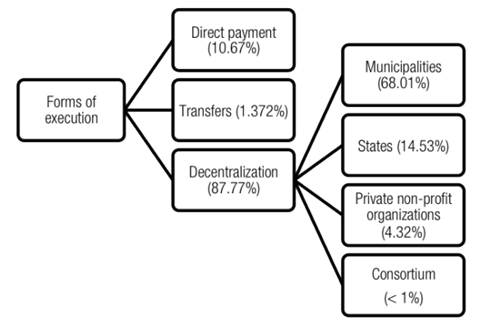
Figure 3 shows how, after budget allocation, payments for parliamentary amendments are distributed across different levels of government and forms of execution. Of the BRL 167 billion spent from 2015 to mid-2024 through individual, caucus, committee, and rapporteur amendments, most goes to intergovernmental transfers to states, the Federal District, and especially municipalities. Municipalities account for approximately 68% of these transfers, while states receive around 14%.
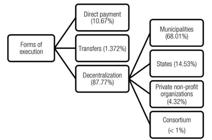
Even when considering direct federal implementation, local demands stay essential, often through providing targeted goods and services. A prominent example is the São Francisco Valley Development Company (Companhia de Desenvolvimento dos Vales do São Francisco e do Parnaíba - Codevasf), a state-owned enterprise with considerable operational flexibility and a large territorial presence. Codevasf has supported the execution of amendment-related resources by delivering equipment like tractors and carrying out local infrastructure projects, such as sanitation improvements, aligned with political commitments.
The new configuration of budgetary governance also strengthens particularism, understood as the allocation of public resources based on narrow or sector-specific interests rather than on universalistic or technical criteria that maximize collective welfare. Figueiredo and Limongi (2002) argue that legislative allocation of amendments does not inherently produce particularistic outcomes, given its alignment with executive-defined programs. Indeed, as shown in Box 2, amendment allocations remain concentrated in a limited number of federal programs: expenditures associated with the Ministries of Health, Regional Development, Cities, and Special Transfers account for 67% of total amendment spending, while 55% of allocated resources are focused on just seven budgetary actions (Ministério do Planejamento e Orçamento, 2024b).
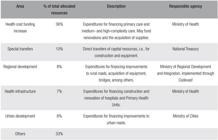
However, analyses restricted to the formal budget structure may obscure the extent of particularistic allocation. The institutionalization of mandatory amendments appears to have expanded this phenomenon in practice. Ideally, identifying particularistic allocation would require verifying whether funded expenditures are integrated into coherent and programmatically structured public policies. Given the operational complexity of legislative amendments and the limitations of direct measurement, this study uses the volume of expenditure entries as a proxy for particularism. This approach is based on the assumption that more structured public policies tend to exhibit fewer, more aggregated expenditure entries, whereas fragmented execution, reflected in a high number of small-value transactions, is consistent with particularistic allocation patterns.
According to SigaBrasil data, between 2015 and 2024, amendment-related expenditures were executed through approximately 600,000 individual entries, with an average value of BRL 278,000 per transaction, covering payments to entities such as tax authorities, public banks (e.g., Caixa Econômica Federal), individuals, and private firms (Câmara dos Deputados, 2024).
The high degree of fragmentation in expenditure execution thus suggests the operationalization of numerous individualized demands. At the same time, the expansion of more flexible transfer mechanisms, together with special transfers, further weakens the argument that legislative allocations are effectively constrained by executive-defined policy programs, since beneficiary subnational governments retain broad discretion over the use of transferred resources. This issue is examined in greater detail in the following subsection.
3.2.3 The flexibility of intergovernmental transfer instruments and the challenges of fiscal federalism
Legislative amendments constitute an important source of funding for subnational governments, and the introduction of mandatory amendments has reinforced this role, particularly for municipalities. This dynamic reflects the broader pattern whereby subnational entities have assumed increasing responsibilities, such as in healthcare provision and basic sanitation, without a corresponding and timely decentralization of fiscal resources adequate to local needs (Arretche, 1999). In this context, municipalities have relied on legislative amendments as a mechanism to finance public policies (Souza, 2003). The concept of fiscal federalism captures these tensions among levels of government regarding the distribution of responsibilities and access to financial resources (Costa et al., 2025).
Historically, the transfer of amendment-related resources to states and municipalities has been carried out predominantly through grant-based agreements (convênios), whose inefficiency and disbursement delays have been a persistent source of dissatisfaction. These instruments are associated with low levels of physical and financial execution (Palotti et al., 2023) and rely on input-based controls, reflecting the centralization of decision-making authority over public policies at the federal level (Bijos, 2018; CONASS, 2003; Moutinho, 2016).
In this context, attempts to accommodate heterogeneous subnational demands while preserving centralized control have led to the fragmentation of these agreements into thousands of project proposals. This fragmentation undermines administrative efficiency and constrains effective access to resources (Palotti et al., 2023; Souza, 2003). It is important to note that these limitations have affected both amendment-based transfers and those originating from regular budget programming.
The new institutional framework for legislative amendments sought to address subnational dissatisfaction with the inefficiencies of the grant-agreement model by expanding the use of automatic and regular transfer mechanisms, particularly in the health sector. At the same time, the requirement of mandatory budgetary and financial execution within constitutionally defined timelines created pressure to adopt more agile transfer instruments. Legal and regulatory changes enabled the expansion of fund-to-fund transfers for current (operating) expenditures in healthcare and, more recently, the introduction of special transfers. These innovations were designed to overcome the bureaucratic constraints associated with traditional grant-based instruments, enabling faster and more flexible allocation of resources.
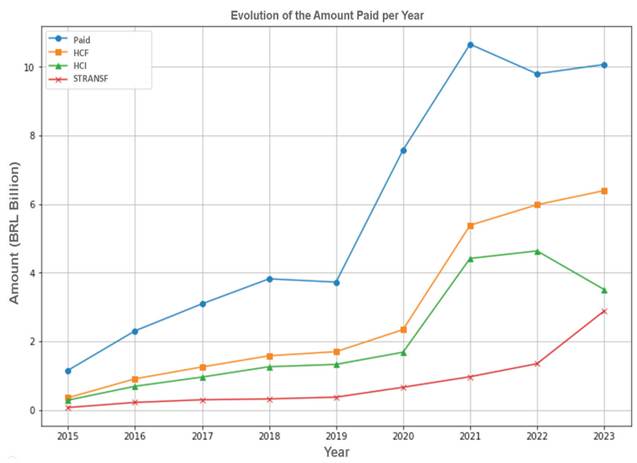
Special transfers, known as emendas pix, mark a more significant shift in intergovernmental transfer methods. Officially established in 2019, they have grown quickly because of the high level of flexibility they give to subnational governments. These transfers enable resources to be sent directly to states and municipalities without needing to connect to specific federal policy programs, unlike fund-to-fund transfers in healthcare, which are still linked to funding primary care and medium- to high-complexity services.
Figure 4 illustrates the significant growth of both healthcare funding amendments and special transfers. Flexible transfer mechanisms have expanded markedly in recent years and, by August 2024, accounted for nearly 80% of total parliamentary amendment allocations. Amendments executed through healthcare funding mechanisms and special transfers have an average payment value of approximately BRL 531,000, compared to BRL 230,000 for other transfer instruments (Câmara dos Deputados, 2024).
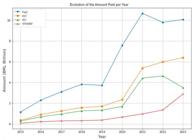
The institutionalization of mandatory amendments has thus consolidated a distinct execution profile, with important implications for their institutional role. This profile is characterized by the payment of a substantial volume of public resources through highly decentralized allocation patterns, marked by dispersion - that is, numerous individual decisions aimed at addressing localized demands - predominantly benefiting municipalities. It also reflects patterns of particularism, as suggested by relatively low average payment values and fragmented execution. Moreover, the increasing reliance on flexible transfer mechanisms has weakened the constraints historically imposed by the grant-agreement model, enabling faster disbursement and granting greater managerial autonomy to subnational governments.
3.2.4 Summary: the new institutional framework for mandatory amendments and the redefinition of their roles in political governability, budgetary governance efficiency, and the management of intergovernmental transfers
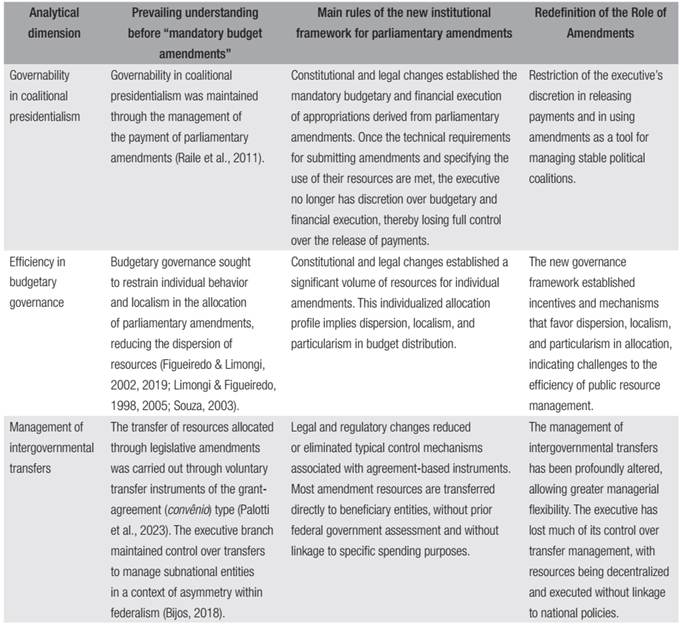
Box 3 below presents how the profile of parliamentary amendments, consolidated under the new institutional framework, may be redefining their role. We highlight key aspects that challenge and refine prevailing understandings of the role of amendments, particularly their use as instruments for political coalition management, their implications for the efficiency of budgetary governance, and their role in managing intergovernmental transfers aimed at mitigating tensions within fiscal federalism.
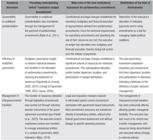
SUMMARY TABLE OF THE NEW INSTITUTIONAL FRAMEWORK FOR LEGISLATIVE BUDGET AMENDMENTS AND POTENTIAL IMPLICATIONS
4. CONCLUSION
This article contributes to the debate on mandatory legislative amendments by expanding the analysis through the lens of institutional change. The analysis focused on three institutional dimensions: (i) the use of amendments as instruments for achieving governability in coalitional presidentialism; (ii) the pursuit of efficiency in budgetary governance; and (iii) the management of intergovernmental transfer instruments to mitigate the challenges of Brazilian fiscal federalism.
A review of the literature shows that the approval of mandatory legisative amendments resulted from a decision-making process influenced by a context where, among other factors, the convergence of long-standing tensions between the executive and legislative branches, the growth of social demands directly channeled through parliamentarians, and conflicts over distribution inherent to Brazilian fiscal federalism were especially prominent. These elements became more evident during the 2015-2016 political crisis, creating an opportunity for institutional change.
The new institutional framework, in turn, redefined both the profile and the role of parliamentary amendments. With respect to governability in coalitional presidentialism, the mandatory budgetary and financial execution of amendments significantly constrained the executive’s discretion in releasing them, altering their traditional use as instruments of coalition management. In terms of budgetary governance efficiency, the new institutional design has favored individualized allocation decisions, reinforcing patterns of dispersion, localism, and particularism in the allocation of public resources.
Finally, in the domain of intergovernmental transfers, the expansion of more flexible instruments, such as health funding increments and special transfers, has substantially transformed the mechanisms for decentralizing federal resources, reducing traditional forms of executive control, and reconfiguring the tensions inherent to fiscal federalism.
The findings support a broader understanding of mandatory legislative amendments that goes beyond their interpretation as merely distributive or political-electoral instruments, situating them also as relevant components of the institutional regulation of the public budget in Brazil. From this perspective, legislative budget amendments can be interpreted as part of a broader set of challenges faced by the Brazilian political-administrative system, including constraints on the executive’s instruments of governability; potential tensions in the efficient allocation of public resources; and implications for investment capacity and resource decentralization, particularly when not aligned with explicit strategies for equity and the strengthening of local capacities.
This interpretation has important implications for the maintenance of institutional stability, the efficiency of budget allocation, and the management of transfer instruments within Brazil’s federal system. Brazil faces substantial challenges in achieving the Sustainable Development Goals (SDGs), in a context marked by fiscal constraints that limit public investment (IPEA, 2024).
In this context of resource scarcity, the expansion of direct legislative participation in the budget through parliamentary amendments should be debated as part of the broader search for solutions to national challenges. As Pitkin (1972, p. 218) observes, “A minor benefit to the whole nation purchased at the price of severe hardship to a part may not be justified. A minor benefit to a part purchased at the price of serious damage to the nation probably is not justified”.
We acknowledge the limitations inherent to the descriptive inference approach adopted in this study, and the findings should be interpreted accordingly. The observed associations and empirical patterns - such as the restriction of executive discretion; the prevalence of dispersion, localism, and particularism in resource allocation; and the transformation of intergovernmental transfer instruments - coincide temporally with the institutionalization of mandatory parliamentary amendments, but do not establish direct causal relationships. The institutional change analyzed occurred in a context marked by multiple concurrent processes, including the 2015-2016 political crisis, fiscal framework challenges, and administrative transformations, which preclude isolating the specific effects of mandatory amendments.
Accordingly, the results should be understood as analytical-institutional indications rather than causal estimates. Future studies employing alternative research designs, greater availability of longitudinal data, and more robust identification strategies may advance the investigation of the causal effects of this new institutional framework. Nonetheless, following the tradition that a well-grounded description is preferable to a weak causal inference (King et al., 1994), this study seeks to contribute to subsequent research by shedding light on a debate that is often approached in a partial manner, frequently restricted to fiscal or corruption-related perspectives, and only rarely examined from the standpoint of parliamentary amendments as part of the public policy implementation process.
It is important to note that this study does not address the dimension of electoral returns, which has been the subject of extensive academic debate (Baião et al., 2018; Mesquita, 2009), nor allocative efficiency (Almeida, 2021; Bertholini et al., 2018; Carvalho, 2007; Pereira & Rennó, 2013). It also does not examine the increasingly active role of the judiciary, particularly the Federal Supreme Court, in shaping and constraining the process of amendment execution.
We also acknowledge limitations associated with the use of the multiple streams framework. As formulated by Kingdon (1997), the framework emphasizes the role of policy entrepreneurs in coupling streams at critical moments. This study does not incorporate an analysis of the interests, strategies, or actions of individual or collective actors involved in the different streams or in their convergence. This reflects a deliberate analytical choice, as the model is employed here as a heuristic framework for reconstructing the process of institutional change, rather than as a tool for behavioral or strategic analysis. Moreover, it is important to recognize the model’s limitations, particularly its descriptive emphasis on situational and temporal dynamics and its limited predictive capacity (Gottems et al., 2013).
Finally, we conclude that parliamentarians, in the exercise of their political roles, should identify local problems and seek to bring solutions to their constituencies. This does not depend exclusively on individualized allocation decisions. Further research and debate are needed to assess whether the phenomenon of mandatory amendments is contributing to the regulation of a virtuous institutional equilibrium or, alternatively, eroding the foundations that sustain the stability of a political and social system as complex as Brazil’s.
ACKNOWLEDGEMENTS
The authors thank the anonymous reviewers for their valuable contributions, comments, and suggestions, which were essential to improving this article. We also appreciate everyone who, directly or indirectly, helped develop this research and prepare this manuscript. Any remaining errors or omissions are entirely the authors’ responsibility
References
- Abranches, S. (1988). Presidencialismo de coalizão: o dilema institucional brasileiro. Dados, 31(1), 5-32. https://dados.iesp.uerj.br/en/artigos/?id=348
-
Almeida, D. P. B. (2021). O mito da ineficiência alocativa das emendas parlamentares. Revista Brasileira de Ciência Política, 34, e239518. https://doi.org/10.1590/0103-3352.2021.34.239518
» https://doi.org/10.1590/0103-3352.2021.34.239518 - Ames, B. (2001). The deadlock of democracy in Brazil University of Michigan Press.
-
Arretche, M. T. S. (1999). Políticas sociais no Brasil: descentralização em um Estado federativo. Revista Brasileira de Ciências Sociais, 14(40), 111-141. https://doi.org/10.1590/S0102-69091999000200009
» https://doi.org/10.1590/S0102-69091999000200009 -
Arretche, M. T. S. (2004). Federalismo e políticas sociais no Brasil: problemas de coordenação e autonomia. São Paulo em Perspectiva, 18(2), 17-26. https://doi.org/10.1590/S0102-88392004000200003
» https://doi.org/10.1590/S0102-88392004000200003 -
Baião, A. L., Couto, C. G., & Jucá, I. C. (2018). A execução das emendas orçamentárias individuais: papel de ministros, cargos de liderança e normas fiscais. Revista Brasileira de Ciência Política, 25, 47-86. https://doi.org/10.1590/0103-335220182502
» https://doi.org/10.1590/0103-335220182502 -
Baptista, T. W. F., Machado, C. V., Lima, L. D., Garcia, M., Andrade, C. L. T., & Gerassi, C. D. (2012). As emendas parlamentares no orçamento federal da saúde. Cadernos de Saúde Pública, 28(12), 2267-2279. https://doi.org/10.1590/S0102-311X2012001400006
» https://doi.org/10.1590/S0102-311X2012001400006 -
Barros, A. T. D., Bernardes, C. B., Faria, C. F. S. D., & Busanello, E. (2021). Presença parlamentar nas mídias sociais: a estruturação dos mandatos digitais na Câmara dos Deputados. Revista de Informação Legislativa, 58(232), 57-86. https://doi.org/10.70015/ril_v58_n232_p57
» https://doi.org/10.70015/ril_v58_n232_p57 - Baskin, M., Mezey, M. L., Barkan, J. D., Bartilow, H., Blair, H., Evans, D., Kasfir, N., Mattes, R., Ndii, D., & Twebaze, S. H. (2014). Distributive politics in developing countries: almost pork Lexington Books.
-
Bertholini, F., Pereira, C., & Renno, L. (2018). Pork is policy: dissipative inclusion at the local level. Governance, 31(4), 701-720. https://doi.org/10.1111/gove.12331
» https://doi.org/10.1111/gove.12331 -
Bijos, D. (2018). Repensando as transferências voluntárias pela perspectiva dos atores e das instituições locais. Desenvolvimento em Questão, 16(44), 322-350. https://doi.org/10.21527/2237-6453.2018.44.322-350
» https://doi.org/10.21527/2237-6453.2018.44.322-350 -
Bijos, P. (2021). Governança legislativa orçamentária: da fragmentação paroquialista à priorização estratégica (Estudo Técnico no 8/2021). Consultoria de Orçamento e Fiscalização Financeira. https://www2.camara.leg.br/atividade-legislativa/estudos-e-notas-tecnicas/estudos-por-assunto/economia/artigo-glo_2021-05-31_publicacao
» https://www2.camara.leg.br/atividade-legislativa/estudos-e-notas-tecnicas/estudos-por-assunto/economia/artigo-glo_2021-05-31_publicacao -
Bonfim, R., Luz, J. H., & Vasquez, V. (2023). Mandatory individual amendments: a change in the pattern of executive dominance in the Brazilian budgetary and financial cycle. Brazilian Political Science Review, 17(2), e0001. https://doi.org/10.1590/1981-3821202300020001
» https://doi.org/10.1590/1981-3821202300020001 -
Câmara dos Deputados. (2024). Siga Brasil https://www12.senado.leg.br/orcamento/sigabrasil
» https://www12.senado.leg.br/orcamento/sigabrasil -
Capella, A. C. N. (2020). Estudos sobre formação da agenda de políticas públicas: um panorama das pesquisas no Brasil. Revista de Administração Pública, 54(6), 1498-1512. https://doi.org/10.1590/0034-761220200689
» https://doi.org/10.1590/0034-761220200689 -
Carvalho, M. (2007). Efeito das emendas parlamentares ao orçamento na redução das desigualdades regionais Monografia de Especialização, Instituto Serzedello Corrêa. Biblioteca Digital da Câmara dos Deputados. https://bd.camara.leg.br/bd/bitstream/handle/bdcamara/2103/efeito_emendas_carvalho.pdf?sequence=1
» https://bd.camara.leg.br/bd/bitstream/handle/bdcamara/2103/efeito_emendas_carvalho.pdf?sequence=1 -
Cate, L. T. (2023). Quem recebe e que diferença fazem: emendas orçamentárias nos municípios brasileiros pós EC 86/2015 (2015-2019). Opinião Pública, 29(3), 792-826. https://doi.org/10.1590/1807-01912023293792
» https://doi.org/10.1590/1807-01912023293792 -
Cohen, M. D., March, J. G., & Olsen, J. P. (1972). A garbage can model of organizational choice. Administrative Science Quarterly, 17(1), 1-25. https://doi.org/10.2307/2392088
» https://doi.org/10.2307/2392088 - Collier, D., Seawright, J., & Munck, G. L. (2004). The quest for standards: king, keohane, and verba’s designing social inquiry In H. E. Brady & D. Collier (Eds.), Rethinking social inquiry: diverse tools, shared standards (pp. 21-46). Rowman & Littlefield.
-
Conselho Nacional de Secretários de Saúde. (2003). Para entender a gestão do SUS Conass. https://bvsms.saude.gov.br/bvs/publicacoes/para_entender_gestao.pdf
» https://bvsms.saude.gov.br/bvs/publicacoes/para_entender_gestao.pdf -
Costa, L. A. D., Silva, N. G. A., Tondolo, V. A. G., & Nogueira, L. (2025). Indicadores socioeconômicos e receitas municipais: Fatores explicativos da capacidade fiscal dos municípios brasileiros. Revista de Administração Pública, 59(1), e2024-0085. https://doi.org/10.1590/0034-761220240085
» https://doi.org/10.1590/0034-761220240085 -
Del Rossi, A. (1995). The politics and economics of pork barrel spending: the case of federal financing of water resources development. Public Choice, 85, 285-305. https://doi.org/10.1007/BF01048200
» https://doi.org/10.1007/BF01048200 - Faria, R. O. (2023). Emendas parlamentares e processo orçamentário no presidencialismo de coalizão Blucher.
-
Figueiredo, A. C., & Limongi, F. (2002). Incentivos eleitorais, partidos e política orçamentária. Dados, 45(2), 303-344. https://doi.org/10.1590/S0011-52582002000200005
» https://doi.org/10.1590/S0011-52582002000200005 -
Figueiredo, A. C., & Limongi, F. (2019). Política orçamentária no Congresso Nacional: ontem e hoje http://dados.iesp.uerj.br/politica-orcamentaria-no-congresso-nacional-ontem-e-hoje/
» http://dados.iesp.uerj.br/politica-orcamentaria-no-congresso-nacional-ontem-e-hoje/ -
Golden, M., & Min, B. (2013). Distributive Politics Around the World. Annual Review of Political Science, 16(1), 73-99. https://doi.org/10.1146/annurev-polisci-052209-121553
» https://doi.org/10.1146/annurev-polisci-052209-121553 -
Gottems, L. B. D., Pires, M. R. G. M., Calmon, P. C. D. P., & Alves, E. D. (2013). O modelo dos múltiplos fluxos de Kingdon na análise de políticas de saúde: Aplicabilidades, contribuições e limites. Saúde e Sociedade, 22(2), 511-520. https://doi.org/10.1590/S0104-12902013000200020
» https://doi.org/10.1590/S0104-12902013000200020 -
Instituto de Pesquisa Econômica Aplicada. (2024). Agenda 2030: Objetivos de desenvolvimento sustentável: avaliação do progresso das principais metas globais para o Brasil: ODS 17: Meios de implementação https://doi.org/10.38116/ri2024ODS17
» https://doi.org/10.38116/ri2024ODS17 - King, G., Keohane, R. O., & Verba, S. (1994). Designing social inquiry: scientific inference in qualitative research Princeton University.
- Kingdon, J. W. (1997). Agendas, alternatives, and public policies (2nd ed.). Longman.
-
Lassen, D. S., & Brown, A. R. (2011). Twitter: the electoral connection? Social Science Computer Review, 29(4), 419-436. https://doi.org/10.1177/0894439310382749
» https://doi.org/10.1177/0894439310382749 -
Limongi, F., & Figueiredo, A. (1998). Bases institucionais do presidencialismo de coalizão. Lua Nova: Revista de Cultura e Política, (44), 81-106. https://doi.org/10.1590/S0102-64451998000200005
» https://doi.org/10.1590/S0102-64451998000200005 -
Limongi, F., & Figueiredo, A. (2005). Processo orçamentário e comportamento legislativo: emendas individuais, apoio ao Executivo e programas de governo. Dados, 48(4), 737-776. https://doi.org/10.1590/S0011-52582005000400002
» https://doi.org/10.1590/S0011-52582005000400002 -
Medina, S. A., Ferreira, M. A. M., Pinto, T. R. G. S., & Santos, I. A. (2023). Alocação das emendas parlamentares individuais: correção de assimetria em saúde ou ganho político? Revista Eletrônica da Administração (Porto Alegre), 29(1), 98-125. https://doi.org/10.1590/1413-2311.374.124848
» https://doi.org/10.1590/1413-2311.374.124848 -
Mendes, M. (2023). Emendas parlamentares e controle do orçamento pelo Legislativo Millennium Papers. https://institutomillenium.org.br/wp-content/uploads/2023/05/millenium-paper-emendas-parlamentares-e-controle-do-orcamento-pelo-legislativo.pdf
» https://institutomillenium.org.br/wp-content/uploads/2023/05/millenium-paper-emendas-parlamentares-e-controle-do-orcamento-pelo-legislativo.pdf -
Menezes, E., Sacramento, A. R., Raupp, F., & Santos, R. (2021). As emendas parlamentares no contexto do orçamento público: alocação de recursos no Governo Federal 2019-2020. Anais do 8º Encontro Brasileiro de Administração Pública, Brasília, DF, Brasil. https://sbap.org.br/ebap/index.php/home/article/view/227/53
» https://sbap.org.br/ebap/index.php/home/article/view/227/53 -
Mesquita, L. (2009). Emendas ao orçamento e conexão eleitoral na Câmara dos Deputados brasileira Dissertação de Mestrado, Universidade de São Paulo. Biblioteca Digital de Produção Intelectual da Universidade de São Paulo. https://doi.org/10.11606/D.8.2009.tde-26082009-002734
» https://doi.org/10.11606/D.8.2009.tde-26082009-002734 -
Ministério do Planejamento e Orçamento. (2024a). Manual Técnico de Orçamento https://www1.siop.planejamento.gov.br/mto/lib/exe/fetch.php/mto2024:mto2024.pdf
» https://www1.siop.planejamento.gov.br/mto/lib/exe/fetch.php/mto2024:mto2024.pdf -
Ministério do Planejamento e Orçamento. (2024b). Sistema Integrado de Orçamento https://www.siop.planejamento.gov.br/modulo/login/index.html#/
» https://www.siop.planejamento.gov.br/modulo/login/index.html#/ -
Ministério da Saúde. (2024, March 16). InvestSUS https://investsus.saude.gov.br/
» https://investsus.saude.gov.br/ -
Moutinho, J. A. (2016). Transferências voluntárias da União para municípios brasileiros: mapeamento do cenário nacional. Revista de Administração Pública, 50(1), 151-166. https://doi.org/10.1590/0034-7612139003
» https://doi.org/10.1590/0034-7612139003 - Mueller, B., & Pereira, C. (2003, December). The Cost of Governing: Strategic Behavior in Brazil’s Budgetary Process. Proceedings of the 31st Brazilian Economics Meeting, Porto Seguro, BA, Brazil.
-
Palotti, P. L. D. M., D’Albuquerque, R. W., & Endo, I. C. (2023). Relações intergovernamentais após a Constituição Federal e 1988: uma radiografia das transferências voluntárias federais aos municípios. Revista Opinião Jurídica (Fortaleza), 21(36), 1-31. https://doi.org/10.12662/2447-6641oj.v21i36.p1-31.2023
» https://doi.org/10.12662/2447-6641oj.v21i36.p1-31.2023 -
Pederiva, J. H., & Pederiva, P. L. M. (2015). Execução de emendas parlamentares individuais ao orçamento: mudanças em 2014. Anais do 1º Encontro Nacional de Ensino e Pesquisa do Campo de Públicas, Brasília, DF, Brasil. https://anepecp.org.br/anaisenepcp/20161128180622_st_04_joao_henrique_pederiva.pdf
» https://anepecp.org.br/anaisenepcp/20161128180622_st_04_joao_henrique_pederiva.pdf -
Pereira, C., & Mueller, B. (2002). Comportamento Estratégico em Presidencialismo de Coalizão: As Relações entre Executivo e Legislativo na Elaboração do Orçamento Brasileiro. Dados, 45(2), 265-301. https://doi.org/10.1590/S0011-52582002000200004
» https://doi.org/10.1590/S0011-52582002000200004 -
Pereira, C., & Rennó, L. (2013). Distribuição de emendas orçamentárias do legislativo e inclusão dissipativa nos municípios brasileiros: 1998 a 2010 Sistema de Bibliotecas FGV. https://hdl.handle.net/10438/17657
» https://hdl.handle.net/10438/17657 - Pitkin, H. F. (1972). The concept of representation University of California.
-
Raile, E. D., Pereira, C., & Power, T. J. (2011). The executive toolbox: building legislative support in a Multiparty Presidential Regime. Political Research Quarterly, 64(2), 323-334. https://doi.org/10.1177/1065912909355711
» https://doi.org/10.1177/1065912909355711 - Rodrigues, T. A. (2019). Emendas parlamentares individuais: a relação entre os Poderes Executivo e Legislativo após a promulgação da Emenda Constitucional 86/2015. Orçamento em Discussão - Senado Federal, (45), 6-49. https://www2.senado.leg.br/bdsf/bitstream/handle/id/560152/OED0045.pdf?sequence=1&isAllowed=y
-
Salazar-Morales, D. A. (2023). A mercantile theory of expert knowledge utilization in patrimonialist bureaucracies: evidence from the health sector in Peru. Journal of Public Administration Research and Theory, 33(3), 391-406. https://doi.org/10.1093/jopart/muac033
» https://doi.org/10.1093/jopart/muac033 -
Santos, N. C. B., & Gasparini, C. E. (2020). Orçamento impositivo e relação entre poderes no Brasil. Revista Brasileira de Ciência Política, (31), 339-396. https://doi.org/10.1590/0103-335220203109
» https://doi.org/10.1590/0103-335220203109 -
Shepsle, K. A., & Weingast, B. R. (1981). Political preferences for the Pork Barrel: a Generalization. American Journal of Political Science, 25(1), 96-111. https://doi.org/10.2307/2110914
» https://doi.org/10.2307/2110914 -
Silva, D. M. C. D., & Vinha, V. G. D. (2025). Desmonte ambiental no Brasil: avanços e lacunas no conhecimento. Revista de Administração Pública, 59(1), e2024-0178. https://doi.org/10.1590/0034-761220240178
» https://doi.org/10.1590/0034-761220240178 -
Souza, C. (2003). Federalismo e conflitos distributivos: disputa dos estados por recursos orçamentários federais. Dados, 46(2), 345-384. https://doi.org/10.1590/S0011-52582003000200006
» https://doi.org/10.1590/S0011-52582003000200006 -
Stokes, S. C. (2009). Pork, by any other name... Building a conceptual scheme of distributive politics Meeting Paper. American Political Science Association, Toronto, Canada. https://ssrn.com/abstract=1449057
» https://ssrn.com/abstract=1449057 -
Stokes, S. C., Dunning, T., Nazareno, M., & Brusco, V. (2013). Brokers, voters, and clientelism: the puzzle of distributive politics Cambridge University. https://doi.org/10.1017/CBO9781107324909
» https://doi.org/10.1017/CBO9781107324909 -
Transparency International. (2021). Overview of parliamentary discretionary spending https://knowledgehub.transparency.org/helpdesk/overview-of-parliamentary-discretionary-spending
» https://knowledgehub.transparency.org/helpdesk/overview-of-parliamentary-discretionary-spending -
Tromborg, M. W., & Schwindt‐Bayer, L. A. (2019). Constituent demand and district‐focused Legislative representation. Legislative Studies Quarterly, 44(1), 35-64. https://doi.org/10.1111/lsq.12217
» https://doi.org/10.1111/lsq.12217 -
Vieira, F. S., & Lima, L. D. (2022). Distorções das emendas parlamentares à alocação equitativa de recursos federais ao PAB. Revista de Saúde Pública, 56(123), 1-14. https://doi.org/10.11606/s1518-8787.2022056004465
» https://doi.org/10.11606/s1518-8787.2022056004465
-
Reviewers:
Adriano Nervo Codato, Universidade Federal do Paraná, Curitiba, PR, Brazil
-
14
One reviewer did not authorize the disclosure of their identity.
-
Peer review report:
The peer review report is available at https://periodicos.fgv.br/rap/article/view/97069/90457
-
RESEARCH DATA AVAILABILITY
The data supporting the findings of this study are available from the corresponding author upon request.
-
ARTIFICIAL INTELLIGENCE USAGE
The authors declare that no artificial intelligence tools were used.
The data supporting the findings of this study are available from the corresponding author upon request.
Data citations
Câmara dos Deputados. (2024). Siga Brasil https://www12.senado.leg.br/orcamento/sigabrasil
Ministério do Planejamento e Orçamento. (2024b). Sistema Integrado de Orçamento https://www.siop.planejamento.gov.br/modulo/login/index.html#/
Ministério da Saúde. (2024, March 16). InvestSUS https://investsus.saude.gov.br/

 Source: Elaborated by the authors.
 Source: Elaborated by the authors.
 Note: The date of commitment was considered to be the date of publication of the ordinance or agreement.Source: Elaborated by the authors based on the InvestSUS panels - National Health Fund of the Ministry of Health, in Portuguese Fundo Nacional da Saúde do Ministério da Saúde (Ministério da Saúde, 2024).
 Note: Percentage of amendment execution shown in parentheses, referring to the period from 2015 to August 2024.Source: Elaborated by the authors based on data from SigaBrasil - beneficiaries (Câmara dos Deputados, 2024).
 Note: Calculated based on committed expenditures from 2015 to August 2024 - all amendments; total committed volume: BRL 213 billion.Source: Elaborated by the authors based on SIOP data (Ministério do Planejamento e Orçamento, 2024b)
 Note: Paid = total amount paid; Health cost funding (HCF) = sum of amount for health cost increases (HCI) and amount for special transfers (STRANSF). N = 4,114 municipalities.Source: Elaborated by the authors based on SigaBrasil (Câmara dos Deputados, 2024).
 Source: Elaborated by the authors.