
 The use of stereotypes at the frontline: categorization logics and reasonings of kindergarten professionals
Abstract
Frontline workers often rely on stereotypes when categorizing citizens, but little is known about the variability in their use, particularly the potential for inhibiting such use. This article explores the variation in the use of stereotypes, analyzing the responses of 46 professionals from eight Brazilian kindergartens to qualitative vignettes. I use the Categorization Logic Scale — a continuum ranging from stereotyped categorization to investigative categorization — to highlight the diverse logics professionals use. Stereotyped categorization involves the uncritical application of stereotypes, while investigative categorization reflects a continuous process of inquiry, marked by openness to testing initial assumptions through further observation. The analysis of the professionals’ responses reveals significant variation in their categorization logic. I examine how these logics are tied to explanatory hypotheses and treatment strategies. The findings suggest that investigative categorization is associated with structural theories about educational inequalities and with more supportive strategies, offering insight into the potential benefits of suppressing stereotypes in frontline interactions.
Keywords:
frontline workers; stereotypes; categorization logic; reasoning; inequalities
Resumo
Os trabalhadores da linha de frente frequentemente se baseiam em estereótipos para categorizar os cidadãos, mas pouco se sabe sobre a variação em seu uso, particularmente o potencial para inibir tal uso. Este artigo explora a variação no uso de estereótipos, analisando as respostas de 46 profissionais de oito pré-escolas brasileiras a vinhetas qualitativas. Utilizo a Escala de Lógica de Categorização - um continuum que varia da categorização estereotipada à categorização investigativa - para destacar as diversas lógicas utilizadas pelos profissionais. A categorização estereotipada envolve a aplicação acrítica de estereótipos, enquanto a categorização investigativa reflete um processo contínuo de investigação, marcado pela abertura para testar suposições iniciais por meio de observações adicionais. A análise das respostas dos profissionais revela uma variação significativa em sua lógica de categorização. Examino como essas lógicas estão ligadas a hipóteses explicativas e estratégias de tratamento. Os resultados sugerem que a categorização investigativa está associada a teorias estruturais sobre desigualdades educacionais e a estratégias dialógicas e de apoio, oferecendo insights sobre os benefícios potenciais da supressão de estereótipos nas interações da linha de frente.
Palavras-chave:
trabalhadores da linha de frente; estereótipos; lógica de categorização; raciocínio; desigualdades
Resumen
Los trabajadores de primera línea suelen basarse en estereotipos a la hora de categorizar a los ciudadanos, pero se sabe poco sobre la variabilidad en su uso, en particular sobre el potencial para inhibir dicho uso. Este artículo explora la variación en el uso de estereotipos, analizando las respuestas de 46 profesionales de ocho centros de educación inicial brasileños a viñetas cualitativas. Utilizo la Escala de Lógica de Categorización ‒ un continuo que va desde la categorización estereotipada hasta la categorización investigativa ‒ para resaltar las diversas lógicas que utilizan los profesionales. La categorización estereotipada implica la aplicación acrítica de estereotipos, mientras que la categorización investigativa refleja un proceso continuo de indagación, marcado por la apertura a poner a prueba las hipótesis iniciales mediante una observación más profunda. El análisis de las respuestas de los profesionales revela una variación significativa en su lógica de categorización. Examino cómo estas lógicas están vinculadas a hipótesis explicativas y estrategias de tratamiento. Los resultados sugieren que la categorización investigativa está asociada con teorías estructurales sobre las desigualdades educativas y con estrategias dialógicas y de apoyo, lo que ofrece una perspectiva sobre los posibles beneficios de suprimir los estereotipos en las interacciones de primera línea.
Palabras clave:
trabajadores de primera línea; estereotipos; lógica de categorización; raciocinio; desigualdades
1. INTRODUCTION
Frontline workers deal with citizens and have the power to decide which citizen deserves a benefit and which citizen deserves a sanction (Lipsky, 2019; Møller, 2009). These decisions are guided by the frontline worker’s overall picture they have of the citizen. The way the worker creates this overall picture sometimes draws upon stereotypes. This happens when frontline workers limit the picture of the citizen to a set of characteristics commonly attributed to members of a specific social group. Viewing citizen through stereotypical lenses may lead frontline workers to treat or assess two citizens with similar conditions but from different social groups in different ways.
The use of stereotypes challenges the egalitarian ideals of broader social policies such as the educational one. In the street-level bureaucracy literature, it is discussed how negative categorization of citizens can drive the perception of deservingness and affect the access to rights (Lotta & Kirschbaum, 2022; Møller, 2009). In the case of educational policies, international research has shown that stereotypes can reinforce educational inequalities (Hinnant et al., 2009; Lautier, 2011; Millet & Croizet, 2016).
While it is common for frontline workers to rely on stereotypes in this process, research shows that there is variation in how these stereotypes are used — some workers are able to suppress or avoid using them altogether. Factors such as years of experience, level of professional training, social background, and workplace have been linked to different patterns in the use of stereotypes (Harrits, 2019; Lotta & Kirschbaum, 2022; Maynard-Moody & Musheno, 2003). However, there is a gap in characterizing the reasoning of frontline workers that are able to block stereotypes.
This article aims to explore the variation in the use of stereotypes by one type of frontline worker — kindergarten professionals —, and especially the cases when these professionals are able to block the use of stereotypes. Based on fieldwork done in 8 Brazilian kindergartens, the goal is to answer the following research question: What are the reasonings produced by kindergarten professionals when they categorize children, especially when they are able to block the use of stereotypes?
The practical task is to identify if there is variation in the use of stereotypes and characterize it. I investigated how these professionals categorize children, especially children who represent a challenging situation to the professional. The aim is to investigate the perceptions of causality and proposed strategies when they reasoned about a child that is causing problems. As argued by Hilton and Von Hippel (1996), stereotypes about a group are related to implicit theories about why some characteristics are connected.
This paper is structured in 5 sections including this introduction. The following one presents the literature on categorization processes and the use of stereotypes by frontline workers. The third introduces data and methods. The fourth section presents the results, and the final one discusses the contributions and limitations of this article.
2. CATEGORIZATION AND STEREOTYPES IN THE LITERATURE
Frontline workers are public employees who interact directly with citizens at the point of policy implementation. Their primary role is to translate policies into concrete actions and outcomes (Lipsky, 2019; Lotta, 2015). Common characteristics of these workers include frequent citizen interaction and the autonomy to act within broad and often ambiguous guidelines and laws. This autonomy gives rise to significant discretionary power in how they handle individual cases (Lipsky, 2019).
Through the exercise of discretion, frontline workers analyze and simplify complex individual situations, ultimately determining who qualifies for benefits and who may be subject to sanctions (Lipsky, 2019; Lotta, 2015; Lotta & Costa, 2020; Møller, 2009). In doing so, they engage in reasoning. Reasoning is how people interpret context and information, make sense of it, and justify their decisions (Harrits, 2019; Møller, 2009).
In discretionary practices, frontline workers are required to categorize each citizen. Categorization can be considered a quotidian political practice that defines who gets what (Møller, 2009). This practice is based on formal laws, guidelines, and standards of eligibility. As a process, categorization can be considered the complete sequence of constructing categories, facing the units, and reasoning where to allocate each one. The practice is the consequence of the last decision, the allocation of the unit in one category.
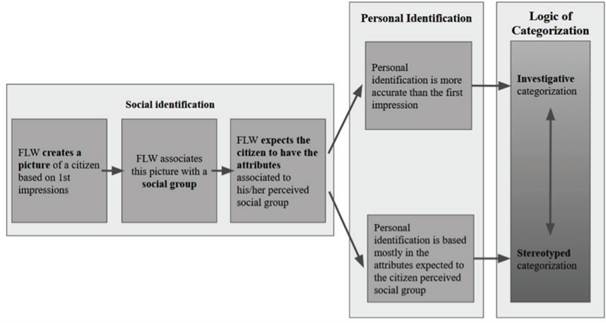
In the categorization process, some frontline workers use stereotypes (Harrits, 2019; Lotta & Kirschbaum, 2021, 2022; Møller, 2009). Stereotypes are internalized cognitive schemas - mental frameworks that encompass the associations and beliefs we hold about members of specific social groups (Dovidio et al., 2010; Hilton & Von Hippel, 1996). They are relational structures that link beliefs, attitudes, and behaviors, and guide people in making relational assumptions (Lotta & Kirschbaum, 2021, 2022). When someone makes a judgment based on a stereotype, they draw on a set of characteristics commonly associated with the social group to which they perceive the other person belongs (Dovidio et al., 2010). In doing so, they attribute certain traits to that group, supported by an underlying network of beliefs about why those traits are linked (Hilton & von Hippel, 1996). In social interactions, the person encountered is often associated with a social identity and is expected to exhibit the collective traits believed to characterize that group (Møller, 2009).
Although categorization can be approached in a more nuanced and individualized manner, the use of stereotypes represents a simplified form of categorization — one that exaggerates the differences between ourselves and members of the stereotyped social group (Harrits, 2019). In contrast, during a non-stereotyped interaction, a person does not assume that the other possesses all the stereotyped characteristics attributed to their social group. Instead, they remain more to forming a more personal understanding of the individual, based on shared experiences and direct interaction.
The public administration literature on stereotypes analyzes variations in the use of stereotypes (Harrits, 2019; Møller, 2009; Raaphorst & Groeneveld, 2018; Thomazinho, 2024). Raaphorst and Groeneveld (2018) argued that stereotyped can be used as shortcuts or as lenses, whit the latter being more pervasive. Stereotypes used as shortcuts involve relying on visible attributes of citizens to quickly infer their assumed identities, which are then used to draw conclusions about unobservable characteristics. The use of stereotypes as lenses happens when all observable signals are interpreted through the filter of stereotypical beliefs. Another kind of differentiation is done by Harrits (2019), who indicates two stages in the use of stereotypes in professional decision-making: activation and application. Activation occurs when stereotypes influence the worker’s reasoning about which decision or action to take. Application takes place when the actual decision or action is based on those stereotypes. Activation is more difficult to prevent because it tends to be automatic and unconscious, as stereotypes are deeply internalized. However, the application can be consciously controlled and potentially avoided through deliberate reasoning (Harrits, 2019). However, both Raaphorst and Groeneveld (2018) and Harrits (2019) did not analyze cases where there is the suppression of the use of stereotypes.
Another analysis of variation in how stereotypes are used was done by Møller (2009), who differentiated stereotyped categorization from individualized categorization. She identifies three key aspects associated with stereotyped categorization: i) using clarifications merely as confirmation tools; ii) relying on commonalities; iii) applying normative perspectives. Opposing stereotyped categorization, Møller (2009) proposes the concept of individualized categorization. In this approach, social workers consider the unique circumstances of each individual and the external factors that may influence their situation. Clarification processes are used to gather additional information about these factors. A critic one may do to this differentiation is for the cases of long-term interactions, which tend to always be individualized — even if still stereotyped.
Other option was proposed by Thomazinho (2024). The proposal was to consider categorization as operating along a continuum of logics. On the bottom side of this continuum lies stereotyped categorization. In this mode of categorization, the individual is treated as if they possess all the stereotypical traits associated with that group. There is no genuine effort to develop a more accurate personal identification through real interaction or experiences. Even when a form of personal identification is constructed, it remains heavily shaped — and ultimately distorted — by stereotypical expectations linked to the person’s perceived social identity. In contrast to stereotyped categorization, there is investigative categorization — a process grounded in experience and characterized by the continuous formulation, testing, and reformulation of hypotheses about the other. This logic goes hand-in-hand with inquiry, which is the process of questioning previous assumptions and actively seeking new insights. It is important to note that investigative categorization does not rely sorely on direct interaction and experience with the other. It also incorporates elements such as prior knowledge, previous experiences, and the social identification of the other. While stereotyped categorization primarily draws on internalized and taken-for-granted cognitive schemas, investigative categorization engages in more complex reasoning processes. The key distinction lies in the openness to test and revise one’s hypotheses.
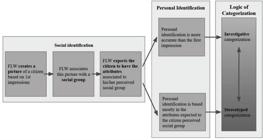
However, there is still a gap in the characterization of the reasoning associated to each logic of categorization. Is each logic of categorization associated to hypotheses about why a citizen fail? And is it associated to some kind of treatment given to the citizens? The answers to these questions can help us to understand how cultural processes are pathways for the reproduction of inequalities, as suggested by Lamont et al. (2014).
3. CONTEXT, DATA AND METHODS
The empirical object of this paper is a type of frontline worker: kindergarten professionals. These professionals have daily interaction with children and have to decide how to treat each of them. The selection of kindergartens and professionals followed the principles of purposeful sampling (Maxwell, 2012, p. 235). Diversification criteria were adopted for choosing the municipalities, kindergartens, and professionals who participated in the research. I selected 4 municipalities situated in São Paulo state with different degrees of resources and inequalities.
Two kindergartens in each municipality were included in the fieldwork. The selection criteria was the vulnerability of its territory — one in a low-vulnerability area and the other in a high-vulnerability area. Six professionals from each kindergarten were interviewed — 4 teachers and 2 assistants. In Kindergarten 2, there were no assistants, thus I interviewed only 4 teachers. In total, 46 professionals were interviewed. The selection of the professionals attempted to have some variation between them in terms of sociodemographic and professional characteristics.
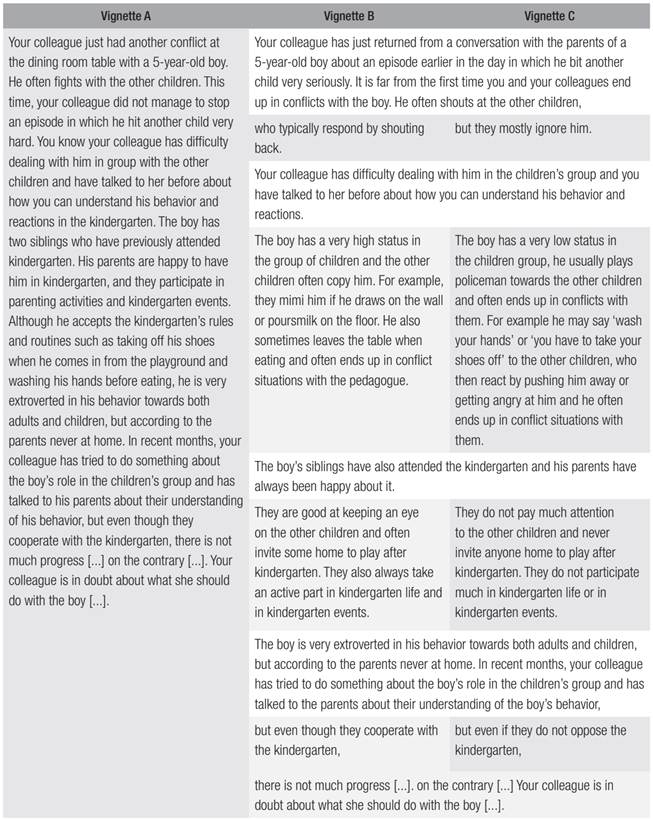
Vignettes were introduced to explore how professionals categorize and reason about children. Vignettes are fictional stories about individuals and situations that are presented to research participants, who are asked to comment and answer some questions about these stories, such as what they would do if they were in that situation (Barter & Renold, 2000; Thomazinho et al., 2024). The aim of qualitative vignettes is not to predict what would be the participants’ behaviors but to investigate how participants categorize and reason about the presented situation. In this reasoning process, the interviewee was stimulated to elaborate hypothesis and categorize the child. The vignettes were designed as Qualitative Vignette Experiments, in which the experimental logic is combined with qualitative interviews and analysis. In Qualitative Vignette Experiments, three vignettes should be prepared — one is the control baseline and two are the alternative ‘treatment’ where variation is introduced (Harrits & Møller, 2021).
The designed vignettes present situations where a boy misbehavior and a kindergarten professional has difficulties supporting his development. A first version of the vignettes was elaborated by the research team of the project “DISCOS - Different contexts - similar tasks: implications for public policy provision”1, and then presented to experts and pilot tested with some kindergarten professionals. A final version was elaborated — they portrayed a realistic problem to stimulate the professionals to categorize the child. The variation between the vignettes was with respect to children’s status in the group and family participation in the kindergarten activities — Baseline Vignette A presented a situation with a boy who medium-popular in the group and whose family is medium-participative, Vignette B presented a situation with a boy who is popular in the group and whose family is participative, while Vignette C presented the exact same situation of Vignette B but with a boy that is not popular in the group and whose family is not participative (Chart 1). The impact of the presence of a high or low-status family and child will be the focus of analysis of other publications of DISCOS project. Here, the focus of the analysis will be the variation of reactions within the professionals.
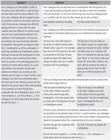
Teachers were presented first to the Baseline vignette A, and then to one of the treatment vignettes (B or C). The allocation of vignettes A or B was randomized by placing pairs of vignettes (A + B or A + C) in envelopes prior to the interviews. When each vignette was introduced, the interviewee was first invited to read it. Then 5 follow-up questions were done to stimulate them to reason about it. The follow-up questions asked them if they recognized the situation, what they thought was the cause of the situation, what they would do if they were the professional dealing with that boy, how could they help a colleague dealing with that situation, and if they thought the boy should be maintained in that group.
Participants were informed about the interview’s conditions and goals and signed a Free and Informed Consent Form. The interviews lasted about 50 minutes and were recorded. Then, they were transcribed and coded with the support of the software NVivo software. The process of analysis was done by qualitative content analysis. The first phase was an open coding focused on answering the research question. From the first round and preliminary analysis, a final list of codes was built, and deductive coding was done. The three main categories of codes were Logic of Categorization, Hypotheses, and Strategies.
To identify when the professional was doing a stereotyped categorization or an investigative categorization the main challenge was that these two logics are on the opposite edges of a continuum, but a big part of the kindergarten professionals’ reasoning had elements of both. Thus, the first step was identifying these elements of each categorization logic. I (abductively) created 3 codes related to elements of the stereotyped categorization and 3 codes related to elements of the investigative categorization. The reactions of the professionals to the vignettes were coded to these six codes. As a result, for each professional reaction to each vignette, there was data on which of these elements were present in their reasoning about the vignette’s boy. The next step was to aggregate these elements with the aim of positioning each kindergarten professional reasoning in the continuum of categorization logics. To do so, for each code of investigative categorization identified in the professional reasoning about a vignette, it was added 1. For each code of stereotyped categorization, it was subtracted 1. Thus, I created a scale of 7 points — from -3 to 3. The 3 represents the investigative categorization and the -3 is the stereotyped categorization.
The same procedure was done to characterize the reasoning of each professional — hypotheses and strategies. The hypotheses about the cause of the situation reveal relational assumptions and cognitive schemas the professionals activated for reason about the vignette boys. The analysis of the strategies was also included because the central importance of categorization processes is that it can define who accesses rights or receives sanctions (Lotta & Costa, 2020; Møller, 2009).
4. RESULTS
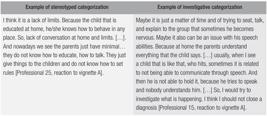
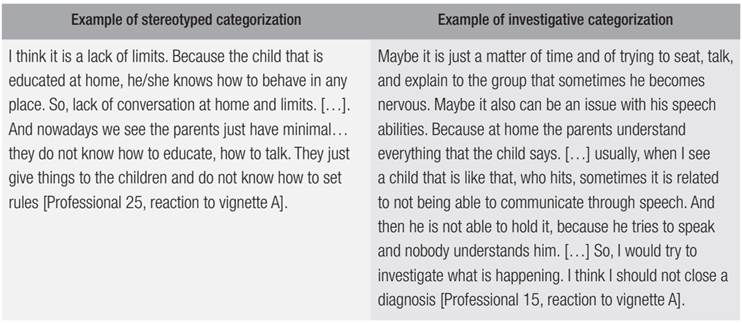
There are professionals placed in all the possible positions from the most stereotyped to the most investigative. Thus, it is possible to say that the interviewees categorize the same fictitious boys in very different ways. While some of them drew hard on stereotypes when reasoning about the vignettes, others were able to have an investigative approach. Chart 2 presents one example of stereotyped categorization and one example of investigative categorization.
In the next subsections I explore the hypotheses of problem explanation and strategies of problem-solving associated with the use of each logic of categorization.
4.1 Hypotheses of problem explanation
Explanations about why a child fails to have good behavior are connected with common-sense beliefs. Educational failure is typically seen as being caused by family, moral, or psychological issues (Patto, 2015). These beliefs are not only found in society in general but also are widespread among education professionals. Patto (2015) affirms that this meritocratic discourse legitimizes educational failure as being individual or family responsibility. On the other hand, scholars argue that poverty and educational failure should be seen as structural problems. For instance, Patto (2015) indicates that the condition of the school environment should be the focus of the analysis.
When analyzing the hypotheses elaborated by the interviewees about the vignettes, I found both sets of explanations. Some of them were focused on the characteristics of the child and his family, thus blaming the citizen side for the challenging situation. This group of hypotheses were gathered in the category Citizen hypotheses. It gathers causal hypotheses that link the conflict situation presented in the vignette with characteristics of the child’s family, pathology, gender, and neighborhood. In the opposite way, other hypotheses were focused on the ability of the educational service and its professionals to deal with challenging situations. This group of hypotheses was denominated Service and pedagogical hypotheses, and integrates hypotheses about the professional abilities, the group of children, the kindergarten, and pedagogical perspectives about children’s normal behavior and development.
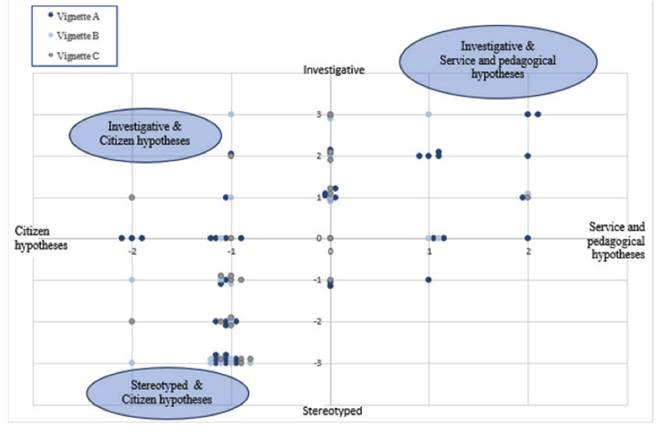
Figure 2 illustrates how the logic of categorization is connected with the two different sets of hypotheses: Citizen hypotheses or Service and pedagogical hypotheses. Each interviewee’s reaction to a vignette was positioned on the y-axis according to its position in the Logic of Categorization Scale; and on the x-axis according to the number of codes from each set of hypotheses. Thus, for each hypothesis code that integrates the Citizen domain, it was subtracted 1; for each code that integrates the Service and pedagogical domain, it was added 1.
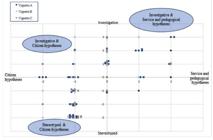
It is possible to observe that stereotyped reasoning usually was related to Citizen hypotheses, mainly causal hypotheses about the child’s family. In the reaction to the vignette A, it is the only hypothesis that the professionals positioned in the negative extreme of the Logic of Categorization Scale had. When reacting to vignette B, professional 41 used also a hypothesis related to the gender of the child: “You can see that the majority of the cases are boys. Boys are more violent; they solve everything fighting. Girls develop faster, rarely they fight” [Professional 41, reaction to vignette B]. Professional 17 was the only one who reacted to vignette B in a stereotyped way without making any hypothesis about the family. Instead, she guessed the boy probably has hyperactivity — thus enacting the cognitive schema that relates children facing challenging situations with a pathology. In vignette C, all the professionals whose reactions were classified as stereotyped categorization made hypotheses about the child’s family. Professional 40, before indicating the boy’s family, hypothesized that he was a single child. When I asked her if in the story the boy has siblings, and she realized he has, she changed her reasoning and indicated as hypotheses both a possible pathology — “maybe we think it is a disorder” —, or family characteristics. Thus, all the stereotyped reasonings were associated with hypotheses in the citizen domain, blaming mainly family characteristics or, in a minority of cases, the boy’s characteristics.
The assumptions made about the boy’s family were diverse. For example, about the family (mis)behavior — “they (the children) don’t receive attention at home” [professional 5, reaction to vignette A]; about the constitution of the family — “we see so many weird things, non-structured families. […] you have two mothers, or you have two fathers, this kind of things” [professional 10, reaction to vignette B]-; about parents in a divorcing process — “maybe the couple is divorcing” [professional 33, reaction to vignette B]; or about the relation with the siblings — “probably it is a troubled relation” [professional 35, reaction to vignette A].
Based on that analysis, I identified that stereotyped logic is associated with meritocratic theories of educational failure that blame the individual (the child or the family). If on one side high development is seen as a ‘natural gift’ and a signal of positive individual (and family) traits (Bourdieu, 2015), educational failure is seen as a lack of motivation, individual (un)abilities, or cultural inadequacy (Patto, 2015). This finding is related to what is identified by Møller (2009): stereotyped practices are connected with a deservingness logic.
On the other hand, the majority of the professionals who reacted with investigative reasoning elaborated mainly Service and Pedagogical hypotheses. This is the case especially in reactions to the vignette A. In that set are hypotheses in which the interviewee said that maybe the fictitious professional could be tired, with erratic behavior, or maybe the boy could be mimicking the attitudes of that professional. For instance, Professional 3 said: “Maybe the teacher is already tired, mentally exhausted, and he [the boy] takes advantage of the situation” [Professional 03, reaction to vignette A]. It is interesting how this hypothesis is related to self-identification with the fictitious professionals, as the interviewees were invited to place themselves in that situation. Professional 15 explicitly indicated this self-identification recognizing she has already been with the same challenge: “and be aware of ourselves speeches, because they [the children] reproduce a lot what we say. ‘Put the shoes, do this, do that’. Then you ask: ‘Who talks like that?’. And it is you. I have already caught myself doing that and I think everybody does it sometimes” [professional 15, reaction to vignette C].
Some professionals also elaborated hypotheses about interactions within the group of children that, together with the complex demands of the pedagogues, cause these conflict situations. For instance, professional 16 said “Does the teacher know what caused him to hit the other? What had the other child done? Because sometimes the teacher…, we are all the time donating ourselves, but we blink, we go to the toilet, we have other demands, and this situation happens” [professional 16, reaction to vignette A]. This kind of hypothesis was more common in the reactions to the treatment vignettes — which makes sense, as these vignettes highlighted the status and relations of the boy with his colleagues. The fact that he was a leader (vignette B) or isolated by his friends (vignette C) was indicated by some professionals. For instance, professional 7 explained the situation of vignette C saying: “I think that because he is being isolated by his colleagues and then he bit the other child”.
In Service and pedagogical are also included hypotheses about the kindergarten in which the interviewees highlighted that these conflict situations happen because of certain characteristics of kindergartens. Professional 38, for example, said: “he [the boy] is not like that at home. But at home is different from the school, because the school is a collective context, there are other children and other ways of education, and the child is adapting herself” [professional 38, reaction to vignette A]. Other hypotheses included in the group of Service and pedagogical are related to what is perceived by professionals as normal challenges of children during their development. Some of these professionals said this kind of situation happens with 5-year-old children because they are still learning how to solve conflicts. It is seen as part of the pedagogical competence to teach the child how to deal with emotions. That is the case of Professional 37’s reaction to vignette A: “When children arrive, the majority of them rely on us to try to solve a situation. They do not understand that there is this possibility [of solving alone]. It is the achievement of autonomy to solve these conflict situations”.
Thus, professionals’ reasoning in an investigative logic was commonly associated with explanations about the structure of the service and pedagogical concerns. It is associated to some normative indications of scholars about how educational inequalities and failure should be regarded (Bourdieu, 2015; Patto, 2015).
However, some reactions positioned in the positive extreme of the Categorization Logic Scale (investigative reasoning, position 2 or 3) were related to Citizen Hypotheses. That is the case of professional 8, who hypothesized that “maybe he [the boy] is having this situation at his home. Or it can be a cognitive problem” [professional 8, reaction to vignette A]. About the presence of hypotheses about the family’s characteristics in reasonings positioned as investigative, there were two kinds of situations. One is that the family was considered in the interviewee’s reasoning without the activation of stereotypes about it. This is the case of the following talk of Professional 15 when reacting to the vignette A “So sometimes we talk about the family to understand his [the boy’s] situation, but not to judge or blame someone. Because we are inclined to do that”. The second possible situation was the elaboration of hypotheses about the child’s family that activated some stereotypes, but it still did not drive the entire reasoning of the interviewee. For example, professional 38 said when reacting to vignette C: “We think that it also can happen in the family: too much scream. He is not being heard, so he uses the bite as a way to call attention to what he wants to say and show. And maybe this family does not give this attention and when he needs it, he uses this trick of bite”. In the sequence, this professional elaborated other hypotheses related to the interactions of the boy with the group. In this case, even if negative stereotypes about families integrated the interviewee’s reasoning, she was able to elaborate on other hypotheses and relied on elements of the story, thus being considered investigative categorization.
4.2 Strategies of problem-solving
The strategies proposed by the interviewees to deal with each vignette situation are important to analyze because, in a real situation, it would define which child and family receive which kind of treatment. The central issue is that categorization processes have real consequences, mainly in the modern bureaucratic state (Jenkins, 2014). Literature on behavior management practices discusses pedagogues’ abilities to deal with behaviors perceived as disruptive (Iraklis, 2022). Usually, these practices are divided into two groups. The first one is denominated positive or dialogic practices, and the second is called negative, punitive, restrictive, or authoritarian practices (Aylward et al., 2022; Iraklis, 2022; Monção, 2018). Positive or dialogic practices include rewards or positive reinforcement (Iraklis, 2022). Aylward et al. (2022) argue that supportive practices positively influence children’s development and learning achievements. This set of practices is the one proposed by professional knowledge and Brazilian early childhood national guidelines (Ministério da Educação, 2018; Monção, 2018).
On the contrary, restrictive behavior management strategies include punishment, verbal reprimands, and time out (Iraklis, 2022). Some authors argue that exclusionary practices are more common in early childhood institutions than in other levels of education (Aylward et al., 2022). Punitive practices can negatively affect children’s development and motivation to participate, increasing children’s emotions of fear, shame, and anger (Iraklis, 2022). Brazilian early childhood guidelines explicitly disallow punitive practices such as “[…] corporal punishment; actual or threatened deprivation of food, rest or toilet facilities; abusive or profane language; public or private humiliation; emotional abuse, including shaming, rejecting, terrorizing or isolating a child” (Ministério da Educação, 2018, p. 51).
When I first coded and analyzed the strategies proposed by the interviewees to deal with the situation of the three vignettes, I found a large variation. Some proposed activities with the child, the group of children, or their families. Others proposed the engagement of the kindergarten management and other professionals. By analyzing patterns of strategies and inspired by the literature, I created two groups of strategies: i) Punitive and restrictive strategies; ii) Dialogic and supportive strategies. The former is composed of strategies that propose to sanction the child, discipline him to follow strict rules, reallocate or isolate the child within his group, change the child of the children’s group, or efforts made to change the family behavior. Dialogic and supportive strategies comprise actions to support the child through dialogue and affection, integrate the child into the children’s group, propose new pedagogical activities, make more observations and documentation, collaborate with colleagues, use professional knowledge, and make efforts to hear and comprehend the family situation.
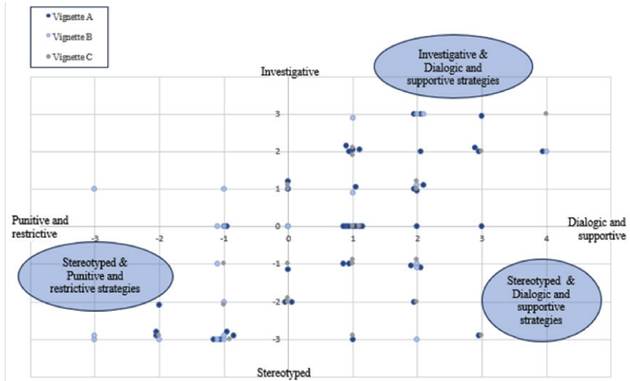
To understand how each group of strategies is related to the logic of categorization I generated Figure 3. It illustrates how the logic of categorization is connected with these two different sets of strategies. Each interviewee’s reaction to a vignette was positioned on the y-axis according to its position in the Logic of Categorization Scale, and on the x-axis according to the number of strategies coded for each strategy set. For positioning the reactions in the x-axis, for which strategy code that integrates the Punitive and restrictive, it was subtracted 1; for each code that integrates the Dialogic and supportive group, it was added 1.
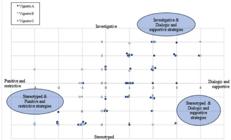
Analyzing Figure 3, one can see that the more stereotyped the reasoning of the interviewee, the more punitive and restrictive the strategies proposed by the professionals. When reacting to the vignettes in a stereotyped logic, the most common hypotheses proposed by the interviewees were to discipline the child to follow rules and make efforts to change the family behavior. Some of the professionals also proposed to give sanctions for the child, such as less time playing. For example, Professional 31 reacted to vignette B by proposing these three kinds of strategies:
“The only thing we can do is to take something from him, explain to him why he will be without this thing, […] you call the father to know how is it at home, but I think the parents hide too much stuff and they think the school has the duty and the power to solve everything, but it is not like that. We are here to teach, not to educate. The education has to come from home” [professional 31, reaction to vignette B].
The punitive and restrictive perspective is the base of the strategies proposed by professional 31. This reasoning is not just connected with a stereotyped logic that blames the citizen (both the child and the family) for the challenging situation but also interprets the problem as one of lack of motivation to behave well. As discussed by Schneider and Ingram (1990), incentive tools have the implicit behavioral assumption that individuals are utility maximizers and that they have the “decision-making skills to select from among alternatives those that are in their own interests” (Schneider & Ingram, 1990, p. 516). Thus, when a policy or a frontline worker uses a sanction, the goal is to raise the costs of undesirable behavior.
Another practice proposed by some of the professionals reasoning in a stereotyped logic was to isolate the child. For example: “In the past, we called it punishment, now it is ‘reflection corner’. So a lot of times you remove the child a couple of minutes, put him/her on a chair and order him/her to think about what he/she did” [Professional 10, reaction to vignette A]. It is interesting the change of denomination described by the professional: from ‘punishment’ to ‘reflection corner’. It is possible to see that while the practice remains the same, the name has changed, probably because now it is not pedagogically recommended to punish the child.
Professional 31 and others proposed to meet the parents with the perspective of trying to change their behavior and how they raise their children. This was the most common strategy proposed by professionals with stereotyped reasoning when reacting to the vignettes. There is a background idea of what is the family and what is the pedagogues’ role, which is made explicit by professional 31: “We are here to teach, not to educate”. Monção (2015) also found that some early childhood professionals believe that families should teach values to their children, while the professionals should focus only on scholastic content. This strategy is strongly connected to normative expectations professionals have about what is a good raising of a child (Lareau, 2011).
However, there were some cases of stereotyped reactions that came together with proposals of Dialogic and supportive strategies, especially strategies of supporting the child by giving affection or dialoguing. For example, Professional 12 reacted to the vignette A by activating stereotypes about the child’s family but proposed the strategy: “I would talk with him and try to understand him, because sometimes it is only you understand what he wants, what he wants to say”. One possible explanation for these outliers is that they considered the child the ‘true victim’ who should be supported, while the family is guilty of the situation. Cordeiro (2023) discusses the folk term ‘true victim’ that is used by frontline workers of a Woman Police Station in Brazil. She identified how the professionals categorize some women as true victims and others as not the true victims, generating different treatments for each group. ‘True victims’ are the ones perceived as deserving attention and positive treatment (Cordeiro, 2023).
The cases of Stereotyped & Dialogic and supportive strategies were more common among reactions to the vignette A and vignette C, being less common abroad reactions to vignette B. Thus, it happened in the cases with less participative families when the professionals activated stereotypes about the families. Indeed, the majority of the interviewees who reacted in a stereotyped logic and proposed dialogic and supportive strategies blamed the family for the situation and saw the boy as the ‘true victim’. For example, professionals 12 and 33 reacted to the vignette indicating that the needy condition of the boy was the cause, thus the professional should give affection, be patient, and dialogue with the child.
However, even in some cases where the child was not seen exactly as the ‘true victim’ some professionals proposed dialogic and supportive strategies. This is the case of the reaction of professional 41 to vignette B. This professional activated family and gender stereotypes when interpreting the situation. He proposed dialogic and supportive strategies by collaborating with his colleagues and using his professional knowledge. It can be considered a case of activation of stereotypes without application when the treatment is decided, as suggested by Harrits (2019).
All the reasonings placed in the positive extreme of the logic of the categorization scale (investigative reasonings, position 2 or 3) came together with proposals of dialogic and supportive strategies. These interviewees proposed strategies that support the child through dialogues and affection, pedagogical activities such as group talking and collective reading books, professional collaboration to better understand the situation, and observation of the child. In these cases, the professionals proposed a process of formulation of strategies that is open-ended and depends on more observation, new information, and alternative visions. For example, “I would talk about my experience, what has worked for me, and what has not worked. […] We have to trade information”. [Professional 20, reaction to vignette A]. The collective approach was also highlighted: “We have a conception that the child is of the school” [Professional 37, reaction to vignette A].
The professional knowledge was a topic of some of these professionals. They proposed that searching for more knowledge and changing the approach could be effective to solve the situation. Professional 20, for instance, said: “we could research, study about this issue with other professionals to have a support” [reaction to vignette C]. Proposals of pedagogical activities were also more common among professionals reasoning with an investigative approach. These activities were diverse, such as using books and having collective “readings about the issue” [Professional 21, reaction to vignette B], plays that would help the child to improve social skills - “maybe playing of Baby, of being a father” [Professional 15, reaction to vignette C], and other collective activities with the entire group of children.
The investigative reasoning was also associated with a more comprehensive way of approaching the families. Instead of indicating the need to change the family’s behavior, the professionals proposed mainly to hear the family to get more information and understand the circumstances of the boy. As said by Professional 20, “[I would] talk with the family to try to understand” [reaction to vignette C].
Gulløv (2017) found that, in Denmark, the process of civilizing children aims two goals that commonly are in contradiction. One is that children became able to adapt to social requirements of each context. Children should learn how to self-control themselves and appropriate ways of being social. The second is that children express their individuality and autonomy, which empower children’s spontaneity. Thus, early childhood professionals both discipline the child to have the appropriate behavior and empower them to be autonomous. The analysis presented on this paper adds how these groups of strategies are related to the logic of categorization used by each professional. When stereotyping, the interviewees tended to propose punitive and restrictive strategies - probably because their behavior assumption is that the child’s motivation to misbehave should be changed, and it can be done by giving sanctions to the child. On the other hand, when professionals had an investigative approach, they proposed dialogic and supportive strategies.
5. CONCLUSION
This paper contributes to the literature on the use of stereotypes by frontline workers. The goal was to characterize the reasonings produced by kindergarten professionals when they categorize children. By analyzing interviewees’ reactions to vignettes, I categorized their responses on a Categorization Logic Scale. This methodology facilitates a comprehensive analysis of not only the use of stereotypes but also the instances where professionals successfully block their application. It is an innovative methodology that can be used by other researchers to better understand the variation in the use of stereotypes in diverse contexts.
I contend that comprehending the reasoning behind blocking stereotype use is pivotal for mitigating their use among frontline workers. Indeed, the results show how investigative categorization is associated with structural hypotheses about educational challenges and with more dialogic and supportive strategies. On the other hand, stereotyped categorization seems to be more related to meritocratic and individualist theories about educational failure and poverty and comes along with more punitive and restrictive strategies. Hilton and Von Hippel (1996) suggested that we should proactively reflect about the theories that sustain stereotypes as a way of inhibiting them. As a practical contribution of the paper, I suggest that frontline workers should have collective moments of reflection about these theories.
These findings can enhance the comprehension of how categorization processes can represent pathways of reproduction of inequalities (Lamont et al., 2014). Punitive practices can have a perverse effect on children (Iraklis, 2022) and represent sanctions, while supportive and dialogic practices can empower children to develop themselves and have better social relations, thus representing benefits. As I argued in the introduction, frontline workers have the power to give sanctions and benefits (Lipsky, 2019; Møller 2009). In this paper, I showed how sanctions are related to stereotyped categorization while benefits are related with investigative categorization. However, there were also cases in which the professional activated stereotypes but proposed dialogic and supportive strategies. It illustrates what Harrits (2019) suggested as being the activation of stereotypes without its application in the treatment.
In this article, the focus was on characterizing the variation in the use of stereotypes. Future research should explore why is there variation and how some characteristics of the professionals can be related to a more investigative or stereotyped approach. The presented findings showed how investigative categorization commonly came along with a focus on professional knowledge and collaboration. Thus, investigations into how professionalism may inhibit the use of stereotypes should be developed.
ACKNOWLEDGEMENTS
The author thanks the comments and suggestions of the reviewers and of the colleagues from the Fundação Getulio Vargas. The author also thanks the partnership with the research team of the DISCOS: Gabriela Lotta, Marie Møller, Michael Hill, and Yonatan Schvartzman.
REFERÊNCIAS
-
Aylward, A., Garver, R., Kramarczuk Voulgarides, C., & Hodgson, C. (2022). The ecosystem of racial inequalities in discipline in early childhood education. Perspectives on Early Childhood Psychology and Education, 6(1), 105-140. https://doi.org/10.58948/2834-8257.1003
» https://doi.org/10.58948/2834-8257.1003 -
Barter, C., & Renold, E. (2000). “I wanna tell you a story”: Exploring the application of vignettes in qualitative research with children and young people. International Journal of Social Research Methodology, 3(4), 307-323. https://doi.org/10.1080/13645570050178594
» https://doi.org/10.1080/13645570050178594 - Bourdieu, P. (2015). Escritos de educação (M. A. Nogueira & A. Catani, Orgs.; 16ª ed.). Editora Vozes.
- Cordeiro, N. (2023). Violência contra as mulheres: (Re)produção de desigualdades nas políticas públicas SOS Corpo.
-
Dovidio, J. F., Hewstone, M., Glick, P., & Esses, V. M. (2010). Prejudice, stereotyping and discrimination: Theoretical and empirical overview. In J. F. Dovidio, M. Hewstone, P. Glick, & V. M. Esses (Eds.), The SAGE handbook of prejudice, stereotyping and discrimination (pp. 3-28). SAGE Publications. https://doi.org/10.4135/9781446200919.n1
» https://doi.org/10.4135/9781446200919.n1 - Gulløv, E. (2017). Civilising the youngest: An ambiguous endeavour. In L. Gilliam & E. Gulløv (Eds.), Children of the welfare state: Civilising practices in schools, childcare and families (pp. 51-68). Pluto Press.
-
Harrits, G. S. (2019). Stereotypes in context: How and when do street-level bureaucrats use class stereotypes? Public Administration Review, 79(1), 93-103. https://doi.org/10.1111/puar.12952
» https://doi.org/10.1111/puar.12952 -
Harrits, G. S., & Møller, M. Ø. (2021). Qualitative vignette experiments: A mixed methods design. Journal of Mixed Methods Research, 15(4), 526-545. https://doi.org/10.1177/1558689820977607
» https://doi.org/10.1177/1558689820977607 -
Hilton, J. L., & Von Hippel, W. (1996). Stereotypes. Annual Review of Psychology, 47, 237-271. https://doi.org/10.1146/annurev.psych.47.1.237
» https://doi.org/10.1146/annurev.psych.47.1.237 -
Hinnant, J. B., O’Brien, M., & Ghazarian, S. R. (2009). The longitudinal relations of teacher expectations to achievement in the early school years. Journal of Educational Psychology, 101(3), 662-670. https://doi.org/10.1037/a0014306
» https://doi.org/10.1037/a0014306 - Iraklis, G. (2022). Classroom (in)discipline: Behaviour management practices of Greek early childhood educators. Education 3-13, 50(1), 16-24. https://doi.org/10.1080/03004279.2020.1817966
- Jenkins, R. (2014). Social identity (4th ed.). Routledge.
-
Lamont, M., Beljean, S., & Clair, M. (2014). What is missing? Cultural processes and causal pathways to inequality. Socio-Economic Review, 12(3), 573-608. https://doi.org/10.1093/ser/mwu011
» https://doi.org/10.1093/ser/mwu011 - Lareau, A. (2011). Unequal childhoods: Class, race, and family life (2nd ed.). University of California Press.
- Lautier, N. (2011). Expectativas dos professores. In Dicionário de educação (pp. 390-392). Editora Vozes.
- Lipsky, M. (2019). Burocracia de nível de rua: Dilemas do indivíduo nos serviços públicos (Tradução da edição brasileira). ENAP.
- Lotta, G. S. (2015). Burocracia e implementação de políticas de saúde: Os agentes comunitários na estratégia saúde da família Editora Fiocruz.
-
Lotta, G., & Costa, M. I. S. (2020). Uso de categorizações políticas e sociais na implementação de políticas: Contribuições teóricas e analíticas. Revista de Sociologia e Política, 28(76), 1-20. https://doi.org/10.1590/1678-987320287604
» https://doi.org/10.1590/1678-987320287604 -
Lotta, G., & Kirschbaum, C. (2021). How street-level bureaucrats use conceptual systems to categorise clients. Policy and Politics, 49(4), 531-551. https://doi.org/10.1332/030557321X16292224578150
» https://doi.org/10.1332/030557321X16292224578150 -
Lotta, G., & Kirschbaum, C. (2022). Double standard in the classroom: Analysis of socio-semantic categorization networks operated by teachers. Revista de Administração Pública, 56(1), 100-133. https://doi.org/10.1590/0034-761220200633
» https://doi.org/10.1590/0034-761220200633 - Maxwell, J. A. (2012). Qualitative research design: An interactive approach (3rd ed.). SAGE Publications.
- Maynard-Moody, S., & Musheno, M. (2003). Cops, teachers, counselors: Narratives of street-level judgement University of Michigan Press.
- Millet, M., & Croizet, J.-C. (2016). L’école maternelle comme première expérience de l’inégalité culturelle. Diversité: Ville École Intégration, (186), 29-34.
-
Ministério da Educação. (2018). Parâmetros nacionais de qualidade da educação infantil https://www.gov.br/mec/pt-br/assuntos/eb/implementacao-dos-parametros-nacionais-de-qualidade-da-educacao-infantil
» https://www.gov.br/mec/pt-br/assuntos/eb/implementacao-dos-parametros-nacionais-de-qualidade-da-educacao-infantil - Møller, M. Ø. (2009). Solidarity and categorization: Solidarity perceptions and categorization practices among Danish social workers [Tese de Doutorado, Aarhus University].
-
Møller, M. Ø., Lotta, G., Thomazinho, G., Schvartzman, Y., & Hill, M. (2023). The state role in civilising childcare - comparing policy intentions with childcare in Brazil and Denmark. Journal of International and Comparative Social Policy, 39(2), 170-188. https://doi.org/10.1017/ics.2023.12
» https://doi.org/10.1017/ics.2023.12 -
Monção, M. A. G. (2015). O compartilhamento da educação das crianças pequenas nas instituições de educação infantil. Cadernos de Pesquisa, 45(157), 652-679. https://doi.org/10.1590/198053143052
» https://doi.org/10.1590/198053143052 -
Monção, M. A. G. (2018). Cenas do cotidiano de um centro de educação infantil: Em foco a relação entre adultos e crianças. Revista @mbienteeducação, 11(2), 259-281. https://doi.org/10.26843/ae19828632v11n22018p260a77
» https://doi.org/10.26843/ae19828632v11n22018p260a77 - Patto, M. H. S. (2015). A produção do fracasso escolar: Histórias de submissão e rebeldia Intermeios.
-
Raaphorst, N., & Groeneveld, S. (2018). Double standards in frontline decision making: A theoretical and empirical exploration. Administration & Society, 50(8), 1175-1201. https://doi.org/10.1177/0095399718760587
» https://doi.org/10.1177/0095399718760587 -
Schneider, A., & Ingram, H. (1990). Behavioral assumptions of policy tools. The Journal of Politics, 52(2), 510-529. https://doi.org/10.2307/2131904
» https://doi.org/10.2307/2131904 -
Thomazinho, G. (2024). Logics of categorization at the frontline: How do kindergarten professionals use and block stereotypes? [Tese de Doutorado, Fundação Getulio Vargas]. Repositório Digital FGV. https://hdl.handle.net/10438/35866
» https://hdl.handle.net/10438/35866 -
Thomazinho, G., Lotta, G. S., & Aliberti, C. (2024). O uso de vinhetas em pesquisas sobre profissionais de educação. Revista @mbienteeducação, 17(esp. 3), e023040. https://doi.org/10.26843/ae19828632v17n3e023040
» https://doi.org/10.26843/ae19828632v17n3e023040
-
1
integrated the team of the international collaborative research project DISCOS (Different Contexts - Similar Tasks: Implications for Public Policy Provision), which aimed to investigate how Brazilian and Danish kindergarten professionals handle similar tasks in very different countries (Møller et al., 2023).
-
DATA AVAILABILITY
Data available on request. The entire dataset supporting the results of this study is available upon request to the corresponding author Gabriela Thomazinho. The dataset is not publicly available due information that compromises the privacy of research participants.
-
FUNDING
This work was carried out with the support of the Coordenação de Aperfeiçoamento de Pessoal de Nível Superior - Brasil (CAPES) - Funding Code 001 and the Fundação de Amparo à Pesquisa do Estado de São Paulo (FAPESP - process n. 2013/07616-7, 2020/15430-4 e 2025/06737-2). The opinions, hypotheses, conclusions, or recommendations expressed in this material are those of the author and do not necessarily reflect the views of FAPESP or CAPES.
-
5
[Original version]
-
Reviewers:
Patricia Rodrigues Rosa (Instituto Federal de Educação Ciência e Tecnologia do Rio Grande do Sul, Canoas / RS - Brazil)
-
Reviewers:
Roberto Rocha Coelho Pires (Instituto de Pesquisa Econômica Aplicada, Brasília / DF - Brazil)
-
Peer review report:
The peer review report is available at this link https://periodicos.fgv.br/rap/article/view/97069/90457
Data available on request. The entire dataset supporting the results of this study is available upon request to the corresponding author Gabriela Thomazinho. The dataset is not publicly available due information that compromises the privacy of research participants.

 Source: Elaborated by the author.
 Source: Elaborated by the author. Vignettes elaborated by the DISCOS team.
 Source: Elaborated by the author.
 Source: Elaborated by the author.
 Source: Elaborated by the author.