
 Thermal stress in the acclimatization of micropropagated banana plantlets, supplemented with plant growth-promoting rhizobacteria
ABSTRACT
Micropropagated banana plantlets need acclimatization to reduce the stresses caused by the change from in vitro to ex vitro environment. The objective of this study was to evaluate the influence of thermal stress on the acclimatization of micropropagated plantlets of banana cultivar ‘Prata Catarina’, supplemented with plant growth-promoting rhizobacteria. Four applications of the LPPC159 strain, belonging to the genus Bacillus were performed every 15 days. Inoculated plantlets did not show differences in the biometric variables compared to fertilized plantlets. Plantlets acclimatized for seven days under controlled conditions, seven days in tunnel and 46 days in greenhouse showed greater pseudostem diameter, fresh and dry mass, and higher accumulations of N, P, K, Ca, Mg, S, Na, B, and Cu. No significant differences were observed between inoculated and non-inoculated plantlets. Inoculations had positive and negative effects only on the accumulations of N and Cu, respectively. The lowest thermal indices were observed for plantlets of T5 (7 days in a controlled environment + 7 days in a tunnel + 46 days in a greenhouse) and T1 (14 days in a shade tunnel + 46 days in a greenhouse), promoting better thermal comfort for plantlets of these treatments. Using shade in the acclimatization phase combined with plant growth-promoting rhizobacteria promoted gains in pseudostem diameter, fresh mass, dry mass, and nutrient accumulation in the plantlets. These conditions also allowed reductions in thermal stress in the acclimatization phase of micropropagated plantlets of banana cultivar ‘Prata Catarina’.
Key words:
abiotic stress; Bacillus; mineral nutrition; Musa spp.; temperature
HIGHLIGHTS:
Seven days in tunnel and 46 days in greenhouse led to increase of micropropagated banana.
Shading in acclimatization and plant growth-promoting rhizobacteria (PGPR) promote gains in plantlet growth.
Shading in acclimatization and PGPR promote better quality of plantlets.
RESUMO
Mudas micropropagadas de bananeira necessitam da aclimatização para redução dos estresses ocasionados pela mudança de ambiente in vitro para ex vitro. O objetivo desse estudo foi avaliar a influência do estresse térmico na aclimatização de mudas micropropagadas de bananeira cultivar Prata Catarina, suplementadas com rizobactéria promotora de crescimento. Foram realizadas quatro aplicações da cepa LPPC159, pertencente ao gênero Bacillus, a cada 15 dias. As mudas inoculadas não apresentaram diferenças nas variáveis biométricas comparando-se as mudas adubadas. As mudas aclimatizadas por sete dias em condições controladas, sete dias em túnel e 46 dias em telado apresentaram maior diâmetro do pseudocaule, massas frescas e secas, e, maiores acúmulos de N, P, K, Ca, Mg, S, Na, B e Cu. Não foram observadas diferenças significativas entre mudas inoculadas e não inoculadas. Apenas para os acúmulos de N e Cu, as inoculações tiveram efeitos positivos e negativos, respectivamente. Os menores índices térmicos foram observados para as mudas dos tratamentos T5 (7 dias em ambiente controlado + 7 dias em túnel de sombrite + 46 dias em casa de vegetação) e T1 (14 dias em túnel de sombrite + 46 dias em casa de vegetação) proporcionando melhor conforto térmico para as mudas desses tratamentos. O uso de sombreamento na fase de aclimatização aliado ao uso de bactérias promotoras de crescimento proporcionou ganhos no diâmetro do pseudocaule, massa fresca, massa seca e acúmulo de nutrientes nas mudas. Estas condições também possibilitaram reduções no estresse térmico na fase da aclimatização das mudas micropropagadas de bananeira cultivar Prata Catarina.
Palavras-chave:
estresse abiótico; Bacillus; nutrição mineral; Musa spp.; temperatura
Introduction
Banana (Musa spp.) is a fruit crop widely cultivated in countries with tropical and subtropical climate, and Brazil is the sixth largest producer in the world, with production of around 6.826 million tons (FAOSTAT, 2023). The area planted with the crop has reached levels of 464 thousand hectares, standing out as one of the main fruit crops cultivated in the country (IBGE, 2024). Using high-quality micropropagated plantlets is essential to achieve high yields and meet the demand of the consumer market (Suman, 2017). Quality plantlets are highly demanded by the market.
After the in vitro micropropagation phase, the plantlets need to be acclimatized to withstand the conditions of full sun in the field (Nomura et al., 2009). Acclimatization lasts between 45 and 60 days and consists of phases of gradual and controlled exposure of plantlets to solar radiation (Carvalho et al., 2012). In addition to radiation control, nutrient supply, temperature and humidity control are factors that contribute to the proper development of plantlets (Nomura et al., 2008; Scaranari et al., 2008; Nomura et al., 2012; Couto et al., 2022; Melo et al., 2024). The level of solar radiation directly influences the rates of photosynthesis and plant growth. The different levels of solar radiation to which the plantlets are subjected condition different physiological, biochemical, anatomical, and plant growth responses (Shaffique et al., 2022).
Although acclimatization ensures the initial development of plantlets after in vitro cultivation, they may still be exposed to stressful conditions, such as those related to water, salts, and temperature (Santos et al., 2018; Nansamba et al., 2019; Shaffique et al., 2022). To mitigate these risks, one of the alternatives is the use of plant growth-promoting microorganisms, among which bacteria of the genus Bacillus stand out (Silva et al., 2018; Rodrigues et al., 2022; Rodrigues et al., 2023).
Bacteria belonging to the genus Bacillus are abundant in the rhizosphere of plants and act as plant growth-promoting agents, either by making nutrients available, producing phytohormones, or protecting against phytopathogens and water, salt, and thermal stress (Goswami & Deka, 2020; Bhat et al., 2023). The interaction of plants with these microorganisms promotes increments in the production of antioxidant enzymes, phytohormones, and organic compounds (Silva et al., 2018; Santos et al., 2023). These parameters are important in the adaptation of plants in the process of thermoregulation under stress conditions (Shaffique et al., 2022), in addition to indirectly promoting gains in plant development (Rodrigues et al., 2022, 2023).
The use of plant growth-promoting microorganisms during acclimatization can promote better growth of micropropagated banana plantlets at this stage (Silva et al., 2018; Rodrigues et al., 2022, 2023). Additionally, in acclimatization, the presence of abiotic stresses, such as thermal stress, can limit the development of plantlets. For example, under high temperature conditions, the use of growth-promoting bacteria from the Bacillus genus has promoted increases in the survival of banana plantlets in the acclimatization phase of up to 96%, when compared to non-bacterized plantlets (Silva et al., 2018).
In this context, the use of bacteria of the Bacillus genus can also bring forward the acclimatization phase, reduce production costs and promote faster plant growth. In this way, plantlets become available for planting earlier and with greater levels of tolerance to adverse environmental conditions. Thus, monitoring of thermal conditions combined with the use of Bacillus strains can improve the development of micropropagated banana plantlets and increase their survival in the acclimatization phase. Therefore, the objective of this study was to evaluate the effect of inoculation of a plant growth-promoting isolate of Bacillus (LPPC159) in micropropagated plantlets of banana cultivar ‘Prata Catarina’, acclimatized under different conditions of environmental control.
Material and Methods
The experiment was conducted at Embrapa Tropical Agroindustry (3° 44’ S and 38° 33’ W, 22 m), located in Fortaleza, Ceará, Brazil. Micropropagated plantlets of the banana cultivar ‘Prata Catarina’ were used. The plantlets were transplanted into 162-cell polyethylene trays with a capacity of 50 cm3, containing sterile substrate produced with peat. The substrate was autoclaved for 1 hour, at 121 °C and 1 atm, twice with an interval of 24 hours. The trays had 18 rows with 9 cells each (50 mL per cell), and the initial three rows (group 1) and the final three rows (group 2) of each tray were used for transplanting the plantlets. A total of 1080 plantlets were used in the acclimatization phase. The experimental design was completely randomized, in a 5 × 2 factorial scheme (five treatments and two inoculations), with four replicates.
The plantlets were subjected to the following treatments: T1) 14 days in a shade tunnel (with one layer of 50% shade net) + 46 days in a greenhouse (with two layers of 50% shade net and micro-sprinkler); T2) 7 days in a controlled environment (± 28 °C) + 53 days in a greenhouse; T3) 60 days in a greenhouse; T4) 14 days in a controlled environment + 46 days in a greenhouse; T5) 7 days in a controlled environment + 7 days in a tunnel + 46 days in a greenhouse.
The treatments were applied to both groups of plantlets transplanted in each tray (27 plantlets per group). In one of the groups, the plantlets were inoculated with the strain of Bacillus sp. LPPC159 and in the other group, the plantlets were supplemented with slow-release fertilizer (14-14-14) (0.5 g in 50 mL).
The environments in which the treatments were applied had the following characteristics: A) greenhouse, with two layers of 50% shade net and an automated micro-sprinkler system; B) controlled environment, consisting of an air-conditioned (± 28 °C) masonry room, with manual irrigation; and C) 50% shade tunnel kept in a greenhouse, with micro-sprinklers. Air temperature and humidity in the different environments were monitored with a thermo-hygrometer, and light intensity was monitored with a lux meter.
The Bacillus sp. strain LPPC159 was obtained from the Collection of Microorganisms of Interest to Tropical Agroindustry (CMIAT) of Embrapa Tropical Agroindustry. The inoculum was prepared in nutrient-yeast-glucose (NYD) culture medium (glucose: 10 mL, yeast extract: 5 g, sterile distilled water: 1000 mL), under orbital shaking at 150 rpm, 30 ºC, for 24 hours. The biomass was centrifuged at 3,600 rpm for 15 min and washed three times with saline solution (0.9% NaCl). Inoculum suspension was prepared in water, at a concentration of 1×10⁹ CFU mL-1, for application to the plantlets. Four inoculations were performed, the first at the time of transplanting to the trays and the others at 15-day intervals.
The following attributes related to plantlet growth were evaluated: height (cm), pseudostem diameter (mm), number of leaves, longest root length (cm), and fresh mass (g) at 59 days after transplanting (DAT). Subsequently, the plantlets were dried in a forced air circulation oven at 65 °C for 72 hours, weighed and ground in an analytical mill (IKA A11 Analytical Mill) to determine the dry mass.
To determine nutrient contents in the shoots, the samples were subjected to sulfuric digestion for determination of N, nitric-perchloric digestion for determination of P, K, Ca, Mg, S, Na, Cu, Fe, Mn, and Zn, and incineration in muffle furnace for determination of B. Nutrient accumulation was calculated by multiplying the nutrient content by the dry mass (Miyazawa et al., 2009).
At 59 DAT, temperature of the stand was determined using a FLIR (Forward Looking Infra-Red) ONE Pro® thermal imaging camera, with thermal sensitivity between -20 and 120 °C, accuracy of ± 3 °C and thermal resolution of 160 × 120 pixels.
The recorded thermal images were analyzed using FLIR Tools software, version 6.4.18, to obtain data regarding the leaves of the plantlets. Air temperature was measured with a thermo-hygrometer (model THAL-300), positioned close to the plant at the time of image capture. These data were then used to calculate the thermal index (TI). TI (ºC) was determined (Eq. 1) based on the data of the average temperatures of the stand obtained in the thermal images and air temperature (Costa et al., 2013).
where:
Tstand - stand temperature, ºC; and,
Tair - air temperature, ºC.
The data related to plant height, pseudostem diameter, number of leaves, longest root length, fresh mass and dry mass were subjected to analysis of variance, and the means were compared by Tukey test (α = 0.05%). Nutrient accumulation data were subjected to analysis of variance, and the means were compared by the Scott-Knott test (α = 0.05%), with the Sisvar statistical program.
Results and Discussion
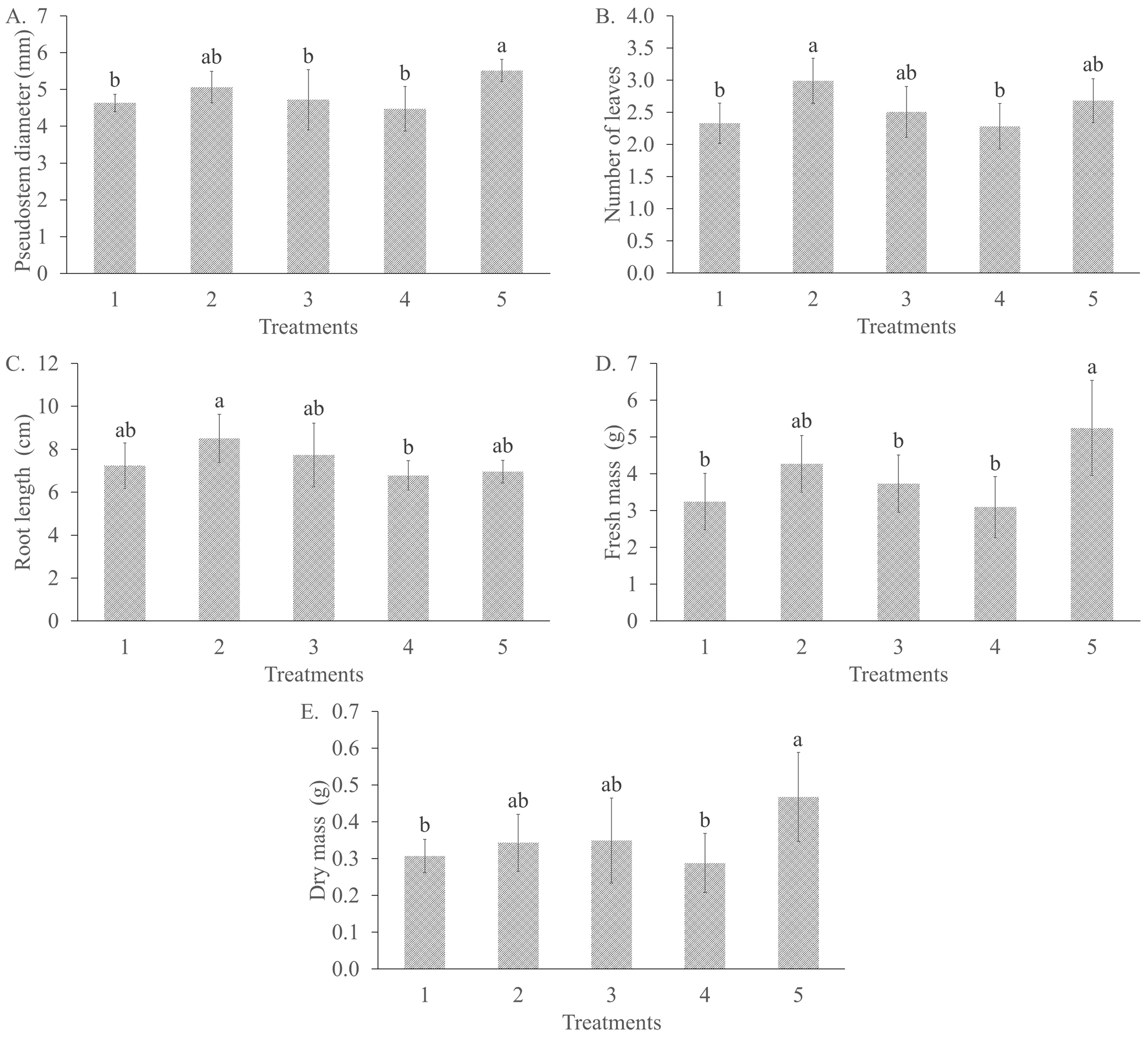
There were no significant differences between micropropagated plantlets of banana cv. ‘Prata Catarina’ inoculated with the LPPC159 strain of Bacillus and fertilized with slow-release fertilizer (Table 1). For the different environments in which the micropropagated plantlets were acclimatized, significant differences were observed in pseudostem diameter, number of leaves, root length, fresh mass, and dry mass. Treatment T5 (7 days in controlled environment + 7 days in tunnel + 46 days in greenhouse) was the one that stood out (Figure 1).
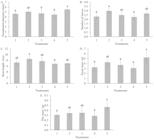
Mean values of pseudostem diameter (A), number of leaves (B), root length (C), fresh mass (D), and dry mass (E) of micropropagated plantlets of banana ‘Prata Catarina’, subjected to different environments for acclimatization
However, this treatment did not differ from T2 (7 days in controlled environment, consisting of an air-conditioned (± 28 °C) masonry room, with manual irrigation + 53 days in greenhouse) for pseudostem diameter, fresh mass and dry mass, and from T3 (60 days in greenhouse environment) for dry mass (Figure 1E). Plantlet height was a growth-related variable that did not show significant differences (p = 0.0843). Number of leaves showed an average of three leaves per plant, with T2 being superior to the others. Plantlets from T2 (7 days in controlled environment, consisting of an air-conditioned (± 28 °C) masonry room, with manual irrigation + 53 days in greenhouse, with two layers of 50% shade net and an automated micro-sprinkler system) reached more than 8 cm of root length (Figure 1C).
Micropropagated banana plantlets cv. ‘Prata Catarina’ subjected to thermal stress conditions, inoculated with the Bacillus strain and those fertilized, did not show differences in the variables related to growth. According to the results obtained in the present study, the use of fertilization and/or plant growth-promoting rhizobacteria promoted similar benefits for the development of plantlets, mitigating the effects of adaptation from in vitro to ex vitro cultivation (Scaranari et al., 2008; Nomura et al., 2012; Santos et al., 2014; Silva et al., 2018) and the presence of abiotic stresses (Goswami & Deka, 2020; Rodrigues et al., 2023).
The use of environments with different types of shading is an interesting technique for the acclimatization of micropropagated banana plantlets (Pereira et al., 2005) and also for reducing thermal stress (Scaranari et al., 2008). In several studies, it has been found that the banana plant is very sensitive to stress conditions, especially thermal stress (Santos & Carneiro, 2012; Silva et al., 2018). Mitigating this stress is an essential condition for the production of vigorous plantlets with phytosanitary quality (Vieira et al., 2023). In the present study, the variables related to plantlet growth were evaluated under conditions of different acclimatization environments. The highest values of pseudostem diameter, number of leaves, root length, fresh mass and dry mass were observed in treatment T5 (7 days in controlled environment + 7 days in environment tunnel + 46 days in greenhouse).
Similar results have been found in studies that used different shading methods to acclimatize micropropagated banana plantlets. In one study, plantlets acclimatized in small greenhouse under 50% shading had the highest means of length, diameter, and number of leaves (Pereira et al., 2005). In another study, acclimatization under 50% shade net for nine weeks promoted the best benefits to micropropagated plantlets of banana cv. ‘Grande Naine’ (Scaranari et al., 2009).
There were no significant differences in the accumulation of macronutrients and sodium in the aerial part of the acclimatized micropropagated plantlets of banana cv. ‘Prata Catarina’, as a function of inoculation with the LPPC159 strain of Bacillus (Table 2). However, significant differences were found as a function of the cultivation environment of the acclimatized plantlets. Plantlets acclimatized in the T5 environment showed the highest accumulations of N, P, K, Ca, Mg, S and Na, differing from those of the other treatments, which did not differ among themselves (Table 2).
The highest accumulations in plantlets were those of N, with greater increments in plantlets not inoculated with the LPPC159 strain of Bacillus (Figure 2).
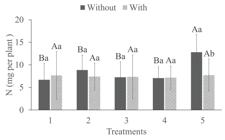
Nitrogen accumulation in the aerial part of acclimatized plantlets of banana cv. ‘Prata Catarina’, as a function of cultivation environment and inoculation of plant growth-promoting rhizobacteria
For the accumulation of micronutrients in the aerial part of micropropagated plantlets of banana cv. ‘Prata Catarina’, there were significant differences in B and Cu. For the latter nutrient, there was a negative effect of inoculation of the LPPC159 strain of Bacillus. The highest accumulations of micronutrients were observed in the T5 (7 days in a controlled environment + 7 days in a tunnel + 46 days in a greenhouse) environment (Table 3).
In the present study, the shading conditions, combined with supplementation with fertilization or plant growth-promoting rhizobacteria, also led to the highest accumulations of macro and micronutrients. The highest accumulations, mainly of N, P, K, Ca, Mg, S, Na, B, and Cu, were observed. These results are similar to those reported in other studies, such as the one conducted by Leal et al. (2005). The authors found increments in N, P, and K accumulations in micropropagated banana plantlets maintained under shade conditions with plastic cover (50%), when supplemented with mycorrhizal fungi.
For the thermal index, negative values were observed in T5 (7 days in a controlled environment + 7 days in a tunnel + 46 days in a greenhouse) and T1 (14 days in a shade tunnel (with one layer of 50% shade net) + 46 days in a greenhouse (with two layers of 50% shade net and micro-sprinkler)), indicating better thermal comfort for the plantlets of these treatments. The other treatments showed positive values, especially T4 (14 days in a controlled environment + 46 days in a greenhouse), which had the highest value of thermal index, differing statistically from T5 (7 days in a controlled environment + 7 days in a tunnel + 46 days in a greenhouse), which had the lowest value (Figure 3).
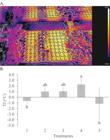
Image from the FLIR ONE Pro® thermal imaging camera showing the micropropagated plantlets of banana cv. ‘Prata Catarina’ at 59 DAT subjected to treatment 2 (A); Thermal index (TI) of micropropagated plantlets of banana cv. ‘Prata Catarina’ at 59 DAT subjected to different environments for acclimatization (B)
Micropropagated plantlets of banana cv. ‘Prata Catarina’ under the highest shade (T5) (7 days in a controlled environment + 7 days in a tunnel + 46 days in a greenhouse) with fertilization or biological supplementation had the lowest thermal indices. Plantlets under these conditions experienced a more favorable thermal comfort for their development. Similar results were found by Scaranari et al. (2008). The authors found that the covers used in different environments promoted excellent temperatures and humidity for acclimatization of micropropagated banana plantlets.
Banana plants need an optimal temperature of 28 ºC for their satisfactory development, and the range of 15 to 35 ºC represents the extreme limits for their cultivation. Extreme temperatures paralyze the biochemical and physiological activities of banana plants (Martinez et al., 2015). In the present study, the average value of ambient temperature was 34.4 °C, which reinforces the need for using shading to improve the thermal comfort of the plantlets. Shaded environments have been indicated as one of the solutions for the acclimatization of plantlets under extreme conditions, as they contribute to reducing internal temperature and prevent incident solar radiation (Melo et al., 2024).
The use of thermal images to detect leaf temperature and determine the thermal index presents itself as a tool to indicate thermal stress in plants in advance (Sousa et al., 2022). Such early identification, combined with efficient irrigation management and proper monitoring of the crop, can prevent the manifestation of stress symptoms in plants, such as changes in leaf orientation, reduction of leaf area with discoloration, development of aborted fruits, reduction of leaf transpiration and others (Tiwari et al., 2020).
Investigating these plant defense mechanisms in the face of stress levels and assessing their severity is essential to optimize plant management with efficient decision-making. Based on Costa et al. (2013), thermography has great potential to quickly detect the reduction of leaf transpiration (stomatal closure), and thus determine a situation of thermal stress.
In the present study, these pieces of evidence were remarkable, and the lowest thermal indices were observed in plantlets of the T5 (7 days in a controlled environment + 7 days in a tunnel + 46 days in a greenhouse) and T1 (14 days in a shade tunnel + 46 days in a greenhouse) treatments. The use of shade, as seen in treatments T5 and T1, in the acclimatization phase combined with PGPR or fertilization promoted gains in pseudostem diameter, fresh/dry mass and nutrient accumulations in the plantlets. These conditions also allowed reductions in thermal stress in the acclimatization phase of micropropagated plantlets of banana cv. ‘Prata Catarina’.
Conclusions
-
Micropropagated plantlets of banana cv. ‘Prata Catarina’ acclimatized for 7 days in a temperature-controlled room, plus 7 days in a shade tunnel and 46 days in a greenhouse showed increments in the variables related to growth and nutrient accumulation. Plantlets acclimatized under these conditions also showed lower thermal indices.
-
Plantlets supplemented with Bacillus sp. and plantlets fertilized with slow-release fertilizer showed similar results, allowing the use of plant growth-promoting rhizobacteria as an alternative for fertilization in the acclimatization phase of micropropagated plantlets.
Acknowledgments
The authors wish to thank Embrapa and UFC (Federal University of Ceará) for the opportunity to conduct this research. Thanks also to BioClone Produção de Mudas S.A for supplying the banana plantlets used in this study.
Literature Cited
-
Bhat, M. A.; Mishra, A. K.; Jan, S.; Bhat, M. A.; Kamal, M. A.; Rahman, S.; Jan, A. T. Plant growth promoting rhizobacteria in plant health: A perspective study of the underground interaction. Plants, v.12, p.1-21, 2023. https://doi.org/10.3390/plants12030629
» https://doi.org/10.3390/plants12030629 - Carvalho, A. C. P. P.; Rodrigues, A. A. J.; Santos, E. O. Produção de mudas micropropagadas de bananeira. Fortaleza, Brasil: Embrapa Agroindústria Tropical (Circular técnica 37), 2012. 14p.
- Costa, J. M.; Grant, O. M.; Chaves, M. M. Thermal imaging to assess plant environment interactions. Journal of Experimental Botany, v.64, p.3937-3949, 2013.
-
Couto, C. A.; Souza, J. L. C.; Souza, E. R. B. Physiological analysis of micropropagated banana ‘BRS Conquista’ seedlings acclimatized under different substrates and organomineral fertilizer doses. Revista Brasileira de Fruticultura, v.44, p.1-6, 2022. https://doi.org/10.1590/0100-29452022916
» https://doi.org/10.1590/0100-29452022916 -
FAO - Food and Agriculture Organization - FAOSTAT (2023) Available on: < Available on: https://www.fao.org/faostat/en/#data/QCL >. Accessed on: May 2023.
» https://www.fao.org/faostat/en/#data/QCL -
Goswami, M.; Deka, S. Plant growth-promoting rhizobacteria-alleviators of abiotic stresses in soil: A review. Pedosphere, v.30, p.40-61, 2020. https://doi.org/10.1016/S1002-0160(19)60839-8
» https://doi.org/10.1016/S1002-0160(19)60839-8 -
IBGE Levantamento Sistemático da Produção Agrícola (2024). Available on: <Available on: https://sidra.ibge.gov.br/home/lspa > Accessed on: May 2024.
» https://sidra.ibge.gov.br/home/lspa - Leal, P. L.; Martins, M. A.; Rodrigues, L. A.; Schiavo, J. A. Crescimento de mudas micropropagadas de bananeira micorrizadas em diferentes recipientes. Revista Brasileira de Fruticultura , v.27, p.84-87, 2005.
- Martinez, C. A.; Oliveira, E. A. D.; Palo Mello, T. R.; Alzate-Marin, A. L. Respostas das plantas ao incremento atmosférico de dióxido de carbono e da temperatura. Revista Brasileira de Geografia Física, v.8, p.635-650, 2015.
-
Melo, J. N.; Pastori, P. L.; Carvalho, A. C. P. P.; Taniguchi, C. A. K.; Borges, W. L.; Silva, C. F. B. Acclimatization of micropropagated seedlings of banana cv. ‘Prata Catarina’ under different environmental conditions. Revista Brasileira de Ciências Agrárias, v.19, p.1-7, 2024. https://doi.org/10.5039/agraria.v19i4a3724
» https://doi.org/10.5039/agraria.v19i4a3724 - Miyazawa, M.; Pavan, M. A.; Muraoka, T.; Carmo, C. A. F. S.; Melo, W. J. Análise química de tecido vegetal. In: Silva, F. C. (ed.). Manual de análises químicas de solos, plantas e fertilizantes. Brasília, DF: Embrapa Informação Tecnológica, 2009. p.190-223.
-
Nansamba, M.; Sibiya, J.; Tumuhimbise, R.; Karamura, D.; Kubiriba, J.; Karamura, E. Breeding banana (Musa spp.) for drought tolerance: A review. Plant Breeding, v.139, p.685-696, 2020. https://doi.org/10.1111/pbr.12812
» https://doi.org/10.1111/pbr.12812 - Nomura, E. S.; Damatto Junior, E. R.; Fuzitani, E. J.; Saes, L. A.; Jensen, E. Aclimatização de mudas micropropagadas de bananeira ‘Grand Naine’ com aplicação de biofertilizantes em duas estações do ano. Revista Ceres, v.59, p.518-529, 2012.
- Nomura, E. S.; Lima, J. D.; Garcia, V. A.; Rodrigues, D. S. Crescimento de mudas micropropagadas da bananeira cv. Nanicão, em diferentes substratos e fontes de fertilizante. Acta Scientiarum Agronomy, v.30, p.359-363, 2008.
- Nomura, E. S.; Lima, J. D.; Rodrigues, D. S.; Garcia, V. A.; Fuzitani, E. J. Influência do substrato e do tipo de fertilizante na aclimatação de mudas de bananeira ‘Prata-Anã’. Ciência e Agrotecnologia, v.33, p.773-779, 2009.
- Pereira, M. C. T.; Nietsche, S.; França, A. C.; Nunes, C. F.; Lima, C.; Gonçalves, V. D.; Salles, B. P.; Morais, D. L. B.; Koji Kobayashi, M. Aclimatização de mudas micropropagadas de bananeira sob diferentes condições de luminosidade. Revista Brasileira de Fruticultura , v.27, p.238-240, 2005.
-
Rodrigues, A. J. O.; Araújo, B. A.; Bezerra, M. A.; Silva, C. F. B.; Sousa, A. B. O.; Nogueira, C. M. R. Gas exchange and leaf area of banana plants under salt stress inoculated with growth-promoting bacteria. Revista Brasileira de Engenharia Agrícola e Ambiental, v.11, p.779-786, 2021. https://doi.org/10.1590/1807-1929/agriambi.v25n11p779-786
» https://doi.org/10.1590/1807-1929/agriambi.v25n11p779-786 -
Rodrigues, A. J. O.; Silva, C. F. B.; Sousa, A. B. O.; Bezerra, M. A.; Araújo, B. A.; Rodrigues, A. M. G.; Vieira, J. Q.; Sousa, J. S. Acclimatization of banana plantlets inoculated with Bacillus sp. and irrigated with low-salinity water. Revista Brasileira de Engenharia Agrícola e Ambiental , v.27, p.407-414, 2023. https://doi.org/10.1590/1807-1929/agriambi.v27n5p407-414
» https://doi.org/10.1590/1807-1929/agriambi.v27n5p407-414 -
Rodrigues, A. J. O.; Silva, C. F. B.; Sousa, A. B. O.; Bezerra, M. A.; Sanó, L.; Faheina Júnior, G. S. Bioestimulante na aclimatização de mudas micropropagadas de banana (Musa spp.). Revista Brasileira de Ciências Agrárias , v.17, p.1-8, 2022. https://doi.org/10.5039/agraria.v17i1a1647
» https://doi.org/10.5039/agraria.v17i1a1647 -
Santos, A. S.; Amorim, E. P.; Ferreira, C. F.; Pirovani, C. P. Water stress in Musa spp.: A systematic review. PLoS One, v.13, p.1-17, 2018. https://doi.org/10.1371/journal.pone.0208052
» https://doi.org/10.1371/journal.pone.0208052 -
Santos, J. E. A.; Brito, M. V.; Pimenta, A. T. A.; Silva, G. S.; Zocolo, G. J.; Muniz, C. R.; Medeiros, S. C.; Grangeiro, T. B.; Lima, M. A. S.; Silva, C. F. B. Antagonism of volatile organic compounds of the Bacillus sp. against Fusarium kalimantanense World Journal of Microbiology and Biotechnology, v.39, p.1-11, 2023. https://doi.org/10.1007/s11274-022-03509-9
» https://doi.org/10.1007/s11274-022-03509-9 - Santos, M. R. A.; Lima, R. A.; Ferreira, M. G. R.; Rocha, J. F.; Espíndula, M. C.; Alvez, E. A. Acclimatization of micropropagated plantlets of Coffea canephora Journal of Biotechnology and Biodiversity, v.5, p.12-19, 2014.
- Santos, S. C.; Carneiro, L. C. Desempenho de genótipos de bananeira na região de Jataí-GO. Revista Brasileira de Fruticultura , v.34, p.783-791, 2012.
- Scaranari, C.; Leal, P. A. M.; Mazzafera, P. Shading and periods of acclimatization of micropropagated banana plantlets cv. Grande Naine. Scientia Agricola, v.66, p.331-337, 2009.
- Scaranari, C.; Leal, P. A. M.; Pellegrino, G. Q. Estudo de simulações de microclimas em casas de vegetação visando à aclimatação de mudas micropropagadas de bananeira cv Grande Naine. Revista Brasileira de Fruticultura , v.30, p.1001-1008, 2008.
-
Shaffique, S.; Khan, M. A.; Wani, S. H.; Pande, A.; Imran, M.; Kang, S.-M.; Rahim, W.; Khan, S. A.; Bhatta, D.; Kwon, E.-H.; Lee, I.-J. A Review on the role of endophytes and plant growth promoting rhizobacteria in mitigating heat stress in plants. Microorganisms, v.10, p.1-17, 2022. https://doi.org/10.3390/microorganisms10071286
» https://doi.org/10.3390/microorganisms10071286 -
Silva, C. F. B.; Brito, T. L.; Taniguchi, C. A. K.; Lopes, L. A.; Pinto, G. A. S.; Carvalho, A. C. P. P. Growth-promoting potential of bacterial biomass in the banana micropropagated plants. Revista Brasileira de Engenharia Agrícola e Ambiental , v.22, p.782-787, 2018. https://doi.org/10.1590/1807-1929/agriambi.v22n11p782-787
» https://doi.org/10.1590/1807-1929/agriambi.v22n11p782-787 -
Sousa, N. I.; Sousa, A. B. O.; Lacerda, C. F. D.; Sales, J. R. D. S.; Mesquita, R. O.; Cavalcante, E. S.; Camara, W. A. Hydrogel as mitigator of salt stress during the establishment of Tagetes patula L. seedlings. Revista Brasileira de Engenharia Agrícola e Ambiental , v.26, p.807-814, 2022. https://doi.org/10.1590/1807-1929/agriambi.v26n11p807-814
» https://doi.org/10.1590/1807-1929/agriambi.v26n11p807-814 - Suman, S. Plant tissue culture: A promising tool of quality material production with special reference to micropropagation of banana. Biochemical Cellular Archives, v.17, p.1-26, 2017.
-
Tiwari, S.; Patel, A.; Singh, M.; Prasad, S. M. Regulation of temperature stress in plants. In: Tripathi, D. K.; Chauhan, D. K.; Prasad, S. M.; Ramawat, N.; Singh, V. P.; Sharma, S.; Dubey, N. K. (eds.). Plant life under changing environment, p.25-45, 2020. https://doi.org/10.1016/C2018-1-02300-8
» https://doi.org/10.1016/C2018-1-02300-8 - Vieira, L. C.; Silva, V. N.; Silva, M. B. P. Bioestimulantes de algas no tratamento biológico: eficiência no vigor de sementes de brócolis. Scientific Electronic Archives, v.16, p.1-8, 2023.
-
1 Research developed at Embrapa Agroindústria Tropical, Fortaleza, CE, Brazil
-
Supplementary documents
There is no supplementary research data.
-
Financing statement
This work was supported by Embrapa (research project: Utilização de Bacillus e Trichoderma para controle do Mal-do-Panamá e promoção de crescimento de mudas micropropagadas de bananeira, Grant number: 43.13.12.007.00.00) and Conselho Nacional de Desenvolvimento Científico e Tecnológico (CNPq), procs. 444339/2014-0, 405401/2021-3, and 304901/2022-9.
There is no supplementary research data.

 T1 - 14 days in a shade tunnel (with one layer of 50% shade net) + 46 days in a greenhouse (with two layers of 50% shade net and micro-sprinkler); T2 - 7 days in a controlled environment (± 28 °C) + 53 days in a greenhouse; T3 - 60 days in a greenhouse; T4 - 14 days in a controlled environment + 46 days in a greenhouse; T5 - 7 days in a controlled environment + 7 days in a tunnel + 46 days in a greenhouse*Means followed by same letter do not differ statistically from each other by Tukey test, at 0.05 probability level
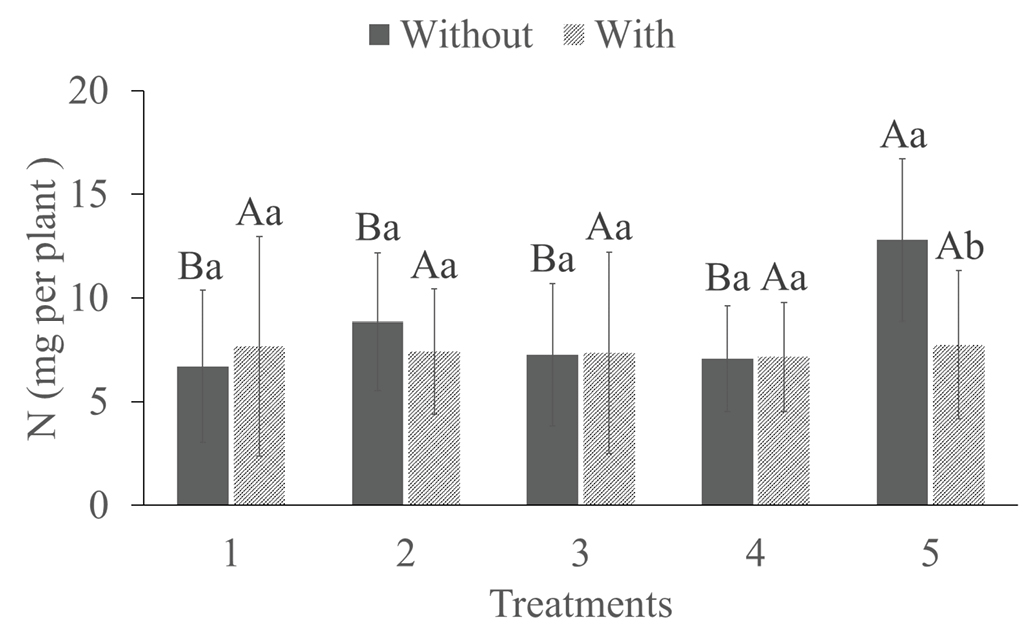 T1 - 14 days in a shade tunnel (with one layer of 50% shade net) + 46 days in a greenhouse (with two layers of 50% shade net and micro-sprinkler); T2 - 7 days in a controlled environment (± 28 °C) + 53 days in a greenhouse; T3 - 60 days in a greenhouse; T4 - 14 days in a controlled environment + 46 days in a greenhouse; T5 - 7 days in a controlled environment + 7 days in a tunnel + 46 days in a greenhouse1 Means followed by the same uppercase letter in the column and lowercase letter in the row do not differ from each other by the Scott-Knott test at 0.05 probability level
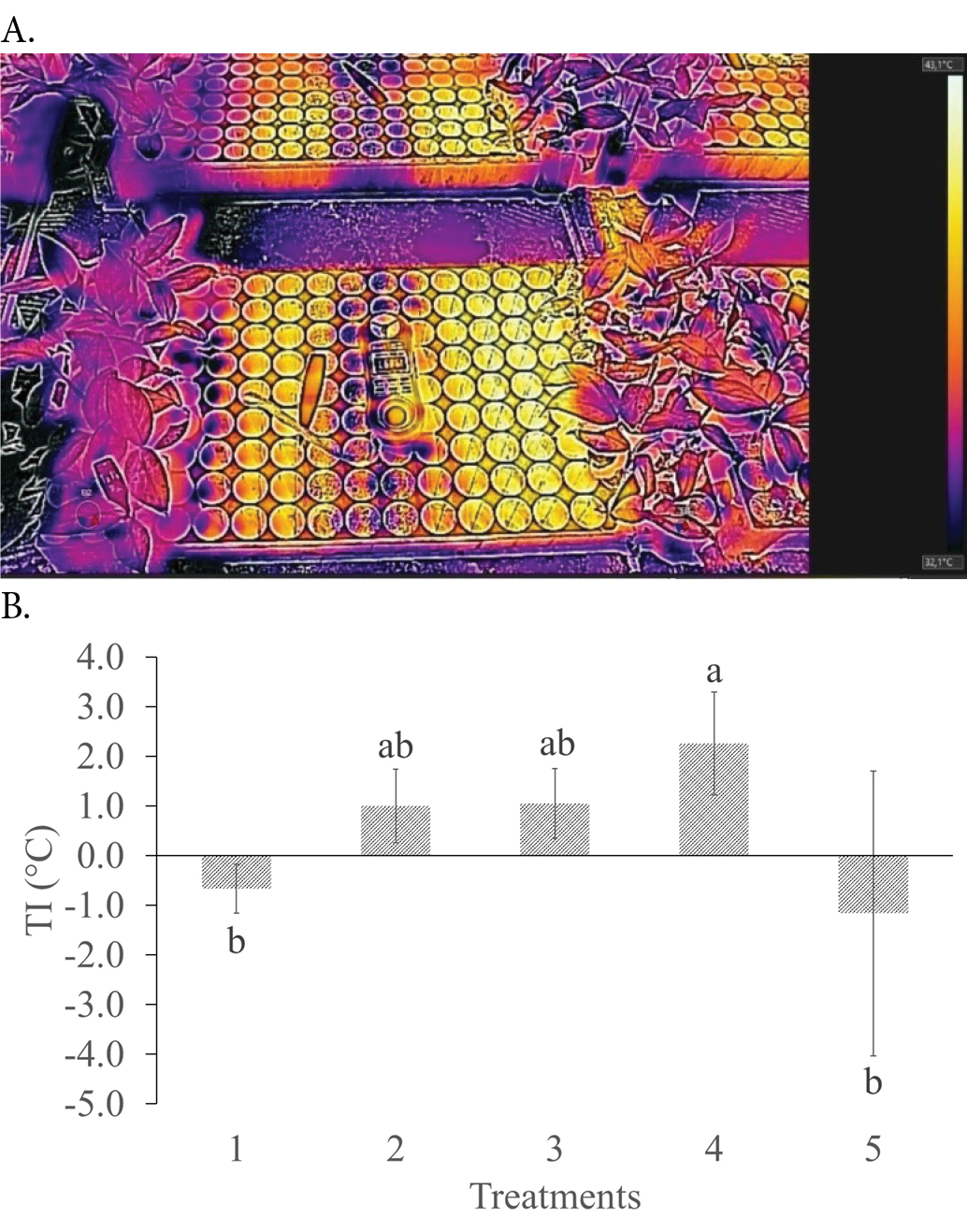 T1 - 14 days in a shade tunnel (with one layer of 50% shade net) + 46 days in a greenhouse (with two layers of 50% shade net and micro-sprinkler); T2 - 7 days in a controlled environment (± 28 °C) + 53 days in a greenhouse; T3 - 60 days in a greenhouse; T4 - 14 days in a controlled environment + 46 days in a greenhouse; T5 - 7 days in a controlled environment + 7 days in a tunnel + 46 days in a greenhouse. *Means followed by at least one letter in common do not differ statistically from each other by Tukey test, at 0.05 probability level