
 The “h-hypothesis” of Sommerfeld-Debye: a semi-classical theory of X-rays, γ-rays, and the photoelectric effect
Abstract
This article examines the scientific controversy surrounding the semiclassical theory developed by Arnold Sommerfeld and Peter Debye between 1911 and 1913. Originally formulated during investigations into X-rays, the theory was expanded to address diverse atomic phenomena, including X-ray and gamma-ray (γ) emissions, ionization potentials, and, most notably, photoelectric emissions. The semiclassical theory – now referred to as the “h-hypothesis” – relied on the application of the “quantum of action”, introduced by Max Planck in his theory of black-body radiation, to calculate the energy absorbed by electrons. Simultaneously, it maintained compatibility with James C. Maxwell’s classical electromagnetic theory, preserving a classical conception of light and the resonant transfer of energy between light and matter. Drawing on methodologies from modern historiography of science, the study analyses primary and secondary sources on the early construction of quantum radiation theory, alongside biographical analyses of the scientists involved. The text provides a historical narrative that enables readers to understand the genesis, development, and refutation of the “h-hypothesis” through a collaborative perspective. As “supplementary material”, it presents the mathematical demonstration of the derivation of Albert Einstein’s renowned “photoelectric effect law”, (re)derived by Sommerfeld and Debye through the theoretical framework of the “h-hypothesis”.
Keywords:
Science Education; History of Science; Modern Physics; Quantum Theory; Nature of Light
 Thumbnail
 Thumbnail
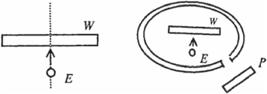 Thumbnail
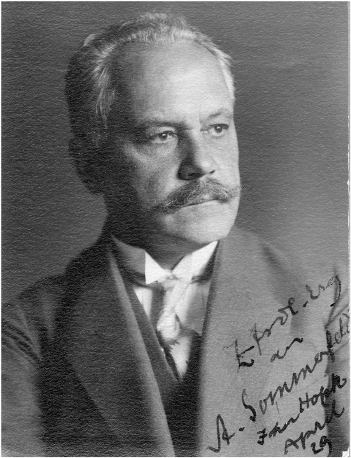 Fonte: Coleção Emilio Segrè Visual Archives, American Institute of Physics.
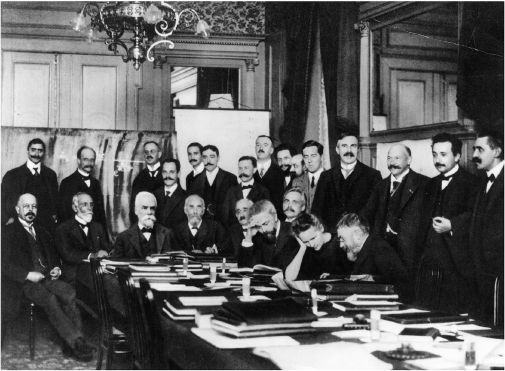 Fonte: American Institute of Physics, Emilio Segrè Visual Archives.
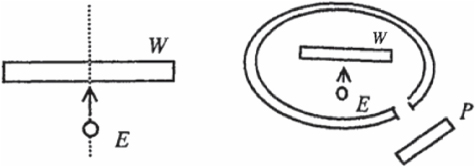 Fonte: Adaptado de [