
 Pregnant women as a reference population to estimate dengue under-reporting: methodological proposal and application in São Paulo State, Brazil
Objective To propose and apply a methodology to estimate the under-reporting of probable dengue cases among non-pregnant women, using the incidence in pregnant women as a reference.
Methods: Ecological study using data on probable dengue cases reported in the state of São Paulo, Brazil, between January and June 2024. Assuming that pregnant women have a higher likelihood of diagnosis and notification due to prenatal follow-up, this group was taken as a reference to calculate the under-reporting of dengue incidence among non-pregnant women aged 18 to 45 years. The association between under-reporting and factors such as Family Health Strategy coverage, number of Primary Health Care Units per thousand women at reproductive age, and degree of urbanization was assessed using logistic regression. Spatial autocorrelation analysis of under-reporting was also performed.
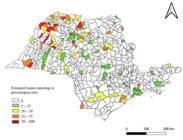
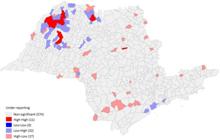
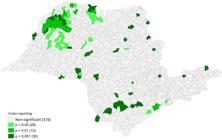
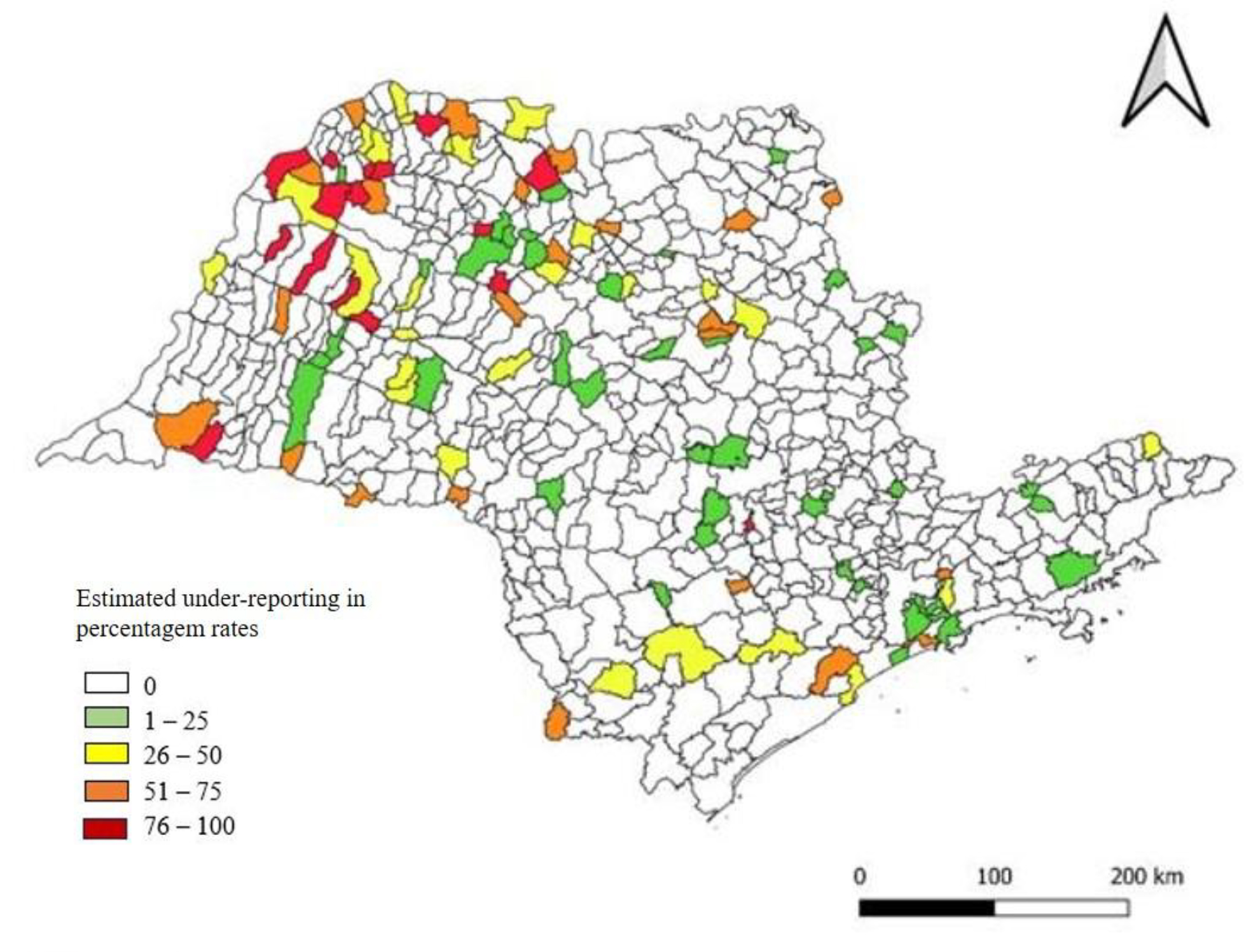
Results: Of the 645 municipalities analyzed, 108 (16.7%) showed evidence of under-reporting, ranging from 1% to 95%. It was estimated that 8,624 dengue cases were not detected among non-pregnant women during the study period. No statistically significant associations were found between the analyzed factors and under-reporting. Spatial analysis identified significant clusters of municipalities with underreporting in the northwestern region of the state.
Conclusion: The proposed methodology may identify areas with probable underreporting and support analyses of determinants of surveillance system sensitivity, thereby helping to guide interventions. Although potentially applicable to other notifiable diseases, comparisons between pregnant and non-pregnant women should be interpreted with caution due to differences in risk, vulnerability, and diagnostic criteria.
Keywords:
Dengue; Under-reporting; Epidemiological monitoring; Pregnant women; Public health
 Thumbnail
 Thumbnail
 Thumbnail
 Thumbnail
 Source: elaborated with the GeoDA 1.22 software.
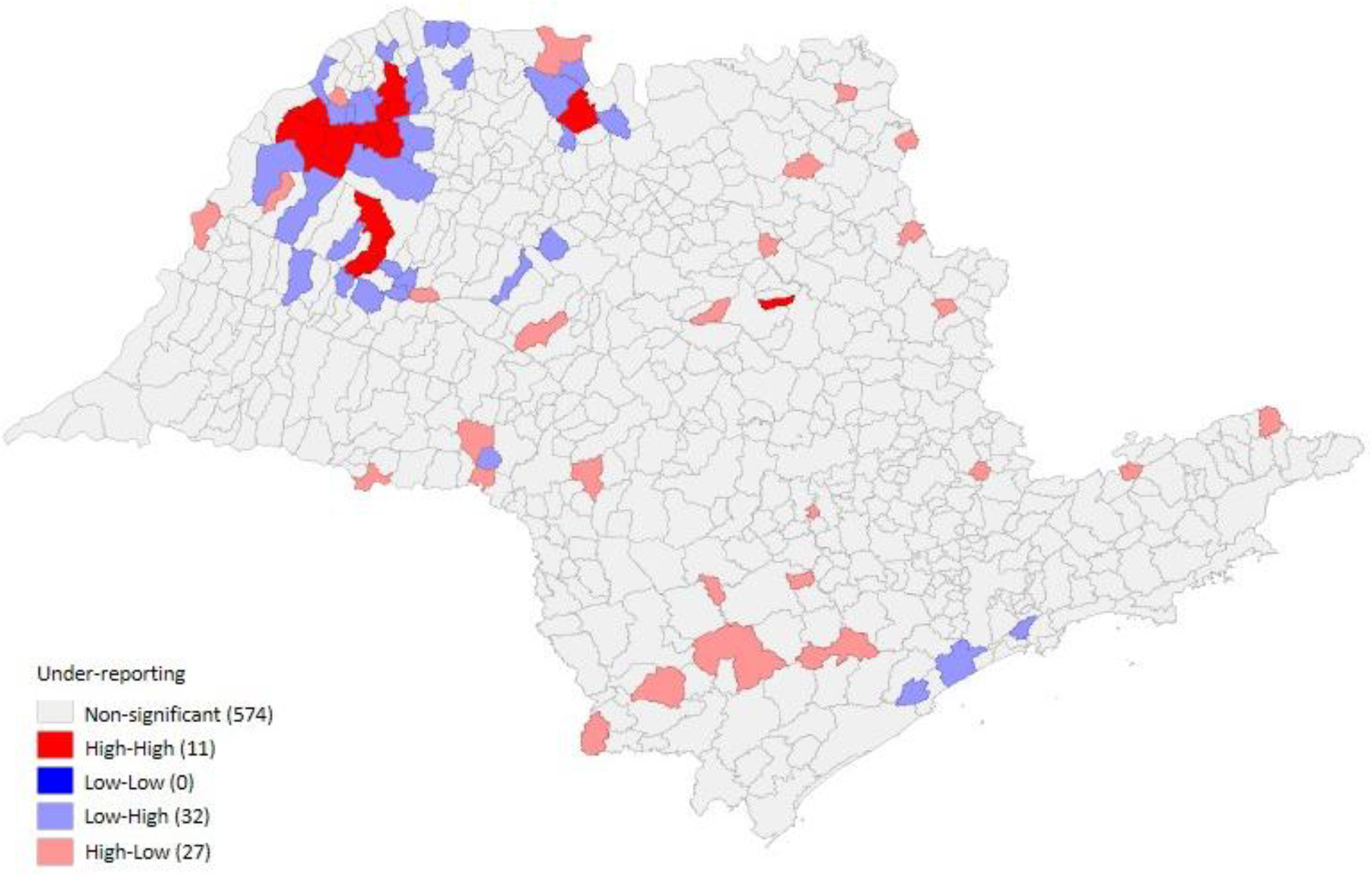 Source: elaborated with the GeoDA 1.22 software.
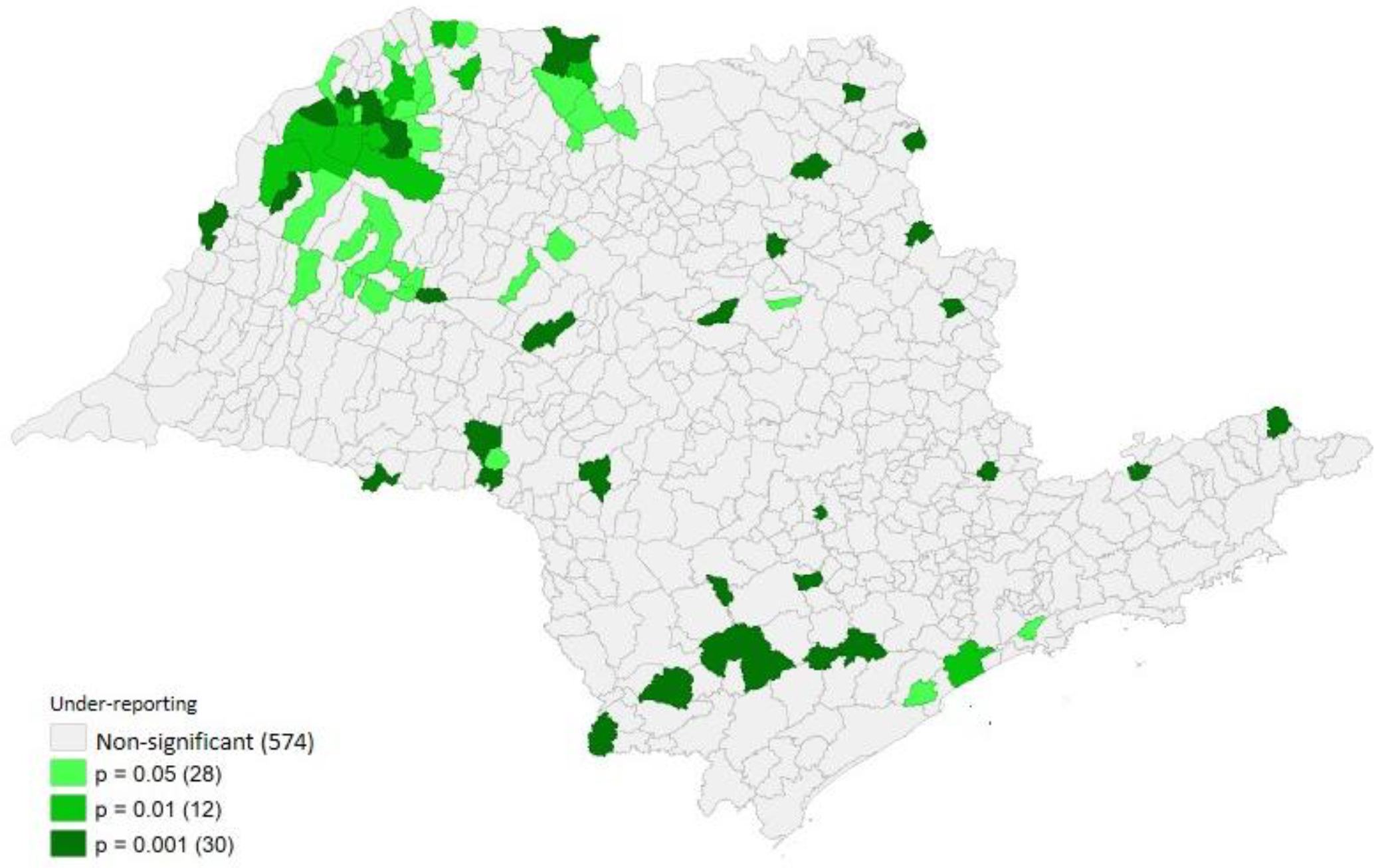 Source: elaborated with the GeoDA 1.22 software.
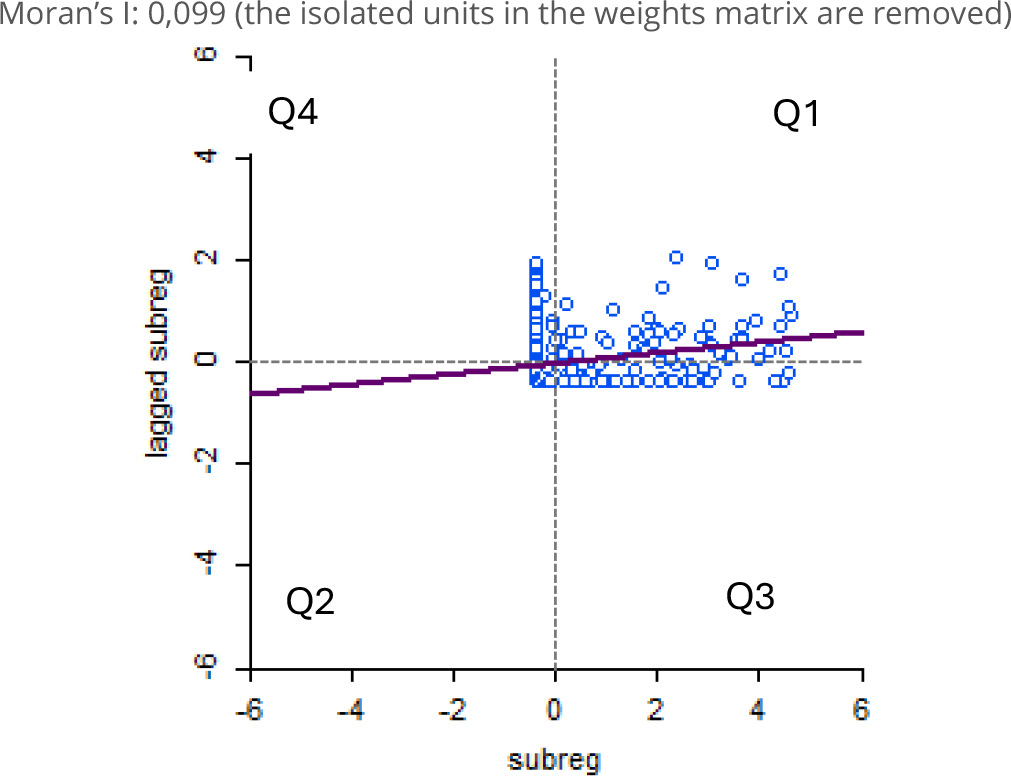 Source: elaborated with the GeoDA 1.22 software.