 Descriptive analysis of genital colonization across gestational trimesters in pregnant women with different obstetric histories
Objective: The aim of this study was to assess the Ureaplasma parvum variation of genital colonization during pregnancy with an exploratory approach among women with term and preterm birth histories.
Methods: Prospective case-control study of 24 pregnant women with history of full-term pregnancy and 26 pregnant women with history of prematurity whose endpoint was to assess the colonization pattern of these agents with a vaginal/cervical sample collected at the beginning of each trimester of gestation. Collected data: sociodemographic characteristics, previous diseases, gynecological and obstetric history, and microorganisms in vaginal secretion samples by real-time polymerase chain reaction (PCR).
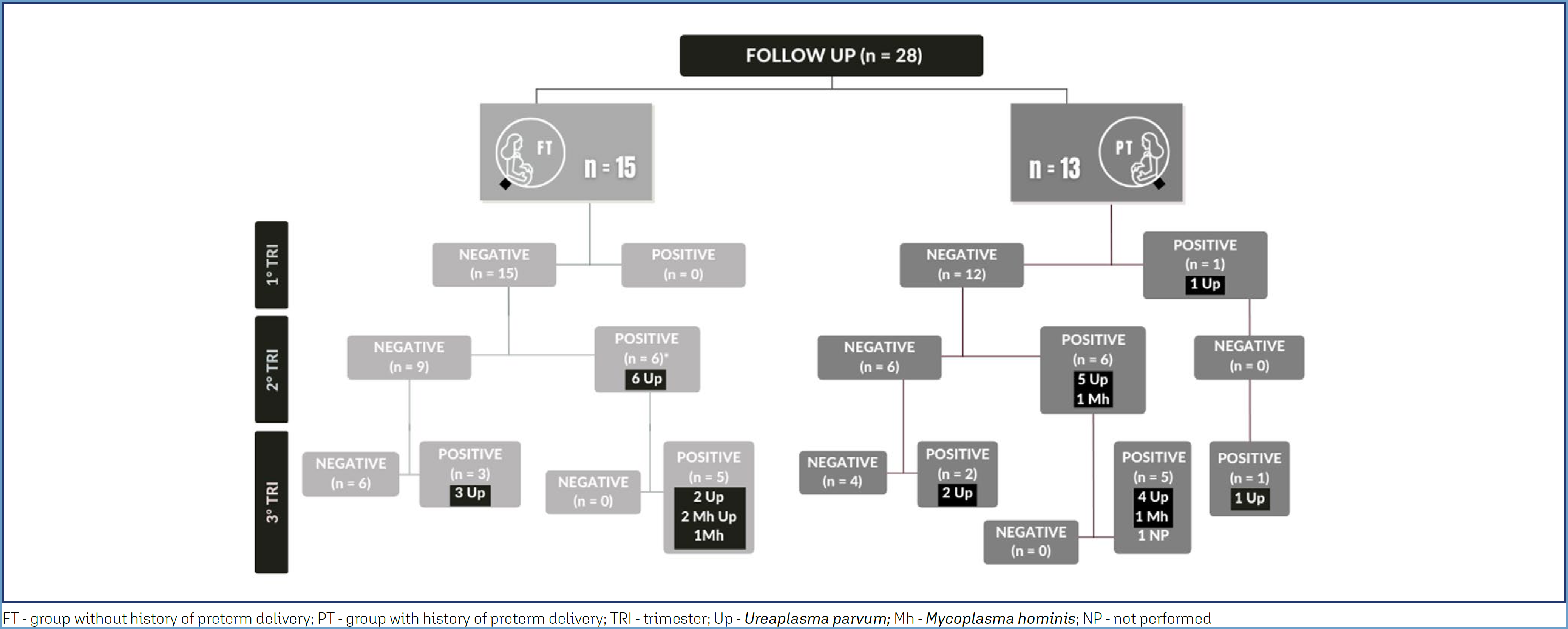
Results: The overall number of cases positive for at least one microorganism was 18 (36.0%). A significantly higher positivity rate was observed in the second and third trimesters in both study groups compared with the first trimester (p<0.001). The microorganisms identified in the vaginal environment were Ureaplasma parvum (66.6%), Mycoplasma hominis (16.7%), and both (16.7%), and the frequency of both these microorganisms was comparable in both groups at each pregnancy trimester (p for all = nonsignificant), but with a difference between the trimesters. Prematurity in the current pregnancy occurred in a single case (6.7%) in a pregnant woman without history of prematurity in the previous pregnancy (p=1.00).
Conclusion: The most frequently identified microorganism was Ureaplasma parvum, and the overall incidence of positive cases including all microorganisms was 36.0%. Although Ureaplasma parvum was the most frequently identified microorganism, the sample was not powered to assess its association with prematurity.
Keywords
Vaginal microbiome; Preterm delivery; Ureaplasma; Mycoplasma hominis; Pregnant women
 Thumbnail
 Thumbnail
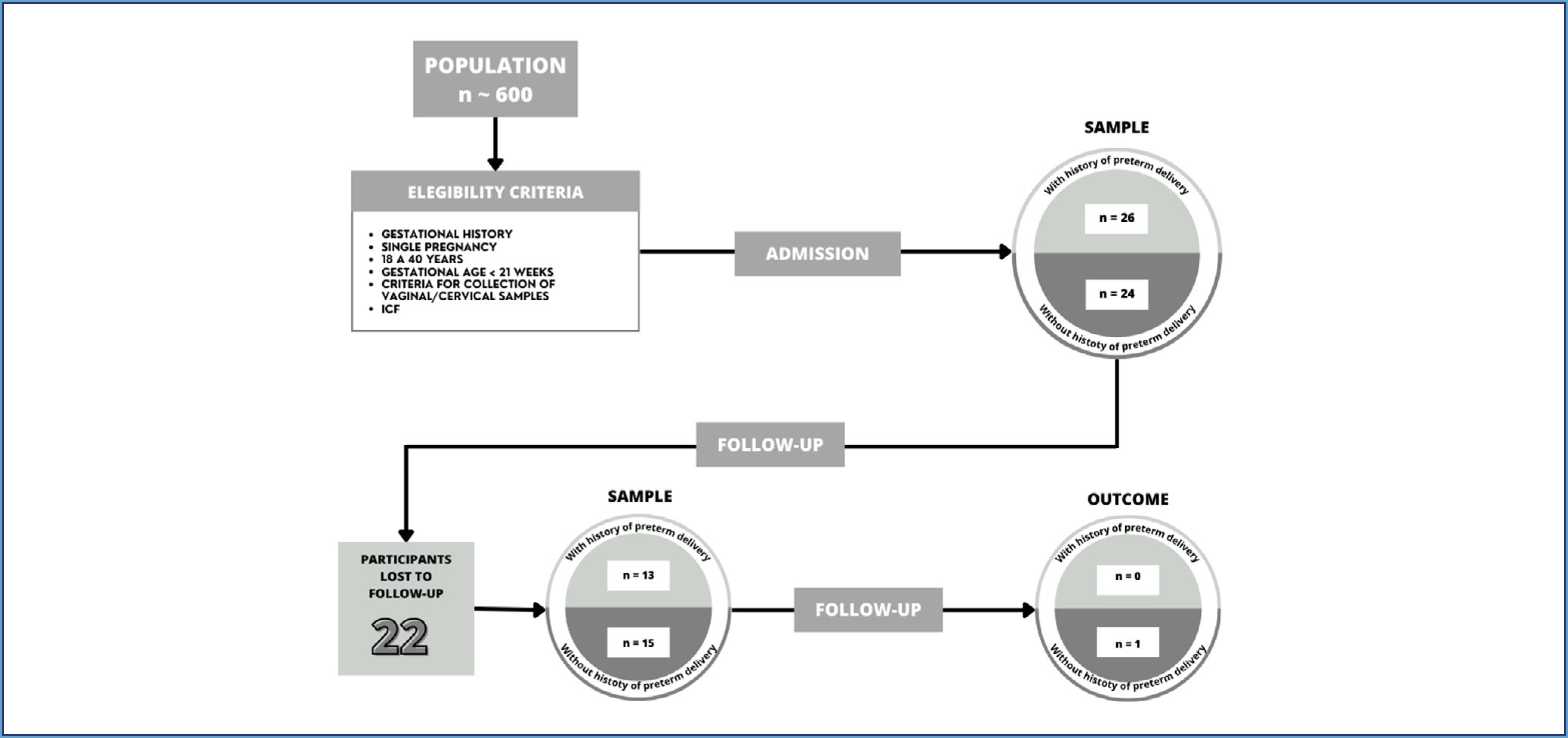 Source: Flow diagram constructed according to STROBE recommendations.(