 Japan’s Cooptation Strategy in the Indo-Pacific: An Analysis of Security, Economic, Cultural Actions to Vietnam (2012-2024)
Abstract
This article examines Japan’s Free and Open Indo-Pacific (FOIP) strategy from Abe to Kishida administrations through its engagement with Vietnam. It argues that, in response to shifting regional power dynamics, Japan has employed cooptation, combining security, cultural, and economic initiatives as a central foreign policy instrument to expand the FOIP framework. This strategy seeks to engage regional partners while signaling commitment to key allies. Based on document analysis and data on trade, development assistance, and security cooperation, the study analyzes Japan’s policies toward Southeast Asia between 2012 and 2024. It demonstrates how FOIP integrates security, political, and economic statecraft to navigate contemporary Indo-Pacific geopolitics.
Keywords
Japan; FOIP; Cooptation; Vietnam; Alliances
Introduction
Disputes in the South China Sea and the East China Sea involving competing claims to islands, reefs and maritime zones have heightened security concerns, and shifts in foreign and defense policies across East Asia over the past two decades. Japan’s foreign policy since the beginning of the 21st century – and especially under Prime Minister Abe’s administration – has increasingly been shaped in response to China’s rise (Hughes et al., 2021, 136-137). The intensifying Sino-American rivalry has placed Japan in a strategic dilemma: it must carefully balance its deep economic interdependence with China against its vital security alliance with the United States, a nation that has provided its nuclear umbrella since 1951.
This has led to a more proactive approach to security and diplomacy, particularly in Southeast Asia and the wider Indo-Pacific, as exemplified by its Free and Open Indo-Pacific (FOIP) vision. Thus, Southeast Asia, a significant space of economic dynamism, emerges as a primary focal point for Tokyo’s strategic outreach. In order to deepen relations with Southeast Asian countries, Japan has adopted a multi-faceted strategy encompassing economic, security, and cultural initiatives, an approach intensified particularly since Abe’s second administration.
Nevertheless, to avoid an increase in the already existing perception of threat from its neighbors, there is also a new narrative strategy adopted by Japan. According to Naganuma (2021), (re)launched in 2016, FOIP shaped this shift, as ‘talk of a Free and Open Indo-Pacific began in earnest during the fourth Abe administration’ (Ibid, 5). The term’s inclusion in speeches and Defense White Papers reflects Japan’s effort to justify the status quo and its U.S. alliance, while articulating its own regional vision.
Assessing cooptation from a realist perspective, we argue that Japan uses it as a foreign policy tool to engage regional partners and signal commitment to peace and stability in the Indo-Pacific, countering perceptions of resurgent militarism – an essential concern given the country’s wartime legacy (Oliveira 2021). At the same time, this approach eases Tokyo’s fears of abandonment and shifts in the regional status quo.
This article argues that three interconnected strategic interests guide Japan’s engagement in Southeast Asia. First, economic ties have historically driven its regional involvement. Until the early 21st century, Japan was often seen as a potential regional leader due to its role in regional development. Second, security concerns have grown amid escalating maritime disputes; Japan’s linkage of South China Sea and East China Sea issues has deepened partnerships with Southeast Asia (Gronning 2018; Inoguchi and Panda 2017; Jimbo 2021). Third, Tokyo seeks to bolster a rules-based order and counterbalance China’s influence, often partnering with regional powers to address status quo challenges. The FOIP has become central to Japan’s Indo-Pacific foreign policy discourse, permeating official documents from Defense White Papers to Development Cooperation and Aid White Papers. To analyze Japan’s strategic engagement in Southeast Asia, this study adopts a qualitative case study approach, examining how Japan’s FOIP-shaped foreign policy has driven its efforts to strengthen bilateral relations with Vietnam between 2012 and 2024.
Scholarly debates on Vietnam’s posture toward China highlight the difficulty of defining the country’s behavior, as many scholars emphasize either balancing behavior (Liff and Ikenberry 2014; Lim and Cooper 2015) or hedging strategies (Vieira and Ferreira-Pereira 2013; Phan 2024). This divergence underscores the complexity of Vietnam’s strategic calculus. Vietnam has shown openness to the broader Indo-Pacific Strategy proposed by the United States, closely aligned with Japan’s regional approach (Nguyen 2021). This ‘welcome’ stance is rooted in pragmatic considerations and concerns about unrestricted alignment against China. After all, Vietnam tends to prioritize managing China’s influence and its bilateral relationship over explicit containment (Jung, Lee and Lee 2021; Ma and Kang 2023) to avoid more tensions with China. This period is particularly relevant as it captures the formalization and expansion of the FOIP vision, as well as significant shifts in regional security dynamics – not only China’s more assertive stance (Zhao, 2013; Masuda 2016) but also the increased U.S. presence through the pivot policy and later under Donald Trump’s actions in the region.
We intend to demonstrate how Japan’s multifaceted cooptation efforts have sought to deepen bilateral ties and legitimize Japanese actions in Southeast Asia while mitigating threat perceptions associated with its expanding military capabilities. By examining the interplay between Japan’s foreign policy under FOIP’s framework and its multifaceted actions toward Vietnam, this article seeks to contribute to a deeper understanding of the evolving security architecture in the Indo-Pacific and the diverse tools states employ to shape regional order.
Alignment, Balancing, and cooptation: strategies for a status quo power
In international relations, we often see countries divided into two broad categories: revisionist/greedy states and status quo states. Revisionist states are typically understood as those trying to change the fundamental rules, institutions, or power structures of the international system (Morgenthau 2003; Gilpin 1981). This distinction becomes even clearer when we look at power transition theory. Scholars like A.F.K. Organski and Jacek Kugler (1980, 19-23) explain that status quo states are generally the beneficiaries of the current system, which gives them good reason to maintain it. Revisionist states, on the other hand, want to change the system because they’re seeking a better position and more influence in global affairs. Randall Schweller (1996) offers a more nuanced perspective, arguing that revisionist states often value what they do not possess more than what they currently have, and may use military force to alter the status quo. Similarly, Robert Gilpin (1981) analyzes the distribution of power, the hierarchy of prestige, and the rules governing interactions among states, showing that a revisionist state seeks to transform these components, whereas status quo states strive to maintain them. The Indo-Pacific strategy itself, along with the regional reframing prompted by China’s rise, can be interpreted as an attempt to justify preserving the status quo. However, if we focus specifically on East Asia, one could argue that a power redistribution has already occurred, since China’s rise and growing presence worldwide through multilateral and especially bilateral initiatives has taken place.
Drawing from realist theories, status quo powers are states that largely accept and integrate into the existing global order, either due to self-interest or dependency. These states can range from small nations and middle powers to rising powers or established great powers who seek to preserve their privileges. In a geopolitical scenario increasingly defined by fears of power transitions and shifts in the balance of power, status quo states, those committed to preserving the existing international order, face particularly acute strategic dilemmas. To counterbalance rising powers or revisionist actors, such states typically pursue two primary strategies: (1) internal balancing, which involves strengthening military and defensive capabilities, and (2) external balancing, which entails forging or consolidating alliances (Waltz 1979; Walt 1985). While internal balancing is a crucial tool, its limitations in multipolar or highly contested regions often render external balancing necessary for maintaining regional stability or addressing shared threats (Waltz 1979; Walt 1985).
Yet implementing these balancing strategies is not usually straightforward, particularly in constrained regional settings like the Indo-Pacific. In an arena of middle and emerging powers, excessive reliance on military expansion entails significant risks. Japan’s situation exemplifies this strategic dilemma, as any significant military expansion remains politically sensitive due to unresolved Second World War legacies. Such moves risk amplifying regional threat perceptions and potentially reopening historical wounds (Smith 2019), accelerating the arms race dynamics in East Asia. This challenge is further compounded by China’s simultaneous economic and military investments (O’Rourke 2023).
In this complex environment, Japan positions itself as a status quo country, specifically committed to preserving the U.S.-led regional order in East Asia1 (Ministry of Defense of Japan 2025). In maintaining this commitment – upholding the regional status quo through continued U.S. presence while preventing China’s emergence as the definitive regional hegemon – Japan faces two challenges: (1) how to effectively counter and manage relations with China amid growing restrictions and U.S.-China tensions, while protecting its economic, political and territorial interests; and (2) how to mitigate the persistent risk of U.S. abandonment, as Washington’s commitment to Asia has shown worrying signs of wavering under isolationist administrations (Lind 2018).
Japan offers a particularly interesting case for theorizing cooptation. As a so-called status quo country, Tokyo has long been committed to preserving the U.S.-led regional order, and it has been constantly exposed to the twin dilemmas of abandonment and entrapment (Oliveira 2021). Unlike other middle and great powers, Japan, especially in the 21st century, must both reassure its principal ally by modifying certain security policies (Saltzman 2015) while simultaneously mitigating the risks of entanglement in U.S. strategic choices, which is aided by its own restrictive constitutional measures. This dual dilemma makes Japan not merely a passive beneficiary of the existing order but an active agent in shaping and sustaining it. Moreover, Japan’s geopolitical position between a revisionist China and a sometimes hesitant United States forces Tokyo to employ strategies that combine order maintenance with adaptive adjustment.
Japan has pursued a dual-track approach to alliance management. On one hand, Tokyo partially accommodated Donald Trump’s criticisms regarding alliance burden-sharing while simultaneously working to strengthen U.S. ties (O’Shea and Maslow 2020). This included both financial commitments - evidenced by Japan’s FY2017 expenditure of ¥587.5 billion from its Defense Ministry budget for U.S. forces, plus an additional ¥204.1 billion for base leasing (Tsuruoka 2018) - and strategic alignment with Washington’s evolving security vision, which gradually adopted more explicit China-containment elements. Importantly, these developments built upon Japan’s security trajectory following the 2015 reinterpretation of Article 9 and the passage of Peace and Security Legislation, which relaxed previous military constraints (Saltzman 2015; Hughes 2017). Through this combination of financial burden-sharing and strategic convergence, Japan has sought to both reassure allies and enhance its regional security posture. Alternatively, driven by abandonment fears (Lind 2018; Smith 2019, 205), Japan pursued new strategic partnerships or deepened existing ones, either formally or informally, as a means to reinforce its alliance network and, in Japan’s case, demonstrate commitment in security affairs.
For this article, we broadly define external balancing as alliance formation or institutional cooperation to pool resources and deter threats, where an alliance is ‘an arrangement for security cooperation between two or more sovereign states’ (Walt 1987, 12). Although traditional external balancing often implies formal military pacts, the complex regional environment requires a more nuanced spectrum of strategies. States seeking to forge alliances or influence the alignment of others may deploy diverse strategies, including: explicit threat and coercion (Mearsheimer 2001); economic instruments and geoeconomics (Drezner 2009; Blackwill and Harris 2016); narratives signaling common enemies or threats (Oliveira 2021); and shared identity narratives and norms (Katzenstein 1996; Kruck and Zangl 2024). Within this framework, we use cooptation as a distinct and increasingly vital strategy employed by status quo powers to cultivate alignment among states, even absent formal treaties.
While rooted in realist understandings of power, our concept of cooptation integrates military, economic, and cultural-influence dimensions. In this article, we consider cooptation as a strategy states employ to garner support in managing or even controlling an existing international order, or status quo scenario. Aligning with the literature on cooptation, Heimann, Kruck, Paikowsky, and Zangl (2024: 13) define it as ‘a specific form of cooperation where the cooptor grants institutional privileges to the cooptee in return for the cooptee’s support of an existing (or emerging) order.’ The authors primarily analyze cooptation through an institutional lens, arguing that it operates by trading institutional privileges for institutional and regime support. In this sense, for them, ‘cooptation always entails the exchange of privileges for support of an institution that underpins a more encompassing social or political order’ (Ibid., 19)
Our objective in this article is to understand cooptation as a foreign policy strategy beyond regional and institutional frameworks, and we argue that this alignment is possible insofar as we are discussing states’ interest in maintaining a particular international/regional order based on specific rules and values. In this sense, our appropriation of the concept is related to a way to understand a country’s behavior in regard to security relations. Following Heimann, Kruck, Paikowsky, and Zangl (2024), cooptation can serve both to extend military alliances and recruit additional partners against main rivals, and to tame challengers to the existing order.
In order to understand this idea of securing partners (Ella and Press-Barnathan 2024), we use a different yet similar definition of cooptation. We define it as the strategic use of material incentives and normative appeals to persuade weaker states to tacitly support or align with a power’s interests, often with the express goal of preserving a particular regional or international order. In this sense, we agree that while states may seek to strengthen ties to promote greater alignment, they also offer privileges through this initiative that ‘might be granted in advance in return for the promise of future support, or they can be granted gradually according to the progress in the provision of the promised support.’ (Heimann, Kruck, Paikowsky, and Zangl 2024: 13).
This approach centers on influencing concrete alignment for specific strategic interests, often in response to a rising rival. Crucially, cooptation seeks a subtle, consensual form of alignment that actively shapes partners’ strategic choices. It also enables the coopting power to signal that its growing military capabilities and regional actions are directed at a common perceived threat or shared goal (Oliveira 2021). In this sense, cooptation differs from hedging. Hedging is a risk-management strategy to avoid overcommitment and diversify options amid power shifts (Koga 2018; Ciorciari and Haacke 2019). Cooptation is proactive, it uses material incentives, political assurances, and cultural initiatives to try to induce possible alignments with the existing order. While hedging mitigates uncertainty for the hedger, cooptation shapes others’ strategic choices. It is an active status quo strategy that signals reassurance, and strengthens the preferred international/regional order.
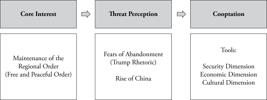
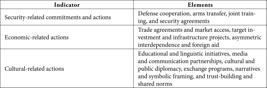
Beyond immediate security goals, cooptation can create mechanisms or open horizons for deeper and institutionalized cooperation. Through incremental trust-building and possible mutual benefits, it lays the groundwork for potential alliance formation or potential support for some actions, even if formalization is not the immediate nor the core aim. In this article, cooptation operates as a mechanism to project influence and signal intentions. To operationalize this concept, we argue that cooptation can be analyzed through three key, interconnected indicators:
Japan implements its Southeast Asian foreign policy through a cooptation approach that achieves two strategic objectives simultaneously. First, by employing multiple avenues to strengthen regional ties, Tokyo alleviates its concerns about potential abandonment. Second, and perhaps more crucially, this engagement serves as a signal to the United States, which reaffirms Japan’s alignment with both the U.S.-led international order and the liberal status quo in the Indo-Pacific.
As we will develop further, Japan employs a nuanced, multifaceted approach to cooptation. On one hand, it strategically leverages economic, cultural, security, and diplomatic incentives – such as crucial infrastructure investments through ODA and targeted defense cooperation – to align smaller states with its interests or, at the very least, visibly demonstrate the possible benefits of partnering with Japan. On the other hand, cooptation also critically functions as a vital tool for alliance reassurance, particularly in hedging against the ever-present risk of U.S. abandonment. Japan’s proactive regional engagement, strengthening multilateral frameworks like the Quad (U.S., India, Australia) and supporting ASEAN-led multilateral initiatives, simultaneously signals reliability to Washington and diversifies Tokyo’s strategic partnership.
FOIP transformation and Japan: searching for alternatives and signaling Commitment
As Shinzō Abe prepared to assume leadership in 2006, he sought to solidify Japan’s alignment with Asia’s maritime democracies, particularly through the informal Quad. In his manifesto, Utsukushii Kuni e (Toward a Beautiful Country), Abe proposed elevating the Quad to a formal leaders’ summit, emphasizing India’s central role in his vision of a ‘broader Asia’ spanning the Indian and Pacific Oceans (Hosoya 2019; Oliveira 2019). Under Abe, India became Japan’s top recipient of official development assistance, and Japan joined India’s annual Malabar naval exercises in 2006. Abe also strengthened Japan’s relationship with Australia, culminating in the 2007 Japan-Australia Joint Declaration on Security Cooperation. Foreign Minister Asō Tarō further expanded this vision with the ‘Arc of Freedom and Prosperity,’ a strategy aimed at building diplomatic and economic connectivity along China’s periphery, from the Russian Far East to Europe.
Abe’s two key messages – Confluence of the Two Seas and Asia’s Democratic Security Diamond – formed the foundation of FOIP 1.0. The defining characteristic of FOIP 1.0 was its competitive stance toward China. Japanese policymakers were seeking to shape the regional order rather than be shaped by China (Hosoya 2019; Satake; Sahashi 2021). They believed that the U.S., India, and Australia, together with Japan, should be able to maintain the status quo in the Indo-Pacific and be the main actors in this regional architecture, as they shared some core values (Hosoya 2019).
Despite early 21st-century initiatives, bureaucratic skepticism across all four Quad countries hindered progress. Additionally, leadership transitions in Japan, Australia, and the United States diverted attention from Abe’s more assertive strategies. However, in 2012, Shinzō Abe revitalized the Quad concept in an article titled Asia’s Democratic Security Diamond. He argued that ‘peace, stability, and freedom of navigation in the Pacific Ocean are inseparable from peace, stability, and freedom of navigation in the Indian Ocean.’ (Abe, 2012). Abe was particularly concerned about China’s growing assertiveness in the South China Sea, cautioning that the region risked becoming a ‘Lake Beijing’.
Although FOIP 2.0 maintains continuity with FOIP 1.0, Hosoya (2019) notes it adopts a more cooperative approach, emphasizing economic prosperity and ties between Asian and African nations. He argues FOIP seeks both to expand Japan’s economic interests and contribute to regional peace and stability. Officially, FOIP is a cornerstone of Japan’s foreign policy, featured in Diplomatic Bluebooks, Aid White Papers, and Defense documents. Its four pillars are: i) Principles for Peace and Rules for Prosperity; ii) Addressing Challenges in an Indo-Pacific Way; iii) Multi-layered Connectivity – prioritizing physical and digital infrastructure in Southeast and South Asia; and iv) Extending Security Efforts from the Sea to the Air, enhancing maritime security, including patrol vessel provision and anti-illegal fishing efforts.
While FOIP’s official pillars focus primarily on non-traditional security concerns, such as maritime capacity building, humanitarian assistance, disaster relief, anti-piracy, counterterrorism, and non-proliferation, security considerations remain a fundamental aspect of its framework. Japan’s 2018 National Defense Program Guidelines (NDPG) signal a growing security role, advocating for joint exercises, defense technology cooperation, and deeper military exchanges under FOIP’s strategic vision. It can be said that FOIP 2.0 was initially designed to adopt a more cooperative approach, partly in response to Beijing’s criticism of its confrontational stance and Japan’s concerns over the economic reliance of Asian nations on China. However, it gradually evolved to balance strategic competition that was arising, particularly in light of China’s increasingly assertive posture and firm stance on its core interests, including territorial sovereignty over the South and East China Sea (Manicom 2010; Oliveira 2021).
As tensions between China and Japan escalated, particularly following Obama’s ‘Pivot to Asia’ and Trump’s Indo-Pacific strategy, FOIP 2.0 became increasingly aligned with U.S. policy in the region. The 2017 and 2022 U.S. National Security Strategies (NSS) framed the Indo-Pacific as a geopolitical arena dominated by U.S.-China competition, reinforcing FOIP’s role as both a diplomatic and strategic instrument within this broader contest. Thus, it can be said that Japan’s FOIP became more security-oriented and became part of its overall foreign policy. Japan proactively responded to regional pressures, including calls from the United States regarding alliance burdens, by enhancing the defense capabilities of Southeast Asian states (Ari 2018).
It was during this period, alongside FOIP 2.0, that Japan adopted the principle of ‘Proactive Contribution to Peace’ as the foundational tenet of its foreign and national security policy (Ministry of Defense of Japan 2023). In the military domain, for instance, one of Japan’s key objectives has been to ‘closely coordinate with other nations, including the United States’ (Ministry of Defense of Japan 2024). Aligned with these shifts in the security landscape, Japan has pursued enhanced cooperation with regional partners, not only in the economic sphere but also in the realm of defense, aiming to play a more active role in its regional environment and strengthen ties with Southeast Asian nations (Inoguchi and Panda 2018; Katagiri 2020).
Thus, Japan’s approach can be understood as a strategy of cooptation, whereby it seeks to integrate regional actors into its strategic framework by offering economic, political, and security incentives. Since the 2010s, Japan has effectively leveraged the principle of freedom of navigation to bolster its presence in Southeast Asia. This region remains vital for Tokyo, not only as a key component of its broader balancing strategy but also for advancing the interconnected security framework of the East and South China Seas (Oliveira 2021). Thus, as mentioned, Japan’s engagement here serves as a modest mechanism to simultaneously: mitigate fears regarding potential U.S. abandonment, and demonstrate to regional partners its commitment to maintaining peace and order – In the Indo-Pacific as a whole.
ASEAN and FOIP: from reluctance to engagement
The diplomatic approach of Japan regarding Southeast Asia was exemplified by former Prime Minister Shinzo Abe’s numerous visits to all ten Southeast Asian states. These engagements frequently culminated in joint diplomatic statements, such as the ‘ASEAN-Japan Vision Statement on Friendship and Cooperation: Shared Vision, Shared Identity, Shared Future.’ Through these concerted efforts, Japan consistently sought to advance policies aimed at fostering coalition-building and cooperation. This was a direct response to a shifting regional landscape characterized by ‘unilateral attempts to change the status quo by force in the periphery of Japan’ (Ministry of Foreign Affairs of Japan 2024).
ASEAN’s role in Japan’s early FOIP framework initially remained undefined, despite being the cornerstone of Indo-Pacific multilateralism. To change that, since 2017-2018, Japan has recalibrated its strategy, explicitly reaffirming ASEAN’s centrality and endorsing ASEAN-led institutions such as the East Asia Summit to fulfill its objectives and visions regarding FOIP. From 2020 onward, Japan Bluebooks consistently expanded FOIP’s scope beyond traditional partners (the U.S., Australia, and India) to include ASEAN and Europe (Pugliese; Zappa 2024).
Initially, ASEAN adopted a cautious stance toward FOIP (Long; Yen 2021, 9). However, the launch of the ‘Asean Outlook on the Indo-Pacific’ (AOIP) on June 22, 2019, at the 34th ASEAN Summit formalized its position. The AOIP emerged from ASEAN’s inherent need to elevate regional issues through multilateral diplomacy and the external impetus provided by the formation of the FOIP strategy (Long; Yen 2021, 10-13). In the same period, Japan started bolstering maritime law enforcement by providing patrol boats and strengthened regional connectivity through infrastructure projects like the East-West and Southern Economic Corridors, spurring development in the Mekong region. Furthermore, the Japan-ASEAN Technical Cooperation Agreement, signed in May, has expanded opportunities for technical collaboration. While Japan has explored joint projects with China’s BRI, securing Chinese agreement to conditions such as debt sustainability for ‘quality infrastructure’, underlying tensions and competition between the two initiatives exist. Former Prime Minister Abe reinforced Japan’s commitment to regional development by launching the Initiative on Overseas Loan and Investment for ASEAN, aligning with the Joint Statement of the 22nd ASEAN-Japan Summit on Connectivity. Foreign Minister Motegi further outlined Japan’s plan to mobilize JICA-backed loans and investments directed toward quality infrastructure, financial access, women’s empowerment, and green investments (Ministry of Foreign Affairs of Japan 2022; 2023).
Japan-Vietnam relations: understanding Japan’s foreign policy actions
Japan and North Vietnam initially established diplomatic relations in September 1973 after the Paris Peace Accords, but post-unification, Vietnam faced international isolation and an economic crisis in the late 1970s due to refugee outflows, its invasion of Cambodia, and failed socialist reforms (Shiraishi 1990). To address this, the Communist Party introduced the Đổi Mới (Renovation) policy in 1986, shifting toward a market-oriented economy with a socialist direction and improving ties with former adversaries, including Japan. Japan subsequently lifted economic sanctions in 1992, and bilateral relations rapidly strengthened through high-level visits, ultimately evolving into a strategic partnership based on shared economic and security interests (Nakano 2018; Nguyen Thi 2022).
The Japan-Vietnam relationship has progressively deepened through a series of upgraded partnership frameworks. After establishing a ‘Reliable, Long-term Stable Partnership’ in April 2002, the two countries issued their first joint communiqué in July 2004 (‘Toward a Higher Sphere of Enduring Partnership’), which included Japan’s support for Vietnam’s accession in international institutions. This foundation enabled the October 2006 ‘Strategic Partnership for Peace and Prosperity in Asia’ declaration during Prime Minister Nguyễn Tấn Dũng’s visit to Japan – a status formally confirmed by Prime Minister Asō Tarō in April 2009 (Nakano 2028, 330). The partnership continued evolving, becoming ‘Extensive’ in 2014 and ‘Comprehensive’ in 2023, this elevation of ties underscores Vietnam’s strategic value to Japan’s FOIP vision.
a) Security
The strategic partnership between Japan and Vietnam has experienced substantial growth in both economic and security dimensions. In the latter case, this expansion has been particularly pronounced since 2009. Coinciding with increased Chinese activity in regional waters, discussions between Japan and Vietnam broadened to encompass cooperation in security and national defense, thereby deepening their ‘strategic partnership’ (Grønning 2017; 2018). A joint communiqué issued in October 2011, titled ‘Action under the Strategic Partnership for Peace and Prosperity in Asia,’ welcomed the adoption of guidelines for the Declaration on the Conduct of Parties in the South China Sea (DOC) and supported the establishment of a formal Code of Conduct (COC). Both nations additionally acknowledged the paramount importance of freedom of navigation and adherence to international law, specifically referencing the United Nations Convention on the Law of the Sea (UNCLOS). The creation of shared norms can serve as a mechanism to help conceive common narratives and common enemies, therefore amplifying alliances and deepening cooptation.
Japan’s engagement with Vietnam, particularly from the early 2010s, demonstrates a consistent and evolving perception of Vietnam as a crucial partner within the FOIP framework. Initially (2012-2015), Japan primarily observed Vietnam’s efforts to balance relations with major powers – Russia as a key arms supplier, China as both a comprehensive partner and a source of South China Sea disputes, and the growing ties with the United States and India. During this period, Japan highlighted Vietnam’s ‘omnidirectional diplomatic policy’ and its increasing engagement in international cooperation, such as peacekeeping operations, indicating recognition of Vietnam’s strategic autonomy and its proactive role in regional stability.
Under Abe, Japan-Vietnam cooperation expanded amid Japan’s East China Sea tensions with China and rising South China Sea disputes. Vietnam’s accusations against Beijing and internal ASEAN criticism of China enabled Japan to advance maritime security cooperation and gain legitimacy in advocating regional peace. For Vietnam, FOIP offered dual benefits: sustaining its hedging policy while building state capacity through Japanese donations, investment, and technology transfer. Japan signaled its intention to cultivate military ties through reciprocal defense visits conducted in 2012–2013. This commitment was further solidified by Prime Minister Abe’s 2014 Shangri-La Dialogue speech. While not explicitly naming China, the speech advocated for the rule of law at sea and condemned the use of force, thereby establishing a framework for the security dimension of the FOIP concept (Ministry of Foreign Affairs of Japan 2014).
Additionally, Japan initiated concrete capacity-building efforts, providing Official Development Assistance and offering training by the Japan Self-Defense Force (JSDF). These initiatives were structured around specific programs targeting Vietnam’s operational gaps: beginning in 2012, Japan conducted its first bilateral capacity-building activity with the Vietnam People’s Navy followed by joint seminars in 2013 and 2015 that included participation from the United States and Australia. Subsequently, Japan expanded its capacity-building portfolio to include air rescue, cybersecurity training, and other areas (Ministry of Defense of Japan 2019; Bradford 2021). The stated objectives of these programs were: (a) to enhance Vietnam’s operational capabilities in non-traditional security domains and (b) to institutionalize regular defense-to-defense contact as a foundation for deeper strategic alignment. This pattern fits the first indicator of cooptation outlined earlier: the provision of material incentives – In this case, training and equipment – that incrementally bind the partner to the coopting power’s strategic framework without requiring formal alliance commitments.
Notable examples include a visit by a Japan Maritime Self-Defense Force (JMSDF) fleet to Đà Nẵng and the provision of six second-hand patrol boats to Vietnam, which directly enhanced Vietnam’s maritime security capabilities (Ari 2018). The transfer of these vessels, though modest in scale, carried symbolic weight when we think about Japan’s security posture in its environment. Japan’s restrictive Three Principles on Arms Exports and later by the relaxed 2014 framework, signaled an expansion of Japan’s willingness to act and provide in terms security-related material to a partner that is navigating its own balancing act with China (Nguyen 2021).
Post-2015, intensified Chinese activity in the South China Sea drove closer Japan-Vietnam strategic alignment. Cooperation included high-level defense visits, a joint communiqué voicing ‘serious concern’ over China’s actions, and practical military training. JMSDF port calls at Cam Ranh Bay (from 2016) signaled Japan’s commitment to a ‘free and open’ maritime order. Japan also expanded capacity-building initiatives, supplying patrol vessels and a major loan to Vietnam by 2017 (Ari 2018; Koga 2020; Nguyen 2021).
The relationship between them continued to deepen into the 2020s showing that the cooptation strategy indeed promoted a strengthening cooperation, but also helped, at least to some extent, to alleviate Japan’s fears of abandonment. A significant step in Japan-Vietnam security ties was the signing of the Agreement on the Transfer of Defense Equipment and Technology in 2021, establishing a crucial legal framework for future defense projects and outlining procedures for transfers and equipment use (Ministry of Foreign Affairs of Japan 2021). This agreement represented a qualitative shift in the bilateral security relationship: whereas previous transfers had been conducted in an ad hoc manner or under ODA-adjacent frameworks, the 2021 accord created an architecture specifically governing defense equipment. It enabled Japan to respond not only to Vietnamese requests but also to other countries – even with the ongoing constraint in its security practices –, without navigating the restrictions of the ODA framework, which excludes military purposes (Ministry of Foreign Affairs of Japan 2021; Nguyen 2021). From a cooptation perspective, the significance of these transfers lies less in their military utility than in their normative dimension: Japan deliberately tied the provision of equipment to a framework of rule of law and freedom of navigation, using material incentives as a vehicle to maintain the strategic contested order it seeks to sustain in the region.
Furthermore, the 2023 Japan-Vietnam Summit Meeting saw both sides agree to further expand defense exchanges and promote cooperation for the transfer of defense equipment, welcoming the provision of training-related equipment to the Vietnam Coast Guard Education and Training Center and concurring on proceeding with cooperation through programs such as the Official Security Assistance (OSA) (Ministry of Foreign Affairs of Japan 2023). The OSA, which was launched in April 2023 and is different from ODA, marks a real shift in how Japan approaches security assistance. For the first time, Tokyo has a dedicated tool to provide grant aid directly to foreign militaries, covering not just equipment and supplies, but also military infrastructure. These were things that Japanese foreign aid simply didn’t address before. Japan’s 2022 National Security Strategy (NSS) was the first document to propose the idea of OSA, driven by the country’s growing awareness of a more complex regional landscape. The OSA is described as ‘part of the efforts to reinforce the comprehensive defense architecture’ (National Security Strategy 2022, 17). As Nishida (2023) points out, OSA also allows Japan to help partner countries with military infrastructure – such as dual-use airports and seaports (for both civilian and military purposes), as well as the repair and construction of military facilities and barracks. In the long run, some of these projects could make it easier for Japan’s Self-Defense Forces to send warships and aircraft to the region, or help secure strategic access points in the Indo-Pacific.
It is noteworthy that Vietnam was identified as a priority recipient for OSA in fiscal year 2024, with Japan considering the provision of different security related materials, such as patrol boats, radar systems, and surveillance drones. Thus, OSA is framed around deterrence rather than development, and its geographic logic seems to be prioritizing states with South China Sea disputes, which reveals the strategic calculation underlying Japan’s cooptation effort.
Vietnam’s 2019 Defense White Paper marked a notable response to regional dynamics, declaring the country’s readiness to ‘participate in defense and security cooperation mechanisms per its ability and interests, including defense and security mechanisms in the Indo-Pacific region’ (National Defense Ministry 2019). This explicit mention of ‘Indo-Pacific’ mechanisms affirmed Vietnam’s increasing openness to, and potential embrace of, the FOIP strategy, perceiving it as a beneficial framework for its national security, its interests in the South China Sea, and its economic development (Long; Yen 2021, 10-13). Thus, we could understand this shift as the result of gradual trust-building that emerged from Japan’s cooptation strategy. The double movement of funding military expenses and providing collaboration through upgrading security threats while simultaneously acting in a concealed narrative of constraining Beijing’s actions in South China Sea grants Vietnam the possibility to not give up its hedging policy towards China while receiving the security privileges guaranteed by Tokyo.
b) Trade and economic exchanges and Official Development Assistance (ODA):
Japan has been a crucial partner in Vietnam’s economic transition since the early 1990s, offering significant ODA, foreign direct investment, and intellectual cooperation. This support, vital for Hanoi’s ‘industrialization and modernization’ policy, facilitated critical areas such as policy design, legal environmental management, and staff training (Ari 2018). The economic relationship further solidified with the Vietnam-Japan Economic Partnership Agreement (VJEPA) in 2008, which cemented bilateral ties and boosted trade and investment, even through periods of global economic crisis.
While Japan remains a key economic ally, Vietnam’s dependency on China is evident, with China serving as its primary trading partner (Vietnam National Trade Repository 2025). This reliance introduces complexities, particularly in the context of China’s expansive Belt and Road Initiative (BRI). Economic data on Vietnam’s relations with Japan and China show that the country is evidently more dependent on China than the other way around. However, this does not mean that Japan has not intensified its economic efforts to expand bilateral relations with Vietnam, with trade growing 15% annually in the last 5 years (Observatory of Economic Complexity 2025).
While a full comparative analysis of Chinese and Japanese economic influence in Vietnam falls beyond the scope of this article2, the interaction with China’s BRI is relevant insofar as it shapes the context within which Japan’s cooptation strategy operates. The relationship between Japan’s ODA and China’s BRI in Vietnam can be understood as a form of competition for cooperation. After all, China tends to offer large-scale financing and Japan positions itself around what it calls ‘quality infrastructure’: transparency, debt sustainability, environmental standards, and technology transfer (Hoshiro 2024; Nishitateno; Todo 2025). In practice, it can be understood that Hanoi has used this strategically, drawing on Japanese ODA for projects where governance and technical standards matter while remaining open to Chinese financing where speed and scale are priorities of the government. Japan’s structural limitations in competing with China’s financial scale are acknowledged. But cooptation does not require dominance; it requires intention and some capacity. Japan still tries to sustain its role as a credible alternative within Hanoi’s strategic calculus
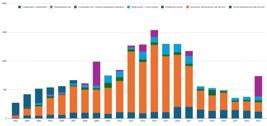
Japan’s incorporation of ODA into its broader security strategy reinforced this dynamic (Shiga 2023). Japan’s ODA disbursements to Vietnam showed a sharp increase between 2002 and 2014, after which they began to decline. Since 2018, the total volume of disbursements has fallen to less than half of its previous levels. Sectorally, Japan’s ODA to Vietnam was largely concentrated in economic infrastructure until around 2017. However, from 2018 onward – when total disbursements also decreased – the imbalance between economic and social infrastructure narrowed. This shift reflects both a gradual increase in aid for social infrastructure and a marked decline in funding for economic infrastructure.
The 2003 revision of Japan’s ODA Charter prioritized ‘quality over quantity,’ while the 2015 Development Cooperation Charter emphasized the role of the private sector and asserted that ODA should contribute to securing Japan’s national interests. These policy shifts likely influenced both the scale and the sectoral allocation of Japan’s ODA to Vietnam (Figure 3). Vietnam is the primary beneficiary of Japanese infrastructure financing from 2015 to 2023, with a total amount of US$9,4 billion, representing 17% of the total invested in Southeast Asia (Lowy Institute 2025). In 2024, Japan’s total Official Development Assistance loans to Vietnam reached its highest level with a total of 678 million dollars (Dayant et al 2025).
In this sense, within its FOIP vision, Japan has actively promoted its Partnership for Quality Infrastructure. Launched by former Prime Minister Abe in May 2015, this initiative directly addresses the region’s infrastructure financing gaps by increasing assistance through institutions like the Japan Bank for International Cooperation (JBIC) and the Japan International Cooperation Agency (JICA), alongside collaborations with other development banks and the private sector. This effort is deliberately positioned as an alternative to China’s BRI.
Seen through the lens of cooptation, this economic engagement offers Vietnam tangible material benefits (infrastructure, financing, technology transfer) that reinforce the appeal of aligning with Japan’s preferred regional order, signaling to Hanoi that the rules-based framework underpinning FOIP comes with concrete advantages. The fact that Vietnam remains one of Japan’s top infrastructure recipients in Southeast Asia, even as ODA volumes have declined globally, suggests that this relationship is deliberately maintained as a strategic anchor because the economic dimension of cooptation, even though it is asymmetric, remains an essential part of a broader strategy of Tokyo.
c) Cultural
Culture can be seen as an instrument of power that can coopt, since the state’s very planning and subsidizing of cultural diffusion serves strategic interests. L’Etang (2009) argues that cultural diplomacy tends to be characterized by long-term campaigns to win “hearts and minds,” aiming to develop emotional bonds with foreign audiences through artistic exchanges, people-to-people programs, tours, and exhibitions – influencing public opinion directly through personal experiences such as educational and cultural exchanges. This logic of winning hearts and minds, which are part of public and cultural diplomacy actions, can be seen as a mechanism of cooptation, as it seeks to reshape preferences and align sympathies without overt pressure. During the period examined, Southeast Asia held a privileged position in Japan’s cultural diplomacy, notably through the Wa Project and JENESYS Program.
Japan has systematically used cultural diplomacy as a tool of public diplomacy since the late 1970s, and more assertively since the 1990s, embedding it into its national foreign policy framework with the explicit goal of improving its international standing and managing its historical legacy in the region (Mendes 2024; Otmazgin 2013). Within the FOIP framework, these initiatives disseminate values associated with the rules-based order and aim to soften the image of a country whose expanding security role might otherwise raise concerns among historical partners (Yoshimatsu 2025). This approach, consistent across the Abe and Kishida administrations, seeks to embed ‘shared’ values, solidify alliances, coopt key states like Vietnam, and expand regional influence (Shambaugh 2013).
As political relations between Japan and Vietnam have grown and developed, it is no coincidence that summits consistently emphasize people-to-people exchanges. Exchanges and cooperation are explicitly underscored by the ministry as central to cultivating bilateral friendships (Ministry of Foreign Affairs of Japan 2024). In Vietnam, this framework demonstrates success, evidenced by the nation’s 2023 ranking as the second-largest foreign community in Japan (over 500,000 residents) and robust bilateral tourism flows (e.g., over 500,000 Vietnamese visitors and one million Japanese travelers in 2019). Furthermore, the popularity of Japanese popular culture (anime/manga) in Vietnam further contributes to strong ties (Ministry of Foreign Affairs of Japan 2024). It is important to note, however, that Japan’s specific cultural initiatives targeting Vietnam under both Abe and Kishida administrations have remained notably limited in scope and impact (Mendes 2024). This limitation, however, does not undermine the strategic logic of the cultural dimension of cooptation. Unlike security or economic instruments, cultural engagement does not aim to create material dependency – its function is more subtle since it aims to reduce threat perceptions, build familiarity with Japanese values and norms (von Feigenblatt 2007, 126), and gradually embed Vietnam within a network of shared understandings that reinforces the regional order Japan seeks to sustain.
Japan’s strategic program for tourism, initiated in 2014, notably included Vietnam among the beneficiaries of simplified visa issuance procedures (Ministry of Foreign Affairs of Japan 2014). Concurrently, Vietnam was also a signatory to intellectual property rights agreements with Japan in the same year (Ministry of Foreign Affairs of Japan 2015). Broadly, Japan’s cultural engagement with Vietnam is often subsumed within broader multilateral initiatives. Illustrative examples include the 2015 visit of Vietnamese para-athletes to Japan under the ‘Sport for Tomorrow’ project, designed to promote sports values and the Olympic/Paralympic movements (Ministry of Foreign Affairs of Japan 2016). Similarly, the 2016 ‘Asia Cup,’ an international moot court competition for Asian law students, including those from Japan and Vietnam, aimed to foster peaceful dispute resolution and cultivate future generations in international law (Ministry of Foreign Affairs of Japan 2017). The Wa Project further exemplifies this multilateral approach, seeking to enhance mutual understanding among Asian nations through expanded cultural exchanges, with Vietnam participating alongside other Southeast Asian countries.
Specific cultural engagements with Vietnam merit attention. In 2016, Japanese language education was introduced into Vietnam’s primary curriculum, supported by the Japan Foundation’s digital platforms, testing, and teacher training (Ministry of Foreign Affairs of Japan 2018). The 45th and 50th diplomatic anniversaries (2018, 2023) were marked by extensive commemorative events, roughly 200 in 2018 (Ministry of Foreign Affairs of Japan 2019) and over 500 in 2023. These included festivals, exhibitions, and the opera Princess Anio, co-produced and premiered in Vietnam. Such events, while common in Japan’s bilateral milestones, nonetheless signal sustained cultural investment in strategic partners.
Despite the discernible limitations in specific cultural cooperation, with a greater emphasis on multilateral cultural projects, Japan maintains robust partnerships with Vietnam in human resources, especially concerning labor-related initiatives. Japan has actively supported Vietnam’s workforce development through the Vietnam-Japan Human Resources Cooperation Center, operational since 2002 (Ministry of Foreign Affairs of Japan 2012), alongside other initiatives such as technical cooperation in infrastructure development (Ministry of Foreign Affairs of Japan 2013). According to the Ministry of Foreign Affairs of Japan (2013), Japanese-led projects in Vietnam, whether direct assistance or otherwise, consistently generate a strong positive impression among Vietnamese citizens, largely attributable to Japan’s reputation for quality. Therefore, while overt cultural ties may appear constrained, Japan’s substantial engagement in other critical areas of cooperation effectively reinforces its strategic presence within Vietnam.
These initiatives illustrate how Japan uses cultural engagement not only to boost friendly relations, but also as an attempt of cooptation. Craven (2011) emphasizes how education (and other ‘indirect, covert, subliminal and softer forms of coercion’) ‘shapes what we take to be our dominant ‘culture’, values, and imperatives of survival’ (Ibid, 65). Accordingly, von Feigenblatt (2007, 126) argues that Japan uses human security and its language patterns to camouflage its real intentions to normalize and expand its military sphere without causing alarmism between its neighbors.
By focusing on its role as a cultural exponent, Japan gets to shift the focus from its industrial and military power and create an environment conducive to cooperation among individuals and disseminate ideas, sensibilities, and images as a side effect (Otmazgin 2013). However, there are criticisms regarding the lack of reciprocity in cultural relations between Japan and other countries. Rothman (2018, 9), for example, points out that Japanese exchange programs seek to select those who are inclined toward Japanese societal institutions and norms and assimilate those individuals more deeply into Japanese culture and language aiming for economic gains, while the cultural aspect is relegated to assimilation without promoting the diversification of cultures among young Japanese people.
Through multilateral projects, educational programs and human resource development, Japan seeks to reshape Vietnam’s perceptions, preferences, and strategic alignments – reducing its own threat image. These efforts insert Vietnam into a network of shared norms under FOIP, advancing Japan’s strategic interests by promoting peace and order through regional partnerships. Simultaneously, Tokyo signals to Vietnam and other actors the benefits of converging with a U.S.-allied regional order. It can be argued that closer cultural ties aim to reduce mutual threat perceptions while trying to reinforce narratives of peace and stability.
Conclusion
The analysis presented throughout this article demonstrates that Japan’s strategic engagement in Southeast Asia, particularly in the case of Vietnam, is intrinsically linked to the consolidation of the FOIP project. Tokyo has sought to expand its regional presence through a multifaceted strategy that combines security, economic, and cultural initiatives – what we define as cooptation. From a realist perspective, we sought to show that this foreign policy approach aims not only to strengthen bilateral ties, but also shape perceptions and legitimize Japan’s role in a regional context marked by historical mistrust, contested norms, and great-power competition.
The three dimensions of cooptation analyzed here do not carry equal weight, and this asymmetry is itself analytically significant. In the security realm, the intensification of military visits, equipment transfers, capacity-building programs, and enhanced maritime coordination illustrate how Japan’s cooptation strategy simultaneously seeks to strengthen Vietnam’s capabilities and reduce threat perceptions regarding Japan’s own actions. This is where cooptation has been most consequential, precisely because it operates at the intersection of Japan’s two central concerns: managing China’s assertiveness and demonstrating to the United States that Tokyo is a reliable partner. An aspect that still requires further examination is the recently introduced Official Security Assistance (Nishida 2023), which so far has yielded only limited observable outcomes.
In the economic domain, although Vietnam remains structurally more dependent on China, Japan has increased its role as an infrastructure financier through ODA and the Partnership for Quality Infrastructure, consolidating its image as a committed and high-quality actor. The economic dimension is the most constrained of the three. But as this article has argued, cooptation does not require dominance; it requires relevance. Japan’s sustained presence as Vietnam’s top infrastructure recipient in Southeast Asia, even as ODA volumes declined, reflects a deliberate choice to remain strategically indispensable in the sectors where its model of quality and governance carries weight.
Finally, in the cultural dimension, educational exchanges, multilateral programs, and people-to-people initiatives seek to foster an environment favorable to strategic alignment. Cultural cooptation is the most subtle of the three dimensions. It works through the gradual tentative normalization of the values, norms, and regional vision associated with the order Japan seeks to preserve, one that remains closely aligned with the United States.
Taken together, these three dimensions reveal something broader about how status quo powers operate under conditions of structural stress. Japan’s case is analytically interesting because it tries to co-opt countries without formal alliances, with a pacifist constitution discourse, with an unresolved wartime legacy, and against a rival whose economic and military resources dwarf its own. And yet the strategy is carefully calibrated to work within these constraints rather than against them. Middle and constrained powers can also employ cooptation as a foreign policy instrument, provided they identify the niches where their offer remains credible and their presence remains valued. Japan has done precisely that in Vietnam, and the FOIP framework has been the vehicle through which this strategy has been articulated, sustained, and signaled to both regional partners and its principal ally in Washington.
Acknowledgments
We would like to thank Professor Shimizu Kosuke, Cristina Pecequilo, and Clarissa Forner for engaging with the initial ideas for this article at Ryukoku University, ERABED, and ISA-LAC, respectively. This work was supported by the Japan Foundation under the Grant Program for Japanese Studies Projects, grant number 21002708; UERJ under Grant PROCIENCIA 2025; JSPS KAKENHI Grant Numbers JP20K20071 and JP20KK0284.
References
- Abe, S. "Asia's Democratic Security Diamond." Project Syndicate, December 27, 2012.
- Blackwill, R. D., and J. M. Harris. War by other means: geoeconomics and statecraft. Cambridge: Harvard University Press, 2016.
- Chanlett-Avery, E. Japan, the Indo-Pacific, and the 'Quad'. Chicago: Chicago Council on Global Affairs, 2018.
-
Ciorciari, J. D., and J. Haacke. "Hedging in international relations: an introduction." International Relations of the Asia-Pacific 19, no. 3 (2019): 367-374. doi: https://doi.org/10.1093/irap/lcz017
» https://doi.org/10.1093/irap/lcz017 -
Craven, J. "International education and imperial penetration, cooptation and control." International Critical Thought 1, no. 1 (2011): 63-75. doi: https://doi.org/10.1080/21598282.2011.566042
» https://doi.org/10.1080/21598282.2011.566042 - Dayant, A., G. Stanhope, R. Rajah, and H. Buckley. Lowy Institute 2025 key findings report Sydney: Lowy Institute, 2025.
- Drezner, D. W. The Sanctions paradox: economic statecraft and international relations. Cambridge: Cambridge University, 2009.
-
Ella, D., and G. Press-Barnathan. "Complex cooptation: how regime complexity affects the stability of cooptation bargains: the case of China and the World Bank." Contemporary Security Policy 46, no. 1 (2024): 66-97. doi: https://doi.org/10.1080/13523260.2024.2419174
» https://doi.org/10.1080/13523260.2024.2419174 - Gilpin, R. War and change in world politics. Cambridge: Cambridge University Press, 1981.
-
Grønning, B. E. M. "Japan's Security Cooperation with the Philippines and Vietnam." The Pacific Review 31, no. 4 (2017): 533-552. doi: https://doi.org/10.1080/09512748.2017.1397730
» https://doi.org/10.1080/09512748.2017.1397730 - Grønning, B. E. M. "The Japanese Perspective on the Security Partnership with Vietnam." In Japan's New Security Partnerships: Beyond the Security Alliance, edited by Wilhelm Vosse and Paul Midford. Manchester: Manchester University Press, 2018
-
Heimann, G., A. Kruck, D. Paikowsky, and B. Zangl. "Cooptation in great power rivalries: a conceptual framework." Contemporary Security Policy 46, no. 1 (2024): 8-36. doi: https://doi.org/10.1080/13523260.2024.2430022
» https://doi.org/10.1080/13523260.2024.2430022 -
Hoshiro, H. "Aid coordination through competition? Unintended consequences of China-Japan rivalry in foreign aid policy in Asia." International Relations of the Asia-Pacific 24, no. 3 (2024): 429-464. doi: https://doi.org/10.1080/13523260.2024.2430022
» https://doi.org/10.1080/13523260.2024.2430022 -
Hosoya, Y. "FOIP 2.0: the evolution of Japan's free and open indo-pacific strategy." Asia-Pacific Review 26, no. 1 (2019): 18-28. doi: https://doi.org/10.1080/13439006.2019.1622868
» https://doi.org/10.1080/13439006.2019.1622868 - Hughes, C. W. "Japan's grand strategic shift: from the Yoshida Doctrine to an Abe Doctrine?" In Power, Ideas, and Military Strategy in the Asia-Pacific, edited by A. J. Tellis, A. Szalwinski, and M. Wills, 73-105. Washington: The National Bureau of Asian Research, 2017.
-
Hughes, C. W., A. Patalano, e R. Ward. "Japan's grand strategy: the Abe Era and its aftermath." Survival 63, no. 1 (2021): 125-160. doi: https://doi.org/10.1080/00396338.2021.1881258
» https://doi.org/10.1080/00396338.2021.1881258 - Inoguchi, T., and A. Panda. "Japan's grand strategy in the South China Sea: principled pragmatism." In Great Powers, Grand Strategies: The New Game in the South China Sea, edited by A. Corr. Annapolis: Naval Institute Press, 2018.
- Jimbo, K. "Japan's defense and security cooperation in Southeast Asia: developing security networks, capacities, and institutions." In The courteous power: Japan and Southeast Asia in the Indo-Pacific era, edited by J. D. Ciorciari, and K. Tsutsui, 54-72. Ann Arbor: University of Michigan Press, 2021.
-
Jung, S. C., J. Lee, and J. Y. Lee. "The Indo-Pacific Strategy and US Alliance network expandability: Asian Middle powers' positions on sino-US geostrategic competition in the Indo-Pacific region." Journal of Contemporary China 30, no. 127 (2020): 53-68. doi: https://doi.org/10.1080/10670564.2020.1766909
» https://doi.org/10.1080/10670564.2020.1766909 -
Katagiri, N. "Shinzo Abe's Indo-Pacific strategy: Japan's recent achievement and future direction." Asian Security 16, no. 2 (2020): 179-200. doi: https://doi.org/10.1080/14799855.2019.1607304
» https://doi.org/10.1080/14799855.2019.1607304 - Katzenstein, P. J. Cultural norms and national security: police and military in postwar Japan. Ithaca: Cornell University, 1996.
-
Koga, K. "Japan's 'Indo-Pacific' question: countering China or shaping a new regional order?" International Affairs 96, no. 1 (2020): 49-73. doi: https://doi.org/10.1093/ia/iiz241
» https://doi.org/10.1093/ia/iiz241 -
Koga, K. "The concept of 'Hedging' revisited: the case of Japan's foreign policy strategy in East Asia's power shift." International Studies Review 20, no. 4 (2018): 633-660. doi: https://doi.org/10.1093/isr/vix059
» https://doi.org/10.1093/isr/vix059 -
Kruck, A., and B. Zangl. "It pays to be generous: how cooptation transforms power rivalries." Contemporary Security Policy 46, no. 1 (2024): 37-65. doi: https://doi.org/10.1080/13523260.2024.2419169
» https://doi.org/10.1080/13523260.2024.2419169 -
Liff, A. P., and G. J. Ikenberry. "Racing toward tragedy? China's rise, military competition in the Asia-Pacific, and the security dilemma." International Security 39, no. 2 (2014): 52-91. doi: https://doi.org/10.1162/ISEC_a_00176
» https://doi.org/10.1162/ISEC_a_00176 -
Lim, D. J., and Z. Cooper. "Reassessing hedging: the logic of alignment in East Asia." Security Studies 24, no. 4 (2015): 696-727. doi: https://doi.org/10.1080/09636412.2015.1103130
» https://doi.org/10.1080/09636412.2015.1103130 - Lind, J. "The art of the bluff: the US-Japan alliance under the Trump administration." In Chaos in the Liberal order: the Trump presidency and international politics in the twenty-first century, edited by R. Jervis, F. J. Gavin, J. Rovner, D. N. Labrosse, and G. Fujii. New York: Columbia University Press, 2018.
-
Ma, X., and D. C. Kang. "Why Vietnam is not balancing China: vietnamese security priorities and the dynamics in Sino-Vietnam relations." Journal of East Asian Studies 23, nº 3 (2023): 363-386. doi: https://doi.org/10.1017/jea.2023.16
» https://doi.org/10.1017/jea.2023.16 - Manicom, J. "Japan's ocean policy: still the reactive state?" Pacific Affairs 83, no. 2 (2010): 307-326.
- Masuda, M. "Why has chinese foreign policy become more assertive?" East Asia Forum, February 20, 2016.
- Mearsheimer, J. J. The tragedy of great power politics New York: W. W. Norton & Company, 2001.
- Mendes, A. 2024. As iniciativas de projeção cultural do segundo governo Abe (2012-2020) para o Sudeste Asiático: reflexões da cultura como instrumento de poder no cenário internacional [Unpublished master's thesis, Universidade do Estado do Rio de Janeiro].
- Ministry of Defense of Japan. Defense of Japan: White Paper. Tokyo, 2012-2024.
- Ministry of Foreign Affairs of Japan. Diplomatic bluebook Tokyo, 2010-2024.
- Ministry of Foreign Affairs of Japan. White Paper on Development Cooperation Tokyo, 2010-2020.
- Morgenthau, H. J. A política entre as nações: a luta pela guerra e pela paz. São Paulo: Imprensa Oficial do Estado de São Paulo, 2003.
- Naganuma, K. "A free and open Indo-Pacific as a major narrative: the reconstruction of values in Asia." National Institute for Defense Studies Commentary, no 159 (2021): 1-20.
- Nakano, A. "Japan-Vietnam relations". In Japan's Foreign Relations in Asia, edited by J. D. J. Brown, and J. Kingston. London: Routledge, 2018.
-
Nguyen, C. T. "Uneasy embrace: Vietnam's responses to the U.S. free and open Indo-Pacific strategy amid U.S.-China rivalry." The Pacific Review 35, no. 5 (2022): 884-914. https://doi.org/10.1080/09512748.2021.1894223
» https://doi.org/10.1080/09512748.2021.1894223 - Nguyen, H. "Maritime capacity-building cooperation between Japan and Vietnam: a confluence of strategic interests." ISEAS Perspective, no 2021/148. Singapore: ISEAS - Yusof Ishak Institute, 2021.
-
Nguyen Thi, T. T. "Vietnam-Japan higher education cooperation in the first two decades of the 21st Century." Wilayah: The International Journal of East Asian Studies 11, no. 1 (2022): 23-33. https://ejournal.um.edu.my/index.php/IJEAS/article/view/34479
» https://ejournal.um.edu.my/index.php/IJEAS/article/view/34479 -
Nishida, Y. "Outstanding issues for official security assistance (OSA) and its strategic utilization." IINA - International Information Network Analysis, August 11, 2023. https://www.spf.org/iina/en/articles/nishida_03.html
» https://www.spf.org/iina/en/articles/nishida_03.html - Nishitateno, S., and Y. Todo. "Economic and Political Impacts of the Belt and Road Initiative on Western Nations in Infrastructure Investment Competitions." RIETI Discussion Paper 25-E-034, 2025.
- National Security Strategy - NSS. National security strategy of Japan. Tokyo: Cabinet Secretariat, 2022.
- Oliveira, A. C. G. de. (2019). Entre o sol, a águia e o dragão: dinâmicas de poder e segurança entre Japão, EUA e China no Leste Asiático e o estudo de caso das ilhas Senkaku/Diaoyu no século XXI [Tese de doutorado, Universidade Federal do Rio de Janeiro].
-
Oliveira, A. C. G. de.. (2021). Mobilizing resources and signaling intentions: a neoclassical realist analysis of Japan's domestic and international instrumentalization of the Senkaku Islands dispute and China's maritime assertiveness. Revista Brasileira De Política Internacional, 64(1), e002. Doi: https://doi.org/10.1590/0034-7329202100102
» https://doi.org/10.1590/0034-7329202100102 - O'Rourke, R. China naval modernization: implications for U.S. Navy capabilities-background and issues for congress. Congressional Research Service Report RL33153. Washington: Congressional Research Service, 2023.
- Organski, A. F. K., and J. Kugler. The war ledger. Chicago: University of Chicago Press, 1980.
-
O'Shea, P., and S. Maslow. "'Making the alliance even greater': (mis-)managing U.S.-Japan relations in the age of Trump." Asian Security 17, no. 2 (2021): 195-215. doi: https://doi.org/10.1080/14799855.2020.1838486
» https://doi.org/10.1080/14799855.2020.1838486 - Otmazgin, N. K. Regionalizing culture: the political economy of japanese popular culture in Asia. Honolulu: University of Hawaii Press, 2013.
-
Palmer, G., S. B. Wohlander, and T. C. Morgan. "Give or take: foreign aid and foreign policy substitutability." Journal of Peace Research 39, no. 1 (2002): 5-26. doi: https://doi.org/10.1177/0022343302039001001
» https://doi.org/10.1177/0022343302039001001 -
Phan, X. D. "Vietnam's hedging amid U.S.-China Mekong rivalry: risk management under uncertainties." The Pacific Review 38, no. 4 (2025): 646-674. doi: https://doi.org/10.1080/09512748.2024.2425347
» https://doi.org/10.1080/09512748.2024.2425347 - Pugliese, G., and M. Zappa. "Japan 2023: still walking in Abe Shinzo's footsteps." Asia Maior 34, no. 1 (2024): 65-124.
-
Rothman, S. B. "Education as a soft power resource to promotion of immigration and assimilation in Japan." Analyses & Alternatives 2, no. 2 (2018): 1-30. doi: https://doi.org/10.22931/aanda.2018.2.2.001
» https://doi.org/10.22931/aanda.2018.2.2.001 -
Saltzman, I. "Growing pains: neoclassical realism and Japan's security policy emancipation." Contemporary Security Policy 36, no. 3 (2015): 498-527. doi: https://doi.org/10.1080/13523260.2015.1091574
» https://doi.org/10.1080/13523260.2015.1091574 -
Satake, T., and R. Sahashi. "The rise of China and Japan's 'vision' for free and open Indo-Pacific." Journal of Contemporary China 30, no. 127 (2021): 18-35. doi: https://doi.org/10.1080/10670564.2020.1766907
» https://doi.org/10.1080/10670564.2020.1766907 - Schweller, R. L. "Neorealism's status-quo bias: what security dilemma?" Security Studies 5, no. 3 (1996): 90-121.
- Shambaugh, D. China goes global: the partial power. Oxford: Oxford University Press, 2013.
-
Shiga, H. "The new dynamics of Japan's official development assistance in an era of great power competition." Journal of Contemporary East Asia Studies 13, no. 2 (2023): 249-263. doi: https://doi.org/10.1080/24761028.2023.2292438
» https://doi.org/10.1080/24761028.2023.2292438 - Shiraishi, M. Japanese Relations with Vietnam, 1951-1987. Ithaca: Cornell University Press, 1990.
- Smith, S. A. Japan rearmed: the politics of military power. Cambridge: Harvard University Press, 2019.
-
Tran, P. T., A. V. G. Vieira, and L. C. Ferreira-Pereira. "Vietnam's strategic hedging vis-à-vis China: the roles of the European Union and Russia." Revista Brasileira de Política Internacional 56, no. 1 (2013): 163-182. doi: https://doi.org/10.1590/S0034-73292013000100009
» https://doi.org/10.1590/S0034-73292013000100009 - Tsuruoka, M. The Donald J. Trump administration as seen from Tokyo: will the U.S.-Japan alliance remain unique? IAI Papers 18/02. Rome: Istituto Affari Internazionali, 2018.
- Ministry of National Defense of Vietnam. "Preface. " In 2019 Vietnam National Defence white paper. Hanoi, 2019.
- Vietnam National Trade Repository. Vietnam's export situation in the first seven months of 2025 Hanoi: Ministry of Industry and Trade, 2025.
- Observatory of Economic Complexity - OEC. OEC Bilateral Trade Profile. 2025.
- Von Feigenblatt, O. F. Japan and human security: 21st Century ODA Policy Apologetics and Discursive Cooptation. 2nd ed. Saarbrücken: Academic Research International, 2007.
-
Walt, S. M. "Alliance formation and the balance of world power." International Security 9, no. 4 (1985): 3-43. doi: https://doi.org/10.2307/2538540
» https://doi.org/10.2307/2538540 - Waltz, Kenneth N. Theory of International Politics New York: McGraw-Hill, 1979.
- Waltz, K. N. "The new world order." Millennium: Journal of International Studies 22, no. 2 (1993): 187-195.
-
Yoshimatsu, H. "The development of Japan's Indo-Pacific strategy: security concerns and instrumental principles." Global Policy 16, no. 4 (2025): 579-588. doi: https://doi.org/10.1111/1758-5899.70006
» https://doi.org/10.1111/1758-5899.70006 - Zhao, S. "Chinese foreign policy as a rising power to find its rightful place." Perceptions: Journal of International Affairs 18, no. 1 (2013): 101-128.
-
1
This commitment persists even as the order Japan seeks to preserve faces structural stress. China’s rise has already redistributed material power in the region, yet U.S. primacy, particularly in military terms, continues to underpin the rules-based framework that Tokyo prioritizes.
-
2
For further details, see more in Hoshiro (2024).
-
Data Availability Statement:
The data that support the findings of this study are publicly available. Documentary sources include official publications from the Ministry of Foreign Affairs of Japan, the Ministry of Defense of Japan, and the Ministry of National Defense of Vietnam, all accessible through their respective institutional websites. Trade and development assistance data were obtained from publicly available databases, including the Observatory of Economic Complexity, the Lowy Institute, and the Ministry of Foreign Affairs of Japan’s official development assistance records.
-
Associate Editors:
Haroldo Ramanzini Junior ( https://orcid.org/0000-0001-7105-6237)Wilton Dias ( https://orcid.org/0000-0002-9623-0526).
-
Scientific Editors:
Haroldo Ramanzini Junior ( https://orcid.org/0000-0001-7105-6237)Wilton Dias ( https://orcid.org/0000-0002-9623-0526).
The data that support the findings of this study are publicly available. Documentary sources include official publications from the Ministry of Foreign Affairs of Japan, the Ministry of Defense of Japan, and the Ministry of National Defense of Vietnam, all accessible through their respective institutional websites. Trade and development assistance data were obtained from publicly available databases, including the Observatory of Economic Complexity, the Lowy Institute, and the Ministry of Foreign Affairs of Japan’s official development assistance records.

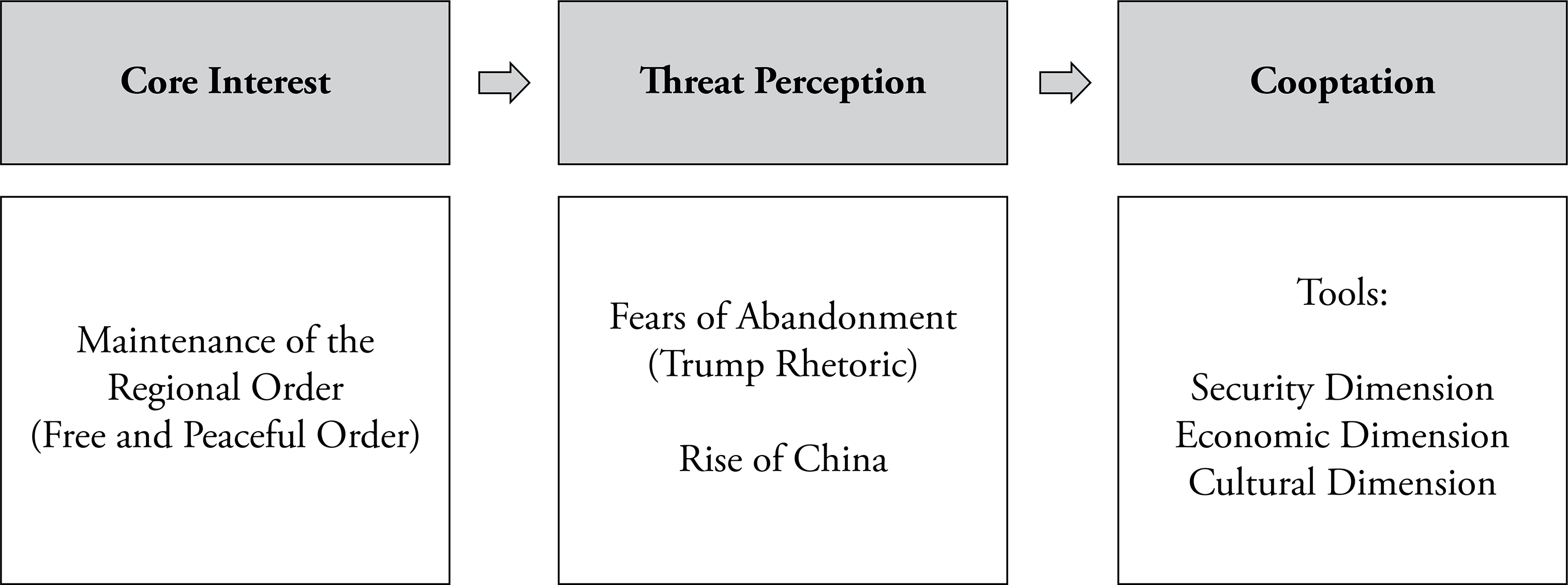 Source: Own elaboration
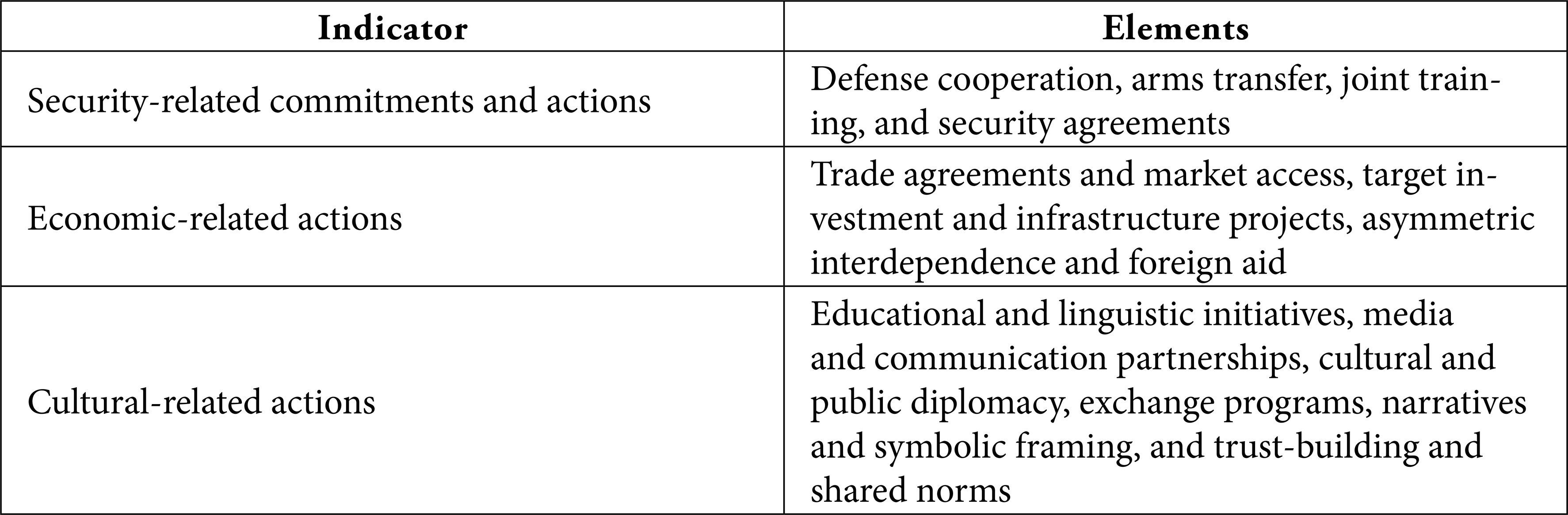 Source: Own elaboration
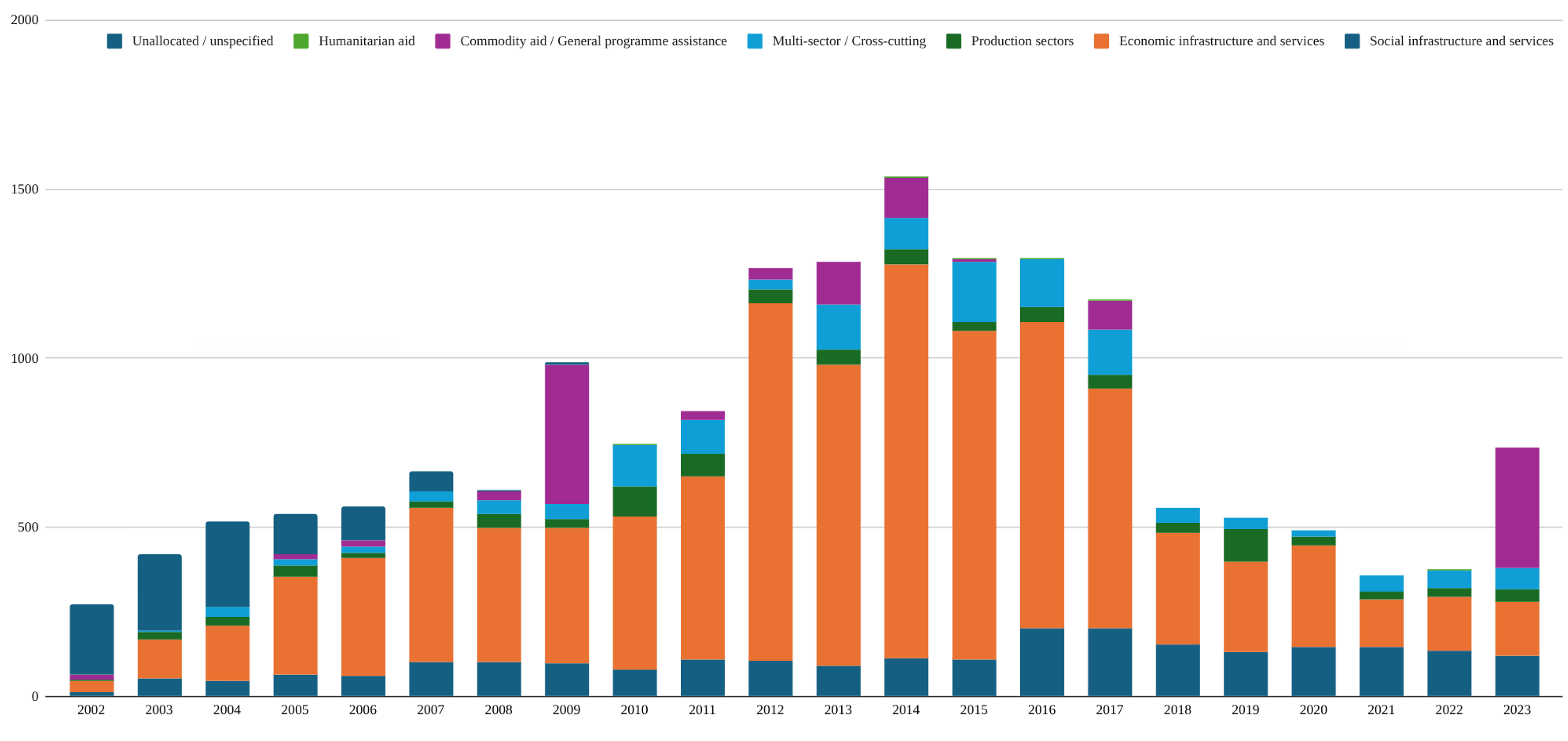 Source: Ministry of Foreign Affairs of Japan, 2025