 Assessing the socioeconomic benefits of the Agreste Adduction System in Pernambuco, Brazil
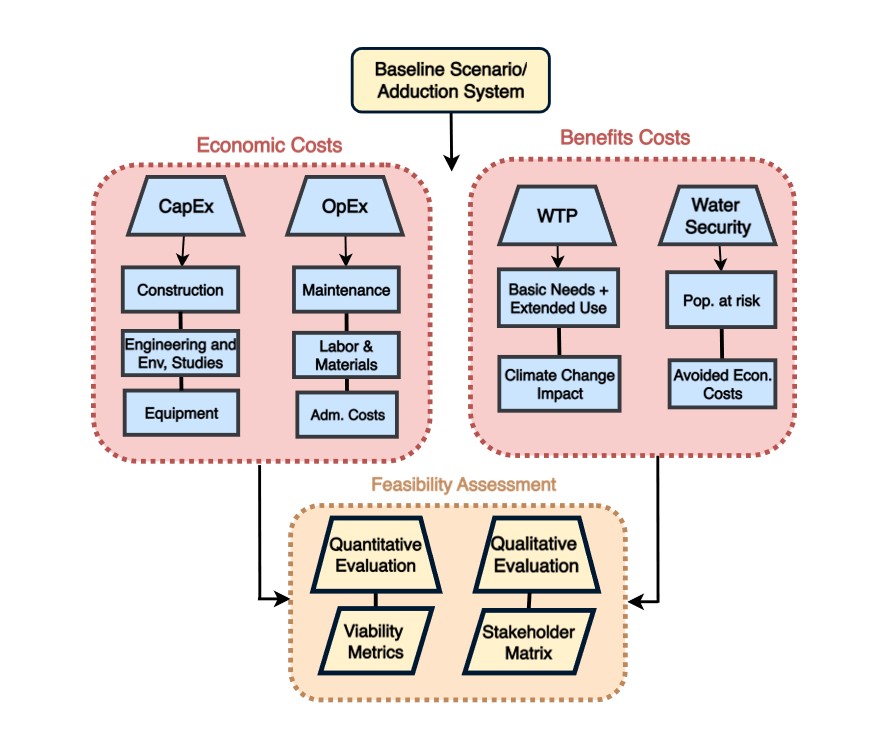
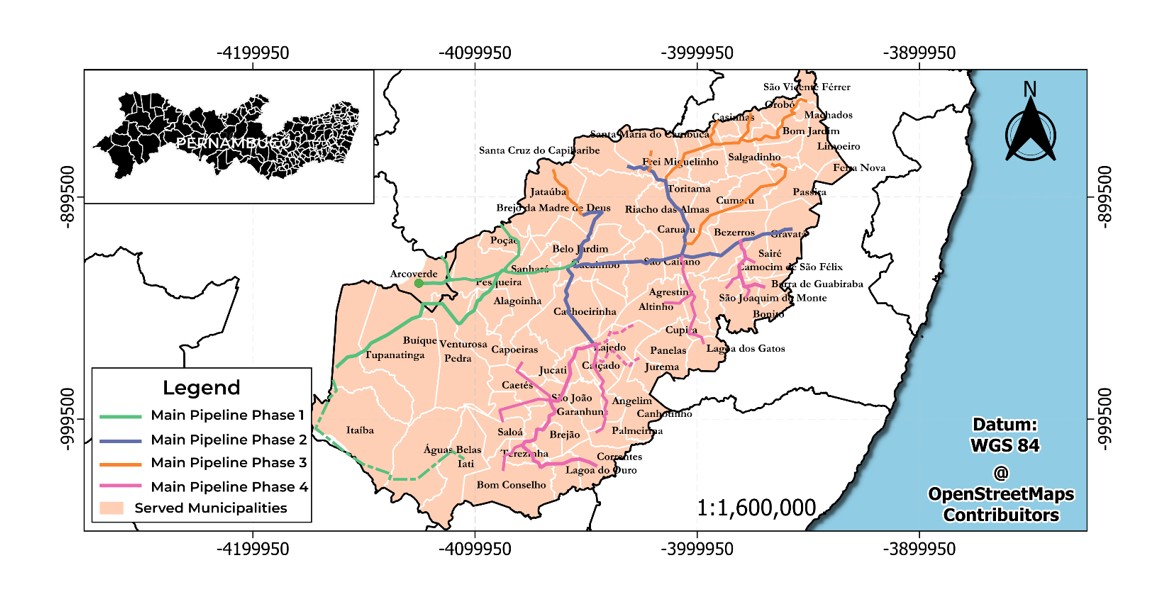
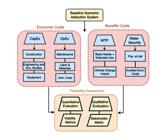
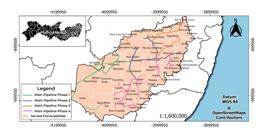
Government intervention in water infrastructure is justified where markets cannot ensure equitable, efficient provision of essential services. Water systems exhibit public goods and natural monopolies characteristics, limiting private incentives. High fixed costs and diffuse social benefits constrain efficiency, while short planning horizons and failure to internalize positive externalities drive chronic underinvestment. In Pernambuco’s semi-arid Agreste—marked by irregular rainfall and no perennial rivers—these failures are acute, and chronic scarcity justifies public leadership in supply expansion. The Agreste Adduction System, integrated with the São Francisco River Integration Project, was designed to provide treated water to 64 municipalities. This study applies a social cost–benefit analysis under two scenarios: (i) baseline—continuation of current water risk, without induced demand/irrigation; and (ii) alternative—adduction system implementation, generating cost-avoidance and induced-demand benefits. Results confirm economic viability: NPSV of R$ 838.28 million, ERR of 22.62%, and B/C ratio of 2.21, indicating substantial net gains through reduced water insecurity. To address the most uncertain item, we test electricity shares of 40%, 60%, and 80% of total O&M; NPSV falls to R$ 748.21–663.91 million, ERR to 21.51–20.49%, and B/C to 1.95–1.76. Beyond energy, complementary risk analyses would further strengthen robustness and policy confidence.
Keywords:
Human water supply; PISF; Cost-benefit analysis; Water resources
 Thumbnail
 Thumbnail
 Thumbnail
 Thumbnail