 Assessing temporal variability in water security across Brazil
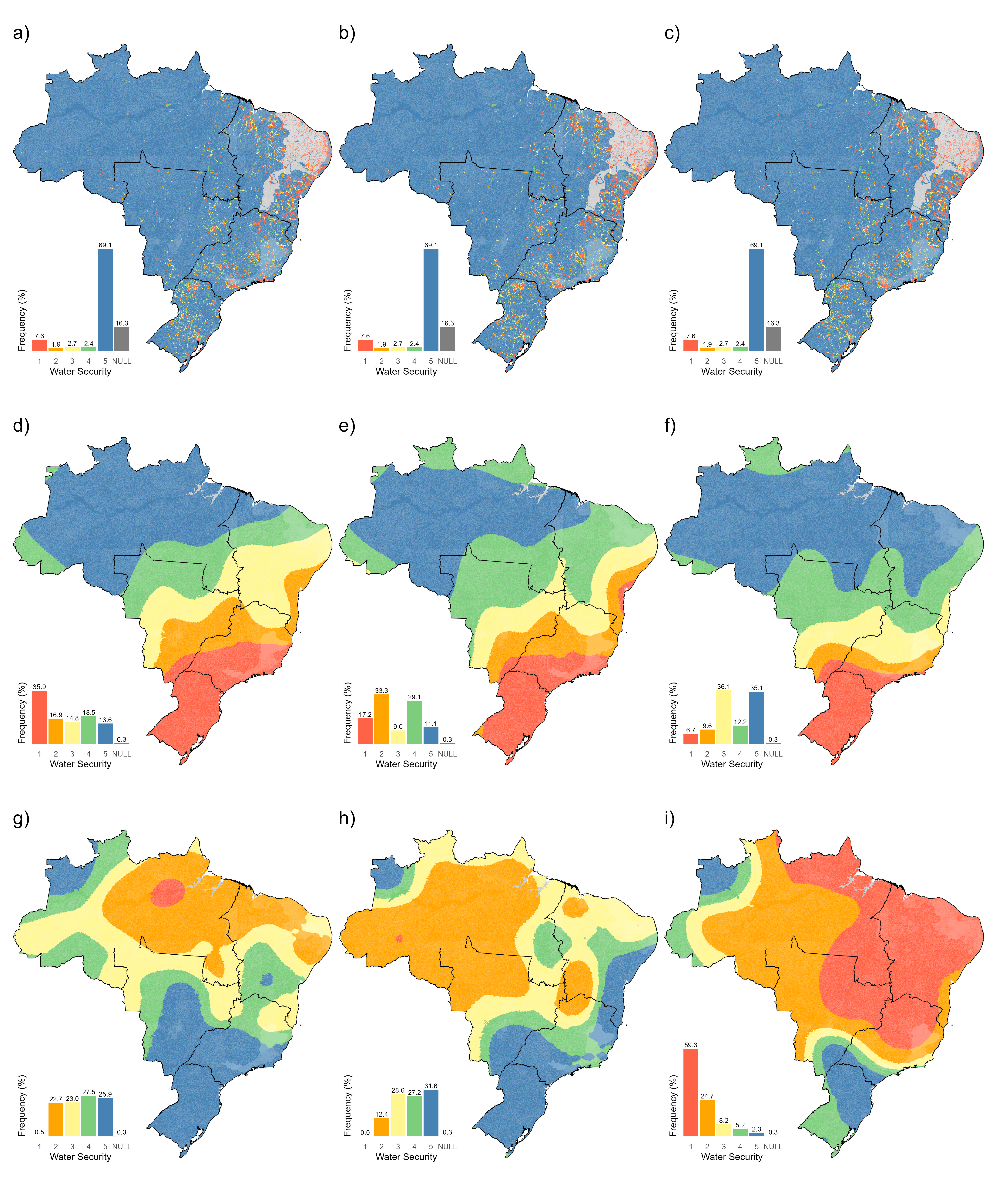
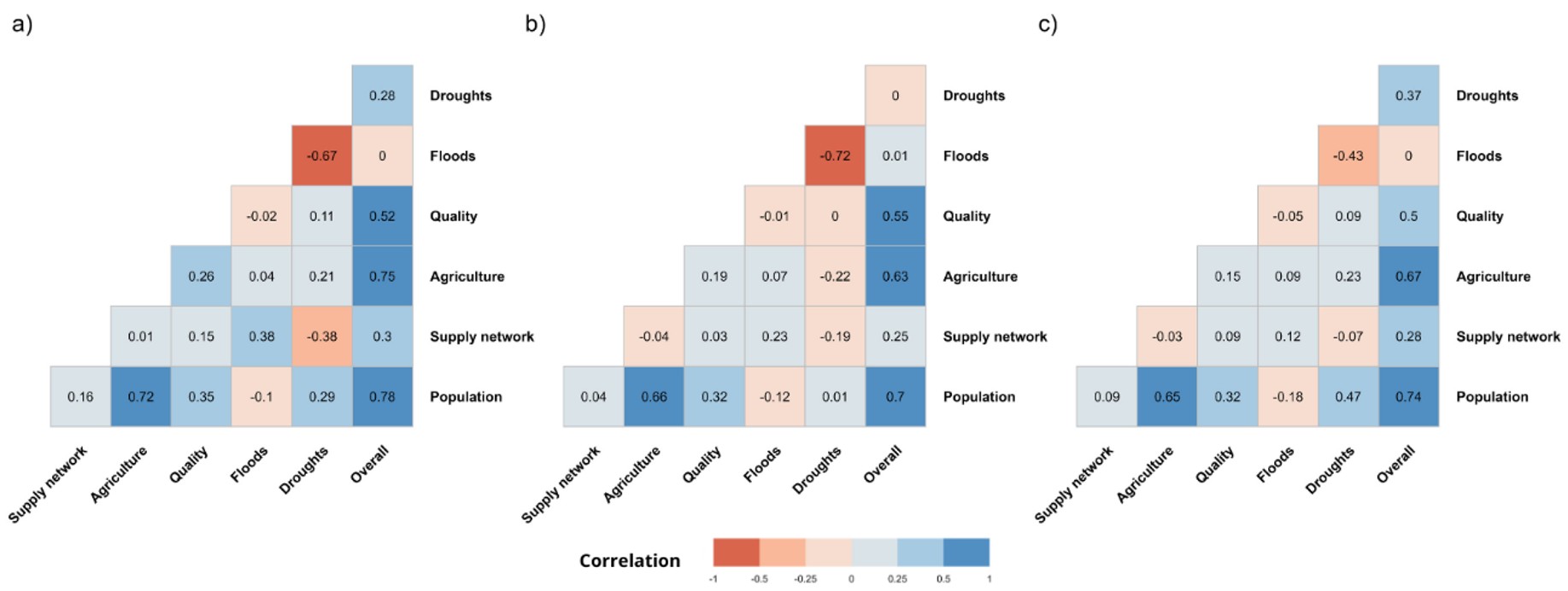
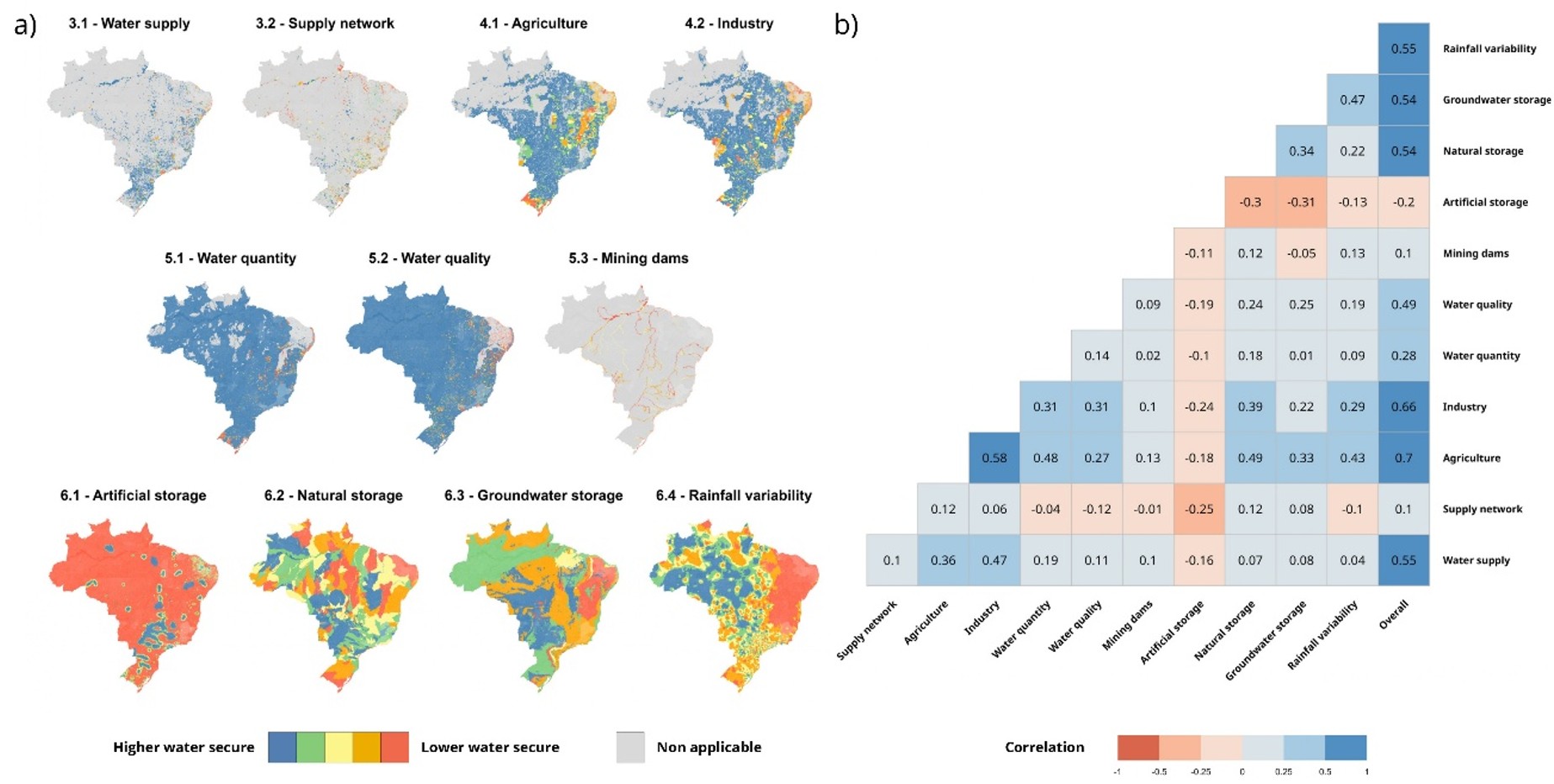
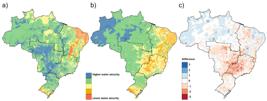
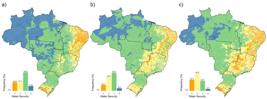
Water security is commonly analyzed by combining indicators representing human, economic, ecosystemic, and resilience dimensions. However, a comprehensive understanding of water security requires evaluating how these indicators evolve over time. Here, we combine three decades of Brazilian data to develop the Temporal Water Security Index (TWSI) which includes time variability and hydrological extremes. We compare TWSI with Brazil’s established index and analyze changes across the country. Our results show a 28% decrease in the proportion of ottobasins classified as the highest water security levels over time. The greatest decline in water security was observed in Southeast Brazil, likely associated with population growth and increasing water demand. These findings underscore the importance of incorporating temporal assessment and hydrological extremes into water security analyses to better support water resources management.
Keywords:
Water security; Hydrological extremes; Water resources management
 Thumbnail
 Thumbnail
 Thumbnail
 Thumbnail
 Thumbnail
 Thumbnail
 Thumbnail