
 Blueprint framework for Integrated Water Resources Management (IWRM): dashboard for the Tapajos River basin
ABSTRACT
The Tapajós River basin is one of the largest tributaries of the Amazon River (on the right bank) and flows through the territories of four Brazilian states. Its complexity translates to the different physiographic aspects, from protected areas defined in part of its territory (indigenous lands and conservation units) to the economic potential (agricultural and mineral) and social pressure from the forming municipalities. In response to this setting, the objective developed was to describe a Blueprint Framework (BF) scenario, taking as reference the forming municipalities and the main factors that affect the development of cities. The processing consisted of developing the Trends and Pressure Framework (TPF) and City Blueprint Performance Framework (CBF), defining the Governance Capacity Framework (GCF), and reclassification by major groupings. The data gathering construction used public sources grouped the social, environmental, and economic dimensions. The results emphasized that the Tapajós River basin is a fragmented and heterogeneous region, and the critical sub-basins are Jamanxin, Teles Pires, and Juruena. The municipal indicators and the river’s active area establish a division between the medium-high and medium-low courses, increasing water insecurity and indicating that having water availability in the river basin does not mean immediate social and economic access to the resource.
Keywords:
Water security; Governance; Environmental management
RESUMO
O rio Tapajós é um dos maiores afluentes do rio Amazonas (na margem direita), atravessando quatro estados brasileiros. Sua complexidade se traduz nos diferentes aspectos fisiográficos constituintes, com a presença de áreas protegidas (terras indígenas e unidades de conservação) e regiões de forte potencial econômico (agrícola e mineral), configurando uma intensa pressão social nos seus municípios formadores. Em resposta a esse cenário, o objetivo desenvolvido foi descrever um cenário Blueprint Framework (BF), tomando como referência os municípios formadores e os principais fatores que afetam o desenvolvimento das cidades. O processamento consistiu: na elaboração do Quadro de Tendências e Pressões (TPF) e do Quadro de Desempenho do City Blueprint (CBF); na definição do Quadro de Capacidade de Governança (GCF); e na reclassificação conforme os principais agrupamentos. A base destes foram fontes públicas de dados, agrupadas nas dimensões social, ambiental e econômica. Os resultados enfatizaram que a bacia do rio Tapajós é uma região fragmentada e heterogênea, e as subbacias críticas são Jamanxin, Teles Pires e Juruena. Os indicadores municipais e o comportamento hídrico da bacia estabelecem uma divisão bem definida entre os cursos médio-alto e médio-baixo, aumentando a insegurança hídrica e indicando que ter disponibilidade de água na bacia hidrográfica não significa acesso social e econômico imediato ao recurso.
Palavras-chave:
Segurança hídrica; Governança; Gestão ambiental
INTRODUCTION
Future scenarios associated with climate change represent a challenge for implementing Integrated Water Resources Management (IWRM). Several factors induce complexity, such as the biological and chemical effects of water quality degradation, the quantitative availability of the water for other uses, the environmental water integrity, and watershed resilience capacity (Beck, 2000). The scarcity prediction defined by global climate models includes drought or extreme rainfall regimes, making water rights increasingly necessary (Pease & Snyder, 2018).
The IWRM, as predicted in Sustainable Development Goals (SDGs), discusses the water supply catchments, the ecosystem services that prevent the environment from degradation as well as promote biodiversity, the management decision focus on rational use of water purposes, the integration between water and urban planning, environmental adaptive and multi-functional infrastructures in sustainable cities, and governance collaboration between policy and community (Koop & Van Leeuwen, 2015a).
Resilience can be defined as the ability to cope with and recover from disruption and anticipate trends and variability to maintain services for people and protect the natural environment now and in the future (Hall et al., 2020). The IWRM, as a making-decision model, must be able to measure the water system resilience. The ideal framework is based on multi-criteria analysis strategies, promotes the development and water use system control in all areas of the rural/urban water cycle, considering the collective impacts and its links to other management sectors (Chang et al., 2020).
The criteria´s establishment based on indicators must be defined to assess the effectiveness of the IWRM. As an example, it is possible to highlight indicators that measure the use consumptive of water (extractive uses), non-consumptive use of water (non-extractive practices), the environmental role of water resources (conservation of biodiversity, preservation of wetlands), the water governance (legislation, institutional capacity, user participation) and hydrological indicators (precipitation, evapotranspiration, stream flow, groundwater, etc.) (Pires et al., 2017). These indicators use multiple performance and guide indices that report on different aspects of IWRM (Essex et al., 2020). An efficient IWRM impacts the vulnerable population, providing a healthier environment and a better quality of life also contributes to reducing the poverty rate (Okumura et al., 2021).
Global estimates until 2050 describe the population in cities increasing to 6.3 billion and the decline in the number of people living in rural areas. This assessment may help to select appropriate water supply, sanitation, and climate adaptation strategies (Van Leeuwen et al., 2016). Water security associated with IWRM is based on both the availability of water resources and the vulnerability of water access, as well as the needs for human development (Dias et al., 2023). The Nexus Framework is an example of integrative analysis that interconnected these themes and that provides the efficient use of natural water resources (Mendonça et al., 2023).
In Blueprint Framework (BF), a process similar to Nexus methodology occurs, where the challenge is to find cities with similar problems, knowledge, experiences, learning practices, policies, or governance models. Therefore, understanding the interrelationship between them is a relevant goal. This model is nominated as city-to-city (C2C) learning (Dieperink et al., 2023). The BF approach may help develop and implement measures to manage water-sensitive cities. It aims to be a strategic purpose that discusses water security, water quality, drinking water, sanitation, infrastructure, climate robustness, biodiversity and attractiveness, and governance (Koop & Van Leeuwen, 2015b). The Trends and Pressures Framework (TPF) and the City Blueprint Framework (CBF) provide a practical view of IWRM performance. The governance mechanisms based on the Governance Capacity Framework (GCF) give the necessary support to decision-makers (Feingold et al., 2018).
Understanding the demand for management and rational water use cannot be valued only on water scarcity conditions. In the scenario of quantitative water supply, water insecurity may occur due to a lack of access to water. The Amazon hydrographic basin brings together studies that deal with climatic and hydrological conditions and how they affect land use and cover (Wongchuig et al., 2019; Santos et al., 2019; Fassoni-Andrade et al., 2021; Jankowski et al., 2021). As part of this environment, the Tapajós River basin (tributary on the right bank) follows climate projected trends and their impact on water systems (Silva et al., 2018; Sousa et al., 2022).
In the Tapajós River basin, the most interference conditions in the water quality and quantity are the natural potential for energy (hydroelectric plants) and mineral use (Oliveira et al., 2022), use of water for agricultural practice (Andrade Lima et al., 2021; Franco et al., 2021), and the growth of cities mainly on the banks of the rivers, contributing to alteration of the natural environment (Nascimento et al., 2022b). Geological data suggest that the metal concentrations in the Tapajós River reflect a response to water contamination by lead, mercury, or other metal mineralization (Andrade Lima et al., 2021).
Tapajós floodplains are inundated seasonally by rivers that carry large amounts of suspended sediments, intense sedimentation, and erosion processes. These floodplains have a slow dynamic and low adaptative capacity, which makes this ecosystem vulnerable to anthropogenic disturbances (Conde et al., 2024). This study focuses on the Tapajós River basin, marked by intense agricultural activities, hydropower, and the political debate over the Amazon natural resources exploitation (Farinosi et al., 2019). Its purpose is to describe a Blueprint Framework (BF) scenario, taking as reference the forming municipalities and the main factors that affect the development of cities.
METHODOLOGY
Tapajós River basin highlights
The Tapajós River basin drains an area of 497,162.20 km2 (Figure 1). It is one of the largest tributaries of the Amazon River (on the right bank), flowing into Mato Grosso (MT, 59.24%), Pará (PA, 38.03%), Amazonas (AM, 2.68%) and Rondônia (RO, 0.05%) (Table 1) states territories.

Tapajós River basin: (1) Drainage network; (2) The Tapajós Basin's main water units; (3) Tapajós River Basin State boundaries; (4) Localization and territory limits.
The river system flows northwards, with terrain elevation values greater than 450 meters at headwaters to a few meters above sea level at the confluence of the mouth of the Amazon River. The main tributaries are the Jamanxim, Teles Pires, and Juruena Rivers.
The water units defined were based on the Otto-coded system of hydrographic basins (level 3) of the National Agency for Water and Basic Sanitation (ANA). Pará and Mato Grosso defined the low-medium and medium-high basin courses, respectively, with opposite responses to the indicators evaluated. The medium-low course of the Tapajós basin includes the Jamanxim River, which covers the topographically lowest areas (Araújo & Lima, 2019) and an extensive continuous vegetation cover (Figure 2). On the other hand, the medium-high course has the highest elevations and represents the hydrographic basins responsible for the main recharge of the Tapajós River (Juruena and Teles Pires).
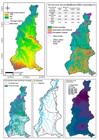
Tapajós river basin landscape aspects: (1) Elevation model; (2) Land cover and use (MapBiomas, 2022); (3) Protected areas and forest coverage; (4) Highways; and (5) Average annual rainfall, adapted from Franco et al. (2024).
Average annual and seasonal rainfall is between 1700 and 2500 mm, with the highest values in the central regions of the basin and the lowest in the southwest. The rainy season shows higher values in the central-eastern areas of the basin (> 2000 mm), and the lowest values in the north and southwest (between 1500 and 1700 mm). In the dry season, the lowest rainfall values are in the centre-south (< 300 mm), and the maximum in the north (> 500 mm) (Franco et al., 2024). This behaviour represents flows (annual average) greater than 5000 m3/s, with maximum values in the quarter from february to april (ranging from 8000 to 9000 m3/s) and minimum values from august to october (close to 1000 m3/s). (Figueiredo & Blanco, 2014).
In addition, the region has experienced changing forest cover and growing population clusters, with a strong presence of expanding productive sectors. In 2022 (data source MapBiomas Project), land cover (vegetal cover) represents 68.33% of the basin area, while agriculture and livestock (29.15%) and occupation mosaics (1.15%) have an extension of 30.30%. Vegetation cover is predominantly within protected areas. 70% of Tapajós watershed is represented by indigenous lands and conservation units, of which 71.36% belong to Pará, 25.38% to Mato Grosso and 3.25% to Amazonas.
Data gathering
The Blueprint Framework (Feingold et al., 2018) is based on three axes: Trends and Pressures Framework (TPF), City Blueprint Performance Framework (CBF), and Governance Capacity Framework (GCF) (Table 2). The blueprint approach involves the concept of integrated water (resources) management, sustainable water (resources) management urban water security, and adaptative water (resources) management (Hoekstra et al., 2018).
Trends and Pressures Framework (TPF), City Blueprint Performance Framework (CBF) and Governance capacity framework (GCF): basic method.
In line with the development of the methodology, the terms “Trends and Pressures Framework (TPF)” and “City Blueprint Performance Framework (CBF)” are used when describing the component indicators. The final products of the assessment of the integrated index are the “Trends and Pressures Index (TPI)” and the “Blue City Index (BCI)”.
The methodology takes into account four factors to help to understand the sustainable development of cities: (1) population, (2) water use consumption, (3) climate change, and (4) allocations for water conservation (Van Leeuwen et al., 2012).
The territorial unit by municipality can be contrasted with the delineation of river catchment areas. However, this is necessary to understand how urban areas grow and develop. To establish these relationships, provide the pressure drives, actual state and impacts, enabling the definition of future management responses. Environmental indicators and those related to water quality, assessed the behaviour of factors such as climate seasonality, forest cover and land use, covering extractive activities such as mining. This premise was necessary to meet analytical criteria that distinguished Feingold et al. (2018) approach linked to urban growth from Petry et al. (2019), which focused on ecosystem conservation practices.
The City Blueprint approach aims to provide a practical profile of water consumption performance, sanitation conditions and the impact of climate variability. It also enables an assessment of the evolution of governance mechanisms responsible for environmental change, allowing consistent comparisons between cities and facilitating decision-making (Van Leeuwen et al. 2016; Feingold et al., 2018).
In order to interpret the meaning of each of the previous indicators, the scoring system was TPF and CBF respectively. The final result is the arithmetic mean of all the indicators. The construction of the data was based on public sources that grouped the social dimension (people; human well-being), the environmental dimension (environmental well-being) and the economic dimension (economic well-being). Table 3 present the details of the indicators in Table 1.
The applied legislation and city planning structure are the basis for the methodology of the GCF. This configuration includes social and governmental control and regulation, management, implementation capacity and multi-level network potential. The legal basis is related to the degree of implementation of the policies for water scarcity, flood risk, climate control, wastewater treatment and solid waste treatment.
These were selected based on their characterization by the municipality and those more closely related in time in the catchment as a whole, considering the original scale defined for each indicator. The reference for assigning values was based on the maximum and minimum of each indicator. The entire database was organized in a GIS (Geographical Information System), which incorporated the spatial distribution of each variable and the calculation of the final indices.
The definition of water consumption (Iwc) in the productive sector (industry, agriculture, livestock, irrigation, service sector) has a formulation presented by Franco et al. (2021). The individual values (Vi) were normalized to take account of total water consumption and the distribution of municipalities (Vt) in order to create a single index (eq. 01). Evaluating Trends and Pressures Index (TPI) and Blue City Index (BCI) adopted the arithmetic mean of all indicators (eq. 02 and 03). Where nS, nE, and nF mean the number of variables that feature the Social (S), Environmental (E), Financial (F), and the CNF indicators (ICBF).
The secondary bases chosen are justified by their spatial distribution, taking the municipality as a reference and providing information that quantifies the water used in the different sectors. The AdaptaBrasil MCTI platform, who provide the information and analysis system on climate change impacts. It allows the users to understand how climatic and non-climatic aspects are interrelated in generating social risks. The Sanitation Atlas (water supply and sanitation statistics) from Instituto Brasileiro de Geografia e Estatística (2021), which updates the information from the National Basic Sanitation Survey (Agência Nacional de Águas e Saneamento Básico, 2017) for the entire country. And the Water Atlas (Agência Nacional de Águas e Saneamento Básico, 2021) is a tool of the National Water Security Plan (PNSH) to work on water security planning, with the priority of water supply in Brazilian cities. The Urban Water Security Index (ISH-U) is one of the former indicators that reflects aspects of quantity and quality of sanitation services that assist in planning the supply and use of water.
Processing and frameworks
A GIS platform systematized the entire construction of the system evaluation: the Tapajós River basin was decoded into hydrographic areas, representing the hydrologically coherent regions (Agência Nacional de Águas e Saneamento Básico, 2017) defined by the river basin coding system (Otto-coded system); and the map algebra represents the composition of the spatial distribution of indicators by municipality in the territory of the river basin.
Although the results deal with the sub-basins in the analysis process, the indicators evaluated correspond to the municipal administrative unit. This choice is due to the nature of the indicators listed, which are best defined in this way. Most of the municipalities described in Table 1 belong to an area of more than 25% (percentage included in the basin). Therefore, the representativeness of the indicator is accepted as covered. Rondônia was not evaluated because its area is less than 1% of the basin.
The processing consists of three consecutive steps (Koop & Van Leeuwen, 2015b): Step 1 - Develop the Trends and Pressure Framework (TPF) and City Blueprint Performance Framework (CBF); Step 2 - Define the Governance capacity framework (GCF); and Step 3 - Organize the rearrangements and aggregation methods: the application of the revised CBF and TPF, clustering, and categorization.
The data processing system involved identifying each variable by the category and weight in Table 3, reclassifying it according to its weight, working out the distribution by variable, and then calculating and reclassifying the derived indices.
Due to the large number of variables, a multivariate technique is recommended as a cluster analysis. The Principal Components Analysis (PCA) technique helps to reduce the variability and provide a clustering classification. The PCA maps the original predictors into a group of principal components to explain the hydrological behaviour (Betancur et al., 2020).
RESULTS AND DISCUSSION
Framework evaluation
The Trends and Pressures Framework (TPF) provides an understanding of social, environmental, and financial pressures (Figures 3 and 4).
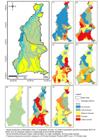
Trends and Pressures Index (TPI) - Social pressures (urbanization rate): (1) population density; (2) relative population growth percentage (2010 to 2020); and (3) diseases related to inadequate environmental sanitation. Environmental pressures (water crises profile): (4) water availability; and (5) water scarcity. Financial pressures (economic pressure): (6) Gross Domestic Product (GDP); and (7) Poverty rate.
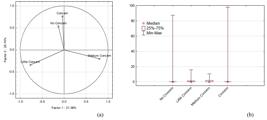
Trends and Pressures Framework (TPF): PCA cluster evaluation (a); and Distribution contains median, quartiles, maximum and minimum (b).
Individually, the most heterogeneous indicators are the relative population growth percentage, diseases related to inadequate environmental sanitation, water demand, water supply, and GDP. The most homogeneous in the basin are the population density, water supply, and poverty rate.
The Trends and Pressures Index (TPI) distribution presents only four classes: No Concern - 1.80%; Little Concern - 66.93%; Medium Concern - 30.64%; and Concern - 0.63%; and the PCA clustering defined two spatial correlations, setting apart two dominant tendencies. The TPI shows a moderate to high response towards the state of Mato Grosso and a medium to low towards the state of Pará. The Tapajós River basin area in the Mato Grosso state represents the worst response to this index.
The distribution of indicators describing the TPF (Figure 3) in the Tapajós basin highlights the differences between the states of Pará and Mato Grosso; the population indicators (density and growth) illustrate the pressure of the agricultural sector in the north of Mato Grosso, in contrast to the creation of conservation areas in Pará, which limit the expansion of human settlements.
Increased pressure on water resources affects water quality, leading to a higher incidence of water-borne diseases; urban growth does not translate into improved social and economic indicators; this is in line with the pattern of several Amazonian cities, where the use of natural resources does not benefit the producing communities and leads to a reduction in the resilience of the exploited environment through intensified use.
The trends and pressure behaviour (Figure 4a) suggest a need for attention to the municipalities (Medium Concern and Concern); there is less variability (variation around the mean - interquartile range) in the majority (Little Concern and Medium Concern categories) and municipalities with distinct results with outliers of maximums or a larger range of the middle half of the dataset (Figure 4b).
This finding returns to the argument that these are two territories with different histories of land use and intended development: Mato Grosso, potentially agrarian, and Pará, focused on conservation but with a history of land conflicts (Riquetti et al., 2023), where there are pressures for timber extraction, grain farming, cattle ranching (Castro, 2018) and mineral exploration (Siqueira-Gay & Sánchez, 2021). These conditions imply different national visions focused on water management and land use, which are illustrated by examples of compromises in the Tapajós basin.
The City Blueprint Framework (CBF) reflects the integrated water resources management (IWRM) performance (Figures 5 and 6) considering the water quality, water consumption, municipal management of basic sanitation, energy security, climate robustness, and the governance response.
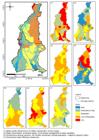
Blue City Index (BCI) - (1) Water quality (threat level); (2) Water consumption: human supply; (3) Water consumption: productive sector; (4) Municipal management of basic sanitation; (5) Infrastructure (energy security); (6) Climate robustness (climate adaptation - Adaptive Capacity Index); and (7) Governance (water efficiency measures).
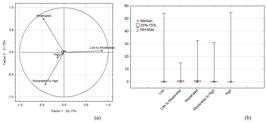
City Blueprint Performance Framework (CBF): PCA cluster evaluation (a); and Distribution contains median, quartiles, maximum and minimum (b).
The BCI has a more heterogeneous response than TPF. The middle and lower Tapajós River basin was the most impacted. The performance degree results were: Low (3.46%), Low to Moderated (27.49%), Moderated (32.58%), Moderated to High (34.17%), and High (2.30%).
The PCA clustering highlights the main trend of moderate to low performance, despite the positive response of some municipalities in the state of Mato Grosso. For this indicator, the state of Pará continues to perform worse. The PCA trends distinguish the minor influences (Low - 3.46% and High - 2.30%) from the most determinant behaviours, Moderated (32.58%) and Moderated to High (34.17%).
The distribution of indicators describing CBF is similar to that defined in TPF, giving the same diagnosis; water consumption (human and productive) and quality are heterogeneous and behave differently between the basin states. The scenario is aggravated by the basic sanitary facilities (especially in Pará), reinforced by the low performance of the management agencies. That creates a future condition of higher compromise of energy security and less resilience to the impacts of climate variability. The result is a set of municipalities that make up the catchment area that shows average behaviour but with a tendency to decrease (Figure 6a) in indicators that favour water sustainability.
The middle half of the dataset (Figure 6b) with maximum outliers, representing municipalities that stand out from the rest, shows greater variation; thus, if the prospects of continued urban growth (Oliveira et al., 2016) lead to increased water demand, an integrated management plan for the Tapajós watershed is needed, with the assurance of maintaining and improving indicators for qualifying and quantifying water sustainability (Nobrega et al., 2018).
Governance Capacity Framework (GCF) involves the potential flood risk, climate control, wastewater treatment, and solid waste treatment. This index is measured considering the legislation applied. The components assessed in the process are social awareness, information availability, control and regulation, management, implementing capacity, financial viability, and multi-level network potential (Figure 7).
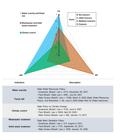
The states of Pará, Mato Grosso, and Amazonas present standards that describe the GCF indicators, varying the degree of implementation in the municipalities and the time taken to consolidate management mechanisms. The national legislation that regulates the management of water resources, basic sanitation, and climate change started in Law n. 9433/1997 (water resources), Law n. 11445/2007 (basic sanitation, modified by Law n. 14026/2020), and Law n. 12187/2009 (climate change). For CBF assessment, the classification of the states that followed the national legislation was “Little Concern”, and those that exceeded it in 10 years were “Concern”.
There is a difference between the creation of the law and the actual implementation of the policies. In the Pará state, the law is from 2001, and the water resources plan was approved 20 years later (Resolution n. 24, May 27, 2021, approval of the State Plan for Water Resources). In the state of Mato Grosso, the state water resources plan (Resolution n. 26, June 2, 2009) precedes the law that defines the policy (Law n. 11088, March 9, 2020, provides for the State Water Resources Policy, and the State Water Resources System). In the state of Amazonas, only in 2015 did the climate change law have the necessary update for its implementation (Law n. 4266, December 1, 2015, provides for the Policy on Environmental Services and the Environmental Services Management System and creates the State Fund for Climate Change, Environmental Conservation, and Environmental Services).
The GCF aims to provide a better empirical understanding of the governance situation, taking into account the boundary conditions (Feingold et al., 2018). On a scale from “no concern” to “concern”, the indicators are analysed according to the barriers and opportunities associated with the overall governance capacity, as reflected in the institutional and legal model defined for each city. That's why it's a qualitative index. The purpose is to qualify the governance scenery, which proves the results obtained by the TPI and BCI.
The Governance Capacity Framework (GCF) allows us to understand the results of the TPF and CBF diagnostics (Figure 7); for water scarcity, flood risk, climate change, wastewater treatment and solid waste treatment components, policies were in place but not fully implemented. The axes of controlling extreme water events, basic sanitation and monitoring climate variability were developed in the 2000s, over two decades ago. The results are fragmented in the main states that make up the Tapajós River basin, considering that the management of water is the sole responsibility of the state and federal governments.
All states have agencies that manage water resources (usually in the form of individual departments or departments linked to the environment), including climate issues. However, the configuration of the instruments of the National Water Resources Policy (Law No. 9433, 8 January 1997) has its strengths in regulation (granting the right to use water) and its weaknesses in consolidating the means of generating information (water resources information system) and, above all, water governance (water resources plans and classification of water bodies into classes according to the predominant uses) (Lopes & Neves, 2017; Foleto, 2018; Morais et al., 2018).
The state of the Tapajós River Basin, with high energy potential and a natural corridor connecting the central region of the country to the north (Fearnside, 2015), with a direct production flow through the Amazon River, makes it a strategic region for regional and national social and economic development (Arias et al., 2018), contradicts the level of governance implemented, which does not contribute to ensuring that the pressures generated by the economic growth of municipalities and the expansion of urban and rural centres are accompanied by effective control of water demand, especially in the face of extreme climatic conditions (floods or droughts) (Farinosi et al., 2019).
Tapajos river basin sustainability
These results are in line with the history of the region. The Tapajós basin reaches the highest level (march to may) at the end of the rainy season and the lowest level during the less rainy season (september to november). The level´s difference is near 6.0 m on average (Lobo et al., 2015; Santos et al., 2019). That favours the most integrated water resources management (IWRM) indicators. However, there are significant trends in rainfall seasonality, with decreases in monthly rainfall in the transitional months, mainly in the headwaters and middle water course (Arias et al., 2018), where the TPF indicators responded more heterogeneously.
The land use and cover changes in the Tapajós River basin affect the TPF and CBF results. The Tapajós highways and waterways favour deforestation, especially in the frontier between Pará and Mato Grosso. It also encourages land use diversification in areas that have already been modified by removing vegetation cover (Fearnside, 2015). And historically, the Tapajós basin represents relevant gold reserves. The miner potential and north-south highway (BR-163) established to connect Santarém (Pará) to Cuiabá (Mato Grosso) produced a strong driver to territory colonization, associated with growth in agricultural activities. As a result, large deforested areas along the highway were established, mainly along the banks of the Tapajós River and the Jamanxim sub-basin (Lobo et al., 2015).
The water quality and consumption, water demand for multiple uses, and surface water availability due to water crisis indicators depend on the water supply in the watershed over time. In the scale of the Tapajós River basin, the hydrological changes due to land use change are visible in its upper portion (high course), which produces a hydrological signature that needs to be simulated along the river until its mouth (Nobrega et al., 2018).
Another factor influencing social and environmental pressure indicators is the geological characteristics added to mining activities, which emphasizes the distribution and enrichment of mercury, mainly on aquatic animals' contribution to Hg bioaccumulation and migratory patterns (Martoredjo et al., 2024).
The climate change scenario will impact river flows in a way diversified throughout the basin. The upper Juruena sub-basin will have the lowest impact and the most expressive streamflow variations in the Jamanxim River (Farinosi et al., 2019). Studies reinforce that the Amazon basin was in a continuous and ongoing drought state for 20 years, from 2001 to 2021 (Zhu et al., 2024), where the drought centroid gradually shifted southward to southwestern, ending in the central mainstream in the Tapajós River basin. The climate robustness (climate adaptation - Adaptive Capacity Index) described in the Brasil (2021) reflects a performance degree defined as low to moderate, which tends to worsen if the trend scenario of intensification of the seasonal period of reduced rainfall continues. This future forecast associated with climate change reinforces the improvement of the Governance Capacity Framework (GCF) and Blue City Index (BCI) framework.
Cluster evaluation and hierarchical analysis indicate a scenario for TPI and BCI, grouping a better-integrated water resources management performance linked to a minor social, environmental, and financial pressure (Figure 8). The opposite grouping represents a medium concern about TPF and a low to moderated degree for CBF.

Trends and Pressures Index (TPI) and Blue City Index (BCI): PCA cluster evaluation (a) and hierarchical analysis (b). TPF´s score: 0 - No Concern; 1 - Little Concern; 2 - Medium Concern; 3 - Concern. CBF´s performance degree: 0 - Low; 3 - Low to Moderated; 5 - Moderated; 7 - Moderated to High; 10 - High.
The low pressure on water resources leads to a positive level of performance on the Blue City Index (Blueprint +), while medium or high pressure leads to a low Blue City Index (Blueprint -). These results were well-defined in the Tapajós basin, indicating the need to strengthen governance measures.
The Governance Capacity Framework (GCF) indicators reflect water governance and water security and have a direct relationship in the Tapajós River basin increase of agricultural and livestock activities evolution (Riquetti et al., 2023). The future simulations projected a reduction in the streamflow by up to 20%, an increase in intra-annual and inter-annual variability, and more prolonged droughts (Farinosi et al., 2019).
The link between existing laws, proposed regulations, and IWRM performance has the common axis of strengthening public policies and their enforcement. The existing legislation is more than 20 years old, and its instruments are only partially implemented or provided for by law in the states of the Northern Region. The growth of cities and their connection as regional metropolises is a reality in the Amazon states, with the significant expansion of agribusiness as a source of income for several municipalities and the concentration of trade and public service infrastructure in the capital cities ( Trindade Júnior & Vale Madeira, 2016; Pereira Junior & Trindade Júnior, 2021; Santos et al., 2023).
The integrated management of water resources and the urbanization of the Amazon, therefore, requires the articulation of policies involving the territory beyond the borders of municipalities and the consideration of the river basin as an axis for the action of public policies on basic sanitation services, housing, consolidation of the agro-industrial sector and energy design. Related to this is the need to act from the perspective of resilient Amazonian cities (Ruiz Agudelo et al., 2020; Nascimento et al., 2022a) under conditions of climate variability, especially at the extremes of periods of greater and lesser rainfall in the region.
These factors mean a progressive conflict between water security and food production. Petry et al. (2019) describe Tapajós´s blueprint as an integrated methodology for planning, supported by a database space, for identifying priority areas aimed at conservation and management. The blueprint methodology adapted from Feingold et al. (2018) has an evaluation process using indicators that differ in format but not in the purport of Petry et al. (2019). Therefore, most of the results for Integrated Water Resources Management (IWRM) are similar in the two proposals applied to the Tapajós River basin:
-
The Tapajós blueprint in both methodologies results in a fragmented and heterogeneous basin. The response presented in the individual distribution of the indicators (Figures 3 and 5) highlights the differences in the territory of the river basin and between the main states that form it.
-
The hydrological process of the river basin demands a hierarchy prioritization for the monitoring, particularly along the Tapajós tributaries. Indicators of water demand and scarcity point to increased pressure on water resources, especially in a future scenario of expansion of cities in the region.
-
The Jamanxin and Teles Pires-Juruena subbasin (upper course of the Tapajós river basin) are recognized as critical regions. The advanced state of degradation of the Jamanxin subbasin with deforestation and illegal mining; and the Teles Pires-Juruena subbasin used to large-scale agriculture, working as an economic territory. The upper course of the Tapajós river basin includes the municipalities of the State of Mato Grosso, which as a whole have a different behaviour from the State of Pará, with a perspective of greater pressure due to water demand, thus the hydrographic basin in this region has a greater commitment to a proposal for integrated management of water resources.
-
Mineral reserve with irregular use or low environmental control and its consequences for water quality and human health (mercury contamination). Water quality indicators and waterborne diseases demonstrated significant impairment in the river basin, with several municipalities in the component states showing similar criticality. Activities such as illegal mining and insufficient basic sanitation contribute to these indicators deserving emphasis in the water resources management process in the region.
The strengthening of all water governance indicators highlights the following priorities for effective implementation of water resources management:
-
It´s necessary to promote the territorial and environmental management, that encloses all territories of the indigenous peoples and conservation unit areas.
-
The package of social, environmental, and economic activities must be evaluated considering the synergic impacts of the BR-163 highway, waterways, and hydroelectric potential of Tapajós River, to mitigate the cumulative impacts.
-
The local and riverside communities need specific assistance with social and economic benefits, including water security, and providing service during periods of lower critical rainfall or expressive floods.
-
The relationships linked to municipal indicators or the river’s active area (that contribute to sustaining the hydrological process and water connectivity) establish a division between the medium-high and medium-low courses formed by the states of Mato Grosso and Pará, respectively. The first is open to agribusiness and energy use (high water demand and water insecurity), and the second represents the main basin area of vegetation cover (protected areas), land conflicts, and mineral potential exploration (increased water insecurity).
CONCLUSIONS
The Tapajós River basin represents the complexity of Amazonian systems. The blueprint methodology easily aggregates several indicators that identify existing weaknesses and potential. The method limitations are associated with the constantly updated information base.
Trends and Pressures Framework (TPF) and City Blueprint Performance Framework (CBF) got it to define the watershed according to the cities in its territory, their weaknesses, and their potential. The Governance Capacity Framework (GCF) is fragile in response to the delay of public policy implementation linked to social awareness, environmental regulation, water resources management, financial viability for sustainability, and multi-level network capacity between the forming states.
Amazonian cities reflect the economic heterogeneity of the region, and the Tapajós basin allows us to identify two distinct profiles between the states of Pará and Mato Grosso. Pará represents the conserved portion of the river basin but with greater social and economic demands. The most altered area of the basin is in Mato Grosso, with more economically active municipalities generating better responses from social and economic indicators.
In closing, the Tapajós basin is a critical region in Brazil for Integrated Water Resources Management (IWRM). To better manage water resources in this region, public water management bodies must take more significant actions. Municipalities need to incorporate water management into their public policies to guarantee the future answer of the region's water demand and its multiple users without compromising existing water availability.
DATA AVAIABILITY:
Research data is only available upon request. Contact email: ameiguins@ufpa.br.
REFERENCES
-
Agência Nacional de Águas e Saneamento Básico – ANA. (2017). Base hidrográfica ottocodificada multiescalas 2017 5k. Base de dados vetoriais. Brasília: ANA. Retrieved in 2024, July 18, from https://metadados.snirh.gov.br/geonetwork/srv/por/catalog.search#/metadata/f7b1fc91-f5bc-4d0d-9f4f-f4e5061e5d8f
» https://metadados.snirh.gov.br/geonetwork/srv/por/catalog.search#/metadata/f7b1fc91-f5bc-4d0d-9f4f-f4e5061e5d8f - Agência Nacional de Águas e Saneamento Básico – ANA. (2021). Atlas Águas: segurança hídrica do abastecimento urbano (332 p). Brasília: ANA.
-
Agência Nacional de Águas e Saneamento Básico – ANA. (2022). Cenário de mudança climática do balanço hídrico: alterações na demanda. Base de dados vetoriais. Brasília: ANA. Retrieved in 2024, July 18, from: https://metadados.snirh.gov.br/geonetwork/srv/por/catalog.search#/metadata/5c4ad4e0-1b7c-45b4-9cb3-1893e44c20d6
» https://metadados.snirh.gov.br/geonetwork/srv/por/catalog.search#/metadata/5c4ad4e0-1b7c-45b4-9cb3-1893e44c20d6 - Andrade Lima, L., Menezes Filho, J., Mertens, F., & Passos, C. J. S. (2021). Investigation of lead sources in manioc flour from riparian communities in the Tapajós Region, Brazilian Amazon. Environmental Earth Sciences, 80, 158. http://dx.doi.org/10.1007/s12665-021-09458-0.
- Araújo, I. B., & Lima, A. M. M. (2019) Carta de susceptibilidade à erosão hídrica na bacia hidrográfica do Médio-Baixo Tapajós, oeste do estado do Pará. In S. G. Teixeira, & C. L. Chaves (Eds.), Contribuições à Geologia da Amazônia (Vol. 11, pp. 83-104). Belém: Sociedade Brasileira de Geologia.
- Arias, M. E., Lee, E., Farinosi, F., Pereira, F. F., & Moorcroft, P. R. (2018). Decoupling the effects of deforestation and climate variability in the Tapajós river basin in the Brazilian Amazon. Hydrological Processes, 32, 1648-1663. http://dx.doi.org/10.1002/hyp.11517.
-
Beck, R. E. (2000). The Regulated Riparian Model Water Code: blueprint for twenty first century water management. William and Mary Environmental Law and Policy Review, 25(1), 113-167. Retrieved in 2024, July 18, from https://scholarship.law.wm.edu/wmelpr/vol25/iss1/5
» https://scholarship.law.wm.edu/wmelpr/vol25/iss1/5 - Betancur, S. B., Gastmans, D., Vásquez, K. V., Santarosa, L. V., Santos, V., & Kirchheim, R. E. (2020). Hydrological responses in equatorial watersheds indicated by Principal Components Analysis (PCA): study case in Atrato River Basin (Colombia). Revista Brasileira de Recursos Hídricos, 25, e45. http://dx.doi.org/10.1590/2318-0331.252020190165.
-
Brasil, AdaptaBrasil MCTI. (2021). Sistema de informações e análises sobre impactos das mudanças do clima. Brasília: MCTI. Retrieved in 2024, July 18, from https://adaptabrasil.mcti.gov.br/
» https://adaptabrasil.mcti.gov.br/ - Castro, C. P. (2018). Novas fronteiras de grãos e desmatamento na Amazônia. In: E. E. Castro, & R. F. Pinto (Eds.), Decolonialidade e sociologia na América Latina (pp. 99-126). Belém: NAEA/UFPA.
- Chang, I.-S., Zhao, M., Chen, Y., Guo, X., Zhu, Y., Wu, J., & Yuan, T. (2020). Evaluation on the integrated water resources management in China’s major cities: based on city blueprint approach. Journal of Cleaner Production, 262, 121410. http://dx.doi.org/10.1016/j.jclepro.2020.121410.
- Conde, M. L. G., Piedade, M. T. F., Wittmann, F., Nascimento, R. G. M., & Schöngart, J. (2024). Evaluation of the management potential of timber resources in clearwater floodplain forests in the Amazon using growth models. Journal of Environmental Management, 351, 119781. http://dx.doi.org/10.1016/j.jenvman.2023.119781.
- Dias, I. Y. P., Lazaro, L. L. B., & Barros, V. G. (2023). Water-Energy-Food security nexus estimating future water demand scenarios based on nexus thinking: the watershed as a territory. Sustainability, 15, 7050. http://dx.doi.org/10.3390/su15097050.
- Dieperink, C., Koop, S. H. A., Witjes, M., Van Leeuwen, K., & Driessen, P. P. J. (2023). City-to-city learning to enhance urban water management: the contribution of the City Blueprint Approach. Cities, 135, 104216. http://dx.doi.org/10.1016/j.cities.2023.104216.
- Essex, B., Koop, S. H. A., & Van Leeuwen, C. J. (2020). Proposal for a national blueprint framework to monitor progress on water-related sustainable development goals in Europe. Environmental Management, 65, 1-18. http://dx.doi.org/10.1007/s00267-019-01231-1.
- Farinosi, F., Arias, M. E., Lee, E., Longo, M., Pereira, F. F., Livino, A., Moorcroft, P. R., & Briscoe, M. (2019). Future climate and land use change impacts on river flows in the Tapajós Basin in the Brazilian Amazon. Earth’s Future, 7, 993-1017. http://dx.doi.org/10.1029/2019EF001198.
-
Fassoni-Andrade, A. C., Fleischmann, A. S., Papa, F., Paiva, R. C. D., Wongchuig, S., Melack, J. M., Moreira, A. A., Paris, A., Ruhoff, A., Barbosa, C., Maciel, D. A., Novo, E., Durand, F., Frappart, F., Aires, F., Abrahão, G. M., Ferreira-Ferreira, J., Espinoza, J. C., Laipelt, L., Costa, M. H., Espinoza-Villar, R., Calmant, S., & Pellet, V. (2021). Amazon hydrology from space: scientific advances and future challenges. Reviews of Geophysics, 59(4), e2020RG000728. http://doi.org/10.1029/2020RG000728
» http://doi.org/10.1029/2020RG000728 - Fearnside, P. M. (2015). Amazon dams and waterways: Brazil's Tapajós Basin plans. Ambio, 44(5), 426-439. https://doi.org/10.1007/s13280-015-0642-z.
- Feingold, D., Koop, S., & Van Leeuwen, K. (2018). The city blueprint approach: urban water management and governance in cities in the U.S. Environmental Management, 61, 9-23. http://dx.doi.org/10.1007/s00267-017-0952-y.
- Figueiredo, N. M., & Blanco, C. J. C. (2014). Simulação de vazões e níveis de água médios mensais para o Rio Tapajós usando modelos ARIMA. Revista Brasileira de Recursos Hídricos, 19(3), 111-126. http://dx.doi.org/10.21168/rbrh.v19n3.p111-126.
- Foleto, E. M. (2018). O contexto dos instrumentos de gerenciamento dos recursos hídricos no Brasil. Geoambiente, 30, 39-59. http://dx.doi.org/10.5216/revgeoamb.v0i30.52823.
- Franco, V. S., Lima, A. M. M., Souza, E. B., Sodré, G. R. C., & Santos, D. C. (2021). Os múltiplos usos da água na bacia do Tapajós na Amazônia Brasileira. Revista Ibero Americana de Ciências Ambientais, 12(9), 562-580. http://dx.doi.org/10.6008/CBPC2179-6858.2021.009.0044.
- Franco, V. S., Lima, A. M. M., Oliveira, R. R. S., Souza, E. B., Sodré, G. R. C., Santos, D. C., Adami, M., Serrão, E. A. O., & Dias, T. S. S. (2024). Anthropogenic activity in the topo-climatic interaction of the Tapajós River basin, in the Brazilian Amazon. Hydrology, 11(6), 82. http://dx.doi.org/10.3390/hydrology11060082.
- Hall, J. W., Mortazavi-Naeini, M., Borgomeo, E., Baker, B., Gavin, H., Gough, M., Harou, J. J., Hunt, D., Lambert, C., Piper, B., Richardson, N., & Watts, G. (2020). Risk-based water resources planning in practice: a blueprint for the water industry in England. Water and Environment Journal, 34, 441-454. https://doi.org/10.1111/wej.12479.
- Hoekstra, A. Y., Buurman, J. & Van Ginkel, K. C. H. (2018). Urban water security: a review. Environmental Research Letters, 13, 053002. http://dx.doi.org/10.1088/1748-9326/aaba52.
- Instituto Brasileiro de Geografia e Estatística – IBGE. (2021). Atlas de saneamento: abastecimento de água e esgotamento sanitário (190 p.). Rio de Janeiro: IBGE, Coordenação de Geografia e Coordenação de Recursos Naturais e Meio Ambiente.
- Jankowski, K. J., Deegan, L. A., Neill, C., Sullivan, H. L., Ilha, P., Maracahipes-Santos, L., Marques, N., & Macedo, M. N. (2021). Land use change influences ecosystem function in headwater streams of the lowland Amazon basin. Water, 13(12), 1667. http://dx.doi.org/10.3390/w13121667.
- Koop, S. H. A., & Van Leeuwen, C. J. (2015a). Application of the improved city blueprint framework in 45 municipalities and regions. Water Resources Management, 29, 4629-4647. http://dx.doi.org/10.1007/s11269-015-1079-7.
- Koop, S. H. A., & Van Leeuwen, C. J. (2015b). Assessment of the sustainability of water resources management: a critical review of the city blueprint approach. Water Resources Management, 29, 5649-5670. http://dx.doi.org/10.1007/s11269-015-1139-z.
- Lobo, F. L., Costa, M. P. F., & Novo, E. M. L. M. (2015). Time-series analysis of Landsat-MSS/TM/OLI images over Amazonian waters impacted by gold mining activities. Remote Sensing of Environment, 157, 170-184. http://dx.doi.org/10.1016/j.rse.2014.04.030.
- Lopes, M. M., & Neves, F. F. (2017). A gestão de recursos hídricos no Brasil: um panorama geral dos estados. FACEF Pesquisa-Desenvolvimento e Gestão, 20(3), 237-250.
-
MapBiomas. (2022). Projeto MapBiomas: coleção 09 da série anual de mapas de cobertura e uso da terra do Brasil. Retrieved in 2024, July 18, from https://brasil.mapbiomas.org/downloads/
» https://brasil.mapbiomas.org/downloads/ - Martoredjo, I., Calvão Santos, L. B., Vilhena, J. C. E., Rodrigues, A. B. L., Almeida, A., Sousa Passos, C. J., & Florentino, A. C. (2024). Trends in mercury contamination distribution among human and animal populations in the Amazon region. Toxics, 12(3), 204. http://dx.doi.org/10.3390/toxics12030204.
- Mendonça, L. A., Loomis, J. J., Limont, M., Bartz, M. L. C., & Rauen, W. B. (2023). Elements of the water - food - environment nexus for integrated sustainability analysis. The Science of the Total Environment, 905, 166866. http://dx.doi.org/10.1016/j.scitotenv.2023.166866.
- Morais, J. L. M., Fadul, É. & Cerqueira, L. S. (2018). Limites e desafios na gestão de recursos hídricos por comitês de bacias hidrográficas: um estudo nos estados do nordeste do Brasil. Revista Eletrônica de Administração, 24(1), 238-264. https://doi.org/10.1590/1413-2311.187.67528.
- Nascimento, N., Lazaro, L. L. B., & Amaral, M. H. (2022a). How can the water-energy-food nexus approach contribute to enhancing the resilience of amazonian cities to climate change? In L. L. B. Lazaro, L. L. Giatti, L. S. Valente de Macedo, & J. A. Puppim de Oliveira (Eds.), Water-Energy-Food nexus and climate change in cities (Sustainable Development Goals Series, pp. 77-92). Cham: Springer. https://doi.org/10.1007/978-3-031-05472-3_5.
- Nascimento, T. S. R., Nascimento Monte, C., Corrêa, E. S., Costa, I., & Batista, L. F. (2022b). The seasonality of contaminants in an urbanized microbasin in the Brazilian Amazon. Water, Air, and Soil Pollution, 233, 412. http://dx.doi.org/10.1007/s11270-022-05879-0.
- Nobrega, R. L. B., Lamparter, G., Hughes, H., Guzha, A. C., Amorim, R. S. S., & Gerold, G. (2018). A multi-approach and multi-scale study on water quantity and quality changes in the Tapajós River basin, Amazon. Proceedings of the International Association of Hydrological Sciences, 377, 3-7. http://dx.doi.org/10.5194/piahs-377-3-2018.
- Okumura, C. K., Locke, M., Fraga, J. P. R., Oliveira, A. K. B., Veról, A. P., Magalhães, P. C., & Miguez, M. G. (2021). Integrated water resource management as a development driver: prospecting a sanitation improvement cycle for the greater Rio de Janeiro using the city blueprint approach. Journal of Cleaner Production, 315, 128054. http://dx.doi.org/10.1016/j.jclepro.2021.128054.
- Oliveira, R. R. S., Venturieri, A., Sampaio, S. M. N., Lima, A. M. M., & Rocha, E. J. P. (2016). Dinâmica de uso e cobertura da terra das regiões de integração do Araguaia e Tapajós/PA, para os anos de 2008 e 2010. Revista Brasileira de Cartografia, 68(7), 1411-1424.
- Oliveira, R., Silva, D., Franco, T., Vasconcelos, C., Sousa, D., Sarrazin, S., Sakamoto, M., & Bourdineaud, J. (2022). Fish consumption habits of pregnant women in Itaituba, Tapajós River basin, Brazil: risks of mercury contamination as assessed by measuring total mercury in highly consumed piscivore fish species and in hair of pregnant women. Archives of Industrial Hygiene and Toxicology, 73(2), 131-142. http://dx.doi.org/10.2478/aiht-2022-73-3611.
- Pease, M., & Snyder, T. (2018). Active water resource management: pariah or blueprint for western water management? Journal of the Southwest, 60, 1013-1033. http://dx.doi.org/10.1353/jsw.2018.0020.
- Pereira Junior, M. V., & Trindade Júnior, S. C. C. (2021). Metropolização brasileira: um estudo sobre a dinâmica e os indicadores socioespaciais das Regiões Metropolitanas de São Luís e Belém. Novos Cadernos NAEA, 24(3), 143-168. http://dx.doi.org/10.18542/ncn.v24i3.10525.
- Petry, P., Higgins, J., Carneiro, A., Rodrigues, S., Harrison, D., & Garcia, E. (2019). A conservation assessment of the Rio Tapajós, Brazil: a vision for a sustainable Rio Tapajos (21 p.). São Paulo: The Nature Conservancy.
- Pires, A., Morato, J., Peixoto, H., Botero, V., Zuluaga, L., & Figueroa, A. (2017). Sustainability assessment of indicators for integrated water resources management. The Science of the Total Environment, 578, 139-147. http://dx.doi.org/10.1016/j.scitotenv.10.217.
- Riquetti, N. B., Beskow, S., Guo, L., & Mello, C. R. (2023). Soil erosion assessment in the Amazon basin in the last 60 years of deforestation. Environmental Research, 236, 116846. http://dx.doi.org/10.1016/j.envres.2023.116846.
- Ruiz Agudelo, C. A., Mazzeo, N., Díaz, I., Barral, M. P., Piñeiro, G., Gadino, I., Roche, I. & Acuña Posada, R. J. (2020). Land use planning in the Amazon basin: challenges from resilience thinking. Ecology and Society, 25(1), 8. http://dx.doi.org/10.5751/ES-11352-250108.
- Santos, V. C., Blanco, C., & Oliveira Júnior, J. F. (2019). Distribution of rainfall probability in the Tapajos River Basin, Amazonia, Brazil. Revista Ambiente & Água, 14(3), e2284. http://dx.doi.org/10.4136/ambi-agua.2284.
- Santos, R. V., Lima, G. V. B. A., & Lima, J. J. F. (2023). “Metrópoles de papel” na Amazônia: horizontes lefebvrianos na produção do espaço em Macapá-Santana, Brasil. Revista Brasileira de Estudos Urbanos e Regionais, 25, e202302. http://dx.doi.org/10.22296/2317-1529.rbeur.202302pt.
- Silva, M. N. A., Pessoa, F. C. L., Silveira, R. N. P. O., Rocha, G. S., & Mesquita, D. A. (2018). Determinação da homogeneidade e tendência das precipitações na bacia hidrográfica do Rio Tapajós. Revista Brasileira de Meteorologia, 33(4), 665-675. http://dx.doi.org/10.1590/0102-7786334008.
- Siqueira-Gay, J. & Sánchez, L. E. (2021). The outbreak of illegal gold mining in the Brazilian Amazon boosts deforestation. Regional Environmental Change, 21, 28. https://doi.org/10.1007/s10113-021-01761-7.
- Sousa, E. S., Santos, V. C., & Costa, C. E. A. S. (2022). Influência de fenômenos climáticos sobre o regime de vazões na Bacia Hidrográfica do Rio Tapajós. Holos Environment, 22(1), 18-30. http://dx.doi.org/10.14295/holos.v22i1.12464.
- Trindade Júnior, S. C. C., & Vale Madeira, W. (2016). Polos, eixos e zonas: cidades e ordenamento territorial na Amazônia. PRACS Revista Eletrônica de Humanidades do Curso de Ciências Sociais da UNIFAP, 9(1), 37-54.
- Van Leeuwen, C. J., Frijns, J., Van Wezel, A., & Van de Ven, F. H. M. (2012). City Blueprints: 24 Indicators to assess the sustainability of the urban water cycle. Water Resources Management, 26, 2177-2197. http://dx.doi.org/10.1007/s11269-012-0009-1.
- Van Leeuwen, C. J., Koop, S. H. A., & Sjerps, R. M. A. (2016). City Blueprints: baseline assessments of water management and climate change in 45 cities. Environment, Development and Sustainability, 18, 1113-1128. http://dx.doi.org/10.1007/s10668-015-9691-5.
- Wongchuig, S. C., Paiva, R. C. D., Siqueira, V., & Collischonn, W. (2019). Hydrological reanalysis across the 20th century: a case study of the Amazon Basin. Journal of Hydrology, 70, 755-773. http://dx.doi.org/10.1016/j.jhydrol.2019.01.025.
- Zhu, Z., Duan, W., Zou, S., Zeng, Z., Chen, Y., Feng, Q., Jingxiu, M., & Yongchang, L. (2024). Spatiotemporal characteristics of meteorological drought events in 34 major global river basins during 1901-2021. The Science of the Total Environment, 921, 170913. http://dx.doi.org/10.1016/j.scitotenv.2024.170913.
Edited by
-
Editor-in-Chief:
Adilson Pinheiro
-
Associated Editor:
Rosa Maria Formiga-Johnsson
Data citations
Agência Nacional de Águas e Saneamento Básico – ANA. (2017). Base hidrográfica ottocodificada multiescalas 2017 5k. Base de dados vetoriais. Brasília: ANA. Retrieved in 2024, July 18, from https://metadados.snirh.gov.br/geonetwork/srv/por/catalog.search#/metadata/f7b1fc91-f5bc-4d0d-9f4f-f4e5061e5d8f
Agência Nacional de Águas e Saneamento Básico – ANA. (2022). Cenário de mudança climática do balanço hídrico: alterações na demanda. Base de dados vetoriais. Brasília: ANA. Retrieved in 2024, July 18, from: https://metadados.snirh.gov.br/geonetwork/srv/por/catalog.search#/metadata/5c4ad4e0-1b7c-45b4-9cb3-1893e44c20d6


