
 Use of nicosulfuron in the management of Megathyrsus maximus ‘BRS Zuri’ intercropped with maize
ABSTRACT
Intercropping maize with tropical forages is common in production systems but must be correctly managed during the early stages to avoid a loss in crop yield due to interspecific competition. Applying subdoses of selective herbicides to the maize is a possible way of suppressing forage growth and avoiding this competition. The aim of this study was to evaluate the effects of subdoses of nicosulfuron herbicide on the development of Megathyrsus maximus ‘BRS Zuri’ when intercropped with maize, and how this simultaneous cultivation affects the weed population and the biometric and production variables of the maize and forage. The design was of randomised blocks with four replications and treatments consisting of six subdoses of nicosulfuron herbicide (0, 2.5, 5, 12.5, 25 and 50 g ha−1) in addition to a single crop of maize. The results show that the forage, BRS Zuri, suppressed the growth and development of the weeds. The dose of 50 g ha−1 caused phytotoxicity in the B2360PW maize hybrid. The presence of the forage had a negative effect on grain yield. The herbicide did not suppress the growth of the forage since both its height and biomass were significant. The results show the need for adjusting the dose, the choice of maize hybrid and the time of herbicide application, with a view to minimising possible interference from the forage in the performance of the maize crop.
Keywords:
Competition; Herbicide; Integrated production system; Weeds; Zea mays
INTRODUCTION
Crop-livestock integration (CLI) is a sustainable agricultural practice that has become considerably widespread, especially in the Cerrado biome (Reis et al., 2021). The advantages of using CLI include, among others, the recovery of degraded pasture (Souza Filho et al., 2019), a larger amount of straw (Carvalho et al., 2018), improvements in nutrient cycling and in the physical and chemical conditions of the soil (Bonetti et al, 2018), cultural weed control, a reduction in the use of phytosanitary products and fewer basic inputs (Dominschek et al., 2021).
Among the types of integration are intercropping, crop rotation and crop succession. Intercropping is defined as the integrated cultivation of two or more species of interest at the same time in the same area (Pariz et al., 2017). The type of integration commonly used in the Cerrado includes the simultaneous cultivation of maize (Zea mays) or sorghum (Sorghum bicolor) with forages of genera Urochloa spp. or Megathyrsus spp.
Interest in species of genus Megathyrsus spp. for use in integrated systems has increased in recent years (Cruvinel et al., 2021) due to their high biomass production, deep root system, tolerance to water stress, nutritional quality and vigorous regrowth, among others (Costa et al., 2020). However, these species may have greater intraspecific competition with the crop than those of genus Urochloa spp. (Santos et al., 2019), which can make intercropping less viable.
Applying subdoses of selective herbicides to the crop of interest may be an alternative way of minimising the competitive effect of the intercropped forage on the grain crop (Freitas et al., 2018). The idea of this practice is to cause temporary stress in the forage, allowing the grain crop to develop normally until it is able to suppress the growth of the grass species by shading (Lima et al., 2019).
One of the herbicides available for use in maize crops is nicosulfuron. This herbicide belongs to the chemical group of sulfonylureas, and its action is based on inhibiting the enzyme acetolactate synthase (ALS), an enzyme responsible for the synthesis of branched-chain aliphatic amino acids, such as valine, leucine, and isoleucine (Cavalieri et al., 2008). Nicosulfuron is classified as systemic, and is used to control monocotyledonous and eudicotyledonous weeds during post-emergence in maize crops. Symptoms in susceptible plants include leaf chlorosis, necrosis, and reduced height (Cavalieri et al., 2008).
Maize plants are considered tolerant to the herbicide as they are able to quickly detoxify its molecules, transforming them into non-phytotoxic compounds (Liu et al, 2015). However, some maize hybrids may be sensitive, depending on the phenological stage of the crop and the dose used.
The aim of this study was to evaluate the effect of subdoses of nicosulfuron herbicide in suppressing Megathyrsus maximus ‘BRS Zuri’ intercropped with maize, and on the weed population, biometric variables, and productivity of both the maize and the forage.
MATERIAL AND METHODS
The study was conducted under field conditions in the city of Rio Verde, Goiás (17°81’01” S, 50°90’47” W, altitude 754 m). The soil in the area, classified as a Dystrophic Red Latosol (EMBRAPA, 2018), has the following physical and chemical characteristics at a depth of 0-20 cm: pH (CaCl2) of 5; P of 23.8 mg dm−3; K of133 mg dm−3, Ca of 1.57 cmolc dm−3, Mg of 0.90 cmol dm−3, Al of 0.06 cmol dm−3, V of 55.9%, OM of 36.1 g dm−3 and particle composition of 48, 8 and 44 dag kg−1 of clay, silt and sand, respectively.
According to Köppen, the climate in the region is classified as Aw, humid tropical, with rainy summers and dry winters. Rainfall, relative humidity and temperature data during the study period are shown in Figure 1 (National Institute of Meteorology – INMET, 2022).

The experimental area was desiccated using glyphosate herbicide (Shadow) at a dose of 1,680 g acid equivalent (a.e.) ha−1 to manage any invasive species that were present. After 15 days, the soil was prepared for the experiment by ploughing and levelling. The maize and forage were sown on 19 December 2020 using 300 kg ha−1 of formulation 05-25-15 NPK fertiliser.
The B2360PW maize hybrid (Brevant) was sown using a 4-row multiple seeder at a depth of 4 cm and a spacing of 0.45 m between rows for a population of approximately 66,666 plants ha−1. The forage, BRS Zuri, was broadcast manually at a rate of 10 kg seeds ha−1 with a crop value (CV) of 79%.
Each experimental plot was 18 m2 in size (eight rows, five metres in length). The working area consisted of the four central rows. The design was of randomised blocks with seven treatments and four replications, the treatments consisting of six subdoses of nicosulfuron herbicide (0, 2.5, 5, 12.5, 25, 50 g ha−1) in addition to a single crop of maize, giving a total of 28 experimental plots.
Nicosulfuron (NICO) was applied 20 days after emergence (DAE) of the maize, when the forage had approximately two tillers. A CO2 pressure backpack sprayer was used, equipped with four spray nozzles spaced 0.5 m apart. The application rate was 200 L ha−1 at a pressure of 2.0 bar. Atrazine (Aclamado BR®) was added to each treatment at a dose of 1,500 a.i. ha−1 to help control broadleaf weeds.
In treating the single maize crop, in addition to atrazine (Aclamado BR®), glyphosate herbicide (Shadow) was applied at a dose of 1,440 g a.e. ha−1. The climate conditions at the time of application were measured using a thermo-hygro anemometer that showed a relative humidity of 45.7%, air temperature of 28 °C and wind speed of 2.2 m s−1.
Each of the plots received a top dressing of nitrogen fertiliser at phenological stage V4, around 28 days after emergence (DAE) of the maize, with the application of 150 kg N. The following insecticides were applied 7, 12 and 27 DAE, respectively, at a rate of 170 L ha−1 for each application: Teflubenzuron (Nomolt® - 150 g L−1), at a dose of 0.15 litres of commercial product per hectare; Chlorpyrifos (Capataz® - 480 g L−1) + Teflubenzuron (Nomolt® - 150 g L−1), at a dose of 1 litre of commercial product and 0.15 litres of commercial product per hectare; and Thiamethoxam (Engeo Pleno™ S - 141 g L−1) at a dose of 0.25 litres of commercial product per hectare.
The weed community was evaluated 45 and 110 days after applying the herbicide (DAA). Three samples were randomly collected per plot using a square with an area of 0.25 rtf. The weeds were cut close to the ground, identified, quantified and separated into species. They were then packed in paper bags and left in a forced-air ventilation greenhouse at 65 ºC for 72 hours before being weighed.
Phytotoxicity in the maize crop caused by the action of the nicosulfuron herbicide was assessed by visual observation 7, 14, 21 and 28 days after application (DAA); scores were assigned, ranging from 0 for normal plants, such as the control, to 100 for dead plants, as per the Frans scale (1972) (Table 1). At each evaluation, the scores were assigned by three evaluators, and the mean percentage of the three scores for each experimental plot was considered.
Visual phytotoxicity scale used to assess the sensitivity of maize plants after application of nicosulfuron herbicide
The biometric variables of the maize, including plant height (PH), height of the first ear insertion (EI) and stem diameter (SD) were measured at flowering, 64 days after application (DAA) of the nicosulfuron, selecting five plants from the working area of each plot. Plant height was measured from the ground to the flag leaf, the height of the first ear insertion was measured from the ground to the ear insertion, and the stem diameter was measured at a height of 3 cm above the ground. A ruler graduated in cm was used to measure the height variables. The diameter was measured with the aid of a digital calliper.
The maize was harvested by hand 129 days after emergence (DAE) of the crop. An area comprising four rows, each three metres in length, was harvested to measure grain yield (GY). The grain and cobs were separated with the aid of a thresher, and the threshed grains were then weighed. Five ears of maize from the working area were used to determine the number of rows per ear (NRE), ear length (EL), ear diameter (ED), thousand-grain weight (TGW), and total number of grains (TNG). Yield and thousand-grain weight were corrected for a water content of 13%.
The height, leaf to stem ratio and biomass of the forage plants were assessed following the maize harvest, approximately 135 DAE. The height was measured with a ruler graduated in cm, based on the height of the canopy at two points per plot. The biomass was measured by cutting an area of 2 m2 at a height of 30 cm above the ground using a cleaver. The collected material was weighed, and a 500-gram sample was removed. The leaves and stems of the sample were separated in the laboratory to determine the leaf to stem ratio. The material was then packed in paper bags and placed in an oven for 72 hours at 65°C. After drying, the material was weighed and the values converted to tons ha−1.
The results for the density and dry weight of the weeds and the results for the maize and forage variables were submitted to regression analysis and adjusted based on simplicity, biological significance and coefficient of determination. The assessments of phytotoxicity in the maize were submitted to Tukey’s test (p ≤ 0.05). The normality of the data had been previously verified using the Shapiro-Wilk test (p ≤ 0.05).
The behaviour of the weed community was determined based on the RI, calculated from the phytosociological indices of frequency, density and dominance (Mueller-Dombois; Ellenberg, 1974; Pitelli, 2000). The weeds, listed according to their RI, were named using the EPPO code (2023).
RESULTS AND DISCUSSION
Assessments of the weed community at 45 (Table 2) and 110 DAA (Table 3) revealed the presence of the following species: Bidens pilosa (BIDPI), Acanthospermum hispidum (ACAHI), Ageratum conysoides (AGECO) and Conysa bonariensis (CONBO), all belonging to family Asteraceae; Digitaria horizontalis (DIGHO), Pennisetum setosum (PENSE), Eleusine indica (ELEIN) and Cenchrus echinatus (CENEC), belonging to family Poaceae; Phyllanthus niruri (PHYNI), Chamaesyce hirta (CHAHI) and Ricinus communis (RICCO) from family Euphorbiaceae; Alternanthera tenella (ALTTE) from family Amaranthaceae; Commelina benghalensis (COMBE) from family Commelinaceae; Nicandra physaloides (NICPH) belonging to family Solanaceae; Richardia brasiliensis (RICBR) from family Rubiaceae, and Sida rhombifolia (SIDRH) from family Malvaceae, giving a total for the two seasons of 16 species, distributed over eight families.
Relative importance of weed species evaluated 45 days after the application (DAA) of nicosulfuron herbicide
Relative importance of weed species evaluated 110 days after the application (DAA) of nicosulfuron herbicide
RICCO, ELEIN and BIDPI showed higher RI values 45 days after applying the nicosulfuron (DAA) (Table 2), with an average of 51.9%, 18.11% and 12.27%, respectively. RI is an indicator that highlights the importance of each species within the weed community. In this study, the weeds in question were found to be the most important in terms of infestation and therefore the most problematic. The other weed species presented low RI values during the sampling period. For the same sampling period, greater weed diversity was seen with the single maize crop and at a dose of 50 g ha−1.
At 110 DAA (Table 3), ALTTE, COMBE and CONBO were the most important species, with RI values of 39.39%, 26.34% and 10.26%, respectively. There was also evidence of greater species diversity in the single maize treatments and at the doses of 25 and 50 g ha−1. Biological characteristics, such as a variety of dissemination mechanisms, life cycle, high seed production and easy adaptation, among others, may explain the importance of these species in both sampling periods.
There was an increase in weed density (Figure 2A) and dry weight (Figure 2B) with the increase in herbicide in each of the two periods of evaluation (45 and 110 DAA). This can be explained by the increased dose resulting in less-homogeneous and less-dense ground cover from the forage, which facilitated the emergence and development of the invasive species.

Density (A) and dry weight (B) of weeds at 45 and 110 days after applying (DAA) nicosulfuron herbicide. Weed density in SM (45 DAA): 55.16 and (110 DAA): 89.24 Weed dry weight in SM (45 DAA): 16.88 and (110 DAA): 97.60. *significant at 5% probability by F-test (p ≤ 0.05)
Furthermore, there was an increase in density and dry weight with the single crop, showing that the forage affords efficient cultural control of any weeds in the system.
Intercropping perennial tropical forages, such as those of genus Megathyrsus spp., can have a greater impact on weed suppression than monocropped grain (Kruchelski et al., 2019), and be a direct aid to efficient weed management. This is consistent with the results found in this study, both for weed density (Figure 2A) and weed dry weight (Figure 2B), which showed an increasing linear effect, demonstrating how the forage is involved in the cultural control of invasive species. At 45 and 110 DAA, the increase in weed density was 0.163 and 0.876 plants m−2, respectively, for each gram of nicosulfuron. Weed dry weight increased by 0.691 and 0.413 g m−2 at 45 and 110 DAA, respectively, for each gram of the product.
Although it is necessary to consider various factors, such as competitive ability, weed emergence time, invasive species, ground cover and management, the presence of forage plants can, with time, lead to a reduction in the use of herbicides in the production system, resulting in reduced costs for the producer (Dominschek et al., 2021).
In the study by Ferreira et al. (2018) conducted over three years in the Cerrado biome, the authors showed that an average biomass of 10,857 kg ha−1 of P. maximum helped control such weeds as A. tenella, C. benghalensis, S. rhombifolia, B. Pilosa and E. indica, among others. For Summers et al. (2021), this can reduce the density and dry weight of invasive species and consequently facilitate their control in successive crops.
In terms of the biometric and productive variables of the maize (Table 4), there was a significant difference in PH, EI, EL, TGW, TNG and GY, with the highest dose (50 g ha−1) affording the lowest values for these variables. On the other hand, there was no significant difference in the other variables under analysis, i.e. SD, NRE and ED.
Plant height (PH), ear insertion height (EI), stem diameter (SD), number of rows per ear (NRE), ear length (EL), ear diameter (ED), thousand-grain weight (TGW), total number of grains in five ears (TNG), and grain yield (GY) in maize intercropped with Megathyrsus maximus ‘BRS Zuri’ as a function of the application of different doses of glyphosate herbicide
According to Table 4, for each gram of nicosulfuron, the height of the maize plants was reduced by 0.0065 m, representing a reduction of around 16% compared to the treatment with no herbicide. There was a reduction of 0.004 m in EI for each gram of herbicide. EL, on the other hand, was reduced by 0.029 cm for each gram applied.
For the production variables, TGW and TNG were lower at the dose of 50 g ha−1, with values of 225 grams and 2865 grains, corresponding to a reduction of 24.5% and 10.5%, respectively, compared to the treatment with no herbicide. Grain yield was particularly noteworthy, with a reduction of 0.040 tons for each gram of herbicide.
The single maize produced 9.70 tons ha−1, which implies that the competition imposed by the forage affected grain yield, since lower yields were seen in the other treatments. These results suggest that the interaction between plants may be a determining factor in agricultural production, and should be taken into account in future studies.
At the highest dose ofherbicide (50 g ha−1), production was 5.36 tons ha−1, a reduction of approximately 45% compared to the SM treatment, meaning that the hybrid was highly sensitive to nicosulfuron, as shown in Table 5, whose results indicate a phytotoxicity of 41%, 42%, 39% and 37%, at 7, 14, 21 and 28 DAA, respectively. At lower doses, the plants showed no symptoms of phytotoxicity throughout the period under evaluation.
Phytotoxicity in maize plants as a function of the application of different subdoses of nicosulfuron herbicide
The results of this study are similar to those found by Barroso et al. (2012), which showed that the phytotoxic effects of a mixture of nicosulfuron + atrazine (40 + 3000 g ha−1) were sufficient to reduce the thousand-grain weight in three different maize hybrids (BMX61, BMX750 and NB7405). In addition, the authors reported an average loss of 10.7 sacks per hectare compared to the control treatment. In the case of this study, application took place 19 days after emergence of the maize. These findings underline the importance of considering the timing of the herbicide application, and its potential interaction with the crops, in order to minimise possible losses in agricultural production.
In the study by Galon et al. (2018), it was found that the application of nicosulfuron herbicide at a dose of 60 g ha−1 resulted in a significant reduction in the thousand-grain weight for the maize hybrid under study (SYN7B28). On the other hand, in a recent study by Wehrmeister et al. (2022), although there was no effect on the productivity of the hybrids under study, they were assumed to be sensitive to nicosulfuron herbicide, since phytotoxicity values of up to 38.3% were seen at a dose of 52 g ha−1.
Figure 3 shows a significant reduction of 0.0059 m in the height of the forage plants for each increase of 1 g ha−1 of herbicide, with the action of nicosulfuron being responsible for 97% of this effect. Conflicting results were found by Cruvinel et al. (2021), who saw a 20% reduction in the height of BRS Zuri grown in a greenhouse, following the application of 15.6 g ha−1, compared to the treatment with no nicosulfuron.

Height of BRS Zuri as a function of the application of different subdoses of nicosulfuron herbicide. *significant at 5% probability by F-test (p ≤ 0.05)
Considering the significant reduction in the height of the forage plants at the dose of 50 g ha−1, nicosulfuron can be assumed to have had a toxic effect on the crop. In any case, the results show that even at high doses, the herbicide was unable to suppress the growth of the forage. It should be noted that forage height is an important factor in managing maize intercropping systems, since when the height of the forage exceeds that of the ear insertion, mechanical harvesting can be adversely affected, resulting in a loss of productivity and a reduction in grain quality.
The growth pattern of the forage may be the result of intraspecific competition for light and space within each plot, leading to greater elongation of the stalks. Cruz et al. (2021) report that shading can directly interfere with the morphogenic characteristics of the forage, showing that the higher the degree of shading, the greater the elongation.
The forage biomass (Figure 4) showed a linear reduction of 0.071 tons ha−1 for an increase of one gram, with 95% of this variation being attributed to the applied doses of nicosulfuron. The results show a phytotoxic effect from the herbicide on this variable, since as the dose increased, biomass yield was reduced. However, even at the highest doses, the biomass produced by the forage can be considered high.

Yield of BRS Zuri as a function of the application of different subdoses of nicosulfuron herbicide. *significant at 5% probability by F-test (p ≤ 0.05)
These results show that the maize had no competitive effect on the forage. Furthermore, this behaviour may be linked to the morphological characteristics of BRS Zuri, together with the fact that it was sown during the harvest period, when the rainfall helped the forage to develop (Figure 1), even after the herbicide had been applied. According to Silva et al. (2020), BRS Zuri has the characteristics of easy establishment, vigorous initial growth, high biomass production, recovery from adverse conditions, and aggressiveness—attributes that contribute to corroborate these results.
Cruvinel et al. (2021) showed that BRS Zuri had higher values for height and biomass yield compared to other forage plants, such as U. ruziziensis, and P. maximum ‘BRS Tamani’ and ‘BRS Kenya’, following the application of nicosulfuron herbicide at doses of 7.8 and 15.6 g a.e. ha−1, showing it to be highly competitive in relation to other species.
The leaf to stem ratio of the forage showed a linear growth of 0.0051 for an increase of 1 g ha−1 of herbicide, with 95% of this response being due to the action of the nicosulfuron (Figure 5). It should be noted that the values found have a mean value close to 1, which is considered critical (Santos et al., 2017).
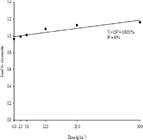
Leaf to stem ratio in BRS Zuri as a function of the application of different subdoses of nicosulfuron herbicide. *significant at 5% probability by F-test (p ≤ 0.05)
The results can be explained by the high intraspecific competition, which induced leaf projection and light capture for the photosynthetic processes of the forage. For Echeverria et al. (2016), the high value of the stem fraction is due to competition for light between the plants, leading to reduced leaf-area accumulation, with a consequent reduction in protein content and digestibility, and lower consumption by the animal.
It should be noted that at 135 DAE the forage was in the flowering phase, a phase characterised by greater stem emission with a corresponding reduction in leaf area. Morphological changes, such as stem elongation, a greater proportion of cellulose and lignin, cessation of the emission of new leaves, and leaf senescence, among others, can significantly affect the critical values of the leaf to stem ratio (Tesk et al., 2018), as seen in the present study.
Based on the above results, it is concluded that the presence of the forage reduced the density and dry weight of the weeds, acting as cultural control inside the study area. The dose of 50 g ha−1 had a phytotoxic effect on the maize, negatively affecting plant height and the height of the first ear insertion, in addition to the yield components.
Interspecific competition between the species under study significantly reduced grain yield in the maize, although the biomass production of the forage was not affected by intercropping with the grain. None of the doses were sufficient to suppress the growth of the forage, since its intrinsic aggressive properties were decisive in maintaining its growth and the experiment was conducted under conditions that were favourable to its development.
It is suggested that further studies be carried out under different experimental conditions, such as time of year and different hybrids, to determine the optimum dose of nicosulfuron herbicide for efficient intercropping between BRS Zuri forage and maize, and minimising possible interference between the crops.
CONCLUSIONS
1. The presence of the forage helped suppress the weeds;
2. The maize hybrid under study was sensitive to nicosulfuron herbicide, as shown by the phytotoxicity of the plants;
3. Maize yield was affected by simultaneous cultivation with the forage;
4. The herbicide did not suppress the growth of the forage since both height and biomass were significant.
ACKNOWLEDGMENTS
The authors would like to thank the Instituto Federal Goiano, Campus Rio Verde, for their infrastructure and support, and the Conselho Nacional de Desenvolvimento Científico e Tecnológico – CNPq for funding this study.
REFERENCES
- BARROSO, A. L. L. et al. Selectivity of nicosulfuron and atrazine on different corn hybrids. Comunicata Scientiae, v. 3, n. 4, p. 255-262, 2012.
- BONETTI, J. A. et al. Soil physical and biological properties in an integrated crop-livestock system in the Brazilian Cerrado. Pesquisa Agropecuária Brasileira, v. 53, p. 1239-1247, 2018.
- CARVALHO, P. C. F. et al. Animal production and soil characteristics from integrated crop-livestock systems: toward sustainable intensification. Journal of Animal Science, v. 96, n. 8, p. 3513-3525, 2018.
- CAVALIERI, S. D. et al. Tolerância de híbridos de milho ao herbicida nicosulfuron. Planta Daninha, v. 26, p. 203-214, 2008.
- COSTA, L. N. et al. Produtividade de forragem e morfogênese de cultivares de Megathyrsus maximus nos cerrados de Roraima. Research, Society and Development, v. 9, n. 8, e652986054, 2020.
- CRUVINEL, A. G. et al. Effects of herbicide underdoses on the vegetative development of Panicum maximum cultivars. Científica, v. 49, n. 3, p. 121-127, 2021.
- CRUZ, N. T. et al. Fatores que afetam as características morfogênicas e estruturais de plantas forrageiras. Research, Society and Development, v. 10, n. 7, e5410716180, 2021.
- DOMINSCHEK, R. et al. Crop rotations with temporary grassland shifts weed patterns and allows herbicide-free management without crop yield loss. Journal of Cleaner Production, v. 306, p. 127140, 2021.
- ECHEVERRIA, J. R. et al. Acúmulo de forragem e valor nutritivo do híbrido de Urochloa ‘BRS RB331 Ipyporã’ sob pastejo intermitente. Pesquisa Agropecuária Brasileira, v. 51, p. 880-889, 2016.
- EMBRAPA. Sistema brasileiro de classificação de solos. 5. ed. Rio de Janeiro, 2018. 208 p.
-
EUROPEAN AND MEDITERRANEAN PLANT PROTECTION ORGANIZATION. EPPO Global Database. 2023. Disponível em: https://gd.eppo.int/photos/plantae Acesso em: 1 mar. 2023.
» https://gd.eppo.int/photos/plantae - FERREIRA, A. C. D. B. et al. Suppressive effects on weeds and dry matter yields of cover crops. Pesquisa Agropecuária Brasileira, v. 53, p. 566-574, 2018.
- FRANS, R. E. Measuring plant responses. Jn: WILKINSON, R. E. (ed.) Research methods in weed science. Puerto Rico: Southern Weed Science Society, 1972. p. 28-41.
- FREITAS, M. A. M. et al. Biological attributes of soil cultivated with corn intercropped with Urochloa brizantha in different plant arrangements with and without herbicide application. Agriculture, Ecosystems & Environment, v. 254, p. 3540, 2018.
- GALON, L. et al. Chemical management ofweeds in corn hybrids. Weed Biology and Management, v. 18, n. 1, p. 26-40, 2018.
- KRUCHELSKI, S. et al. Panicum maximum cv. Aries establishment under weed interference with levels of light interception and nitrogen fertilization. Planta Daninha, v. 37, 2019.
- LIMA, S. F. et al. Suppression of Urochloa brizantha and U. Ruziziensis by glyphosate underdoses. Revista Caatinga, v. 32, p. 581-589, 2019.
- LIU, X. et al. RNA-Seq transcriptome analysis of maize inbred carrying nicosulfuron-tolerant and nicosulfuron susceptible alleles. International Journal of Molecular Sciences, v. 16, n. 3 p. 5975-5989, 2015.
- MUELLER-DOMBOIS, D.; ELLENBERG, H. A. Aims and methods of vegetation ecology. New York: John Wiley & Sons, 1974. 574 p.
- PARIZ, C. M. et al. Lamb production responses to grass grazing in a companion crop system with corn silage and oversowing of yellow oat in a tropical region. Agricultural Systems, v. 151, p. 1-11, 2017.
- PITELLI, R. A. Estudos fitossociológicos em comunidades infestantes de agroecossistemas. Jornal Conserb, v. 1, n. 2, p. 1-7, 2000.
- REIS, J. C. et al. Integrated crop-livestock systems: a sustainable land-use alternative for food production in the Brazilian Cerrado and Amazon. Journal of Cleaner Production, v. 283, p. 124580, 2021.
- SANTOS, G. O. et al. Relação folha-colmo de brachiaria (Urochloa brizantha) fertirrigada com efluente de esgoto tratado. Ciência & Tecnologia, v. 9, n. 1, 2017.
- SANTOS, J. et al. Agronomic and productive characteristics of sunflower intercropped with forage in a crop-livestock integration system. Revista Caatinga, v. 32, p. 514-525, 2019.
- SILVA, E. B. et al. Chemical composition of Panicum maximum ‘BRS Zuri’ subjected to levels of salinity and irrigation depths. Revista Ciência Agronômica, v. 51, 2020.
- SOUZA FILHO, W. de et al. Mitigation of enteric methane emissions through pasture management in integrated crop-livestock systems: Trade-offs between animal performance and environmental impacts. Journal of Cleaner Production, v. 213, p. 968-975, 2019.
- SUSMERS, H. et al. Integrated weed management with reduced herbicides in a no-till dairy rotation. Agronomy Journal, v. 113, n. 4, p. 3418-3433, 2021.
- TESK, C. R. M. et al. Impact of grazing management on forage qualitative characteristics: a review. Scientific Electronic Archives, v. 11, n. 5, 2018.
- WEHRMEISTER, R. et al. Glufosinate, nicosulfuron and combinations in the performance of maize hybrids with the pat gene. Revista Ciência Agronômica, v. 53, p. e20218175, 2022.
Edited by
-
Editor-in-Chief:
Prof. Alek Sandro Dutra - alekdutra@ufc.br


