
 Basil production and chemical composition of essential oils as a function of water suppression
ABSTRACT
Basil produces essential oils of economic interest, but producing this species in semi-arid regions is a challenge. Brazil has specific edaphoclimatic characteristics that varying with region. The objective was to study the yield and chemical composition of essential oils of Ocimum basilicum L. in a greenhouse in Bahia, Brazil, subjected to 24, 72, 96, 120 and 144 hours without irrigation, corresponding to the 1st, 3rd, 4th, 5th and 6th days, in order to evaluate the optimization of essential oil removal, production and chemical composition. Data on height and number of leaves of the species and climatic conditions of the region were collected. Essential oils were obtained by hydrodistillation, and the identification and quantification of chemical compounds was performed by GC-FID. Proline content, fresh and dry biomass, essential oil content and chemical composition were evaluated. Water stress treatments caused reduction of 9.31% to 27.32% in fresh biomass, an increase of ~50% in dry biomass and there was a marked increase in proline production as an indication of stress. Essential oil content was proportional to irrigation time, and after 72 hours it no longer showed a significant difference. It was observed that the best basil essential oil content is obtained on the third day of water suspension and the chemical composition of the essential oils changed subtly, with the major compounds being linalool and eugenol. It is recommended to grow basil in a greenhouse with 40% shade net and harvest at 62 days after transplanting under a six-day water suspension.
Keywords:
Basil; Chemical characterization; Abiotic stress
RESUMO
O manjericão produz óleos essenciais de interesse econômico, entretanto produzir essa espécie em regiões semiáridas é um desafio. O Brasil tem características edafoclimáticas variando com a região. Objetivou-se estudar o rendimento e a composição química dos óleos essenciais de Ocimum basilicum L. em território baiano em casa de vegetação, submetidos à 24, 72, 96, 120 e 144 horas sem irrigação, correspondendo ao 1°, 3°, 4°, 5° e 6° dias, a fim de avaliar a otimização da extração do óleo essencial, a produção e composição química. Dados de altura e número de folhas da espécie e condições climáticas da região foram coletados. Os óleos essenciais foram obtidos por hidrodestilação, a identificação e quantificação dos compostos químicos por GC-FID. Avaliou-se o teor de prolina, biomassa fresca e seca, teor de óleo essencial e composição química. Os tratamentos de estresse hídrico apresentaram redução entre 9,31% e 27,32% na biomassa fresca, aumento de ~50% na biomassa massa seca e houve aumento acentuado na produção de prolina como indicativo de estresse. O teor de óleo essencial foi proporcional ao tempo de irrigação, e a partir de 72h já não apresentou diferença significativa. Observou-se que o melhor teor de óleo essencial do manjericão é obtido ao terceiro dia de suspensão hídrica e a composição química dos óleos essenciais alterou de forma sutil, sendo os compostos majoritários linalol e eugenol. Recomenda-se o cultivo de manjericão em casa de vegetação com sombrite de 40% e colheita aos 62 dias após o transplantio sob suspensão hídrica de seis dias.
Palavras-chaves:
Manjericão; Caracterização química; Estresse abiótico
INTRODUCTION
Basil (Ocimum basilicum L.), belonging to the Lamiaceae family, is a species appreciated for its aromatic character and production of essential oils, which have as main constituents linalool, carvacrol, estragole and geranial (LORENZI; MATOS 2021). These compounds are a product of the secondary metabolism produced by the plant for chemical protection. Due to its biological assets, the species has high pharmacological and economic value in the context of aromatherapy, pharmaceutical, cosmetic and food industry (SESTILI et al., 2018).
It is known that chemical constituents of high biological activity are produced by the plant when it is under adverse abiotic conditions such as water stress and nutritional deficiency. This condition is also related to soil texture (GUERRA et al., 2020). Therefore, plants with these characteristics draw the attention of medicinal plant producers, since such a mechanism positively influences the yield of essential oils, with the possibility of saving water.
There are several ways to evaluate the physiological response of plants to water stress, and among these parameters proline can be used as an indicator. It is a non-protein amino acid that is produced and stored in the vacuole of water deficit-resistant plants. Thus, in xeromorphic environments, this amino acid acts in osmotic adjustment, to maintain the turgor potential. In addition, it plays an important role in neutralizing reactive oxygen species produced as a result of the stressor (DAMALAS, 2019).
In view of the above, in aromatic plants, irrigation directly interferes with the production of essential oil, since this secondary metabolite is produced in response to some type of stress such as herbivory. The mechanism of action of the plant under stress conditions occurs from the carbon fixed by photosynthesis during the synthesis of primary metabolites, which are redirected to the production of secondary metabolites, such as phenolic compounds and terpenoids (TAIZ et al., 2017). Therefore, to optimize the production and content of essential oils, irrigation should be suspended to avoid leaching of volatile compounds stored in the glandular trichomes of leaves (MEIRA; MARTINS; ALVARENGA, 2019).
According to Rowland, Smith and Taylor (2018), quality of raw material, yield and phytochemical profile can be achieved by irrigation regimes. Therefore, it is necessary to evaluate the stress condition that results in the accumulation of compounds without causing losses in biomass or damage to plants, as well as analyzing these responses in the different parts of economic interest (EMAMI; BARKER; HASHEMI, 2024). In this perspective, water deficit prior to the harvest of aromatic plants appears as an alternative for processing the final product.
Thus, research is necessary given the complexity of the plant matrix and production of these metabolites, since the cultivation of aromatic plants such as the species Ocimum basilicum L. is a challenge in semiarid regions, being a limiting factor for the supply of the plant drug to the consumer market. Thus, in view of the importance of the cultivation of aromatic plants of medicinal value, the objective of this study was to evaluate the production, chemical composition, proline content, and fresh and dry biomass of plants subjected to different periods of water suspension.
MATERIAL AND METHODS
The study was carried out at the State University of Southwestern Bahia (UESB), from September 2019 to January 2020. Plants were grown in a greenhouse at coordinates 15°15'12.81" S latitude and 40°16'25.17" W longitude.
Climate Analysis
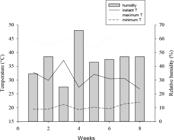
Climatic data such as temperature and humidity were obtained from daily collection with thermo-hygrometer and climatic data of the city were collected with the INMET automatic surface observation weather station. During the experiment, the region had an average temperature of 26.38 ° C, average humidity of 65.96% and average precipitation of 0.17 mm. In the greenhouse, the average temperature was 33.06 °C, and the average relative humidity was 33.06 % (Figure 1).
Soil Analysis
For the present study, the soil used (coordinates 15° 18’49.42” S latitude and 40°2’3.69” W longitude) came from the surface layer (0-20 cm), collected in 5 composite samples in zig-zag equidistant 5 meters with the aid of a Dutch auger. The composite sample was taken to the Soil Laboratory of the Department of Agricultural and Soil Engineering for evaluation of the physical characteristics in terms of particle size and texture and chemical characteristics of the macronutrients.
The soil was characterized as sandy loam (SANTOS et al., 2018), composed mostly of coarse sand, fine sand and silt, and smaller proportions of clay (Table 1); it was observed that, when irrigated, the water is drained. As for the chemical composition (Table 2), the values of macronutrients were adequate with good levels, with no need for fertilization and corrections, which favored the content of organic matter and pH, which showed optimal levels for the development of the species. Exchangeable ions and bases also showed satisfactory levels according to the manual of cultivation of the species in Brazil (PEREIRA; MOREIRA, 2011).
Experimental conduction
Seedlings were produced using 1,950 mg kg-1 of commercial seeds of Ocimum basilicum L. (Isla®), which were sown in polystyrene germination trays with 128 cells containing a commercial substrate (Nutriplant®). At 16 days after sowing, seedlings that reached an average height of five centimeters were transferred (three units) to each plastic bag of 18 cm in diameter and 16 cm in height, with soil volume of 1.4 dm3 kg-1. After 15 days of acclimatization, thinning was carried out, keeping one plant. The seedlings were distributed on a masonry bench at 1.20 m height from the ground with a spacing of 0.20 m. To determine field capacity, the dry soil samples of 1.4 dm3 kg-1 were weighed and saturated with water. The volume of water retained of 210 mL was determined by the difference in the weight of the drained samples. Each experimental unit was watered twice a day to maintain field capacity. Control of spontaneous plants was carried out manually whenever necessary. Height and number of leaves were recorded weekly, and the evaluation was performed at 39 days after transplanting. Treatments consisted of five days of water suspension (24, 72, 96, 120 and 144 hours). These treatments were applied before harvest to extract the essential oil. In each treatment, the content of proline, fresh and dry biomass, content and composition of essential oils were evaluated.
Proline
Free proline was quantified using 0.5 g of fresh leaf mass. The plant material was macerated in porcelain mortar with 3% sulfosalicylic acid, using seven concentrations (0, 25, 50, 75, 100, 125 and 150 μL), diluted in distilled water with a final volume of 10 mL, were used for each sample. The macerate was poured into Erlenmeyer® flasks and shaken for 60 minutes in the orbital bench shaker at room temperature. After filtration, 1000 μL of acid ninhydrin and 1000 μL acetic acid were added, which remained for 1 hour in a water bath, and the reaction was interrupted with an ice bath. For chromophore precipitation, 4 mL of toluene was added and then the absorbances were read at 520 nm in a Kasvi® spectrophotometer (K37-VIS). To obtain the free proline content, a calibration curve was constructed with the Synth® proline analytical standard, with absorbance reading performed at the same wavelength. Proline content was estimated according to the colorimetric method of Koenigshofer and Loeppert (2019), calculated as presented in the following Equation:
Essential Oil, fresh and dry matter, and essential oil content
On the 62nd day of cultivation, which coincided with the reproductive period, the aerial part of the plants was collected for the extraction of essential oil. These were cut 5 cm from the ground, at 8 am (CARVALHO FILHO et al., 2006). The plant material of the aerial part was weighed on an analytical scale, homogenized and separated into triplicates as composite samples. After separating the material, it was stored in kraft paper bags and dried in a forced air circulation oven at 45 °C. At the time of oil extraction, the dehydrated material was inserted into a round-bottomed flask with deionized water and subjected to hydrodistillation. In this stage, a Clevenger-type hydrodistiller (MAJROOMI; ABDOLLAHI, 2018) was used for 120 minutes at a constant temperature (100 °C) according to the Brazilian pharmacopoeia. The essential oil obtained was treated with anhydrous sodium sulfate (Sigma Aldrich®), weighed on an analytical scale and stored in amber bottles. The material resulting from the extraction was used to determine the dry biomass, after being dried in a forced air circulation oven at 65 °C up to constant weight. Essential oil content was calculated based on dry biomass and expressed as a percentage (BUFALO et al., 2015).
Gas chromatography coupled to flame ionization detector (GC-FID)
Chromatographic analyses were performed at the State University of Santa Cruz. Quantitative chemical composition was obtained with the Saturm 3800 gas chromatograph (Varian) equipped with a fused silica capillary column VF5ms (30m X 0.25mm) with 5% phenyl-95% dimethylpolysiloxane stationary phase (0.25 μm film thickness), with helium 6.0 as carrier gas and flow of 1.2 mL.min-1 (10 psi). Injector and detector temperatures were 250 °C and 280 °C, respectively. 1.0 μL of 10% CHCl3 solution was injected in split mode (1:10). The temperature of the column started at 70 °C, increased by 8 °C/min to 200 °C, by 10 °C/min to 280 °C, and was kept at this temperature for 3.75 minutes, totaling a time of 28.0 minutes. Quantification of the components was obtained by electronic integration of the peaks detected in the FID by triplicate standardization. Qualitative analysis was performed by a CGMS QP 2010 mass spectrometer (Shimadzu), with a triple quadrupole analyzer, and the column and temperature conditions were identical to those used in the CG-FID analysis. Temperature of the ion source was 200 ºC and interface temperature was 250 °C. The components of the oils were identified by the analysis of the fragmentation patterns observed in the mass spectra, confirmed by comparing their mass spectra with those present in the database provided by the instrument (NIST 11.0), as well as by comparing their retention indices with the known compounds obtained by injection of a mixture of standards containing a homologous series of C8 - C26 alkanes (Sigma Aldrich®) and data from the literature, reference for analytical standard (ADAMS, 2007), as well as scientific articles indexed in the ISI.
Statistical analysis
The experimental design was completely randomized with five treatments, with 20 individuals in each treatment for analysis of number of leaves, height and fresh matter. For the analysis of essential oil, proline content and chemical compounds, the tests were performed in triplicate. The data were tested for statistical assumptions of normality with the Kolmogorov-Smirnov test, homogeneity of variances with Levene’s test and after meeting the assumptions, the data were subjected to analysis of variance (ANOVA). Duncan’s test was used to evaluate the effect of each factor, adopting a significance level of 0.05 (p≤0.005). Pearson’s correlation was performed for the relationship between the variables height and temperature. IBM SPSS® and SigmaPlot® were used to plot the graphs.
RESULTS AND DISCUSSION
Height and number of leaves
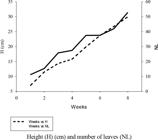
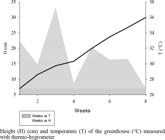
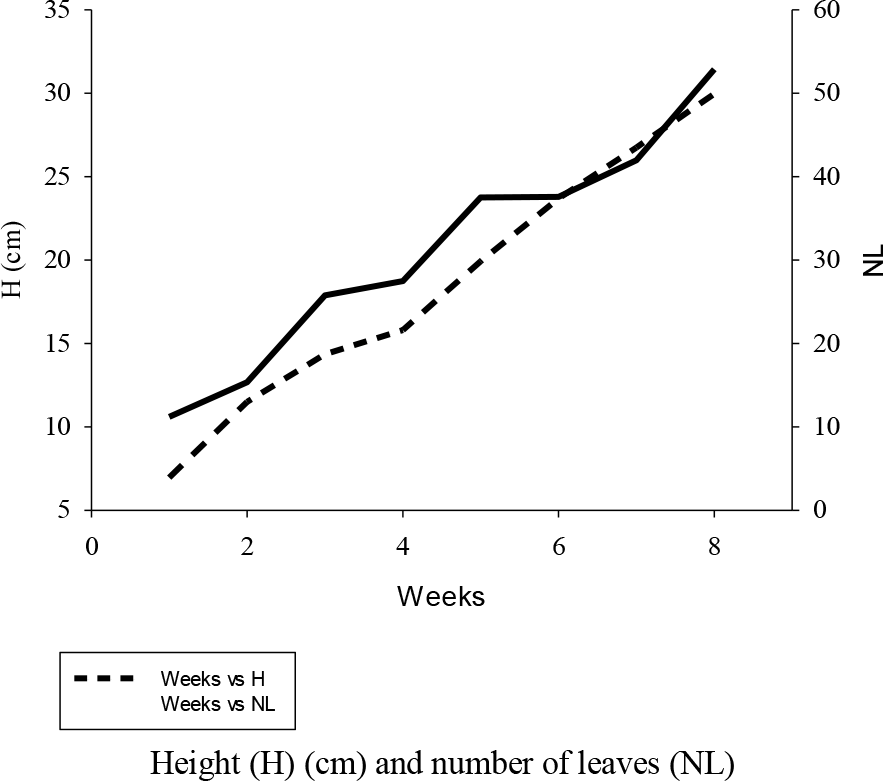
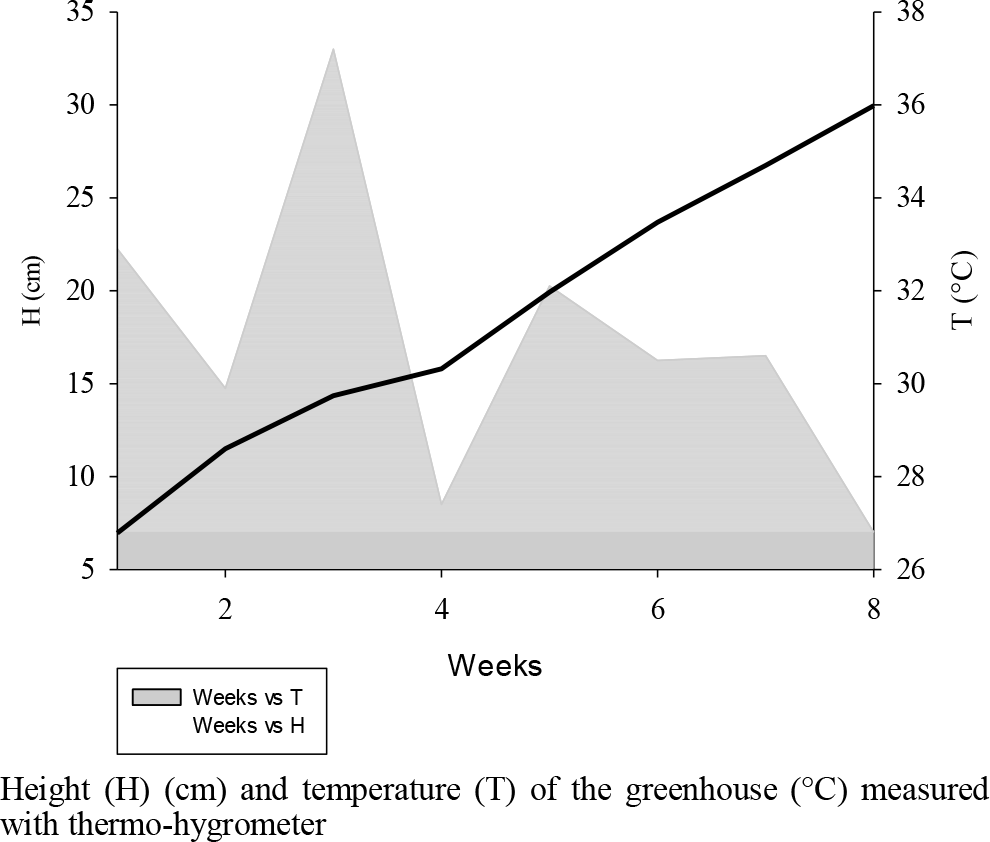
At the end of eight weeks, the species Ocimum basilicum L. showed an average height of 33 cm and average of 55 leaves (Figure 2). Thus, Pearson’s correlation between height and temperature was negative, with r= -0.515 with p>0.05, thus showing that there is no relationship between these two parameters under these conditions (Figure 3). In this period of development, the plants began the reproductive phenophase with the first flower buds. In a parallel experiment with basil cultivation in an outdoor environment, the plants did not show the same growth in height, leaf production and did not show flower buds.
Proline content, fresh and dry matter and essential oil content
Proline content increased among the water suspension treatments compared to the control; at 72 hours, there was a nine-fold increase in proline production. Although the production of proline increased as an indication of stress, there was no statistical difference between the treatments (five days of stress) (Table 3 and Figure 4). It is known that proline is a free amino acid that acts in plant osmoregulation by participating in the maintenance of homeostasis when under conditions of stress, relieves the negative effects of water scarcity and protects cells from oxidative stress (MEIRA; MARTINS; ALVARENGA, 2019). These are the reasons why the proline content was very low in the first treatment (24 hours of water suspension). A difference in the production of free proline in response to water stress was reported by Meira, Martins and Alvarenga (2019), with the species Lippia origanoides Kunth; in this study the authors reported that the total average of free proline was 0.39 μmol g-1 FM with irrigation and 2.45 μmol g-1 FM after stress.
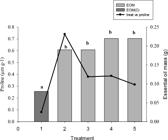
Proline production and weight of the essential oil of Ocimum basilicum L. as a function of water suppression, cultivated in a greenhouse.
When evaluating the biomass of the aerial part, it was observed that the best result was obtained with fresh matter without the application of water stress (Table 3). This result shows that there was weight loss as irrigation was suspended. This occurred 72 hours after water suspension and, from this treatment, a reduction in fresh matter was observed, with a significant difference between the control group and the other subsequent treatments, with reductions of only 9.31% (72 h), 11.49% (96 h), 22.36% (120 h) and 27.32% (144 h). Although the lack of water caused weight loss in the plants, these values did not differ statistically from those in the control group by Duncan’s test at 5% significance level (P<0.05) (Table 3). Reduction in fresh matter due to water suspension was also observed by Abreu and Mazzafera (2005), in a study with the herbaceous species Hypericum brasiliense in Campinas, SP; however, this study extended the time of water stress for 15 days due to the nature of the plant and reported a significant reduction within the period of water suspension.
Differently from what was observed for dry matter, there was a significant increase in dry biomass of approximately 50% after water suspension and, after 72 hours, there was no statistical difference between the groups with water stress, maintaining the increment in dry weight (Table 3). Studies with Artemisia annua L. corroborate the result obtained, with an increase in dry weight when plants were subjected to 38 hours of water deficit (MARCHESE et al., 2010). The authors reported that this increase was unexpected because the water deficit in general stops or reduces the growth and accumulation of biomass, and attributed this finding to the use of 2/39X1V hybrid seeds; however, after 68 hours they already observed a reduction in the biomass of this species. This was also verified by Matos et al. (2014) in a study with Hypericum polianthemum in Porto Alegre, RS, in which water stress did not reduce total biomass and improved two secondary metabolites, the compound uliginosin B and dimethoxy-2,2-dimethyl-benzopyran, accumulating double yields of fertilized plants subjected to water stress.
In the literature, there are reports of long-term water stress causing reduction in fresh and dry biomass in Ocimum basilicum L. (SANTOS et al., 2017), and it was observed in this experiment that in a short period of water stress caused reduction in fresh biomass and increase in dry biomass. This is an important result from an industrial point of view, since it facilitates the processing, drying and obtaining of essential oil.
The contents of essential oil produced in each of the five treatments showed a progressive increase with the time of irrigation suspension. The values for this parameter were: 0.07 (24 h), 0.15 (72 h), 0.16 (96 h), 0.22 (120 h), 0.24 (144 h) g plant-1, so the best response for essential oil content was obtained with the last treatment. It was observed that the suspension of irrigation favors oil production, since the increase was significant in plants without irrigation, and the greatest difference in content was observed between the intervals of 72 and 96 hours for the intervals of 120 and 144 hours of irrigation suspension (Table 3). However, as observed for the fresh matter content, for this parameter from 72 hours onwards there was no statistical difference between the groups subjected to water stress. This result is due to the species being exotic and not cultivated under semi-arid climatic conditions, which makes it sensitive to high temperatures and lack of water. This physiological characteristic led the plant to stabilize the oil content before reaching permanent wilting (KERBAUY, 2019).
In Montes Claros, MG, whose climate is tropical savanna and has an annual rainfall of 1086.40 mm year-1, a study was carried out with irrigation depths and essential oil production with Melissa officinalis L. and reported that the highest production of essential oil was obtained with the lowest irrigation depth, corresponding to 50% of crop evapotranspiration (MEIRA et al., 2013). Santos et al. (2017) reported different results in a study with different irrigation depths with Ocimum basilicum L. in Crato, CE, whose climate is semi-arid. For the species cultivated under these conditions, the authors recommended 100% evapotranspiration depth for the production of fresh biomass and oil content (SANTOS et al., 2017).
Reduction in turgor and dehydration are the first physiological responses of the plant to water deficit; from 72 hours of irrigation suppression, it was observed loss of turgor and the leaves remained up to 120 hours, after which there was loss of some leaves, indicating a possible increase in proline. However, for the essential oil content present in the leaves, it can be inferred that this plant responds well to water stress until the fifth day, which is the ideal time for oil extraction because it is the last period before senescence. After 144 hours, the plants evolve to permanent wilt, which causes the loss of plant material. Therefore, for basil under the climatic conditions of Itapetinga in greenhouse cultivation, the ideal stress to optimize the oil content is a maximum of six days.
Chemical Characterization
Nine chemical constituents were observed, namely one monoterpene hydrocarbon sabinene, two monoterpenes oxygenated linalool and eugenol, three sesquiterpenes oxygenated methyl eugenol, methyl isoeugenol and eudesmol, and one sesquiterpene hydrocarbon δ-cadinene (Table 4). Even under different irrigation times, the samples have the chemical characteristics of the parent plants, whose chemical profile contained as major constituents linalool (7.00-20.18%) and eugenol (33.95-40.26%), and the constituents found in smaller proportions were sabinene (1.02-4.36), δ-cadinene (1.37-1.64), eudesmol (1.26-2.02) and methyl eugenol (0.591.11). As noted by Bufalo et al. (2015), the components that confer the chemical profile of the essential oil of Ocimum basilicum L. are linalool, eugenol, and estragole. Thus, it was observed that the oil and proline contents corroborate the chromatographic analyses, which showed the same chemical composition with subtle variation in the percentage of each compound. This result shows that the seeds used in the experiment are clones of the same accessions.
Chemical constituents of the essential oil of Ocimum basilicum L. cultivated in a greenhouse, under different water suspension treatments.
Despite that, water suspension favored a significant increase in the proportion of linalool and sabinene from 72 h onwards when compared to the 24 h treatment, and the increase was maintained with the 96 h, 120 h and 144 h treatments (Table 4). This result showed a great advantage of water deficit, which was the increments in the concentrations of linalool of 60% and sabinene of 76% from 72 hours.
For the eugenol, δ-cadinene and eudesmol components, no changes were observed between the treatments, whose mean values in this study were 36.60%, 1.41% and 1.59%, respectively (Table 4). In the 72 h and 144 h treatments, there was an increase in the production of methyl eugenol compared to the other compounds (Table 4), which can be explained by a carbon reallocation and/or interconversion of constituents during the water stress period (TAIZ et al., 2017).
These results are corroborated by Silva et al. (2003), who collected Ocimum basilicum L., semi-purple cultivar VIC 22760 at two harvest times (8 and 16 h) in the municipality of Viçosa, MG, and reported high levels of eugenol (32.71%) and linalool (21.24%) in the essential oil. In the region of Brasilândia, DF, the harvest of the species in the field at three harvest times (45, 90 and 135 days), Jannuzzi et al. (2019) reported linalool as the major constituent, with 69.53%, and eugenol as the second compound, with 5.49%. According to the authors, these percentages were maintained at all harvest times, thus emphasizing that these compounds characterize them as one of the existing chemotypes of the species.
In other regions, there are records of different varieties of Ocimum basilicum, such as the records of the plant with 0.37% sabinene and 0.18% eudesmol present in the cultivar Maria Bonita in the city of Gurupi (TO) kept in a greenhouse (VELOSO et al., 2014). In line with the present study, Chaves et al. (2017) cultivated different species of basil in medicinal garden in Fortaleza, CE, and reported similar results for the constituents found in smaller proportions such as sabinene, which varied between 0.16 and 1.98%, δ-cadinene, whose concentration was 1.98% for Ocimum grantissimum (SILVA et al., 1999), and methyl-eugenol, whose concentrations were 1.37% for Ocimum micrathun (SILVA et al., 2004) and 0.39% for Ocimum selloi (MORAES et al., 2002), respectively.
This difference in chemical composition can be explained by the divergence in the cultivation conditions of the studies and between species and cultivars (MORAIS, 2009). In addition, the composition of the essential oil may show changes during the harvest and post-harvest processes attributed to spontaneous conversions, which influence its content and chemical composition (CARVALHO FILHO et al., 2006).
As found in the present study (Table 4), an experiment with species of another family such as Hypericum brasiliense L. cultivated under water deficit in Campinas, SP, showed an increase in the concentration of phenolic compounds in shoots and roots, compared to control plants, and a reduction in growth after 15 days of water stress (ABREU; MAZZAFERA, 2005). The authors reinforce the need to suspend irrigation to optimize the production of metabolites, and stress time varies according to the species. The process by which this occurs is the closure of the stomata during water stress, as a way to compensate for the decrease in water supply, thus reducing water loss through transpiration. However, such closure reduces the uptake of carbon dioxide by the plant, which reduces photosynthesis and therefore the primary metabolism (TAIZ et al., 2017).
In the case of aromatic species such as Ocimum basilicum L., as there was no incorporation of carbon by the photosynthetic apparatus during the stress period, the carbon previously fixed in photosynthesis was reallocated to the synthesis of isoprenes in secondary metabolism, which explains the changes in chemical contents after 72 hours of water suspension.
As a way to benefit the development of the plant with preservation of biomass for essential oil extraction, it was observed that the suspension of irrigation promoted increments in dry matter and total essential oil content, besides increasing the proportion of linalool, a chemical compound of interest for the industry. In addition, the stability of the dry matter increases the durability of the raw material and reduces losses, which ensures the quality of the material.
Even after water suppression, the results did not change significantly, so it is possible to adopt water stress by irrigation suspension before harvest without changing production and for water saving. With the results obtained in the present study, it was clear that it is necessary to study more parameters related to the water consumption of the plant in the region or to analyze evaporation from the leaf surface. This reinforces the need to suspend irrigation for two to three days before the extraction of essential oil from fresh plant material of the evaluated species.
Therefore, this study presents contributions to the cultivation of medicinal plants in semiarid regions, besides supporting the construction of management plans for producers, as it demonstrates the effect of environmental, climatic, soil and irrigation variables on plant growth, as well as the effect of water suspension before harvest in obtaining such products as raw material for the production of herbal medicines. However, the study contributed with information on the cultivation of the species in the region of Itapetinga, BA, and on the influence of irrigation suspension for the production of chemical constituents.
CONCLUSION
Thus, under the experimental conditions presented, the plant increases the production of secondary metabolites such as essential oil and proline from the third day of irrigation suspension, with an increase in dry biomass. Linalool and eugenol are the major constituents of basil. It is recommended to grow basil in a greenhouse with shade net (40%), with sowing in seedbed with commercial substrate, transplanting at 14 days after germination and harvest at 62 days after transplanting, in the early flowering phenological stage, under water suspension for six days, since plant loss due to permanent wilting and senescence occurs from the seventh day onwards.
ACKNOWLEDGMENTS
The authors thank CAPES for granting scholarships to graduate students, and CNPq and FAPESB for the financial support for the acquisition of equipment and supplies.
REFERENCES
- ABREU, I. N.; MAZZAFERA, P. Effect of water and temperature stress on the content of active constituents of Hypericum brasiliense Choisy. Plant Physiology and Biochemistry, 43: 241-248, 2005.
- ADAMS, R. P. Identification of Essencial Oil Components by Gas Chromatography/Mass Spectrometry 4 ed. Carol Stream, IL: Allured Publ. Corp. 2007. 804 p.
- BUFALO, J. et al. Organic versus conventional fertilization effects on sweet basil (Ocimum basilicum L.) growth in a greenhouse system. Industrial Crops and Products, 74: 249254, 2015.
- CARVALHO FILHO, J. L. S. et al. Influence of the harvesting time, temperature and drying period on basil (Ocimum basilicum L) essential oil. Revista Brasileira de Farmacognosia, 16: 24-30, 2006.
- CHAVES, M. et al. Caracterização dos óleos essenciais de plantas medicinais e aromáticas cultivadas no horto da Embrapa Fortaleza, CE: EMBRAPA, 2017. 33 p. (Documentos, 151).
- DAMALAS, C. A. Improving drought tolerance in sweet basil (Ocimum basilicum) with salicylic acid. Scientia Horticulturae, 246: 360-365, 2019.
- EMAMI, Z.; BARKER, A.; HASHEMI, M. Physioloy of medicinal and aromatic plants under drought stress. The Crop Journal, 12: 330-339, 2024.
- GUERRA, A. et al. Nitrogênio influencia o acúmulo de biomassa e o rendimento de óleo essencial de manjericão. Brazilian Journal of Development, 6: 24739-24756, 2020.
- JANNUZZI, H. et al. Manejo de corte de manjericão (Ocimum basilicum L.) em três épocas de colheitas no Distrito Federal - DF Brasília, DF: EMBRAPA, 2019. 21 p. (Boletim Técnico, 352).
- KERBAUY, G. B. Fisiologia vegetal 3 ed. Rio de Janeiro, RJ: Guanabara Koogan, 2019. 420 p.
- KOENIGSHOFER, H.; LOEPPERT, H. The up-regulation of proline synthesis in the meristematic tissues of wheat seedlings upon short-term exposure to osmotic stress. Journal of Plant Physiology, 237: 21-29, 2019.
- LORENZI, H., MATOS, F. J. A. Plantas Medicinais no Brasil: nativas e exóticas 3 ed. Nova Odessa, SP: Jardim Botânico Plantarum, 2021. 544 p.
- MAJROOMI, B.; ABDOLLAHI, B. The impact of cold stress on genes expression pattern of monoand sesquiterpene biosynthesis and their contents in Ocimum basilicum L Phytochemistry, 156: 250-256, 2018.
- MARCHESE, J. A. et al. Efeito do déficit hídrico no acúmulo de biomassa e artemisina em absinto anual (Artemisia annua L., Asteraceae). Brazilian Journal of Plant Physiology, 22: 1-9, 2010.
- MEIRA, M. R.; MARTINS, E. R.; ALVARENGA, I. C. A. Prolina livre e flavonoides totais de Lippia origanoides submetidos a níveis de saturação por base e estresse hídrico. Brazilian Journal of Agricultural Sciences, 14: 1-9, 2019.
- MEIRA, M. R. et al. Vegetative growth, phytomass and essential oil yield of Melissa officinalis L. under different irrigation levels/Crescimento vegetativo, producao de fitomassa e de oleo essencial de Melissa officinalis L. sob diferentes laminas de irrigacao. Ciência Rural, 43: 779-786, 2013.
- MORAES, L. A. S. et al. Phytochemical characterization of essential oil from Ocimum selloi Anais da Academia Brasileira de Ciências, RESEM (Rio de Janeiro, 74: 183186, 2002.
- MORAIS, L. A. S. Influência dos fatores abióticos na composição química dos óleos essenciais. Horticultura Brasileira, 27: 779-785, 2009.
- MATOS, N. J. et al. Stress induction of valuable secondary metabolites in Hypericum polyanthemum acclimatized plants. South African Journal of Botany, 94: 182-189, 2014.
- PEREIRA, R. C. A.; MOREIRA, A. L. M. Manjericão: cultivo e utilização 1. ed. Fortaleza, CE: EMBRAPA, 2011. 31 p. (Documentos, 136).
- ROWLAND, L. S.; SMITH, H. K.; TAYLOR, G. O potencial para melhorar a qualidade da cultura da erva culinária com irrigação deficitária. Cientia Horticulturae, 242: 44-50, 2018.
- SANTOS, H. R. et al. Influência de lâminas de irrigação na biomassa, teor e composição química do óleo essencial de manjericão. Espacios, 38: 21, 2017.
- SANTOS, H. G. et al. Sistema Brasileiro de Classificação de Solos, 5. ed. Brasília, DF: EMBRAPA, 2018. 356 p.
- SESTILI, P. et al. The potential effects of Ocimum basilicum on health: a review of pharmacological and toxicological studies. Expert Opinion on Drug Metabolism & Toxicology, 14: 679-692, 2018.
- SILVA, F. et al. Teor e composição do óleo essencial de manjericão (Ocimum basilicum L.) em dois horários e duas épocas de colheita. Revista Brasileira de Plantas Medicinais, 6: 33-38, 2003.
- SILVA, M. G. V. et al. Chemical variation during daytime of constituents of the essential oil of Ocimum gratissimum leaves. Fitoterapia, 70: 32-34, 1999.
- SILVA, M. G. V. et al. Composition of essential oils from three Ocimum species obtained by steam and microwave distillation and supercritical CO2 extraction. Archive for Organic Chemistry, 6: 66-71, 2004.
- TAIZ, L. et al. Fisiologia e desenvolvimento vegetal 6. ed. Porto Alegre, RS: Artmed, 2017. 888 p.
- VELOSO, R. A. et al. Teor e composição do óleo essencial de quatro acessos e duas cultivares de manjericão (Ocimum basilicum L.). Revista Brasileira de Plantas Medicinais, 16: 364-371, 2014.

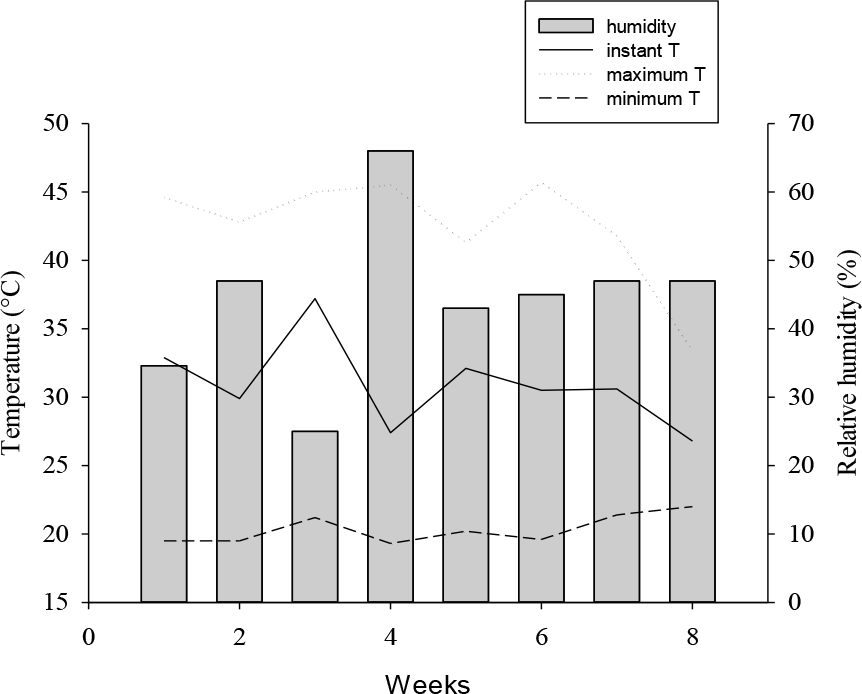 Climatic conditions of the greenhouse of UESB, Itapetinga Campus, southwest of Bahia. *Values referring to the average relative humidity (%) and maximum, minimum and average temperature (°C)
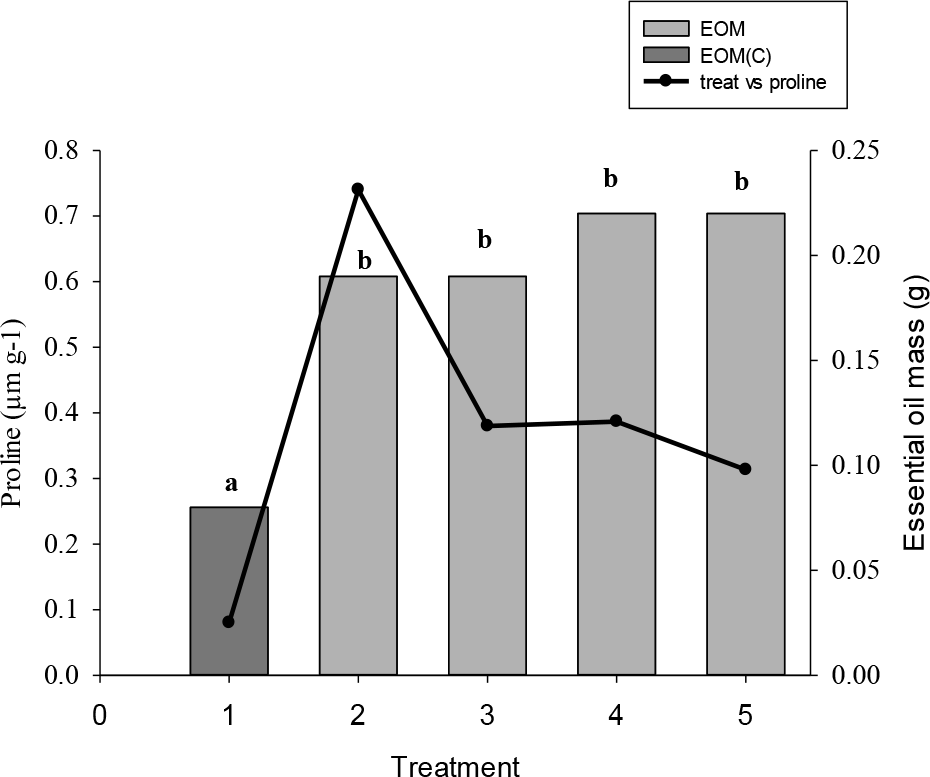 Means followed by the same letter did not differ statistically by Duncan’s test at 5% significance level (p<0.05)