
 Action of abiotic elicitors and nutritional solutions on yellow bell pepper using hydroponic system
ABSTRACT
The aim of this study was to evaluate the contents of photosynthetic pigments, growth and production of yellow bell pepper under saline nutrient solutions and application of abiotic elicitors in a hydroponic system. The study was conducted in a greenhouse belonging to the Federal University of Campina Grande, Campus of Pombal, PB, Brazil. The cultivation was carried out under an hydroponic system, using a completely randomized design, with split plots. The main plots consisted of three levels of electrical conductivityofthenutrientsolution-ECns(2.1,3.1,and 4.1 dS m-1), while the subplots consisted of abiotic elicitors (control; salicylic acid, proline, and hydrogen peroxide), with three replicates. The concentrations of salicylic acid, proline, and hydrogen peroxide were 3.6 mM, 10 mM, and 40 μM, respectively. Salicylic acid at a concentration of 3.6 mM led to smaller height of yellow bell pepper plants under ECns of 2.1 dS m-1. However, salicylic acid, proline, and hydrogen peroxide at concentrations of 3.6 mM, 10 mM, and 40 μM, respectively, increased the synthesis of photosynthetic pigments and biomass accumulation. The use of 40 μM hydrogen peroxide and 3.6 mM salicylic acid resulted in higher chlorophyll total, carotenoids, and total dry matter contents in yellow bell pepper under ECns of 4.1 dS m-1. Electrical conductivity of the nutrient solution of 3.1 dS m-1 promoted a greater number of fruits in yellow bell pepper.
Keywords:
Capsicum annuum L.; Salt stress; Tolerance.
RESUMO
Objetivou-se com este trabalho avaliar os teores de pigmentos fotossintéticos, crescimento e produção de pimentão amarelo sob soluções nutritivas salinas e aplicação de elicitores abióticos em sistema hidropônico. O trabalho foi conduzido em casa de vegetação pertencente à Universidade Federal de Campina Grande, Campus Pombal - PB. O cultivo foi realizado em sistema hidropônico, utilizando delineamento inteiramente casualizados, com parcelas subdividida. As parcelas principais consistiram de três níveis de condutividade elétrica da solução nutritiva - CEsn (2,1; 3,1 e 4,1 dS m-1) enquanto as subparcelas incluíram os elicitores abióticos (testemunha; ácido salicílico, prolina e peróxido de hidrogênio), com três repetições. As concentrações de ácido salicílico, prolina e peróxido de hidrogênio foram de 3,6 mM; 10 mM e 40 μM, respectivamente. O ácido salicílico na concentração de 3,6 mM proporcionou menor crescimento em altura de plantas do pimentão sob CEsn de 2,1 dS m-1. Contudo, o ácido salicílico, prolina e peróxido de hidrogênio na concentração de 3,6 mM; 10 mM e 40 μM, respectivamente, aumentaram a síntese de pigmentos fotossintéticos e o acúmulo de fitomassa. A utilização de 40 μM de peróxido de hidrogênio e 3,6 mM de ácido salicílico resultou em maiores teores de clorofila total, carotenoides e fitomassa seca total do pimentão sob CEsn de 4,1 dS m-1. A CEsn de até 3,1 dS m-1 promoveu maior número de frutos no pimentão.
Palavraschave:
Capsicum annuum L.; Estresse salino; Tolerância.
INTRODUCTION
Bell pepper (Capsicum annuum L.) is a vegetable widely appreciated in Brazil, with significantly high production in protected environments, surpassing other crops in terms of adaptation (SANTOS et al., 2018). In addition to being an abundant source of B vitamins and minerals, such as potassium, phosphorus, magnesium, and calcium, its fruits are rich in unsaturated fatty acids, bioflavonoids, capsaicinoids, and carotenoids, contributing to its growing popularity and demand in the consumer market (OLATUNJI; AFOLAYAN, 2018).
In the 2017 season, Brazil produced 224,286 tons in 32,507 agricultural establishments in several Brazilian states, with São Paulo, Minas Gerais, Bahia, and Rio de Janeiro accounting for 66% of Brazilian production (IBGE, 2017). In the Brazilian Northeast, bell peppers have potential for expansion due to their adaptation to the tropical climate (LIMA et al., 2016). However, the region faces significant challenges due to water scarcity, resulting from irregular rainfall and high evaporation rates that rapidly reduce the volume of water available for irrigation. Thus, to ensure the stability of agricultural production, it is crucial to adapt cultivation practices, with special emphasis on efficiency in water use (ALMEIDA; ALMEIDA; OLIVEIRA, 2021).
As a result, it has become common to use low-quality water to maintain agriculture in the region, which has contributed to increased environmental damage, especially soil degradation. In this context, hydroponics stands out as an advanced method that promotes efficient water use and maximizes yield, particularly in vegetables (MENDONÇA et al., 2022). In hydroponic cultivation, the plants have different responses to water salinity when compared to traditional cultivation, since the absence of matric potential, as the cultivation system is soilless, causes the total water potential to be basically determined by the osmotic potential of the nutrient solution (BAYRAM; DINLER; TASCI, 2014; DORNELES et al., 2021).
The use of elicitors, such as salicylic acid, proline, and hydrogen peroxide, has also stood out as an effective strategy against abiotic stress (AHMAD et al., 2019; SHARMA et al., 2019), especially in semi-arid areas of Northeast Brazil. Salicylic acid participates in the secondary metabolism of plants, regulating processes related to photosynthesis and nutrient uptake (FARHADI; GHASSEMI-GOLEZANI, 2020; SILVA et al., 2023). Proline is an amino acid that acts on intracellular osmotic balance, protecting cytosolic enzymes in high-salinity environments, contributing to the stability of redox balance, maintaining cellular integrity under stress conditions (LIMA et al., 2016; EL MOUKHTARI et al., 2020).
At low concentrations, hydrogen peroxide (H2O2), in turn, acts as a signaling agent that stimulates the production of antioxidant enzymes, improving the efficiency in the absorption of water and nutrients and helping to maintain ionic homeostasis, fundamental aspects for attenuating salt stress in plants (VELOSO et al., 2023; GUEDES et al., 2024). On the other hand, reactive oxygen species (ROS) at high concentrations in the cell cause damage to biomolecules such as lipids, proteins and DNA and alter intrinsic properties of the membrane, such as fluidity, and ion transport, leading to loss of enzymatic activity and consequently cell death (SHARMA et al., 2012).
In view of the above, this study aimed to evaluate the contents of photosynthetic pigments, growth, and production of yellow bell pepper in a hydroponic system, using saline nutrient solutions and abiotic elicitors.
MATERIAL AND METHODS
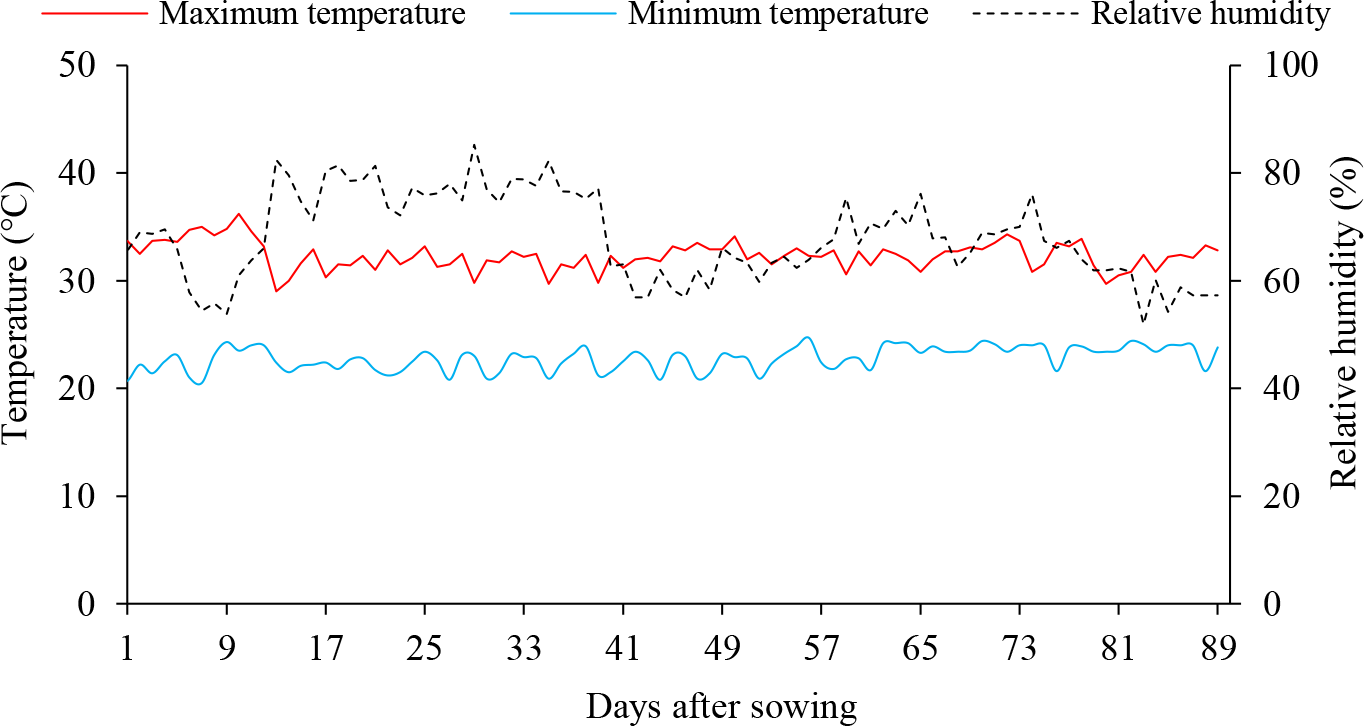
The experiment was conducted from March to May 2023 under greenhouse conditions at the Center of Science and Agri-Food Technology (CCTA), of the Federal University of Campina Grande (UFCG), in the municipality of Pombal, PB, Brazil, geographically located at 6° 46' 8'' South and 37° 47' 45'' West, with an altitude of 184 m. The climate of the municipality of Pombal is semi-arid (AW’ hot and humid according to Köppen’s classification) with a rainy period that begins in November and ends in April (ALVARES et al., 2013). Temperature and relative humidity data collected during the experiment are presented in Figure 1.

The experimental design was completely randomized, in a split-plot scheme, with the plots consisting of three levels of electrical conductivity of the nutrient solution - ECns (2.1, 3.1, and 4.1 dS m-1) and the subplots consisting of abiotic elicitors (without application - control, salicylic acid, proline, and hydrogen peroxide), with three replicates and three plants per experimental plot. The concentrations of salicylic acid (3.6 mM), proline (10 mM), and hydrogen peroxide (40 μM) were based on studies with soursop, bell pepper, and cotton, conducted by Silva et al. (2020), Lima et al. (2016), and Veloso et al. (2023), respectively.
The experiment was conducted using seeds of the yellow bell pepper ‘Alegria’, a variety that produces blocky fruits, green when immature and yellow when ripe, with a length of 8 to 13 cm and a weight of 200 to 250 g. Seedlings were produced using 50-mL containers, with washed coconut fiber as substrate. During the phase from germination to the emergence of the first true leaf (GUEDES et al., 2024), the plants received a nutrient solution at 50% of the concentration recommended by Hoagland and Arnon (1950). After the emergence of the second pair of true leaves, the seedlings were transplanted into the hydroponic system.
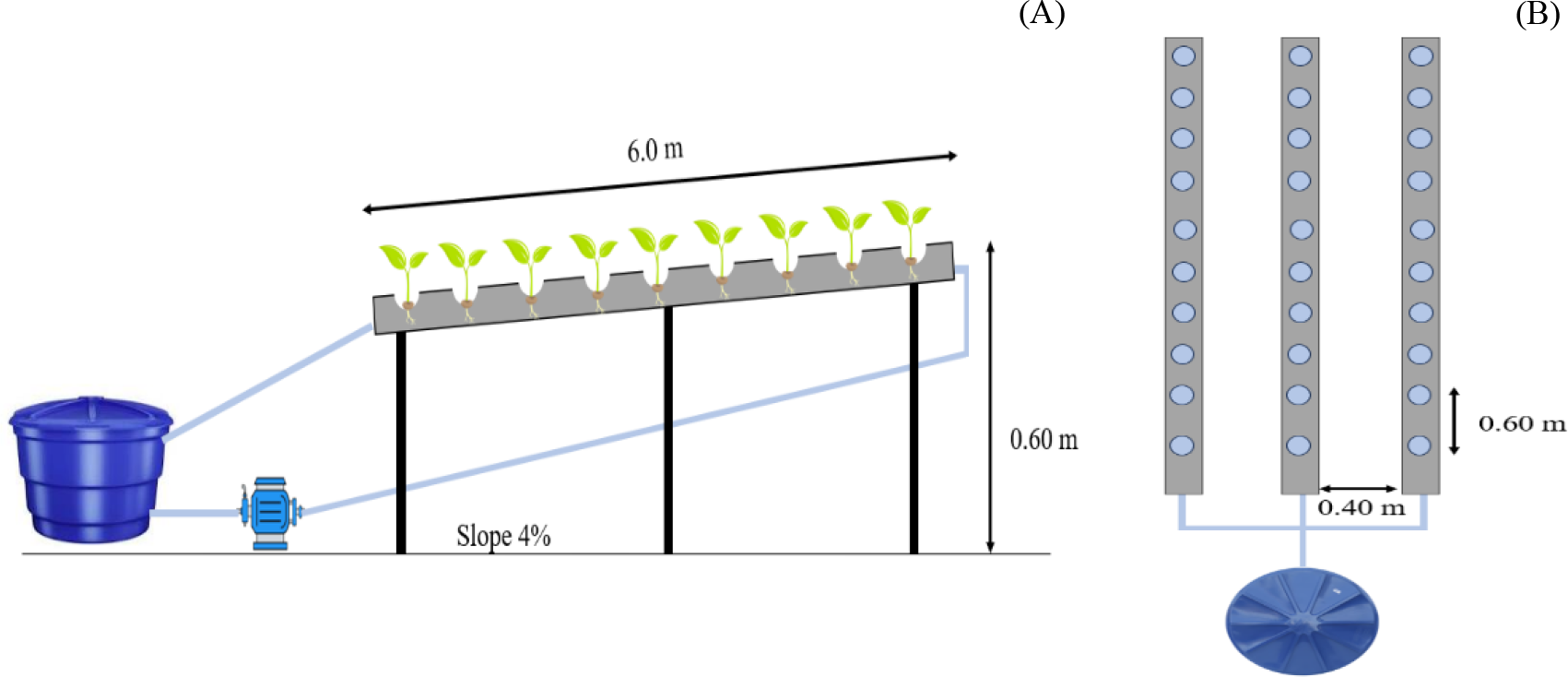
The hydroponic system was of the Nutrient Film Technique (NFT) type, made with PVC pipes of 100 mm in diameter and six meters in length, spaced 0.40 m apart. In the hydroponic profile, the planting holes were 54.17 mm in diameter, with a distance of 0.50 m between them, and the spacing between treatments (subsystems) was 1.0 m.
The channels were supported on 0.6-m-high sawhorses with a slope of 4% to allow the flow of the nutrient solution. At the lowest point of each bench of the hydroponic system, a 150 L polyethylene box was placed to collect and conduct the nutrient solution back to the channels. The solution was pumped to the channels by a 35 W pump, with flow rate of 3 L min-1. The layout of the system in side view (A) and top view (B) is shown in Figure 2.

Representation of the Nutrient Film Technique (NFT)-type hydroponic system: side view (A) and top view (B).
The nutrient solution recommended by Hoagland and Arnon (1950) was used in the study, whose nutrient compositions and concentrations are shown in Table 1. The solution was prepared with local-supply water (0.3 dS m-1), resulting in an electrical conductivity of 2.1 dS m-1 and pH between 5.5 and 6.5.
Chemical composition and nutrient concentration* of the general nutrient solution indicated by Hoagland and Arnon (1950), used in the hydroponic cultivation of yellow bell pepper.
The saline nutrient solutions were prepared with the addition of non-iodized sodium chloride (NaCl), calcium chloride (CaCl2.2H2O), and magnesium chloride (MgCl2.6H2O) in an equivalent ratio of 7:2:1, respectively. Irrigation waters were prepared considering the relationship between ECw and salt concentration (RICHARDS, 1954), according to Equation 1.
Where:
Q = Sum of cations (mmolc L-1); and,
ECw = Difference between the desired electrical conductivity and the ECw of the water in the municipal supply system (dS m-1).
At eight-day intervals, the saline nutrient solution was completely replaced, and the electrical conductivity and pH were monitored daily and adjusted as necessary with the addition of local-supply water (0.3 dS m-1) or the solution, maintaining the ECns according to the initially established treatments. When necessary, 0.1 M potassium hydroxide (KOH) or hydrochloric acid was added to the nutrient solution to maintain the pH between 5.5 and 6.5. The plants were grown with vertical staking, using a nylon twine fixed to the structure of the greenhouse.
Treatments began to be applied 10 days after transplanting (DAT), and the elicitors were sprayed manually from 5:00 p.m., every week, with the solutions applied on the adaxial and abaxial sides of the leaves according to the established treatments. During the experiment, an average of 60 mL per plant was applied, totaling 4 applications. The frequency of application was based on a study conducted with cherry tomatoes (GUEDES et al., 2024).
Proline and hydrogen peroxide were diluted in distilled water, while salicylic acid was prepared by dissolution in 30% ethyl alcohol. In order to break the surface tension and facilitate the absorption of the respective solutions, 0.05% of Haiten, a non-ionic adhesive spreader, was added. To avoid drifting between the different treatments, a plastic tarpaulin was used to isolate the plants during application of the elicitors.
Electrolyte leakage (%EL) was determined at 45 DAT using 10 leaf discs with an area of 1.54 cm2, which were placed in beakers with 50 mL of distilled water and maintained at 25 ºC for 24 hours. After this time, the initial electrical conductivity of the medium (Ci) was measured with a benchtop conductivity meter. Subsequently, the beakers were placed in a forced air circulation oven at 80 ºC and kept for 120 minutes, to measure the final conductivity (Cf). Electrolyte leakage in the leaf blade was determined according to Scotti-Campos et al. (2013), as shown in Equation 2.
Where:
%EL = electrolyte leakage (%);
Ci = initial electrical conductivity (dS m-1); and, Cf = final electrical conductivity (dS m-1).
To determine the relative water content (RWC) at 45 DAT, ten leaf discs (area of 1.54 cm2) were collected and immediately weighed to obtain fresh mass (FM); then, the discs were transferred to a beaker containing 50 mL of distilled water and left to soak for 24 hours. After this period, the discs were dried with paper towels to remove excess water, and the turgid mass (TM) was measured. Subsequently, the discs were dried in an oven at 65 ± 3 °C until they reached a constant weight to obtain the dry mass (DM). Relative water content was determined using Equation 3, as recommended by Weatherley (1950).
Where:
RWC = relative water content (%);
FM = fresh mass (g);
TM = turgid mass (g); and, DM = dry mass (g).
At 45 DAT, four leaf discs with an area of 1.54 cm2 were collected to determine the contents of photosynthetic pigments (chlorophyll a, chlorophyll b, chlorophyll total and carotenoids) by adapting the methodology of Arnon (1949). To this end, the discs were placed in containers with 6.0 mL of 80% acetone (A.R.). After the extraction period, the readings were taken in a spectrophotometer at absorbance wavelengths (ABS 470, 647 and 663), and the contents were determined using Equations 4, 5, 6 and 7, with the results expressed in μg mL-1.
From the contents of Chl a, Chl b, Chl T and Car, the Chl a/Chl b, and Chl T/Car ratios were calculated.
At the same time (45 DAT), evaluations of plant height (cm), stem diameter (mm), number of leaves and number of fruits per plant were carried out. At 89 DAT, plant material was collected, fractionated into different parts, placed in a paper bag, taken to a forced air oven at a temperature of 65 ± 3 °C and kept for 72 h, until it reached a constant mass. Soon after, leaf, stem, and root dry masses were determined on a semi-analytical scale. Total dry mass (TDM) was obtained by adding leaf dry mass (LDM), stem dry mass (SDM), and root dry mass (RDM). The total number of fruits per plant (NFr) was determined by counting the fruits harvested in each treatment.
The data were analyzed for normality (Shapiro-Wilk test) and homoscedasticity (Bartlett test), and subsequently subjected to analysis of variance using the F test (p ≤ 0.05). In case of significant effect, Tukey test was performed at 5% probability level to compare the means, using the statistical software SISVAR - ESAL version 5.7.
RESULTS AND DISCUSSION
The interaction between the factors salinity levels of the nutrient solution × abiotic elicitors had a significant effect (p≤0.01) on all variables related to photosynthetic pigment contents and the Chl a/Chl b and Chl T/Car ratios, electrolyte leakage, and relative water content of hydroponic yellow bell pepper plants, 45 days after transplanting (Table 2).
Summary of the analysis of variance for the contents of chlorophyll a (Chl a), chlorophyll b (Chl b), chlorophyll total (Chl T), carotenoids (Car), Chl a/Chl b ratio (Chl a/b), Chl T/Car ratio (Chl T/Car), electrolyte leakage (%EL), and relative water content (RWC) of yellow bell pepper grown with saline nutrient solutions (ECns) and foliar application of abiotic elicitors (E) in an NFT hydroponic system, at 45 days after transplanting.
Chlorophyll a contents varied significantly with the application of abiotic elicitors (Figure 3A), with proline and salicylic acid resulting in increments of 59.32 and 57.72%, respectively,comparedto control plants atthe ECnsof 2.1 dS m-1. With the increase in nutrient solution salinity to 3.1 dS m-1, the application of hydrogen peroxide promoted the highest content of Chl a (1636.7 μg mL-1), followed by the application of salicylic acid (1135.2 μg mL-1). Plants grown under saline nutrient solution of 4.1 dS m-1 showed Chl a content of 1232.8 μg mL-1, representing an increase of 45.00% compared to those subjected to ECns of 2.1 dS m-1 (850.22 μg mL-1); this value was even higher with foliar application of hydrogen peroxide (1705.6 μg mL-1) and salicylic acid (1839.5 μg mL-1).

Contents of chlorophyll a - Chl a (A), chlorophyll b - Chl b (B), chlorophyll total - Chl T (C) and carotenoids - Car (D) of yellow bell pepper plants, as a function of the interaction between the salinity levels of the nutrient solution (ECns) and abiotic elicitors (E), grown in an NFT hydroponic system, at 45 days after transplanting.
In this way, the maintenance of high contents of chlorophyll a contributes to a greater use of photochemical energy, since this pigment is a central part of the photosystem (SIMKIN et al., 2022). Similar responses were observed in hydroponic cultivation of common bean (Phaseolus vulgaris L.) under conditions of saline nutrient solution by Bayram, Dinler and Tasci (2014), who interpreted the gains in antioxidant activity as a way to mitigate impacts arising from the production of reactive oxygen species.
For the chlorophyll b contents (Figure 3B), the increase in salinity did not cause significant differences in plantsofthecontroltreatment(averagecontent of 385.74 μg mL-1). However, the application of abiotic elicitors promoted distinct positive responses at each level of ECns, with increments observed with the application of proline (537.61 μg mL-1) and salicylic acid (644.99 μg mL-1) in the 2.1 dS m-1 solution. In the 3.1 dS m-1 solution, the application of proline resulted in the highest contents of Chl b (1001.10 μg mL-1), followed by the application of hydrogen peroxide (738.08 μg mL-1), distinguishing from the results observed in the nutrient solution of 4.1 dS m-1, with the highest contents of Chl b obtained with the application of hydrogen peroxide (710.84 μg mL-1) and salicylic acid (674.44 μg mL-1).
It is important to highlight that, with the application of proline and hydrogen peroxide, the Chl b contents increased with the ECns from 2.1 to 3.1 dS m-1 and then decreased under ECns of 4.1 dS m-1, while salicylic acid did not show a definite trend. Thus, it is evident that the application of elicitors contributes to maintaining high levels of chlorophyll b, a pigment associated with the expansion of the absorption spectrum (SIMKIN et al., 2022).
The increase in the salinity level of the nutrient solution from 2.1 dS m-1 to 4.1 dS m-1, in the control treatment, resulted in an increase of 48.74% in the chlorophyll total contents (Figure 3C). The application of proline, in turn, contributed to increasing the Chl T content by 62.68% compared to the control plants under ECns of 2.1 dS m-1. This differed from the application of hydrogen peroxide, which promotedincreases in ChlT content from theECnsof 3.1 dS m-1. On the other hand, the application of salicylic acid did not significantly affect the contents compared to control plants under ECns of 3.1 dS m-1 (1509 μg mL-1), but promoted increasesof 70.75and45.31%underECnsof 2.1 and 4.1 dS m-1, respectively. This behavior corroborates the maintenance of chlorophyll content and the reduction of the degradation process, normally associated with the activity of the enzyme chlorophyllase, caused by the metabolic imbalance in the control of reactive oxygen species (FENG et al., 2023). Farhadi and Ghassemi-Golezani (2020) and El Moukhtari et al. (2020) observed that foliar application of proline and salicylic acid increased the activity of antioxidants, such as catalase (CAT), ascorbate peroxidase (APX), and superoxide dismutase (SOD), and Aragão et al. (2023) found that the use of foliar-applied hydrogen peroxide stimulated the synthesis of photosynthetic pigments in bell pepper plants grown under salt stress.
The application of elicitors altered the proportion of carotenoids in bell pepper leaves, a behavior that was not observed in the control plants with the increase in ECns (Figure 3D). In the saline nutrient solution of 2.1 dS m-1, proline application was the only one that differed from the control plants, causing an increase of 39.95%. Under the other levels of ECns, the application of hydrogen peroxide stood out from the control plants, resulting in increments of 60.44 and 34.43% under salinity levels of 3.1 and 4.1 dS m-1, respectively. Considering that carotenoids are pigments associated with the expansion of the photon absorption wavelength, the process of energy dissipation in the form of heat (SIMKIN et al., 2022), the signaling process from hydrogen peroxide under salinity conditions establishes the maintenance of carotenoid production as a way of protecting the photochemical structure of the plant (AHMAD et al., 2019; GUEDES et al., 2024), especially under conditions of high photon flux during the day, a condition normally found in the Brazilian semi-arid region (MARENGO et al., 2020).
The Chl a/Chl b ratio was not altered by the increase in the salinity level of the nutrient solution in the control treatment (Figure 4A). However, in the 2.1 dS m-1 solution, the application of salicylic acid led to the lowest value of Chl a/Chl b (2.09), with a loss of 23.16% compared to control plants. This behavior was observed with the application of proline and hydrogen peroxide in the 3.1 dS m-1 solution, with reductions of 55.92 and 16.32%, respectively, compared to control plants, distinguishing from the application of salicylic acid, which promoted the highest Chl a/Chl b ratio at this same level of ECns, of 3.05. In plants cultivated under ECns of 4.1 dS m-1, the application of proline promoted a significant difference from plants in the control treatment, with an increase of 16.60%.
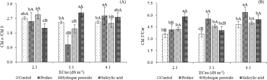
Chl a/Chl b ratio (A) and Chl T/Car ratio (B) of yellow bell pepper plants, as a function of the interaction between the salinity levels of the nutrient solution (ECns) and abiotic elicitors (E), grown in an NFT hydroponic system, at 45 days after transplanting.
Maintaining a 3:1 ratio between Chl a and Chl b contents is considered adequate for C3 plants (LICHTENTHALER; BABANI, 2022). As observed in the study, the values obtained were close to this ideal, except in plants that received application of proline in the saline nutrient solution of 3.1 dS m-1 and salicylic acid under ECns of 2.1 dS m-1, which kept the values of chlorophyll b high, leading to a decrease in the intensity of absorption of the reaction centers in the photosystem, which may affect the utilization of fluorescence by the plant (SIMKIN et al., 2022; VELOSO et al., 2023).
The increase in nutrient solution salinity from 2.1 dS m-1 to 4.1 dS m-1 contributed to increasing the Chl T/ Car ratio of bell pepper plants in control treatment by 34.35% (Figure 4B). This fact is related to the need to supply the synthesis of chlorophylls, which are widely degraded under conditions of salt stress (FENG et al., 2023). In turn, the application of elicitors resulted in different responses as a function of the salinity level of the nutrient solution, with highlights for salicylic acid, which promoted the highest value in plants grown under ECns of 2.1 dS m-1 (5.80), and proline, responsible for increments of 52.49 and 32.22% compared to plants of the control treatment in the saline nutrient solutions of 3.1 and 4.1 dS m-1, respectively. In this case, the maintenance of high contents of chlorophyll, compared to carotenoids, promoted by the application of elicitors, occurs as a strategy to maintain the photon absorption rate, as the plant invests in antioxidant activity to avoid photoinhibition (AHMAD et al., 2019; SIDDIQUI et al., 2022).
Regarding electrolyte leakage (%EL) in the leaf blade of the bell pepper plants (Figure 5A), it was observed that foliar application of proline resulted in increments of 18.07% and 28.19% in plants subjected to ECns of 2.1 and 4.1 dS m-1, respectively, compared to the control treatment. This effect is associated with the increase in the Chl T/Car ratio, which intensifies the photochemical activity of the plant, but can also compromise the integrity of the cell membrane under conditions of high salinity. Notably, plants treated with salicylic acid showed the lowest %EL values under ECns of 2.1 and 3.1 dS m-1, with reductions of 19.01 and 39.64%, respectively, compared to the control. This response is in line with the role of this phytohormone in controlling reactive oxygen species (ROS), minimizing photochemical damage to cell integrity (SILVA et al., 2023). It is worth mentioning that, even with the increase in salinity, the behavior of the treatments was maintained in relation to the conditions of low salinity, indicating that the toxic effect of salinity was not expressively established in the leaves of bell pepper, which differs from what is normally observed in situations of salt stress (EL MOUKHTARI et al., 2020; BOUZROUD et al., 2023).

Electrolyte leakage - %EL (A) and relative water content - RWC (B) in the leaf blade of yellow bell pepper plants, as a function of the interaction between the salinity levels of the nutrient solution (ECns) and abiotic elicitors (E), grown in an NFT hydroponic system, at 45 days after transplanting.
The relative water content of the bell pepper plants was not affected by the increase in nutrient solution salinity (Figure 5B). In turn, the application of abiotic elicitors promoted a significant effect on plants that received hydrogen peroxide application, compared to the control treatment at salinity level 2.1 dS m-1 and to proline under saline nutrient solution of 4.1 dS m-1. It is worth pointing out that the ability to maintain cell turgidity is essential for the adaptation of plants to salt stress, as it ensures the continuity of the water flow essential for photosynthesis (FENG et al., 2023).
Under conditions of salt stress, the high concentration of salts often limits the absorption of water and nutrients by plants due to osmotic and ionic effects, which affect several physiological processes, including leaf blade hydration, pigment production, and the efficiency of photochemical activity (VELOSO et al., 2023; SILVA et al., 2023). However, the results of this study suggest that the preservation of the observed physiological parameters can be attributed to the competition between the nutrients in the solution and specific ions, favoring selectivity in the root system (MENDONÇA et al., 2022). In addition, the absence of matric potential contributes to attenuating the negative impacts on water and nutrient absorption, thus assisting in the maintenance of cell turgidity, metabolism, and photosynthetic activity (BAYRAM; DINLER; TASCI, 2014).
There was a significant effect of the interaction between the factors salinity levels of the nutrient solution and abiotic elicitors on plant height, number of leaves, and dry mass accumulation in different parts of yellow bell pepper plants (Table 3). The salinity levels of the nutrient solution had a significant influence on the total number of fruits per plant. However, no significant effects of any source of variation were observed for the stem diameter of yellow bell pepper at 45 DAT.
Summary of the analysis of variance for plant height (PH), stem diameter (SD), number of leaves (NL), leaf dry mass (LDM), stem dry mass (SDM), root dry mass (RDM), total dry mass (TDM), and total number of fruits per plant (NFr) of yellow bell pepper grown with saline nutrient solution (ECns) and application of abiotic elicitors (E) in NFT hydroponic system.
The application of salicylic acid resulted in a lower plant height in the saline nutrient solution of 2.1 dS m-1, with a reduction of 28.97% compared to the control treatment (Figure 6A). Under the other levels of ECns, there were no significant differences due to the application of elicitors compared to control plants. However, when comparing the elicitors in the 3.1 dS m-1 solution, foliar application of proline resulted in plants with lower height compared to those that received hydrogen peroxide and salicylic acid, showing reductions of 24.68 and 22.21%, respectively. This fact may be related to the function of hydrogen peroxide and salicylic acid in the activation of the plant’s defense system, as both act as stress condition signaling agents, exerting a positive influence with the increase in nutrient solution salinity and promoting greater adaptation to the environment (FARHADI; GHASSEMI-GOLEZANI, 2020; GUEDES et al., 2024).

Plant height (A) and number of leaves (B) of yellow bell pepper plants, as a function of the interaction between the salinity levels of the nutrient solution (ECns) and abiotic elicitors (E), grown in NFT hydroponic system, at 45 days after transplanting.
For the number of leaves of bell pepper plants (Figure 6B), foliar application of proline and hydrogen peroxide resulted in increments of 54.54 and 48.48%, respectively, compared to control plants in the saline nutrient solution of 2.1 dS m-1. Plants grown under ECns of 3.1 dS m-1 showed the highest number of leaves (56 leaves) under foliar application of salicylic acid, a behavior that was maintained with the applicationofelicitors.WiththeincreaseofECns to 4.1 dS m-1, there was a reduction to 44 leaves in the control plants, but this value did not differ significantly from the number found under ECns of 3.1 dS m-1, a behavior similar to that observed in the elicitors compared to control plants. However, under the highest salinity level of the nutrient solution, plants that received salicylic acid had an NL (59 leaves per plant) 51.28% higher than that found in plants under proline application (39 leaves). The increase in the number of leaves with the increase in ECns may be associated with a reduction in the photosynthetically active area of the plant, leading to a higher energy expenditure to meet its photosynthetic demand (BOUZROUD et al., 2023).
The ECns of 4.1 dS m-1 caused a decrease in the leaf dry mass accumulation of yellow bell pepper (Figure 7A), with a reduction of 22.80% compared to that found in control plants under a solution of 2.1 dS m-1 (13.73 g per plant). Under the same salinity condition, the elicitors showed positive responses to stress, promoting increments of 20.75, 28.58 and 36.51% in plants under foliar application of proline, hydrogen peroxide and salicylic acid compared to the control, respectively. In plants cultivated under ECns of 3.1 dS m-1, no losses were observed in LDM accumulation, and there were positive responses to the application of hydrogen peroxide (16.63 g per plant) and salicylic acid (17.4 g per plant) compared to the control. In turn, under ECns of 2.1 dS m-1, hydrogen peroxide promoted the highest LDM accumulation (19.4 g per plant), followed by proline application (15.8 g per plant).

Leaf dry mass - LDM (A), stem dry mass - SDM (B), root dry mass - RDM (C), and total dry mass - TDM (D) of yellow bell pepper plants, as a function of the interaction between the salinity levels of the nutrient solution (ECns) and abiotic elicitors (E), grown in NFT hydroponic system, at 89 days after transplanting.
Salt stress causes reduction in leaf area, a behavior associated with the process of acclimatization of the plant to stress conditions, in which it reduces leaf area as a way to minimize excessive photon uptake and, possibly, through metabolic imbalance, excessive accumulation of reactive oxygen species (FENG et al., 2023; VELOSO et al., 2023). This result differs from that observed in plants under the application of elicitors, which contribute to reducing the production of ROS and maintaining the photochemical uptake area, increasing biomass accumulation in the leaf (AHMAD et al., 2019).
For stem dry mass in plants under saline nutrient solution of 2.1 dS m-1 (Figure 7B), the highest values were obtained when applying hydrogen peroxide (12.13 g per plant) and salicylic acid (10.90 g per plant), with increments of 39.26 and 25.14%, respectively, compared to plants of the control treatment. In plants cultivated under saline nutrient solution of 3.1 dS m-1, the elicitors promoted increases in SDM, with increments compared to plants of the control treatment of 26.16, 36.71 and 37.75% when applying proline, hydrogen peroxide and salicylic acid, respectively. On the other hand, in plants cultivated under ECns of 4.1 dS m-1, foliar application of salicylic acid promoted the highest SDM (10.4 g per plant), an increase of 21.50% compared to that observed in plants of the control treatment, differing from those that received proline application, which had the lowest value (6.39 g per plant), but without differing from that obtained with the application of proline under ECns of 2.1 dS m-1.
The results obtained for SDM are consistent with the values found for PH of yellow bell pepper with the increase in nutrient solution salinity. However, elicitors provide increments that differentiate them from control plants, possibly due to cell expansion, demonstrating a greater flow of photoassimilates to the plant structure (SHARMA et al., 2019).
The root dry mass of yellow bell pepper plants in the control treatment increased with the increase in nutrient solution salinity (Figure 7C), with increments of 44.60 and 53.17% when the ECns increased to 3.1 and 4.1 dS m-1, respectively. With the application of elicitors, there were increments of 46.35 and 28.57% in RDM with the foliar application of proline and hydrogen peroxide, respectively, compared to plants of the control treatment under the ECns of 2.1 dS m-1. Foliar application of hydrogen peroxide also promoted benefits in plants grown under ECns of 3.1 dS m-1 (11.25 g per plant), and together with the application of salicylic acid (11.17 g per plant), led to the highest accumulation of RDM in yellow bell pepper plants. In plants grown under saline nutrient solution of 4.1 dS m-1, salicylic acid differed significantly from the control (average of 6.53 g per plant), with a value 31.10% lower than that obtained in plants of the control treatment.
Greater root growth in plants grown under salt stress is generally associated with water limitation caused by the accumulation of salts in the nutrient solution, leading to greater investment in root production to meet the plant’s water demand (BOUZROUD et al., 2023). However, with the use of elicitors, there is often an accumulation of osmolytes in the root system, establishing a balance in the flow of solution to the xylem vessels under conditions of high salinity (SHARMA et al., 2019), a behavior that helps to explain the lower contribution to RDM by salicylic acid under ECns of 4.1 dS m-1.
The total dry mass of bell pepper plants was not significantly affected by nutrient solution salinity in the control treatment (Figure 7D). However, with the use of abiotic elicitors, under the ECns of 2.1 dS m-1, all of them resulted in increments in TDM, especially the foliar application of hydrogen peroxide (39.63 g per plant), which promoted an increase of 37.84% compared to plants in the control treatment (28.75 g per plant). The benefits of foliar application of hydrogen peroxide were observed at the other levels of ECns, with increments of 27.20 and 14.33% compared to plants in the control treatment under ECns of 3.1 dS m-1 and 4.1 dS m-1, respectively. In addition, foliar application of salicylic acid had a beneficial effect on plants grown under saline nutrient solution of 3.1 dS m-1, with a value 29.30% higher than that obtained in plants of the control treatment.
Thus, the cultivation in saline solution maintained the fixation of photoassimilates in the bell pepper plants, which can be attributed to the efficiency in the stress signaling process, which associated with the 45-day growing period, favors the maintenance of acceptable levels of Na+ and Cl-, maintaining the integrity of the plant’s metabolic and photosynthetic activity (BAYRAM; DINLER; TASCI, 2014).
The use of elicitors, especially hydrogen peroxide, intensified this effect, possibly by keeping the production of secondary metabolites high, contributing to the maintenance of chlorophyll synthesis, increasing energy uptake for the production of ATP and NDPH, and consequently, contributing to carbon fixation in the Calvin cycle (SIDDIQUI et al., 2022).
As highlighted in the summary of the analysis of variance (Table 3), there was no significant effect of elicitors and interaction between factors (ECns × E) for the total number of fruits per plant. Such a response may be related to the time of exposure to stress and the frequency of application of the elicitors. Plants grown under ECns of 4.1 dS m-1 differed significantly from those subjected to nutrient solution salinity of 3.1 dS m-1 (Figure 8). However, when comparing the NFr of plants grown under ECns of 2.1 dS m-1 with that of plants that received nutrient solution of 3.1 and 4.1 dS m-1, there was no significant difference between them. This indicates that the translocation of photoassimilates to the fruits is maintained with the increase of salinity in the nutrient solution, reinforcing the idea that the nutrient solution of up to 4.1 dS m-1 can be used for the cultivation of yellow bell pepper.
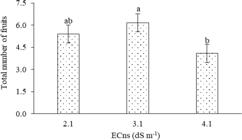
Total number of fruits per plant of hydroponic yellow bell pepper plants, as a function of salinity levels of nutrient solution (ECns), at 89 days after transplanting.
CONCLUSION
Salicylic acid at a concentration of 3.6 mM leads to lower growth in height of yellow bell pepper plants under saline nutrient solution of 2.1 dS m-1. Application of salicylic acid, proline, and hydrogen peroxide at concentrations of 3.6 mM, 10 mM, and 40 μM, respectively, increases the synthesis of photosynthetic pigments and biomass accumulation of yellow bell pepper under conditions of salt stress in hydroponic cultivation. Using 40 μM hydrogen peroxide and 3.6 mM salicylic acid results in higher contents of chlorophyll total, carotenoids, and total dry mass in bell pepper plants grown under nutrient solution with electrical conductivity of 4.1 dS m-1. Nutrient solution salinity of 3.1 dS m-1 promotes a higher number of fruits in yellow bell pepper.
ACKNOWLEDGEMENTS
Authors acknowledge support received from the INCT in Sustainable Agriculture in the Tropical Semi-Arid Region - INCT AgriS (CNPq/FUNCAP/CAPES), Process 406570/2022-1 (CNPq) and Process INCT-35960-62747.65.95/51 (FUNCAP).
Data Availability:
The data that support the findings of this study can be made available, upon reasonable request, from the corresponding author .
REFERENCES
- AHMAD, A. et al. Effect of exogenous application of osmolytes on growth and yield of wheat under drought conditions. Journal of Environmental and Agricultural Sciences, 21: 6-13, 2019.
- ALMEIDA, A. H. B.; ALMEIDA, H. S. A.; OLIVEIRA, M. K. T. Perspectivas da gestão hídrica no semiárido brasileiro para a irrigação. Disciplinarum Scientia| Naturais e Tecnológicas, 22: 119-132, 2021.
- ALVARES, C. A. et al. Koppen’s climate classification map for Brazil. Meteorologische Zeitschrift, 22: 711-728, 2013.
- ARAGÃO, J. et al. Hydrogen peroxide in the mitigation of salt stress in bell pepper. Semina: Ciências Agrárias, 44: 217-236, 2023.
- ARNON, D. I. Copper enzymes in isolated cloroplasts: polyphenoloxidases in Beta vulgaris Plant Physiology, 24: 1-15, 1949.
- BAYRAM, D.; DINLER, B.S.; TASCI, E. Differential response of bean (Phaseolus vulgaris L.) roots and leaves to salinity in soil and hydroponic culture. Notulae Botanicae Horti Agrobotanici Cluj-Napoca, 42: 219-226, 2014.
- BOUZROUD, S. et al. Salt stress responses and alleviation strategies in legumes: a review of the current knowledge. 3 Biotech, 13: e287, 2023.
- DORNELES, A. O. S. et al. Responses of Solanum tuberosum L. to water deficit by matric or osmotic induction. Potato Research, 64: 515-534, 2021.
- EL MOUKHTARI, A. et al. How does proline treatment promote salt stress tolerance during crop plant development? Frontiers in Plant Science, 11:e553924, 2020.
- FARHADI, N.; GHASSEMI-GOLEZANI, K. Physiological changes of Mentha pulegium in response to exogenous salicylic acid under salinity. Scientia Horticulturae, 267: e109325, 2020.
- FENG, D. et al. Categories of exogenous substances and their effect on alleviation of plant salt stress. European Journal of Agronomy, 142: e126656, 2023.
- GUEDES, M. A. et al. H2O2 as attenuator of salt stress on the physiology and growth of hydroponic cherry tomato. Revista Caatinga, 37: e12002, 2024.
- HOAGLAND, D. R.; ARNON, D. I. The water-culture method for growing plants without soil. 2. ed. Circular. Berkeley: California Agricultural Experiment Station, 1950. n. 347, 32 p.
-
IBGE - Instituto Brasileiro de Geografia e Estatística. Sistema IBGE de recuperação automática - SIDRA: censo agropecuário 2017. Resultados definitivos. 2017. Available at: <https://sidra.ibge.gov.br/pesquisa/censo-agropecuario/ censo-agropecuario-2017>. Access on: May 2, 2025.
» https://sidra.ibge.gov.br/pesquisa/censo-agropecuario/censo-agropecuario-2017 - LICHTENTHALER, H. K.; BABANI, F. Contents of photosynthetic pigments and ratios of chlorophyll a/b and chlorophylls to carotenoids (a+b)/(x+c) in C4 plants as compared to C3 plants. Photosynthetica, 60: 3-9, 2022.
- LIMA, G. S. et al. Irrigação com águas salinas e aplicação de prolina foliar em cultivo de pimentão ‘All Big’. Comunicata Scientiae, 7: 513-522, 2016.
- MARENGO, J. A. et al. Assessing drought in the drylands of northeast Brazil under regional warming exceeding 4 ºC. Natural Hazards, 103: 2589-2611, 2020.
- MENDONÇA, A. J. T. et al. Salicylic acid modulates okra tolerance to salt stress in hydroponic system. Agriculture, 12: e1687, 2022.
- OLATUNJI, T. L.; AFOLAYAN, A. J. The suitability of chili pepper (Capsicum annuum L.) for alleviating human micronutrient dietary deficiencies: A review. Food Science & Nutrition, 6: 2239-2251, 2018.
- RICHARDS, L. A. Diagnosis and improvement of saline and alkali soils. 1. ed. Washington: U. S. Department of Agriculture, 1954. 160 p. (Agriculture Handbook, 60).
- SANTOS, A. C. et al. Brackish water: an option for producing hydroponic Capsicum annuum in laminar flows of mineral nutrients. Revista Colombiana de Ciencias Horticolas, 12: 147-155, 2018.
- SCOTTI-CAMPOS, P. et al. Physiological responses and membrane integrity in three Vigna genotypes with contrasting drought tolerance. Emirates Journal of Food and Agriculture, 25: 1002-1013, 2013.
- SHARMA, A. et al. Phytohormones regulate accumulation of osmolytes under abiotic stress. Biomolecules, 9: e285, 2019.
- SHARMA, P. et al. Reactive oxygen species, oxidative damage, and antioxidative defense mechanism in plants under stressful conditions. Journal of Botany, 2012: e217037, 2012.
- SIDDIQUI, S. A. et al. Photosynthetic gas exchange and chlorophyll a fluorescence in Salicornia brachiata (Roxb.) under osmotic stress. Journal of Plant Growth Regulation, 41: 429-444, 2022.
- SILVA, A. A. R. et al. Salicylic acid alleviates the effects of salt stress on the physiology, growth, and production of hydroponic okra. Arid Land Research and Management, 37: 602-618, 2023.
- SILVA, A. A. R. et al. Salicylic acid as an attenuator of salt stress in soursop. Revista Caatinga, 33: 1092-1101, 2020.
- SIMKIN, A. J. et al. The role of photosynthesis related pigments in light harvesting, photoprotection and enhancement of photosynthetic yield in plant. Photosynthesis Research, 152: 23-42, 2022.
- VELOSO, L. L. S. A. et al. H2O2 alleviates salt stress effects on photochemical efficiency and photosynthetic pigments of cotton genotypes. Revista Brasileira de Engenharia Agrícola e Ambiental, 27: 34-41, 2023.
- WEATHERLEY, P. E. Studies in the water relations of the cotton plant. I - the field measurements of water deficits in leaves. New Phytologist, 49: 81-87, 1950.
Edited by
-
Editor in Chief:
Aurélio Paes Barros Júnior
-
Section Editor:
João Everthon da Silva Ribeiro

 Same uppercase letters indicate no significant difference between the salinity levels of the nutrient solution for the same abiotic elicitor and same lowercase letters indicate no significant difference between the abiotic elicitors at the same ECns level by Tukey test (p≤0.05). Vertical bars represent the standard error of the mean (n = 3).
 Same uppercase letters indicate no significant difference between the salinity levels of the nutrient solution for the same abiotic elicitor and same lowercase letters indicate no significant difference between the abiotic elicitors at the same ECns level by Tukey test (p≤0.05). Vertical bars represent the standard error of the mean (n = 3).
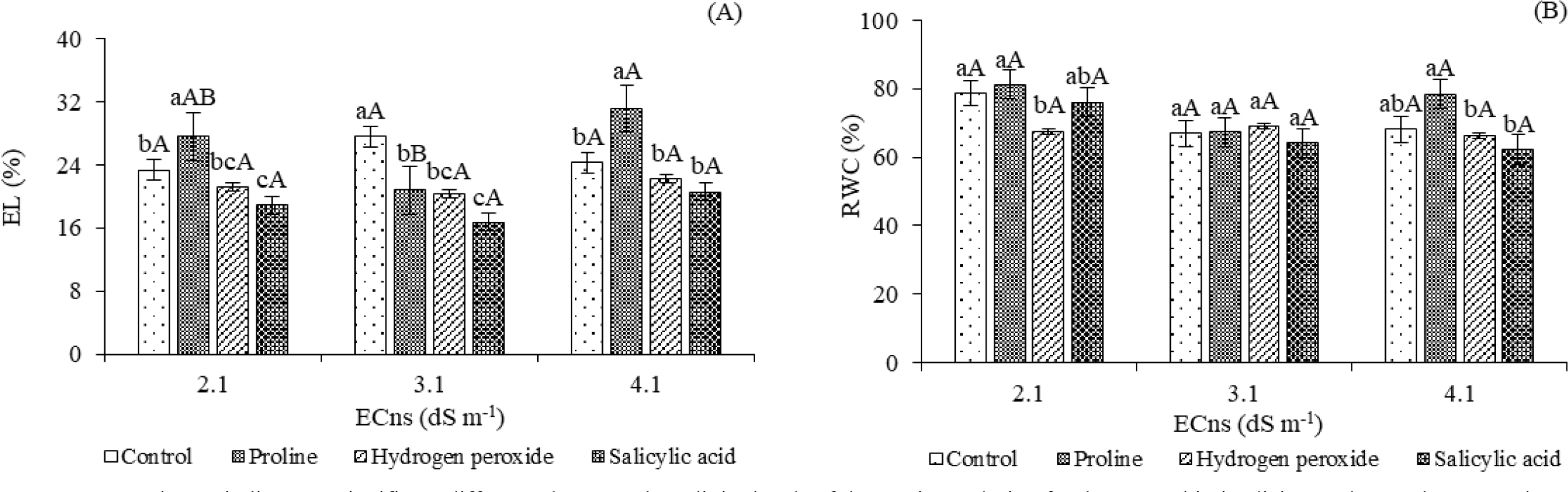 Same uppercase letters indicate no significant difference between the salinity levels of the nutrient solution for the same abiotic elicitor and Same lowercase letters indicate no significant difference between the abiotic elicitors at the same ECns level by Tukey test (p≤0.05). Vertical bars represent the standard error of the mean (n = 3).
 Same uppercase letters indicate no significant difference between the salinity levels of the nutrient solution for the same abiotic elicitor and same lowercase letters indicate no significant difference between the abiotic elicitors at the same ECns level by Tukey test (p≤0.05). Vertical bars represent the standard error of the mean (n = 3).
 Same uppercase letters indicate no significant difference between the salinity levels of the nutrient solution for the same abiotic elicitor and same lowercase letters indicate no significant difference between the abiotic elicitors at the same ECns level by Tukey test (p≤0.05). Vertical bars represent the standard error of the mean (n = 3).
 Means followed by different letters indicate a significant difference between the treatments by Tukey test (p ≤ 0.05); Vertical bars represent the standard error of the mean (n = 3).