Diagnosis and export of macronutrients in maize for silage under doses of nitrogen via fertigation
ABSTRACT
Maize is prominent in silage production; however, the cropping season may compromise its yield performance. Nevertheless, nitrogen fertilization via irrigation has the potential to ensure high yield. The objective was to evaluate the levels of nitrogen (N), phosphorus (P), potassium (K), calcium (Ca), and magnesium (Mg) in the diagnostic leaf and their exports in maize for silage cultivated under increasing doses of N via fertigation, in Canindé de São Francisco, Sergipe, Brazil. The experiment was conducted in summer (January to April) and winter (June to September) of 2016. The experimental design was a randomized complete block design, with four replications and four N doses (0, 80, 160, and 240 kg ha⁻1), with a combined analysis of the growing seasons. Nutrient contents in the diagnostic leaf were increased with increasing N doses, except for Ca. Maize cultivated in winter showed higher contents of N (28.65 g kg⁻1) and P (3.59 g kg⁻1), while in summer the plants showed higher values for K (25.2 g kg⁻1), Ca (4.60 g kg⁻1), and Mg (8.52 g kg⁻1). The decreasing order of nutrient export was: N > K > Mg > Ca > P. In summer, exports of P (64.34 kg ha⁻1), K (156.99 kg ha⁻1), and Mg (78.35 kg ha⁻1) were favored up to the N dose of 124.43 kg ha⁻1. In the winter season, there were higher exports of N (185.01 kg ha⁻1), Mg (78.83 kg ha⁻1), and Ca (74.43 kg ha⁻1), especially with the application of 240 kg ha⁻1 of N.
Keywords:
Zea mays L.; Nutrient absorption; Nitrogen fertilization; Plant physiology.
RESUMO
O milho possui destaque na produção de silagem, porém a época de cultivo pode comprometer seu desempenho produtivo. Todavia, a adubação nitrogenada via irrigação apresenta potencial de garantir elevada produtividade. Objetivou-se, neste trabalho, avaliar os teores de nitrogênio (N), fósforo (P), potássio (K), cálcio (Ca) e magnésio (Mg) na folha diagnóstica e suas exportações no milho para silagem cultivado sob doses crescentes de N via fertirrigação, em Canindé de São Francisco/SE. O experimento foi conduzido no verão (janeiro a abril) e inverno (junho a setembro) de 2016. O delineamento foi em blocos ao acaso, com quatro repetições e quatro doses de N (0; 80; 160 e 240 kg ha-1), sendo realizada análise conjunta das safras. Os teores de nutrientes na folha diagnóstica foram incrementados com as doses crescentes de N, com exceção para o Ca. O milho cultivado no inverno apresentou maiores teores de N (28,65 g kg-1) e P (3,59 g kg-1), enquanto no verão as plantas tiveram valores superiores para K (25,2 g kg-1), Ca (4,60 g kg-1) e Mg (8,52 g kg-1). A ordem decrescente de exportação dos nutrientes foi: N > K > Mg > Ca > P. No verão, as exportações de P (64,34 kg ha-1), K (156,99 kg ha-1) e Mg (78,35 kg ha-1) foram beneficiadas até a dose nitrogenada de 124,43 kg ha-1. Na safra de inverno houve maiores exportações de N (185,01 kg ha-1), Mg (78,83 kg ha-1) e Ca (74,43 kg ha-1), sobretudo com aplicação de 240 kg ha-1 de N.
Palavras-chave:
Zea mays L.; Absorção de nutrientes; Adubação nitrogenada; Fisiologia vegetal.
INTRODUCTION
Maize (Zea mays L.) is one of the main agricultural crops worldwide, widely used in human food, in the formulation of animal feed, and in the production of silage for intensive livestock systems. In Brazil, maize silage is strategic for maintaining the productivity of dairy and beef herds, especially in regions with strong water seasonality, in which maintaining high biomass production depends on efficient nutritional and water management (ALUOCH et al., 2022).
Among the nutrients, nitrogen (N) is the most demanded by the crop, participating in the synthesis of proteins, enzymes, chlorophyll, and structures essential for growth and biomass accumulation (SZULC et al., 2021). Recent trials with maize for silage show that intermediate doses of N (180-200 kg ha⁻1) applied in split applications via fertigation maximize yield, forage quality, and efficiency of water and N use (DEMIR; KEÇECI; TUNÇ, 2021; WANG et al., 2023; CHI et al., 2025). However, the inappropriate use of N reduces its use efficiency, favors losses through volatilization, leaching, and denitrification, increases costs, and intensifies environmental impacts (JIANG et al., 2025).
Fertigation has stood out as a strategy to increase fertilizer efficiency, as it allows the fractionated application of water and nutrients directly in the root zone, synchronizing supply and crop demand. In addition to directly influencing N nutrition, N management alters the absorption and balance of other macronutrients, affecting nutritional status, biomass productivity, and nutrient export by the aboveground part (PASLEY et al., 2019).
In semi-arid environments, such as the Brazilian Northeast, edaphoclimatic factors low and irregular rainfall, high air temperatures, and soils often poor in organic matter modify the dynamics of mineralization, leaching, and volatilization of nutrients, making the cropping season and water and N management decisive for crop performance (LI et al., 2023; ZOU; CHENG; SHEN, 2023). Studies conducted in semi-arid areas of Asia and Africa show that the integration between fertigation, optimized N management, and complementary use of organic sources or biofertilizers improves the availability of N, phosphorus (P), and potassium (K), nutrient absorption, and yield of maize (EMAM; OSMAN, 2021; GUL et al., 2021; ABDO; EL-SOBKY; ZHANG, 2022).
Given the importance of nutritional management in irrigated systems in semi-arid regions and the lack of specific information for maize intended for silage under these conditions, it becomes necessary to understand how increasing doses of N via fertigation affect not only yield but also mineral nutrition and nutrient export by the crop. Thus, the objective was to evaluate the levels of nitrogen (N), phosphorus (P), potassium (K), calcium (Ca), and magnesium (Mg) in the diagnostic leaf and their exports in maize for silage cultivated under increasing doses of N via fertigation, in Canindé de São Francisco, Sergipe, Brazil.
MATERIALS AND METHODS
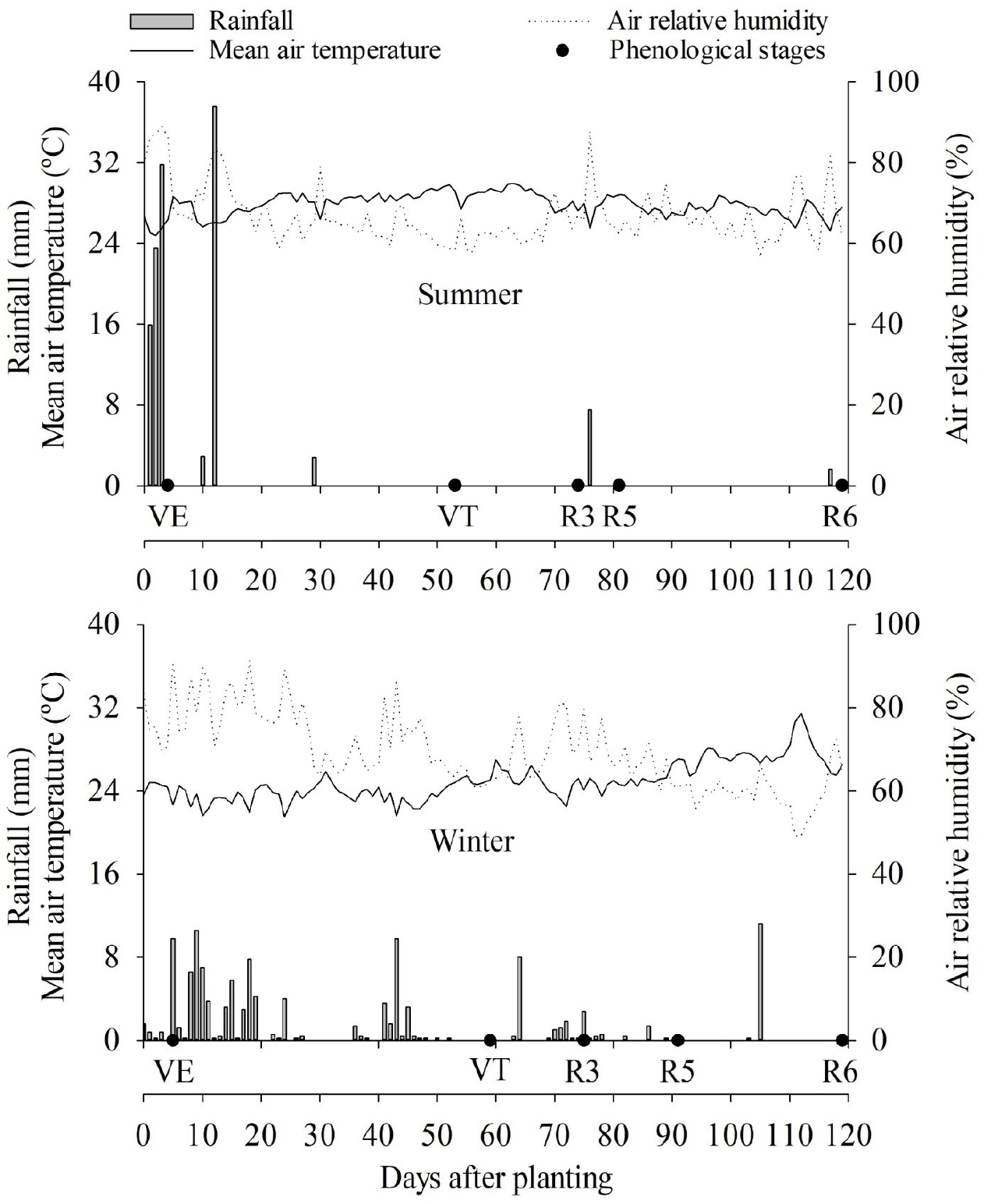
The experiment was conducted in the field, consisting of two experiments corresponding to two agricultural seasons, one in the summer (January to May) and the other in the winter (June to October) of 2016, on a property located in an irrigated perimeter supplied with water from the São Francisco River, in the municipality of Canindé de São Francisco, Sergipe State, Brazilian semi-arid region (9°40’27” South, 37°45’45” West, 194 m altitude). The climate of the region, according to Köppen’s classification, is BSh’, semi-arid, with a rainy season concentrated in the months of April, May, and June. The average meteorological data for the period in which the experiments were conducted were obtained from an automatic weather station installed 6 km away from the experimental area (Figure 1).

Values of accumulated rainfall, average air temperature, relative air humidity, and indication of phenological stages (VE: emergence; VT: tasseling; R3: milky grains; R5: doughy grains; R6: physiological maturity) of maize for silage fertigated with nitrogen doses, in the summer and winter seasons of 2016, in Canindé de São Francisco, State of Sergipe, Brazil.
The soil of the experimental areas was classified as Chromic Luvisol, with undulating topography and clayey texture particle size values of 478.20 g kg⁻1 of sand, 98.00 g kg⁻1 of silt, and 423.80 g kg⁻1 of clay, with chemical characteristics described in Table 1.
Chemical analyses of the soil of the experimental areas (0 to 20 cm), in the summer and winter seasons of 2016, in Canindé de São Francisco, State of Sergipe, Brazil.
The experimental design used was a randomized block design, with four replications. In both agricultural seasons, the treatments consisted of four N doses (0, 80, 160, and 240 kg ha⁻1). These were split, applying 15% of the N dose at 15 days after emergence (DAE), 50% at 20 DAE, and 35% at 40 DAE, through a Venturi-type fertilizer injector.
A zinc (Zn) dose (2.0 kg ha⁻1) was applied via fertigation to all treatments (SOBRAL et al., 2007), at the same proportions and application times as N. The N and Zn doses were supplied through the fertilizers urea and zinc sulfate, respectively. Considering the history of the area (recently opened) and the soil analysis, liming and fertilization with P and K sources were not necessary.
Each plot consisted of six rows, 6 m in length, spaced 1 m apart, totaling an area of 36 m2 (6 m × 6 m). The four central rows were considered the usable area of the plot (22.4 m2), excluding the border.
Soil preparation was carried out with two cross harrowings to an average depth of 20 cm. Subsequently, the plots were marked and sowing was performed manually using Bt Feroz maize (Syngenta®), at a spacing of 1 m × 0.2 m (50,000 plants ha⁻1), with planting carried out on 01/20/2016 (summer) and 06/17/2016 (winter). This cultivar is a double hybrid, early cycle, with hard and orange-colored grains.
The experiment used a localized drip irrigation system, with spacing of 0.2 m between emitters and an average flow rate of 1.2 L h⁻1, with the irrigation depth obtained through water balance, considering precipitation and crop evapotranspiration (ETc). The gross irrigation depths totaled 254 and 179 mm in the summer and winter seasons, respectively.
The cultural practices adopted during the experiment followed the standards used by producers in the region. Weed control was carried out through the application of the herbicide Atrazine (500 g L⁻1), applied at 23 DAE.
At 49 DAE (summer) and 54 DAE (winter), at the time of the appearance of the female inflorescence (silking stage), the basal third of the leaf opposite to and below the first ear was collected, excluding the midrib, from ten plants randomly selected within the usable area of each plot.
Subsequently, the dry mass of these leaves was obtained after drying in a forced-air circulation oven, at a temperature of 65 °C, until constant mass was reached. The dry plant material was placed in transparent plastic bags, identified, and sent to the laboratories of the Federal Institute of Alagoas, Piranhas Campus, for determination of nutrient contents. The diagnostic leaves were ground in a stainless steel knife mill, Wiley type (Tecnal - TE-650), using a 2-mm-mesh sieve, and then stored in properly identified plastic bags.
N content (g kg⁻1) was determined using 200 mg of plant sample and transferring it to a digestion tube, where 1 mL of 30% hydrogen peroxide and 3 mL of sulfuric acid were added. Subsequently, digestion was carried out in a digestion block with heating at 180-190 °C for two hours, followed by an additional hour at 350 °C.
For chemical analysis of P, K, Ca, and Mg contents (g kg⁻1), the material underwent wet digestion with microwave heating (CEM - Mars Xpress). A total of 200 mg of plant material was used, and the samples were placed in perfluoroalkoxy (PFA) Teflon tubes, being digested with a mixture of 5 mL of nitric acid (70%) and 3 mL of hydrogen peroxide (30%), following a programmed heating procedure. After digestion, the samples were diluted with distilled water in a 25 mL volumetric flask.
Subsequently, P was determined by colorimetry at a wavelength of 725 nm, while K was quantified by flame photometry. In the Agricultural and Environmental Chemistry Laboratory of the Federal Rural University of Pernambuco (UFRPE) - Academic Unit of Garanhuns (UAG), Ca and Mg were determined by Flame Atomic Absorption Spectrophotometry (Shimadzu - Varian AA-240).
Harvests were carried out at the R5 phenological stage (doughy grains), corresponding to 77 DAE (summer) and 86 DAE (winter), that is, when the plants had an average dry matter content of approximately 35%. After harvest, three plants from the usable area were separated into leaves, stem, tassel, and ears for determination of fresh mass (g plant⁻1). Subsequently, dry mass was determined after drying in a forced-air oven at 65 °C until constant mass was reached. Chemical analyses of nutrients were performed according to the methodology described for the diagnostic leaves.
Based on dry mass and macronutrient content in each plant part, final nutrient accumulation (mg plant⁻1) was determined and, subsequently, nutrient export through silage harvest (kg ha⁻1) was estimated, considering a population density of 50,000 plants ha⁻1.
For each agricultural season (summer and winter), analysis of variance was performed using the Sisvar software, version 5.6. Subsequently, a combined analysis was performed for variables with homogeneity of variances between seasons (PIMENTEL-GOMES, 2009). In the same software, regression equations were selected for N doses based on the following criteria: biological explanation of the phenomenon, simplicity of the equation, and significance of parameters using Student’s t-test at 5% probability level. When combined analysis was possible, means were compared using Tukey’s test at 5% probability level; otherwise, the non-parametric Mann-Whitney test was applied at 5% probability level.
RESULTS AND DISCUSSION
Regarding the K content in the diagnostic leaf, it was not possible to perform a combined analysis of variance due to the lack of homogeneity of variances between the seasons. According to the non-parametric Mann-Whitney test for comparison between seasons (p < 0.001), there was a higher K content in the summer season (22.7 g kg⁻1). The analysis of variance for each agricultural season demonstrated the existence of a significant effect of N dose on K contents in the diagnostic leaf of maize in both summer and winter.
The values of K content in the diagnostic leaf were described by a quadratic model for the summer season, with a maximum of 25.20 g kg⁻1 of K at a dose of 161.48 kg ha⁻1 of N (Figure 2A), whereas for the winter season the maximum was 11.21 g kg⁻1 of K at a dose of 119.37 kg ha⁻1 of N (Figure 2B).
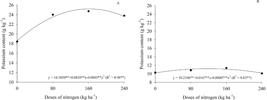
Potassium content in the diagnostic leaf of maize fertigated with increasing doses of nitrogen in the summer (A) and winter (B) seasons in the municipality of Canindé de São Francisco, State of Sergipe, Brazil.
According to Raij (2011), for maize cultivation, the adequate levels of K in the diagnostic leaf range from 17 to 35 g kg⁻1, with only the winter season showing values below this range. This result can be explained by the influence of the time of year, since in the winter season the higher rainfall volume may have caused losses of this macronutrient, considering that K⁺ ions move easily in soil solution due to their high mobility, causing losses through leaching (NG et al., 2022). The nutrient lost through leaching is in a form absorbable by the plant, in this case K⁺; therefore, this form of the nutrient has high solubility in water (RAIJ, 2011), explaining the lower concentration of this nutrient in the leaves during winter.
For the contents of N, P, Ca, and Mg, the results highlighted significant effects of the seasons on all variables, whereas the effect of N doses was significant for N, P, and Mg. The interaction between the two factors was significant only for P and Mg.
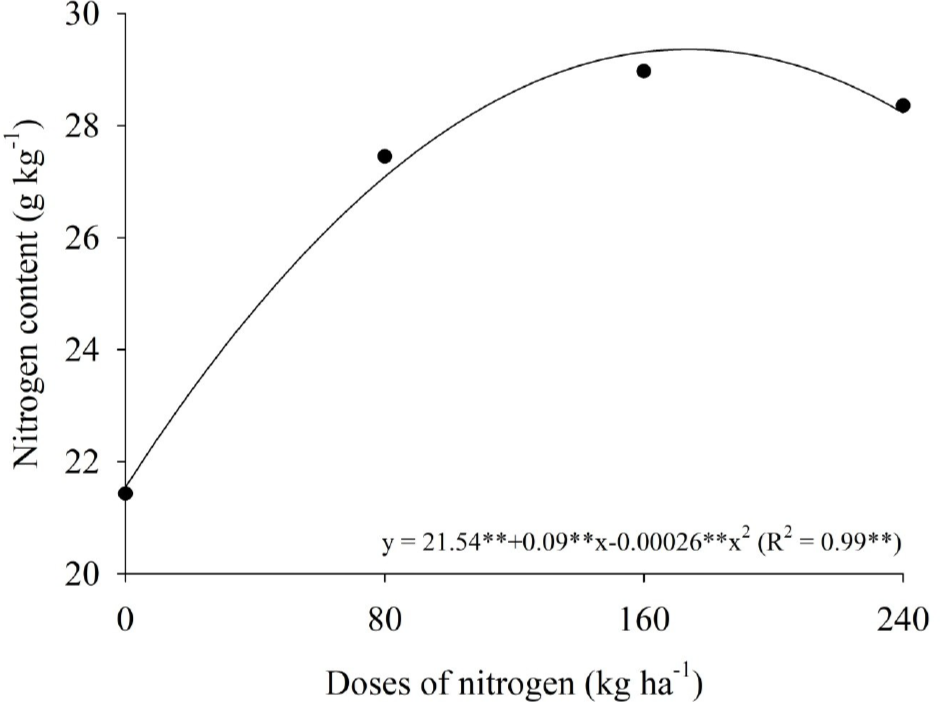
The response of leaf N content as a function of N doses in the soil resulted in a quadratic model fitting representative of both seasons, with a vertex corresponding to the maximum of 29.37 g kg⁻1 of N at a dose of 173.84 kg ha⁻1 of N (Figure 3). The reduction in N content in the diagnostic leaf at the highest dose (240 kg ha⁻1) may have been caused by excess N in the soil, emphasizing the need for adjustments in fertilization recommendations to approach as closely as possible the amount required by maize. The application of high quantities of this element is subject to greater losses, since the plant has the capacity to assimilate it up to a certain limit (DU et al., 2024). Above this amount, the excess will be lost through processes occurring in the environment, such as leaching and volatilization of NH₃ (CHEN et al., 2021). Thus, Raij (2011) highlights that the average N content in the diagnostic leaf for adequate maize nutrition should be between 27 and 35 g kg⁻1.

Nitrogen content in the diagnostic leaf of maize fertigated with increasing doses of nitrogen in Canindé de São Francisco, State of Sergipe, Brazil.
The analysis of simple effects of the seasons showed that the average N content in diagnostic leaves during the winter period (28.65 g kg⁻1) was significantly higher than in the summer (24.5 g kg⁻1) (Table 2). This result may be related to the plant growth cycle until the collection of the diagnostic leaf (49 DAE in summer and 54 DAE in winter), in which climatic conditions, such as lower light intensity, photoperiod, and air temperature, increased the vegetative growth period of maize (BARBOSA et al., 2020) in the second season, favoring the increase in N content in the diagnostic leaf.
Mean values of nitrogen and calcium contents in the diagnostic leaf of maize fertigated with increasing doses of nitrogen in two agricultural seasons in the municipality of Canindé de São Francisco, State of Sergipe, Brazilian semi-arid region.
The Ca content in summer (4.60 g kg⁻1) was significantly higher than in winter (3.25 g kg⁻1), regardless of the N dose applied to the soil (Table 2). The Ca content considered ideal for maize development ranges from 2.5 to 8 g kg⁻1 (RAIJ, 2011). In winter, higher values of pH, electrical conductivity of the saturation extract, and higher percentage of Na⁺ (Table 1) may have enhanced the formation of poorly soluble calcium compounds, such as calcium carbonates/bicarbonates, dicalcium phosphate, octacalcium phosphate, and hydroxyapatite, reducing its permanence in the soil solution and, consequently, impairing Ca absorption by plants (BARROW; HARTEMINK, 2023; PEKER et al., 2024).
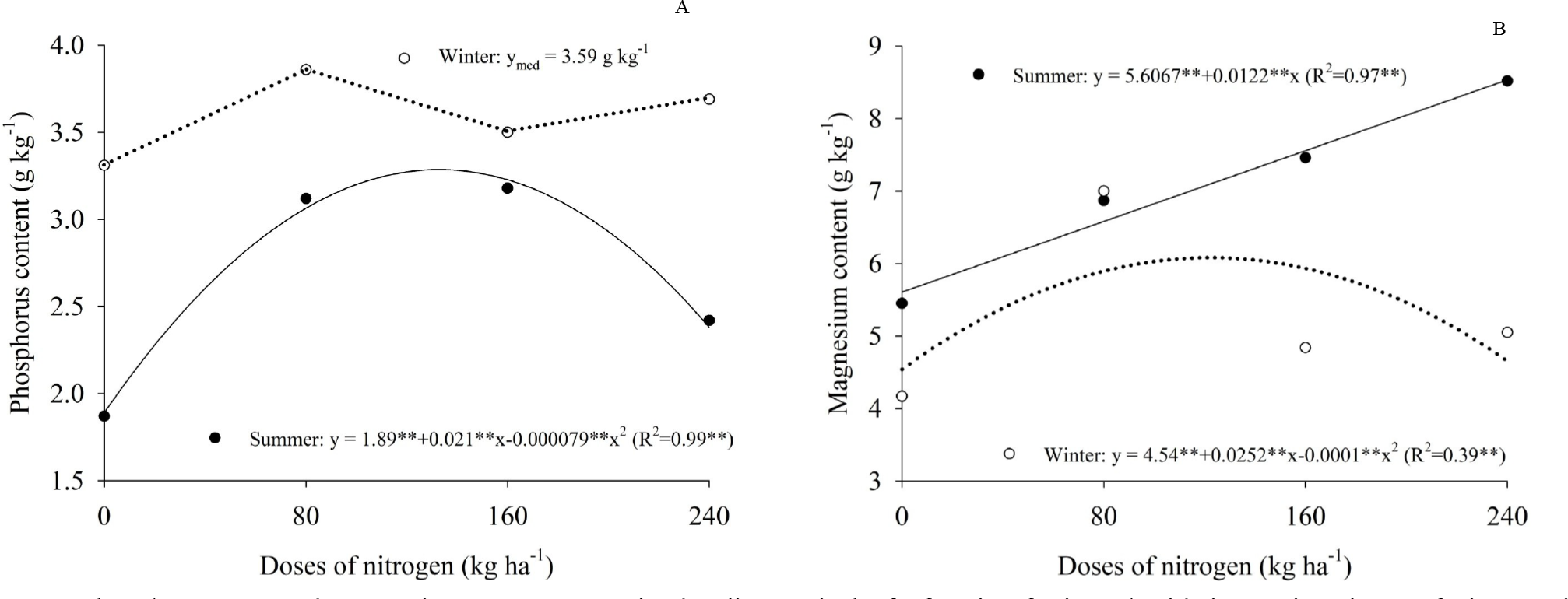
In Figure 4A, it is observed that the quadratic model fitted for the summer season reached a maximum of 3.29 g kg⁻1 of P at the dose of 133.61 kg ha⁻1 of N, decreasing up to the highest evaluated dose. The relationship between increasing N doses and leaf P contents of plants grown in winter did not allow fitting a regression equation, resulting in an average value of 3.59 g kg⁻1 of P (Figure 4A).

Phosphorus (A) and magnesium (B) contents in the diagnostic leaf of maize fertigated with increasing doses of nitrogen in two agricultural seasons (winter and summer) in the municipality of Canindé de São Francisco, State of Sergipe, Brazil.
The analysis of significant interactions between dose and season showed that the P content in diagnostic leaves of maize in winter was significantly higher than in summer, except at the dose of 160 kg ha⁻1 of N (Table 3). The ideal average P content in the maize diagnostic leaf is between 2 and 4 g kg⁻1 (RAIJ, 2011), values that were achieved with the application of the treatments. In winter, despite the pH being above 7.0, the P content and soil organic matter were higher than in summer, providing, together with meteorological conditions (Table 1), benefits to the absorption of P and other nutrients by plants.
Mean values of phosphorus and magnesium contents from the interaction between agricultural seasons and increasing doses of nitrogen via fertigation in maize production in Canindé de São Francisco, State of Sergipe, Brazil.
Contrary to what was observed for P, the analysis of significant interactions showed that Mg content in the leaves of plants grown in summer predominated over those grown in winter, being considered equal only at the dose of 80 kg ha⁻1 of N (Table 3), and it is observed that as the N dose increases, there is an increase in Mg content (Figure 4B). Under these conditions, there was a linear increasing pattern of Mg concentration in maize leaves grown in summer along the N doses used (Figure 4B). For the winter period, a quadratic response of foliar Mg contents as a function of N doses was observed, with a maximum of 6.08 g kg⁻1 of Mg at the dose of 122.93 kg ha⁻1 of N.
For Mg, the ideal levels are within the range of 1.5 to 5 g kg⁻1 (RAIJ, 2011), with this nutrient standing out in relation to Ca due to the low Ca/Mg ratio in the soil (1.60 in summer and 2.27 in winter), which favored its absorption. The differences in the Ca/Mg ratio may have influenced the distinct responses of foliar Mg content for each agricultural season.
According to the joint analysis of export data of N, K, and Mg in maize for silage fertigated with N doses, there was interaction between increasing N doses and agricultural seasons for K and Mg, in addition to the isolated effect of treatments for N.
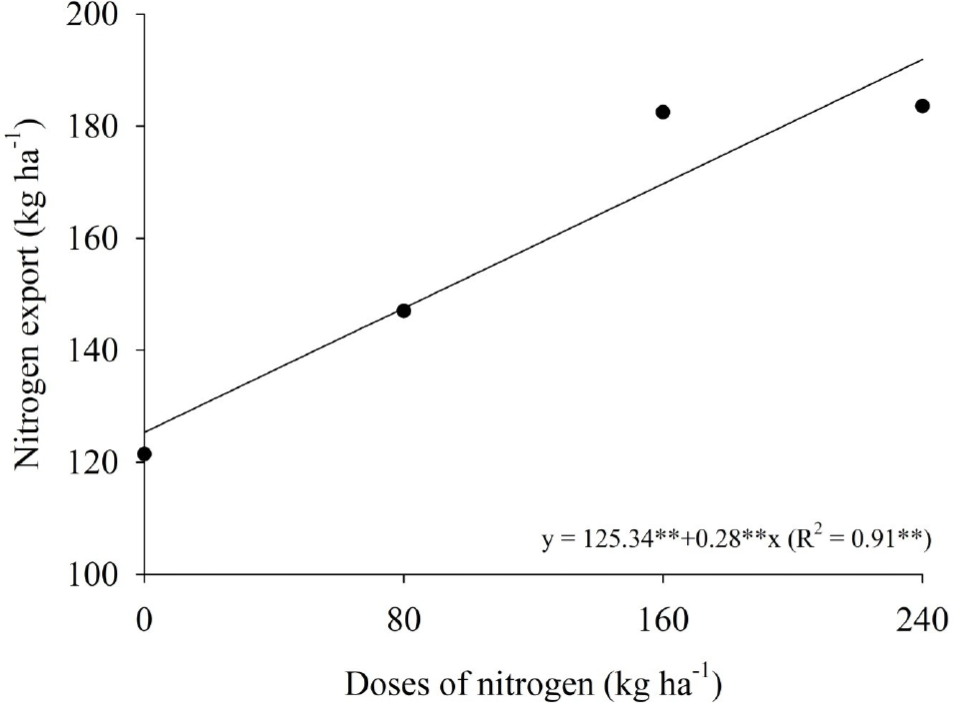
Nitrogen export increased linearly according to increasing N doses, with a maximum estimated export of 191.92 kg ha⁻1 when maize was fertigated with the dose of 240 kg ha⁻1 of N (Figure 5).

Nitrogen export by the aboveground part of maize for silage fertigated with increasing doses of nitrogen in Canindé de São Francisco, State of Sergipe, Brazil.
In Table 4, it is observed that maize cultivation in winter promoted higher N export (185.01 kg ha⁻1) by the crop compared to the summer season (132.25 kg ha⁻1). The difference in N export observed between seasons can be explained by the edaphoclimatic conditions of each period, since high temperatures in summer reduced the crop cycle (Figure 1), which consequently also reduced dry matter accumulation and the amount of N exported.
Mean values of nitrogen export by the aboveground part of maize for silage cultivated in two agricultural seasons in the municipality of Canindé de São Francisco, State of Sergipe, Brazil.
Fertigation with a high N dose in soil with pH above 6.50 (Table 1) probably enhanced NH₃ volatilization from urea application, especially in the summer season (ESCOLA et al., 2021). Although fertigation is an efficient strategy to improve N use efficiency, high pH conditions may still favor volatilization, making it necessary to properly manage the N source, irrigation depth, and fertilizer splitting (DEMIR; KEÇECI; TUNÇ, 2021; WANG et al., 2023; CHI et al., 2025).
According to Figure 6A, K export reached a maximum estimated value of 156.99 kg ha⁻1 in the summer season at a dose of 129.80 kg ha⁻1 of N, whereas in winter it was not possible to fit a regression equation (average of 148.45 kg ha⁻1 of K). Most of the K is accumulated in the vegetative part and, therefore, is returned to the soil after harvest through incorporation of maize crop residues (GOMES et al., 2018). Since K is not part of the structure of organic compounds in plants, it is easily released into the soil through residue fragmentation and washing by rainwater. Therefore, it is essential to understand how nutrients are used by the plant and the need to replenish the soil with nutrients exported by the crop, allowing more sustainable and economically rational fertilization management.

Potassium (A) and magnesium (B) exports by the aboveground part of maize for silage fertigated with increasing doses of nitrogen in two agricultural seasons in the municipality of Canindé de São Francisco, State of Sergipe, Brazil.
For the doses of 80 and 160 kg ha⁻1 of N, there was no difference between the growing seasons in relation to K export (Table 5), whereas for the absence of nitrogen fertilization and the use of 240 kg ha⁻1 of N, higher values were observed in the winter season. According to the results of soil analyses in the experimental area (Table 1), there was high K saturation in both agricultural seasons, but with higher content in winter, which may have promoted greater absorption of this nutrient in the second season, even in the absence of nitrogen fertilization and at the dose of 240 kg ha⁻1 of N.
Mean values of potassium and magnesium exports from the interaction between agricultural seasons and increasing nitrogen doses via fertigation in maize for silage production in Canindé de São Francisco, State of Sergipe, Brazilian semi-arid region.
Regarding Mg (Figure 6B), the maximum exports were 78.35 kg ha⁻1 in summer (123.41 kg ha⁻1 of N) and 78.83 kg ha⁻1 in winter (240 kg ha⁻1 of N), with higher average results observed in winter cultivation (Table 5), except at the dose of 80 kg ha⁻1, for which there was no difference between seasons. The Mg export values were considered very high compared to those reported in the literature: 11-12 kg ha⁻1 (PONTE FILHO et al., 2023) and 25 kg ha⁻1 (OLIVEIRA et al., 2019), which may be a result of the low Ca/Mg ratio (1.61) in the soil of the experimental area, associated with high nutrient saturation in the soil in both seasons, conditions that are quite favorable for Mg absorption. Indeed, in the study conducted by Ponte Filho et al. (2023), the Ca/Mg ratio was 2.41, and in the research by Oliveira et al. (2019), an average value of 4.2 was observed in different plots.
For the variables of P and Ca export, it was not possible to perform a combined analysis of variance. There was a significant effect of N doses only for P export in the summer season.
In the summer season, a quadratic equation was fitted with a coefficient of determination of 0.68 to explain P export in the aboveground part of maize as a function of increasing N doses, and a maximum export of 64.34 kg ha⁻1 was observed at the dose of 120.08 kg ha⁻1 of N, followed by a decrease up to the highest evaluated dose (Figure 7). In the winter season, the average P export was 37.65 kg ha⁻1. These values are higher than those reported by Silva et al. (2018), who observed, at physiological maturity, P export of 25.72 and 29.65 kg ha⁻1 at pH values of 6.1 and 6.0, in environments of medium and high investment, respectively.

Phosphorus export by the aboveground part of maize for silage fertigated with increasing nitrogen doses in the summer season in the municipality of Canindé de São Francisco, State of Sergipe, Brazil.
Lange et al. (2022) verified that soil correction to a Ca/ Mg ratio of 3/1 promoted improvement in soil pH, plant height, number of leaves per plant, and biomass accumulation compared to soil without correction and with a Ca/Mg ratio of 1/1, reinforcing the importance of a balance between nutrients in the soil. Knowing that pH has a strong influence on P adsorption, since acidic soils tend to make this nutrient unavailable for plant uptake, it can be related to the soil of the experimental area, where pH values of 6.60 in summer and 7.10 in winter were observed (Table 1), in addition to Ca/Mg ratios of 1.61 (summer) and 2.27 (winter), conditions that probably did not promote P unavailability to plants, which was reflected in the high values of P export by the crop.
The average Ca exports in summer and winter were 59.60 and 74.43 kg ha⁻1, respectively. The soil of the experimental areas showed high Ca saturation in both seasons (Table 1), which possibly justifies the high export of this nutrient by maize for silage and the absence of a significant effect of N doses, even with the low Ca/Mg ratio (1.61 in summer and 2.27 in winter) observed.
The literature confirms N and K as the most exported nutrients, with Ca and Mg at intermediate levels and P generally the lowest, which is qualitatively consistent with the results presented (HÜLSE et al., 2017; OLIVEIRA et al., 2023). The data are compatible in order and magnitude for N and K but indicate relatively higher export of P, Ca, and especially Mg compared to the average of other studies, which probably results from the chemical characteristics of the soil (Table 1). The increase in N fertilization also increased the extraction of N, P, K, Ca, and Mg, both due to greater dry matter production and greater uptake per plant (HÜLSE et al., 2017; PASLEY et al., 2019; RAM; RAJ; PATEL, 2023).
CONCLUSIONS
The nutrient contents in the diagnostic leaf were increased with increasing N doses, except for Ca. Maize cultivated in winter showed higher contents of N (28.65 g kg⁻1) and P (3.59 g kg⁻1), while in summer the plants showed higher values for K (25.2 g kg⁻1), Ca (4.60 g kg⁻1), and Mg (8.52 g kg⁻1).
The decreasing order of nutrient export from maize for silage fertigated with N doses under semi-arid conditions was: N > K > Mg > Ca > P. In summer, exports of P (64.34 kg ha⁻1), K (156.99 kg ha⁻1), and Mg (78.35 kg ha⁻1) were favored up to the nitrogen dose of 124.43 kg ha⁻1.
In the winter season, there were higher exports of N (185.01 kg ha⁻1), Mg (78.83 kg ha⁻1), and Ca (74.43 kg ha⁻1), especially with the application of 240 kg ha⁻1 of N.
Data Availability:
The data that support the findings of this study can be made available, upon reasonable request, from the corresponding author.
REFERÊNCIAS
- ABDO, A.; EL-SOBKY, E.; ZHANG, J. Optimizing maize yields using growth stimulants under the strategy of replacing chemicals with biological fertilizers. Frontiers in Plant Science, 13: 1069624, 2022.
- ALUOCH, S. et al. Effect of mineral N fertilizer and organic input on maize yield and soil water content for assessing optimal N and irrigation rates in Central Kenya. Field Crops Research, 277: 108420, 2022.
- BARBOSA, M. A. M. et al. Phenological and physiological evaluation of first and second cropping periods of sorghum and maize crops. Journal of Agronomy and Crop Science, 206: 263-276, 2020.
- BARROW, N. J.; HARTEMINK, A. E. The effects of pH on nutrient availability depend on both soils and plants. Plant And Soil, 487: 21-37, 2023.
- CHEN, L. et al. Comparison of nitrogen loss weight in ammonia volatilization, runoff, and leaching between common and slow-release fertilizer in paddy field. Water Air Soil Pollut, 232: 132, 2021.
- CHI, Y. et al. Optimizing water and nitrogen management improves maize productivity by regulating root development in the cold semi-arid Songnen plains of Northeast China. Frontiers in Plant Science, 16: 1658353, 2025.
- DEMIR, Z.; KEÇECI, M.; TUNÇ, A. Effects of nitrogen fertigation on yield, quality components, water use efficiency and nitrogen use efficiency of silage maize (Zea mays L.) as the second crop. Journal of Plant Nutrition, 44: 373-394, 2021.
- DU, K. et al. Optimal rate of nitrogen fertilizer improves maize grain yield by delaying the senescence of ear leaves and thereby altering their nitrogen remobilization. Field Crops Research, 310: 109359, 2024.
- EMAM, S.; OSMAN, E. Integrated application of organic, bio and mineral fertilizers on nutrients uptake and productivity of Zea mays L. under semi-arid condition. Journal of Plant Nutrition, 44: 309-321, 2021.
- ESCOLA, M. E. et al. Volatilização de nitrogênio aplicado em milho cultivado na Amazônia Meridional. HOLOS, 7: 1-15, 2021.
- GOMES, M. D. P. et al. Desenvolvimento inicial do milho em resposta a doses de potássio. Revista Brasileira de Milho e Sorgo, 17: 27-36, 2018.
- GUL, H. et al. Maize (Zea mays L.) productivity in response to nitrogen management in Pakistan. American Journal of Plant Sciences, 12: 1173-1179, 2021.
- HÜLSE, J. et al. Nutrient balance in the soil and nutritive characteristics of maize silage cut at different heights. Semina-Ciências Agrárias, 38: 3779-3796, 2017.
- JIANG, Y. et al. A meta-analysis of the effects of nitrogen fertilizer application on maize (Zea mays L.) yield in Northwest China. Frontiers in Plant Science, 15: 1485237, 2025.
- LANGE, A. et al. Incubação de calcário finamente moído e características químicas do solo sob cultivo de soja e milho. Nativa, 10: 585-594, 2022.
- LI, Q. et al. Comprehensive assessment of the agronomic, environmental and economic benefits effects of nitrogen fertigation management on maize in Northeast China. Plant Production Science, 26: 378-390, 2023.
- NG, J. F. et al. Soil nutrient retention and ph buffering capacity are enhanced by calciprill and sodium silicate. Agronomy, 12: 219, 2022.
- OLIVEIRA, M. et al. Removal of nutrients and bromatological quality of corn in high productivity crops. DELOS: Desarrollo Local Sostenible, 16: 544-562, 2023.
- OLIVEIRA, T. F. et al. Extração e exportação de macronutrientes em lavouras de milho de alta produtividade. Revista em Agronegócio e Meio Ambiente, 12: 837-854, 2019.
- PASLEY, H. R. et al. Nitrogen fertilizer rate increases plant uptake and soil availability of essential nutrients in continuous maize production in Kenya and Zimbabwe. Nutrient Cycling in Agroecosystems, 115: 373-389, 2019.
- PEKER, A. E. et al. The effect of sodic water type on the chemical properties of calcareous soil in semi-arid irrigated land. Soil Systems, 8: 10, 2024.
- PIMENTEL-GOMES, F. Curso de estatística experimental 15 ed. Piracicaba, SP: FEALQ, 2009. 4551 p.
- PONTE FILHO, F. A. M. et al. Produtividade e exportação de nutrientes em um consórcio de milho e gramíneas forrageiras nas condições do semiárido. Revista Brasileira de Saúde e Produção Animal, 24: 20220029, 2023.
- RAIJ, B. V. Fertilidade do solo e manejo de nutrientes 2. ed. International Plant Nutrition Institute IPNI, 2011. 420 p.
- RAM, K.; RAJ, A.; PATEL, K. Effect of nitrogen, phosphorus and potassium on yield, quality, nutrient content and uptake on hybrid maize (Zea mays L.). Agricultural Science Digest, 43: 295-300, 2023.
- SILVA, C. G. M. et al. Macronutrient uptake and export in transgenic corn under two levels of fertilization. Pesquisa Agropecuária Brasileira, 53: 1363-1372, 2018.
- SOBRAL, L. F. et al. (Eds.). Recomendações para o uso de corretivos e fertilizantes no Estado de Sergipe Aracaju, SE: Embrapa Tabuleiros Costeiros, 2007. 251 p.
- SZULC, P. et al. Evaluation of nitrogen yield-forming efficiency in the cultivation of maize (Zea mays L.) under different nutrient management systems. Sustainability, 13: 10917, 2021.
- WANG, M. et al. Analysis and closing of the high-production-maize yield gap in the semi-arid area of Northeast China. Agronomy, 14: 30, 2023.
- ZOU, Z.; CHENG, C.; SHEN, S. Effects of meteorological conditions and irrigation levels during different growth stages on maize yield in the Jing-Jin-Ji Region. Sustainability 15: 3485, 2023.
Edited by
-
Editor in Chief:
Aurélio Paes Barros Júnior
-
Section Editor:
Flávio Pereira da Mota Silveira