Telepractice in speech sound disorder treatment in the Unified Health System: A pilot pragmatic study
ABSTRACT
Purpose: to compare face-to-face speech therapy with telepractice and hybrid models for children with phonological impairment (PI) in the unified health system, and to describe participant socioeconomic and racial/ethnic profiles.
Methods: twelve boys with PI (mean age 6.2) were divided into telepractice, face-to-face, and hybrid groups. They were assessed (ABFW Phonology) before and after 11 therapy sessions with ABAB-Withdrawal and multiple probes approach. Percentage of Consonants Correct-Revised (PCC-R) and phonological systems were analyzed. Associations between therapy improvement and target sound acquisition, intention-to-treat, race/ethnicity, and socioeconomics were examined (Fisher's exact test, p≤0.05).
Results: significant PCC-R and phonological system improvements (p≤0.05) occurred post-therapy across all 12 participants, regardless of group. Improvement was associated with target sound acquisition and intention-to-treat, but not with race/ethnicity or sociodemographics.
Conclusion: telepractice, face-to-face, and hybrid therapy yielded similar outcomes for children presented with PI. Race/ethnicity and socioeconomic factors did not affect therapy improvement.
Keywords:
Speech, Language and Hearing Sciences; Speech Sound Disorder; Telemedicine; Unified Health System; Pragmatic Clinical Trial
RESUMO
Objetivo: comparar o tratamento fonoaudiológico presencial com a terapia por telefonoaudiologia e híbrida para crianças com transtorno fonológico no sistema único de saúde e caracterizar o perfil socioeconômico e de raça/cor dos participantes.
Métodos: doze meninos com transtorno fonológico, com idade média de 6:2 anos, foram divididos em três grupos: telefonoaudiologia, presencial e híbrido. Eles foram avaliados com a parte de Fonologia do ABFW, antes e após 11 sessões com a abordagem terapêutica ABAB-Retirada e provas múltiplas. A partir da avaliação, calculou-se o percentual de consoantes corretas revisado (PCC-R) e determinou-se o sistema fonológico geral dos participantes. A associação entre a melhora terapêutica e a aquisição do som-alvo, intenção de tratar, raça/cor e perfil sociodemográfico foi verificada (teste exato de Fisher, p≤0,05%).
Resultados: houve aumento significante (p≤0,05%) do PCC-R e do sistema fonológico geral após a terapia nos doze participantes, independentemente do grupo terapêutico. Houve associação entre a melhora e aquisição do som alvo; e a melhora e a intenção de tratar. Não houve associação entre a melhora e raça/cor e perfil sociodemográfico.
Conclusão: as formas de tratamento propostas demonstraram resultados similares. Os dados de raça/cor e socioeconômicos não influenciaram na melhora.
Descritores:
Fonoaudiologia; Transtorno Fonológico; Telemedicina; Sistema Único de Saúde; Ensaio Clínico Pragmático
INTRODUCTION
Outpatient speech-language therapy services within the Brazilian Unified Health System (SUS) were predominantly conducted face-to-face until the COVID-19 pandemic1. From March 2020 onwards, speech-language pathologists (SLPs) had to adapt their service delivery models to continue providing care to clients who were unable to receive face-to-face therapy due to social distancing measures1,2. Given the constraints on physical contact during this period, public speech-language services transitioned to virtual care through telepractice1.
Telepractice is the provision of speech-language pathology services offered remotely through information and communication technologies, such as secure telephone services, videoconferencing, electronic mail (e-mail), text messaging, and mobile device applications (smartphones), with or without internet connection, via video call or audio file messages1.
Among the numerous areas of speech-language pathology that can be addressed through telepractice, the area of childhood spoken language stands out. Of the most prevalent childhood spoken language disorders in SUS services, phonological impairment is prominent3-8. In the clinical speech-language pathology demand within public health services, phonological impairment has an average prevalence of 31%3-8.
Phonological impairment (PI) is a cognitive-linguistic speech disorder that affects a child's production of speech sounds, resulting from the organization of the mental representation of these sounds within the internalized knowledge of the language. It occurs when there is a failure in the mental representation of speech sounds, a phonemic alteration, because the sound information stored and represented in the mental lexicon is impaired9. PI is part of speech sound disorder (SSD)10.
The diagnosis of phonological impairment can be made from the age of three years11. While phoneme substitutions, omissions, insertions, and reversals are typical during speech development, by the age of five, children with typical phonological development should have a complete or near-complete phonological inventory equivalent to that of an adult speaker11.
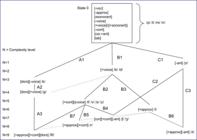
The taxonomy of interventions for children with phonological impairment presents 15 treatment approaches12. With a therapeutic focus based on complexity12,13, the ABAB-Withdrawal and multiple probes14 therapeutic approach is established in research in Brazilian Portuguese. This approach selects treatment targets based on implicational hierarchies, meaning that targeting more complex speech sounds - those with more distinctive features - induces broader phonological system changes14. As a result, treatment promotes generalization to untreated phonemes. In this study, the Implicational Model of Feature Complexity (IMFC)15 (FIGURE 1) was used to identify the most complex target sounds for therapy.
The study hypothesizes that both face-to-face therapy and telepractice within the SUS framework yield comparable and effective outcomes in the treatment of phonological impairment. This hypothesis has been supported in previous studies. One study16 compared 14 children with speech sound disorders receiving therapy either face-to-face or via telepractice. The children attended a university clinic for therapy sessions in both modalities over a five-week period, with two 30-minute sessions per week. Caregivers waited in a designated waiting area while therapy was conducted in research-dedicated therapy rooms. No significant differences in performance were observed between the face-to-face and telepractice sessions.
Within the SUS - one of the world’s largest universal healthcare systems17 - there are currently no published studies supporting the use of telepractice for phonological impairment treatment. The use of telepractice expanded globally following the COVID-19 pandemic, underscoring the need for further studies comparing its efficacy to face-to-face therapy2.
Given the realities of speech-language pathology service provision within the SUS, this study adopted a pragmatic trial18,19. Pragmatic trials are less rigid and more reflective of real-world clinical practice, requiring minimal additional organizational efforts or resource allocation18. These trials allow for flexibility in intervention delivery, ease of follow-up, and intention-to-treat analyses20. Pragmatic clinical trials aim to evaluate the effectiveness of an intervention in real-world settings and to examine the rationale for selecting a particular treatment approach18: whether face-to-face, telepractice-based, or hybrid. To ensure the generalizability19 of findings, this study was designed as a pilot pragmatic clinical trial.
This research focuses on the application of telepractice for phonological impairment intervention in the SUS, emphasizing the need for theoretical and empirical support for its implementation in public healthcare settings. Therefore, the purpose of this study is to compare face-to-face speech therapy with telepractice and hybrid models for children with phonological impairment (PI) in the unified health system, and to describe participant socioeconomic and racial/ethnic profiles.
METHODS
This research project was approved by the Research Ethics Committee of the Federal University of Santa Maria, RS, Brazil, under protocol number 5.955.621, CAAE 67795323.6.0000.5346, in compliance with Resolution 466/2012 of the National Health Council, Ministry of Health, Brazil. Participants and their guardians were invited to participate in the study in a face-to-face setting, where any questions were addressed before obtaining informed consent and assent through signed agreements.
The study was conducted as a pragmatic trial18-20, as it took place in a specialized outpatient speech-language pathology service within the SUS, located in a metropolitan area in southern Brazil. A municipal government-employed speech-language pathologist (SLP) led the study within this specialized service. The SLP had a 100-hour monthly workload and was responsible for treating a diverse caseload of clients with various speech-language needs. The service schedule included: 18 weekly or biweekly therapy openings (each 45 minutes long), five initial assessment openings for adult patients or infants with dysphagia, and two 45-minute openings per week allocated for team meetings or service organization. The service employed three additional SLPs, all of whom treated phonological impairment, given its high prevalence.
The lead SLP conducting the study had formal employment with the specialized care service where the research took place. The SLP had experience providing care via telepractice, 180 hours of training in digital health, and nine years of specialization in orofacial myology, accredited by the Brazilian Federal Council of Speech-Language Pathology and Audiology, qualifying them to assess orofacial praxis skills.
Inclusion criteria considered for participant selection were: children aged between three years and eight years, eleven months, and 29 days, with a speech-language diagnosis of phonological impairment; recruited from the waiting list of the outpatient specialized care service within the SUS, awaiting a spot for speech therapy; of both sexes; native speakers of Brazilian Portuguese; with auditory thresholds within normal limits; and with internet access capable of supporting clear video calls and efficient data exchange via an easy-to-use messaging application. Exclusion criteria included: children with syndromes, intellectual disabilities, cerebral palsy, hearing loss, bilingualism, severe psychiatric disorders (e.g., autism and psychoses), or a prior diagnosis of neurological disorders; those with broader oral language impairments, such as language delay or language disorder, as well as motor speech disorders, including childhood apraxia of speech or childhood dysarthria10; those who did not complete the audiological and orofacial myology/orofacial praxis assessment; and those who abandoned the speech therapy treatment proposed by the study.
Sample Size
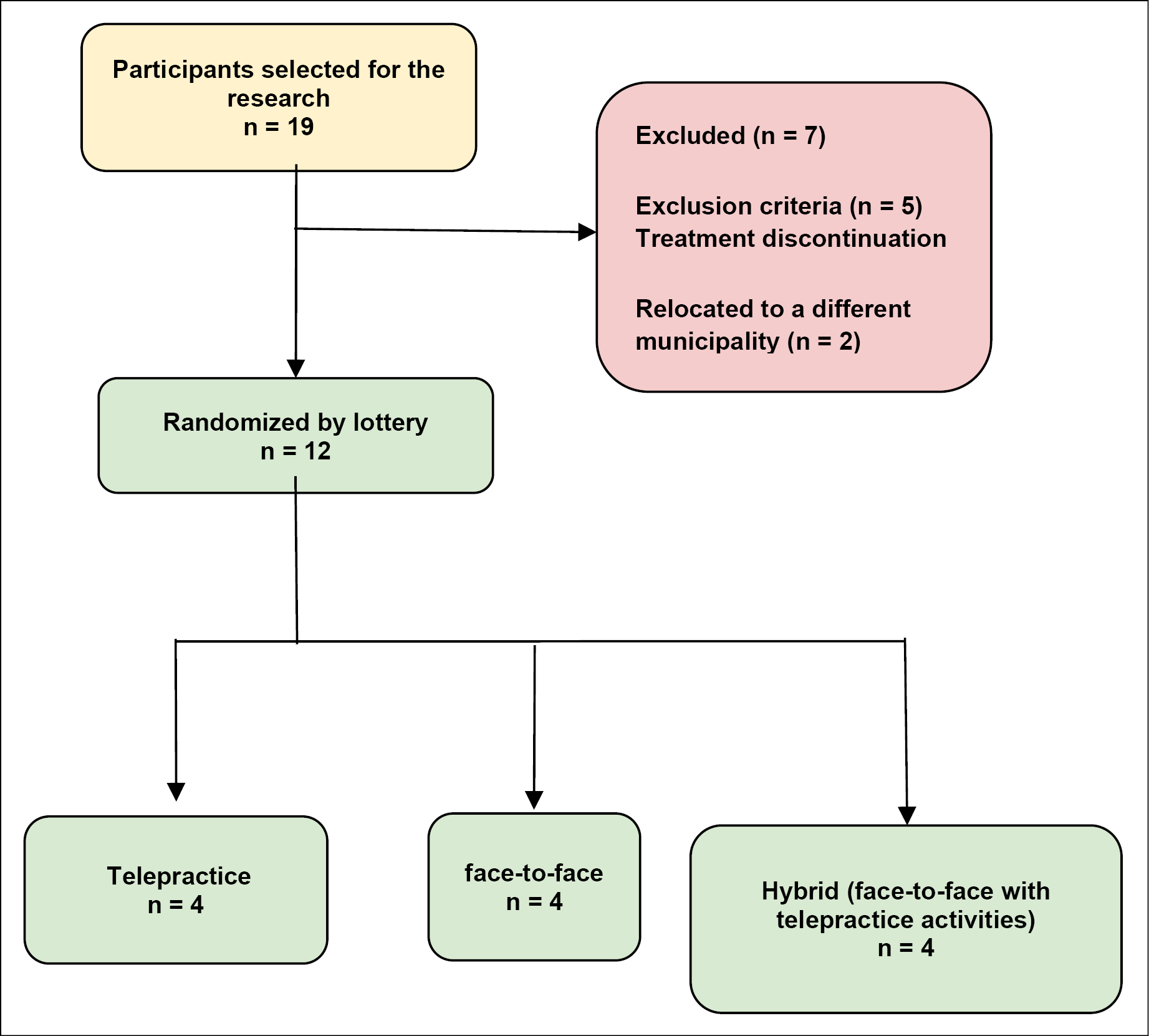
The sample size was determined to allow paired mean comparisons using Student’s t-test. The parameters for calculating the minimum number of participants were: A large effect size (0.8 standard deviations), 5% significance level, and a statistical power of 70%. Based on these parameters, the minimum sample size was estimated at 12 participants, divided into three groups: Telepractice group (G1) - 4 participants, face-to-face group (G2) - 4 participants, hybrid group (G3) - 4 participants. All participants were male, with an average age of 6 years and 2 months, and had a diagnosis of phonological impairment.
Randomization and Blinding
A SLP from the service conducted the initial assessments of the children, categorizing them based on their speech, spoken language, and literacy disorders, and managing the waiting list for therapy services. The study participants were prospectively selected from this waiting list for speech-language intervention. After the initial assessment confirmed a diagnosis of phonological impairment, participants were randomly assigned to one of the study groups through a lottery-style drawing. This process resulted in the following group distribution: G1) Telepractice: 4 children; G2) Face-to-face: 4 children; G3) Hybrid: 4 children. Blinding was not implemented, as the same SLP conducted all stages of the study, including: Participant selection and randomization; audiological assessment; orofacial praxis assessment; spontaneous speech assessment; phonological testing; and speech-language therapy sessions.
Procedures
This study was conducted between April and December 2023. During the first session, an initial assessment was conducted, including an interview with the child’s caregivers. This interview gathered information about the child’s speech and hearing development. Additionally, the child’s spontaneous speech was analyzed to rule out impairments in other language components, including pragmatics (use), semantics (content), and morphosyntax (form). The phonological component was also examined in greater detail. Orofacial praxis was assessed by evaluating the child’s ability to perform cardinal tongue movements (up, down, left, and right). Speech motor components were analyzed through spontaneous speech and a phonology test21, ensuring that childhood apraxia of speech (CAS) characteristics were ruled out. Participants underwent audiological assessment using an AMPLIVOX A260 audiometer (calibrated on May 31, 2023) with DD45 headphones, in a quiet room without a soundproof booth. The hearing test measured responses to frequencies 0.25 kHz, 0.5 kHz, 1 kHz, 2 kHz, 3 kHz, 4 kHz, 6 kHz, and 8 kHz at an intensity of 15 dB HL.
The phonological assessment included the Phonology section of the ABFW test21, using imitation and naming tasks. The child’s responses were recorded using an iPhone 14 and stored on a computer hard drive for later analysis. A SLP performed a perceptual-auditory analysis of the audio recordings, conducting a double-check process by comparing them to the phonetic transcription taken during the evaluation. Corrections were made to the transcription if necessary.
Based on the phonological assessment, the Percentage of Consonants Correct-Revised22 (PCC-R) was calculated to determine the severity of the phonological impairment. The PCC-R formula used was: [NCC / (NCC+NCI+NCO)] * 100; where: NCC = Number of correct consonants; NCI = Number of incorrect consonants (substitutions); NCO = Number of omitted consonants. The severity classification was as follows: Mild phonological impairment: 86% - 100%; mild-to-moderate phonological impairment: 66% - 85%; moderate-to-severe phonological impairment: 50% - 65%; severe phonological impairment: Below 50%23. Additionally, contrastive analysis was performed to assess each child’s phonological system, considering all 19 consonantal phonemes of Brazilian Portuguese. The analysis categorized phoneme acquisition as follows: Acquired phonemes (nfA): Produced correctly in 80% or more of opportunities; partially acquired phonemes (nfPA): Produced correctly in 40% - 79% of opportunities; non-acquired phonemes (nfNÃO): Produced correctly in 0% - 39% of opportunities24. This analysis was conducted before and after therapy to measure progress.
Based on the phonological assessment, participants were randomly assigned to one of three therapy groups: G1) Telepractice: Sessions were conducted via synchronous video calls using Google Meet, accessed through the university’s institutional email account. The SLP used a computer with a Samsung EHS61 GH59-15063A headset with a built-in microphone and a webcam. Participants used either a smartphone or computer, depending on their preference. The child’s caregiver was present throughout the video call. G2) Face-to-face therapy: Sessions took place in person, with the child’s caregiver inside the therapy room for the entire session. G3) Hybrid (Face-to-face + Telepractice Activities): Sessions were conducted in person, with the child’s caregiver inside the therapy room. However, at-home activities were identical to those used in the telepractice group, sent via WhatsApp to the caregivers. This group was designed to assess whether the telepractice therapy materials - or simply the additional caregiver engagement through WhatsApp - provided any advantage over standard face-to-face therapy.
Therapy was conducted using the ABAB-Withdrawal and multiple probes approach13, adapted for once-weekly sessions, as outlined in Chart 1.
Diagram of the ABAB-Withdrawal therapeutic approach, adapted for weekly sessions, used in the study
The ABAB-Withdrawal and multiple probes approach13 was chosen because it has been effective for children with varying degrees of phonological impairment and because it selects target sounds for treatment based on the implicational hierarchy of distinctive features developed in IMFC15 (Figure 1).
In phase A1, speech data from participants were collected to determine the target sound to be worked on in therapy. Target sounds were chosen based on their complexity and the child’s ability to produce them, prioritizing more complex sounds in IMFC15 (Figure 1) to promote greater changes in the phonological system14. The target sound was worked on at the word level. The treatment cycle (B1) lasted nine weeks, using words from the book Brincando com Sons25 (Playing with Sounds). On average, 20 words per target sound were used: 10 words in therapy and 10 words in auditory bombardment.
All caregivers were instructed to perform the proposed activities at home, including auditory bombardment and playful word repetition at least once a day for five weekdays.
For the in-person group (G2), caregivers received printed materials with target words and games from Brincando com Sons25 for home practice. For the G1 and G3 groups, an audio file was sent via WhatsApp for auditory bombardment, along with a PDF file containing images of the target words and a video demonstrating the correct articulation of some words (around seven to ten words). An example of this with the phoneme /r/ included words such as ‘arara, barata, pererê, maré, siri, guri, coroa, toró, and urubu’, showing the /r/ phoneme associated with Brazilian Portuguese open vowels /a/, /e/, /ɜ/, /i/, /o/, /ɔ/, and /u/26.
The verification of home exercise completion was assessed qualitatively through questions related to intention-to-treat20. At the beginning of each session, participants were asked whether they had practiced at home with questions such as: “Did you practice speaking at home?”; “Did you do the activities at home?”; “Did you bring the worksheet?”; “Do you remember the target words?”.
Participants responded honestly, either saying they had not practiced, citing reasons such as “there was no time” or “the child didn’t want to,” or confirming they had practiced and describing their approach. Some even brought extra activities created by their parents or modified the original activities. If necessary, additional questions were asked about the words, as those who had practiced at home tended to memorize most or all of them.
At the end of the therapy cycle, a withdrawal period (A2) was conducted, lasting one week without direct intervention on the target sound. Caregivers were instructed not to conduct speech training during this time. To optimize the withdrawal phase, school vacations, holidays, or participant travel were utilized whenever possible. During A2, speech reassessment21 was conducted, again verifying PCC-R, contrastive analysis, and total or partial acquisition of the target sound.
In the final therapy session, race/color data of the children were collected in person. Socioeconomic data27 were provided by the mother or father via an individual WhatsApp survey, considering per capita income, parental education level, and use of social assistance benefits. For per capita income, participants were asked to classify their family income based on a minimum wage of R$ 1,412.00 (US$ 280.26): 1) Up to ½ minimum wage; 2) Between ½ and 1 minimum wage; 3) More than 1 minimum wage.
Parental education level was assessed by asking about the highest level completed by either parent: 1) Illiterate to five years of education (5th grade/Elementary School 1/Primary); 2) Six to nine years of education (6th to 8th grade/Elementary School 2/Middle School); 3) Some high school education; 4) Completed high school; 5) Some college education; 6) Completed college or higher (specialization, master’s, doctorate, postdoctorate). For statistical analysis, these responses were grouped into two categories:1) 10 years or less of education; 2) 11 years or more of education.
Regarding social assistance28, participants answered “yes” or “no” to whether they used services such as continuous cash benefits, the Bolsa Família program, or any discounts or gratuities provided by the Social Assistance Reference Center (CRAS), including electricity bill discounts or food grants.
Statistical Analysis
Descriptive statistics, including mean and standard deviation, were calculated for pre- and post-therapy cycle measures of PCC-R (Percentage of Consonants Correct - Revised), the number of acquired phonemes (nfA), partially acquired phonemes (nfPA), and non-acquired phonemes (nfNÃO) for the entire sample (n = 12) as well as for each group (G1: n = 4, G2: n = 4, G3: n = 4).To compare variables, a paired Student’s t-test was performed, with a 5% significance level. If the normality assumption was violated, as assessed by the Shapiro-Wilk test, the Wilcoxon non-parametric test was applied.
Regarding the number of phonemes, an improvement in phonological abilities during the therapy cycle was expected to follow this pattern: Acquired (nfA) and partially acquired phonemes (nfPA) should increase (PRE < POST); Non-acquired phonemes (nfNÃO) should decrease (PRE > POST).
The mode was calculated for categorical variables, including improvement, target sound acquisition, treatment adherence, race/color, education level, and use of social assistance services.
To assess associations, Fisher’s exact test was used to analyze the relationships between: Improvement (yes/no) and target sound acquisition (yes/no); Improvement and intention-to-treat (yes/no); Improvement and race/color; Improvement and socioeconomic variables.
Improvement (= yes) was defined as an increase in PCC-R, an increase in acquired and partially acquired phonemes, and a decrease in non-acquired phonemes after the therapy cycle. Target sound acquisition was considered achieved if the phoneme was classified as acquired or partially acquired in the post-treatment evaluation. Treatment adherence was assessed based on caregiver responses regarding home practice activities and categorized as yes or no.
RESULTS
The sample consisted of 12 participants, selected according to the diagram proposed by the CONSORT and Pragmatic Trials in Healthcare (Practihc) groups19, as shown in Figure 2. All 12 participants completed all study phases, with no sample loss.

Flow diagram of the study participants, according to CONSORT and PRACTIHC group guidelines19
All data were analyzed by comparing pre-therapy cycle (PRE) and post-therapy cycle (POST) results.
The characterization of the 12 participants is detailed in Chart 2. Notably, all participants were male. This is justified by the fact that there were significantly more boys with phonological impairment on the service’s waiting list than girls. The age of each participant, the target sound addressed in therapy, and individual data on PCC-R, number of acquired phonemes, partially acquired phonemes, and non-acquired phonemes before and after the therapy cycle are presented in Chart 2.
Regarding the severity of phonological impairment, most participants started therapy with a mild-to-moderate severity level (n = 6), while 4 participants had severe impairment, and 2 participants had moderate-to-severe impairment. At the end of the therapy cycle, three participants improved their severity levels: P1G1 improved from moderate-severe to mild-moderate; P6G2 and P12G3 improved from mild-moderate to mild. Two participants had borderline values for a change in severity classification: P8G2 reached 65% PCC-R, just below the mild-moderate threshold (66%-85%); P9G3 reached 85% PCC-R, the cutoff for the mild severity category (86%-100%).
On average, PCC-R and nfA scores increased after the therapy cycle for all participants (n = 12): PCC-R improved from 61% (PRE) to 69% (POST) (p < .001); nfA increased from 11 phonemes (PRE) to 13 phonemes (POST) (p = 0.003); nfPA increased from 2 (PRE) to 3 (POST) (p = 0.356); nfNÃO decreased from 6 (PRE) to 4 (POST) (p = 0.006).
Each group showed an increase in mean PCC-R: G1 - Telepractice (n = 4): PCC-R increased from 53% (PRE) to 62% (POST) (p = 0.091). G2 - Face-to-face (n = 4): PCC-R increased from 53% (PRE) to 60% (POST) (p = 0.020). G3 - Hybrid (n = 4): PCC-R increased from 77% (PRE) to 86% (POST) (p = 0.036).
Regarding the mean values of the number of phonemes per group, in G1, the mean number of phonemes for the nfA G1 increased from 9 (pre) to 11 (post) (p = 0.148); nfPA G1 increased from 3 (pre) to 4 (post) (p = 0.156); and nfNÃO G1 decreased from 7 (pre) to 4 (post) (p = 0.071). In G2, the mean number of phonemes was as follows: nfA G2 increased from 10 (pre) to 11 (post) (p = 0.071); nfPA G2 remained unchanged at 3 both pre- and post-intervention (p = 0.874); and nfNÃO G2 decreased from 7 (pre) to 6 (post) (p = 0.500). In G3, nfA G3 increased from 14 (pre) to 16 (post) (p = 0.046); nfPA G3 increased from 1 (pre) to 2 (post) (p = 0.500); and nfNÃO G3 decreased from 4 (pre) to 1 (post) (p = 0.039).
Statistical analyses are presented in Chart 3, applying Student’s paired t-test or, when necessary, the Wilcoxon test. p-values indicate that the entire sample (n = 12) showed significant improvements in PCC-R (p < .001) and nfA (p = 0.003). Additionally, significant PCC-R improvements were observed in G2 - Face-to-face (p = 0.020) and G3 - Hybrid (p = 0.036). Regarding the number of phonemes, only G3 showed significant increases in nfA (p = 0.046) and decreases in nfNÃO (p = 0.039).
Chart 4 presents mode calculations for improvement, target sound, target sound acquisition, treatment adherence, race/color, per capita income, parental education, and use of social assistance services. During the therapy cycle, nine participants (Mo = 9) demonstrated improvement, defined as an increase in PCC-R or target sound acquisition. Eight participants (Mo = 8) acquired the target sound in nfA or nfPA, while four did not acquire the target sound (nfNÃO). Fisher’s exact test showed a significant association between overall treatment improvement and target sound acquisition (p = 0.018). However, this association was not observed within individual groups (G1, G2, and G3).
Regarding intention-to-treat, nine participants (Mo = 9) showed adherence, as measured by responses about therapy progress and home practice activities. Fisher’s exact test revealed a significant association between treatment improvement and adherence (p = 0.005).
Interestingly, treatment adherence was not different between the hybrid group (which used telepractice materials) and the face-to-face group.
Regarding race/ethnicity and socioeconomic data, the majority of participants were White (n = 8; Mo = 8); had parents with 11 or more years of education (n = 10; Mo = 10); and did not use social assistance services (n = 7; Mo = 7). As for family per capita income, four participants had an income below half the minimum wage: three from G3 and one from G1; four had an income between half and one minimum wage: one from G1, two from G2, and one from G3; and four had a per capita income above one minimum wage: two from G1 and two from G2.
Using Fisher’s exact test to assess the association between improvement and race/ethnicity or socioeconomic data, no statistically significant association was found between therapeutic improvement and any of the race/ethnicity or socioeconomic variables. Nine patients showed improvement, and three did not-one from each therapy group. These patients had varied socioeconomic characteristics.
DISCUSSION
Analyzing the descriptive statistics - mean, standard deviation, and mode - it was observed that the therapeutic groups studied (G1 - Telepractice, G2 - Face-to-Face, and G3 - Hybrid: Face-to-Face with Telepractice Activities) demonstrated similar results, with effective improvement after a therapy cycle. The entire sample (n = 12) showed a statistically significant increase in the t-test for PCC-R, the number of acquired phonemes (nfA), and partially acquired phonemes (nfPA), along with a decrease in non-acquired phonemes (nfNÃO). Three participants did not show improvement (P3G1, P7G2, and P11G3), with one in each therapy group. A previous study16 that compared telepractice and face-to-face treatment in English-speaking children, using a controlled research method in a university setting (adapted to the time period, 2013), reported improvement in 13 out of 14 participants.
Among the groups, a statistically significant increase was observed in G2 - Face-to-Face for PCC-R and in G3 - Hybrid for PCC-R and nfA. Despite the statistical significance threshold, all groups showed a numerical increase in mean PCC-R and nfA, along with a decrease in nfNÃO. The lack of statistical significance should not be interpreted as an absence of improvement.
Similar findings regarding increased PCC-R after complexity-based therapy were reported in a study29 involving two bilingual Spanish-English girls with phonological impairment in both languages. The study focused on target sounds that were complex within the implicational hierarchy of both languages, specifically /gr/ and /kr/ in Spanish. Therapy sessions were conducted three times per week for 40 minutes over six weeks, with parents present. The participants increased their PCC-R scores in both languages, despite receiving therapy exclusively in Spanish.
The selection of target sounds for therapy, presented in Chart 4, was based on each participant’s ability to produce the sound and the highest possible complexity level according to the IMFC¹⁵ (Figure 1). The chosen sounds ranged from levels 6 to 9, which represent the highest levels of phonological complexity. The fricatives /ʃ/ and /ʒ/ (level 7) have direct implicational relationships with the phonemes /ɲ/ (level 1); /f/, /v/, /s/, and /z/ (level 5); and also with the plosives /b/ and /d/ (level 2). The liquid phonemes /l/ (level 6), /r/ (level 8), and /ʁ/ (represented here as /R/, level 9) share the [+approximant] feature and also present direct implicational relationships: /l/ with the plosives /b/ and /d/; /r/ with the fricatives /f/, /v/, /s/, /z/ and the plosives /b/ and /d/; and /R/ with the plosives /k/ and /g/, the fricatives /f/, /v/, /s/, /z/, and the plosives /b/ and /d/.
All participants who showed improvement (75% of the sample) had positive intention-to-treat20. Conversely, the three participants who did not improve (P3G1, P7G2, and P11G3) did not demonstrate intention-to-treat20. This outcome may be linked to failure to complete home practice activities, which were essential given the once-a-week therapy schedule. Completing these activities daily is crucial for effective treatment. Intention-to-treat was assessed in a clinical context, in alignment with pragmatic trials20 guidelines, through questions about engagement in therapy activities.
The present study did not find an association between race/color or disadvantaged socioeconomic status and better therapy outcomes. A literature review revealed a lack of studies addressing phonological impairment therapy within Brazil’s public healthcare system (SUS) in relation to socioeconomic and racial data, making this study a novel contribution.
Regarding the feasibility of telepractice, a scoping review30 examined its cost-effectiveness, accessibility, and implementation across rehabilitation services, comparing developed and developing countries.
One of the advantages attributed to telerehabilitation was cost and access to services, as it overcomes barriers such as distance to the treatment site, travel time, and transportation expenses. The main challenges to implementation are human-related: limited skills in using applications and communication tools, disbelief in the effectiveness of telehealth, and concerns regarding data security; organizational: limited human and financial resources; technical: slow internet, lack of technical knowledge, and limited access to technology; and clinical practice-related: professional insecurity and the restriction of activities that can be performed remotely30.
In the present study, human, organizational, technical, and clinical practice barriers30 were overcome without requiring service adaptations or high-cost equipment. Telepractice was conducted using a standard smartphone headset, a low-cost webcam, and a computer with broadband internet.
This study was conceptualized during the COVID-19 pandemic, but telepractice can be implemented in other scenarios. In May 2024, the state of Rio Grande do Sul, Brazil, faced a large-scale environmental disaster due to severe rainfall, which destroyed roads and bridges, disrupting access between cities31. To prevent speech-language pathology services from being completely halted until infrastructure was restored, telepractice could serve as a viable alternative.
Considering the taxonomy of speech outcomes reporting³², the present study was found to address Domain 3: broad measures of generalization of the child’s overall phonological system, based on readily interpretable metrics, through the use of PCC-R and the number of phonemes before and after speech therapy to determine therapeutic improvement. It is recommended that future studies explore Domain 6: the impact of phonological impairment on the child’s daily life activities; Domain 7: impact on quality of life and well-being; and Domain 8: impact of phonological impairment on individuals who live or interact closely with the child.
The limitations of this study were primarily related to the inability to follow participants through to discharge from speech therapy, as the intervention was restricted to a single therapy cycle. Longitudinal follow-up to monitor long-term outcomes was not feasible due to the researcher-speech-language pathologist’s departure from the clinical service. The number of participants was also constrained by the limited availability of openings within the service - 18 in total - which needed to accommodate other demands beyond phonological impairment cases. However, previous studies included two29, eight13, and fourteen16 participants. Grouping participants by severity of phonological impairment was not possible due to randomization. It is also important to note that the same speech-language pathologist conducted the entire study, which constitutes a limitation.
CONCLUSION
In the comparison between the proposed face-to-face and telepractice interventions for children with phonological impairment within the SUS, the results of the present study were similar, with effective improvement observed in 75% of participants. Most children demonstrated speech improvement, as evidenced by an increase in PCC-R, acquisition of nfA, and reduction in nfNÃO, in addition to the acquisition of the target sound in either nfA or nfPA. No association was found between therapeutic improvement and any race/ethnicity or socioeconomic variables.
The ABAB-Withdrawal and multiple probes approach, which uses the implicational model of feature complexity for phoneme selection, proved to be feasible for implementation within the SUS, including via telepractice. This study demonstrated the potential of telepractice for treating phonological impairment within the SUS, presenting a low-cost and viable implementation model.
REFERENCES
-
1 Dimer NA, Canto-Soares N do, Santos-Teixeira L dos, Goulart BNG de. The COVID-19 pandemic and the implementation of telehealth in speech-language and hearing therapy for patients at home: An experience report. CoDAS. 2020;32(3):e20200144. https://doi.org/10.1590/2317-1782/20192020144 PMID: 32578694.
» https://doi.org/10.1590/2317-1782/20192020144 -
2 Hassanati F, Mowzoon H, Soleimani F, Nobakht Z, Vameghi M, Takafolli M. Face-to-face and telespeech therapy services for children during the COVID-19 pandemic: A scoping review. Iran J Child Neurol 2023;17:9-41. https://doi.org/10.22037/ijcn.v17i3.42084
» https://doi.org/10.22037/ijcn.v17i3.42084 - 3 Farias IKM de S, Araújo ANB de, Nascimento CMB do, Xavier IA de LN, Vilela MBR. Characterization of care provided at a Speech Therapy School Clinic affiliated with the Brazilian public healthcare system. Rev. CEFAC. 2020;22(1):e10119. https://doi.org/10.1590/1982-0216/202022110119
-
4 Longo IA, Tupinelli GG, Hermógenes C, Ferreira LV, Molini-Avejonas DR. Prevalence of speech and language disorders in children in the western region of São Paulo. CoDAS. 2017;29(6):e20160036. https://doi.org/10.1590/2317-1782/20172016036 PMID: 29160334.
» https://doi.org/10.1590/2317-1782/20172016036 -
5 Andrade CRF de. Speech-language idiopathic disorder prevalence in children from one to eleven years of age. Rev Saúde Pública. 1997;31(5):495-501. https://doi.org/10.1590/S0034-89101997000600008 PMID: 9629727.
» https://doi.org/10.1590/S0034-89101997000600008 -
6 Molini-Avejonas DR, Estevam SF, Couto MIV. Organization of the referral and counter-referral system in a speech-language pathology and audiology clinic-school. CoDAS. 2015;27(3):273-8. https://doi.org/10.1590/2317-1782/20152014158 PMID: 26222945.
» https://doi.org/10.1590/2317-1782/20152014158 -
7 Diniz RD, Bordin R. Demanda em Fonoaudiologia em um serviço público municipal da região sul do Brasil. Rev soc bras fonoaudiol. 2011;16(2):126-31. https://doi.org/10.1590/S1516-80342011000200004
» https://doi.org/10.1590/S1516-80342011000200004 -
8 César A de M, Maksud SS. Caracterização da demanda de fonoaudiologia no serviço público municipal de Ribeirão das Neves - MG. Rev. CEFAC. 2007;9(1):133-8. https://doi.org/10.1590/S1516-18462007000100017
» https://doi.org/10.1590/S1516-18462007000100017 -
9 Dias RF, Mezzomo CL. Speech therapy for phonological disorders with basis on stimulation of phonological awareness skills. Distúrb. Comun. 2016;28(1):14-25. https://revistas.pucsp.br/index.php/dic/article/view/25425
» https://revistas.pucsp.br/index.php/dic/article/view/25425 -
10 Shriberg LD, Kwiatkowski J, Mabie HL. Estimates of the prevalence of motor speech disorders in children with idiopathic speech delay. Clinical Linguistics & Phonetics. 2019;33:679-706. https://doi.org/10.1080/02699206.2019.1595731 PMID: 30987467.
» https://doi.org/10.1080/02699206.2019.1595731 -
11 Ceron MI, Simoni SND, Urrutia GAU, Keske-Soares M. Segmental acquisition of Brazilian Portuguese: Onset simple, complex and coda. CoDAS. 2022;34:e20200439. https://doi.org/10.1590/2317-1782/20212020439 PMID: 35043859.
» https://doi.org/10.1590/2317-1782/20212020439 -
12 Baker E, Williams AL, McLeod S, McCauley R. Elements of phonological interventions for children with speech sound disorders: The development of a taxonomy. Am J Speech Lang Pathol. 2018;27(3):906-35. https://doi.org/10.1044/2018_AJSLP-17-0127 PMID: 29801043.
» https://doi.org/10.1044/2018_AJSLP-17-0127 -
13 Storkel HL. The complexity approach to phonological treatment: How to select treatment targets. Lang Speech Hear Serv Sch. 2018;49:463-81. https://doi.org/10.1044/2017_LSHSS-17-0082 PMID: 29582052.
» https://doi.org/10.1044/2017_LSHSS-17-0082 -
14 Barberena L da S, Mota HB, Keske-Soares M. Phonological changes obtained by treatment based on ABAB-Withdrawal and Multiple-Probes Approach in different severity levels of phonological disorders. Rev. CEFAC. 2015;17(Suppl 1):44-51. https://doi.org/10.1590/s1516-18462013005000053
» https://doi.org/10.1590/s1516-18462013005000053 -
15 Mota HB. Aquisição segmental do Português: um modelo implicacional de complexidade de traços. Letras de Hoje. 1997;32. https://revistaseletronicas.pucrs.br/ojs/index.php/fale/article/view/15290/10082
» https://revistaseletronicas.pucrs.br/ojs/index.php/fale/article/view/15290/10082 -
16 Grogan-Johnson S, Schmidt AM, Schenker J, Alvares R, Rowan LE, Taylor J. A comparison of speech sound intervention delivered by telepractice and side-by-side service delivery models. Commun Disord Q. 2013;34:210-20. https://doi.org/10.1177/1525740113484965
» https://doi.org/10.1177/1525740113484965 -
17 Lopes MACQ, Oliveira GMM de, Maia LM. Digital health, universal right, duty of the state? Arq Bras Cardiol. 2019;113:429-34. https://doi.org/10.5935/abc.20190161
» https://doi.org/10.5935/abc.20190161 -
18 Coutinho E da SF, Huf G, Bloch KV. Ensaios clínicos pragmáticos: uma opção na construção de evidências em saúde. Cad Saúde Pública. 2003;19(4):1189-93. https://doi.org/10.1590/S0102-311X2003000400039 PMID: 12973582.
» https://doi.org/10.1590/S0102-311X2003000400039 -
19 Zwarenstein M, Treweek S, Gagnier JJ, Altman DG, Tunis S, Haynes B, Oxman AD, Moher D, CONSORT group, Pragmatic Trials in Healthcare (Practihc) group. Improving the reporting of pragmatic trials: An extension of the CONSORT statement. BMJ. 2008 Nov 11;337:a2390. https://doi.org/10.1136/bmj.a2390 PMID: 19001484.
» https://doi.org/10.1136/bmj.a2390 -
20 Dodd B. Re-evaluating evidence for best practice in paediatric speech-language pathology. Folia Phoniatr Logop. 2021;73:63-74. https://doi.org/10.1159/000505265 PMID: 31940655.
» https://doi.org/10.1159/000505265 - 21 Wertzner HF. Fonologia. In: Andrade CRF, Befi-Lopes DM, Fernandes FDM, Wertzner HF, editors. ABFW: Teste de Linguagem Infantil nas Áreas de Fonologia, Vocabulário, Fluência e Pragmática - Terceira Edição Revisada, Ampliada e Atualizada. 3rd ed., Barueri: Pro-Fono; 2023. p. 5-40.
-
22 Shriberg LD, Austin D, Lewis BA, McSweeny JL, Wilson DL. The percentage of consonants correct (PCC) metric: Extensions and reliability data. J Speech Lang Hear Res. 1997;40(4):708-22. https://doi.org/10.1044/jslhr.4004.708 PMID: 9263938.
» https://doi.org/10.1044/jslhr.4004.708 -
23 Shriberg LD, Kwiatkowski J. Phonological disorders III: A procedure for assessing severity of involvement. J Speech Hear Disord. 1982;47(3):256-70. https://doi.org/10.1044/jshd.4703.256
» https://doi.org/10.1044/jshd.4703.256 -
24 Bernhardt B. Developmental implications of nonlinear phonological theory. Clin Linguist Phon. 1992;6:259-81. https://doi.org/10.3109/02699209208985536
» https://doi.org/10.3109/02699209208985536 - 25 Nascimento LCR. Brincando com os Sons: jogos para a terapia de distúrbios articulatórios. 1 ed. rev. atual. Barueri: Pro-Fono; 2009.
-
26 Bohn GP, Santos RS. The acquisition of pre-tonic vowels in Brazilian Portuguese. Alfa Rev Linguíst (São José Rio Preto) 2018;62:195-226. https://doi.org/10.1590/1981-5794-1804-9
» https://doi.org/10.1590/1981-5794-1804-9 -
27 Maravalhas RDA, Santana DD, Salles-Costa R, Veiga GVD. Changes in meal frequency among adolescents living in a socially vulnerable area of the Rio de Janeiro metropolitan region, Brazil. Ciênc Saúde Coletiva. 2022;27(1):387-98. https://doi.org/10.1590/1413-81232022271.28092020 PMID: 35043916.
» https://doi.org/10.1590/1413-81232022271.28092020 -
28 Abrucio FL, Rodrigues RV, Milanello TRS, Melo YM de. Ascensão e crise do Sistema de Assistência Social (SUAS) no federalismo brasileiro. Rev Katálysis. 2023;26(2):243-54. https://doi.org/10.1590/1982-0259.2023.e91292
» https://doi.org/10.1590/1982-0259.2023.e91292 -
29 Combiths P, Escobedo A, Barlow JA, Pruitt-Lord S. Complexity and cross-linguistic transfer in intervention for Spanish-English bilingual children with speech sound disorder. J Monolingual Biling Speech. 2022;4(3):234-70. https://doi.org/10.1558/jmbs.23445
» https://doi.org/10.1558/jmbs.23445 -
30 Nizeyimana E, Joseph C, Plastow N, Dawood G, Louw QA. A scoping review of feasibility, cost, access to rehabilitation services and implementation of telerehabilitation: Implications for low- and middle-income countries. Digital Health. 2022;8:205520762211316. https://doi.org/10.1177/20552076221131670 PMID: 36249480.
» https://doi.org/10.1177/20552076221131670 -
31 Rizzotto MLF, Costa AM, Lobato L de V da C. Crise climática e os novos desafios para os sistemas de saúde: o caso das enchentes no Rio Grande do Sul/Brasil. Saúde Em Debate. 2024;48. https://doi.org/10.1590/2358-28982024141edp
» https://doi.org/10.1590/2358-28982024141edp -
32 Baker E, Masso S, Huynh K, Sugden E. Optimizing outcomes for children with phonological impairment: A systematic search and review of outcome and experience measures reported in intervention research. LSHSS. 2022;53(3):732-48. https://doi.org/10.1044/2022_LSHSS-21-00132 PMID: 35394819.
» https://doi.org/10.1044/2022_LSHSS-21-00132